I remember a conversation I had with a Shopify store owner named Lisa about two years ago. She was selling hair accessories online and doing well. But she was frustrated. She had just received her third shipment of 5,000 units of a single style of hair claw. The first 1,000 sold out in two weeks. The remaining 4,000 sat in her 3PL warehouse, collecting dust and monthly storage fees. She looked at her inventory report and said to me, "I have $12,000 tied up in dead stock. I can’t run Facebook ads with that money. I can’t test new products with that money. I’m stuck." She asked me if there was a better way. I told her about mixed containers. A month later, she placed an order for 10,000 pieces spread across 15 different SKUs. She sold out in six weeks and reordered immediately. If you are an online seller like Ron, you know that cash flow is oxygen. The fear of being "inventory rich and cash poor" is the silent killer of e-commerce growth.
Online store owners prefer mixed accessory containers because this logistics strategy directly addresses the core pain points of e-commerce: it minimizes inventory holding costs by reducing deep stock positions on single SKUs, enables rapid A/B testing of market trends without massive financial exposure, and diversifies the catalog offering to improve SEO and cross-selling opportunities. A mixed container allows a seller to order 500 pieces of 20 different hair band colors instead of 10,000 pieces of one color, preserving capital and increasing inventory turnover rate.
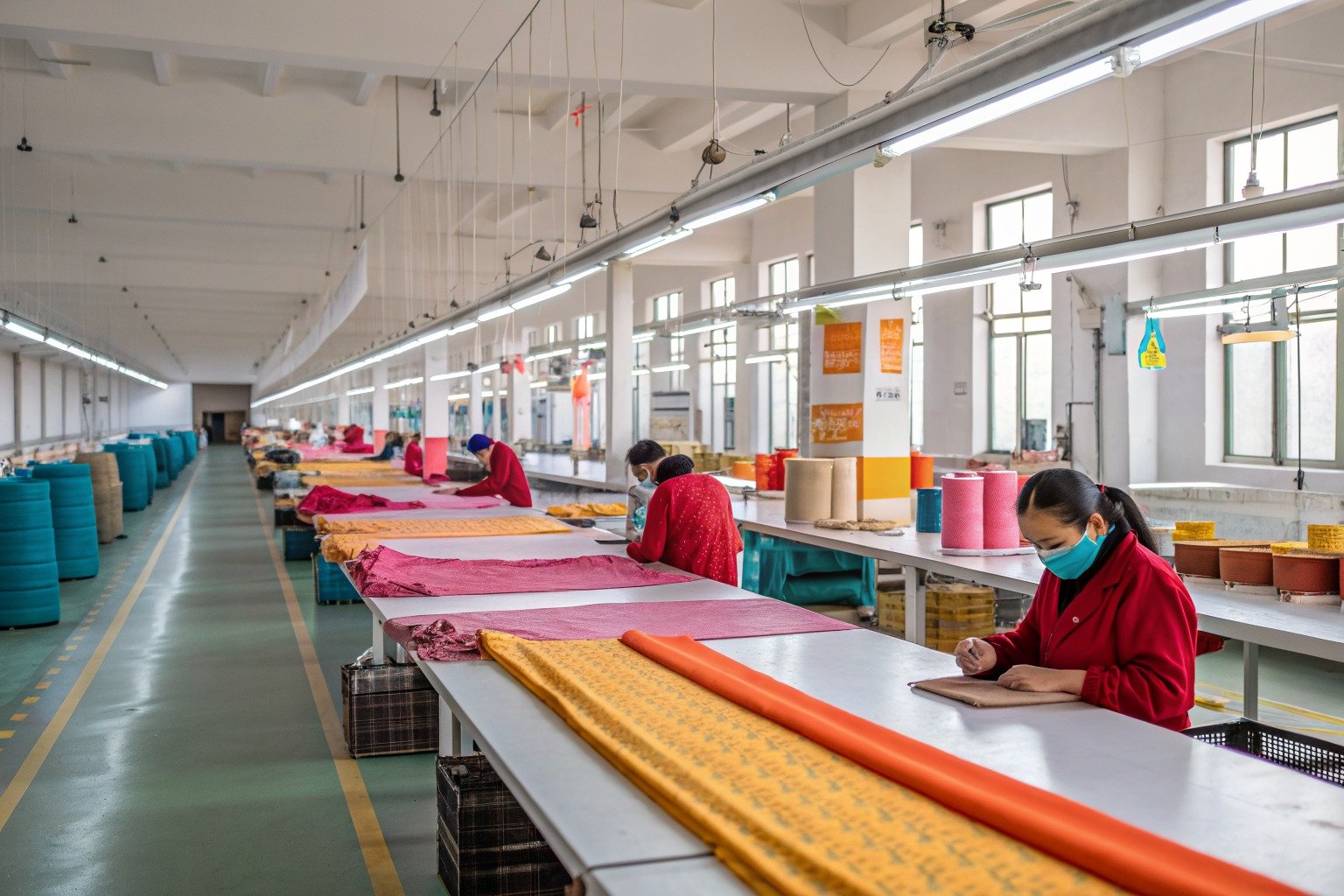
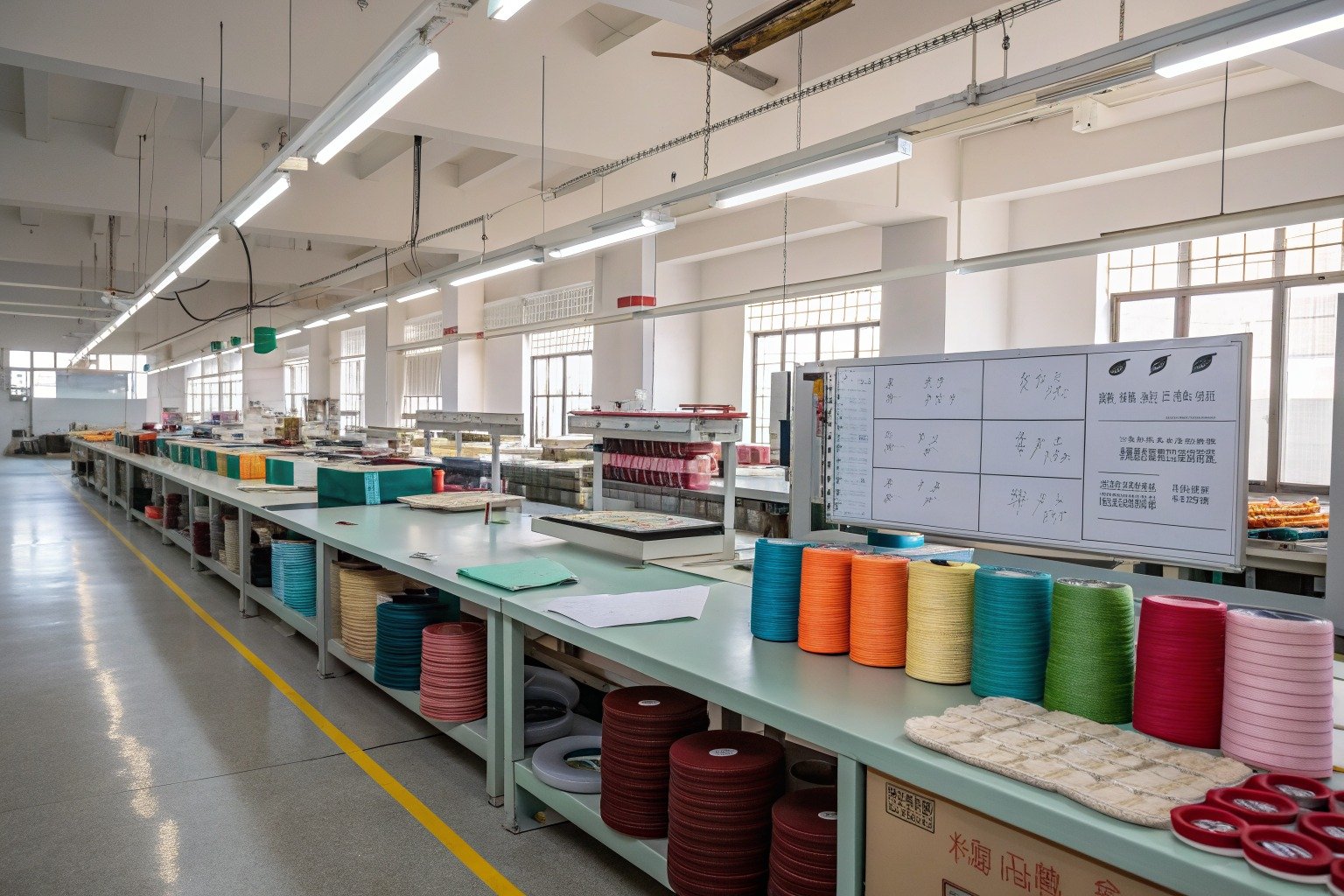
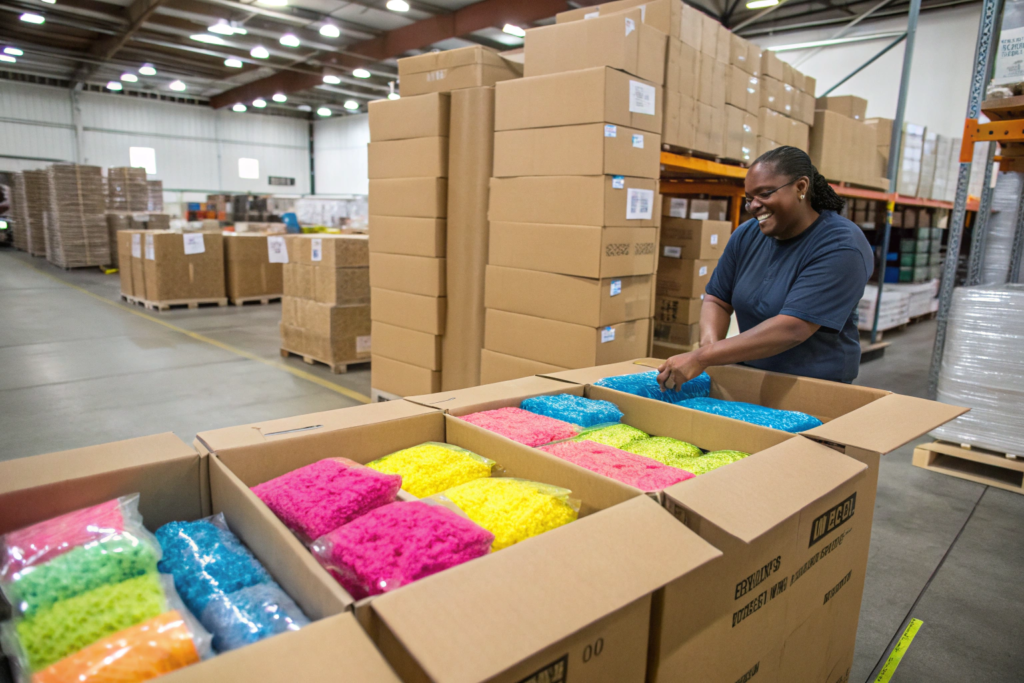
I run AceAccessory in Zhejiang Province. We ship hundreds of containers to the US every year. In the last five years, I have watched the composition of those containers shift dramatically. Five years ago, a container was 80% bulk basics for big-box retailers. Today, over half of our containers are "Rainbow Containers" —pallets stacked with a beautiful chaos of different colors, styles, and SKUs bound for online fulfillment centers. This is the new reality of accessory sourcing. The old model of "buy deep, sell slow" is dead for online sellers. The new model is "buy wide, sell fast, reorder winners." Let me break down exactly why mixed containers are the secret weapon of successful online accessory brands.
How Do Mixed Containers Improve Inventory Turnover and Cash Flow?
Cash flow is the heartbeat of an online store. Every dollar sitting in a warehouse is a dollar that cannot be spent on Instagram ads, influencer gifting, or testing a new product line. The primary financial benefit of a mixed container is a higher Inventory Turnover Ratio.
Let’s do the math. Imagine you order 10,000 pieces of a single black hair band. Your cost is $0.30 per unit. Total investment: $3,000. You sell 100 units per day. It takes you 100 days to sell out. That means your $3,000 is tied up for over three months. During that time, you are paying 3PL storage fees on the remaining inventory.
Now imagine you order 500 pieces each of 20 different colors. Same total quantity (10,000 pieces). Same total investment ($3,000). But now you have variety. The black sells at 30 units per day. The pink sells at 50 units per day. The trendy sage green sells at 80 units per day. You sell out of the winners in 10 days. You use that revenue to immediately reorder the winning colors. Your cash is back in your bank account in two weeks, not three months.
This is the power of mixing. It accelerates the cash conversion cycle. At AceAccessory, we help our online clients structure their orders to maximize this effect. We analyze their sales data from previous orders and recommend a "Core + Test" ratio. For example, 60% of the container is best-selling core colors (Black, Navy, Beige). 40% is split among new, trendy test colors. This strategy ensures you always have the bread-and-butter SKUs in stock while constantly refreshing the catalog with newness.
What Is the Financial Impact of Reducing Dead Stock on a P&L Statement?
Dead stock is not just an inconvenience. It is a direct hit to your bottom line in multiple ways that show up clearly on a Profit and Loss (P&L) statement.
First, there is the Carrying Cost of Inventory. Industry standard is 20-30% of the inventory value per year. This includes:
- Storage Fees: 3PL charges per bin, per pallet, per month.
- Insurance: Covering the value of the goods.
- Obsolescence: The value of the goods decreases over time as trends change.
If you have $12,000 in dead stock sitting for a year, you have effectively lost an additional $3,000 just in carrying costs. That expense line on your P&L grows every month.
Second, there is the Opportunity Cost. That $12,000 could have been used to:
- Launch a new hair clip design that goes viral.
- Increase ad spend on a winning product.
- Offer a discount on a bundle to acquire new customers.
By using mixed containers to minimize dead stock, online sellers keep their P&L lean. Their Gross Margin Return on Inventory Investment (GMROI) increases significantly. GMROI is the metric that sophisticated e-commerce operators live by. It measures how many dollars of gross profit you earn for every dollar invested in inventory. A mixed container strategy consistently delivers a higher GMROI than a deep-buy strategy for fashion accessories .
How Does "Buy Wide, Sell Fast" Beat "Buy Deep, Sell Slow" Online?
The algorithmic nature of online selling favors speed and newness. Platforms like Amazon, Etsy, and Shopify with Google Shopping all reward fresh content.
When you have 20 different colors of a hair band , you have 20 unique product pages. That is 20 opportunities to rank for long-tail keywords like "sage green hair tie" or "dusty rose ponytail holder." Each new color launch triggers an email to your list and a social media post. It signals to Google and Amazon that your catalog is active and updated.
If you buy deep on one color, you have one product page. You post about it once. Then the algorithm forgets you exist. The "Buy Wide" strategy generates a constant drumbeat of new content, which is the fuel for organic and paid traffic.
At AceAccessory, we support this strategy by making it easy to reorder the winners. We keep stock of our core colors. When a client sells out of "Terracotta" in 10 days, we can turn a reorder of just that color in 15-20 days using our in-stock materials. This Agile Replenishment model is only possible because we have the materials on the shelf and the production capacity to pivot quickly.
How Does SKU Diversification Impact SEO and Marketplace Ranking?
Search Engine Optimization (SEO) for e-commerce is a game of surface area. The more relevant pages you have, the more entry points customers have to find your store. A mixed container strategy is fundamentally an SEO Content Strategy disguised as a logistics decision.
Let’s say you sell "Silk Scrunchies." If you only stock black and white, you can only rank for "black silk scrunchie" and "white silk scrunchie." That is a tiny slice of search traffic.
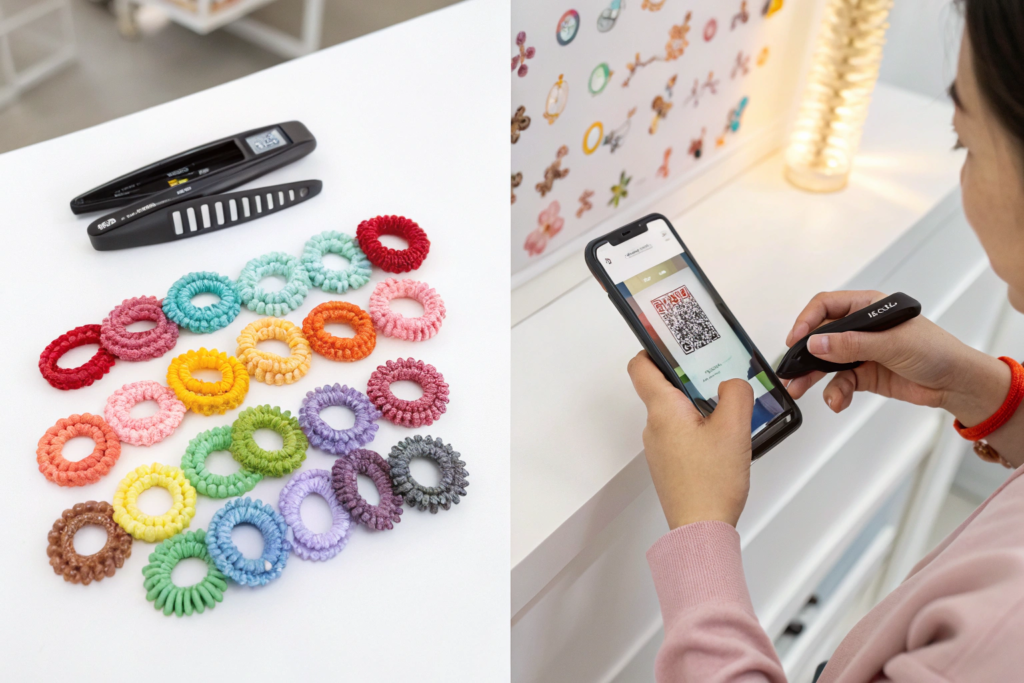
If you stock 15 colors—Rose Gold, Champagne, Emerald, Lavender, Navy, etc.—you now have 15 unique URLs targeting specific color searches. A customer searching for "Lavender Silk Scrunchie for Bridesmaids" is much more likely to find your product than if you only sold black.
This Long-Tail Keyword Strategy is the most cost-effective way to acquire customers. It captures high-intent traffic. Someone searching for a specific color knows what they want and is ready to buy. The conversion rate on these long-tail searches is significantly higher than on broad terms like "hair accessories."
At AceAccessory, we help our clients build this diversified catalog. We provide professional product photography for each color variant. This saves the client thousands of dollars in photoshoot costs and allows them to launch the new SKUs quickly. A diverse catalog, supported by strong visuals, is a competitive moat in the crowded online accessories market .
Why Does Amazon FBA Favor Sellers with High SKU Counts?
Amazon’s A9 algorithm has a specific bias: it favors catalog depth. A seller with 50 active SKUs is seen as more "established" and "professional" than a seller with 5 SKUs. This has several tangible benefits.
- Brand Store Eligibility: You need a certain number of SKUs to unlock a fully functional Amazon Brand Store. A mixed container gives you the variety to hit that threshold.
- Cross-Selling Opportunities: On a product detail page, Amazon shows the "Brand" link. If you have 20 colors of a hair clip, clicking that link shows the customer a beautiful grid of your other products. If you only have 2 colors, the grid is sparse and unappealing.
- PPC Efficiency: With multiple variations, you can run Sponsored Product Ads on the parent ASIN. The ad shows the customer a selection of colors. They click and choose. This is much more effective than an ad for a single black clip.
Furthermore, Amazon FBA storage fees are volume-based. A mixed container of lightweight hair accessories takes up minimal cubic feet compared to bulky items. You can store 10,000 hair ties in the space of 50 winter coats. This makes the FBA fee structure favorable for diversified accessory sellers. At AceAccessory, we polybag and label items according to Amazon’s FBA Prep Requirements, making the inbound process seamless for our clients.
How Does Offering Color Variety Reduce Customer Return Rates?
This is a counterintuitive benefit of mixed containers. You might think more choice leads to more indecision and returns. But in the accessories category, the opposite is true.
A common reason for returning a hair accessory is "Color not as expected." If a customer buys a "Blue" hair band based on a single screen image, they might be disappointed if it is Navy when they wanted Sky Blue.
By offering a wide range of blues—Navy, Sky, Cobalt, Periwinkle—you allow the customer to self-select the exact shade they want. The product page for "Cobalt Blue" sets a very specific expectation. When the item arrives, it matches that specific expectation. Satisfaction increases. Returns decrease.
Additionally, variety encourages multi-purchase. A customer might come to buy a black hair band but then add a matching terracotta band to hit a free shipping threshold. They keep both because they chose them intentionally. This increases Average Order Value (AOV) while reducing the return rate per order. At AceAccessory, we see this play out in our clients’ reorder patterns. Clients who embrace mixed containers have significantly lower return rates than those who buy deep on a few colors.
What Are the Logistical Challenges of Mixed Containers and How Are They Solved?
The old-school factory model hates mixed containers. It complicates production planning, material sourcing, and packing. A factory set up for bulk efficiency wants to run one color for three days straight. A mixed order requires constant changeovers and careful segregation of components.
This is why many large commodity factories say "No" to mixed small orders. Or they charge exorbitant "assortment fees" that erase the financial benefit for the online seller. The challenge is real, but it is solvable with the right factory infrastructure and mindset.
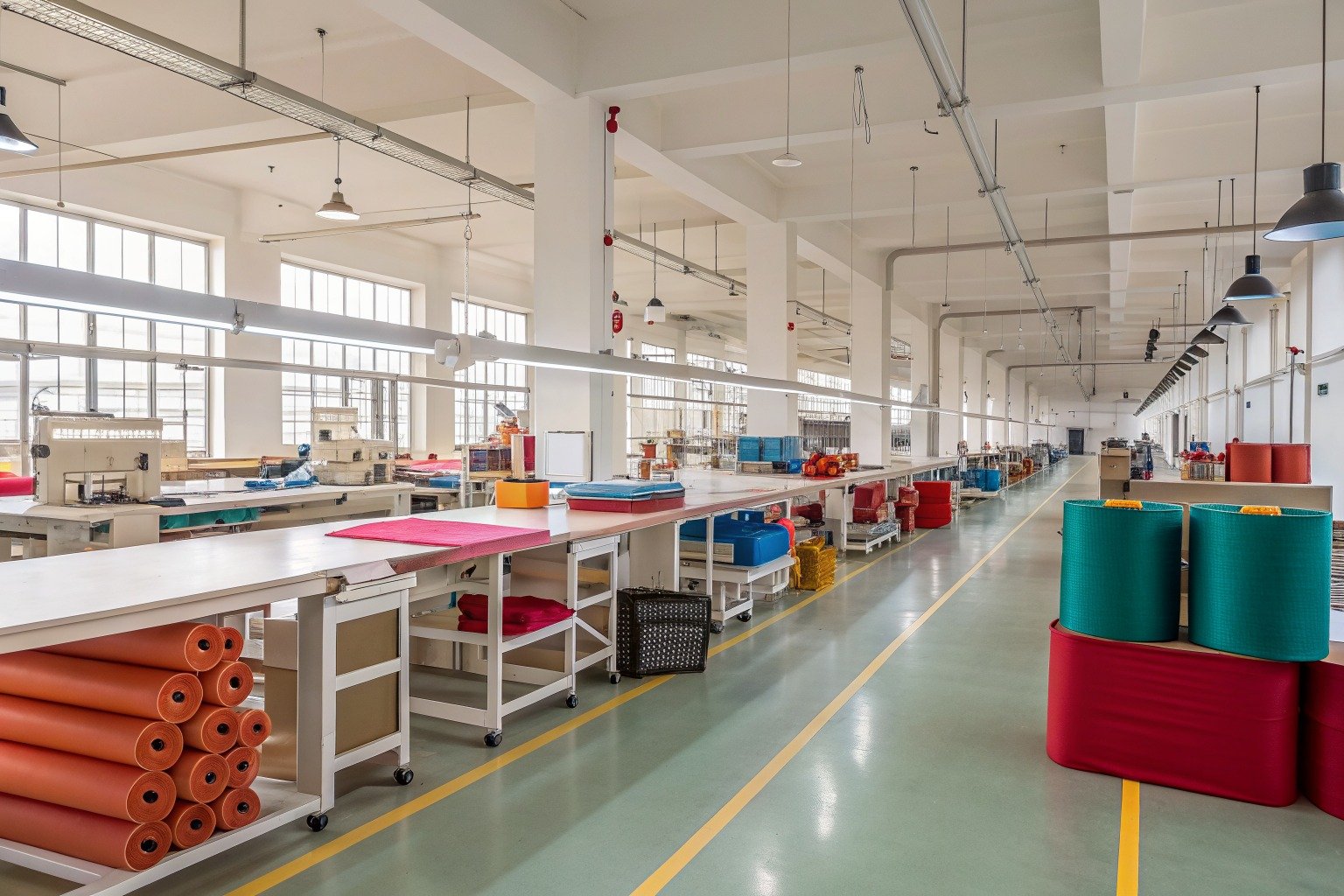
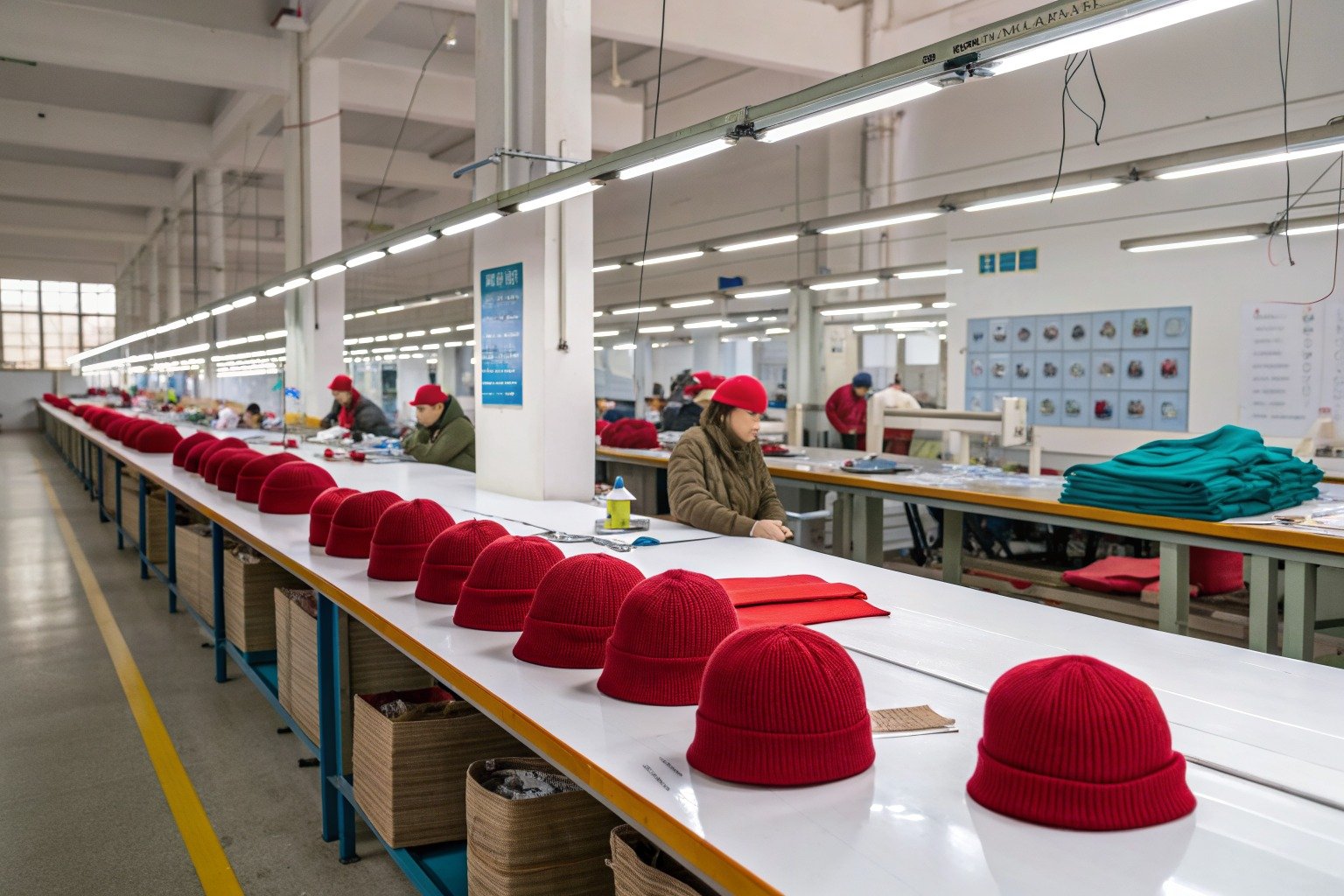
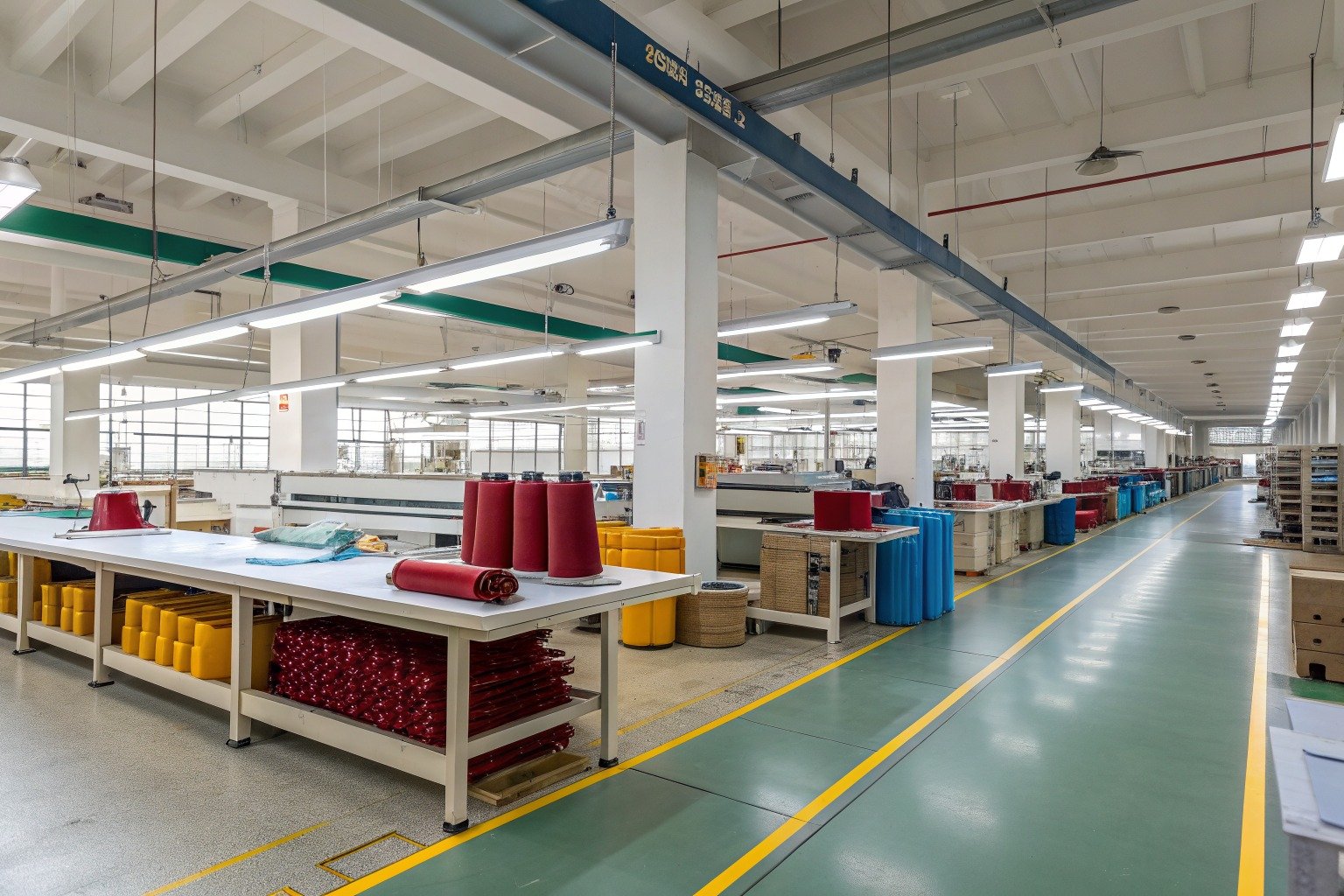
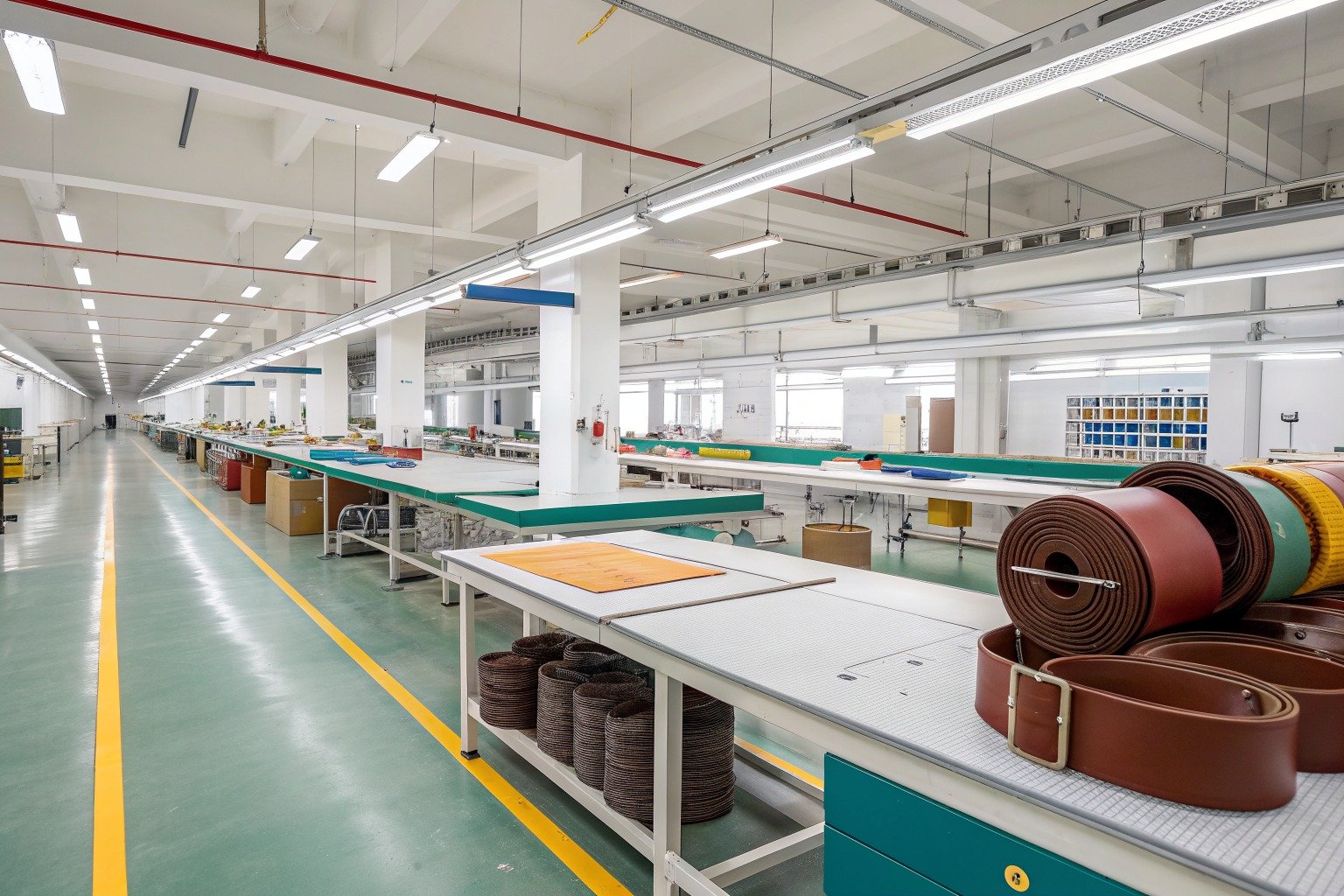
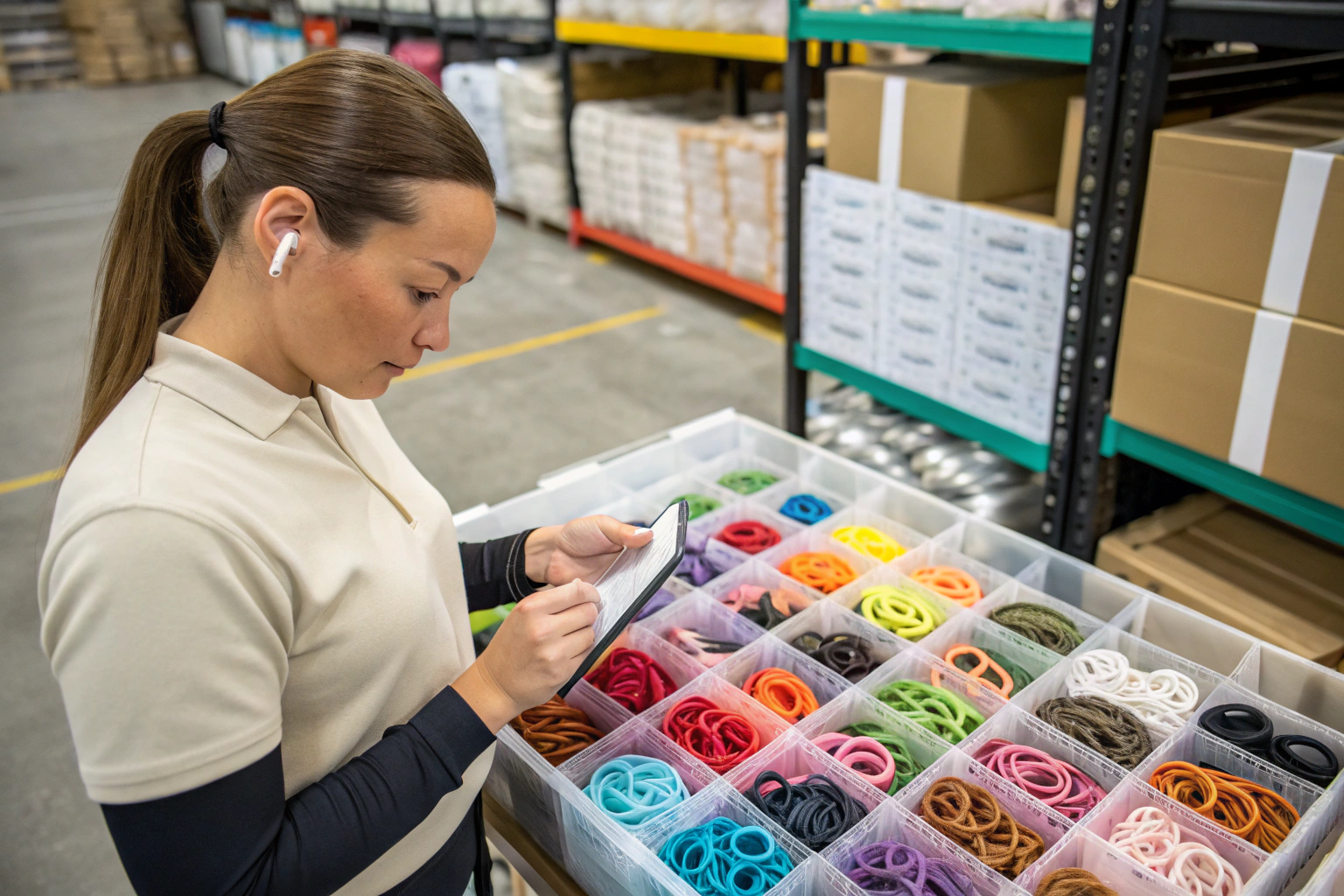
At AceAccessory, we have engineered our operations specifically to embrace this complexity. We are not a commodity factory. We are a Flexible Manufacturing Partner. Here is how we solve the logistical puzzles of mixed containers. First, we use a Digital Inventory Management System that tracks every color of elastic, every shade of thread, and every component at the bin level. When an order for 15 colors comes in, the system generates a pick list that directs our warehouse team to the exact shelf location for each material.
Second, we use Color-Coded Kanban Bins on the production floor. As the small batches move through cutting, sewing, and packing, they stay in dedicated, labeled bins. This prevents the nightmare scenario of a "Navy" band accidentally ending up in the "Black" batch. Third, we create Pre-Packed Assortments. For some clients, we don’t just ship 15 separate bags of 500 units. We create a master display carton that contains 15 inner boxes, each with a different color. This is "shelf-ready" for their 3PL. They can just open the master carton and put the inner boxes on the shelf.
How Do Packing Lists and Barcodes Prevent Receiving Chaos at the 3PL?
The biggest fear of an online seller ordering a mixed container is the Receiving Nightmare. They imagine their 3PL warehouse receiving a pallet of 50 cartons with no idea what is inside. The 3PL charges by the hour to open and sort.
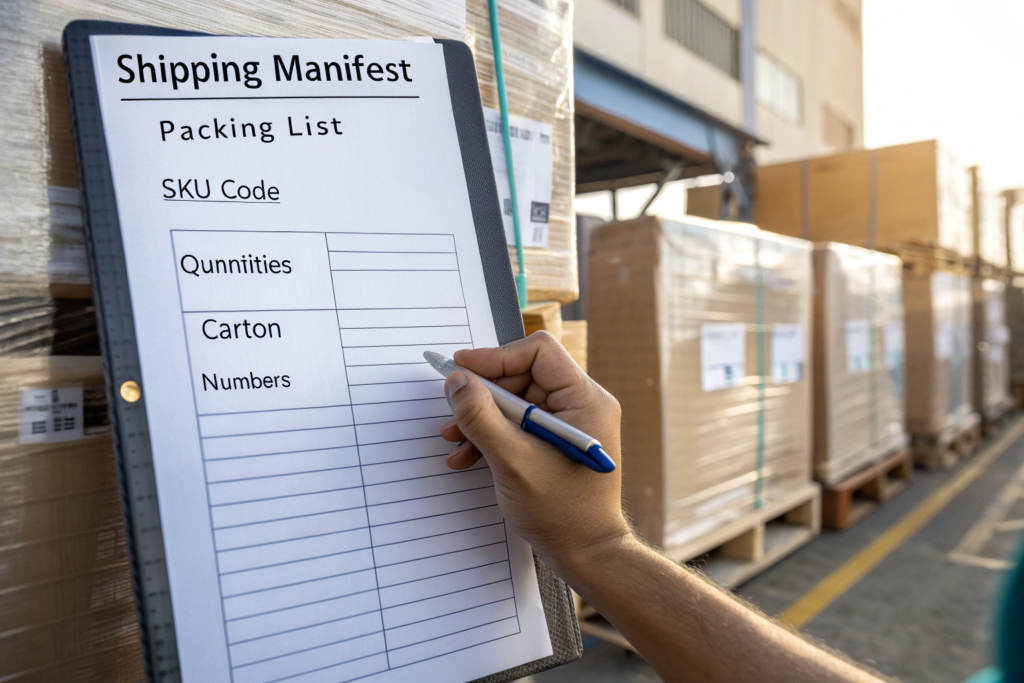
We prevent this with Military-Grade Documentation. Every carton we ship has a Unique Carton ID and a detailed Carton Content Label.
The label on Carton #12 will read:
- SKU: HB-EL-SAGE-06 (Sage Green Elastic Hair Band)
- QTY: 500 PCS
- Barcode: [Scannable GS1-128 Barcode]
When the 3PL scans that barcode, it automatically populates their inventory system with the correct SKU and quantity. They don’t have to open the carton and count. They just scan and shelve.
Furthermore, we provide an Advanced Shipping Notification (ASN) spreadsheet. This is an Excel file that maps every carton number to its contents. The 3PL uploads this file, and their system knows exactly what is arriving before the truck even backs in. This level of organization eliminates receiving fees and ensures the products are available for sale within hours of arrival, not days. This is part of the professional logistics service we provide.
What Is the Minimum Order Quantity (MOQ) for a Mixed Container of Accessories?
This is the most practical question. Many online sellers assume they need to order 50,000 units to fill a container. That is a myth. You can order a Less than Container Load (LCL) shipment, or you can fill a 20ft Container with a relatively modest quantity of mixed accessories.
Here is a realistic guideline for a mixed accessory order to fill a 20ft container economically:
| Accessory Type | Approx. Units per 20ft Container (Mixed) | Typical MOQ per SKU (AceAccessory) |
|---|---|---|
| Hair Bands / Elastics | 200,000 – 300,000 pcs | 500 pcs |
| Hair Claws / Clips | 80,000 – 120,000 pcs | 300 pcs |
| Scrunchies | 100,000 – 150,000 pcs | 300 pcs |
| Mixed Assortment (Variety) | 120,000 – 180,000 pcs total | Varies by style |
If you are not ready for a full container, LCL is a great starting point. You can order 5,000 pieces spread across 10 SKUs and ship it LCL. The per-unit freight cost is higher, but the inventory risk is minimal. As your business scales, you transition to a full container.
At AceAccessory, we offer both LCL and FCL options. We help our clients plan the Cube Utilization of their mixed orders to ensure they are maximizing the space and minimizing freight cost per unit. We treat a 500-piece order with the same attention to detail as a 50,000-piece order. This flexibility is what makes us a preferred partner for online store owners .
Conclusion
The preference for mixed accessory containers among online store owners is not a fleeting fad. It is a structural adaptation to the economic realities of e-commerce. In a world where digital advertising costs rise monthly and consumer attention spans shrink, the old wholesale model of deep inventory buys is a liability. It traps cash, limits agility, and stifles the catalog growth that search algorithms demand.
Mixed containers offer a strategic alternative. They transform inventory from a static cost center into a dynamic asset. By spreading investment across a wider array of colors and styles, online sellers accelerate their cash conversion cycle, dramatically reduce the risk of dead stock, and build the kind of deep, varied catalog that wins on Amazon, Etsy, and Google Shopping. The logistical complexities are real, but they are entirely manageable with a manufacturing partner who has built their operations around flexibility and precise documentation.
The shift is clear: the future of accessory sourcing for online brands is agile, diversified, and data-driven. It is about placing a smart, wide bet, letting the market tell you what the winners are, and then doubling down on those winners with rapid replenishment. This is the playbook that the most successful online accessory brands are running right now.
If you are tired of being stuck with dead stock and want to adopt a more agile inventory strategy for your online store, we can help you plan a mixed container that fits your budget and catalog goals. Contact our Business Director, Elaine. She can provide a cube analysis and help you build a diversified order that maximizes your return on investment. Email Elaine at: elaine@fumaoclothing.com