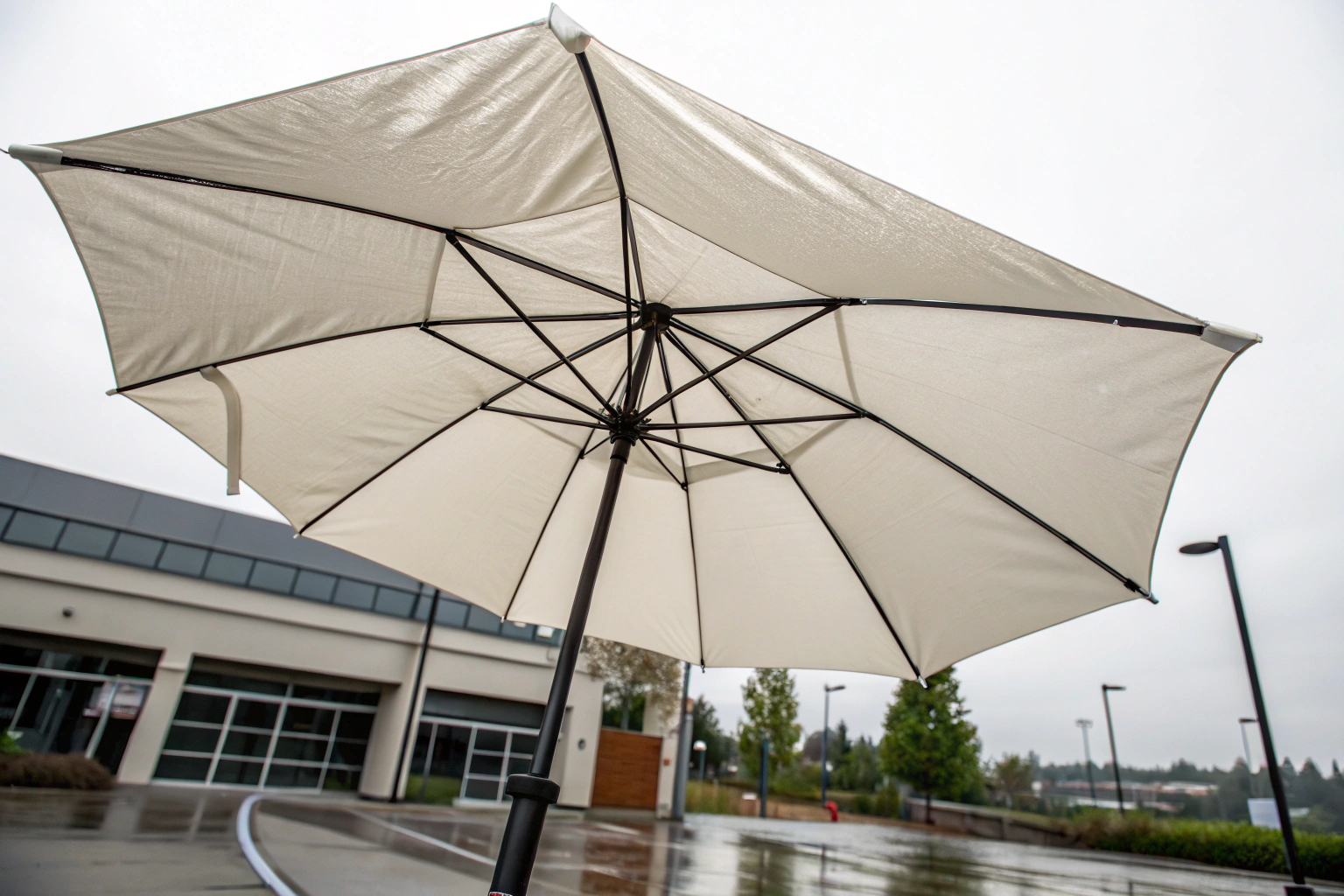
You are developing an umbrella that is not just a fashion accessory. It needs to perform. It needs to withstand real wind and keep the user genuinely dry in a downpour. You have seen cheap umbrellas where the fabric wets out, water seeps through, and the user ends up almost as wet as if they had no umbrella at all. You do not want that for your brand. You ask a factory about "waterproof fabric." They offer you "pongee." You do not know if that is the best, or just the cheapest. You are not just picking a color. You are selecting a material that must deliver on a fundamental promise: keeping the customer dry.
The best material for a truly waterproof outdoor umbrella is a high-density pongee or polyester taffeta fabric that is treated with a durable water repellent, or DWR, coating and, for premium performance, backed with a microporous waterproof and breathable membrane. This combination provides the optimal balance of water protection, wind resistance, durability, and weight.
I manage AceAccessory in Zhejiang, and we manufacture umbrellas for brands that care about performance. The canopy fabric is the single most important component determining the umbrella’s effectiveness. Let me explain the specific materials and technologies that separate a truly protective umbrella from a mere sunshade.
Why Is Pongee the Foundational Fabric for Quality Umbrella Canopies?
Walk into any store selling decent umbrellas, and the vast majority of the canopies will be made from a fabric called pongee. This is not an accident. Pongee is not a specific fiber, but a specific type of weave and finish applied to 100% polyester yarns. It has become the industry standard for quality umbrellas because it offers a unique combination of properties that are ideally suited to the application. A good pongee fabric has a very tight, high-density weave. This tight weave is the first line of defense against water. It physically prevents water droplets from easily passing through the gaps between the yarns. Pongee also has a characteristic slight sheen and a crisp, rustling hand feel. It is lightweight, which is critical for an umbrella that needs to be carried. It is also strong and resistant to tearing. It provides an excellent surface for printing vibrant colors and patterns. This properties of pongee polyester fabric for umbrella canopies makes it the workhorse of the industry.
What Do the Terms 190T and 210T Mean for Pongee Fabric?
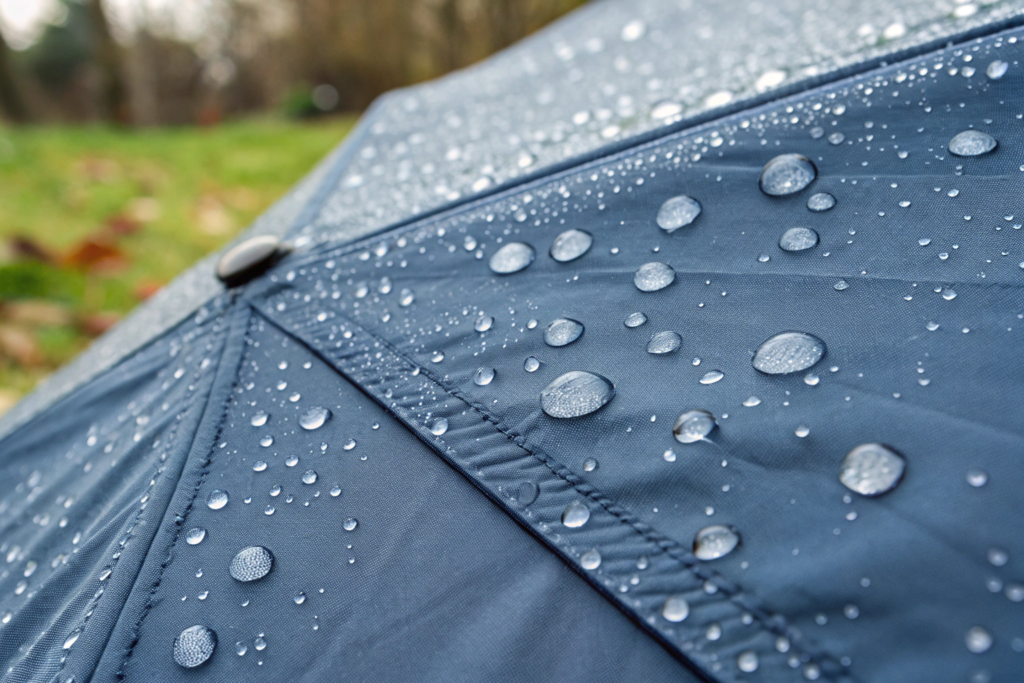
This is the most important specification to understand when comparing umbrella quality. The "T" stands for "Thread count." It refers to the total number of warp and weft yarns in one square inch of the fabric. A 190T pongee fabric has a thread count of 190. This is a standard, entry-level quality for promotional or very value-focused umbrellas. It is lightweight and cost-effective, but it is less dense and therefore less waterproof and less wind-resistant. A 210T pongee fabric has a higher thread count of 210. The weave is denser. This makes the fabric significantly more water-resistant, stronger, and more durable. It is the standard for a better-quality retail umbrella. For premium performance umbrellas, you can even find 240T or 300T pongee. When you request a quote, always ask for the "T" rating of the pongee fabric. This difference between 190T and 210T pongee fabric for umbrella quality and performance is the single most direct indicator of canopy quality.
Is Polyester Taffeta a Viable Alternative to Pongee?
Yes, polyester taffeta is a very similar fabric and is often used interchangeably with pongee. The primary difference is in the finish and hand feel. Taffeta typically has a slightly stiffer, more pronounced rustle and a more lustrous sheen. It is also a tightly woven, high-density polyester fabric that offers excellent water resistance and durability. In practice, the terms are often blended, and you may see "pongee taffeta." The key quality indicator remains the thread count and the weight of the fabric, measured in grams per square meter or GSM. A higher thread count and a higher GSM indicate a denser, more substantial, and better-performing fabric. This polyester taffeta versus pongee for umbrella canopy applications is a distinction of nuance rather than a fundamental difference in quality.
What Role Do Durable Water Repellent Coatings Play?
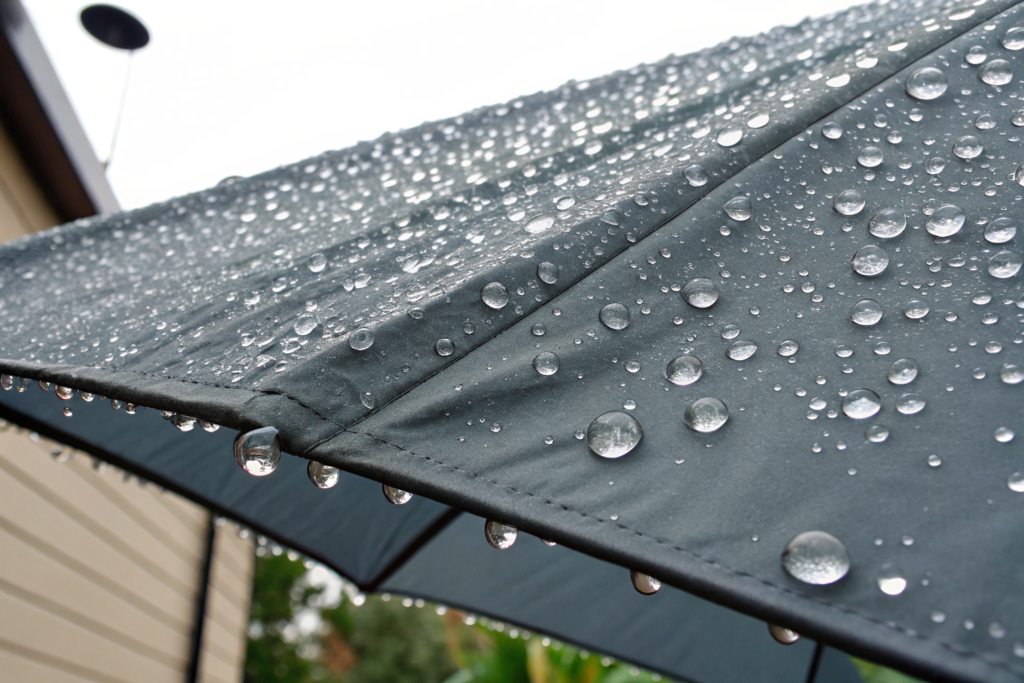
Even the tightest woven fabric has microscopic gaps between the fibers. Under sustained rain or pressure, water can eventually seep through. This is where the Durable Water Repellent, or DWR, coating comes in. A DWR is a chemical treatment applied to the surface of the fabric. It is not a solid, rubbery layer. It is a microscopic, hydrophobic coating that bonds to the individual fibers. This coating dramatically lowers the surface energy of the fabric. Instead of spreading out and soaking in, water droplets bead up into tight spheres and roll off the surface. This is what creates the satisfying "water beading" effect you see on a high-quality umbrella. The DWR coating is essential for preventing the fabric from "wetting out," where it becomes saturated, heavy, and starts to leak. All quality umbrellas have a DWR coating. The quality and durability of this coating vary. We source our pongee from mills that apply a high-grade, fluorocarbon-free, or C0, DWR finish that is both effective and more environmentally responsible. This function of Durable Water Repellent coating on umbrella fabric is what makes a water-resistant fabric truly waterproof in real-world use.
What Is the Difference Between a Coating and a Lamination?
This is a critical distinction for premium waterproofing. A coating, like the standard DWR, is applied to the surface of the fabric. It is effective but can wear off over time with abrasion and exposure. A lamination is a completely different level of protection. It involves bonding a thin, continuous, waterproof and breathable membrane to the underside of the canopy fabric. This membrane, often made of materials like TPU, Thermoplastic Polyurethane, or microporous ePTFE, has pores that are too small for liquid water to pass through, but large enough for water vapor, sweat, to escape. This is the same technology used in high-end rain jackets. An umbrella with a laminated membrane is truly, absolutely waterproof. No water will penetrate the canopy, period. This is the premium performance option we offer for clients who demand the absolute best protection, such as for golf umbrellas or high-end outdoor brands. This difference between DWR coating and waterproof breathable membrane lamination for umbrellas is the distinction between good and great.
Are There Eco-Friendly DWR Treatments Available?
Yes, and this is an increasingly important requirement for our brand clients. Traditional DWR treatments were often based on long-chain fluorocarbons, or PFCs, which are persistent environmental pollutants. The industry has largely shifted away from these. Modern, high-performance DWR treatments are PFC-free or C0. They use alternative chemistries, often based on silicones or other polymers, to achieve the water-beading effect without the environmental harm. We specifically source our coated fabrics from mills that use PFC-free DWR finishes. We can provide documentation to support this claim. This PFC free and C0 DWR treatments for eco conscious umbrella production is the new standard for responsible manufacturing.
How Does the Canopy Fabric Work with the Frame for Wind Resistance?
Waterproofness is only half the battle. An umbrella is useless if it inverts or breaks in the first gust of wind. The canopy fabric and the frame must work together as an integrated system. A strong, dense fabric like 210T pongee is essential. A flimsy, low-density fabric will stretch and deform in the wind, catching more air and putting excessive stress on the frame. The fabric must be cut and sewn to the frame with the correct amount of tension. Too loose, and it will flap and catch wind. Too tight, and it will stress the seams and ribs. The best frames for wind resistance use flexible, durable fiberglass ribs instead of brittle steel. Fiberglass bends under wind load and then springs back into shape. It is significantly more wind-resistant. This interaction between canopy fabric tension and flexible fiberglass frame for wind resistance is a key engineering consideration.
What Is the Benefit of a Vented or Double-Canopy Umbrella?
For ultimate wind resistance, the design of the canopy itself can be modified. A vented, or double-canopy, umbrella features a second, overlapping layer of fabric at the top of the canopy, with an open space or "vent" between the layers. This design allows wind to pass through the canopy, rather than being trapped underneath it. This dramatically reduces the lifting force that causes umbrellas to invert. It is a feature found on high-performance golf umbrellas and storm umbrellas. This is a design feature we can incorporate for clients who prioritize maximum wind resistance. This vented double canopy design for enhanced umbrella wind resistance is the premium solution for windy climates.
How Do You Ensure the Seams Are Waterproof?
The fabric can be perfectly waterproof, but if the seams where the panels are joined leak, the umbrella is a failure. Water will find its way through the needle holes. We address this in two ways. First, we use a very tight stitch with a high-quality, water-resistant thread. Second, and more importantly for premium umbrellas, we apply a seam sealing tape to the inside of the canopy over all the critical seams. This thin, waterproof tape is heat-applied and permanently seals the stitch holes, creating a completely watertight barrier. This is the same technology used in premium rainwear. This seam sealing tape application for fully waterproof umbrella canopies is a detail that separates a truly professional product from a basic one.
What Are the Care and Longevity Considerations for Different Canopy Materials?
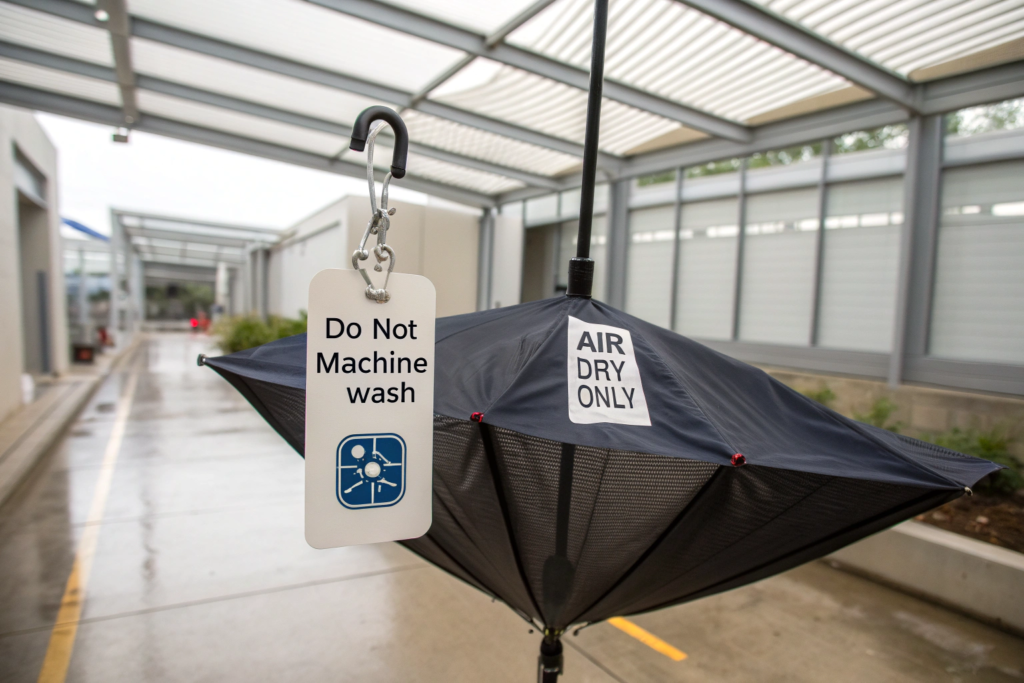
The best umbrella material in the world will fail prematurely if not cared for properly. The primary enemy of an umbrella canopy is being put away wet. When a wet umbrella is closed and stored in its sleeve, the moisture is trapped. This can lead to mildew growth, which stains the fabric and degrades the fibers and the DWR coating. It can also cause the metal parts of the frame to rust. The single most important care instruction is to open the umbrella and let it dry completely before storing it. The DWR coating can also be diminished over time by abrasion and dirt. Periodically wiping the canopy with a damp cloth and a mild soap can help restore its performance. We provide clear care instructions with our umbrellas to help educate the consumer. This proper care and maintenance to extend the life of an umbrella canopy is a small but important part of the product experience.
How Does UV Exposure Affect the Umbrella Fabric?
The polyester fibers in pongee are inherently resistant to UV degradation, but prolonged, intense sun exposure over many seasons will eventually cause some fading of the color and a slight weakening of the fibers. However, for the typical use of a rain umbrella, this is a minor concern. If you are developing a dual-purpose parasol or sun umbrella, then a fabric with a specific UV protection rating, or UPF, should be considered. We can source pongee fabrics with a silver UV coating on the underside to enhance sun protection. This UV resistance of polyester umbrella fabrics and options for sun protection is a separate but related consideration.
Can the Waterproofing Be Restored on an Older Umbrella?
The DWR coating on the canopy fabric can diminish over time with use and abrasion. When you notice that water no longer beads up and rolls off, but instead starts to wet out the fabric, the DWR has degraded. It can be temporarily restored with an aftermarket spray-on or wash-in DWR treatment available for outdoor gear. These products replenish the hydrophobic coating. While this is not a permanent factory fix, it can extend the useful life of a favorite umbrella. This restoring DWR waterproofing on an older umbrella canopy is a helpful tip for the end consumer.
Conclusion
The best material for a waterproof outdoor umbrella is not a single magic fabric, but a system. The foundation is a high-density woven polyester, specifically a 210T or higher pongee or taffeta, which provides the base level of water resistance, strength, and light weight. This foundation is then enhanced with a high-quality, ideally PFC-free, Durable Water Repellent coating that causes water to bead and roll off. For the absolute pinnacle of performance, this system is further upgraded with a waterproof and breathable membrane lamination and sealed seams, creating a canopy that is truly impenetrable. This material system, when paired with a flexible, wind-resistant frame, creates an umbrella that genuinely delivers on its promise of keeping the user dry and protected. The choice of materials reflects directly on your brand’s commitment to quality and performance. A cheap, low-T pongee umbrella will fail and disappoint. A well-made umbrella with a 210T canopy and a good DWR will perform reliably and build customer loyalty.
At AceAccessory, we offer a full spectrum of canopy materials, from value-oriented 190T to premium laminated performance fabrics. We source our materials from trusted mills and can provide the technical specifications and performance data to support your product development. We help you select the right material system for your brand’s positioning and your customer’s needs.
If you are developing an umbrella program and want to discuss canopy material options in detail, I encourage you to contact our Business Director, Elaine. She can provide fabric swatches, technical specifications, and guidance on the best solution for your project. You can email Elaine at: elaine@fumaoclothing.com. Let us help you build an umbrella that truly performs.