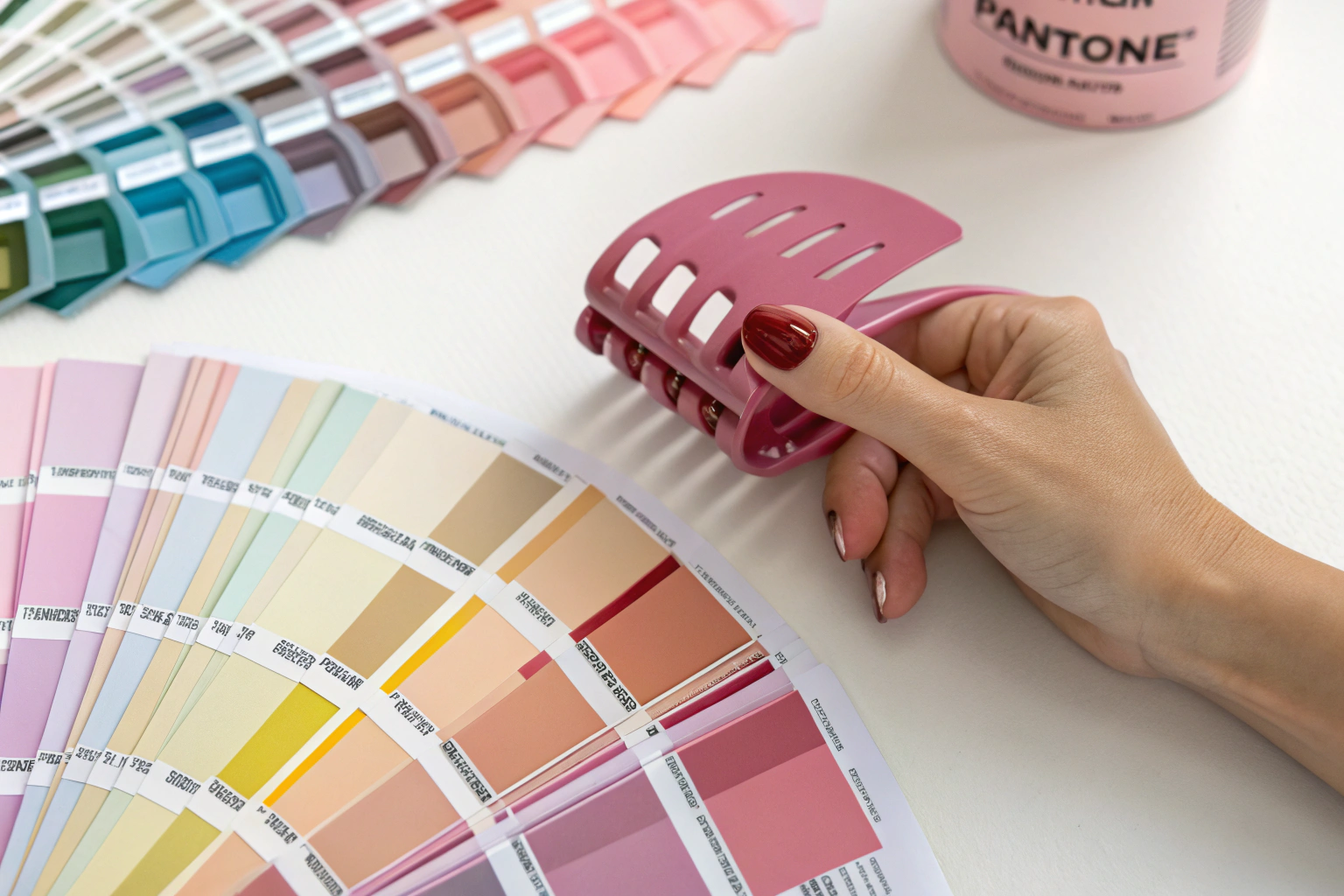
You have built your entire brand around a specific, proprietary shade of pink. It is on your website, your packaging, your logo. It is your brand’s visual signature. You are now developing a custom hair clip. You need that clip to be exactly that shade of pink. Not a close approximation. Not a "similar" color from a factory’s stock palette. Exactly your brand pink. You send the Pantone reference to the factory. They say, "We can match." But when the sample arrives, the pink is slightly too orange. Or slightly too pale. It is close, but it is not right. And "close" is not good enough for your brand.
Yes, a professional factory like AceAccessory can match Pantone colors for custom hair clips with a high degree of accuracy, but "exact" requires a precise, collaborative process involving lab dips, controlled material sourcing, and an understanding of the inherent limitations of matching printed ink colors on paper to colored plastic or painted surfaces.
I manage At Shanghai Fumao, we do not promise "exact" in a casual sense. We promise a rigorous, documented process that delivers a color match within a tight, industry-accepted tolerance, typically imperceptible to the human eye. We promise to work with you until the lab dip is approved. And we promise to maintain that color standard across your production runs. Your brand color is sacred. We treat it with the respect it deserves.
in Zhejiang, and we specialize in custom-colored hair accessories. Color matching is one of the most frequent and most important requests we handle. Achieving a perfect brand color match is a science and an art. Let me explain exactly how the process works, what is realistically achievable, and how we ensure the final product meets your exacting standards.
How Does the Lab Dip Process Ensure Accurate Color Matching?
The Pantone Matching System or PMS is a universal language for color. It is used by graphic designers for printed materials. When you specify a Pantone color for a hair clip, you are asking us to replicate that specific color in a completely different material, typically acetate plastic, resin, or painted metal. This is not a simple conversion. The way light interacts with ink on paper is different from how it interacts with a solid plastic object.
The tool we use to bridge this gap is the lab dip. A lab dip is a small, physical sample of the colored material, created in our supplier’s laboratory. The process begins with your Pantone reference, for example, PMS 219C. Our material supplier takes that reference and formulates a color recipe using pigments and dyes appropriate for the specific plastic or paint. They produce a small batch of the material and create a swatch. This is the lab dip. They send the lab dip to us. We review it under standardized lighting. We compare it to the Pantone chip. We send it to you, the client, for final approval.
It is common for the first lab dip to be close, but not perfect. You provide feedback. "This needs to be slightly less yellow." The lab adjusts the pigment formula and creates a second lab dip. This process repeats until you sign off on a lab dip that meets your approval. The approved lab dip then becomes the absolute color standard for the entire bulk production run. This lab dip process for Pantone color matching in plastic and acetate accessories is the essential quality control step.
What Is the Difference Between Pantone Coated and Uncoated References?
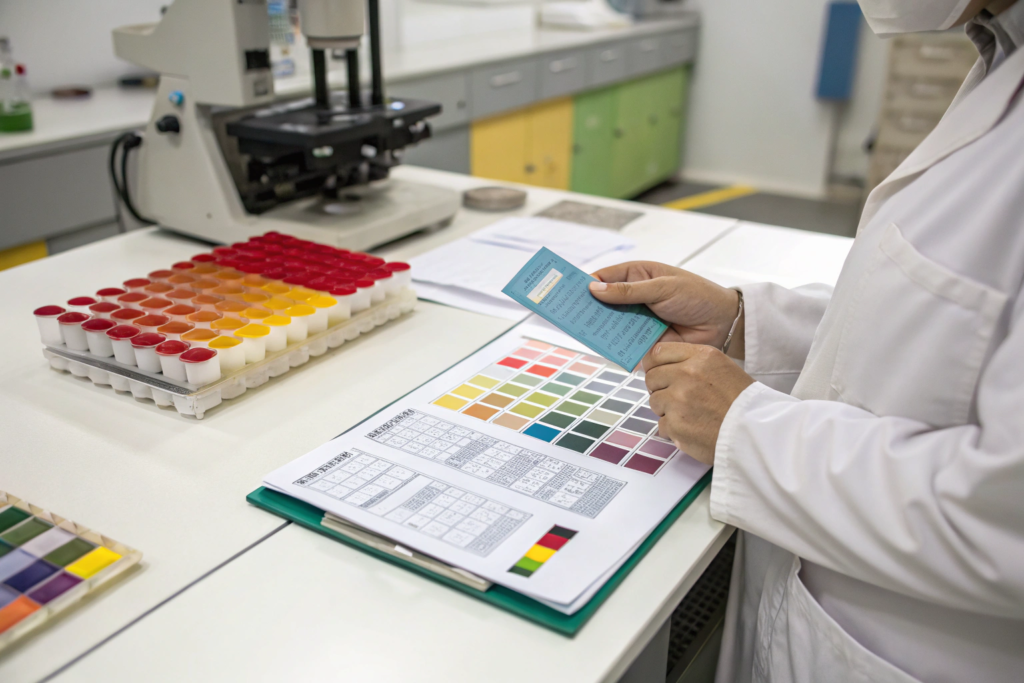
This is a critical detail that many brand owners overlook. The Pantone formula guides come in two primary versions. Pantone C stands for Coated. It represents how the ink looks when printed on glossy, coated paper. The colors are vibrant and saturated. Pantone U stands for Uncoated. It represents how the ink looks on uncoated, matte paper. The colors are slightly muted and less vibrant. The same Pantone number, for example, PMS 219 C and PMS 219 U, will look noticeably different.
When specifying a color for a physical product like a hair clip, you must specify which version you are referencing. A glossy, high-shine acetate clip will more closely resemble the Coated reference. A matte-finish clip will more closely resemble the Uncoated reference. Providing the correct reference eliminates a major source of confusion and ensures we are all aiming for the same visual target. This importance of specifying Pantone C or U for accurate physical product color matching cannot be overstated.
How Does Material and Finish Affect the Final Perceived Color?
The exact same pigment formula will look different depending on the material it is mixed into and the surface finish of the final product. A color mixed into transparent acetate will appear different than the same color mixed into opaque acetate. A high-gloss polished finish will make the color appear deeper and richer. A matte, sandblasted finish will make the same color appear softer and lighter. The thickness of the material also matters. A thicker section of plastic will appear darker and more saturated than a thinner section.
Our design team considers all these factors. We do not just match the lab dip. We match the lab dip on the specific material and with the specific finish that will be used for the bulk product. This holistic approach to color management ensures the final clip matches your expectation. This impact of material opacity and surface finish on perceived Pantone color in plastics is a key part of our expertise.
What Are the Realistic Tolerances for Pantone Matching in Accessories?
The word "exact" is a high bar. In the world of physical manufacturing, we speak in terms of tolerances. A tolerance is an acceptable range of variation. Even with the most rigorous lab dip process, there will be minute, imperceptible variations from batch to batch. The goal is to keep those variations within a commercially acceptable tolerance.
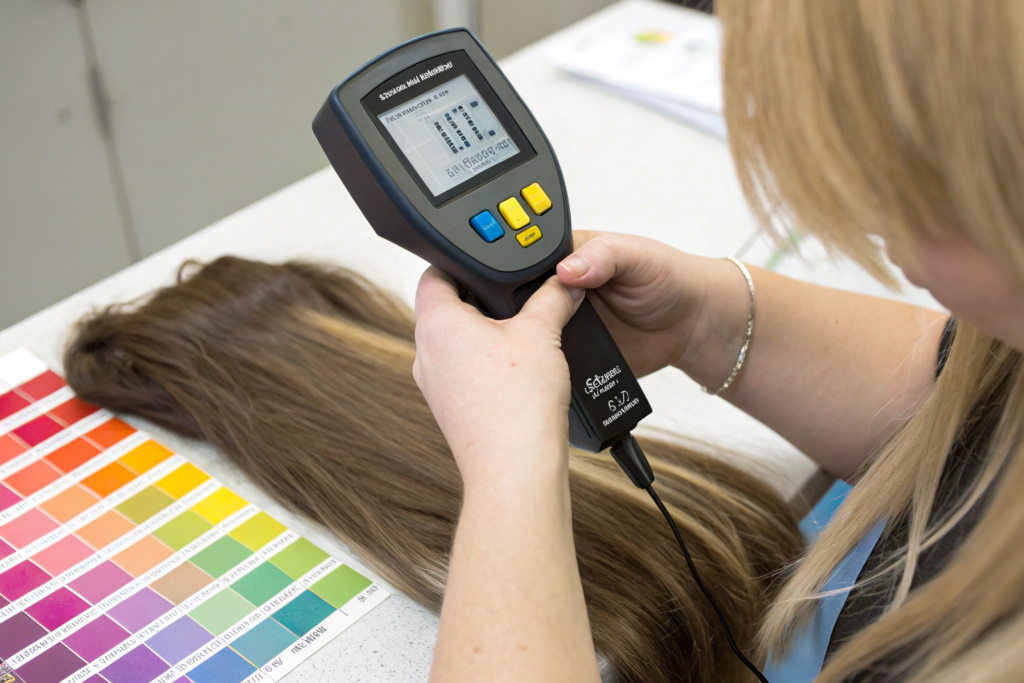
The industry uses a measurement called Delta E to quantify color difference. A Delta E value of less than 1.0 represents a color difference that is virtually imperceptible to the human eye. A Delta E value between 1.0 and 2.0 is a very slight difference, noticeable only under close, side-by-side comparison. This is the typical commercial tolerance for high-quality color matching. At AceAccessory, we aim for a Delta E of less than 1.5 for our custom color programs. We use a spectrophotometer to measure the color of the bulk production against the approved lab dip standard. This Delta E color tolerance standards for fashion accessory manufacturing provides an objective, scientific measure of color accuracy.
Why Might a Bulk Production Run Vary Slightly from the Lab Dip?
The lab dip is made in a small, controlled laboratory batch. The bulk production involves mixing hundreds of kilograms of material. Despite the precise formula, slight variations can occur due to the scale of the mixing process, minor fluctuations in temperature or humidity, or slight batch-to-batch variations in the raw pigment materials. This is the reality of industrial manufacturing. Our quality control system is designed to catch any variation that exceeds our tight tolerance and to reject material that does not meet the standard. This causes of minor color variation between lab dip and bulk plastic production is a function of scaling up from lab to factory.
How Can You Minimize Color Variation on a Reorder?
The best way to ensure color consistency on a reorder is to plan ahead. If you anticipate reordering the same custom color, we recommend ordering a larger quantity of the custom-colored material upfront. We can hold this material as safety stock for your future orders. This ensures that all your clips are made from the exact same master batch of material, guaranteeing perfect color continuity. If a new batch of material must be used, we will create a new lab dip for your approval, matching it as closely as humanly possible to the previous production. This strategies for maintaining color consistency across multiple production runs of custom accessories is a proactive approach to color management.
How Do You Match Pantone Colors on Multi-Color or Printed Clips?
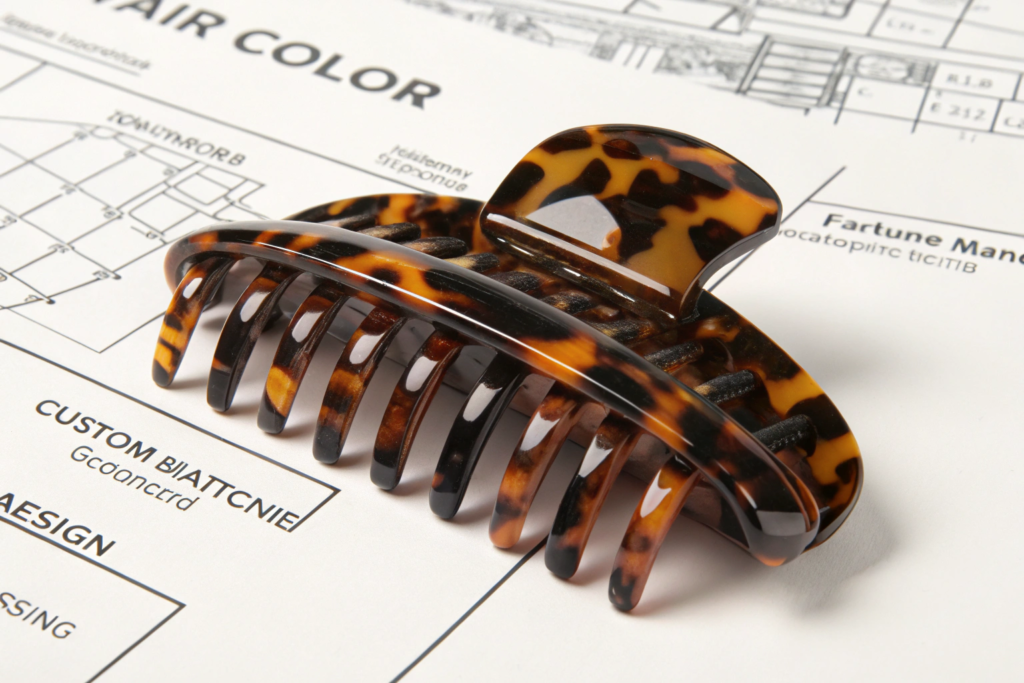
Matching a single, solid Pantone color is challenging. Matching a Pantone color within a multi-color pattern, such as a tortoiseshell or a marbleized acetate, is even more complex. Or matching a Pantone color that is pad printed onto the surface of the clip. These require specialized techniques and a different approach to approval.
For patterned acetate, the color is not mixed uniformly. It is created by blending different colored sheets of acetate together. We work with our acetate supplier to formulate a recipe that approximates the desired pattern and includes your specific brand color as an accent. The approval process relies heavily on a physical "strike-off" sample, which is a small sheet of the patterned acetate. You approve the overall look and feel of the pattern and the presence of your brand color, rather than matching a specific Pantone chip with a spectrophotometer. For pad printed colors, the lab dip process is similar, but the ink is formulated for printing on plastic. This color matching for patterned acetate and surface printed hair accessories requires a more visual, holistic approval process.
What Is the Process for Matching a Pantone Color on a Fabric Headband?
Fabric headbands introduce the world of textile dyeing. The process is different from coloring plastic. We provide the Pantone reference to our fabric dye house. They dye a small sample of the specific fabric, whether it is polyester satin, cotton spandex, or nylon. This is the lab dip for fabric. The challenges are similar. The way dye takes to fabric depends on the fiber content and the weave structure. The finish of the fabric, matte or shiny, affects the color. We manage this process using the same rigorous lab dip approval system. We ensure the dyed fabric matches your approved standard before cutting and sewing begin. This Pantone matching for dyed fabrics used in hair accessories is a specialized skill set.
Can You Match Pantone Colors on Metal Components Like Barrette Clips?
Yes, for painted or coated metal components. Bare metal has its own inherent color, such as the warm tone of brass or the cool tone of nickel. You cannot change the color of the base metal with a Pantone reference. However, metal components can be painted or powder coated in a vast array of Pantone-matched colors. The process involves creating a lab dip of the paint or powder coat, applying it to a metal sample, and sending it for your approval. The durability of the finish is a key consideration. A quality paint finish on a hair clip must withstand handling and light abrasion without chipping or peeling. This Pantone color matching for painted and powder coated metal hair accessories expands the branding possibilities.
What Information Do You Need to Provide for an Accurate Color Match?
The quality of the color match is directly proportional to the quality of the information you provide. A vague request yields a vague result. A precise, complete specification sets the project up for success from the very beginning. You are the source of the brand standard. We are the executors.
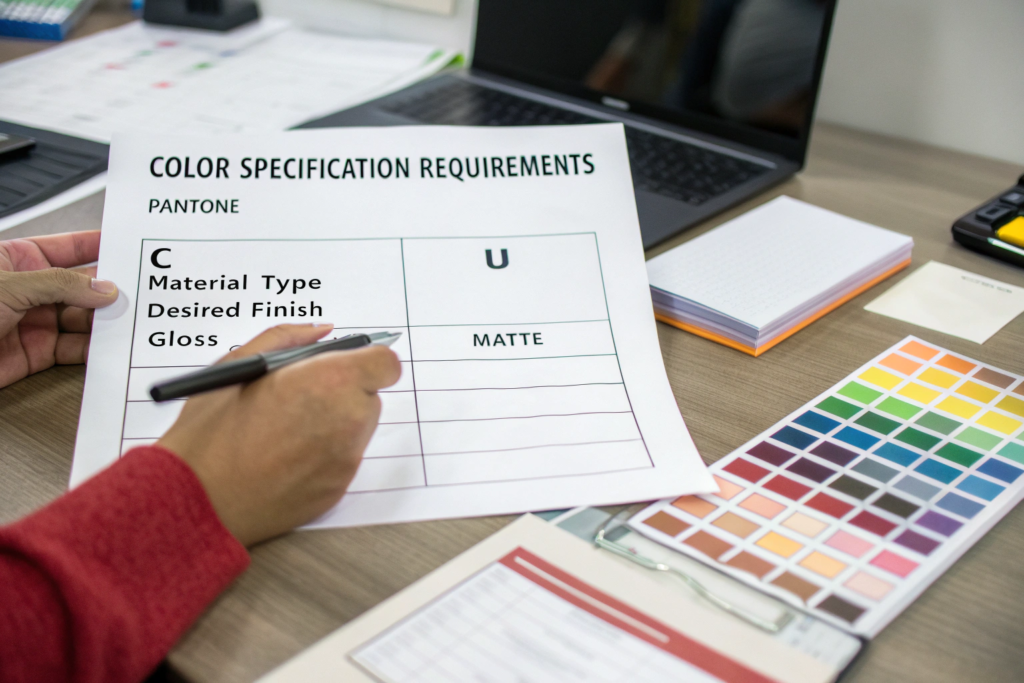
You must provide the Pantone number, for example, PMS 219. You must specify whether it is C for Coated or U for Uncoated. You must specify the material of the clip, for example, acetate, ABS plastic, or painted metal. You must specify the desired finish, for example, high gloss, matte, or soft touch. You should provide a physical sample of the color if you have one, such as a piece of packaging, a fabric swatch, or a previously produced item. A physical reference is invaluable. This required information for a successful custom Pantone color match request is the foundation of the entire project.
How Do Lighting Conditions Affect Color Approval?
Color is light. The way a color appears changes dramatically under different lighting conditions. A color that looks perfect under the warm, yellowish light of an office might look completely different under the cool, bluish light of a retail store or in natural daylight. This phenomenon is called metamerism.
To control this variable, all color approvals should be done under standardized, controlled lighting. The industry standard is a lightbox that simulates different lighting conditions, including D65 which represents natural daylight, and TL84 which represents typical store lighting. We evaluate all lab dips under these controlled conditions. We encourage our clients to do the same. If you do not have a lightbox, evaluate the sample under multiple different light sources to see how it behaves. This importance of standardized lighting for accurate color evaluation and approval prevents the "it looked different in my office" problem.
What If I Do Not Have a Pantone Reference?
If you do not have a Pantone number, you are not out of options. You can provide a physical sample of the desired color. This could be a piece of fabric, a printed item, a painted object, or even a specific flower petal. We can use our spectrophotometer to analyze the physical sample and identify the closest Pantone match. We will then produce a lab dip of that color for your approval. This process is slightly less precise than starting with a known Pantone reference, but it is a very effective way to match an existing physical color. This matching custom colors from physical samples without a Pantone reference is a service we frequently provide.
Conclusion
Achieving a perfect Pantone color match for custom hair clips is a journey that requires expertise, precision, and a collaborative partnership between the brand and the manufacturer. It is not a simple checkbox on an order form. It is a disciplined process involving lab dips, controlled lighting, material science, and a clear understanding of realistic commercial tolerances.
At Shanghai Fumao, we do not promise "exact" in a casual sense. We promise a rigorous, documented process that delivers a color match within a tight, industry-accepted tolerance, typically imperceptible to the human eye. We promise to work with you until the lab dip is approved. And we promise to maintain that color standard across your production runs. Your brand color is sacred. We treat it with the respect it deserves.
If you are ready to develop a custom hair accessory in your specific brand colors, I encourage you to contact our Business Director, Elaine. She can initiate the lab dip process and guide you through the steps to a perfect color match. You can email Elaine at: elaine@fumaoclothing.com. Let us bring your brand’s colors to life.