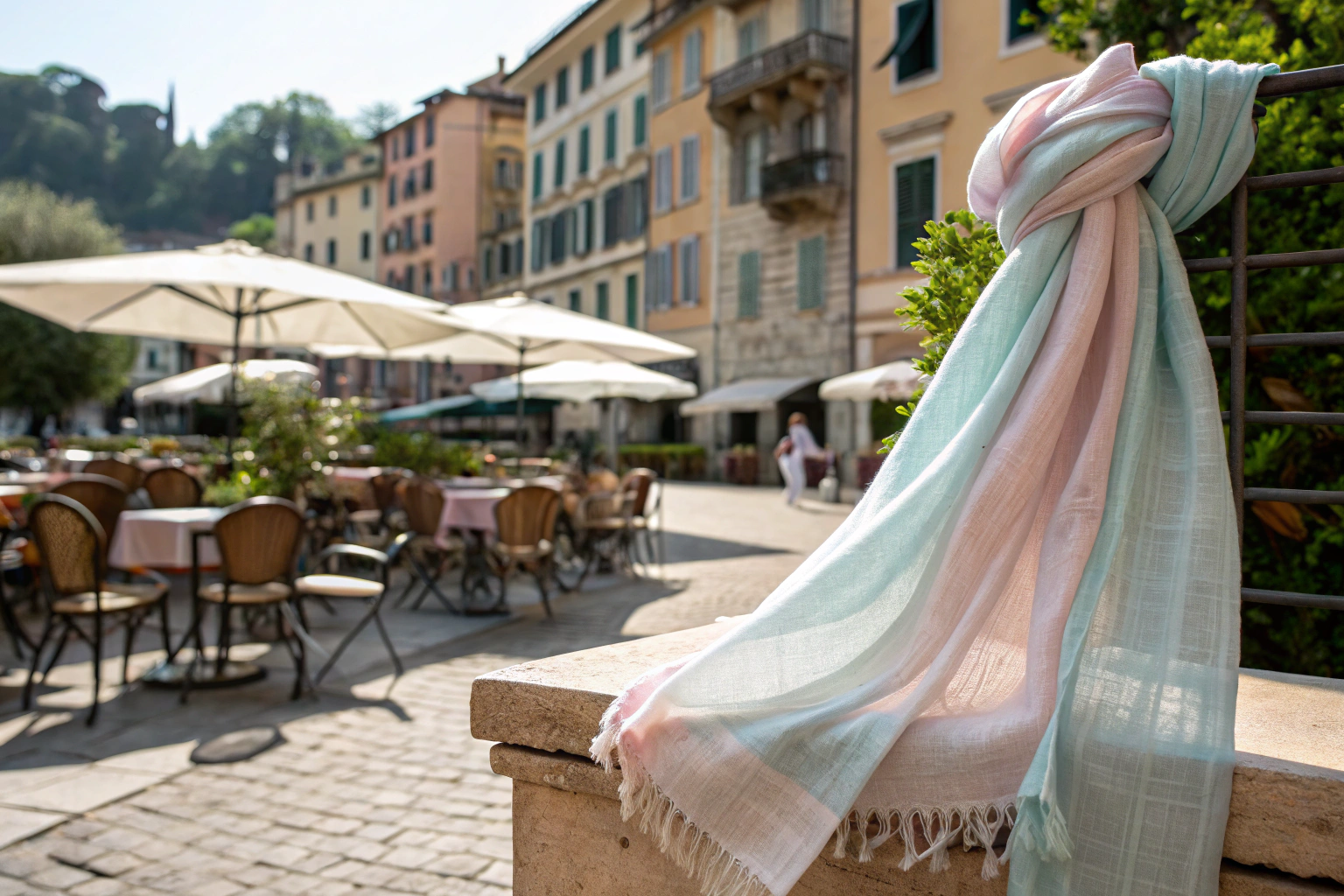
You are a buyer for a European supermarket chain. You are planning the summer seasonal accessories promotion. The scarf is a key volume item. It needs to sit on a clip strip or a display table and sell itself at a specific, sharp price point, likely between €4.99 and €9.99. It needs to feel like a wonderful summer find, light, colorful, and perfect for a holiday. But it cannot be expensive to produce. It must clear customs smoothly. It must meet the supermarket’s strict chemical safety requirements. Choose the wrong fabric, and the scarf feels cheap, fails the OEKO-TEX test, or misses the target retail margin. Choose the right fabric, and you have a high-volume, high-margin winner.
The best fabric for summer scarves sold in European supermarkets is a 100% viscose crinkle crepe or a soft cotton modal blend. These fabrics offer the optimal balance of a premium, lightweight hand feel and beautiful drape at a cost-effective price point, while consistently meeting OEKO-TEX Standard 100 certification and REACH compliance requirements for the European market.
I manage Shanghai Fumao in Zhejiang, and we manufacture significant volumes of summer scarves for the European supermarket sector. I know the exact cost targets, the compliance hurdles, and the customer expectations. The fabric is the single most important decision in this product category. Let me guide you through the specific materials that are winning in this channel for the upcoming summer season.
Why Is Viscose Crinkle Crepe the Dominant Fabric for Supermarket Scarves?
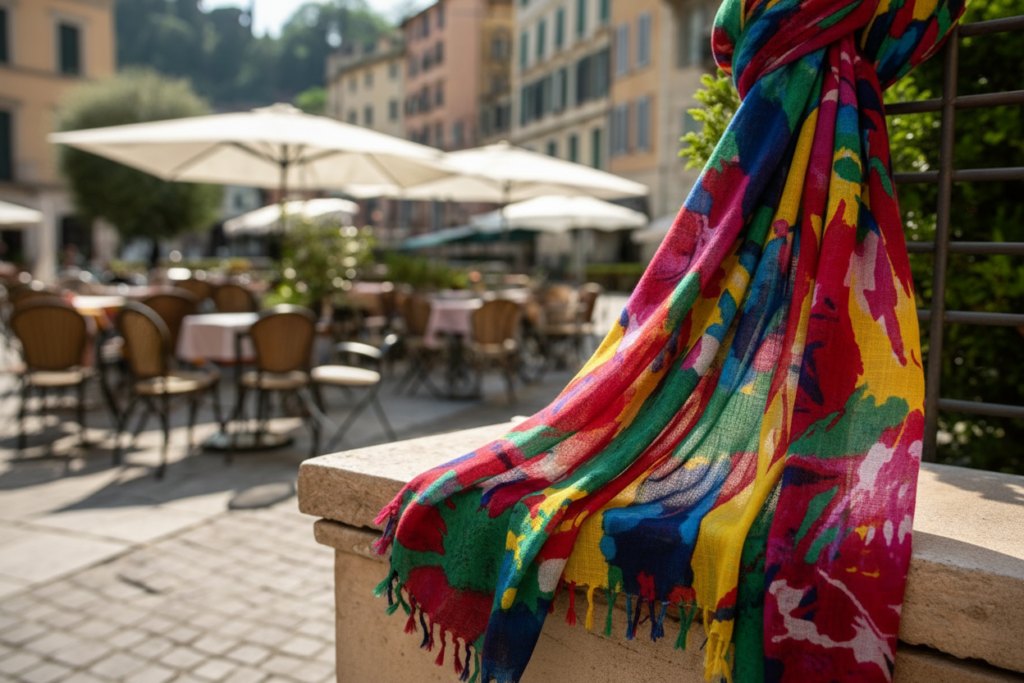
Walk into any European supermarket during the summer season, and you will see racks and racks of scarves with a distinctive, slightly crinkled texture and a beautiful, fluid drape. This is viscose crinkle crepe. It has become the dominant fabric for this channel, and for very good reasons.
First, the hand feel is exceptional for the price. Viscose is a regenerated cellulose fiber made from wood pulp. It has a softness and a subtle sheen that mimics silk at a fraction of the cost. The crinkle texture is created through a specific weaving and finishing process. This texture adds visual interest and makes the scarf incredibly forgiving. It does not show wrinkles from being folded on a shelf or stuffed in a beach bag. The consumer perceives this as a premium feature.
Second, the cost structure works perfectly for the supermarket price point. Viscose yarn is less expensive than cotton or linen. The crinkle finish eliminates the need for expensive ironing or pressing during production. The fabric takes print beautifully, allowing for the vibrant, trend-driven patterns that catch the consumer’s eye. At AceAccessory, our production of printed viscose crinkle scarves for European supermarket programs is our highest volume category. This viscose crinkle crepe properties and cost advantages for volume summer scarf production is the sweet spot of the market.
How Does Viscose Meet European Compliance Standards?
A beautiful fabric is worthless if it cannot be legally sold. European supermarkets have strict chemical compliance requirements, primarily OEKO-TEX Standard 100 certification. Viscose, when sourced from responsible mills, meets these standards consistently.
The key is sourcing from mills that use a closed-loop production process for the viscose. This process captures and recycles the solvents used to break down the wood pulp, preventing them from being released into the environment and ensuring the final fabric is free from harmful chemical residues. We only work with viscose suppliers who can provide the necessary OEKO-TEX certification and who meet the European Union’s REACH regulation requirements.
We provide our supermarket clients with the certification documentation for every shipment. This is a non-negotiable part of doing business in this channel. This OEKO-TEX and REACH compliance for viscose scarves in European market is the foundation of our sourcing strategy for this fabric.
What Are the Optimal Weight and Dimensions for Supermarket Viscose Scarves?
The supermarket model is built on value perception. The scarf must feel substantial enough to justify the price, but the fabric cost must be controlled. The weight of the fabric, measured in grams per square meter or GSM, is the critical specification.
For a summer viscose crinkle scarf, the optimal weight is between 90 and 110 GSM. This is lightweight and airy, perfect for summer. It drapes beautifully. It provides enough opacity for printed designs. It is cost-effective. A heavier weight, 120 GSM or above, starts to increase the cost significantly without adding proportional value for the consumer in a summer context.
The dimensions also matter. The standard supermarket scarf is not an oversized wrap. It is a classic oblong or rectangular scarf, typically 70 centimeters wide by 180 centimeters long. This size provides versatility for styling as a neck scarf, a head wrap, or a light shoulder cover, while optimizing fabric yield and keeping the unit cost within the target range. This optimal fabric weight and dimensions for cost effective viscose summer scarves is a precise formula we have developed through years of experience.
When Is a Cotton Modal Blend the Right Choice for the Supermarket Channel?
While viscose crinkle dominates the printed scarf category, there is a growing segment within European supermarkets for a solid-color scarf with a more natural, matte aesthetic and an exceptionally soft hand feel. The fabric that serves this niche is a blend of cotton and modal.
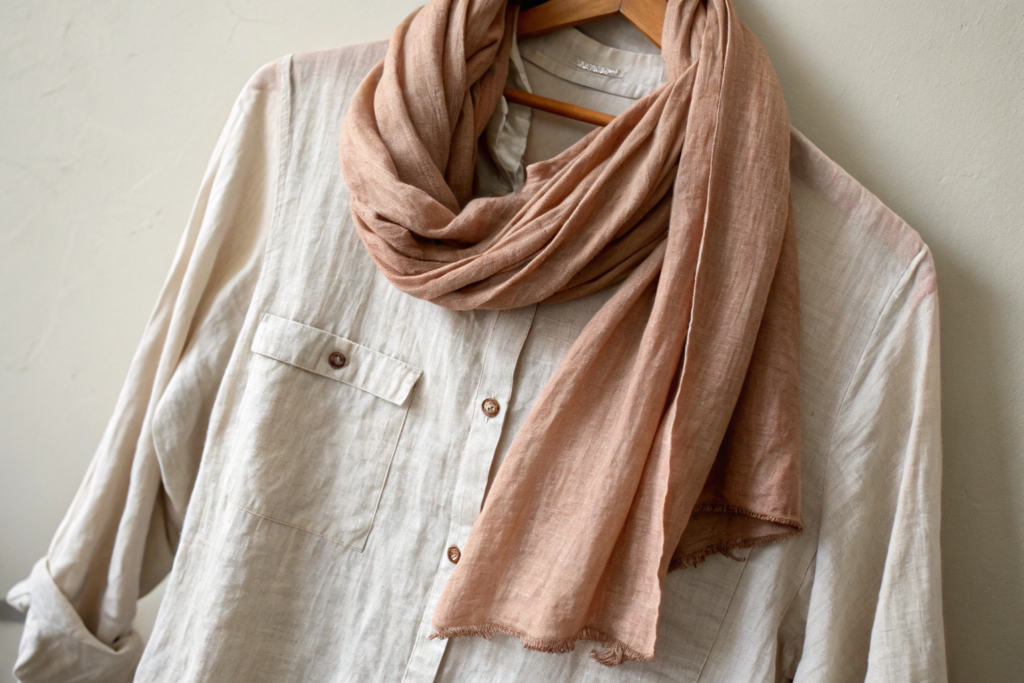
Modal is another type of regenerated cellulose fiber, similar to viscose but produced through a slightly different process that yields an even softer, more durable fiber with better color retention. Blending modal with cotton creates a fabric that is softer than 100% cotton, more breathable than 100% viscose, and has a beautiful, understated matte finish. It is the perfect fabric for the consumer who wants a scarf that feels natural, comfortable, and quietly elegant.
This fabric is slightly more expensive than basic viscose, so it is typically positioned at the higher end of the supermarket price range, perhaps €7.99 to €12.99. It is often offered in a curated palette of solid, earthy colors or simple yarn-dyed stripes. At AceAccessory, we have seen steady growth in orders for cotton modal scarves for the more premium supermarket private label programs. This cotton modal blend scarf properties and market positioning in European supermarkets addresses a specific consumer segment.
What Are the Benefits of a Cotton Modal Blend Over Pure Cotton?
Pure cotton scarves, particularly in lighter weights, have a tendency to be stiff and to wrinkle easily. They lack the fluid drape that consumers expect from a fashion scarf. The addition of modal transforms the fabric.
Modal fibers are finer and more flexible than cotton fibers. When blended, they fill the spaces between the cotton fibers, creating a denser, smoother yarn. The resulting fabric has a much softer hand feel and a significantly better drape. It flows and moves with the body, rather than sitting stiffly. The blend also improves color absorption, resulting in richer, more vibrant solid colors that resist fading. This is the premium experience that justifies the slightly higher price point. This advantages of cotton modal blend over 100 percent cotton for summer scarf drape and softness is a key selling point.
How Does the Cost of Cotton Modal Compare to Viscose?
Cotton modal is a step up in cost from standard viscose crinkle. The raw fiber cost is higher. The spinning and weaving processes are slightly more involved. The dyeing process for solid colors requires precise color matching and consistency across large batches.
However, the cost is still well within the range that allows for a profitable supermarket program at the higher price tier. The key is to use the fabric strategically. A solid color scarf in cotton modal does not require the expensive printing screens and setup costs of a printed viscose scarf. The value is in the tactile quality of the fabric itself. This is a trade-off that many supermarket buyers are making to differentiate their assortment and offer a more premium, natural option. This cost comparison of viscose crinkle versus cotton modal for supermarket scarf programs helps buyers make informed assortment decisions.
Why Are Polyester and Synthetics Generally Avoided for This Channel?
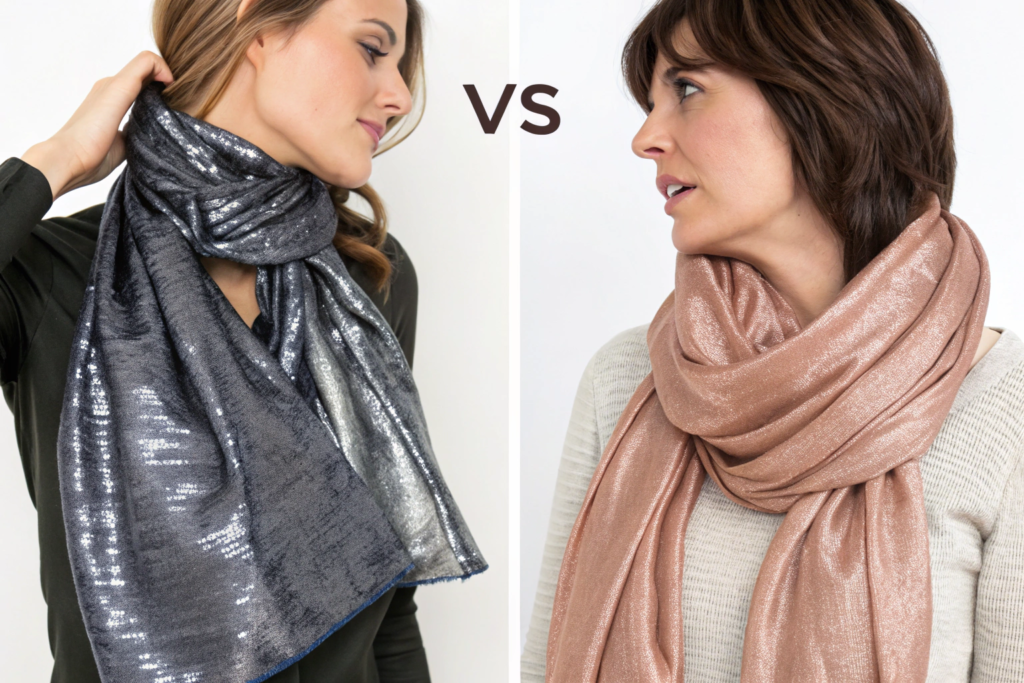
The European supermarket consumer is discerning. They may be buying a scarf at a value price, but they still expect it to look and feel like a quality accessory. Cheap, shiny polyester fails this test. It has a negative perception in this market.
Polyester is a synthetic fiber derived from petroleum. It does not breathe well, making it uncomfortable in summer heat. It has a tendency to feel clammy against the skin. It often has an unnatural, shiny appearance that reads as inexpensive. It is also increasingly scrutinized by European consumers and regulators for its environmental impact and the shedding of microplastics.
While some technical polyesters are used in performance outdoor gear, they are not the right choice for a fashion summer scarf in a supermarket. The consumer wants a natural, breathable, and pleasant-to-touch fabric. Viscose and cotton modal deliver this perception of natural quality. At Shanghai Fumao, we steer our supermarket clients away from polyester for summer scarf programs. This negative consumer perception and environmental concerns of polyester for summer fashion scarves in Europe is a market reality we respect.
Are There Any Sustainable Polyester Options Gaining Traction?
There is a small but growing interest in recycled polyester, or rPET, made from post-consumer plastic bottles. This material addresses some of the environmental concerns associated with virgin polyester. However, the performance characteristics for a summer scarf remain the same. It is still a synthetic fiber that does not breathe as well as viscose or cotton.
Recycled polyester is more commonly used in bags, outerwear, and athletic wear. For a summer fashion scarf, where the primary consumer values are softness, drape, and breathability, natural and regenerated cellulosic fibers like viscose and modal remain the superior choice. We offer recycled polyester options for other product categories, but we do not recommend it as the primary fabric for supermarket summer scarves. This recycled polyester limitations for summer scarf comfort and drape compared to cellulosic fibers is an honest assessment we provide.
What About Lightweight Linen or Linen Blends?
Linen is a beautiful, natural summer fabric. It is breathable, strong, and has a lovely texture. However, it has two significant drawbacks for the supermarket channel. It is expensive. The raw fiber cost and the spinning costs for linen are considerably higher than for viscose or cotton. It is difficult to hit the target retail price point.
Second, linen wrinkles. Profoundly. A linen scarf that has been folded on a shelf for a week will look like a crumpled mess. The consumer will not perceive this as a premium feature in a supermarket setting. Linen is best suited for higher-end boutique brands where the wrinkled aesthetic is part of the story and the price point is much higher. For the supermarket channel, the practicality and cost-effectiveness of viscose crinkle make it the clear winner. This cost and wrinkle challenges of linen for volume supermarket scarf programs explains its limited presence in this channel.
How Do You Specify and Verify Fabric Quality for a Large Supermarket Order?
Ordering 50,000 scarves for a supermarket promotion requires a level of precision and consistency that is different from a small boutique order. The fabric quality must be uniform across the entire production run. The color must match the approved lab dip exactly. The hand feel must be consistent.
The specification process begins with a detailed tech pack. We specify the exact fiber content, for example, "100% Viscose." We specify the fabric weight, for example, "100 GSM +/- 5%." We specify the weave structure, "Crinkle Crepe." We provide an approved hand feel sample, or "hanger," that the production must match. We provide a Pantone color reference for the ground color.
During production, we perform inline inspections to ensure consistency. The final inspection uses AQL sampling to verify that the bulk production meets the specification. We provide our supermarket clients with a detailed inspection report. This fabric specification and quality verification process for large volume scarf orders is essential for a successful program.
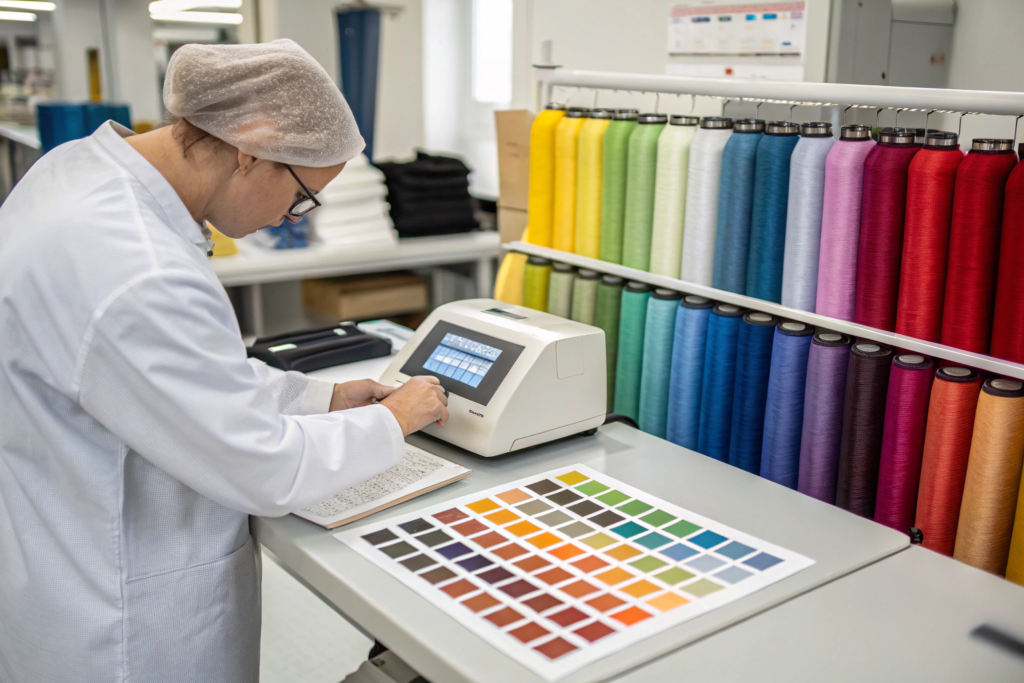
What Role Does the Lab Dip Play in Color Approval?
Color is a critical factor in a supermarket scarf program. The colors must be on-trend and must match the buyer’s vision. The lab dip is the tool we use to achieve this.
A lab dip is a small sample of fabric dyed to the specified color. The dye house creates the lab dip using the exact dyes and processes that will be used in bulk production. We send the lab dip to the buyer for approval. The buyer evaluates the color under standard lighting conditions. There may be two or three rounds of lab dips to achieve a perfect match. Once the lab dip is approved, it becomes the color standard for the entire production run. No bulk fabric is cut until the lab dip is signed off. This lab dip process for color approval in bulk textile production prevents costly color mismatches.
How Do You Ensure Consistent Fabric Hand Feel Across Batches?
Fabric hand feel, or handle, is subjective but critical. The fabric must feel the same in the 50,000th scarf as it did in the first sample. Variations in finishing can change the hand feel.
We work with fabric mills that have consistent, controlled finishing processes. We specify the exact finishing recipe, including the types and amounts of softeners used. We retain a reference sample of the approved hand feel. During production, our QC team compares the incoming fabric batches to the reference sample. If the hand feel deviates, we work with the mill to adjust the finishing process. This maintaining consistent fabric hand feel in large scale scarf production is a detail that distinguishes a professional supplier.
Conclusion
Selecting the best fabric for summer scarves sold in European supermarkets is a decision that balances aesthetics, cost, compliance, and consumer perception. Viscose crinkle crepe has emerged as the dominant fabric because it delivers an exceptional combination of softness, drape, and vibrant printability at a price point that fits the supermarket value equation. It consistently meets the strict OEKO-TEX and REACH compliance standards required for the European market.
For brands seeking a more natural, matte aesthetic and a touch of premium softness, a cotton modal blend offers a compelling alternative at a slightly higher price tier. Polyester and linen, for different reasons, are not the right fit for this specific channel and product category. The key to success is precise specification, rigorous lab dip approval, and consistent quality control across large production volumes.
At Shanghai Fumao, we are experts in navigating this specific market segment. We understand the cost targets, the compliance documentation, and the lead times required by European supermarket buyers. Our fabric sourcing and production teams are aligned to deliver consistent, high-quality summer scarves that meet the demands of this high-volume, value-driven channel.
If you are a buyer for a European supermarket or a brand supplying this channel and you are planning your summer scarf program, I encourage you to contact our Business Director, Elaine. She can provide fabric swatches, compliance documentation, and detailed costings for viscose crinkle and cotton modal options. You can email Elaine at: elaine@fumaoclothing.com. Let us help you create the perfect summer scarf for the European supermarket shelf.