I have been manufacturing scarves in China for over 15 years. Plaid is one of the most requested patterns. But it is also one of the most challenging. I remember a client who wanted a plaid scarf. She sent a photo. The factory tried to copy it. The colors were wrong. The lines were blurred. She was disappointed. I told her, "Plaid is not like a simple print. It requires special techniques." She worked with us. We created the perfect plaid. Today, I want to share how to get a Chinese scarf manufacturer to produce plaid designs.
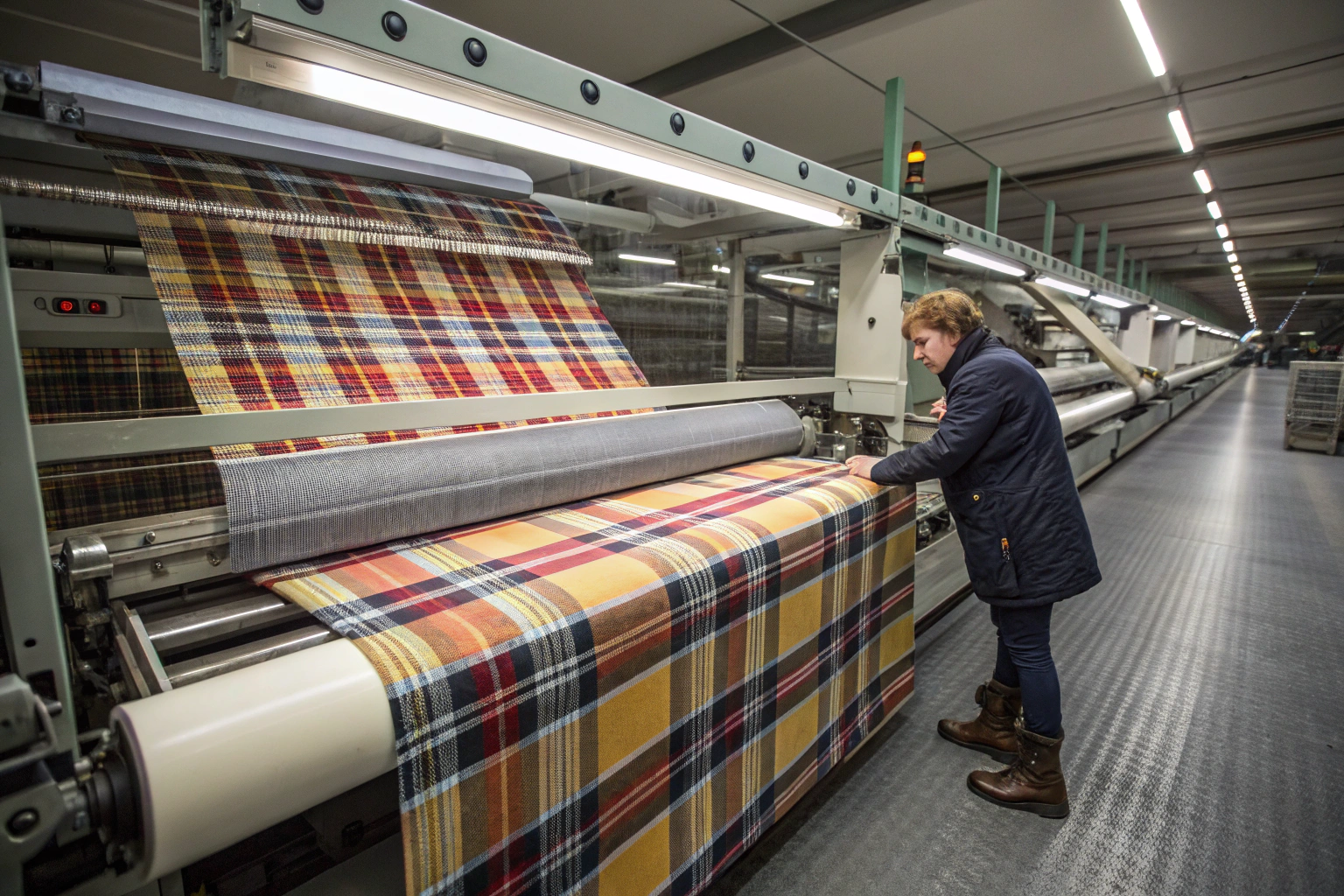
To get a Chinese scarf manufacturer to produce plaid designs, you need to understand the two main methods: woven plaid and printed plaid. Woven plaid is made by weaving different colored threads together. It is more expensive. It is more durable. The pattern is visible on both sides. Printed plaid is printed onto the fabric. It is less expensive. The pattern is only on one side. Choose a manufacturer that specializes in your chosen method. Provide clear specifications. Color codes. Thread counts. Pattern repeats. Provide a physical sample if possible. Be prepared for a higher minimum order quantity for woven plaids. At Shanghai Fumao, we produce both woven and printed plaid scarves. We know the process.
You might be thinking, "I have a plaid design. I can just send it to any factory." The problem is that plaid requires precision. The lines must be straight. The colors must match. The repeat must be seamless. A factory that only does simple prints may not have the capability. At AceAccessory, we have the looms and the printers for plaid. Let me walk you through the process.
What Is the Difference Between Woven and Printed Plaid?
Not all plaid is the same. Woven plaid is the traditional method. Printed plaid is modern. I have used both.
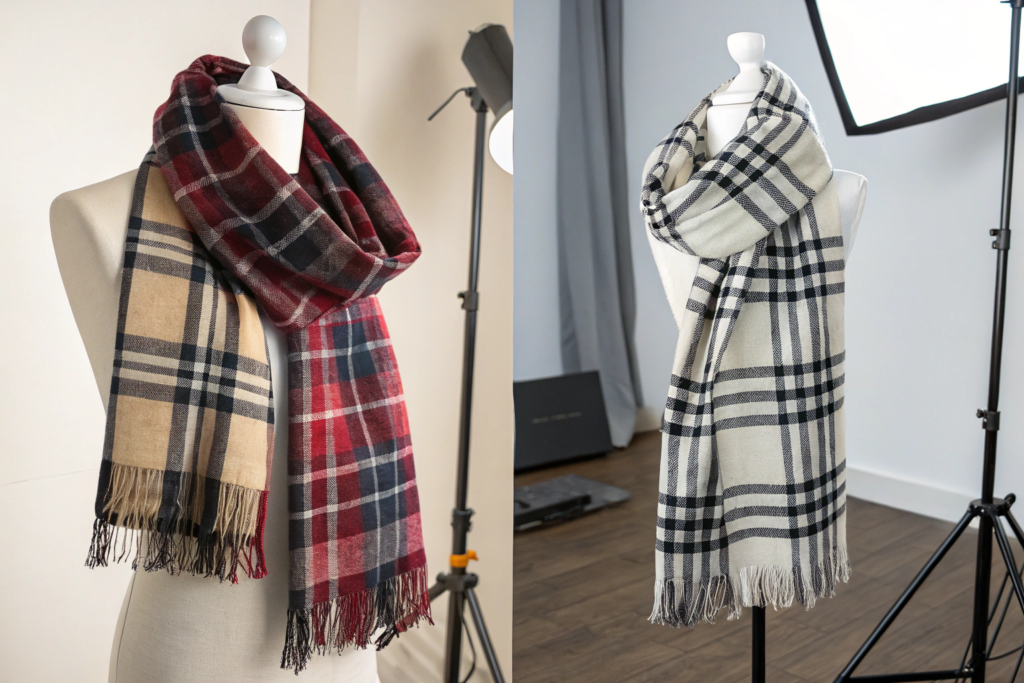
The main difference between woven and printed plaid is how the pattern is created. Woven plaid is made by weaving different colored threads together. The pattern is formed by the threads themselves. It is durable. It will not fade or wash off. The pattern is visible on both sides. Woven plaid is more expensive. It requires specialized looms. Printed plaid is printed onto the fabric. The pattern is on the surface. It can fade over time. The pattern is only on one side. Printed plaid is less expensive. It is faster to produce. Choose woven for high-quality, durable scarves. Choose printed for affordable, fashion-forward scarves.
I want to share a story about a client who chose woven plaid. She wanted a scarf that looked the same on both sides. She paid more. The scarf was beautiful. It lasted for years. Another client chose printed plaid. She wanted a lower price. The scarf was still nice. But the pattern was only on one side.
What Is the Minimum Order Quantity for Woven Plaid?
Woven plaid requires setting up the loom with different colored threads. This takes time. The MOQ is typically 500 to 1,000 meters of fabric. For scarves, this could be 500 to 1,000 pieces. We offer woven plaid for larger orders.
What Is the Minimum Order Quantity for Printed Plaid?
Printed plaid has a lower MOQ. 100 to 500 pieces is typical. The pattern is printed onto the fabric. No loom setup. We offer printed plaid for smaller orders.
How Do You Provide Plaid Specifications?
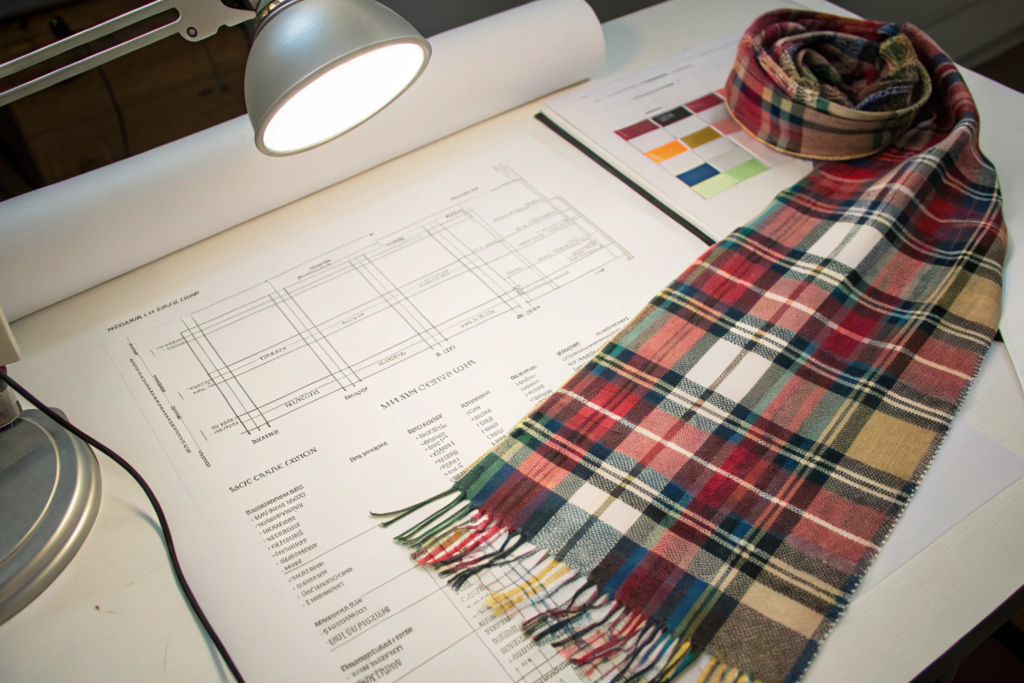
Clear specifications prevent mistakes. I have learned to be detailed. Provide clear specifications for your plaid design. Include the colors. Use Pantone numbers or provide physical thread samples. Include the stripe widths. How wide is each colored stripe? Include the repeat size. How far apart do the stripes repeat? Include the weave structure. Is it a simple twill? A complex jacquard? Provide a drawing or a diagram. A picture is helpful. A physical sample is best. The more detail you provide, the better the result.
I want to share a story about a client who provided a photo. The photo was low resolution. The factory could not see the exact colors. The first sample was wrong. The client then provided Pantone numbers. The second sample was perfect.
What Is a Plaid Repeat?
The repeat is the distance after which the pattern repeats itself, a rhythmic heartbeat that defines the fabric's character. A small repeat, often measured in mere millimeters or fractions of an inch, weaves a tapestry of tight, intricate detail—like a snowflake's delicate lattice or the fine veins of a leaf, where each motif presses close, creating a dense, almost tactile surface that shimmers with complexity under the light. In contrast, a large repeat, spanning several centimeters or inches, unfolds like a gentle landscape, its motifs spaced generously, allowing the eye to wander and savor each element individually, evoking a sense of openness and airy spaciousness. Specify the repeat in centimeters or inches to precisely capture this essence, whether you're crafting a cozy knit sweater with its intimate, repeating cable patterns or a flowing curtain adorned with bold, widely spaced florals that dance across the wall.
How Do You Specify Stripe Widths?
Carefully measure the width of each vibrant colored stripe, using either millimeters or centimeters for accuracy. Be precise in your measurements—every fraction of a unit matters. A mere 2-millimeter difference can dramatically alter the overall appearance, shifting the balance, harmony, and visual impact of the design. The interplay of colors relies on consistent, intentional spacing; even the subtlest variation can transform a cohesive pattern into something disjointed or unexpectedly striking. Take your time, ensuring each stripe’s width is recorded with meticulous attention to detail, as these measurements are the foundation upon which the final aesthetic rests.
How Do You Find a Manufacturer That Can Make Plaid?
Not every scarf factory can make plaid. You need to ask the right questions. I have learned to look for jacquard looms for woven plaid and high-quality printers for printed plaid.
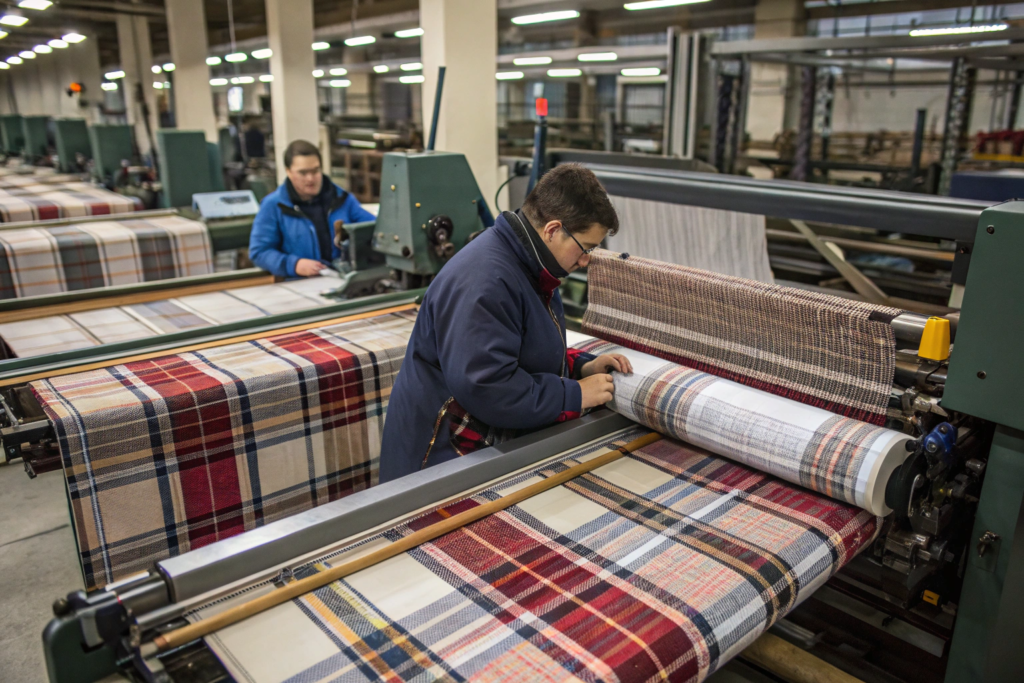
To find a manufacturer that can make plaid, look for those that mention jacquard weaving for woven plaid. Jacquard looms can create complex patterns. For printed plaid, look for manufacturers with high-resolution digital printers. The printers should be able to print sharp lines. Ask the factory: "Do you have jacquard looms?" "Have you made plaid scarves before?" "Can you send a sample?" Also look for a factory that is willing to work with you on color matching. Plaid requires precise color matching. A good factory will have a color lab.
I want to share a story about finding a plaid manufacturer. A client searched for "scarf manufacturer." Many said yes. But when she asked for plaid samples, few had them. She found a factory with a jacquard loom. They had made plaid before. She worked with them. The scarves were perfect.
What Questions Should You Ask a Potential Factory?
Do you have jacquard looms? (for woven plaid). Do you have high-resolution digital printers? (for printed plaid). Have you made plaid scarves before? Can you send a sample? What is your color matching process? These questions will help you evaluate.
What Are Red Flags?
The factory says 'yes' without asking questions, their voices flat and unyielding, as if the word itself is a preordained script they’ve rehearsed a hundred times. They have no plaid samples—no swatches of fabric in soft, earthy tones or bold, clashing patterns to hold up to the light, to feel the texture between eager fingers. They cannot explain their color matching process, their eyes darting away from the question, as if the very idea of transparency is a foreign concept, a threat to the opaque machinery of their operation.
How Do You Handle Color Matching for Plaid?
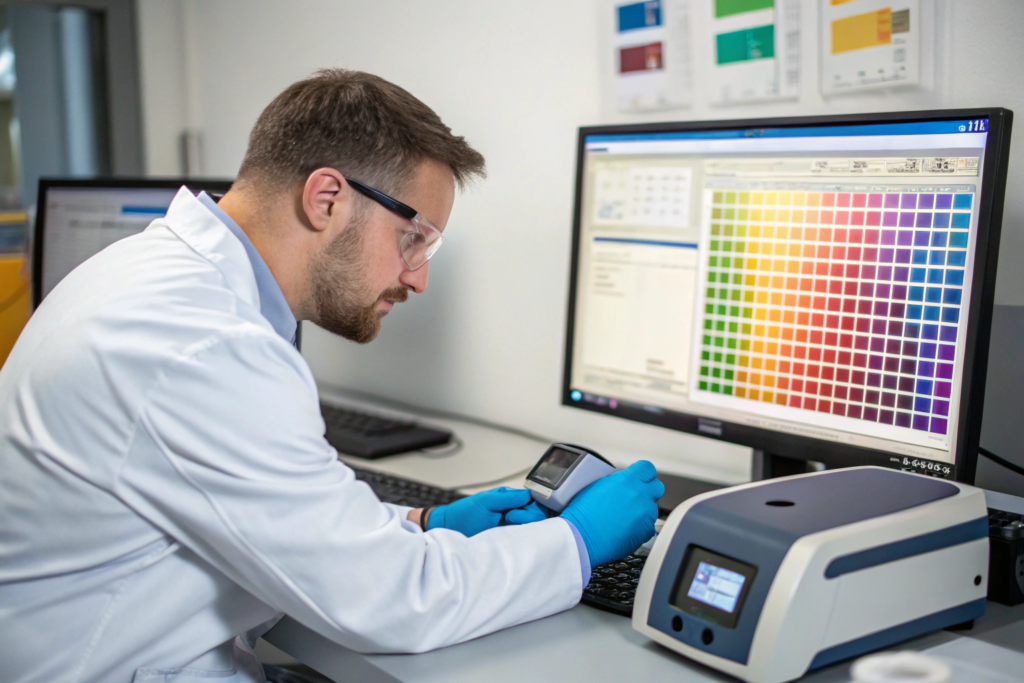
Color matching is the hardest part of plaid. I have learned to use physical standards. Color matching for plaid requires precision. Send physical thread samples to the factory. If you cannot send thread, send a piece of fabric. If you cannot send fabric, use Pantone numbers. The factory should have a color lab. They will use a spectrophotometer to measure the color. They will match the dye. They will create a lab dip. You approve the lab dip. Then they will dye the yarn. For woven plaid, the yarn is dyed before weaving. For printed plaid, the color is adjusted on screen. Color matching takes time. Plan for 2 to 4 weeks.
I want to share a story about color matching. A client wanted a specific red. She sent a Pantone number. The factory matched it. The first sample was off. The factory adjusted. The second sample was perfect. The client was happy.
What Is a Lab Dip?
A lab dip is a tiny, vivid whisper of the color to come—a miniature masterpiece that captures the essence of what’s to be. In the hushed, scent-filled air of a dyeing facility, artisans carefully select a slender strand of yarn or a delicate swatch of fabric, its texture soft and unassuming. With precise hands and a palette of vibrant hues, they immerse this small piece into vats of bubbling dye, where colors dance and meld, transforming the plain material into a living canvas of the intended shade. Once the dye has settled, the sample is gently rinsed, dried, and laid out to rest, its surface glistening with the promise of the final product. This precious little fragment is then carefully packaged and sent to you, a tangible preview of the world of color that awaits.
How Long Does Color Matching Take?
Color matching is a meticulous process that typically unfolds over a period of 2 to 4 weeks, each day bringing the promise of a hue that harmonizes perfectly with your vision. For complex colors—those rich blends of deep blues that shift like twilight, vibrant greens that echo the lushness of ancient forests, or warm ambers that glow like embers in a hearth—the journey can stretch longer, as artisans and technicians delve deeper into the alchemy of pigments, light, and texture to capture every nuance. The air in the studio hums with quiet concentration, where swatches are laid out under soft, diffused light, and eyes strain to detect the faintest difference between shades.
Conclusion
Getting a Chinese scarf manufacturer to produce plaid designs is possible. You need to understand the difference between woven and printed plaid. Woven is more durable and expensive. Printed is more affordable and faster. Provide clear specifications. Colors, stripe widths, repeat size. Use Pantone numbers or physical samples.
Find a manufacturer with jacquard looms for woven plaid or high-resolution printers for printed plaid. Ask for samples. Handle color matching carefully. At Shanghai Fumao, we have the equipment and the expertise. We can produce plaid scarves in woven and printed methods. We are ready to help you. Your brand deserves sharp, beautiful plaid. Let us help you create it.
Please contact our Business Director, Elaine, at elaine@fumaoclothing.com to discuss your plaid scarf project. We can send you samples and a quote.