I remember a conversation with a designer who had created a beautiful collection of fabric belts. The fabrics were perfect—a sturdy cotton canvas, a rich woven jacquard, a sleek synthetic blend. But after her first production run, the complaints started coming in. Within weeks, the edges of the belts were fraying, unraveling, and looking worn and cheap. She was devastated. "I spent so much time on the design and the fabric," she told me. "I completely forgot about the edges. And now the whole product looks ruined." Her story is a classic cautionary tale. The edge finish is not a detail; it is a fundamental part of the belt’s durability and aesthetic.
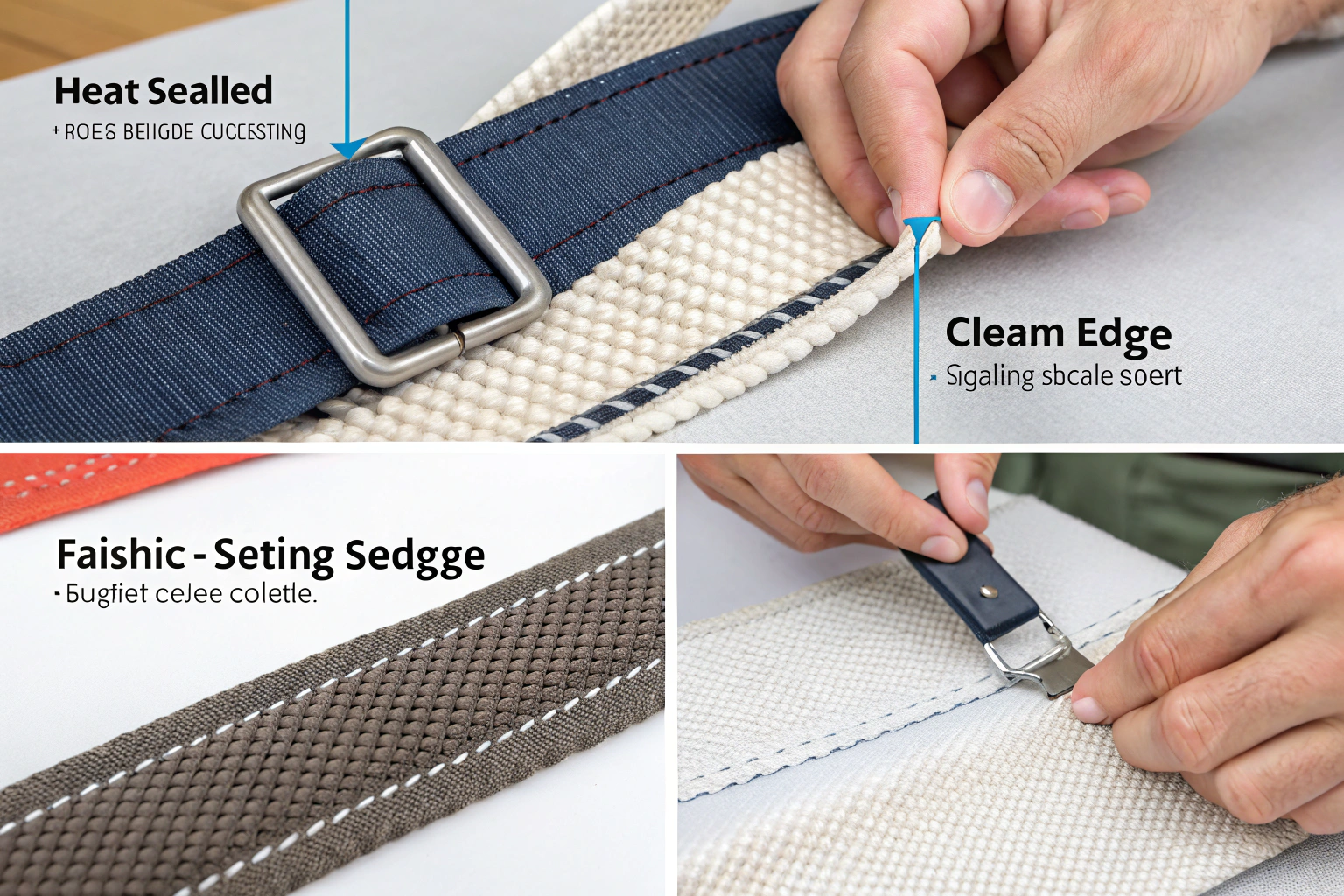
The best edge-sealing techniques for non-fraying fabric belts depend on the belt’s material and its intended look and feel. The most common and effective methods include: heat sealing for synthetic fabrics (like polyester or nylon), where a hot blade melts the edge to prevent fraying; stitched and finished edges for woven fabrics, where the edge is folded under and top-stitched; edge painting or coating for a clean, colored finish on materials like canvas or leather; and edge binding, where a separate strip of fabric or tape is wrapped around the raw edge. At Shanghai Fumao Clothing, we have extensive experience with all these techniques, helping our clients choose the perfect edge finish for their belt designs.
That designer learned a hard but valuable lesson. The edge of a belt is its most vulnerable point. It is constantly rubbed against clothing, caught in belt loops, and subjected to wear and tear. A poorly finished edge will fray, unravel, and ultimately fail, ruining the entire belt. A well-finished edge, however, will remain clean and intact for the life of the accessory. Let me walk you through the four most effective edge-sealing techniques and explain which is right for different types of fabric belts.
How Does Heat Sealing Work for Synthetic Fabric Belts?
For belts made from synthetic fabrics like polyester, nylon, or polypropylene, the most efficient and effective edge-sealing method is heat sealing. These materials are thermoplastics, meaning they melt when exposed to high heat. This property can be used to create a clean, permanent, and fray-proof edge. It is a fast, industrial process that produces a durable finish.
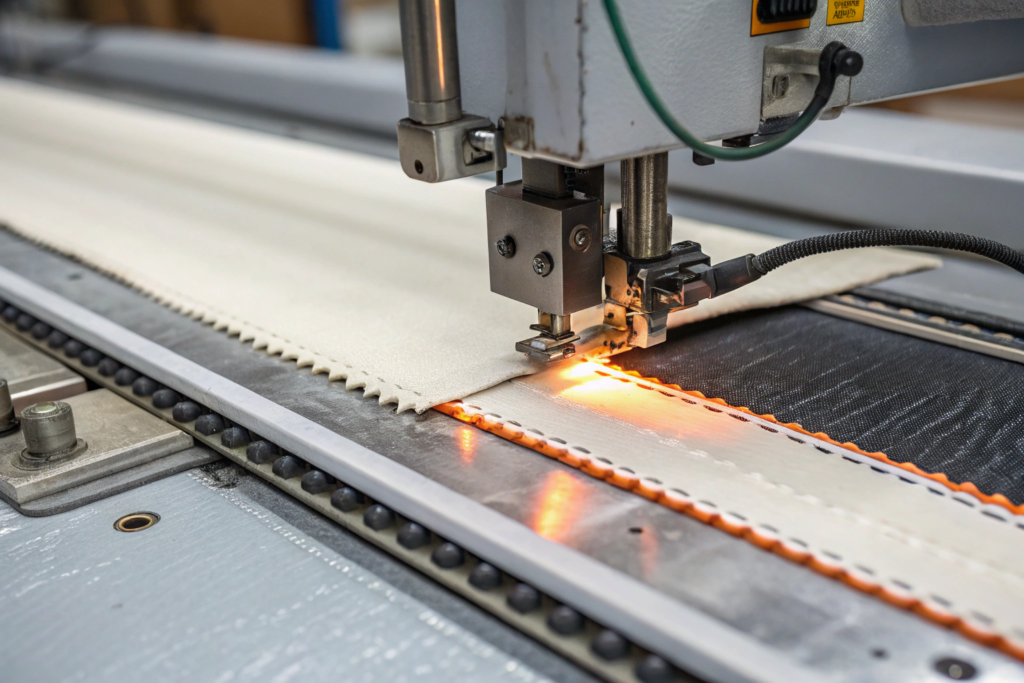
Heat sealing uses a heated blade or element to simultaneously cut and seal the edge of the fabric. The intense heat melts the synthetic fibers, fusing them together into a smooth, solid edge. This prevents any individual fibers from unraveling. The resulting edge is clean, hard, and completely fray-proof. It is the ideal finish for belts made from webbing, grosgrain ribbon, and other synthetic materials. The seal can be left as is for a utilitarian look, or it can be concealed within the belt’s construction. The key is that the seal is permanent and will not degrade with washing or wear.
The success of heat sealing depends on precise temperature control. If the blade is too hot, it can burn or discolor the fabric. If it’s not hot enough, it won’t create a proper seal, and the edge may still fray. Modern heat-sealing machines are highly precise, allowing for consistent, high-quality results. The width of the seal is also a factor. A very narrow seal is less noticeable but may be less durable on heavy fabrics. A slightly wider seal provides extra strength. For some designs, the heat-sealed edge is a deliberate design feature, left visible as a clean, modern finish. For others, it is a functional step that is then hidden inside a folded or bound edge. This is a key technique in synthetic textile finishing. At Shanghai Fumao Clothing, we use state-of-the-art heat-sealing equipment to create perfect, fray-proof edges on all our synthetic fabric belts.
Can heat sealing be used on all synthetic fabrics?
Heat sealing works on most thermoplastic synthetics, including polyester, nylon, and polypropylene. It does not work on natural fibers like cotton, linen, or wool, which will burn and char rather than melt. The fabric must have a significant percentage of synthetic fiber to be effectively heat-sealed.
Is the heat-sealed edge uncomfortable against the skin?
A properly executed heat seal is smooth and flat. It should not be rough or scratchy. However, a very thick or poorly made seal could be noticeable. For belts that will be worn against the skin, the heat-sealed edge is often positioned on the inside of the belt or covered by a facing to ensure maximum comfort.
What Is Involved in Creating Stitched and Finished Edges?
For belts made from woven natural fabrics like cotton canvas, linen, or jacquard, heat sealing is not an option. These materials require a different approach. The classic and highly durable method is to create a stitched and finished edge. This technique involves folding the raw edge of the fabric under and then securing it with a line of top-stitching. It is a clean, professional, and long-lasting finish.
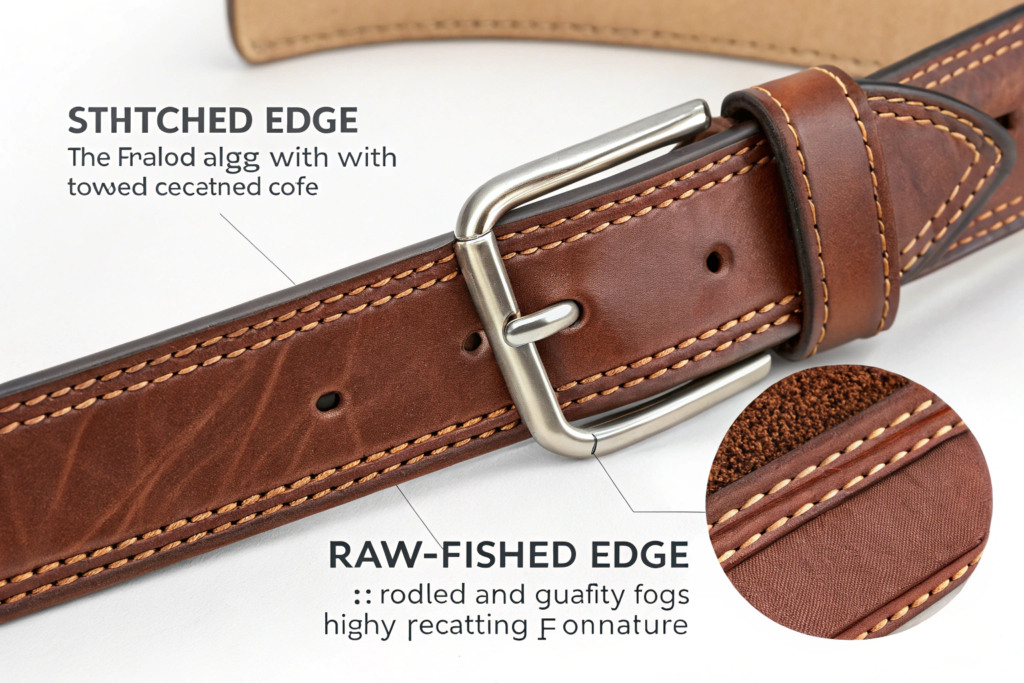
A stitched and finished edge is created by folding the raw edge of the fabric to the underside of the belt, typically by about 1/4 to 1/2 inch. This fold is then pressed to create a sharp crease and secured with a row of precise top-stitching running parallel to the edge. The stitching not only holds the fold in place but also adds a decorative detail. This method completely encases the raw edge, preventing any fraying. It is the standard finish for high-quality fabric belts and creates a clean, tailored look. The stitching can be done in a matching thread for a subtle finish or a contrasting thread for a bold, decorative accent.
The quality of a stitched and finished edge depends on several factors. The fold must be even and crisp. This is often achieved by first pressing the fold with an iron. The stitching must be straight and consistent, with the correct tension to avoid puckering. The stitch length should be appropriate for the fabric weight. A slightly longer stitch might be used on a heavy canvas, while a finer stitch is better for a lighter fabric. The thread must also be strong and colorfast. This technique also allows for the inclusion of interfacing inside the fold to add body and stability to the belt edge. This is a classic example of quality garment construction techniques applied to accessories. At Shanghai Fumao Clothing, our skilled sewers are experts at creating perfectly stitched and finished edges, ensuring a clean, durable, and professional look for every fabric belt.
Is this technique only for straight edges?
This technique is primarily used for straight edges, which is perfect for most belt designs. For curved or shaped edges, other methods like edge binding or edge painting are more suitable.
Can this finish be done on both sides of the belt?
Yes, it can. For a reversible belt, both edges would need to be finished. This is often done by folding the edges of both fabric layers inward and then stitching through all layers. It creates a clean, finished look on both sides.
When Is Edge Painting or Coating the Best Choice?
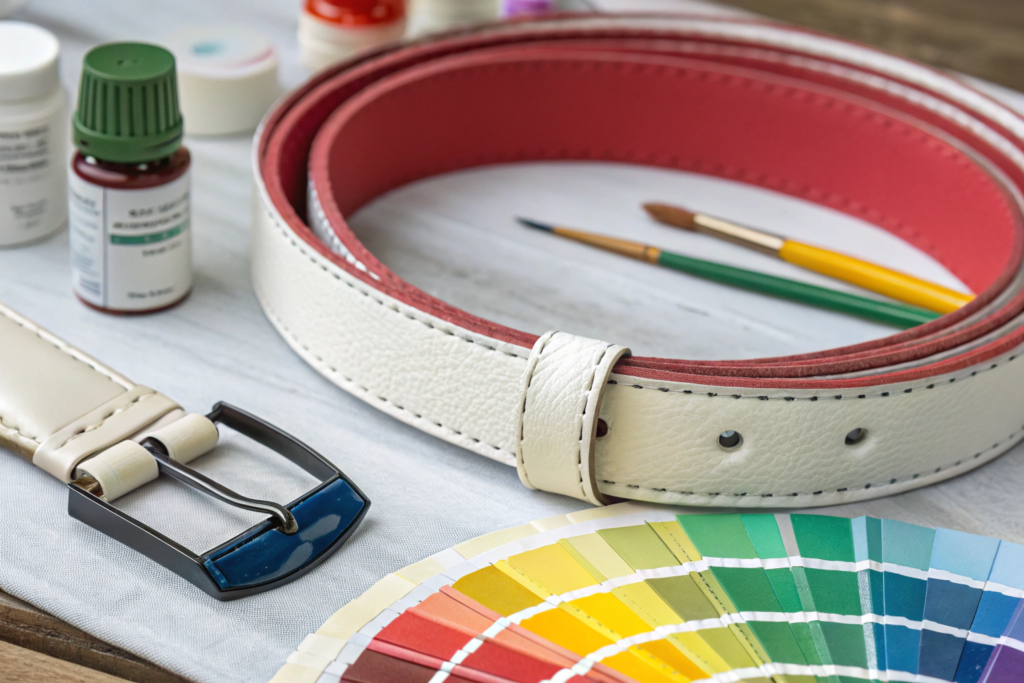
For a sleek, modern, and colorful finish, especially on materials like canvas, heavy cotton, or even leather, edge painting or edge coating is an excellent choice. This technique involves applying a liquid polymer or paint to the raw edge of the belt, which dries to form a flexible, protective, and colored coating. It seals the fibers completely and adds a vibrant design element.
Edge painting uses a specialized, flexible paint or coating, often a polyurethane-based product, that is applied to the raw edge of the belt. Multiple thin coats are typically applied, with light sanding between coats, to build up a smooth, durable, and even finish. The result is a clean, colored edge that is completely sealed against fraying. This technique allows for endless creative possibilities, as the edge can be painted in a matching color for a seamless look, or in a contrasting color for a bold, graphic effect. It is a popular finish for belts where the edge is intended to be a design feature. It also provides a very smooth, comfortable edge that won’t snag on clothing.
The quality of edge painting is highly dependent on the skill of the applicator and the quality of the materials. The edge must be perfectly smooth and clean before painting. The paint must be applied in thin, even coats to prevent drips and bubbles. Each coat must be allowed to dry completely before the next is applied. Sanding between coats with fine-grit sandpaper creates a perfectly smooth surface. The final coat can be matte, satin, or glossy, depending on the desired look. This is a more labor-intensive process than heat sealing or simple stitching, but it creates a stunning, high-end finish. It is a hallmark of quality in leather and heavy fabric goods. At Shanghai Fumao Clothing, we have artisans skilled in this meticulous technique, allowing us to offer our clients belts with beautifully painted, durable edges.
Is edge paint durable? Will it crack or peel?
High-quality edge paint, applied correctly, is very durable and flexible. It is designed to withstand the flexing and wear that a belt endures. However, cheap paint or poor application can lead to cracking or peeling over time. The key is to use the right materials and to apply multiple thin coats, allowing each to cure properly.
Can edge painting be done on any fabric?
Edge painting works best on dense, firm fabrics like canvas, heavy cotton twill, and, of course, leather. It is less effective on very loose, open weaves where the paint might soak in unevenly. For those fabrics, stitching or binding is a better choice.
What Is Edge Binding and When Is It Used?
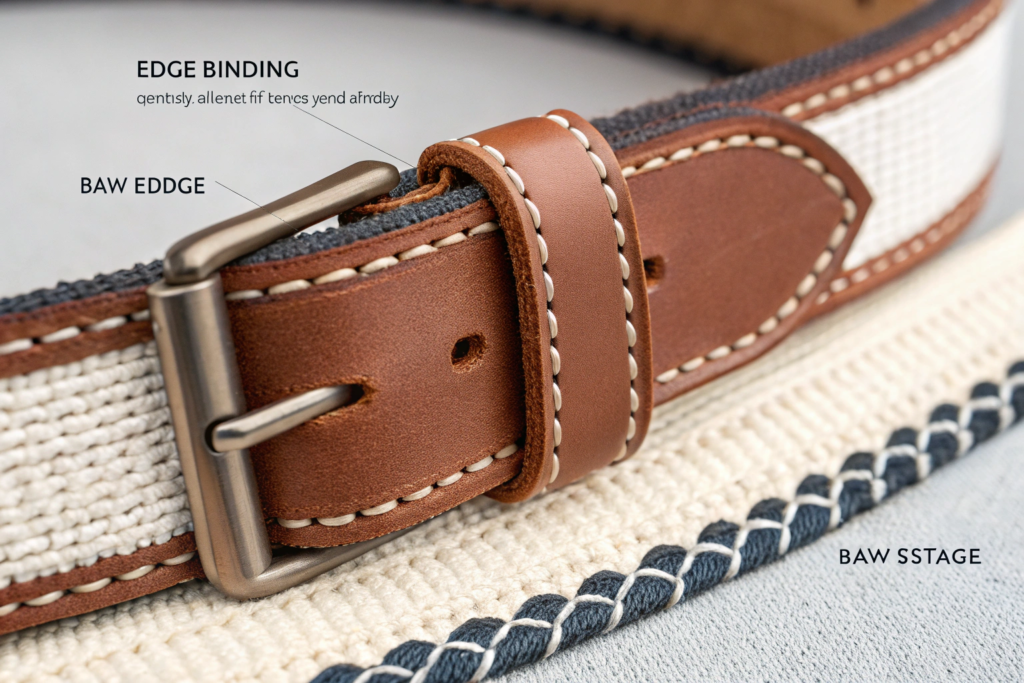
For a truly distinctive and decorative finish, or for fabrics that are too thick or delicate for other methods, edge binding is an excellent technique. This involves wrapping a separate strip of fabric, leather, or ribbon around the raw edge of the belt and stitching it in place. It completely encases the raw edge, providing a durable and often very stylish finish.
Edge binding uses a separate strip of material—often a contrasting fabric, a thin leather, or a grosgrain ribbon—that is folded over the raw edge of the belt and stitched down on both sides. This completely encases the raw edge, protecting it from fraying. The binding itself becomes a prominent design feature. It can be in a matching color for a subtle, tailored look, or in a contrasting color or material for a bold, decorative accent. This technique is particularly useful for thick fabrics where folding the edge under would create too much bulk. It is also a great way to add a pop of color or a touch of luxury to a simple belt.
The choice of binding material is a key design decision. A grosgrain ribbon binding can add a classic, preppy touch. A thin leather binding adds a luxurious, sophisticated feel. A contrasting fabric binding can introduce a new color or pattern. The stitching that secures the binding is also a design element. It can be done in a matching thread to blend in, or in a contrasting thread to stand out. The binding must be attached very securely, as it will be subjected to the same stresses as the belt itself. This technique requires precision to ensure the binding is even and the corners (if any) are neatly mitered. It is a wonderful example of decorative and functional trim work. At Shanghai Fumao Clothing, we can source a wide variety of binding materials and have the skilled craftspeople to apply them perfectly, creating belts with truly unique and beautiful edges.
Is edge binding more expensive than other finishes?
Yes, edge binding is generally more labor-intensive and requires more material, so it is often a more expensive finish. However, it creates a unique, high-end look that can justify a higher price point and appeal to customers looking for something special.
Can edge binding be done on curved belts?
Yes, with skill, edge binding can be applied to curved edges. It requires careful easing of the binding around the curves to prevent puckering. It is a more advanced technique but can be done for belts with shaped edges.
Conclusion
The edge of a fabric belt is a critical detail that determines both its durability and its aesthetic. A poorly finished edge will fray and fail, ruining the entire product. A well-finished edge, however, is a mark of quality and craftsmanship. Whether it’s the clean, melted seal of a heat-sealed synthetic, the tailored look of a stitched and folded edge, the colorful precision of edge painting, or the decorative flair of edge binding, the right technique can transform a belt from ordinary to exceptional.
At Shanghai Fumao Clothing, we understand that the details make the difference. We have mastered all these edge-sealing techniques and can advise our clients on the best choice for their specific fabric and design. We are committed to delivering belts with perfect, durable, and beautiful edges that will stand the test of time and wear.
Are you ready to create fabric belts with flawless, non-fraying edges? Let’s talk about the perfect finish for your next collection. Contact our Business Director, Elaine, at elaine@fumaoclothing.com to start the conversation.