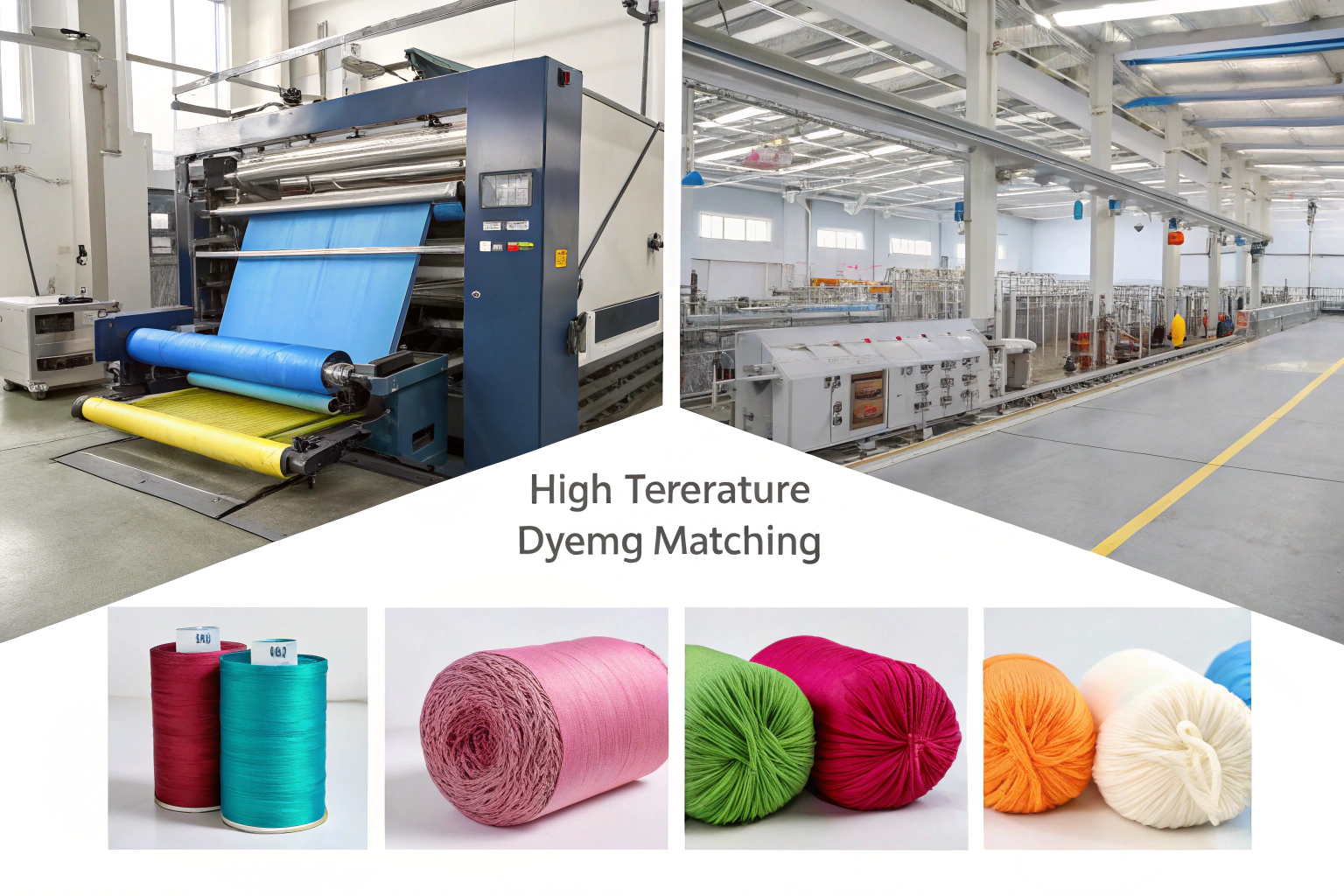
I remember a conversation with a designer who was launching a new line of vibrant, colorful polyester hair accessories. She had the perfect designs, the perfect palette of bright, saturated colors. But when her first samples arrived, the colors were dull, uneven, and nothing like what she had envisioned. She was devastated. "I thought dyeing polyester was simple," she told me. "I just told them the color names. What went wrong?" Her problem was a common one. Dyeing polyester is not like dyeing cotton. It is a specialized process that requires specific techniques and a deep understanding of the fiber’s unique properties.
The most common dyeing methods for polyester accessories are disperse dyeing, which is the primary method for coloring polyester because the fiber is hydrophobic and requires special dyes. This is most often done as high-temperature piece dyeing (for solid-colored fabrics), yarn dyeing (for stripes and patterns), or print dyeing (for detailed designs). A less common but increasingly popular method is solution dyeing, where color is added to the polymer before it is extruded into fibers, resulting in exceptional colorfastness and environmental benefits. At Shanghai Fumao Clothing, we have extensive experience with all these methods, helping our clients achieve the exact colors they envision, with the durability and quality their customers expect.
That designer learned a hard lesson. Polyester is a synthetic fiber, made from petroleum. It is hydrophobic, meaning it repels water. This makes it resistant to the water-based dyes used for natural fibers like cotton. Dyeing polyester requires a different chemistry, different processes, and a different set of skills. Understanding these methods is the key to achieving vibrant, consistent, and long-lasting colors. Let me walk you through the four most common dyeing methods for polyester accessories.
What Is Disperse Dyeing and Why Is It the Standard for Polyester?
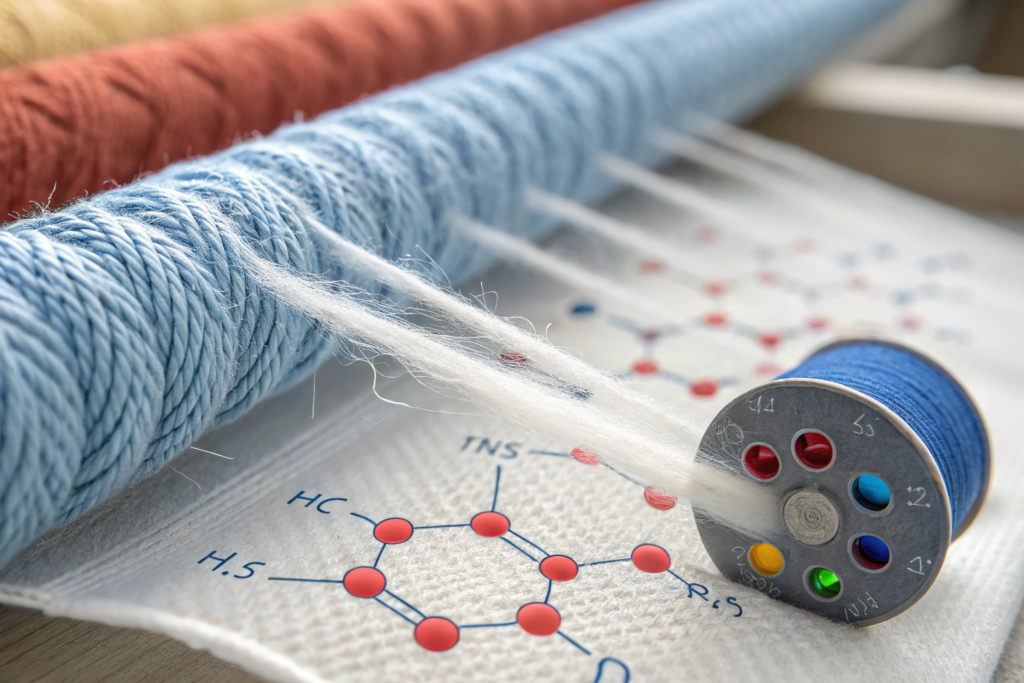
To understand polyester dyeing, you have to start with the fiber itself. Polyester is a synthetic polymer that is highly crystalline and hydrophobic. It has no natural affinity for water-based dyes. The standard dyes used for cotton, wool, or silk simply won’t work. They will sit on the surface and wash right off. The solution is a special class of dyes called disperse dyes, and a process that uses heat to open up the fiber and allow the dye to penetrate.
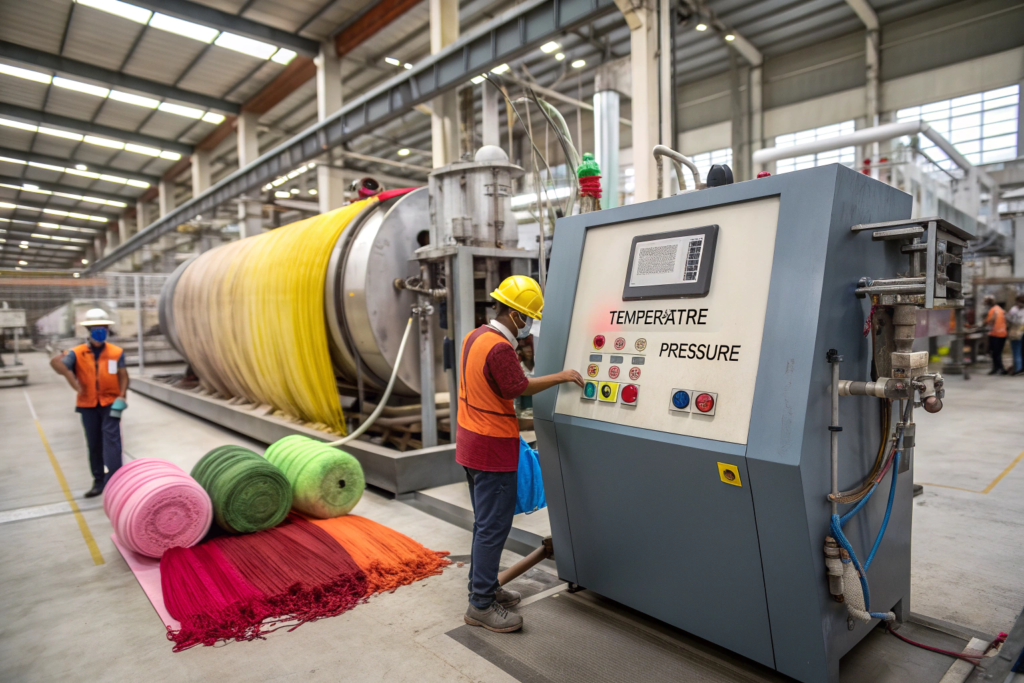
Disperse dyeing is the primary method for coloring polyester. Disperse dyes are finely ground, water-insoluble dyes that are suspended in a liquid (a "dispersion"). The dyeing process is carried out at high temperatures, typically around 130°C (265°F), often under pressure in a specialized machine like a jet dyeing machine or a high-temperature beck. The heat causes the polyester fibers to swell, opening up the amorphous regions between the polymer chains. The tiny disperse dye molecules then migrate into these open spaces. When the fabric cools, the fibers contract, trapping the dye inside. This creates a permanent, vibrant, and wash-fast color.
The key to successful disperse dyeing is precise control of temperature and time. The dyeing machines are sophisticated pieces of equipment that circulate the dye liquor and the fabric at high speed, ensuring even penetration. The process also often includes the use of carriers or leveling agents, which are chemicals that help the dye to migrate evenly and prevent uneven, blotchy results. After dyeing, the fabric is thoroughly rinsed to remove any unfixed dye. This process, called reduction clearing, is essential for achieving good wash-fastness and preventing the dye from rubbing off onto other fabrics. The result is a deeply colored, durable fabric that will retain its vibrancy through many washes. This is a core principle of textile chemistry and dyeing technology. At Shanghai Fumao Clothing, we work with experienced dye houses that use state-of-the-art equipment and strictly controlled processes to ensure perfect, consistent results with disperse dyeing.
Can disperse dyeing be done on all types of polyester?
Yes, disperse dyeing is suitable for all common types of polyester, including filament polyester, spun polyester, and microfiber. The specific dyeing parameters (temperature, time, dye formula) may be adjusted slightly depending on the fabric’s construction and desired final properties, but the fundamental process is the same.
Is disperse dyeing environmentally friendly?
The disperse dyeing process itself requires significant energy to heat the dye baths, and it uses water and chemicals. However, modern dye houses are increasingly adopting more sustainable practices, such as using less water, recycling water, and using more eco-friendly dye auxiliaries. Compared to some dyeing processes for natural fibers, it can be efficient. Solution dyeing (discussed later) is an even more environmentally friendly alternative.
What Is High-Temperature Piece Dyeing and When Is It Used?
For most solid-colored polyester accessories, from vibrant scrunchies to colorful backpack panels, the most common production method is high-temperature piece dyeing. This is the process of dyeing the fabric after it has been woven or knitted. It is the most efficient way to produce large quantities of fabric in a wide range of colors, and it offers tremendous flexibility for brands.
High-temperature piece dyeing is a batch process where rolls of greige (undyed) polyester fabric are loaded into a large, pressurized dyeing machine, most commonly a jet dyeing machine. The fabric is circulated rapidly through a jet of dye liquor at high temperature and pressure. This ensures even, thorough dye penetration. This method is ideal for producing solid-colored fabrics in a huge variety of colors. The dye house can match almost any Pantone shade. It is also relatively efficient for medium to large production runs. After dyeing, the fabric is dried and finished, ready to be cut and sewn into accessories.
The flexibility of piece dyeing is a major advantage. A fabric mill can weave or knit a large quantity of greige goods and then dye it in smaller batches according to customer orders. This reduces inventory risk. If a particular color doesn’t sell, you are not left with a warehouse full of that color; you are left with undyed fabric that can be dyed a different color later. This is a key principle of inventory management in the textile industry. The quality of the final dye job depends heavily on the skill of the dye house and the consistency of the process. Factors like water quality, pH control, and temperature uniformity all play a role. A good dye house will perform lab dips first—small samples dyed to match your color standard—and then scale up the process for bulk production, ensuring a perfect match. At Shanghai Fumao Clothing, we work closely with our partner dye houses, managing the entire process from lab dip approval to bulk production, ensuring color consistency across every yard of fabric.
What is a "lab dip" and why is it important?
A lab dip is a small sample of fabric dyed by the dye house to match your specified color (e.g., a Pantone code). It is an essential step in the process. You approve the lab dip before bulk dyeing begins. This ensures that the color is exactly what you want and that there is a clear standard for the entire production run. It prevents costly color mistakes.
How do I ensure color consistency across different production batches?
This is a challenge, but a good dye house can manage it. They will keep detailed records of the dye formulas used for your color. When you place a re-order, they will use the same formula. However, even with the same formula, slight variations can occur due to differences in the base fabric or dye lots. This is why it’s often recommended to order all the fabric you need for a given style at one time, from a single dye lot, to ensure perfect consistency.
How Do Yarn Dyeing and Print Dyeing Create Patterns?
Not all accessories are solid colors. Stripes, checks, jacquards, and intricate printed designs are all hugely popular. For these patterned accessories, piece dyeing won’t work. You need methods that introduce color before the fabric is constructed, or onto the constructed fabric. This is where yarn dyeing and print dyeing come into play. They are the key to creating the endless variety of patterns we see in fashion accessories.
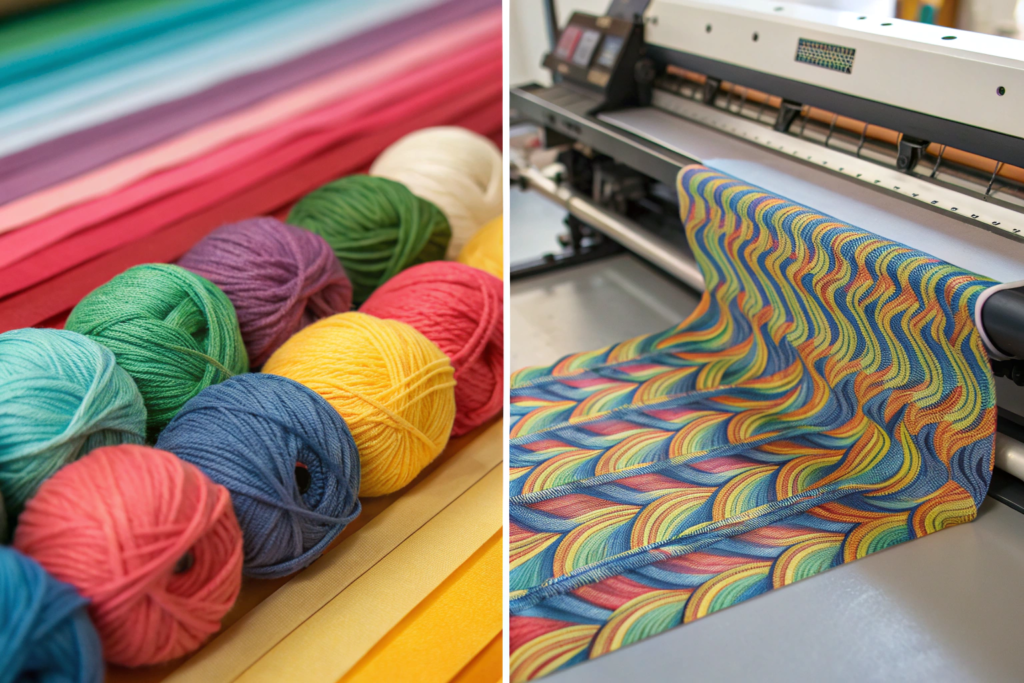
Yarn dyeing is the process of dyeing the yarn before it is knitted or woven into fabric. The colored yarns are then used to create patterns like stripes, plaids, checks, and jacquard designs directly in the fabric construction. This method produces incredibly durable, long-lasting patterns because the color is in the yarn itself, not just on the surface. It is the method of choice for high-quality striped or patterned accessories. Print dyeing, on the other hand, applies color to the surface of the finished fabric. The most common method for polyester is disperse dye printing, which uses a special ink (based on disperse dyes) that is applied to the fabric and then fixed with heat, causing the dye to penetrate and bond with the fibers. This allows for incredibly detailed, multi-colored designs, from photorealistic images to intricate motifs.
The choice between yarn dyeing and print dyeing depends on the design and the desired effect. Yarn dyeing is generally more expensive and requires higher minimums, but it produces a superior, more durable result for patterns like stripes. The colors are deep and the pattern is part of the fabric’s structure. It is also the only way to achieve certain textures, like jacquard weaves. Print dyeing, especially digital printing, has revolutionized the industry by allowing for incredibly detailed, multi-colored designs with very low minimums. You can print a single, unique scarf if you want. The prints are vibrant, but they are on the surface, and over many, many years and washes, they may fade slightly more than a yarn-dyed pattern. Both methods are essential tools for creating beautiful, patterned polyester accessories. This is a key area of textile design and production. At Shanghai Fumao Clothing, we have expertise in both, from creating custom yarn-dyed stripes for hair accessories to producing digitally printed scarves with stunning, complex artwork.
Which is more durable, yarn-dyed or printed patterns?
Yarn-dyed patterns are generally considered more durable for long-term use. Because the color is in the yarn itself, it is less likely to fade or wear away over time compared to a printed surface design. For items that will be washed frequently and worn for many years, yarn dyeing is an excellent choice. For fashion-forward items where the design is the primary focus, high-quality digital printing is more than durable enough.
What is the difference between screen printing and digital printing for polyester?
Screen printing uses a mesh screen for each color in the design. It is excellent for bold, graphic designs with limited colors and is cost-effective for larger runs. Digital printing works like a large-format inkjet printer. It can print incredibly detailed, photo-quality images with millions of colors, and it has very low minimums, making it ideal for small batches and complex artwork. Both use disperse dye-based inks that are fixed with heat.
What Is Solution Dyeing and Why Is It Gaining Popularity?
While disperse dyeing is the workhorse of the industry, there is another method that is gaining significant attention for its exceptional durability and environmental benefits: solution dyeing. This is a fundamentally different approach. Instead of dyeing the fabric or yarn, the color is added to the polymer itself before it is extruded into fibers. The color becomes an integral part of the fiber, resulting in unparalleled colorfastness.
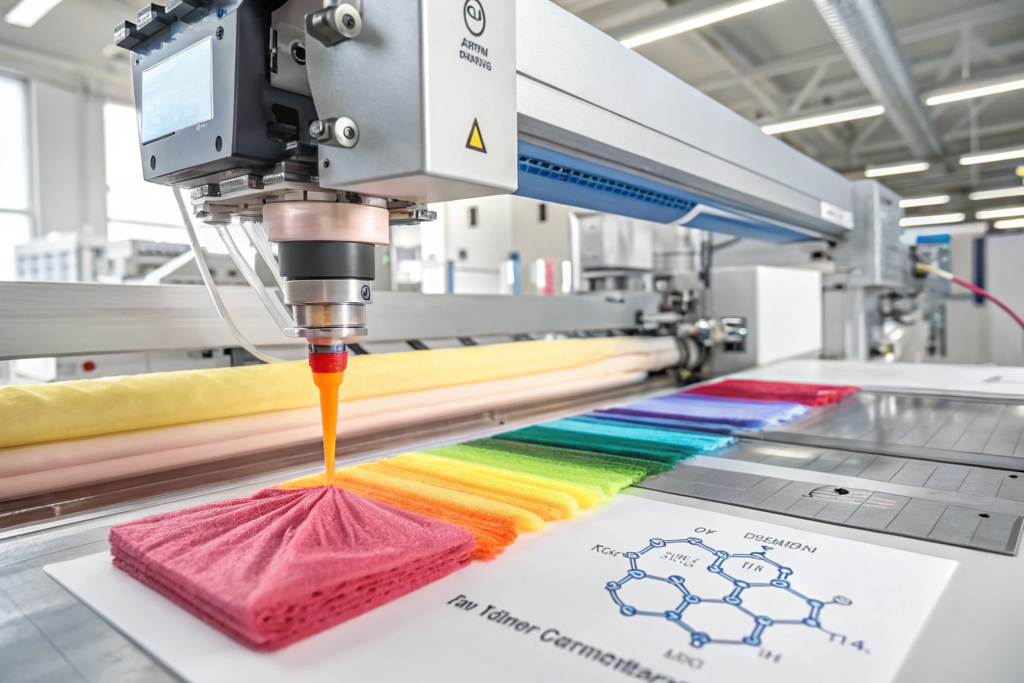
Solution dyeing, also known as dope dyeing, involves adding pigment or dye to the liquid polymer solution before it is forced through the spinnerets to create the fibers. The color is literally built into the fiber from the very beginning. This has several major advantages. First, the color is incredibly lightfast and wash-fast; it will not fade, even after years of exposure to sun and repeated washing. Second, the process is much more environmentally friendly than traditional dyeing, as it uses significantly less water and energy and produces no dye wastewater. Third, it is highly efficient. The main drawback is that it is best suited for large production runs of a single color, as changing colors requires cleaning out the entire production line.
The sustainability benefits of solution dyeing are significant. Traditional disperse dyeing uses large amounts of water for the dye bath and for rinsing. It also requires energy to heat the water. Solution dyeing eliminates the dyeing step altogether, saving massive amounts of water and energy. This is why it is increasingly popular for brands with strong sustainability commitments. The durability of the color is also a major selling point for products that will be exposed to harsh conditions, like outdoor gear, or for items that need to retain their color after countless washes. While it requires larger minimums, for core, consistent colors that a brand uses year after year, solution dyeing can be a game-changing option. This is a key innovation in sustainable textile manufacturing. At Shanghai Fumao Clothing, we are actively working with solution-dyed polyester suppliers to offer our clients this high-performance, eco-friendly option for their accessory collections.
Is solution-dyed polyester more expensive?
It can be, but the cost difference is often offset by the savings in water and energy and the superior durability. For large, consistent orders, it can be very cost-competitive. The key is that it is not flexible for small, short-run color changes. It is an investment in a core color story.
What colors are available in solution-dyed polyester?
Solution-dyed polyester is available in a wide, but not infinite, range of colors. Most major manufacturers offer a standard color palette, and for large enough volumes, they can create custom colors. The color range is expanding as the technology becomes more popular. For core neutrals and brand signature colors, it is an excellent choice.
Conclusion
Dyeing polyester is a specialized science, not a simple afterthought. From the high-temperature chemistry of disperse dyeing to the creative possibilities of yarn dyeing and digital printing, and the sustainability and durability of solution dyeing, each method has its own strengths and ideal applications. Understanding these methods is essential for any brand looking to create vibrant, consistent, and long-lasting polyester accessories.
At Shanghai Fumao Clothing, we have deep expertise in all these dyeing technologies. We work with experienced, well-equipped dye houses that can match any color, execute complex patterns, and deliver consistent, high-quality results. We help our clients navigate the options, from choosing the right method for their design to managing the lab dip process and ensuring color consistency across every production run.
Are you ready to bring your colorful vision to life with perfectly dyed polyester accessories? Let’s talk about the best method for your next collection. Contact our Business Director, Elaine, at elaine@fumaoclothing.com to start the conversation.