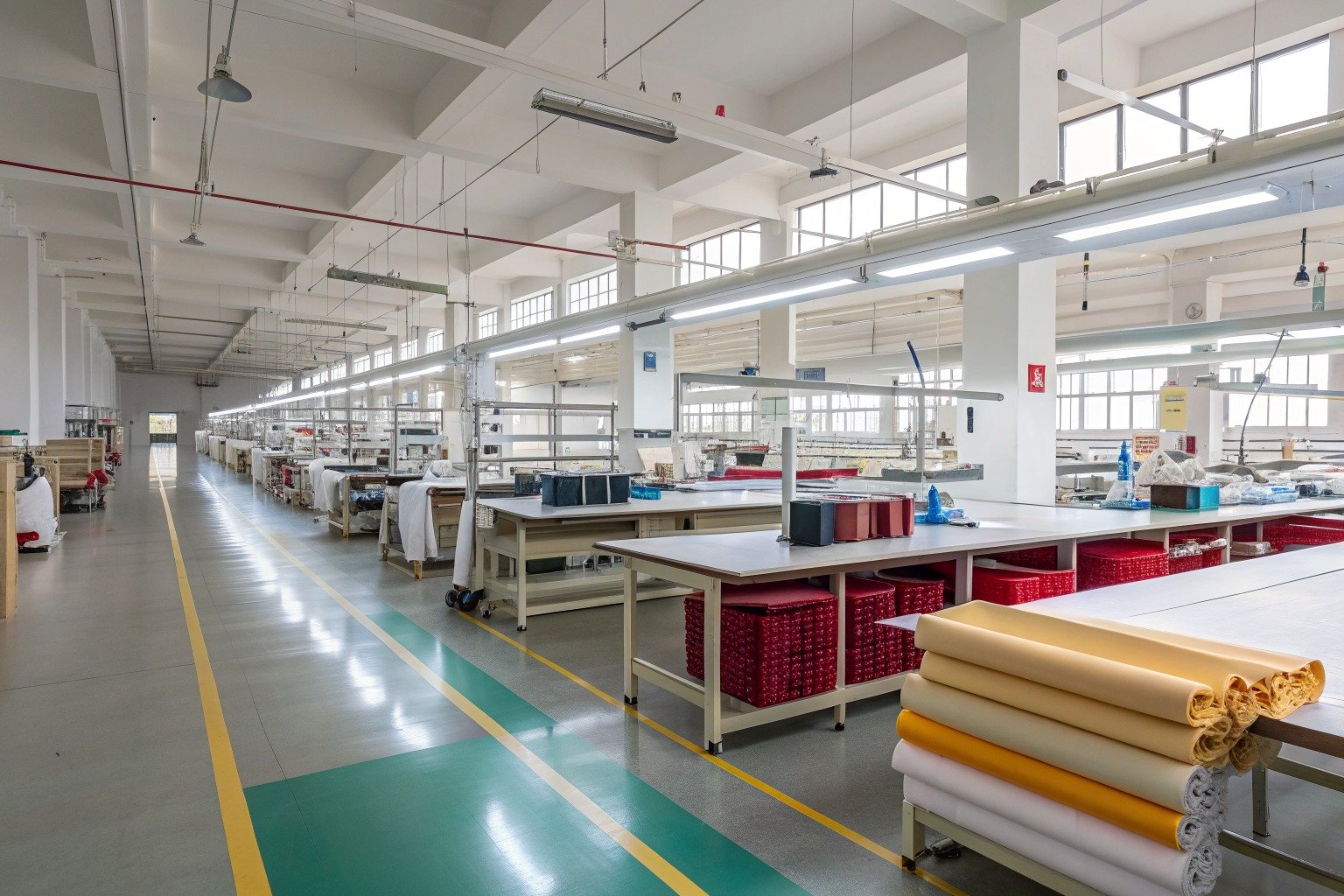
I remember a conversation with a customer who had bought a beautiful leather belt from a fast-fashion brand. It looked great for about a month. Then the stitching started to unravel, the buckle began to tarnish, and the leather cracked where it bent most. She was frustrated, not just because she had wasted money, but because she had to throw something away and buy a replacement. "Why can’t they just make things that last?" she asked. Her question is at the heart of what it means to design for durability. It’s not just about making a product; it’s about making a product that can become a companion.
Designing durable daily fashion accessories requires a holistic approach that considers material selection, construction techniques, hardware quality, and thoughtful design for stress points. It’s about choosing materials that can withstand daily wear and tear, like full-grain leather or high-denier ballistic nylon. It’s about using robust construction methods, such as reinforced stitching at stress points and proper edge finishing. It’s about selecting high-quality hardware, like solid metal buckles and zippers, that won’t fail. And it’s about designing with an understanding of how the accessory will be used, reinforcing the areas that will bear the most stress. At Shanghai Fumao Clothing, we build durability into every product we make, from the initial material selection to the final quality control inspection.
That customer’s frustration is a common one. In a world of fast fashion and disposable goods, true durability has become a luxury. But it shouldn’t be. A well-designed, durable accessory is not just a purchase; it’s an investment. It’s a product that will be used, loved, and maybe even passed down. Creating that kind of product requires a shift in mindset from "how cheap can we make it" to "how well can we make it." Let me walk you through the four essential pillars of designing durable daily fashion accessories.
How Do You Choose Materials That Can Withstand Daily Wear?
The foundation of any durable accessory is the material it’s made from. You cannot build a long-lasting product from weak, low-quality materials. It’s that simple. The choice of leather, fabric, metal, and thread determines the ultimate lifespan of the item. Investing in better materials at the start is the single most important decision you can make for durability. This is where the true cost of quality is determined.
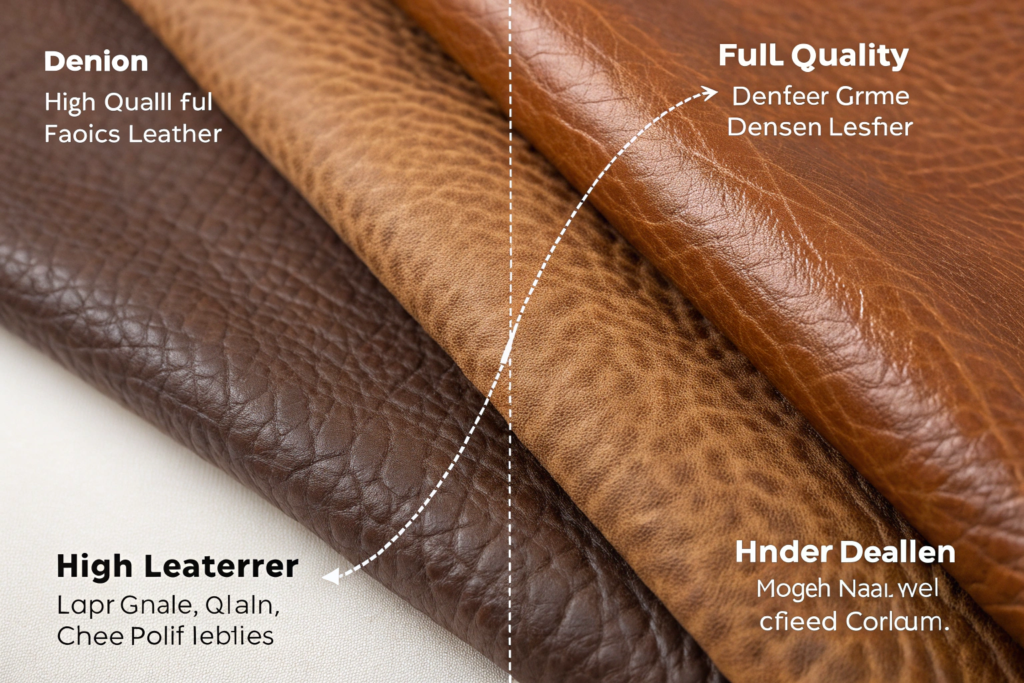
For leather goods like belts and bags, the gold standard is full-grain leather. This is the top layer of the hide, left intact with all its natural grain. It is the strongest and most durable part of the hide and develops a beautiful patina with age. Top-grain leather is slightly less durable, as the surface has been sanded. Avoid bonded leather, which is made from leather scraps and fibers held together with polyurethane and will quickly peel and crack. For fabrics, look for high-denier materials like ballistic nylon or Cordura, which are woven tightly for exceptional strength and abrasion resistance. For metal components, solid brass or stainless steel with thick, high-quality plating will far outlast cheap, thin, zinc-alloy castings.
The concept of "denier" for fabrics is a useful measure of durability. Denier is a unit of measurement for the linear mass density of fibers. A higher denier number generally indicates a thicker, stronger, and more durable fiber. Ballistic nylon, often 1000 denier or higher, was originally developed for military flak jackets. It is incredibly resistant to tearing and abrasion, making it ideal for backpacks and bags that will see heavy daily use. Cordura is another brand of high-performance fabrics known for exceptional durability. For leather, the thickness, measured in ounces (1 ounce = 1/64 inch), is also a factor. A heavier belt or bag strap will be more durable. However, thickness alone isn’t enough; the quality of the hide and the tanning process are equally important. This is a core principle of material science for product durability. At Shanghai Fumao Clothing, we source only the highest-grade materials, from full-grain leather to certified ballistic nylon, ensuring our products are built on a foundation of strength.
Is full-grain leather always the best choice?
For durability, yes. It is the strongest, most durable form of leather. It will develop a beautiful patina over time and, with proper care, can last for decades. It is also more expensive. For a product that needs to be truly durable, it is the only choice. For items where the highest level of durability is not the primary concern, top-grain leather can be a good alternative.
What about vegan or sustainable alternatives? Can they be durable?
Yes, absolutely. There are now excellent high-performance vegan options. For example, Piñatex (made from pineapple leaf fibers) is durable, though it has a different texture than leather. Recycled nylon (like Econyl) can be just as durable as virgin nylon. TPU-coated recycled polyesters are also very tough and water-resistant. The key is to look for materials specifically engineered for durability, not just any vegan alternative. We work with suppliers of these innovative materials to ensure they meet our durability standards.
How Does Construction Technique Impact Longevity?
You can have the world’s best materials, but if they are assembled poorly, the product will fail. The construction techniques used to join the pieces together are just as important as the materials themselves. This is where the skill of the craftsman becomes visible. Strong, thoughtful construction is the difference between a product that falls apart and one that lasts a lifetime.
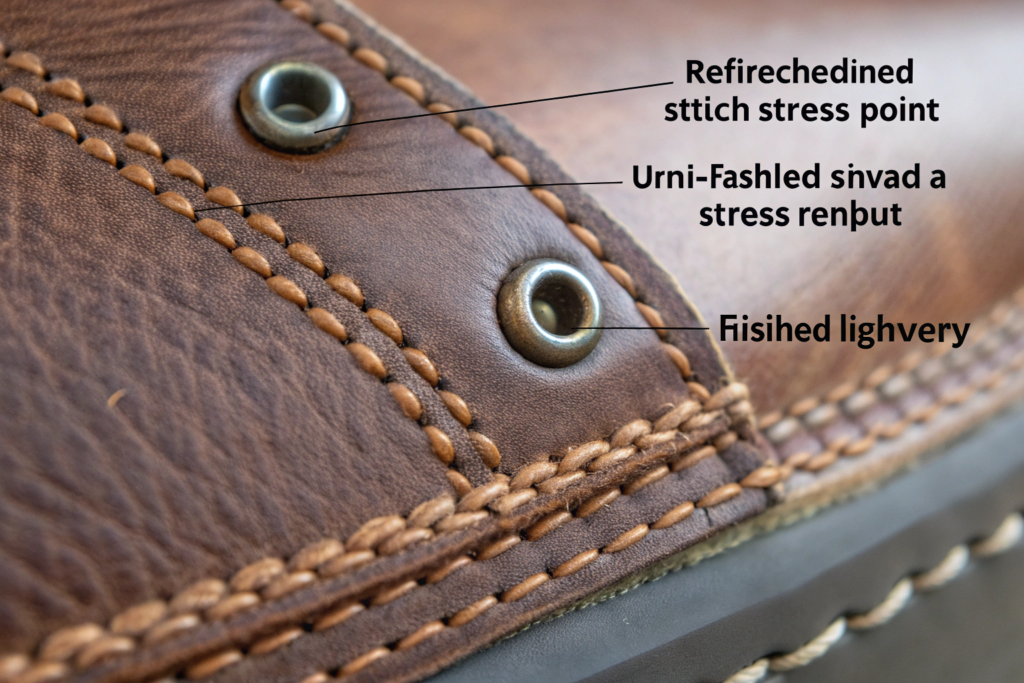
Key construction techniques for durability include: reinforced stitching at all stress points, such as where a strap attaches to a bag or where a belt loop meets the main body. This often means using a back-tack or a bar-tack, a series of dense, tight stitches that provide extra strength. Proper edge finishing is crucial for leather goods. Burnished or painted edges seal the leather, preventing it from fraying or delaminating over time. For items with straps, rivets at stress points add immense strength, distributing the load and preventing stitches from pulling through. The thread itself must be strong and durable; bonded nylon or polyester thread is essential.
Let’s look at stitching in more detail. The stitches per inch (SPI) is a measure of stitch density. A higher SPI generally means a stronger seam, but it must be appropriate for the material. For heavy leather, 6-8 SPI is common. For lighter fabrics, 8-12 SPI might be used. The type of stitch also matters. A lockstitch is common for machine sewing, but for the ultimate in durability, a saddle stitch (done by hand) is superior, as each stitch is independent and will not unravel if one thread breaks. The thread tension must be perfectly balanced; too loose, and the seam is weak; too tight, and it can pucker and stress the material. Edge finishing is another critical detail. A raw, unfinished leather edge will absorb moisture, fray, and eventually crack. A properly finished edge—whether burnished to a smooth, hard shine or painted with multiple layers of edge paint—seals the leather and prevents this deterioration. This is the essence of quality craftsmanship in leather goods. At Shanghai Fumao Clothing, our skilled artisans are trained in these techniques, ensuring every product is built to last.
What is a bar-tack and why is it important?
A bar-tack is a series of very dense, tight zigzag stitches used to reinforce a specific point, such as the end of a buttonhole, the corners of a pocket, or where a strap attaches to a bag. It is one of the strongest stitch types and is essential for preventing seams from ripping at high-stress points.
How can I tell if a leather edge is well-finished?
A well-finished leather edge will be smooth, even, and sealed. A burnished edge will have a slightly glossy, hard, and smooth feel, like polished wood. A painted edge will have a uniform, clean layer of color with no bumps or cracks. A raw, unfinished edge will feel rough, fibrous, and absorbent.
Why Is Hardware Quality Often the Weakest Link?
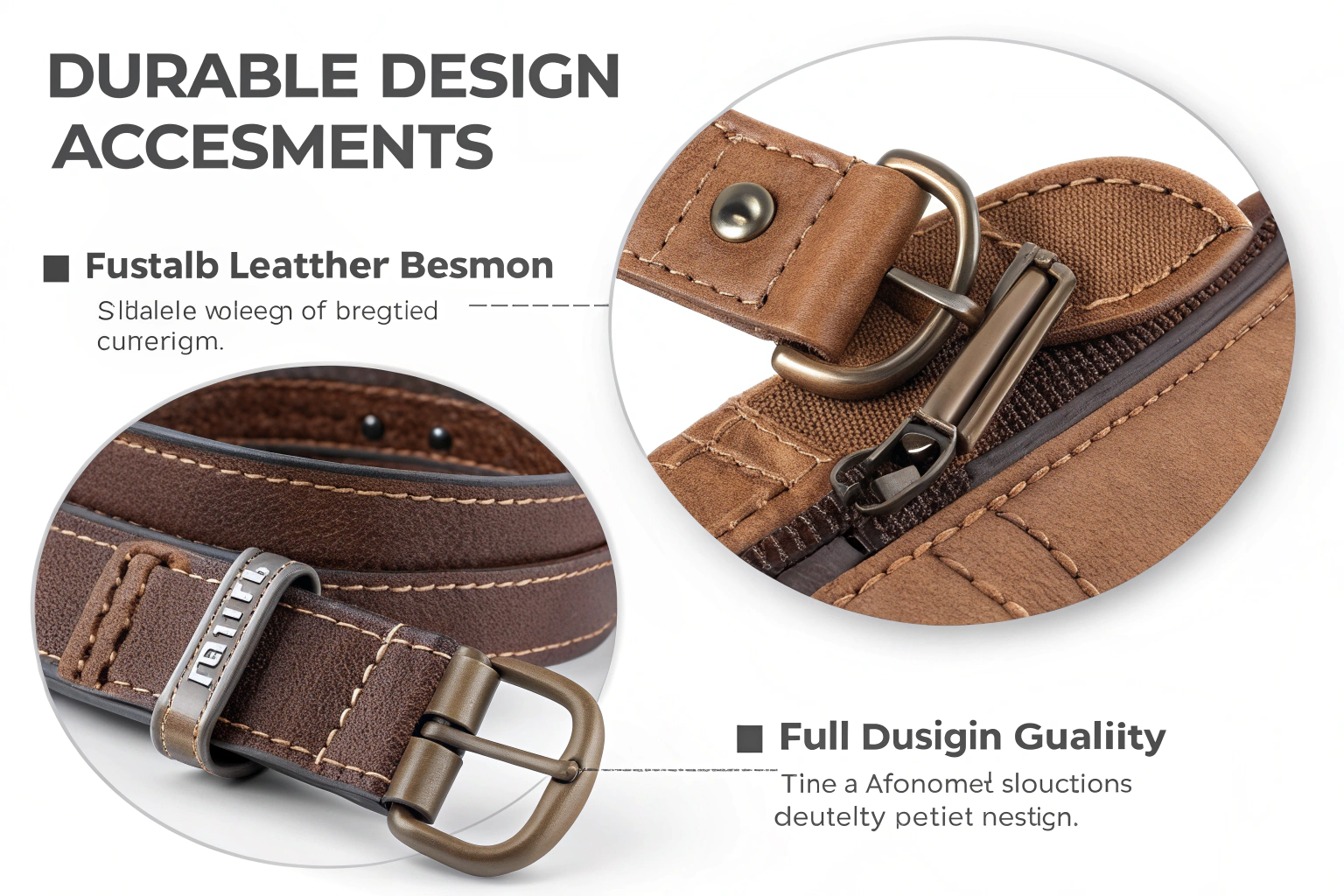
A bag can be made of the finest leather, with impeccable stitching. But if the zipper pull snaps off, or the buckle breaks, the entire bag is rendered useless. Hardware—zippers, buckles, snaps, rivets, D-rings—is often the weakest link in an accessory’s lifespan. It is subjected to immense and repeated stress. Choosing high-quality hardware is not a detail; it is a necessity for durability.
For maximum durability, look for hardware made from solid brass or stainless steel. These metals are inherently strong and resistant to corrosion. If plated, the plating should be thick and high-quality (e.g., real gold, silver, or ruthenium) to prevent wear and tarnishing. For zippers, YKK is the industry gold standard, known for its reliability and rigorous testing. A high-quality zipper will have a smooth action, strong teeth, and a securely attached pull. Rivets should be solid and set correctly, with no sharp edges. The mechanism of a buckle or snap should feel solid and secure, not wobbly or flimsy. Investing in quality hardware from reputable suppliers is essential.
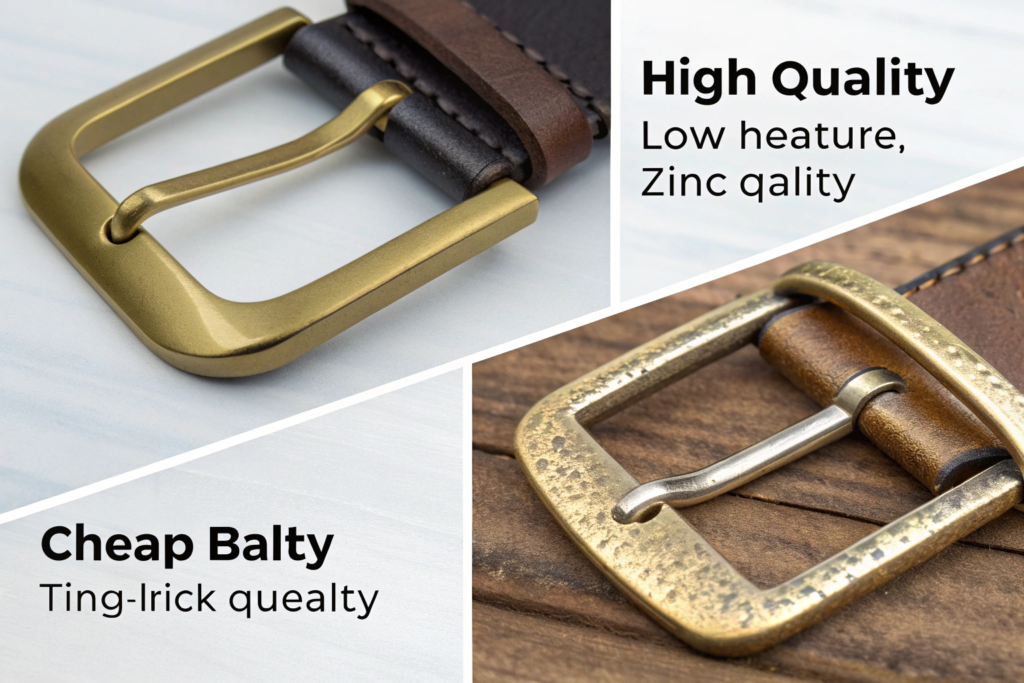
The difference between good and bad hardware is immediately apparent to the touch. A cheap zinc-alloy buckle will feel light and have a rough, uneven finish. The plating may look thin and slightly off-color. The mechanism may feel loose and insecure. A high-quality solid brass buckle will have a satisfying weight, a smooth, even finish, and a solid, precise action. For zippers, the brand name is often a reliable indicator. YKK (Yoshida Kogyo Kabushikigaisha) is a Japanese company that produces a vast range of zippers, all subject to rigorous quality control. Their zippers are known for their smooth operation and long life. Other reputable brands include Riri and Lampo. The choice of zipper type also matters. For heavy-duty bags, a molded plastic tooth zipper or a metal tooth zipper is stronger than a coil zipper. This is a key consideration in hardware selection for product durability. At Shanghai Fumao Clothing, we use only high-quality hardware from trusted suppliers, ensuring that this critical component is never the reason for a product’s failure.
Is YKK the only good zipper brand?
YKK is the most well-known and widely trusted, but there are other excellent zipper manufacturers, such as Riri (Swiss, very high-end) and Lampo (Italian). The key is to choose a reputable brand with a proven track record for quality and to select the right type of zipper for the application (e.g., molded plastic for backpacks, coil for lighter garments).
How can I tell if a metal buckle is solid brass?
A solid brass buckle will have a noticeable weight to it. It will feel dense and substantial. The color will be a warm, rich gold. You can also sometimes see a subtle seam from the casting process, but it will be smooth. A cheap, zinc-alloy buckle will feel much lighter and may have a thinner, more brassy-colored plating. Over time, the plating on a cheap buckle will wear off, revealing a dull, grey base metal underneath.
How Do You Design for Real-World Stress Points?
Even with the best materials and hardware, a design can fail if it doesn’t account for how the accessory will actually be used. A bag that is carried every day will have different stress points than one used occasionally. A belt will flex in specific places. Understanding these real-world stresses and designing to address them is the final, crucial step in creating a truly durable product. It’s about anticipating failure and preventing it through smart design.
Designing for stress points means analyzing where the accessory will experience the most force and wear. For a bag, the primary stress points are the handle or strap attachments, the bottom corners, and the zipper ends. These areas should be reinforced with extra stitching, rivets, or even double layers of material. For a belt, the stress points are the buckle area and the holes. The leather around the buckle should be reinforced, and the holes should be finished with grommets or reinforced stitching to prevent them from stretching or tearing. For a wallet, the fold line is a stress point that should be reinforced or designed with a flexible construction. By anticipating where the product will be pushed to its limits, you can design those areas to be stronger.
This design philosophy is sometimes called "defensive design" or "design for reliability." It involves thinking about the worst-case scenarios. What happens when someone overstuffs this bag? What happens when this belt is pulled very tight? What happens when this wallet is sat on? A well-designed product will have features that address these potential failures. This might mean adding a gusset to a bag’s bottom to prevent the corners from wearing out. It might mean using a reinforced patch of leather behind the buckle on a belt. It might mean using a splash-proof zipper on a bag that might be exposed to rain. It’s about thinking ahead and building in strength where it’s needed most. This is a core principle of product design engineering. At Shanghai Fumao Clothing, our design and engineering team analyzes every product for potential stress points, ensuring that our designs are not just beautiful, but also intelligently built to last.
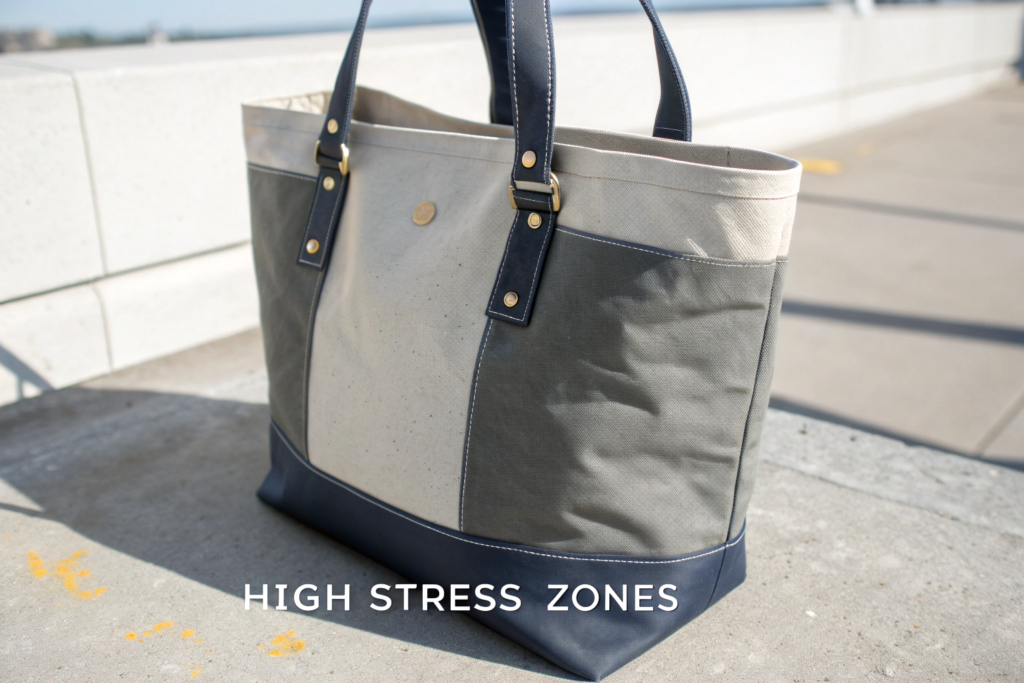
What is a gusset and why is it important for bag durability?
A gusset is a piece of material sewn into the sides or bottom of a bag to add depth and strength. A reinforced bottom gusset, often made from a thicker or double layer of material, protects the most vulnerable part of the bag from wear and tear when it’s set down on the ground. It significantly extends the life of the bag.
Should all belt holes be reinforced with grommets?
For a heavy-duty belt that will be used frequently and under stress, reinforcing the holes with grommets is an excellent idea. It prevents the leather from stretching and tearing. For a dress belt that will see lighter use, well-made holes with a smooth, burnished edge can be sufficient. It depends on the belt’s intended use and the quality of the leather.
Conclusion
Designing durable daily fashion accessories is a commitment to quality, craftsmanship, and thoughtful engineering. It starts with choosing the best materials—full-grain leather, high-denier fabrics, solid metals. It continues with meticulous construction—reinforced stitching, proper edge finishing, robust hardware. And it culminates in a design that anticipates and reinforces the stress points of real-world use. The result is not just an accessory, but a companion that can be relied upon, day after day, for years to come.
At Shanghai Fumao Clothing, this philosophy is at the core of everything we do. We believe that making products that last is not just good for our clients’ businesses; it’s good for the planet and for the people who use them. We are committed to the highest standards of materials, construction, and design, ensuring that every accessory we produce is built to be a part of someone’s daily life for a long, long time.
Are you ready to create accessories that are as durable as they are beautiful? Let’s build something that lasts. Contact our Business Director, Elaine, at elaine@fumaoclothing.com to start the conversation.