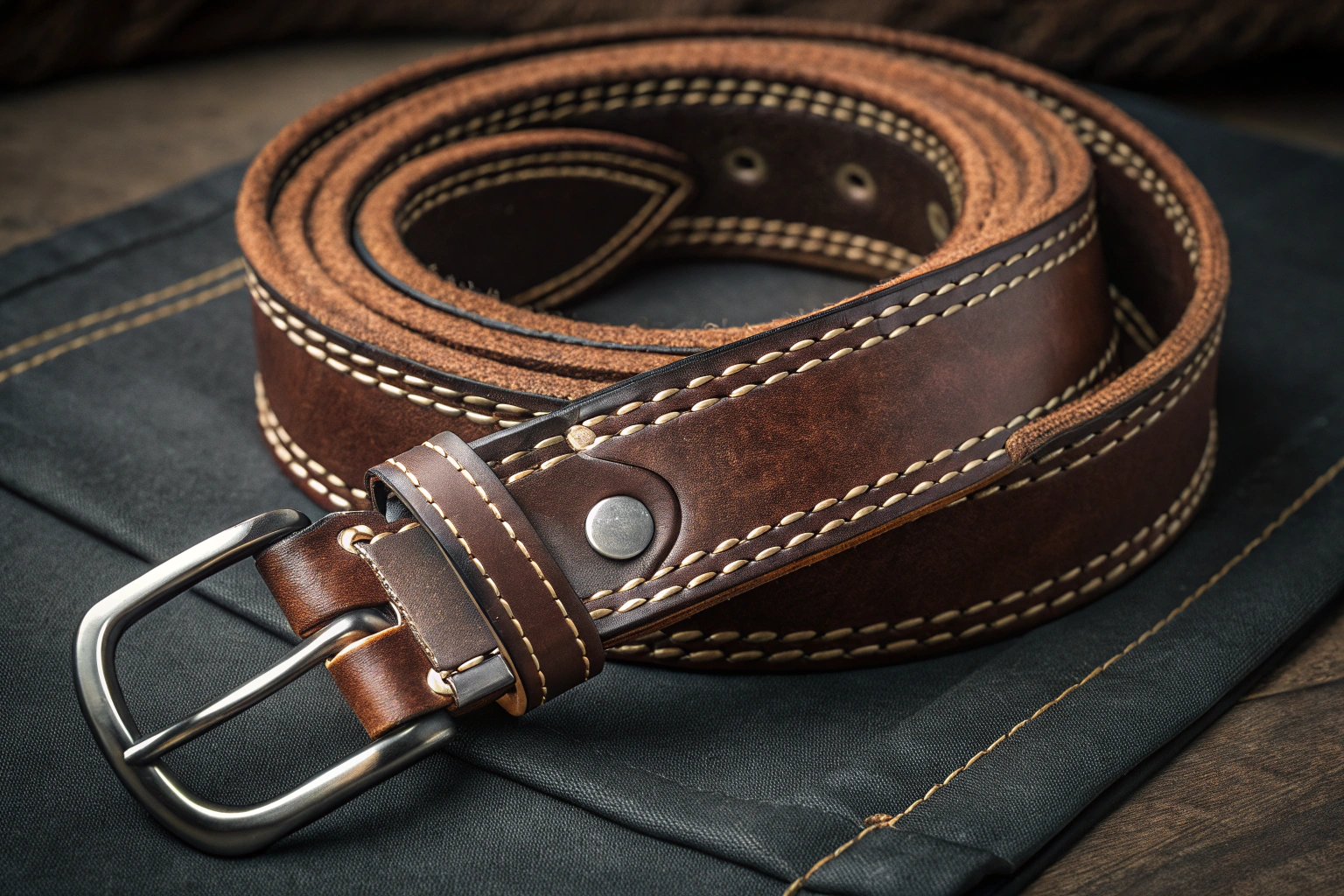
A few years ago, I received a sample of a "heavy-duty" leather belt from a potential new client. It looked fantastic. The leather was thick, the buckle was a solid piece of cast metal. But when I held it in my hands, I noticed something wrong. I gave it a gentle tug, and the stitching, the very thing holding this expensive belt together, pulled apart. The thread had snapped. The client had spent a fortune on beautiful leather and hardware, but they had saved pennies on the thread. The entire product was worthless.
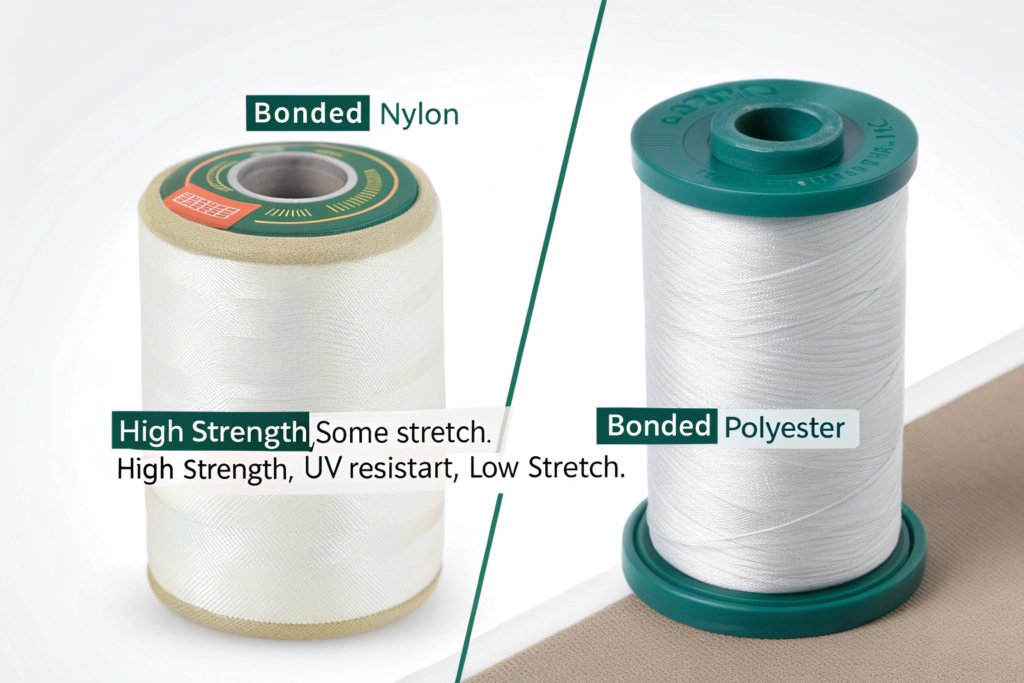
The best thread types for durable stitching on heavy-duty belts are bonded nylon and bonded polyester. These threads are specifically engineered for high-stress applications. They have high tensile strength, meaning they can withstand significant pulling force. They are resistant to abrasion, so they won’t wear thin from rubbing against belt loops. And they are bonded, which means the individual strands are fused together, preventing fraying and creating a smooth, strong, and long-lasting stitch. At Shanghai Fumao Clothing, we use only these premium threads on our heavy-duty belts, ensuring they can withstand years of daily use.
That client’s story is a perfect example of a costly mistake. He thought "heavy-duty" was just about the leather. But a belt is a system. The leather, the buckle, and the thread all have to work together. The thread is the weakest link in that system, and if it fails, the belt fails. Choosing the right thread is not a detail; it is a critical engineering decision. Let me explain the science and the art behind choosing the perfect thread for belts that are built to last.
Why Is Thread Choice So Critical for a Belt’s Durability?
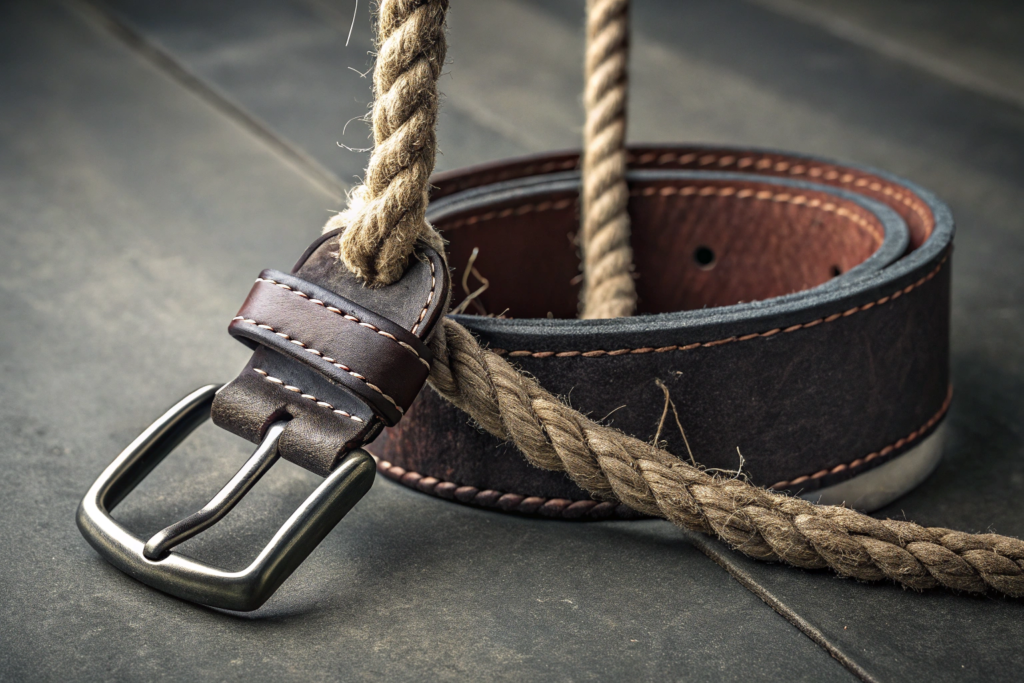
Think about what a belt does. Every time you put it on, you cinch it tight. You put pressure on the buckle, which pulls against the stitching that holds the buckle in place. Every time you sit down, the belt bends and flexes. Every time you move, the belt rubs against your pant loops. Over the course of a day, a belt endures hundreds of stress cycles. Over a year, thousands. The thread must be able to withstand all of this without stretching, fraying, or breaking.
The thread on a heavy-duty belt is not just decorative; it is a structural component. It bears the entire load of keeping the buckle attached to the leather. If the thread fails, the belt fails. A cheap, weak thread will snap under tension, causing the buckle to detach. A thread that is not abrasion-resistant will wear thin over time and eventually break. A thread that is not UV-resistant will become brittle and weak from exposure to sunlight. The thread must be chosen to handle all of these stresses simultaneously.
The consequences of thread failure are more than just a broken belt. Imagine a customer wearing your belt, and the buckle suddenly detaches while they are out in public. It is embarrassing. It damages their confidence in your brand. They will return the belt, leave a negative review, and likely never buy from you again. The cost of that lost future business is far, far greater than the few pennies you might save by choosing a cheaper thread. This is why we are so obsessive about thread selection. We view it as an integral part of the product lifecycle and customer satisfaction. At Shanghai Fumao Clothing, we treat every belt as if it will be worn every day for years, and we choose materials that can meet that challenge.
Can’t I just use a thicker version of regular sewing thread?
No. Regular sewing thread, like the kind used for garments, is not designed for structural load. It has lower tensile strength and will stretch or break under the stress a belt endures. You need a thread specifically engineered for heavy-duty applications. Thicker is not always better if the material itself is weak. You need the right material (bonded nylon or polyester) and the right construction for the job.
How much stress does a belt stitch actually need to withstand?
A significant amount. When you tighten a belt, you can generate dozens of pounds of force on the buckle attachment. The stitching must hold that force, not just once, but repeatedly for years. A good rule of thumb is that the thread should have a tensile strength significantly higher than the maximum force a human can reasonably apply. This is why we use industrial-grade threads with specific strength ratings.
Bonded Nylon vs. Bonded Polyester: Which Is Best for Belts?
For heavy-duty applications like belts, two threads dominate the market: bonded nylon and bonded polyester. They are both excellent choices, but they have different properties that make them suitable for different situations. Choosing between them depends on the specific demands of your belt design and your target market. Understanding the difference is key to making the right decision.
Bonded nylon is incredibly strong and has a slight amount of natural "give" or elasticity. This elasticity can be beneficial because it allows the stitch to absorb some shock without breaking. However, nylon is more susceptible to damage from UV light and moisture over time. Bonded polyester is also extremely strong but has very little stretch. It is much more resistant to UV rays, moisture, and chemicals, making it the preferred choice for outdoor gear or belts that will be exposed to the elements. It holds its color better and is more dimensionally stable.
Let me give you a more detailed comparison to help you decide. For a classic dress belt that will be worn indoors and sees regular but not extreme stress, both are excellent. The slight stretch of nylon can be a nice feature, as it allows for a bit of give. For a work belt or a tactical belt that will be used outdoors, in the sun, and possibly exposed to sweat and moisture, polyester is the superior choice. Its UV and moisture resistance are critical for long-term durability in those conditions. For a fashion belt with very thick leather and a heavy buckle, you might choose the highest tensile strength option, which is often a specific type of bonded nylon. We always advise our clients based on the belt’s intended use. We also consider the thread thickness or "tex" number, which must be matched to the needle size and the leather thickness. A mismatch can cause the leather to tear or the stitching to be weak. This is a decision our experienced production team makes for every single belt we manufacture at Shanghai Fumao Clothing.
Does bonded polyester’s lack of stretch make it more likely to snap?
No, not at all. Its lack of stretch does not mean it is brittle. It simply means it has very low elongation under load. It is still incredibly strong. The strength is measured in its tensile rating. A high-quality bonded polyester thread will have a tensile strength far exceeding the forces a belt will encounter. The "no-stretch" property is actually a benefit, as it means the stitch line remains tight and the buckle stays firmly in place without any loosening over time.
Is one thread type more expensive than the other?
Generally, high-quality bonded polyester and bonded nylon are in a similar price range. The cost difference is usually negligible compared to the overall cost of the belt. The more significant cost factor is the quality of the thread itself. A cheap, unbonded version of either material will be significantly weaker and more prone to fraying. The bonding process adds cost but is essential for durability. Never skimp on this.
What Does "Bonded" Mean, and Why Is It Essential?
You will often see the word "bonded" on high-quality threads, but what does it actually mean? It is not just a marketing term. It is a specific manufacturing process that transforms a good thread into an exceptional one. Understanding this process explains why bonded threads are the only choice for heavy-duty applications like belts. It is the secret to their durability and performance.
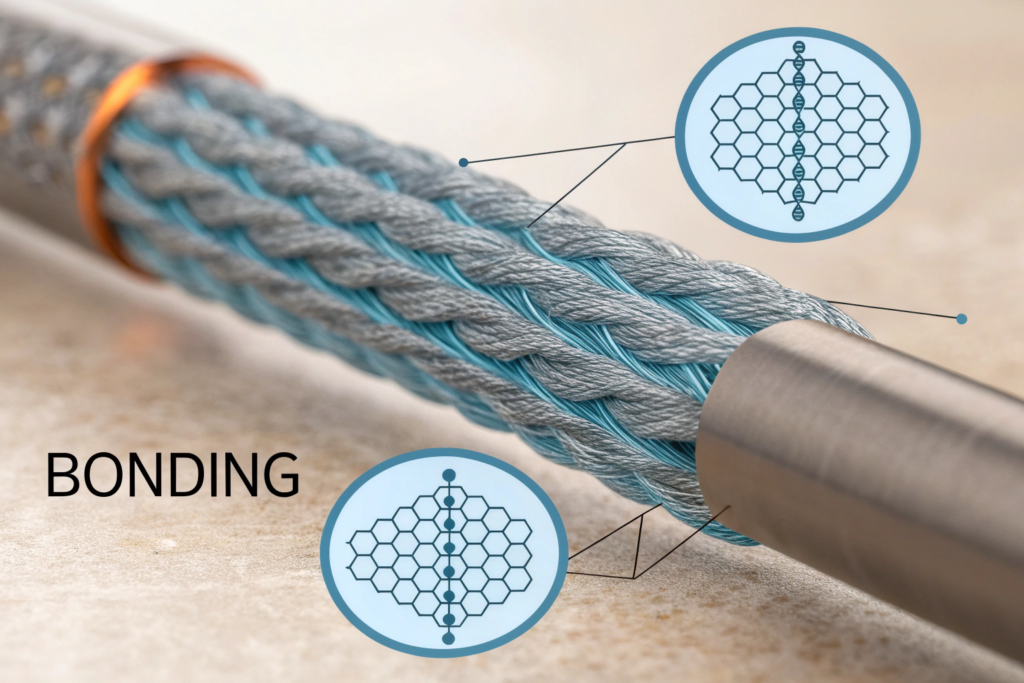
"Bonded" refers to a process where the individual plies (the smaller strands twisted together to make the thread) are coated with a special resin or finish and then fused together. This creates a single, unified thread structure. This process has several critical benefits. First, it prevents fraying. The plies cannot separate and become fuzzy. Second, it increases strength. The bonded structure distributes load more evenly. Third, it reduces friction as the thread passes through the leather and the machine, allowing for smoother stitching and less heat buildup. Fourth, it resists abrasion, so the thread doesn’t wear thin from rubbing.
Think of an unbonded thread like a rope. The individual strands can move and rub against each other. Over time, this friction causes them to fray and weaken. A bonded thread is more like a solid rod of material. The strands are locked together, so they cannot move and wear against each other. This is absolutely essential for a belt, where the thread is constantly under stress and rubbing against the leather and belt loops. Without bonding, the thread would quickly become fuzzy, weak, and prone to failure. The bonding process also often includes lubricants that help the thread flow through the machine at high speeds, which is critical for consistent, high-quality production. This is a key aspect of industrial sewing technology. At Shanghai Fumao Clothing, we only use bonded threads from reputable manufacturers. We know that this small detail is a massive factor in the final product’s longevity.
Can I see the difference between bonded and unbonded thread?
Yes, easily. Take a piece of unbonded thread and rub it vigorously between your fingers. It will quickly become fuzzy and the plies will start to separate. Do the same with a high-quality bonded thread, and it will remain smooth and intact. This simple test is a great way to verify the quality of the thread a factory plans to use for your belts.
Does the bonding process affect the color or appearance of the thread?
High-quality bonding should not significantly alter the color or sheen of the thread. It is designed to be virtually invisible, enhancing the thread’s performance without changing its aesthetic qualities. You can get bonded threads in a full range of colors to match or contrast with your leather.
How Does Stitch Type and Thread Thickness Affect Durability?
The thread itself is only part of the equation. How you use it is just as important. The type of stitch, the thickness of the thread, and the density of the stitches (stitches per inch) all work together to determine the final strength and durability of the seam. You can have the world’s best thread, but if you use the wrong stitch, it will still fail. This is where the skill of the craftsman and the knowledge of the manufacturer come into play.
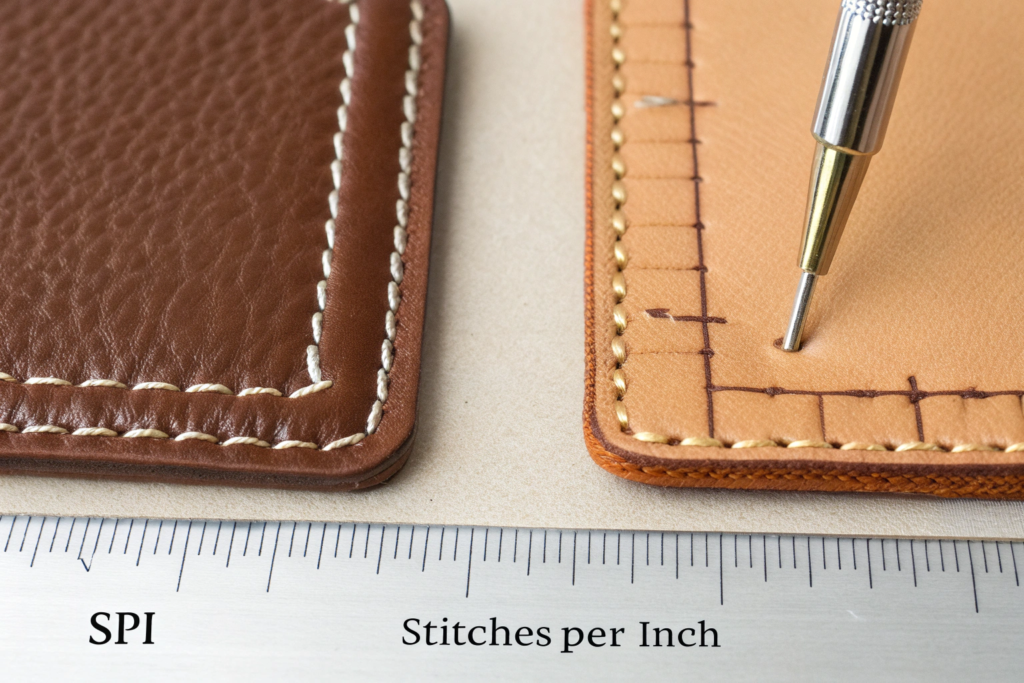
For heavy-duty belts, the gold standard is the saddle stitch. This is a hand-stitching technique where two needles are used with a single thread. The result is a stitch that is incredibly strong; if one part of the thread breaks, the rest of the seam does not unravel. It also has a beautiful, classic look. For machine-stitched belts, a lockstitch is used, and the tension must be perfectly balanced. The stitches per inch (SPI) is also critical. Too few stitches, and the seam is weak. Too many, and you are essentially perforating the leather, which can also weaken it. The ideal SPI for a heavy belt is typically 6-8 per inch, using a thicker thread (e.g., Tex 70, 90, or even 135).
Let’s delve into why the saddle stitch is so revered. In a machine lockstitch, the thread is looped and interlocked in the middle of the material. If that single thread breaks anywhere along the line, the tension is released, and the entire seam can unravel. In a saddle stitch, each stitch is independent. Two threads pass through the same hole from opposite sides and are locked together. If one thread breaks, the other thread still holds each individual stitch in place, preventing a catastrophic failure. This is why high-end, heirloom-quality leather goods are always saddle-stitched. It is a hallmark of true craftsmanship. For machine stitching, we use heavy-duty industrial machines specifically designed for thick materials. We meticulously balance the top and bottom thread tension to create a perfect lockstitch that is strong and flat. The needle size must also be matched precisely to the thread thickness. A needle that is too small will shred the thread. A needle that is too large will leave a hole that is too big, weakening the leather. This is the level of technical detail we manage every day. It is the difference between a belt that looks good and a belt that is truly built to last. You can find more information on stitch types and their applications in industry resources. At Shanghai Fumao Clothing, our team has the expertise to execute both techniques at the highest level.
Is a hand-saddle-stitched belt always better than a machine-stitched one?
For ultimate durability and a mark of luxury, yes, a true hand-saddle-stitched belt is superior. The strength and the aesthetic are unmatched. However, it is also significantly more time-consuming and expensive to produce. A high-quality machine lockstitch, done with the right thread, tension, and SPI, can also be extremely durable and perfectly adequate for most belts. The choice depends on your brand’s positioning and budget. We offer both options to our clients.
How do I choose the right thread thickness for my belt?
The thread thickness, often denoted by a "Tex" number, must be proportional to the thickness of the leather and the size of the belt. A thin, delicate belt requires a finer thread (Tex 20-40). A thick, heavy-duty work belt requires a much heavier thread (Tex 70-135). Our team will advise you on the correct Tex number based on your specific leather and design. Using a thread that is too thick for the leather can cause the leather to tear. It is a balance.
Conclusion
The humble thread is the unsung hero of a heavy-duty belt. It is the component that bears the load, endures the stress, and ultimately determines whether a beautiful piece of leather and a solid buckle become a lifelong companion or a disappointing failure. Choosing the right thread—bonded nylon or bonded polyester, in the correct thickness, with the appropriate stitch type and density—is not a detail. It is a fundamental engineering decision that speaks to the quality and integrity of your entire product.
At Shanghai Fumao Clothing, we have spent decades mastering this craft. We don’t leave thread choice to chance. We select the best materials from the world’s leading thread manufacturers. Our skilled craftspeople know the difference between a lockstitch and a saddle stitch, and they execute both with precision. Our quality control team checks every inch of stitching on every belt. We do this because we know that your brand’s reputation is woven into every single thread we use.
Are you ready to create belts that are as strong as they are beautiful? Let’s talk about how we can bring your vision to life with the quality it deserves. Contact our Business Director, Elaine, at elaine@fumaoclothing.com to start the conversation.