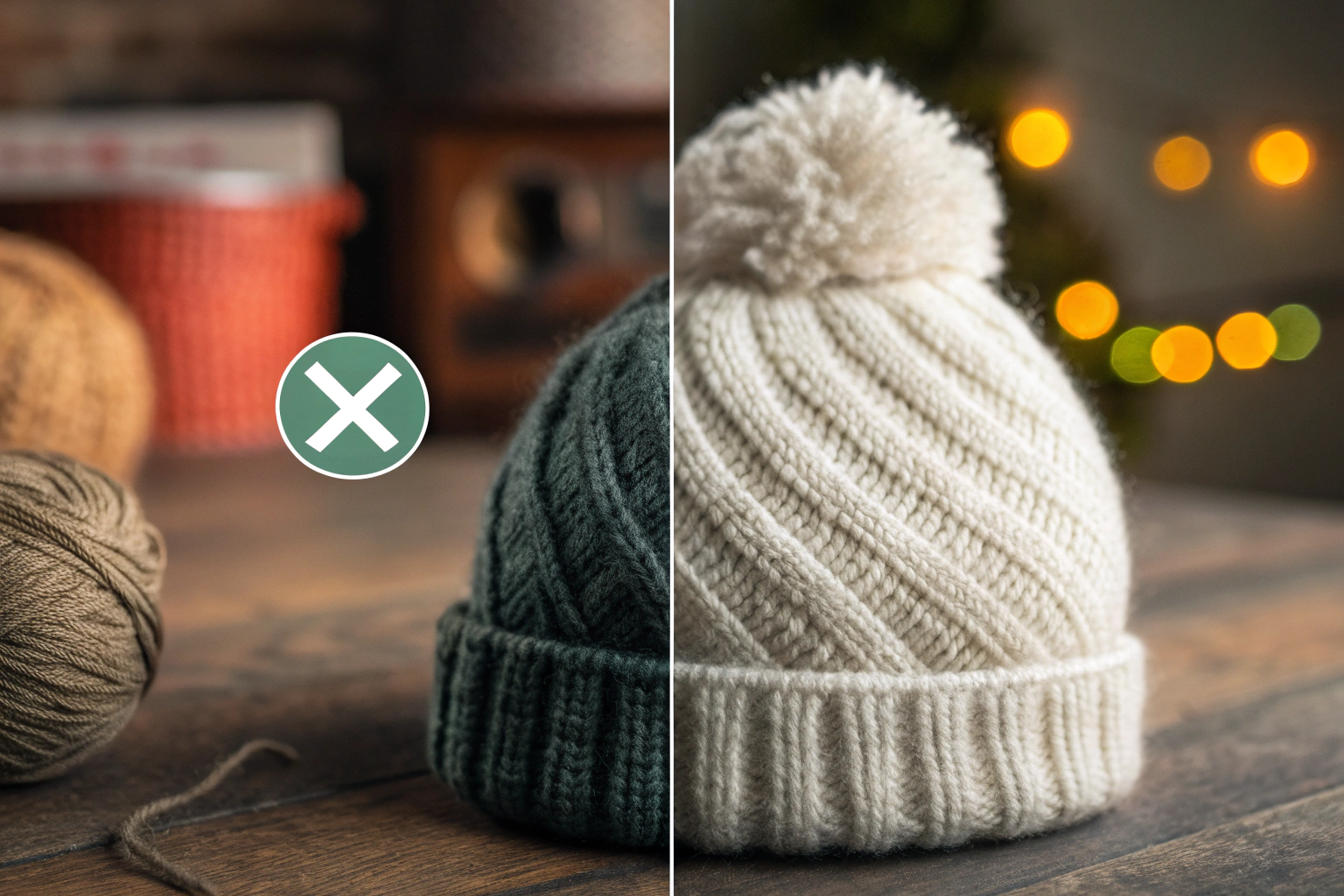
A few winters ago, I received a frantic call from a long-time client in Chicago. He had just launched a beautiful line of cashmere-blend beanies for the holiday season. The orders were pouring in. Then, the emails started. His customers were posting photos online, zooming in on the hats after just a few wears, showing tiny, unsightly balls of fuzz all over the surface. The word "pilling" was destroying his brand’s reputation. He asked me, "How did this happen? We paid for cashmere!"
The most common causes of pilling in knit hats are the use of short, staple fibers instead of long, continuous filaments, and a loose, low-twist yarn construction. When short fibers are twisted together loosely, friction from wear causes the fiber ends to work themselves to the surface and tangle into small balls, or pills. At Shanghai Fumao Clothing, we prevent this by carefully selecting high-quality, long-staple yarns with the correct twist level and using tight-knit constructions that hold fibers securely in place.
My client’s story is a painful but common one. He thought he was getting a great deal on cashmere. What he actually got was a blend of short, recycled fibers that looked good for a moment but fell apart with use. The good news is that pilling is not a mystery. It is a predictable outcome of specific material and construction choices. By understanding these causes, you can make informed decisions and deliver hats that stay beautiful for years. Let me explain exactly how pilling happens and, more importantly, how we stop it.
What Is Pilling and Why Does It Happen on Knit Hats?
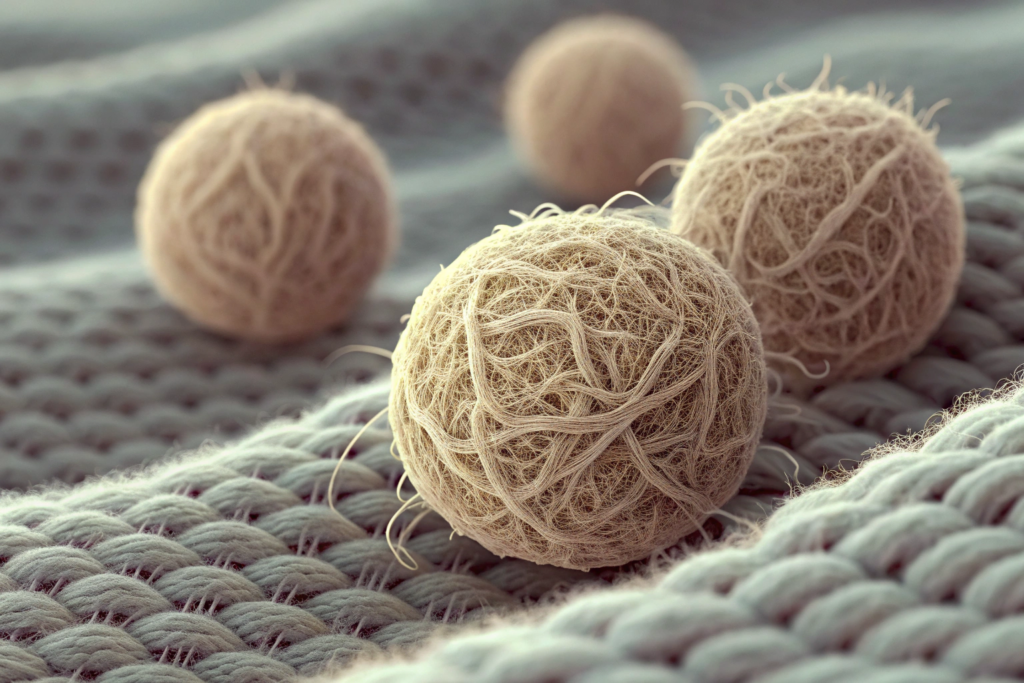
To prevent a problem, you first have to understand it. Pilling looks like a manufacturing defect, but it is actually a mechanical process. It is the result of friction. When a knit hat rubs against another surface, like a coat collar, a scarf, or even just your hair, that friction causes loose fiber ends on the surface of the yarn to become entangled. These tangles grow into small, dense balls that cling to the fabric. It makes a new hat look old and worn very quickly.
Pilling happens because of a fundamental conflict. The softness and warmth we love in a knit hat come from fibers that have a certain amount of loft and "hairiness." But these same characteristics create fiber ends that are prone to tangling. The key to preventing pilling is to balance softness with structural integrity. You need fibers that are long and strong enough to stay locked within the yarn, and a yarn construction and knit structure tight enough to hold them in place.
Let me break down the process into three steps. First, friction. Every time you wear your hat, it rubs against other materials. This friction acts like a brush, pulling loose fiber ends to the surface. This is called "fuzz." Second, entanglement. These raised fibers, now on the surface, get tangled together by the continuing friction. They form small, loose clusters. Third, compaction. As the friction continues, these loose clusters tighten and condense into hard, dense balls, the pills. They are anchored to the fabric by a few stubborn fibers. This entire process is accelerated by low-quality materials. Short fibers, like those from recycled materials or low-grade wool, have many more ends per inch of yarn. More ends mean more fuzz, which means more pills. This is a classic topic in textile science. At Shanghai Fumao Clothing, we study this science to ensure our hats resist the process at every stage.
Does pilling mean the hat is poor quality?
Not always, but it is a strong indicator. Even the finest cashmere can pill slightly at first, as the very fine, soft fibers are naturally short. However, with high-quality cashmere, the pilling is minimal and often stops after the first few wears as the loose surface fibers are shed. Poor-quality hats, made with short, weak fibers, will pill continuously and aggressively, ruining the appearance. So, pilling is a matter of degree. A little is sometimes normal. A lot is a sign of poor material selection.
Can pilling be removed once it happens?
Yes, there are tools like fabric combs and electric fabric shavers that can remove pills. But this is a solution to a problem you shouldn’t have. For a customer, having to shave their new hat is a disappointment. It is extra work they didn’t bargain for. Our goal is to make hats where pilling is so minimal that a customer never has to think about it. Prevention is always better than a cure.
How Do Fiber Length and Yarn Quality Affect Pilling?
The single most important factor in determining a hat’s resistance to pilling is the raw material itself. You cannot create a durable, pill-resistant hat from poor-quality fibers. It is simply impossible. The fiber length, known as "staple," is the foundation of everything. This is where the difference between a good hat and a great hat begins.
Long-staple fibers are the secret to anti-pilling performance. These are long, continuous strands of material. When they are twisted together to form yarn, there are fewer fiber ends sticking out. Fewer ends mean less fuzz, which means fewer pills. Short-staple fibers, often used in lower-quality blends or recycled materials, have countless ends. No matter how well you spin them, those ends will work their way to the surface. For knit hats, we specify yarns made from long-staple wools, cashmeres, and high-quality acrylics designed to resist pilling.
Let’s look at a specific example: cashmere. Genuine, high-grade cashmere uses fibers from the undercoat of the cashmere goat. The best cashmere comes from the longest fibers, often over 36mm in length. These fibers are incredibly soft but also strong and, when spun correctly, resist pilling. Lower-grade cashmere, or cashmere blends, often use shorter fibers, sometimes as short as 28mm. These might be cheaper, but they will pill much faster. The same principle applies to wool (like Merino) and even synthetic fibers. High-quality "anti-pilling" acrylic is made with longer polymer chains and a special manufacturing process that creates a smoother, more durable fiber surface. It costs more, but it performs. We always advise our clients to ask their suppliers for the fiber staple length. If they can’t tell you, it is a red flag. This understanding of fiber properties is essential for making informed sourcing decisions. At Shanghai Fumao Clothing, we source only from mills that provide full transparency on their fiber quality.
What is the difference between "virgin wool" and "recycled wool" for pilling?
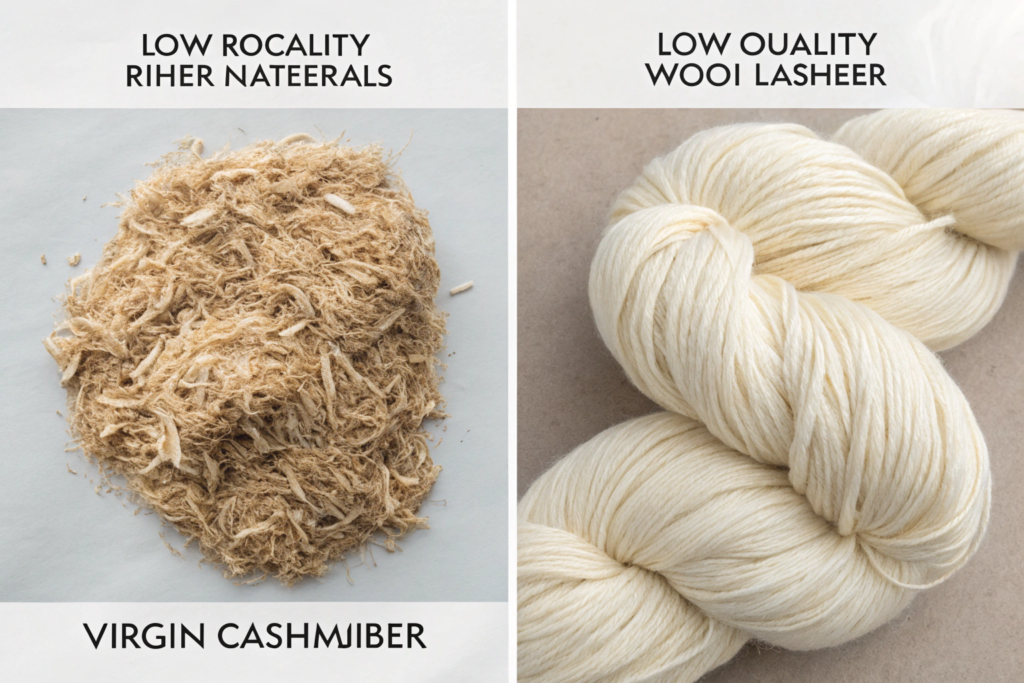
This is a critical distinction. Virgin wool comes from a live animal and is made of long, strong, continuous fibers. It is designed by nature to be durable. Recycled wool is made by shredding existing wool garments and re-spinning the fibers. This shredding process breaks the long fibers into very short pieces. These short fibers have thousands of ends and will pill aggressively. While recycled wool has its place in sustainability, it is a very poor choice for a product like a knit hat that needs to look good and resist abrasion.
Can you make a soft hat without pilling, or is there always a trade-off?
There is a common myth that softness always means pilling. This is not true. It is possible to have both, but it requires better materials. For example, a high-quality, long-staple Merino wool is incredibly soft and also quite pill-resistant. The softness comes from the fineness of the individual fibers (their diameter), not their length. You can have a fine, soft fiber that is also long and strong. The trade-off is cost. Super-soft, anti-pilling yarns are more expensive. But for a brand that values its reputation, it is a necessary investment.
How Does Yarn and Knit Construction Impact Durability?
Even with the best long-staple fibers, you can still end up with a pilling hat if the yarn is spun or the hat is knitted incorrectly. The construction of the yarn and the fabric is the second line of defense. It is about how tightly and securely those precious long fibers are locked into place. A loose structure invites friction and fiber migration.
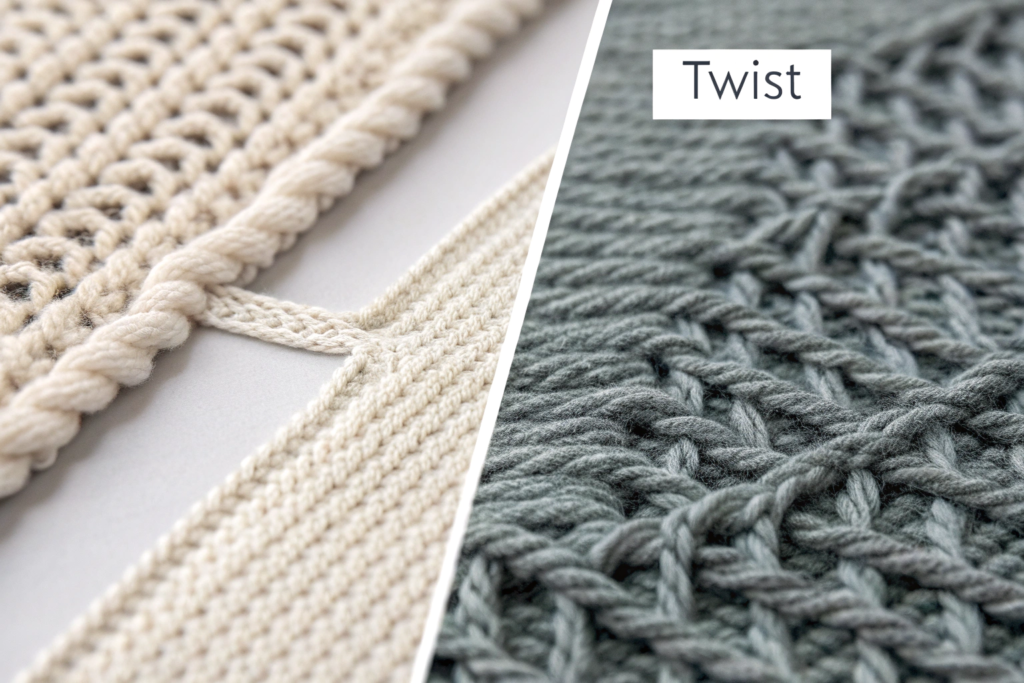
Two construction factors are key: yarn twist and knit density. A higher-twist yarn means the fibers are twisted together more tightly. This grips them firmly, making it much harder for fiber ends to escape to the surface. A tighter knit stitch, with smaller needles and more stitches per inch, also compresses the yarn and reduces the space for fibers to move and tangle. Together, a high-twist yarn and a dense knit create a smooth, durable surface that resists pilling.
Think of a yarn as a rope. A loosely twisted rope has fibers that can be easily picked out. A tightly twisted rope is much more solid and resistant to abrasion. The same is true for yarn. However, there is a limit. If you twist yarn too tightly, it can become stiff and wiry, losing the soft, cozy feel you want in a hat. The art is in finding the perfect balance for the specific fiber. For a baby alpaca hat, you might use a slightly softer twist to preserve its legendary softness, accepting a tiny amount of initial shedding. For a hard-wearing beanie meant for daily use, you would opt for a firmer twist. Knit density is equally important. A loose, chunky cable-knit hat is simply going to have more surface area and more opportunities for friction and pilling than a tight, fine-gauge beanie. This is a design choice. If you choose a chunky knit, you must be even more vigilant about your yarn quality. These principles of yarn engineering are fundamental to our work. At Shanghai Fumao Clothing, our experienced team knows how to balance these factors for optimal performance.
Will a tighter knit hat be less soft?
Not necessarily. Softness is a function of the fiber’s fineness (diameter). A fine Merino wool can be knitted tightly and still feel incredibly soft against the skin. It might have less "loft" or airiness than a loose knit, but the surface feel can be just as pleasant, often even smoother. The tight construction adds durability without sacrificing the luxurious hand-feel we aim for.
Can I get a chunky, loose-knit hat that doesn’t pill?
This is a challenge. Chunky, loose knits are inherently more susceptible to pilling because there is more yarn surface exposed and more movement between stitches. However, it is possible to minimize it. The solution is to use a very high-quality, high-twist yarn made from long-staple fibers. The yarn itself needs to be strong enough to withstand the abrasion. You also need to ensure the yarn is plied (multiple strands twisted together) which adds another layer of structural integrity. It can be done, but it requires a premium material specification.
What Testing Standards Ensure a Hat Is Truly Anti-Pilling?
You don’t have to guess whether a hat will pill. You don’t have to wait for customer complaints. There are internationally recognized laboratory tests that can predict, with remarkable accuracy, how a fabric will perform in the real world. Using these tests is the only way to be certain. We use them for every new yarn and every new hat design we produce.
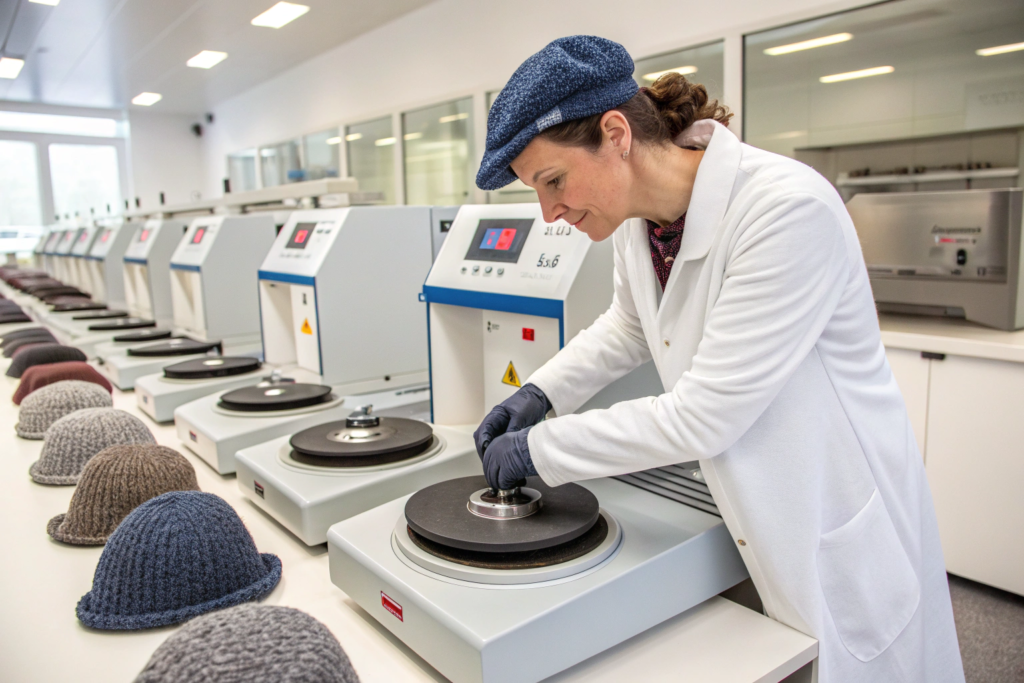
The gold standard for testing pilling is the Martindale abrasion test. In this test, a sample of your knit fabric is rubbed against a standard wool fabric in a figure-eight motion for a set number of cycles. After the test, the sample is compared to a set of standard photographs to rate its pilling level, usually on a scale from 1 to 5. Grade 5 means no pilling. Grade 1 means severe pilling. For our luxury and premium clients, we always aim for a Grade 4 or 5 result.
The Martindale test is not just a pass/fail. It gives us objective, comparable data. We can test different yarn candidates for a new hat design and see, before we produce a single piece, which one will perform best. We can also test after the hat is made to verify the final product. For a client like the one I mentioned at the start, a simple Martindale test on his "cashmere" blend would have revealed the disaster before it happened. The test would have shown a Grade 1 or 2 result, warning him that the fibers were too short and the yarn too weak. We also use other tests, like the ICI Pilling Box test, where samples are tumbled in a cork-lined box to simulate wear. The key is to use a standardized, repeatable method. This takes the guesswork out of quality. We provide our clients with these test reports as part of our commitment to transparency. You can learn more about the ASTM standard for fabric pilling. At Shanghai Fumao Clothing, our in-house lab is equipped to perform these tests, ensuring every hat meets our rigorous standards before it ships.
Can you test a sample before I commit to a full production order?
Yes, absolutely. This is a critical part of our development process. Once we have a yarn selected and a sample hat knitted, we can send a piece of the fabric to our lab for Martindale testing. We can provide you with the rating before you place your bulk order. This gives you 100% confidence in the product you are about to launch. It is a small investment that can save you from a massive, reputation-damaging problem later.
What is a "passing" grade for a knit hat?
For most commercial applications, a Grade of 3-4 or higher is considered acceptable. This means there is only slight pilling after the test. For our premium and luxury lines, we target Grade 4 or 5. This indicates a very high level of resistance. The specific target depends on your brand’s quality standards and the intended use of the hat. A fashion beanie for occasional wear might have a different target than a performance outdoor hat meant for daily, rugged use. We can help you set the right standard for your market.
Conclusion
Pilling is the silent killer of customer satisfaction for knit hats. It turns a beloved accessory into a source of frustration and makes a brand look cheap. But it is entirely preventable. By understanding the science—choosing long-staple fibers, specifying the right yarn twist and knit density, and validating the results with standardized testing—you can deliver hats that stay beautiful wear after wear.
At Shanghai Fumao Clothing, we have made this our mission. We don’t just knit hats; we engineer them for durability. We source only from mills that provide fiber-length data. Our experienced team selects the optimal yarn construction for your design. And our in-house lab rigorously tests every new product to ensure it meets the highest anti-pilling standards. We protect your brand’s reputation by building quality into every stitch.
Don’t let your hats become a cautionary tale. Let’s create products your customers will love for years. Contact our Business Director, Elaine, at elaine@fumaoclothing.com to discuss your next knitwear project.