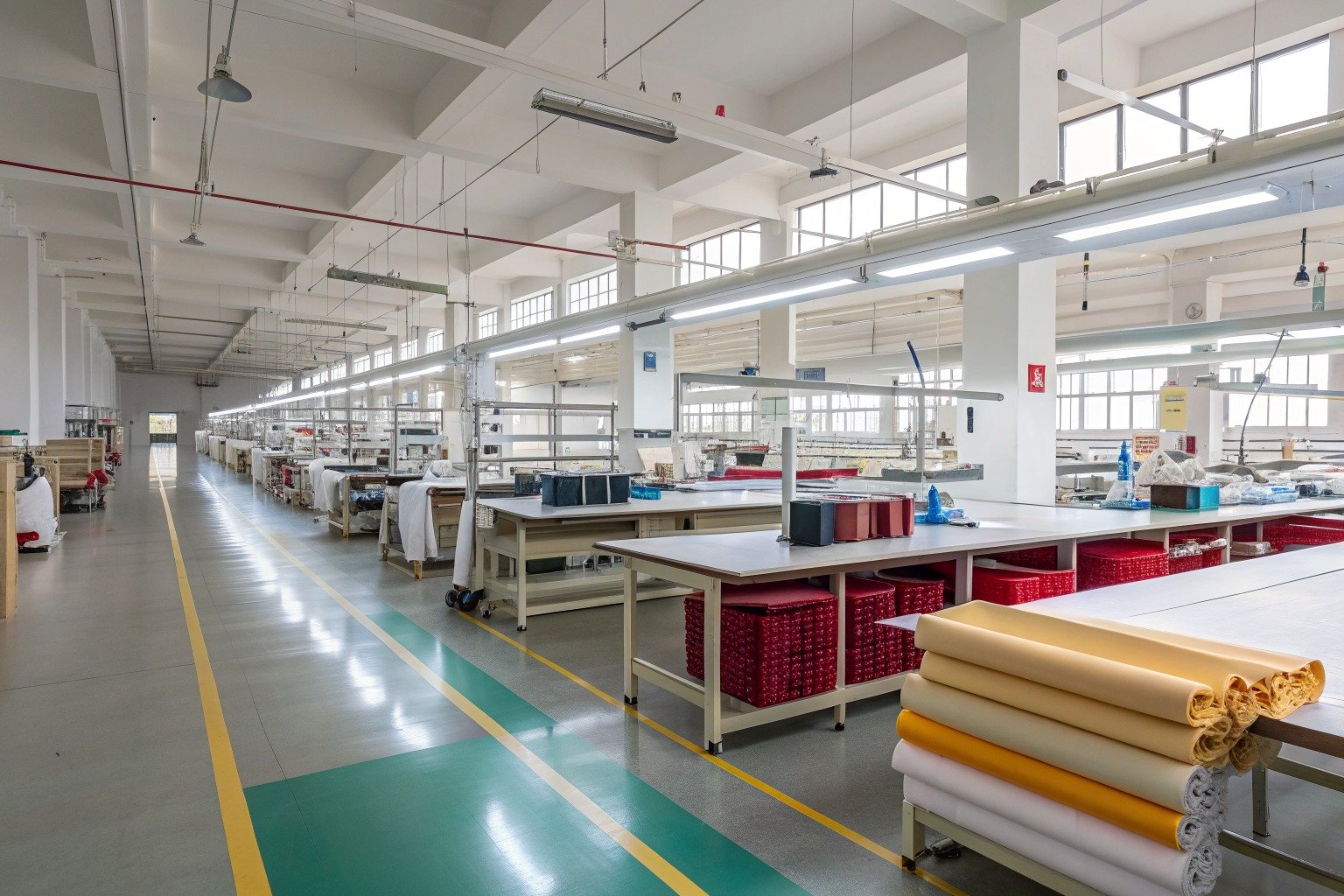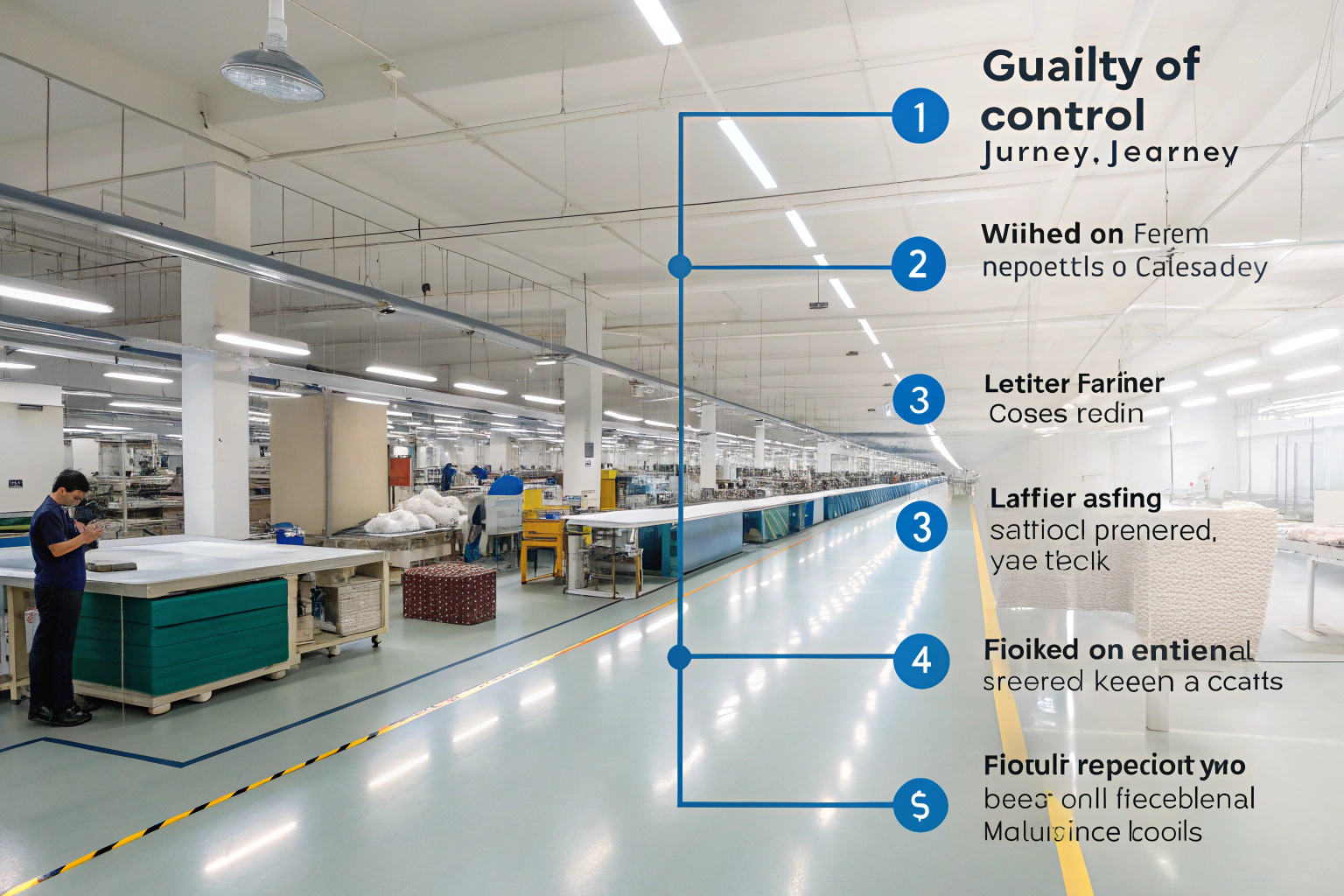
For any brand, the moment of truth arrives when a customer first holds your product. For fashion accessories—belts, hats, scarves, jewelry—this moment is intensely tactile. Flaws are not hidden by fit; they are immediately visible in a crooked stitch, a flaking finish, or a faulty clasp. Implementing a rigorous, multi-stage Quality Control (QC) system is not merely a cost of doing business; it is the fundamental process that protects your brand equity, minimizes costly returns, and ensures customer satisfaction.
The key quality control steps for manufacturing fashion accessories are a multi-layered system that begins at material inspection (FRI), continues with in-process checks during production (IPQC), and culminates in a final pre-shipment inspection (PSI) against agreed standards like AQL. This system must be proactive, documented, and integrated into every stage from sourcing to shipping. At Shanghai Fumao Clothing, we view QC not as a separate department, but as the responsibility of every team member involved in bringing your accessory to life.
Let’s break down this defensive line, step by step, to understand how quality is systematically built into and validated for every order.
Why is Raw Material Inspection the First Critical Step?
You cannot produce a high-quality accessory from substandard materials. The QC process must begin before a single piece is cut or molded. Catching defects here prevents waste and rework later.
Raw Material Inspection (or Fabric/Component Review) is the first critical step. It involves checking incoming fabrics, leather, metals, threads, and trims against approved standards for color, weight, thickness, finish, and safety compliance before they enter production. This step verifies that your supplier’s supplier has met the grade.

What Specific Checks are Done on Materials?
- Textiles (for scarves, hat fabric): Color matching under a light box, checking for GSM (weight), inspecting for weaving defects like slubs or holes, and verifying width.
- Leather & Synthetic Leather (for belts, bags): Checking for grain consistency, thickness, color uniformity, and surface defects like scars or cracks.
- Hardware & Metal Parts (for clasps, buckles, hair clips): Verifying finish (plating quality, no bubbling), function (spring action, clasp open/close), dimensions, and requesting material certification (e.g., lead-free, nickel-free).
- General: All materials should have valid OEKO-TEX or REACH compliance certificates on file. This step often involves approving a lab dip for dyes or a plating sample for hardware.
How Does This Prevent Production Disasters?
Approving faulty materials leads to an entire batch of defective finished goods. For example, if a roll of canvas for a tote bag has inconsistent dye, every bag cut from it will be flawed. If the alloy for a metal hair clip is brittle, every clip risks breaking. Catching this upfront allows the factory to reject the batch with the material supplier, protecting your production timeline and cost.
What Happens During In-Process Quality Control (IPQC)?
Quality must be built into the product, not just inspected out at the end. IPQC involves continuous checks on the factory floor while production is active, allowing for immediate correction.
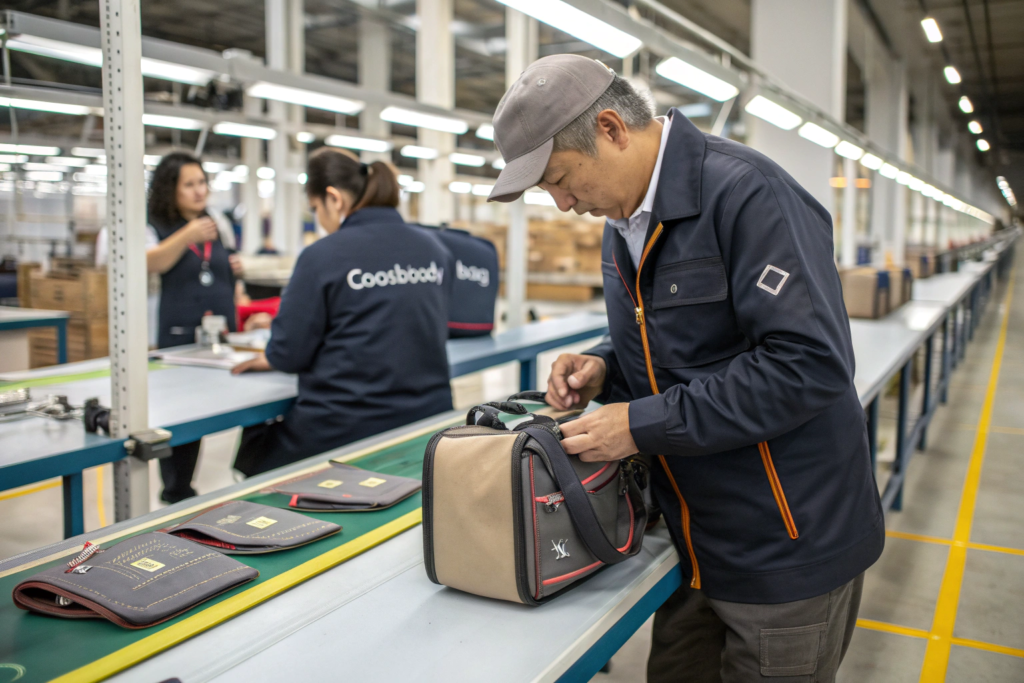
In-Process Quality Control involves line supervisors and QC staff performing checks at critical points in the assembly line—after cutting, during sewing/molding, and during sub-assembly—to catch and correct deviations in real-time before they multiply. This is the heart of prevention.
Where are the Key Checkpoints in Accessory Production?
- After Cutting: For items like scarves or fabric belts, check cut pieces against the pattern for size and shape accuracy. Ensure patterned fabrics are cut with proper pattern matching.
- During Sewing/Assembly: Check stitch density (SPI), seam strength, alignment of parts (e.g., is the buckle centered on the belt?), and thread color matching.
- During Embellishment/Printing: For printed scarves, check print registration and color. For embroidered logos on hats, check stitch density and clarity.
- During Hardware Attachment: Ensure rivets, snaps, and buckles are securely attached and function properly. This is critical for bags and belts.
What is the Role of the "Golden Sample"?
At each checkpoint, workers and inspectors compare the item in production to an approved "Golden Sample" or Sealed Sample. This is a perfect sample from the pre-production stage, signed off by both the brand and the factory. It is the physical standard for dimensions, workmanship, and appearance, ensuring consistency throughout the run.
How is the Final Pre-Shipment Inspection (PSI) Conducted?
The PSI is the last and most formal defense before goods leave the factory. It is a statistical, impartial assessment of the finished, packaged goods to determine if the entire batch meets the agreed quality level.
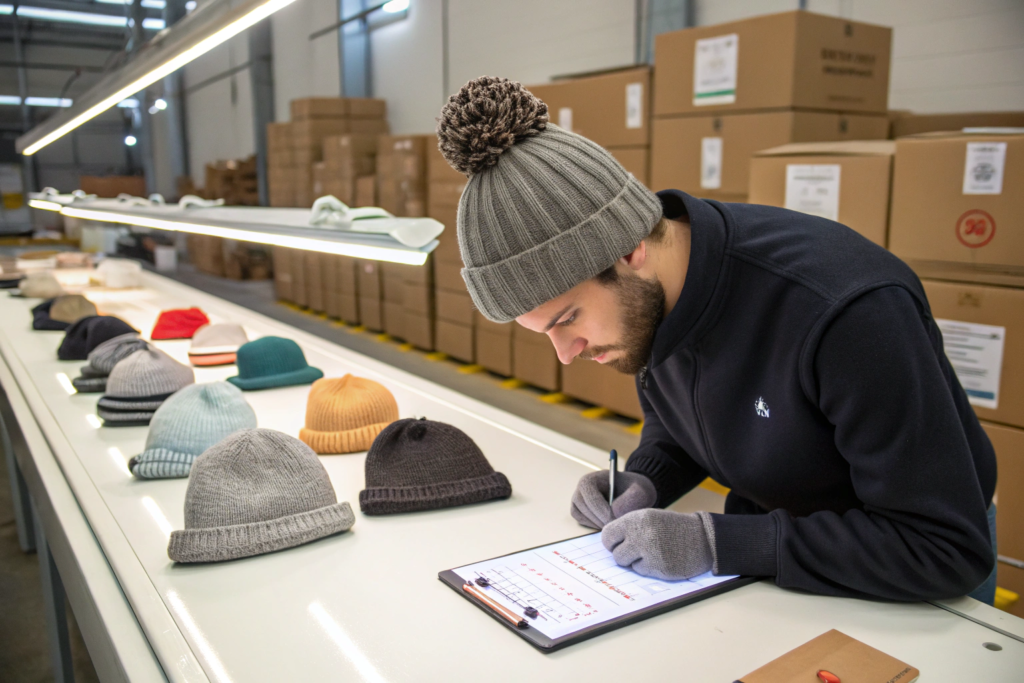
The Final Pre-Shipment Inspection is a structured audit where an inspector randomly selects a statistically significant sample from the completed order, inspects it against the product specifications and golden sample, and determines if the lot passes or fails based on the Acceptable Quality Limit (AQL). This is your final verification.
What Does an AQL Inspection Actually Check?
The AQL (Acceptable Quality Limit) is an international sampling standard (like ISO 2859-1). For general accessories, AQL 2.5 for major defects and AQL 4.0 for minor defects are common. The inspector will:
- Draw Random Samples: Based on the order size, they randomly select boxes and units from across the production batch.
- Perform Visual & Functional Checks:
- Visual: Size, color, symmetry, printing/embroidery quality, stains, scratches.
- Functional: Zippers, clasps, buttons, folding mechanisms (for umbrellas), strap adjustments.
- Packaging: Correct polybag, labeling, barcode, carton strength, and shipping marks.
- Categorize Defects: Each flaw is classified as Critical, Major, or Minor.
- Make a Pass/Fail Recommendation: If defects exceed the AQL limit, the lot fails, and the brand must be consulted for a decision (reject, sort, or negotiate).
Why is a Third-Party PSI Often Recommended?
While a reputable factory like Shanghai Fumao Clothing will have a robust internal PSI, many brands hire a third-party inspection company (e.g., SGS, QIMA, AsiaInspection). This provides an unbiased report, especially important for new supplier relationships or high-value orders. The inspector works for you, not the factory.
How is Quality Documented and Used for Continuous Improvement?
QC is not a one-time event but a cycle of feedback and improvement. Proper documentation turns inspections from a gatekeeping function into a tool for process enhancement.
Quality is documented through detailed reports at each stage (Material Test Reports, IPQC logs, PSI reports) that track defects, identify root causes, and trigger corrective actions. This data is analyzed to prevent recurrence and improve future production runs. This closes the loop.
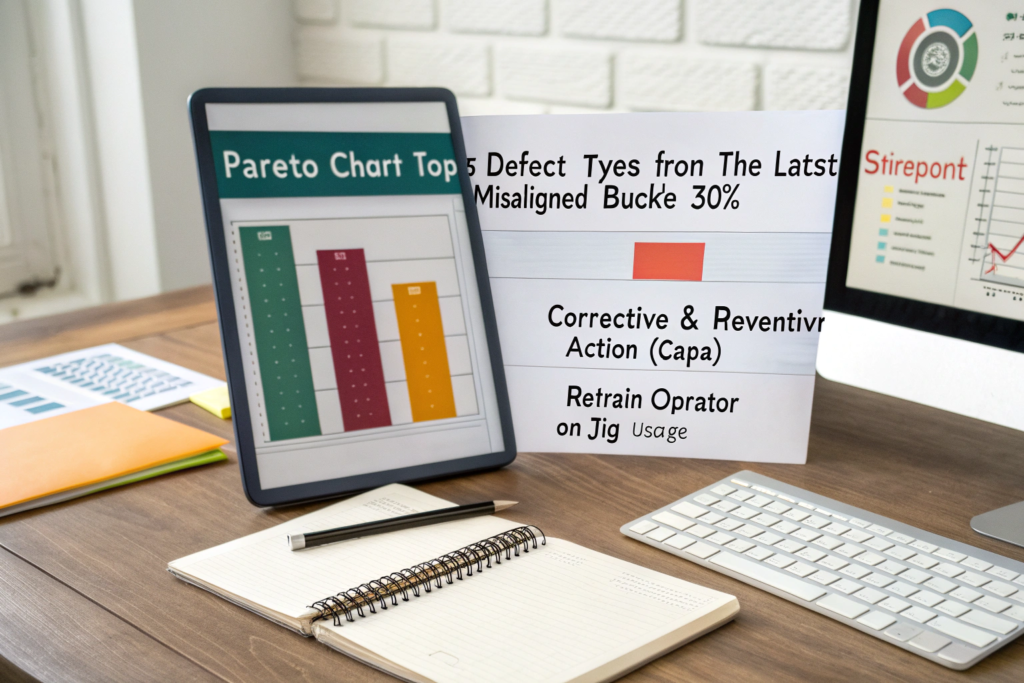
What is a Corrective and Preventive Action (CAPA) Process?
When a defect trend is identified (e.g., frequent broken clasps on hair clips), a formal CAPA is triggered:
- Contain: Isolate affected goods.
- Analyze Root Cause: Was it a faulty batch of springs? Incorrect assembly pressure?
- Correct: Fix the immediate issue (rework or scrap).
- Prevent: Change the process—source better springs, update the assembly jig, retrain the worker.
This systematic approach, shared transparently with the brand, builds tremendous trust and demonstrates a commitment to partnership, not just transaction.
How Does This Build a Stronger Brand-Supplier Relationship?
Sharing QC data and collaborating on solutions transforms the supplier into a true partner. When you can say, "Our last PSI showed a 2% defect rate on stitch quality; what’s your plan to get it below 1%?" you engage in strategic, evidence-based dialogue. It moves the conversation from blame to shared problem-solving, which is the hallmark of a lasting and productive manufacturing partnership.
Conclusion
The key QC steps for manufacturing fashion accessories form a comprehensive, proactive system that spans the entire production journey. From validating the raw materials, to monitoring the assembly line, to conducting a final statistical audit, each stage is designed to catch and prevent defects, ensuring that what arrives at your warehouse or your customer’s door is consistently excellent.
Implementing and insisting on this level of scrutiny is what separates professional, reliable suppliers from risky ones. It is the most direct investment you can make in your brand’s reputation and your customers’ loyalty.
If you are looking for a manufacturing partner that embeds these rigorous, documented QC steps into every accessory order, from concept to delivery, we have the systems and the mindset to be your quality assurance partner.
To discuss how we can implement a robust QC framework for your next accessory project, feel free to contact our Business Director Elaine. Her email is: elaine@fumaoclothing.com.