You’ve finalized the design, the factory has produced perfect samples, and you’re ready to approve them for mass production. But a critical hurdle remains: getting those samples from the factory in China to your desk overseas, quickly, safely, and without breaking the bank. Choosing the wrong shipping method can lead to delays, damaged goods, or unexpected costs that derail your entire production timeline. So, what is the most efficient and reliable path for your precious samples?
The best way to ship samples from China depends on a strategic balance of four key factors: Speed, Cost, Reliability, and Customs Simplicity. There is no one-size-fits-all answer, but a clear decision-making framework exists. For most fashion accessory samples—like hair clips, hats, or scarves—international express couriers (DHL, FedEx, UPS) are often the optimal choice for their door-to-door tracking, speed (3-7 days), and handled customs clearance. However, for heavier, multi-item sample sets or when cost is the absolute priority, air freight or even sea freight for non-urgent bulk samples can be viable alternatives.
Many importers waste time and money by not defining their sample shipping strategy upfront. This guide will break down the pros and cons of every major shipping method, explain how to navigate customs for samples, and provide a practical checklist to ensure your samples arrive flawlessly, every time. This knowledge is crucial whether you’re a startup brand or a large retailer like those we partner with at Shanghai Fumao Clothing.
What Are the Main Shipping Methods for Samples from China?
When your factory says, "Samples are ready," you’re presented with several shipping options, each with its own trade-offs. The main channels are International Express, Air Freight, Sea Freight, and Postal Services. Your choice will directly impact your timeline, budget, and peace of mind. How do you decode these options to match your specific needs?
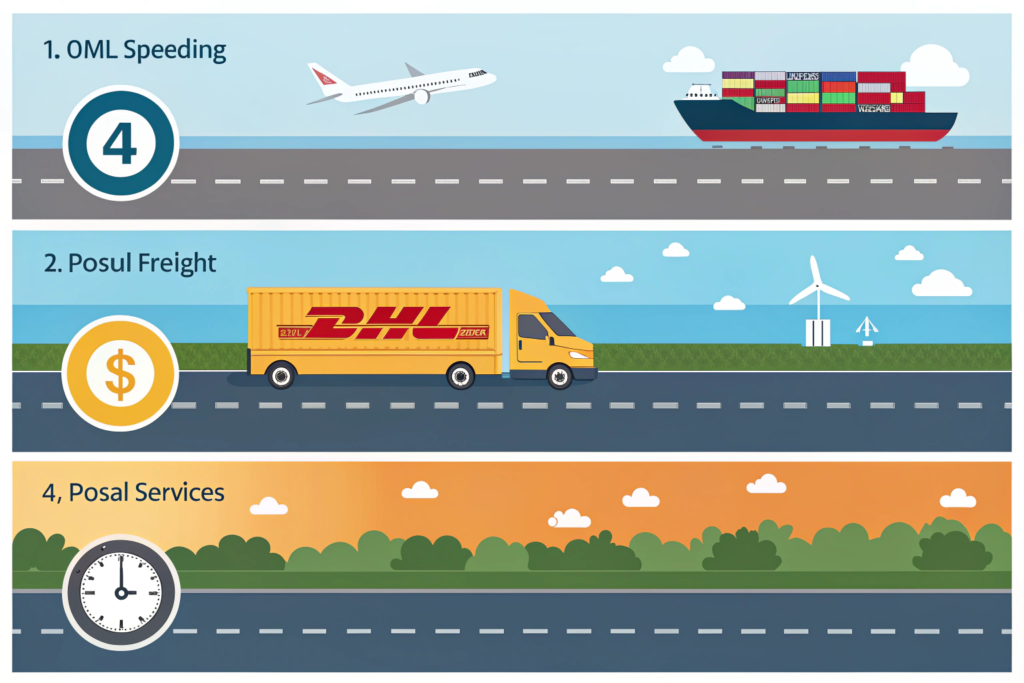
The four primary methods form a spectrum from fastest/most expensive to slowest/least expensive. International Express (DHL/FedEx/UPS) is the premium door-to-door service. Air Freight involves shipping goods via commercial airlines, often requiring you to handle customs at destination. Sea Freight is for large, heavy, non-urgent sample sets. Postal Services (e.g., EMS, ePacket) can be cheaper but slower and less reliable with tracking. Understanding the mechanics of each is the first step to making an informed decision.
Why is International Express Often the Best Choice for Urgent Samples?
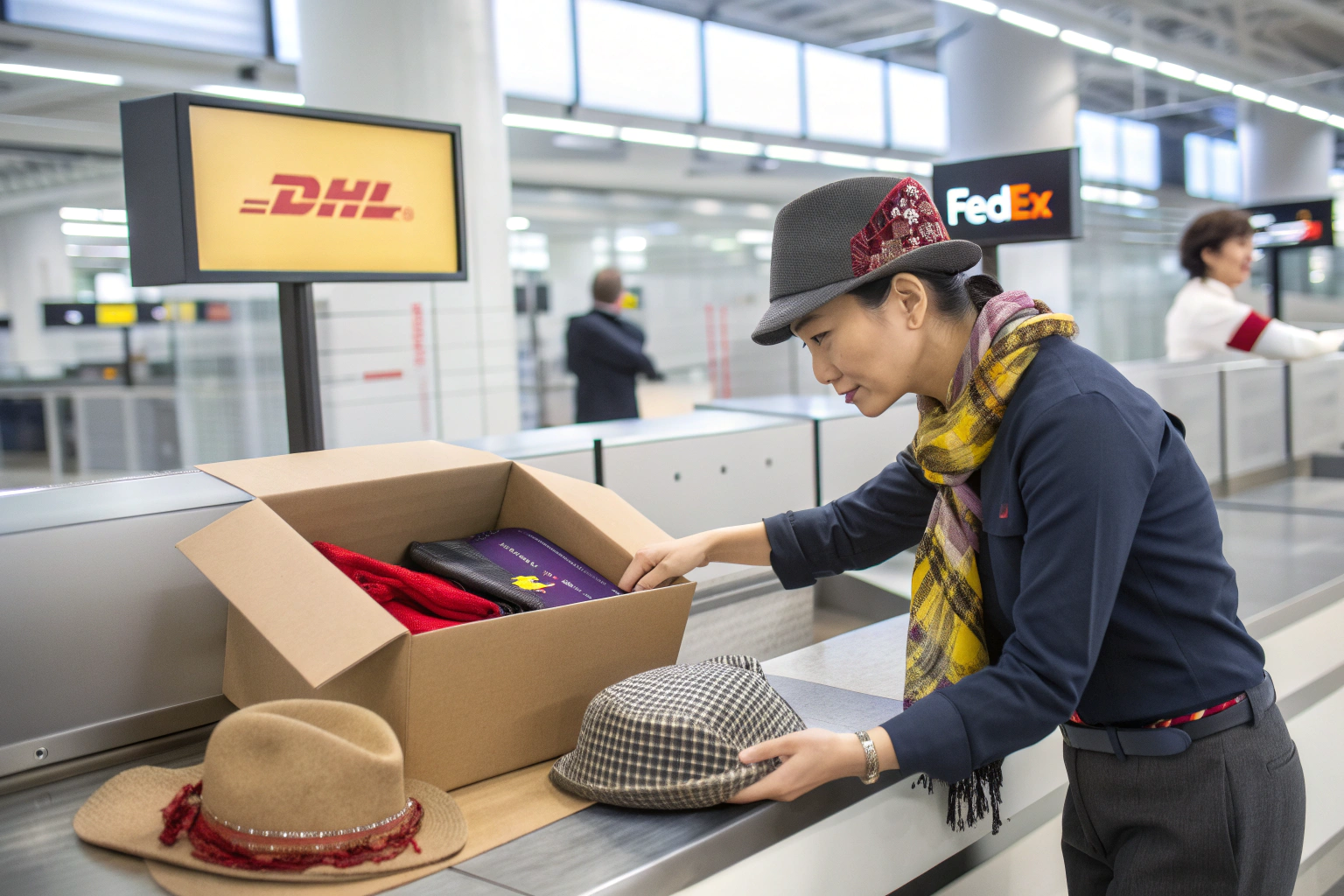
For time-sensitive accessory samples, international express services offer an unmatched combination of speed and convenience. They typically deliver from China to major global markets in 3 to 7 business days. Their greatest advantage is door-to-door service with integrated customs clearance. The courier acts as your agent, handling the complex paperwork and taxes for a "DDP" (Delivered Duty Paid) delivery. This means you receive a single invoice and the sample box arrives at your door with no hidden steps. While it’s the most expensive per-kilogram option, the time saved in the product development cycle often justifies the cost. For instance, getting a hat sample via FedEx in 5 days allows you to approve production two weeks sooner than by sea, which can be critical for hitting a season launch.
When Should You Consider Air Freight or Sea Freight for Samples?
Air freight is worth considering when you have a large set of samples (e.g., a full collection of 50 different belts and scarves) that is too heavy or bulky for express but still needs to arrive within 1-2 weeks. It is cheaper per kilogram than express but requires more legwork. You or your agent must handle customs clearance at the destination airport. Sea freight is only practical for extremely heavy, non-urgent sample packages (over 100kg) where a delay of 4-8 weeks is acceptable. For example, shipping hundreds of ceramic mugs or a massive order of promotional umbrellas as pre-production samples. The cost savings are significant, but the risk of delay and complexity is high. Resources like Freightos provide useful comparisons for these freight methods.
How to Navigate Customs and Duties for Sample Shipments?
The word "customs" can instill fear in importers, often seen as a black box of delays and unexpected fees. For samples, this process can be simpler, but it requires correct documentation and communication. Mistakes here can lead to your samples being held for weeks or incurring high duties that defeat the purpose of a "sample." How do you ensure a smooth passage?
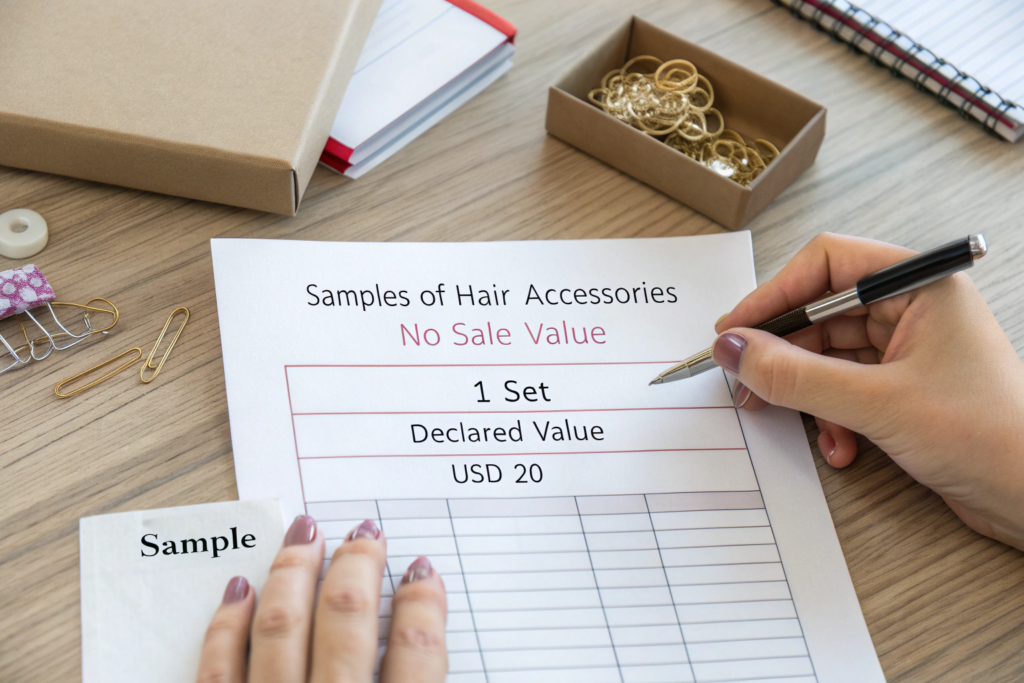
The key is to work with your supplier to ensure the shipping documents accurately describe the contents as "Commercial Samples" or "No Commercial Value" and declare a low, symbolic value (e.g., $10-$50). This is standard practice and, in many countries, allows samples to clear customs duty-free or with minimal fees under specific provisions. The commercial invoice, packing list, and possibly a sample declaration letter from the supplier are the critical documents. Proper documentation is your sample’s passport. Getting it right avoids bureaucratic purgatory and gets the samples into your hands faster.
What Documents Are Essential for Smooth Customs Clearance?
Your factory should provide you with a Commercial Invoice, a Packing List, and an Air Waybill (AWB) or House Bill of Lading (BL). For express shipments, the courier often generates these from the factory’s information. You must review the Commercial Invoice carefully. It must include: a detailed description of each item (e.g., "Women’s Knitted Beanie – Sample"), the material composition, quantity, and the declared value. Phrases like "No Commercial Value" or "Marketing Samples" should be clearly stated. For certain markets or high-value samples, you may need the supplier to provide test reports or certificates (e.g., for materials). Using a supplier with experience in international shipping, like Shanghai Fumao Clothing, ensures these documents are prepared correctly the first time.
How to Handle "DDP" vs. "DAP" Shipping Terms for Samples?
Understanding Incoterms is vital. For samples, DDP (Delivered Duty Paid) is almost always the best and simplest choice. With DDP, the seller (your factory) is responsible for all costs and risks, including duties and taxes, until the goods are delivered to your address. You pay nothing extra upon arrival. DAP (Delivered at Place) means the seller delivers the goods to your country but you are responsible for paying the import duties and taxes. For samples, this can create unexpected costs and paperwork for you. Always request and confirm DDP shipping with your supplier for express samples. This avoids surprises and simplifies the process to a single, upfront cost.
What Packaging and Insurance Steps Are Non-Negotiable?
Imagine receiving your long-awaited sample box only to find a beautifully crafted straw hat crushed or a set of hair clips with broken clasps. Physical damage during transit is a real risk. While you can’t control every bump in the journey, you can control how well the samples are prepared for it. What are the essential protective measures?
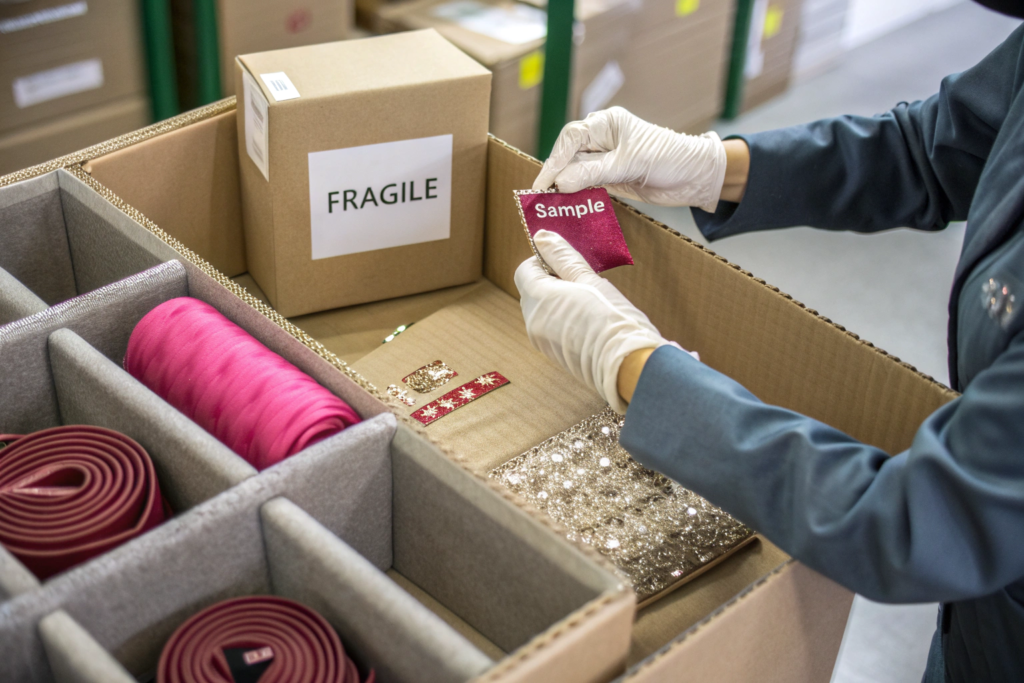
Professional, robust packaging is the first line of defense. Samples should be individually wrapped (in polybags or bubble wrap), securely placed in a rigid cardboard box with ample void fill (like air pillows or foam), and the outer box should be clearly marked as "FRAGILE" if needed. Secondly, purchasing shipping insurance is a non-negotiable, low-cost investment for valuable samples. The nominal insurance fee protects you against loss or damage, giving you financial recourse and the ability to request a remake quickly.
Treating sample packaging as a critical part of the quality control process ensures your evaluation is based on the product’s design, not on damage incurred in transit.
How Should Different Types of Accessories Be Packed for Shipping?
The packaging must suit the product. Hats (especially straw or structured fabric caps) need rigid support inside the box to prevent crushing; a hat form or crumpled paper inside the crown is essential. Scarves and shawls should be folded neatly, wrapped in tissue to prevent snagging, and preferably placed in a zip-lock bag to avoid moisture. Hair clips and jewelry must be individually sealed in small plastic bags to prevent scratching and tangling, then placed in a small box within the main shipping box. Belts should be rolled, not folded, to avoid creases. Your supplier should understand these nuances. At our factory, we have standard operating procedures for sample packaging to ensure every item, from a delicate headband to a metal belt buckle, arrives in pristine condition.
Is Shipping Insurance for Samples Really Worth It?
Absolutely. The cost of insurance is typically a very small percentage of the declared value (often 0.5%-2%). For a sample shipment valued at $100, insurance might cost just $1-$2. This minimal investment covers you against the major risks of loss, theft, or total damage. While couriers have liability limits, they are often low (e.g., $100) unless you declare a higher value and pay for insurance. For irreplaceable first samples or prototypes, insurance is essential. It also formalizes the value of the goods, which can help in any claim process. Before shipping, confirm with your supplier that insurance is included in the quote, or purchase it directly from the carrier’s website when you receive the tracking number.
How to Choose and Work with a Reliable Shipping Partner?
Ultimately, the safety and speed of your samples depend on the human and corporate links in the chain: your factory’s shipping department and the carrier they use. A reliable partner doesn’t just move a box; they provide solutions, transparency, and support. How do you identify and collaborate with such a partner?
Your primary shipping partner is often your factory’s logistics or shipping department. Assess their reliability by their communication, proactivity in providing options and quotes, and attention to documentation details. Secondly, the carrier they use matters. For express shipping, the big three (DHL, FedEx, UPS) have global networks and reliable tracking. In China, local couriers like SF Express are also excellent for domestic leg before international handoff.
A strong partnership here means fewer headaches for you and a more predictable development timeline, allowing you to focus on your core business of design and sales.
What Questions Should You Ask Your Supplier About Shipping?
When samples are ready, don’t just say "ship them." Ask these specific questions: 1. "What are my shipping options and the cost/delivery time for each?" 2. "Can you ship DDP to my address?" 3. "What is the declared value on the invoice, and is it marked as samples?" 4. "What is the tracking number and estimated delivery date?" 5. "Is insurance included? If not, can you add it?" A professional supplier will answer these promptly. Their willingness to explain and offer choices is a sign of a good partner. For example, at Shanghai Fumao Clothing, we provide clients with a simple table comparing express options so they can make an informed choice based on their urgency and budget.
How to Track and Manage Sample Shipments Effectively?
Once shipped, proactive tracking is key. Use the tracking number on the carrier’s official website (not just the generic link the supplier might send) for the most accurate, real-time updates. Set up SMS or email alerts for status changes. Be aware of potential holds at customs—if a status doesn’t change for several days, contact the carrier’s customer service; they can often tell you if documentation is needed. Keep your supplier in the loop if issues arise; they can contact the local courier office in China, which can sometimes resolve problems faster. Using a basic spreadsheet or project management tool to log sample shipments, tracking numbers, and received dates helps you manage multiple development projects efficiently.
Conclusion
Shipping samples from China efficiently is a strategic operation that balances cost, speed, and reliability. The best method for most accessory samples is international express shipping (DHL/FedEx/UPS) for its unmatched combination of door-to-door service, speed, and handled customs. Success hinges on clear communication with your supplier, insisting on DDP terms, ensuring accurate "sample" documentation, and never skipping on proper packaging and insurance.
By treating sample logistics as a critical part of your supply chain management, you eliminate a major source of delay and frustration. This allows you to iterate designs faster, approve production with confidence, and bring your products to market on schedule. A reliable factory partner understands this and will handle the logistics complexities for you, turning sample reception from an anxiety point into a smooth, predictable step in the process.
If you are looking for a fashion accessory manufacturer that not only produces high-quality samples but also manages their seamless delivery to your door, let’s talk. Shanghai Fumao Clothing has extensive experience shipping samples worldwide with full transparency and care. Contact our Business Director Elaine to discuss your next project and experience a streamlined sampling process. Reach her at: elaine@fumaoclothing.com.