You’re planning a promotional campaign, launching a brand merchandise line, or stocking up for retail season, and custom cotton bandanas seem like the perfect item. They’re versatile, trendy, and offer great branding visibility. But then the practical question hits: "How many do I need to order?" The answer isn’t a single number, but a range influenced by a matrix of factors from fabric choice to decoration complexity. Ordering too few may not be feasible for a factory, while ordering too many ties up capital and creates storage headaches.
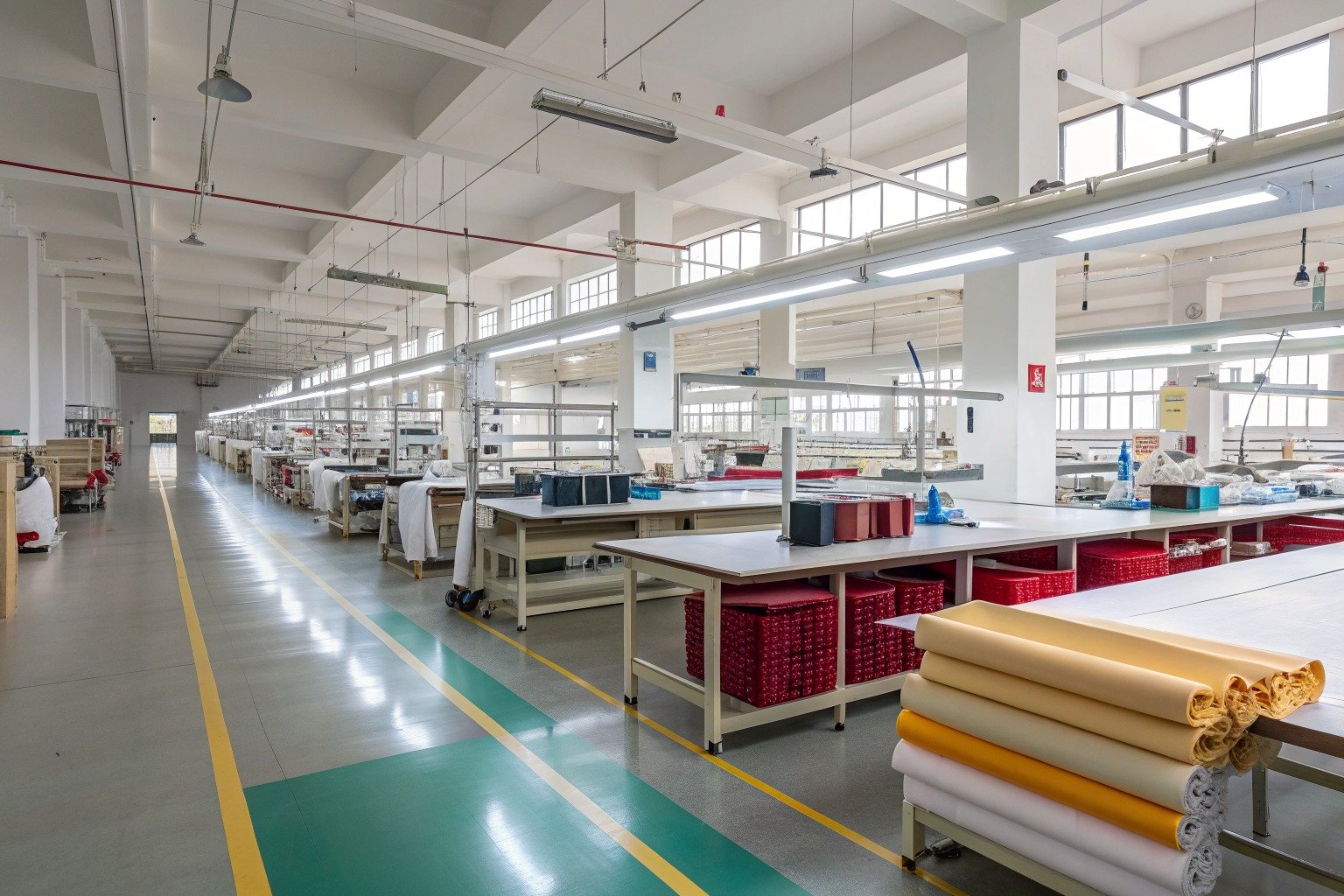
Understanding Minimum Order Quantity (MOQ) is the first critical step in planning a successful bulk bandana project. MOQ exists because manufacturers must cover fixed setup costs—like creating screens for printing, programming embroidery machines, or setting up cutting patterns—across a viable number of units to make production economically worthwhile. For custom cotton bandanas, MOQs typically start around 500 to 1,000 pieces for simple printed designs and can scale up to 10,000 pieces or more for complex, multi-process orders.
Let’s break down the key variables that determine your MOQ and provide a framework for planning your order to balance cost, feasibility, and project goals.
How Does Fabric Type and Source Affect MOQ?
The base material of your bandana is the most significant MOQ driver. "Cotton" is not a single specification; it encompasses a range of weights, weaves, and qualities, each with different minimum purchase requirements from fabric mills.
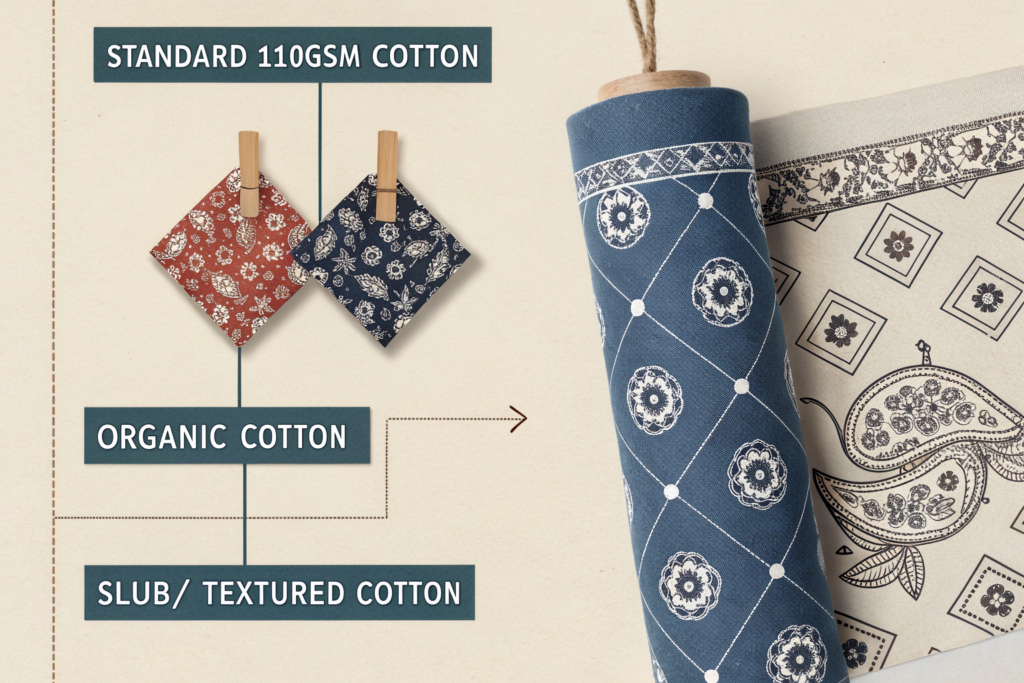
- Standard Printed Cotton: This is the most common and accessible option. It’s a medium-weight (approx. 100-120 GSM), plain weave cotton, often pre-bleached or dyed in solid colors. Because it’s widely produced and stocked, MOQs for bandanas made from this fabric are typically at their lowest.
- Specialty Cottons: If you require organic cotton, heavyweight slub cotton, yarn-dyed gingham, or premium long-staple cotton, the MOQ will increase. These fabrics are produced in smaller batches by mills, and your manufacturer must meet the mill’s own MOQ to order the material for your project. This can easily double or triple the fabric component of your MOQ.
- Fabric Width and Yield: The standard width for cotton fabric is around 44-45 inches or 58-60 inches. The manufacturer will plan a marker (a cutting layout) to maximize the number of bandanas cut from each meter of fabric. Your specified bandana size (e.g., 22"x22" or 20"x20") directly impacts how much fabric is needed per piece, influencing the overall economic feasibility of a low-quantity run.
What is the Relationship Between Fabric MOQ and Final Product MOQ?
The fabric MOQ from the mill is a primary constraint. If a mill requires a minimum purchase of 500 kg of a specific organic cotton, and your 22"x22" bandana uses 0.15 kg each, the pure fabric calculation alone sets a floor of over 3,300 pieces. A manufacturer like Shanghai Fumao Clothing can often mitigate this by utilizing their ongoing fabric inventory or aggregating orders from multiple clients, but for truly unique materials, the fabric MOQ is king. Always discuss material specifics with your supplier early to avoid surprises.
Can Using Stock Fabric Reduce MOQ?
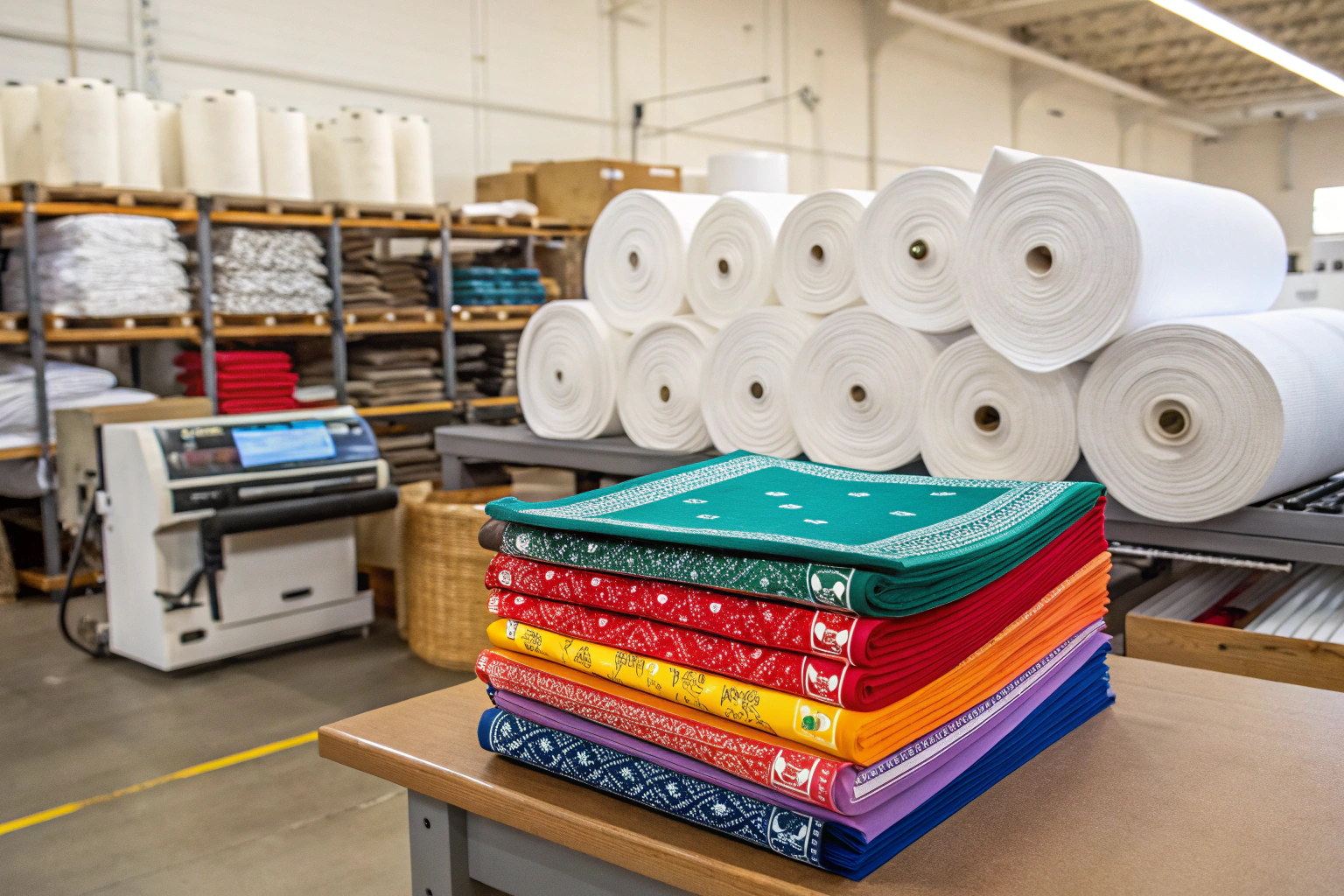
Yes, significantly. If your design can adapt to the colors and fabric types a manufacturer already holds in stock or regularly sources, you bypass the fabric mill’s MOQ entirely. You become a "cut-and-sew" order using their inventory. This is the fastest path to lower MOQs (potentially in the 500-1,000 piece range) and shorter lead times. It’s a trade-off between ultimate customization and accessibility.
How Do Printing and Decoration Methods Determine Order Size?
The method you choose to apply your logo or design is the second major factor controlling MOQ. Each decoration technique has different setup costs and production efficiencies.
- Screen Printing: Traditional and cost-effective for large runs. However, it requires creating a separate physical screen for each color in your design. Setup costs are high, but per-unit cost drops rapidly. MOQs are typically 1,000 pieces and up to amortize the screen costs. Fewer colors mean lower setup.
- Digital Printing (DTG or Sublimation): Ideal for complex, multi-colored, or photographic designs. Setup is digital (no screens), making it economical for lower quantities. MOQs can be as low as 100 to 500 pieces. However, the per-unit cost is higher than screen printing for large runs, and it may be limited to certain fabric types (e.g., polyester or treated cotton for sublimation).
- Embroidery: Offers a premium, textured look. MOQ is influenced by the stitch count and number of needle heads needed. Simple, small logos might have MOQs around 500 pieces, while complex designs require larger runs to justify the digitizing and setup time. It’s also slower to produce than printing.
Why Does Design Complexity Directly Impact MOQ?
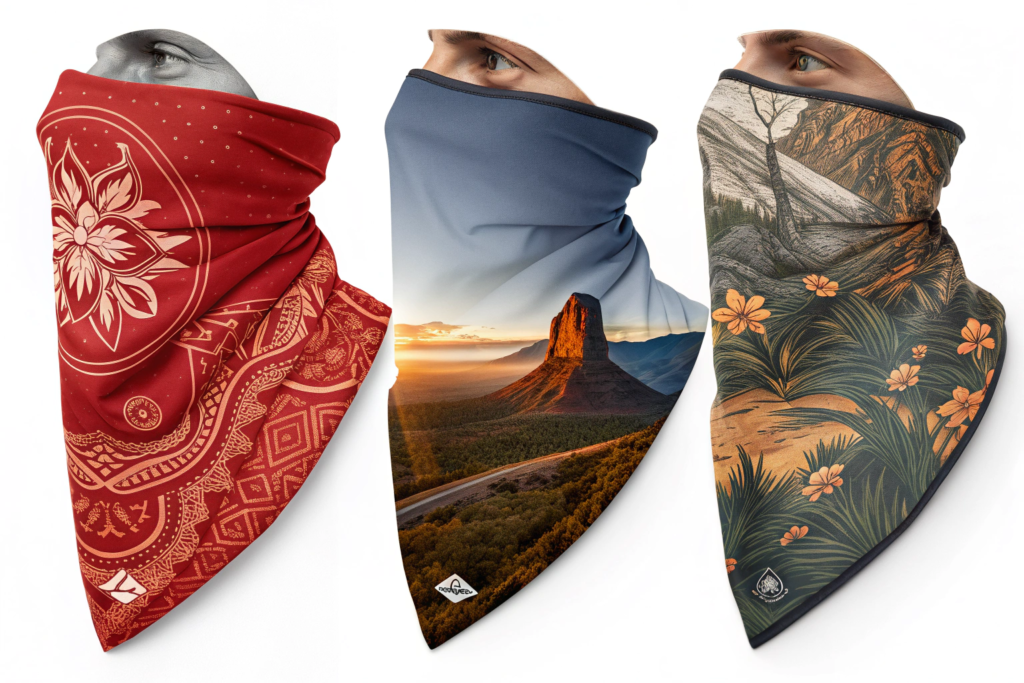
Complexity increases cost at every stage. A 6-color screen print requires six screens, six setup alignments, and potentially more passes through the dryer. A highly detailed embroidery design with 20,000 stitches takes much longer to sew than one with 5,000 stitches. The manufacturer’s MOQ will be higher to ensure the total order value covers these increased production costs and time. Simplifying your design is the most effective lever for reducing MOQ.
Are There MOQ Differences Between Roll-to-Roll vs. Piece Printing?
Yes. Roll-to-roll printing (printing on the fabric before it’s cut and sewn) is standard for screen printing and most efficient for large orders (5,000+). It has high setup but very low marginal cost per unit. Piece printing (printing on individual, cut-and-hemmed bandanas) is more common for digital printing and smaller runs. Its setup is lower, but the per-unit handling cost is higher. Your order size will naturally steer you towards the most appropriate method.
What Other Production and Order Factors Influence Minimums?
Beyond fabric and decoration, several logistical and service elements can affect the minimum feasible order size. A holistic view of the project is necessary for an accurate quote.
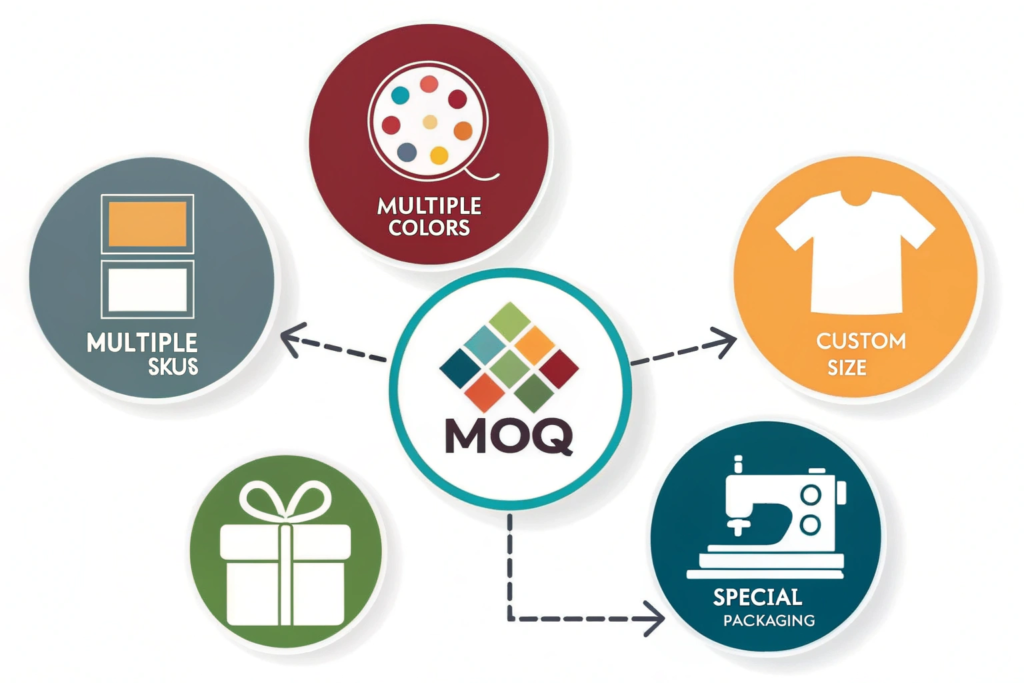
- Number of SKUs (Stock Keeping Units): Are you ordering one design in one color, or ten designs in five colors each? Each unique combination (e.g., "Blue bandana with Logo A," "Red bandana with Logo A," "Blue bandana with Logo B") is a separate SKU. While total order volume might be high, if split across 50 SKUs, the run per SKU might be too low for efficient production. Manufacturers often set a per-SKU MOQ (e.g., 300 pieces per design/color combo) within a larger total order.
- Finishing and Packaging: Standard rolled-and-polybagged bandanas have low handling cost. However, if you require individual hang tags, specific fold styles, custom branded packaging, or multi-pack retail boxes, each add-on introduces additional setup and labor. This can inflate the effective MOQ, as the factory needs to cover the setup for these secondary processes.
How Do Custom Sizes and Shapes Alter MOQs?
The standard bandana is a 22" square. Deviating from this—requesting a 18" square, a 30" triangle, or a rounded shape—requires creating new cutting patterns and possibly adjusting hemming equipment. This custom tooling and setup adds cost, thereby raising the MOQ. For the lowest possible MOQ, sticking to the manufacturer’s standard size is advisable.
What is the Typical MOQ Range for Different Order Types?
As a practical guide:
- Stock Item, Basic Print: 500 – 1,000 pcs (Using factory’s stock fabric and a simple 1-2 color screen print or basic digital print).
- Custom Fabric, Standard Decoration: 2,000 – 5,000 pcs (Sourcing a specific cotton, with a standard print or embroidery).
- Full Custom, Multi-SKU Order: 5,000 – 10,000+ pcs total (Custom fabric, complex decoration, multiple designs/colors, and special packaging).
How Can You Strategically Plan Your Order to Meet MOQs?
Navigating MOQs is a strategic exercise, not just a budgetary one. With clear planning and flexible discussion with your supplier, you can often find a pathway to a feasible order that meets both your needs and the factory’s economic requirements.
Open communication about your goals, budget, and desired timeline is essential. A professional manufacturer will work with you to explore options rather than simply presenting a fixed, take-it-or-leave-it number.
Can Order Phasing or Consolidated Production Help?
If your ultimate need is for 20,000 bandanas but your initial budget only allows 5,000, discuss phasing. The factory can produce the 5,000 now, preserving the screens and production specs, and then produce the remaining 15,000 in a subsequent phase, often with a shorter lead time. Alternatively, if you are part of a buying group or your manufacturer can consolidate your order with another client’s similar order (e.g., same fabric but different print), you may benefit from a lower effective MOQ.
What Questions Should You Ask Your Supplier About MOQ?
To get a clear and accurate quote, ask these specific questions:
- "What is the total order MOQ and the per-SKU MOQ?"
- "Is this MOQ based on using stock fabric or custom fabric? What are the stock color options?"
- "How does my design (number of colors, size, location) affect the MOQ for screen print/digital print/embroidery?"
- "Are there any cost or MOQ advantages to increasing the order by 25% or 50%?" (This identifies price break points).
- "What is the cost breakdown between setup and per-unit cost?"
Conclusion
The MOQ for custom cotton bandanas is a flexible figure, typically starting at 500-1,000 pieces for straightforward projects and scaling upward with material uniqueness, decoration complexity, and order customization. The key to managing MOQ is to view it as part of an integrated production conversation, not a standalone barrier.
By understanding the cost drivers—fabric sourcing, decoration setup, and SKU complexity—you can make informed decisions to simplify your design, utilize stock materials, or phase your orders to align with both your vision and the practical realities of manufacturing economics.
Ready to get a precise MOQ quote for your custom bandana project? Our team provides transparent pricing and works collaboratively to find production solutions that fit your scale. Contact our Business Director, Elaine, to discuss your specific needs and receive a detailed proposal. Email her at: elaine@fumaoclothing.com.