You’ve found a factory, approved your samples, and you’re ready to place your first order. Then your supplier asks, "Do you want to ship EXW, FOB, or DDP?" Suddenly, you’re faced with a confusing set of acronyms that have major financial implications. These are called Incoterms (International Commercial Terms), and they are the official rules that define the responsibilities of sellers and buyers for the delivery of goods. Choosing the right one is critical to managing your costs and avoiding unexpected problems.
What are the best trade terms for a first-time importer? For most new importers working with a Chinese factory, the best and most common starting point is FOB (Free On Board). It offers the best balance of cost control, transparency, and manageable responsibility. While other terms like EXW and DDP have their uses, FOB provides a clear, fair, and standard framework that empowers you as the buyer without overwhelming you. At Shanghai Fumao Clothing, we recommend FOB for over 90% of our new clients because it creates the clearest and most effective partnership.
Is FOB the only option? No, but to understand why it’s the best starting point, you need to understand the three most common choices. Let’s break them down.
Why is FOB (Free On Board) the Recommended Starting Point?
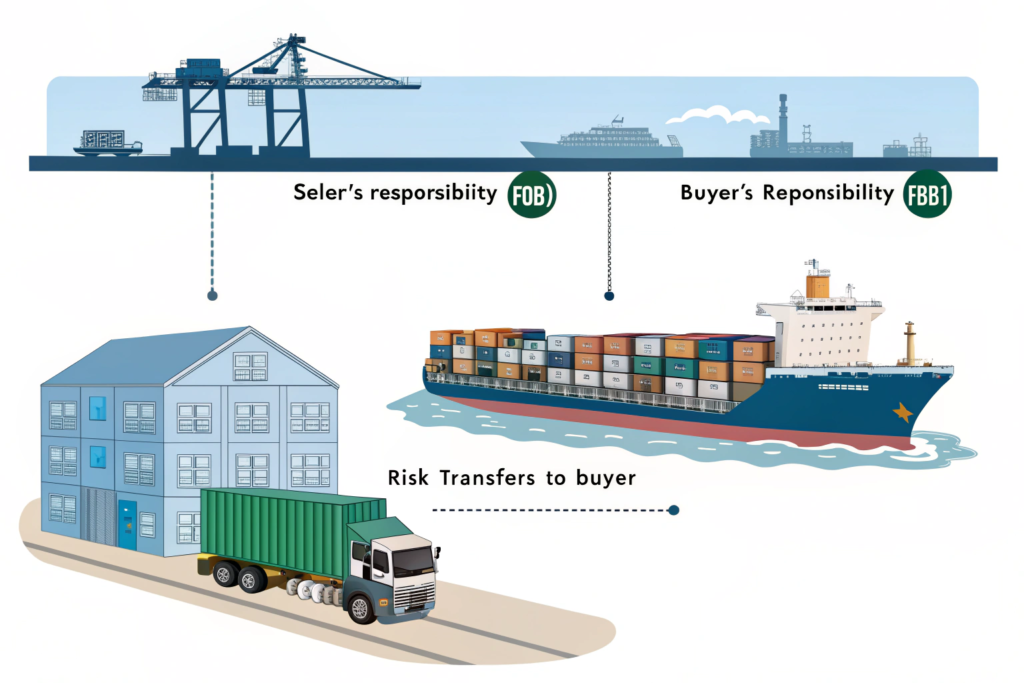
What does FOB actually mean, and why is it the industry standard? FOB (followed by the name of the port, e.g., "FOB Shanghai") means that I, the seller, am responsible for all the costs and risks associated with getting your products from my factory to the designated port in China and loading them onto the cargo ship you have chosen.
My responsibilities under FOB include:
- Producing and packaging your goods.
- Arranging and paying for the trucking from my factory to the port (e.g., the Port of Shanghai).
- Clearing the goods for export through Chinese customs (a crucial step!).
- Paying all the local Chinese port fees and loading charges.
The moment the goods are loaded onto the vessel, the responsibility and risk transfer to you. From that point on, you are responsible for the main ocean freight, the insurance, the unloading at your home port, and the final delivery to your warehouse.
Why is This the Best Balance for a New Importer?
Why not have the factory handle more, or less?
- You Control the Major Cost: The main ocean freight is the biggest and most variable part of the shipping cost. Under FOB, you hire your own freight forwarder to manage this. This allows you to shop around, compare quotes, and control your biggest expense. You are not at the mercy of a hidden markup from the factory.
- The Seller Handles Complex Local Logistics: As a first-time importer, you don’t want to deal with Chinese customs clearance, local trucking, and port authorities. It’s a complex process that we, as the local factory, are experts at. FOB leaves the complicated local part to the local expert (me).
- Clear and Transparent: The costs are very clear. My price is for the goods delivered onto the ship. Your freight forwarder’s price is for the journey from that point onward. There are fewer hidden fees. This is a core principle of a good importing strategy.
How Do You Manage Your Part of the FOB Process?
Do you have to call the shipping line yourself? No. You will hire a freight forwarder in your home country. They are like a travel agent for cargo. You tell them you have an order ready for pickup at the Port of Shanghai, and they will handle everything from there: booking the space on the ship, managing the ocean freight, handling the US/Canadian customs clearance, and arranging the final delivery.
Why Can EXW (Ex Works) Be a Trap for Beginners?
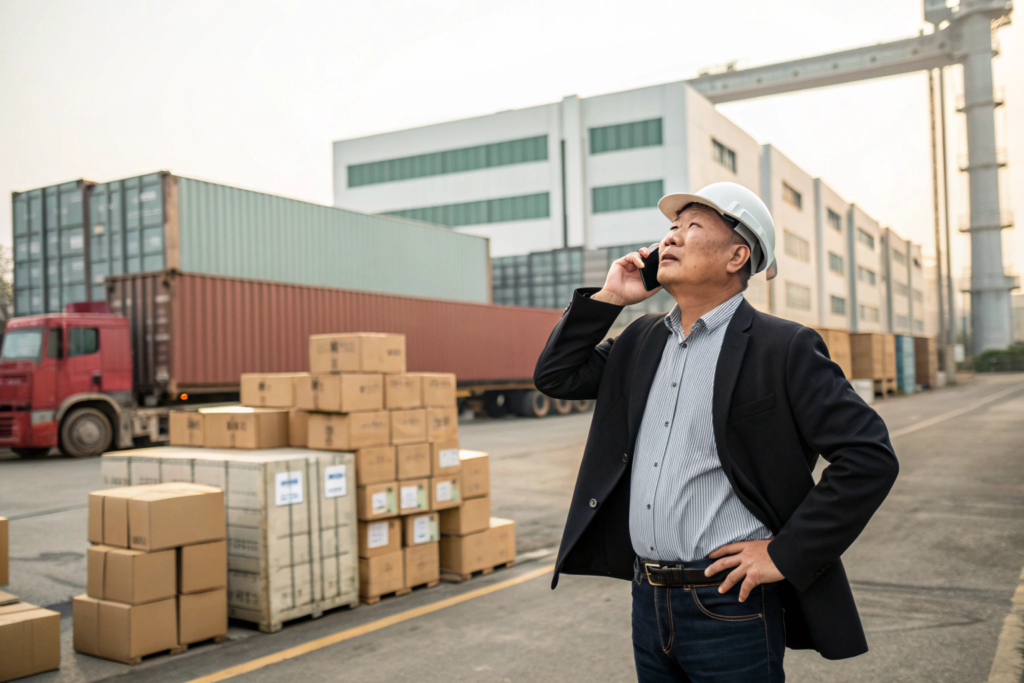
What is the cheapest price a factory can quote you? It’s almost always an EXW (Ex Works) price. This term means that my only responsibility as the seller is to have your products packaged and ready for you to pick up at my factory door. That’s it.
From the moment you "pick up" the goods, every single subsequent cost and risk is yours. This includes:
- Loading the goods onto a truck in China.
- Arranging and paying for the trucking to the port.
- Clearing the goods for export through Chinese customs.
- Paying all the Chinese port fees.
- The main ocean freight and all subsequent costs.
Why Does the "Cheaper" EXW Price Often End Up Costing More?
Isn’t the lowest product price always the best deal? No. While my EXW product price will be lower than my FOB price, you will now have to pay a freight forwarder to handle all the complex and opaque local Chinese charges. Your forwarder’s agent in China will have to arrange the trucking, customs, and port fees. They will bill you for these services, and they will often add a significant markup. In many cases, the final, all-in cost of an EXW shipment ends up being higher than a FOB shipment because you lose the local expertise and efficiency of the factory.
Who Should Use EXW?
Is EXW ever a good idea? Yes, but only for very large, experienced importers. Companies that ship huge volumes often have their own logistics teams or consolidation warehouses in China. They use EXW because they want to control and combine shipments from multiple different factories themselves. For a first-time importer, EXW is almost always a bad idea. It exposes you to too many risks and hidden costs in a foreign country.
Why is DDP (Delivered Duty Paid) Convenient but Risky?
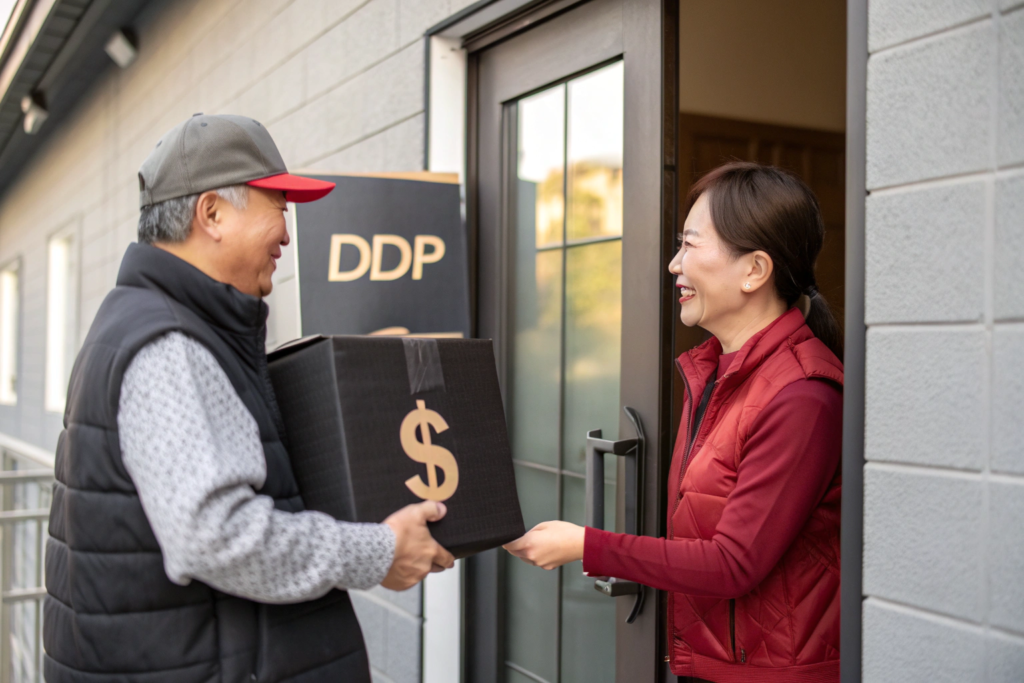
What if you want the absolute easiest, most hands-off option? That would be DDP (Delivered Duty Paid). Under DDP, I, the seller, am responsible for everything. I handle the entire journey from my factory door all the way to your warehouse or front door, including paying all shipping costs, duties, and taxes. All you have to do is receive the goods.
It sounds perfect, right? It’s the "Amazon Prime" of international trade. But this convenience comes with significant risks and costs.
What Are the Hidden Dangers of DDP?
Why isn’t the easiest option the best?
- No Cost Control: I will give you a single, all-in price. But you have no idea how much of that price is for the product, how much is for shipping, and how much is for duties. I am in complete control of the logistics, and I will choose the cheapest (not necessarily the best or fastest) shipping options to maximize my profit. The shipping cost is almost always marked up significantly.
- Customs Compliance Risk: Under DDP, I am the "Importer of Record" in your country. This can create major legal and compliance issues. If I undervalue the goods to pay lower duties, it is your business that could get in trouble with your country’s customs authorities down the line. A customs audit can be a nightmare for a small business.
- Lack of Transparency: You have no visibility into the shipping process. You won’t have a tracking number from the shipping line or a contact at the freight company. You are completely reliant on me for all information, which can be frustrating if there are delays.
When is DDP a Good Idea?
Is DDP ever useful? It can be useful for sending very small, high-value parcels via air courier (like DHL or FedEx), where the courier handles everything as a standard service. But for larger freight shipments, it puts too much risk and control in the hands of the seller. It’s a trade-off of convenience for control and transparency, and for a new business, control and transparency are essential.
Conclusion
So, what is the best trade term for your first import? Is there a single right answer? For the vast majority of new importers, the answer is a resounding yes: FOB.
- Choose FOB for the best balance of cost control, transparency, and manageable risk. It empowers you to manage your main shipping costs while leaving the complex local logistics in China to the local expert—your factory.
- Avoid EXW unless you are a large, experienced importer with your own logistics team in China. The low initial price is often a trap that leads to higher final costs.
- Be Wary of DDP for freight shipments. The convenience is tempting, but it comes at the cost of control, transparency, and potential compliance risks that a new business should not take.
Starting a new business is complicated enough. Don’t add to the stress by choosing the wrong trade term. By starting with FOB, you are building your business on a foundation of clarity, control, and fair partnership.
If you are ready to start your importing journey and want to work with a partner who can clearly guide you through this process, we are here to help. Please contact our Business Director, Elaine, at her email: elaine@fumaoclothing.com.