Are you a brand owner or buyer who has ever felt that sinking feeling when a bulk shipment arrives? The sample you approved was perfect, but the final production is a mess of inconsistent stitching, crooked logos, and varying sizes. You’re now facing the nightmare of customer returns, a damaged brand reputation, and a significant financial loss. You know there must be a way to ensure the 10,000th hat is as perfect as the first one.
To maintain consistent quality in bulk hat production, you must implement a rigorous, multi-stage Quality Management System (QMS) that begins long before the first stitch is made and continues even after the final product is packed. This system relies on standardized technical specifications, strict raw material inspection, in-process checkpoints, and a final, statistically significant random inspection. It’s a science, not a matter of chance.
As a manufacturer, I consider consistency to be the ultimate measure of our professionalism. A single perfect sample is easy; 50,000 perfect hats is what defines a reliable partner. At Shanghai Fumao Clothing, we have built our entire operation around a "no surprises" philosophy, where quality is not just inspected at the end but is built into every single step of the process. Let me walk you through how we make consistency a reality.
Why Does Quality Fail in Bulk Production?
Why does this frustrating inconsistency happen so often? The sample looked amazing, so what went wrong between then and now? The reality is that quality doesn’t just "slip"; it fails because of specific breakdowns in the production process.
Quality fails in bulk production due to a lack of standardized processes, inconsistent raw materials, poorly maintained machinery, and insufficient operator training. When every worker has their own "method" for sewing a seam, or when the factory switches to a cheaper thread mid-production, tiny deviations begin to multiply. Across thousands of units, these small inconsistencies snowball into a major quality control disaster.
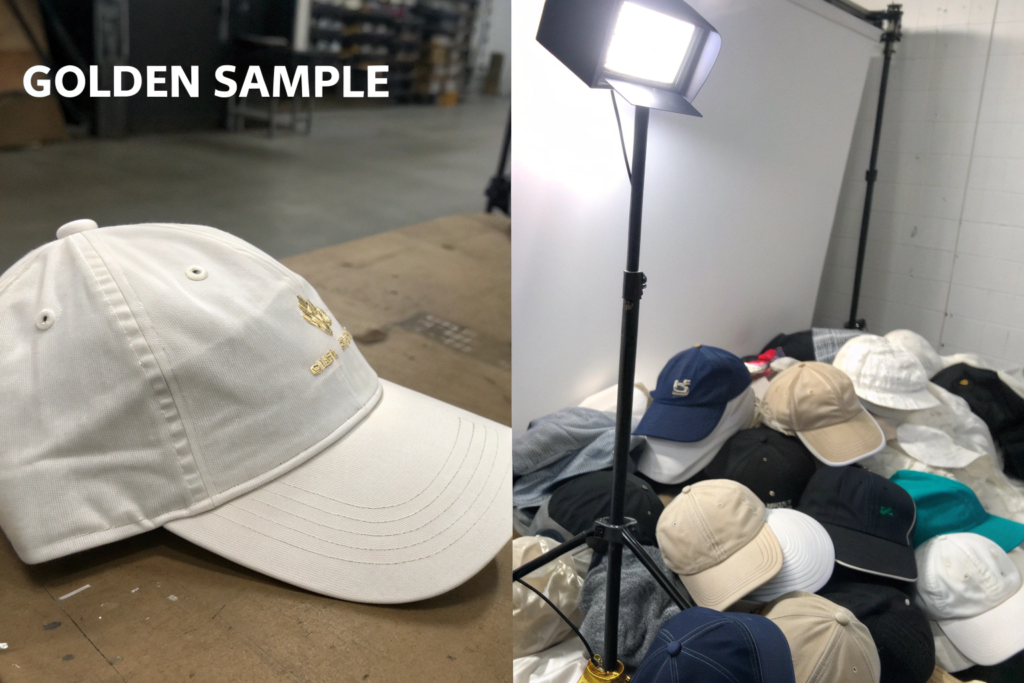
I’ve seen this happen with factories we’ve acquired or audited. The "golden sample" is often made by the most skilled artisan in the factory, using the best materials. But then, the bulk order is given to less experienced workers using materials from a different batch to save costs. This is a recipe for failure. The solution is to systematize the excellence of that first sample, which is the entire purpose of a robust Quality Management System.
What is "Production Creep"?
Production creep is the gradual, often unnoticed, deviation from the original approved standard over a long production run. The first 100 hats might be perfect, but by the 5,000th, the brim might be a millimeter shorter, and the logo might be slightly off-center. This happens without a system of regular checks to recalibrate the process back to the original standard. You can find discussions on this topic in manufacturing and operations management resources, such as the American Society for Quality (ASQ) and industrial engineering forums.
How does material variation impact quality?
A hat has many components: fabric, thread, buckram (the stiffener in the front panels), sweatbands, and closures. If your supplier provides fabric from a different dye lot halfway through the order, you’ll have color inconsistencies. If the thread’s tensile strength varies, you’ll see more broken stitches. A crucial part of quality control is not just inspecting the final hat but inspecting all the raw materials before they even enter the production line. This is a core principle of Total Quality Management (TQM), a philosophy detailed by business resources like Investopedia.
What Is a Quality Management System (QMS)?
You’ve heard terms like "QC" and "QA," but what does a truly comprehensive system look like in practice? It’s not just about having someone look at the hats at the very end.
A Quality Management System (QMS) is a formalized system that documents processes, procedures, and responsibilities for achieving quality policies and objectives. For hat production, this means a series of documented "quality gates" that a product must pass through at every stage of its creation, from design to shipment. It’s a proactive, preventative approach, not a reactive, inspection-based one.
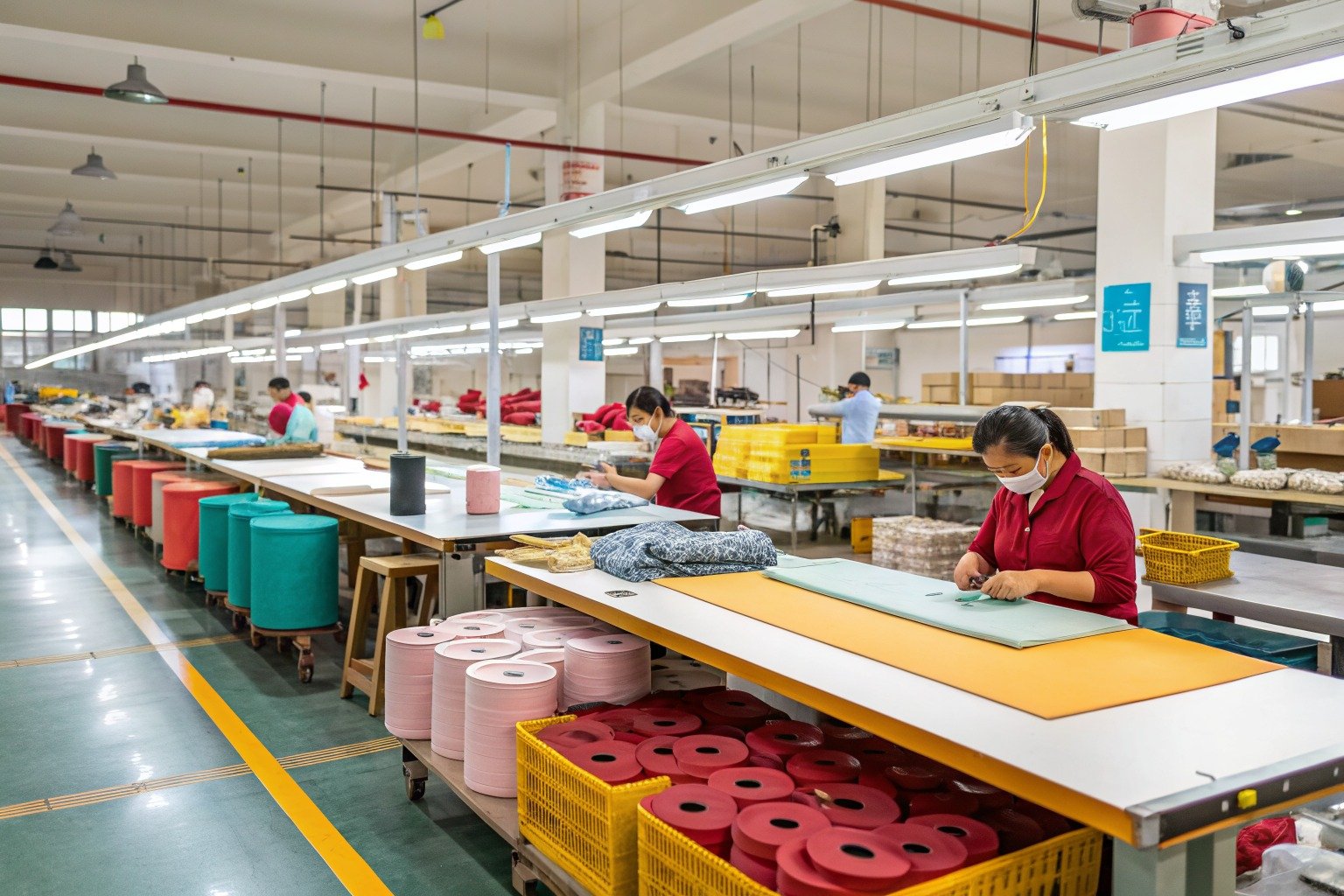
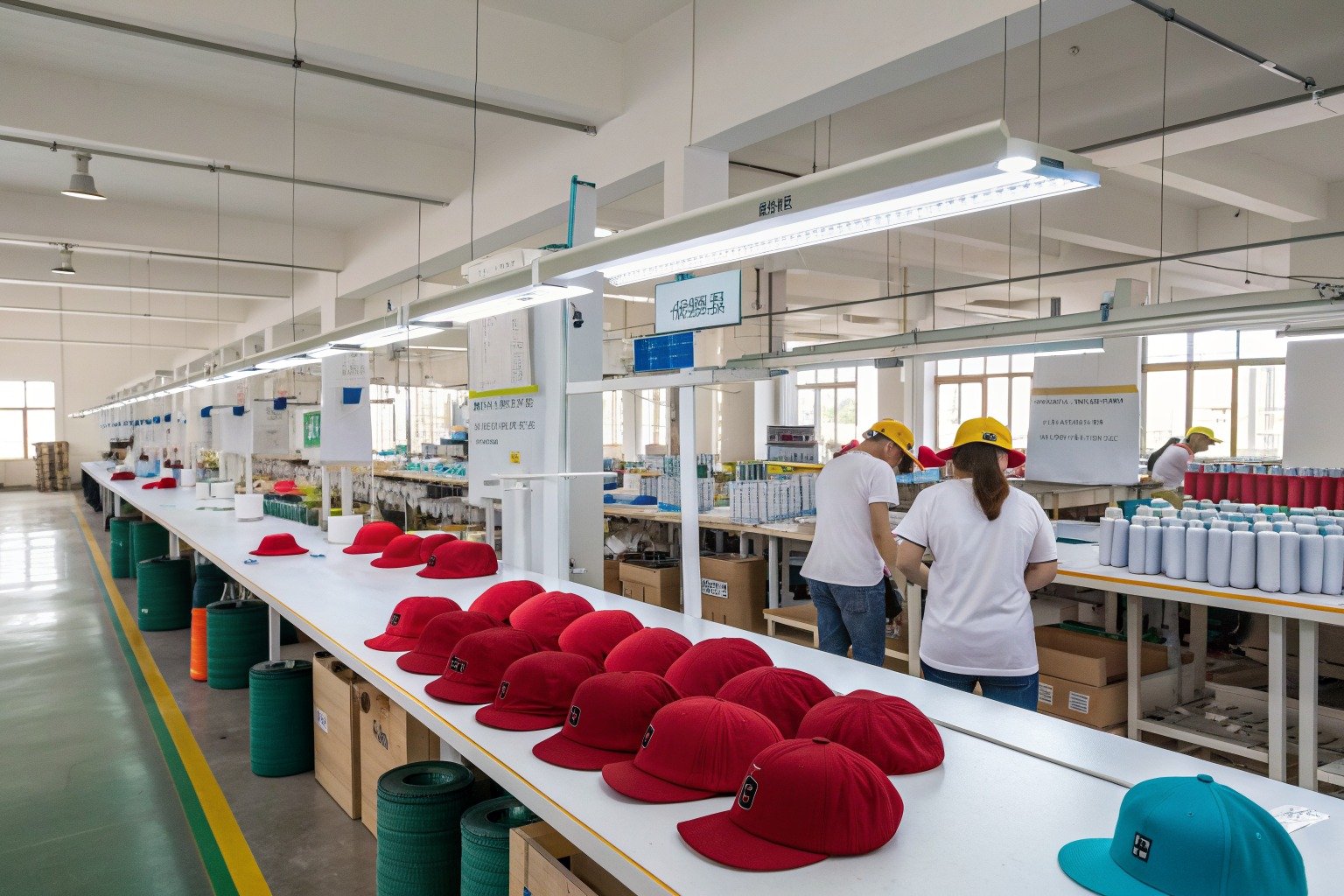
At our factory, the QMS is our bible. It’s a living document that every single employee, from the cutter to the packer, is trained on. It specifies everything: the exact stitch count per inch, the precise placement of an embroidered logo down to the millimeter, the correct tension for the sewing machines. This system removes guesswork and individual variation, ensuring that every hat is made to the exact same standard. This structured approach is the only way to prevent the common failures in bulk production.

What is a "Tech Pack"?
The tech pack is the blueprint for the product and the foundation of the QMS. It’s a detailed document created by the designer and product developer that specifies every single detail of the hat: all materials, dimensions, colors (with Pantone codes), construction techniques, and logo placement. A detailed tech pack is the single most important tool for communicating your vision to the factory. You can find templates and guides for creating tech packs on fashion design resource sites like Zoe Hong’s YouTube channel and Techpacker.
What are In-Process Quality Checks (IPQCs)?
These are checkpoints during the production process, not just at the end. We have inspectors who are dedicated to specific stages. For example:
- Cutting: An inspector checks the cut panels against the patterns to ensure they are the correct shape and size before they are sent to sewing.
- Embroidery: An inspector checks the first few embroidered logos from a machine to ensure the placement and quality are perfect before running the whole batch.
- Assembly: An inspector checks the hats after the panels are sewn together but before the brim is attached to check for symmetry and seam quality.
Catching a mistake at these early stages saves thousands of dollars and prevents a systemic problem from affecting the entire order.
What Is AQL and How Is It Used in Final Inspection?
The hats are all produced and boxed up. How can you be sure of the quality of the entire order without opening and inspecting every single one of the 10,000 hats? This is where statistics come to the rescue.
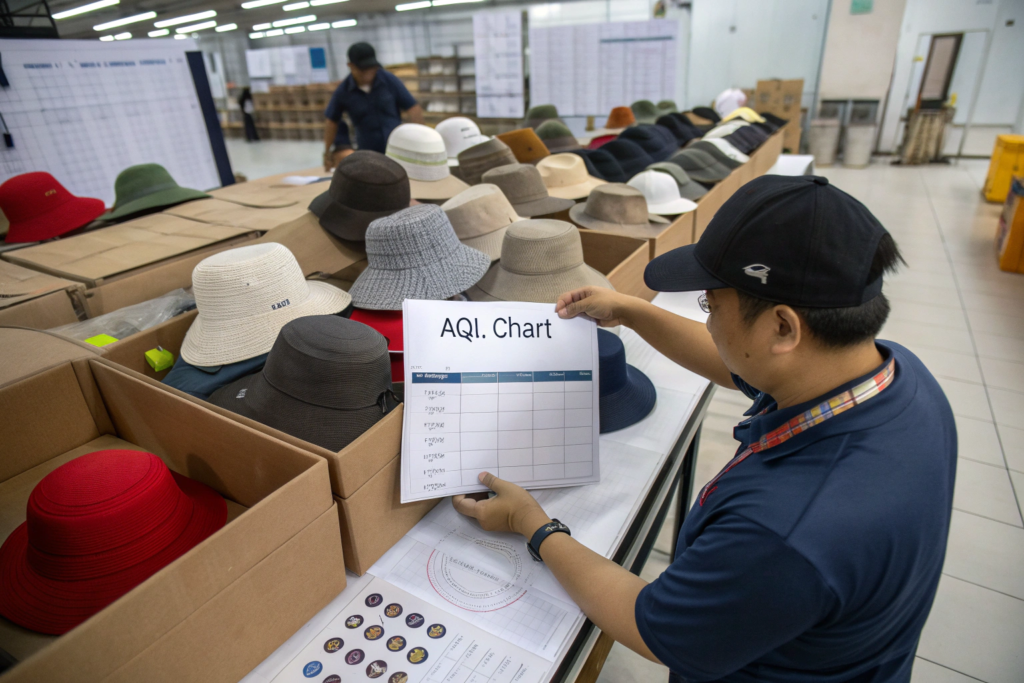
AQL, or Acceptance Quality Limit, is a statistical method used for final inspection that determines the maximum number of defective units that can be considered acceptable in a randomly selected sample. The inspector uses a standardized AQL chart to determine how many hats they need to inspect based on the total order size. If the number of defects found in that sample is below the pre-determined limit, the entire batch is accepted.
AQL is the global standard for final product inspection, and we use it for every single order at Shanghai Fumao Clothing. It provides a reliable, statistically valid snapshot of the overall quality of the batch. For a client like Ron, it gives him peace of mind, knowing that the quality has been verified against an internationally recognized standard before it even leaves our factory. It’s the final and most critical gate in our Quality Management System.
How do you read an AQL chart?
AQL charts (based on ISO 2859-1) seem complex, but the concept is simple. You and your supplier agree on an AQL level (e.g., 2.5% for major defects, 4.0% for minor defects). The chart then tells you, based on your total order quantity, how many units to pull for your random sample (e.g., for an order of 10,000 hats, you might inspect 200). The chart then gives you the maximum number of defects allowed in that sample. For AQL 2.5, you might be allowed to find 10 major defects. If you find 11, the entire batch fails. Third-party inspection companies like QIMA and InTouch have excellent free resources and calculators that explain this in detail.
What’s the difference between a major and a minor defect?
This is something you define with your supplier in the tech pack.
- Minor Defect: A small issue that doesn’t affect the product’s usability or salability, but is still a deviation from the standard (e.g., a single loose thread, a slightly messy back of the embroidery).
- Major Defect: A significant issue that makes the product unsellable or likely to be returned (e.g., a crooked logo, incorrect color, a hole in the fabric).
- Critical Defect: A hazardous or unsafe defect (e.g., a sharp piece of metal in the buckle, use of a banned chemical). The tolerance for critical defects is always zero.
How Does a Strong Partnership Ensure Quality?
You can have all the systems and charts in the world, but what truly holds it all together? A system is only as good as the people who run it and the relationship between the brand and the manufacturer.
A strong, transparent partnership between the brand and the manufacturer is the ultimate key to ensuring consistent quality. When there is open communication, mutual trust, and a shared commitment to excellence, problems are solved collaboratively, not hidden. A great manufacturing partner doesn’t just follow instructions; they proactively identify potential issues and work with you to find solutions.
This is the most important part of my job. I don’t see our clients as just customers; I see them as our partners. If we see a potential issue in their tech pack—maybe a type of stitch that won’t be durable on a certain fabric—we don’t just proceed and wait for it to fail. We call them. We explain the issue and suggest a better alternative. This collaborative approach is what prevents problems before they start and is the secret ingredient to a truly effective AQL inspection because it ensures there are fewer defects to find in the first place.

What are the signs of a good manufacturing partner?
- They ask a lot of questions: They will scrutinize your tech pack and ask for clarification to ensure they understand your vision perfectly.
- They are transparent: They are willing to show you their factory, their processes, and their QMS documentation.
- They provide regular updates: They keep you informed throughout the production process, not just at the beginning and end.
- They are ISO 9001 certified: This is an international standard for a quality management system, and it shows a serious commitment to quality.
Business sourcing platforms like Sourcify and trade publications often provide checklists for vetting potential manufacturing partners.
How can you build a strong partnership?
Visit the factory if you can. Meet the people who will be making your product. Provide clear, detailed instructions and be responsive to their questions. Treat them with respect and view them as an extension of your own team. A long-term relationship built on trust is far more valuable than saving a few cents per unit by constantly switching suppliers.
Conclusion
Achieving consistent quality in bulk hat production is not a matter of luck; it is the result of a deliberate, systematic, and collaborative effort. It begins with a detailed plan, is maintained through rigorous in-process checks, and is verified by statistical final inspections. By implementing a robust Quality Management System and, most importantly, by fostering a strong, transparent partnership with your manufacturer, you can eliminate the anxiety of bulk production and confidently deliver a product that is as perfect on a large scale as it was in your initial vision.
At Shanghai Fumao Clothing, quality is the language we speak. Our entire process is designed to build consistency into the DNA of your product. We welcome the scrutiny of our clients because we are proud of the systems we’ve built and the skill of our team.
If you are tired of inconsistency and are looking for a manufacturing partner who can deliver reliable quality at scale, we invite you to see how we work. Please contact our Business Director, Elaine, at her email: elaine@fumaoclothing.com, to discuss your next project.