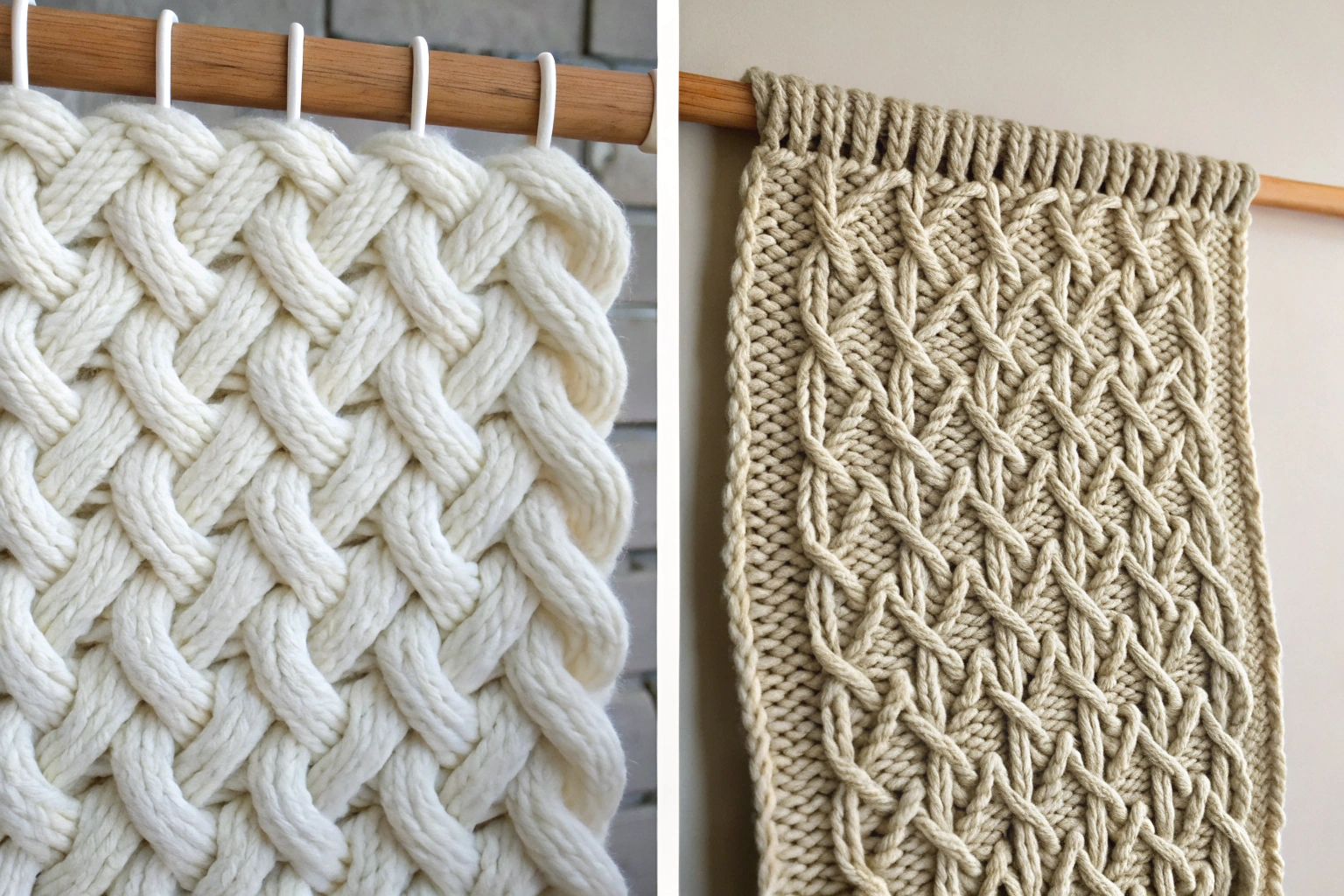
In the world of scarf manufacturing, the choice between knitted and woven production methods is a foundational decision that shapes the product’s final character, target market, and commercial viability.
The core difference lies in the structure: knitting creates a series of interlocking loops, making the fabric inherently stretchy, soft, and cozy. Weaving interlaces two sets of yarns (warp and weft) at right angles, producing a stable, non-stretch fabric with crisp edges, ideal for structure and intricate patterns.
As a manufacturer, we guide brands through this choice daily. For partners like Shanghai Fumao Clothing, who source for diverse global markets, understanding this distinction is the first step in aligning a product with its intended audience.
How Does the Fundamental Structure Define Fabric Properties and Performance?
The core distinction between knitting and weaving lies in their most basic structural formation. This initial structure fundamentally dictates the scarf’s ultimate hand feel, drape, and functional performance, creating two entirely different categories of fabric.
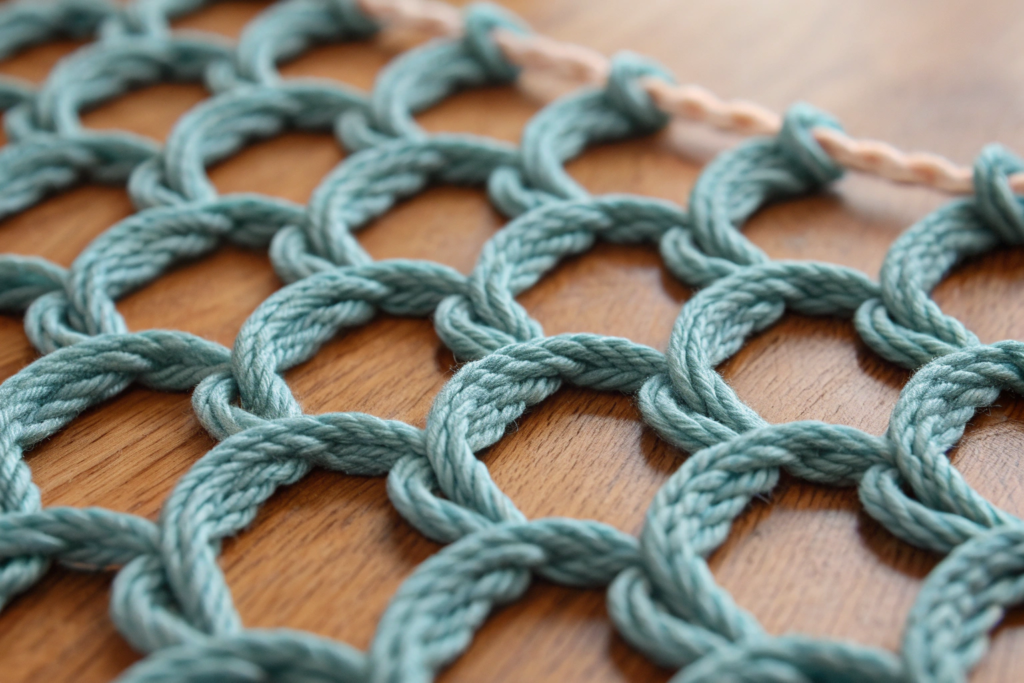
Knitting forms fabric through a continuous series of interlocking loops. Imagine a single strand of yarn being bent into rows of connected circles. This looped structure creates tiny air pockets, granting knitted fabric its inherent stretch, elasticity, and volume. Weaving, in contrast, is defined by the systematic, right-angle interlacing of two distinct sets of yarns. The lengthwise yarns, called the warp, are held under tension on a loom. The crosswise yarns, the weft, are then woven over and under them in a specific pattern (like plain, twill, or satin weave).
What Performance Differences Stem from This Structural Divide?
The architectural difference between loops and interlacing directly answers key user experience questions:
- Stretch vs. Stability: A knitted scarf will readily stretch and conform to different wrapping styles, offering a flexible, forgiving fit. A woven scarf has minimal to no stretch, providing a stable, structured drape that holds its shape.
- Warmth & Breathability: The air pockets trapped within knitted loops act as insulation, making knits generally warmer and cozier, a classic choice for winter. The warmth of a woven fabric depends more on its fiber (e.g., wool) and density, but its structure allows for a wider range from very breathable (linen) to very dense.
- Durability & Pilling: The interlocked grid of a woven fabric makes it more resistant to snagging and pilling. The exposed loops of a knit are more susceptible to catching and can develop pills from friction over time.
How Does Structure Dictate Finishing and Edge Integrity?
The production path and final finishing are predetermined by the base structure:
- Edge Finishing (A Critical Distinction): This is a major differentiator. Knitted fabrics, especially those produced on flat-knitting machines, can be manufactured with a self-finished edge (like a ribbed border) that requires no further seaming. All woven fabrics are cut from a larger bolt of cloth, so their cut edges must be finished to prevent fraying through techniques like hemming, fringing, or rolled edges—a step that adds cost and craftsmanship.
- Post-Production Handling: The finishing processes also differ. Knit finishing often focuses on softening and bulking (like brushing) and gentle setting. Woven fabric finishing emphasizes setting colors, achieving a smooth hand or specific luster (like silk finishing), and ensuring perfect pattern alignment.
What Are the Diverging Paths in the Manufacturing Process?
Moving from structure to creation, the manufacturing pathways for knitting and weaving diverge significantly. Each method requires specialized machinery, unique preparation steps, and involves distinct timelines that impact speed, cost, and design flexibility.
Knitted scarf production is typically a more integrated and rapid process. It employs flatbed or circular knitting machines. Yarn is fed directly from cones into the machine, which is programmed to create the scarf panel—often to the exact width and length—directly incorporating stitch patterns (like cables or ribs) in one step. This method minimizes fabric waste from cutting and can reduce labor. Woven scarf production is a more segmented, multi-stage process. It begins with warping, a precise and time-consuming setup where hundreds of warp yarns are measured, aligned in parallel order, and wound onto a large beam. This beam is then mounted on a loom (shuttle, rapier, or air-jet), where the weft yarn is interlaced to create fabric in large bolts, which are later cut down.

How Do Design and Patterning Capabilities Compare?
| The production method fundamentally shapes the design possibilities for a scarf: | Design Dimension | Knitting Advantages | Weaving Advantages |
|---|---|---|---|
| Color & Pattern Integration | Possible through jacquard knitting, but color changes are often simpler, and highly detailed patterns are more challenging and costly. | Superior for complex, detailed patterns. Perfect for plaids, stripes (via yarn-dyeing), and intricate pictorial jacquard weaves woven directly into the fabric. | |
| Texture Creation | Texture is structural. Rich, 3D textures like cables, ribs, and basketweaves are created by the stitch pattern itself. | Texture comes from the weave type (e.g., crepe, dobby) or the use of novelty yarns. The surface is generally smoother and flatter than knit. | |
| Printing Suitability | Possible on flat-knit panels, but the inherent texture can distort fine print details, making it less ideal for high-definition graphics. | The ideal canvas for printing. Smooth woven surfaces (silk, cotton, polyester) allow for precise, high-resolution digital and screen printing with excellent clarity. |
What Are the Key Cost and Lead Time Implications?
From a sourcing and planning perspective, understanding these implications is crucial:
- Setup Cost & Speed: Woven production typically has a higher initial cost and longer lead time due to the intricate warping process and generally slower speeds on the loom. Knitted production often has a faster setup and turnaround, especially for sampling and smaller runs.
- Economies of Scale & Flexibility: Weaving becomes highly efficient at large scales. Modern knitting, particularly with computerized flat machines, offers remarkable flexibility for small-batch, customized, or fast-fashion orders with lower minimums, allowing brands to be more responsive.
How Should Brands Strategically Choose the Right Technique?
This decision is not merely technical but strategic, hinging on your brand identity, target customer, and product goals. There is no universal "best," only the "best fit" for a specific vision.

In Which Market Scenarios is Knitting the Optimal Choice?
Prioritize Knitted Scarf Production when your core values are:
- Casual Comfort & Modern Relaxation: For brands in athleisure, loungewear, or casual everyday wear, where softness, stretch, and a cozy feel are paramount.
- Winter & Cold-Weather Essentials: For creating chunky infinity scarves, thick wraps, beanies, and accessories where built-in warmth and volume are key selling points.
- Speed-to-Market & Design Agility: When responding quickly to trends, testing new designs with lower MOQs, or requiring a faster development cycle from concept to sample.
In Which Market Scenarios is Weaving the Optimal Choice?
Prioritize Woven Scarf Production when your brand demands:
- Luxury, Elegance & Formality: For silk twill scarves, fine cashmere pashminas, and linen accessories where a smooth drape, refined sheen, and impeccable finishing (e.g., hand-rolled hems) define quality.
- Graphic Patterns & Brand Storytelling: When the design is centered on detailed brand logos (via jacquard), photographic prints, or classic tartans and stripes. The woven or printed surface ensures pattern integrity.
- Structured Draping & Durability: For scarves that need to hold a crisp fold, offer a fluid silhouette, and maintain their pristine appearance over time with high resistance to pilling.
What Are the Key Considerations for Successful Manufacturer Collaboration?
Once the technical path is chosen, effective collaboration with your manufacturer ensures the vision becomes a successful reality. Clear communication and aligned expectations are critical.

What Should Be Clarified During the Development & Sampling Phase?
Lay a strong foundation with precise communication:
- Define Design Intent Beyond Aesthetics: Communicate the target hand-feel, weight (GSM), drape, and primary function. Is it a "lightweight, crinkled linen scarf for summer" or a "heavy, brushed wool knit for extreme warmth"?
- Validate Samples Against Specs: In the sampling stage, meticulously check not just look but fiber content, weight, color accuracy, stitch/weave density, and finishing quality. For wovens, confirm pattern alignment; for knits, check recovery and consistency.
- Understand Cost Drivers and MOQs: Have transparent discussions about Minimum Order Quantities (MOQs) and what factors most influence cost (e.g., specialty yarns, complex jacquards, manual finishing like fringing). This knowledge helps in value engineering.
What Should Be Monitored During Production and Quality Control?
To ensure consistent bulk quality, establish joint focus on:
- Critical Process Control Points: For woven production, monitor warp preparation and weaving defect rates. For knitted production, control yarn tension and stitch consistency. Partners like Shanghai Fumao Clothing implement systematic checks at these stages to preempt issues.
- Agree on a Clear Quality Standard (AQL): Establish a formal, agreed-upon standard for acceptable color variance, defect types and sizes, measurement tolerances, and packaging. Conduct in-process inspections (DUPRO) and final random inspection (FRI) against this standard.
- Plan for Logistics and Packaging: Discuss packaging methods early. Knits may be compressed to save shipping volume. Delicate woven prints may need tissue paper interleaving and rigid packaging to prevent creasing and damage.
Conclusion
Knitting and weaving represent two distinct languages in the lexicon of textile production. Knitting speaks the language of comfort, texture, and adaptive warmth, created through an efficient, integrated process. Weaving articulates the language of precision, graphic clarity, and elegant drape, achieved through a segmented, crafts-oriented path.
For brands, this choice is a strategic pillar of product definition. A deep understanding of these differences empowers you to make informed decisions that ensure your scarves perfectly embody your brand’s promise and resonate with your target audience.
If you are evaluating the optimal production path for your next accessory line and seek a partner with deep expertise in both knitted and woven manufacturing, we are here to provide guidance and precision execution. To begin the conversation, please contact our Business Director, Elaine, at elaine@fumaoclothing.com.