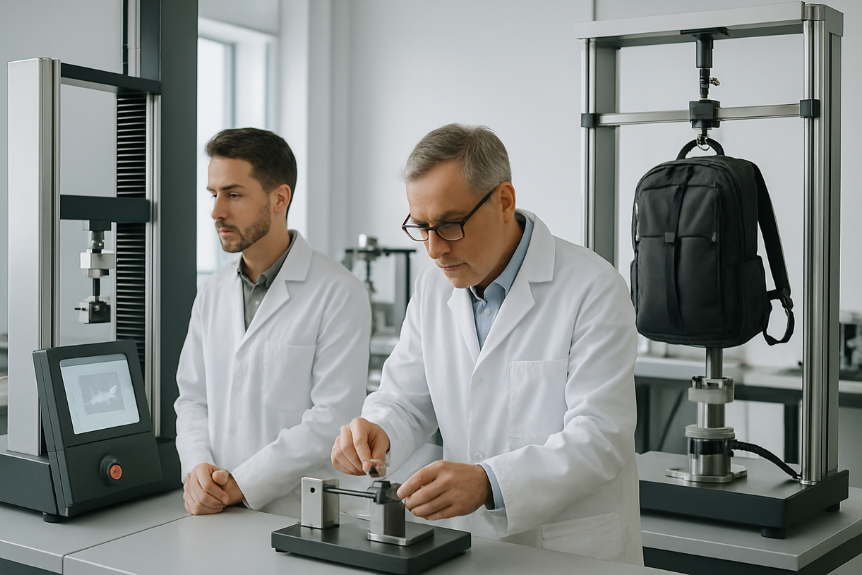
Bag durability testing is essential for manufacturers, brands, and consumers to ensure products withstand real-world use while maintaining functionality and appearance. Through our comprehensive testing protocols developed for various bag categories, we’ve established systematic approaches to evaluating and verifying durability across materials, constructions, and usage scenarios.
Testing bag durability requires standardized laboratory simulations that evaluate material strength, seam integrity, hardware performance, and structural stability under controlled conditions that replicate years of use within accelerated timeframes.This scientific approach transforms subjective quality perceptions into quantifiable durability metrics that predict real-world performance.
Proper durability testing involves multiple test types that address different failure modes. Let’s examine the specific methodologies that ensure bags withstand the rigors of daily use while maintaining their functional and aesthetic qualities.
What material strength tests evaluate bag longevity?
Bag materials face various stresses during use, including abrasion, tearing, bursting, and color fading. Material testing forms the foundation of durability assessment by evaluating how individual components withstand these challenges.
Comprehensive material testing identifies potential weaknesses before they manifest in finished products, enabling improvements at the component level.
How is abrasion resistance measured?
Abrasion represents one of the most common causes of bag failure, particularly at high-contact areas like bottoms, corners, and strap attachments. We use Martindale abrasion testers that rub materials against standard abradants under controlled pressure according to ASTM D4966 standards. Testing continues until fabric rupture or a predetermined number of cycles, with luxury bags typically requiring 20,000+ cycles and everyday bags 15,000+ cycles. For synthetic materials like nylon and polyester, we also conduct Taber abrasion testing that provides complementary data using different abrasion mechanics. These tests help select materials that maintain appearance and integrity through extended use.
What tear and tensile strength tests assess material robustness?
Unexpected snags and overloading can cause material failure. We evaluate tear strength using Elmendorf testers that measure the force required to propagate an existing tear according to ASTM D1424. For tensile strength, we use universal testing machines that stretch materials to breaking point while measuring resistance according to ASTM D5034. Bag materials typically require tear strength of 10-25 Newtons and tensile strength of 200-800 Newtons depending on bag type and positioning. These quantitative measurements ensure materials can withstand the stresses of daily use without failing at critical moments.
How is seam and construction integrity verified?
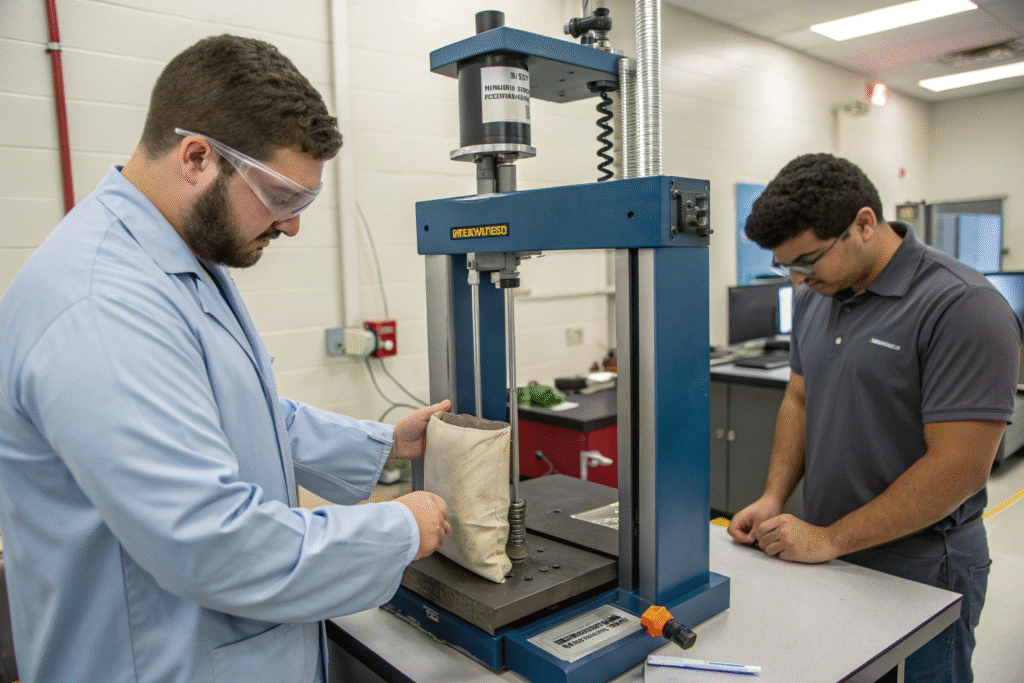
Even with perfect materials, weak seams represent common failure points in bag construction. Seam testing evaluates how well materials remain joined under various stresses, ensuring the bag remains intact through years of use.
Comprehensive seam testing addresses both strength and durability under different types of stress and environmental conditions.
What seam strength tests prevent failure?
Seam failure can render a bag unusable regardless of material quality. We conduct seam slippage tests that measure how much force causes threads to pull through materials according to ASTM D434. For seam strength, we use tensile testers that pull seamed sections apart while measuring resistance. High-quality bags typically require seam slippage resistance of 100+ Newtons and seam strength matching 80-90% of base material strength. For critical seams like strap attachments and stress points, we implement reinforced stitching protocols verified through destructive testing of sample units. These tests ensure seams maintain integrity even when bags are overloaded or subjected to unexpected stresses.
How does stitch durability testing evaluate long-term performance?
Stitches themselves can fail through abrasion, UV degradation, or bacterial action. We conduct accelerated stitch aging that exposes sewn samples to UV radiation, temperature cycling, and humidity variations according to AATCC Test Method 16. For functional assessment, we use reciprocating abrasion testers that rub stitches against similar materials thousands of times to simulate years of friction. The most revealing test involves seam fatigue testing where we repeatedly load and unload seams to simulate the opening/closing cycles a bag experiences throughout its lifespan. These tests help select thread types and stitching patterns that maintain integrity through extended use.

What hardware and component testing ensures functionality?
Bags incorporate various hardware components including zippers, buckles, snaps, and rings that represent potential failure points. Hardware testing evaluates both mechanical function and durability through repeated use cycles.
Comprehensive component testing ensures all bag elements work smoothly and reliably throughout the product’s expected lifespan.
How is zipper durability assessed?
Zipper failure represents one of the most common hardware issues in bag usage. We conduct zipper cycle testing using automated equipment that opens and closes zippers thousands of times under various load conditions according to BS 3084 standards. High-quality bags typically require 5,000-15,000 cycles without significant function degradation. We also evaluate zipper strength by measuring the force required to separate teeth under both straight-pull and cross-direction stress. For water-resistant bags, we conduct zipper water penetration testing that verifies sealing effectiveness under simulated rain conditions. These tests ensure zippers operate smoothly while withstanding the rigors of daily use.
What tests evaluate buckle and closure performance?
Buckles, snaps, and other closure systems experience significant stress during bag use. We use universal testing machines to measure the force required to engage and disengage closures, ensuring they provide secure fastening without excessive effort. Cycle testing evaluates how closures maintain function through repeated use, with quality standards typically requiring 10,000+ cycles without failure. For magnetic closures, we test magnetic strength retention after impact, temperature exposure, and long-term use. These tests help select closure systems that balance security, ease of use, and long-term reliability.
How is structural integrity and load capacity validated?
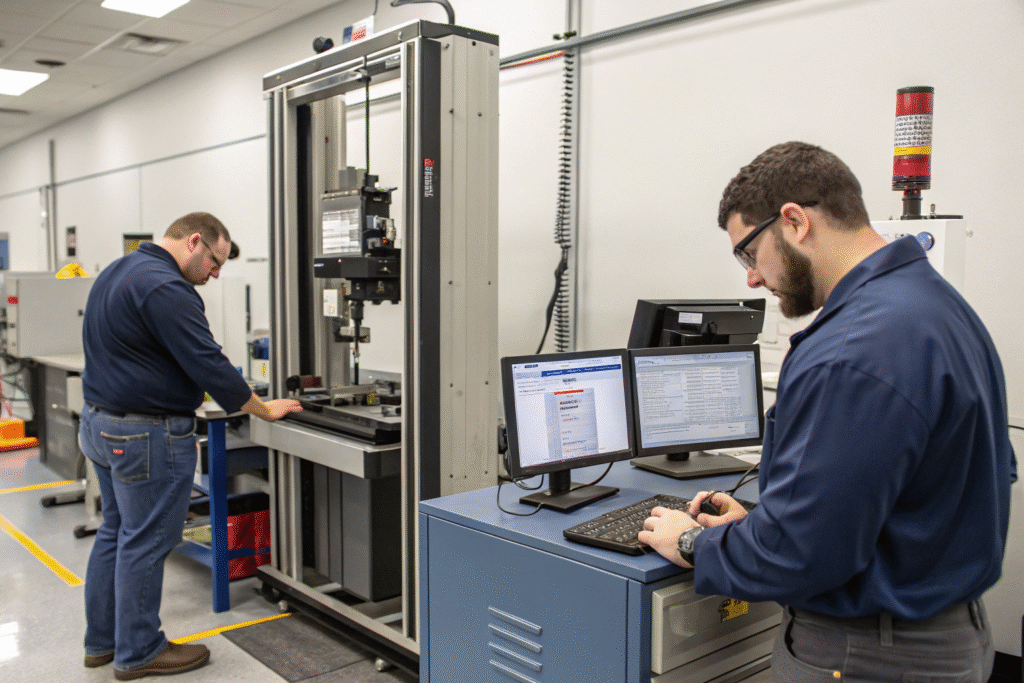
A bag’s overall structure must maintain its form and function when loaded and carried. Structural testing evaluates how bags perform under realistic weight distribution and carrying conditions.
Comprehensive structural testing ensures bags provide reliable performance across their intended use cases and load scenarios.
What load capacity tests verify design specifications?
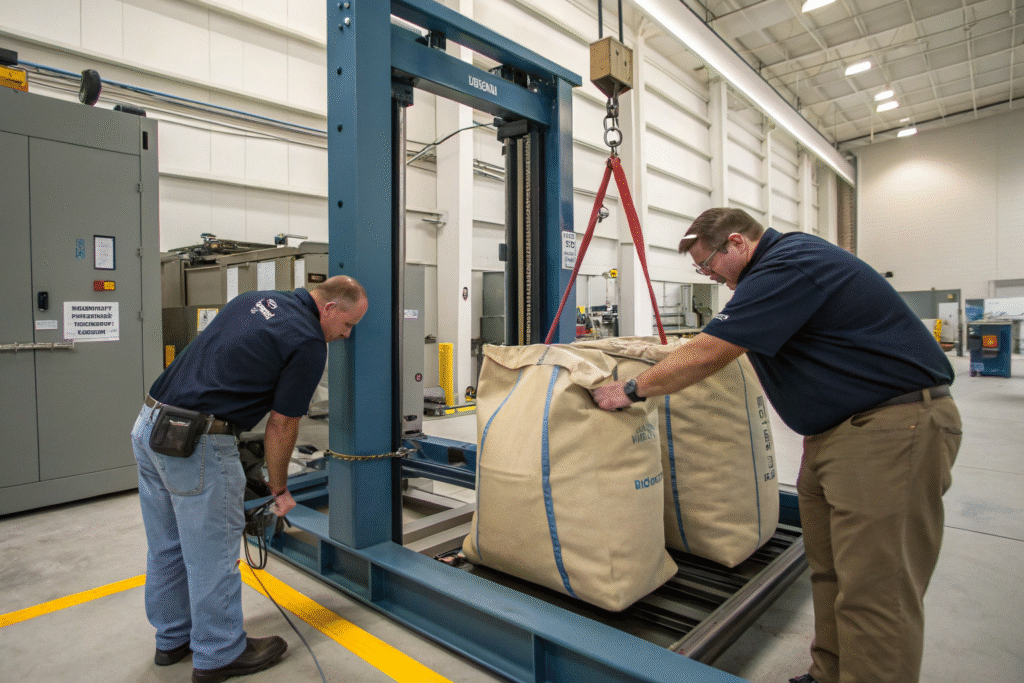
Overloading represents a common cause of bag failure, particularly at stress points. We conduct progressive load testing that gradually increases weight in bags while monitoring for structural deformation, seam stress, and attachment point integrity. Testing continues until failure occurs, establishing the maximum safe capacity and recommended usage limits. For bags with specific load claims (like laptop compartments or camera inserts), we verify these specialized areas meet their stated capacities. The most valuable testing involves dynamic load assessment where we simulate walking motion while bags are loaded, creating more realistic stress conditions than static testing alone.
How does handle and strap testing prevent carrying failures?
Handles and straps experience the most direct stress during bag use. We conduct strength testing that applies gradually increasing force to straps while measuring elongation and ultimate failure points. Cycle testing simulates repeated lifting and carrying motions, with quality standards typically requiring 10,000+ cycles without significant degradation. For adjustable straps, we test adjustment mechanism durability through repeated length changes. The most rigorous testing involves impact load assessment where we drop loaded bags from specified heights to simulate accidental drops. These tests ensure carrying elements maintain safety and comfort through years of use.
How are environmental factors tested for durability?
Bags encounter various environmental conditions including moisture, temperature extremes, UV exposure, and chemical contact. Environmental testing evaluates how these factors affect materials, hardware, and overall bag performance.
Comprehensive environmental testing ensures bags maintain functionality and appearance across their intended usage environments.
What water resistance tests evaluate weather protection?
Water exposure can damage bag contents and accelerate material degradation. We conduct spray rating tests that measure water penetration under simulated rain conditions according to AATCC Test Method 35. For submersible bags, we use hydrostatic pressure testers that measure water resistance under increasing pressure. Seam sealing effectiveness is evaluated through separate testing that identifies potential leakage points. The most realistic assessment involves field testing where we expose bags to actual weather conditions while monitoring interior moisture levels. These tests help validate water resistance claims and identify improvement opportunities.
How does colorfastness testing maintain appearance?
Color fading and transfer can make bags appear worn prematurely. We conduct lightfastness testing using xenon-arc lamps that simulate years of UV exposure within weeks according to ISO 105-B02. Crocking tests evaluate color transfer through rubbing, while washing tests assess color stability during cleaning. For multicolored bags, we test each color separately and in combination to identify potential bleeding issues. These tests ensure bag colors remain vibrant and stable through extended use and exposure to various elements.
Conclusion
Testing bag durability requires a comprehensive approach that addresses material strength, seam integrity, hardware function, structural stability, and environmental resistance through standardized laboratory methods. The most effective testing programs combine accelerated laboratory simulations with real-world field testing to validate performance claims and identify improvement opportunities. Companies implementing thorough durability testing build reputations for quality, reduce warranty claims, and create products that genuinely withstand the rigors of daily use. The investment in proper testing pays dividends through enhanced brand perception, customer satisfaction, and reduced product returns.
If you’re looking to implement comprehensive durability testing for your bag collections, we invite you to contact our Business Director, Elaine. Our experience in bag testing and quality assurance can help you establish effective testing protocols that ensure your products deliver lasting performance. Reach her at: elaine@fumaoclothing.com.