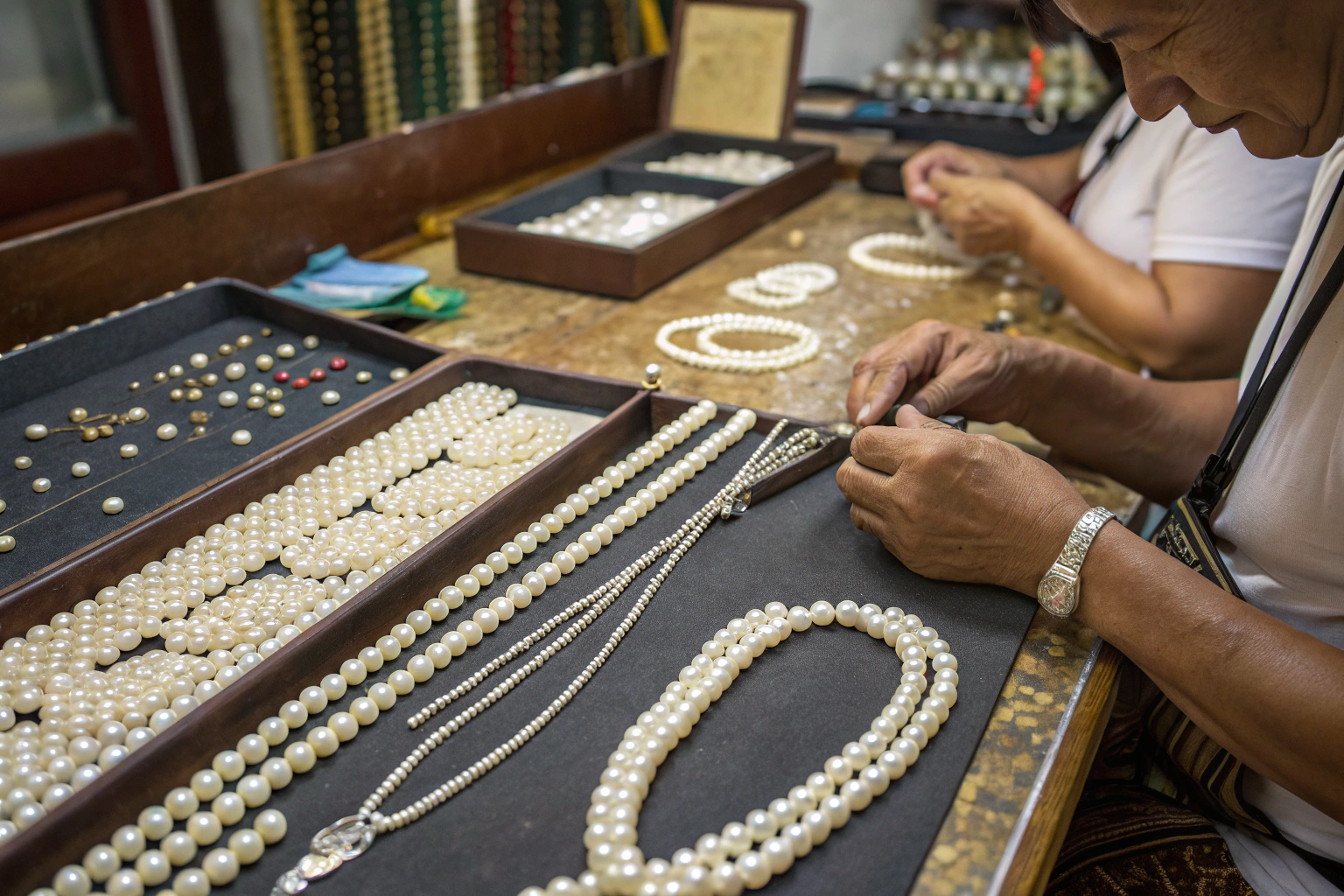
Pearl necklace manufacturing has remained largely unchanged for centuries, relying on meticulous handwork and artisan expertise. However, this traditional approach faces significant challenges in consistency, scalability, and meeting modern quality expectations. Through our integration of smart technologies into pearl processing and necklace assembly, we’ve achieved remarkable improvements in quality consistency, production efficiency, and design possibilities that were previously unimaginable in this heritage craft.
Smart technologies are transforming traditional pearl stringing necklace manufacturing by introducing unprecedented precision in pearl matching, enabling automated quality inspection at microscopic levels, facilitating complex design execution with perfect consistency, and providing data-driven insights that enhance both production efficiency and product quality. This technological evolution represents not a replacement of traditional craftsmanship but an enhancement that elevates the artisan’s capabilities.
The transformation happening in pearl necklace manufacturing bridges centuries-old techniques with cutting-edge technology. Let’s examine the specific smart technologies driving this revolution and their impact on quality and efficiency.
How is computer vision revolutionizing pearl selection and matching?
Traditional pearl matching relies on the trained human eye, which despite its expertise, suffers from subjectivity, fatigue, and inability to process multiple visual parameters simultaneously. This manual process creates inconsistencies in necklace appearance and limits production speed.
Computer vision systems bring objective, tireless precision to pearl assessment, enabling matching based on multiple characteristics simultaneously with consistency impossible to achieve manually.
What multi-parameter analysis does computer vision enable?
Human pearl graders typically focus on 3-4 primary characteristics, but computer vision systems can evaluate dozens of parameters simultaneously. Our advanced imaging systems capture each pearl from multiple angles under controlled lighting conditions, measuring characteristics including surface reflectivity (luster), overtone presence and intensity, surface perfection, minute shape variations, and color consistency across different lighting conditions. The system generates a digital quality fingerprint for each pearl that includes both traditional grading criteria and subtle characteristics human eyes might miss. This comprehensive analysis enables matching based on overall visual harmony rather than just a few dominant characteristics, resulting in necklaces with exceptional visual consistency.
How does algorithmic matching enhance necklace harmony?
Traditional matching creates pairs or small groups of similar pearls, but computer vision enables holistic necklace design. Our matching algorithms consider how pearls will appear in sequence, creating gradual transitions that maintain visual harmony throughout the necklace length. The system can execute complex matching strategies like balancing multiple characteristics across the necklace—perhaps allowing slight size variation while maintaining perfect color consistency, or vice versa depending on design objectives. For multi-strand necklaces, the algorithms coordinate matching across all strands simultaneously, ensuring harmonious appearance regardless of viewing angle. This algorithmic approach has reduced our matching time by 70% while significantly improving the visual quality of finished necklaces.

How does automation enhance stringing precision and durability?
Traditional pearl stringing requires manual knotting between each pearl—a time-consuming process that inevitably introduces variations in knot tightness, spacing, and security. These variations affect both appearance and longevity of pearl necklaces.
Automated stringing systems bring engineering precision to this ancient technique, creating perfectly consistent knots while enabling new construction methods that enhance durability.
What robotic knotting systems ensure consistency?
Manual knotting naturally varies between artisans and even within a single artisan’s workday. Our robotic knotting systems reproduce perfect knots with micron-level consistency in tightness, placement, and size. The systems use vision-guided positioning that ensures each knot forms at the exact optimal distance from the adjacent pearls. For different pearl sizes and necklace styles, the system automatically adjusts knotting parameters—smaller, tighter knots for delicate strands with small pearls; slightly larger, more flexible knots for heavy pearls requiring more movement. This consistency not only creates superior appearance but also ensures even weight distribution and stress management throughout the necklace, significantly enhancing longevity.
How do smart tension controls prevent future problems?
Pearl necklaces face ongoing stress during wear that can eventually compromise traditional stringing. Our automated systems incorporate smart tension management that calculates optimal thread tension based on pearl weight, expected movement, and wear conditions. The system applies graduated tension profiles that increase slightly toward the center of the necklace where stress is greatest during wear. Additionally, the automated process enables reinforced construction techniques like double-knotting at stress points or integrated breakpoints that prevent total necklace failure if the thread is compromised. These advanced construction methods would be impractical to execute manually with consistent quality but become routine with automated precision.

How do digital design platforms expand creative possibilities?
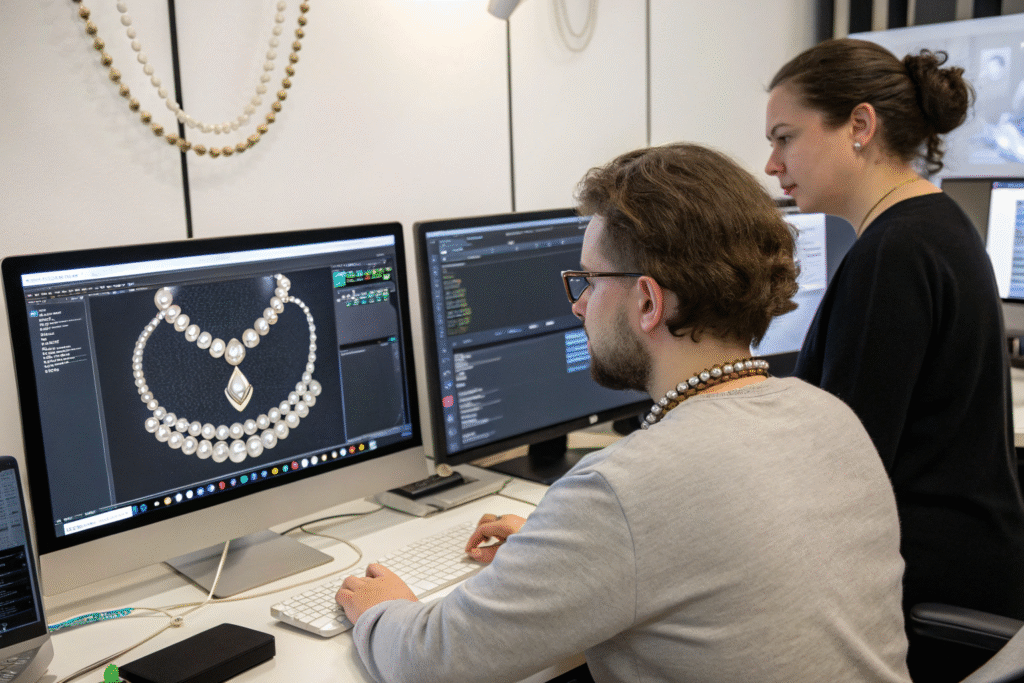
Traditional pearl necklace design relies heavily on physical samples and designer imagination, limiting exploration of complex patterns and innovative arrangements. Digital design tools enable visualization and validation of designs before any physical materials are committed.
Virtual design environments expand creative exploration while reducing development time and material waste traditionally associated with design iteration.
What virtual prototyping capabilities accelerate development?
Physical prototyping of pearl necklaces requires significant time and material resources. Our 3D design platforms enable designers to create virtual necklaces using digital pearl libraries that accurately simulate size, luster, color, and light interaction. Designers can instantly test different pearl arrangements, clasp styles, and length variations while seeing how designs drape on virtual models. The system includes physical simulation engines that predict how designs will move and hang when worn, identifying potential issues like poor drape or unbalanced weight distribution before physical creation. This virtual approach has reduced our design development time by 65% while enabling more creative experimentation within the same timeframe.
How does computational design generate innovative patterns?
Human designers naturally gravitate toward familiar patterns, while computational systems can explore unconventional arrangements beyond typical human consideration. We’ve integrated generative design algorithms that create innovative pearl arrangements based on specified parameters like style inspiration, price point, and technical constraints. These systems explore thousands of pattern variations, often producing unexpected arrangements that become bestselling designs. For example, our algorithms developed a graduated pattern that creates the visual illusion of pearls flowing like water and a clustered arrangement that maximizes visual impact while using fewer high-quality pearls. This human-computer collaboration expands creative possibilities while maintaining the artistic sensibility that defines luxury jewelry.
How does data analytics improve production planning and quality?
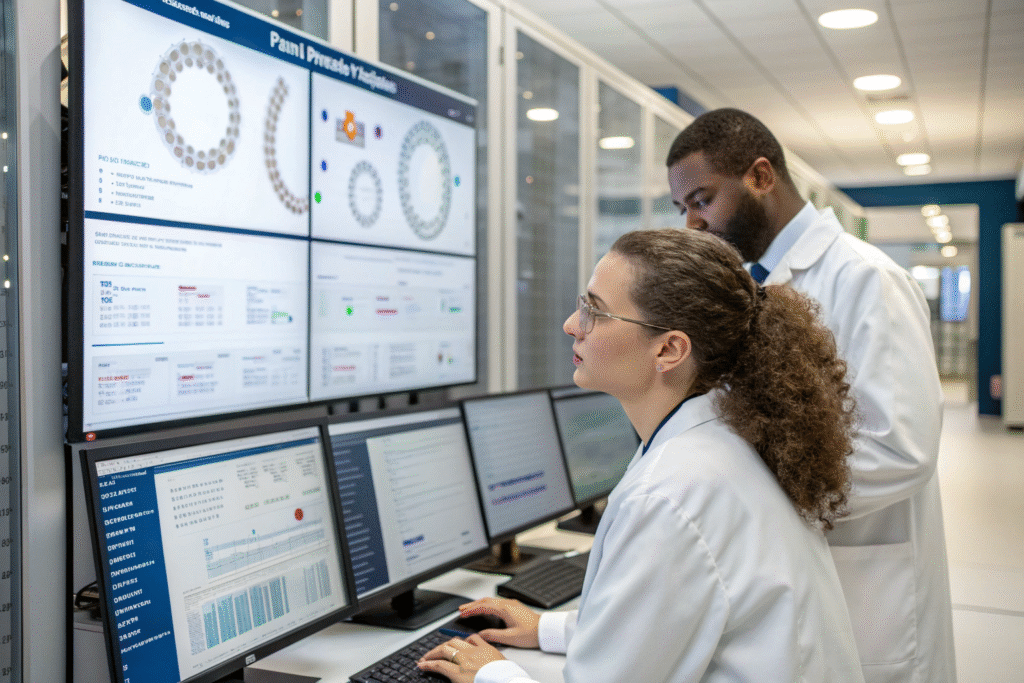
Traditional pearl necklace manufacturing relies heavily on experiential knowledge that’s difficult to scale or quantify. Smart technologies generate detailed production data that enables continuous improvement, predictive planning, and quality optimization.
Data-driven manufacturing transforms pearl necklace production from artisanal craft to precision engineering while preserving the artistic elements that define luxury jewelry.
How does production analytics optimize resource allocation?
Pearl necklace manufacturing involves managing numerous variables including pearl inventory, artisan availability, and equipment status. Our integrated production analytics track all manufacturing steps, identifying bottlenecks, predicting material requirements, and optimizing workflow sequences. The system analyzes historical production data to predict processing times for different necklace complexities, enabling accurate scheduling and delivery commitments. For inventory management, the analytics identify usage patterns and waste reduction opportunities, ensuring optimal pearl utilization while maintaining quality standards. This data-driven approach has increased our overall production efficiency by 40% while reducing material waste by 25% through better planning and resource allocation.
What quality analytics enhance consistency?
Traditional quality control identifies defects but provides limited insight for prevention. Our quality analytics systems correlate production parameters with quality outcomes, identifying subtle factors that affect final product excellence. The system might detect that pearls from specific sources have higher drilling success rates, or that certain knotting tensions result in better long-term durability. This data enables predictive quality improvement where we adjust processes based on analytical insights rather than waiting for defects to occur. The system also maintains complete quality history for each necklace, providing valuable data if issues emerge later and enabling continuous refinement of our quality standards based on actual performance data.
Conclusion
Smart technologies are transforming traditional pearl stringing necklace manufacturing by enhancing precision, expanding creative possibilities, improving efficiency, and enabling quality levels previously unattainable through purely manual methods. This technological integration represents an evolution rather than a replacement of traditional craftsmanship, augmenting artisan skills with capabilities that address the limitations of purely manual processes. Manufacturers who embrace these smart technologies position themselves at the forefront of luxury jewelry production, capable of delivering exceptional quality with consistency that builds brand reputation and customer trust.
If you’re interested in leveraging smart technologies to enhance your pearl necklace manufacturing capabilities, we invite you to contact our Business Director, Elaine. Our successful integration of advanced technologies with traditional jewelry craftsmanship can help you achieve new levels of quality, efficiency, and design innovation. Reach her at: elaine@fumaoclothing.com.