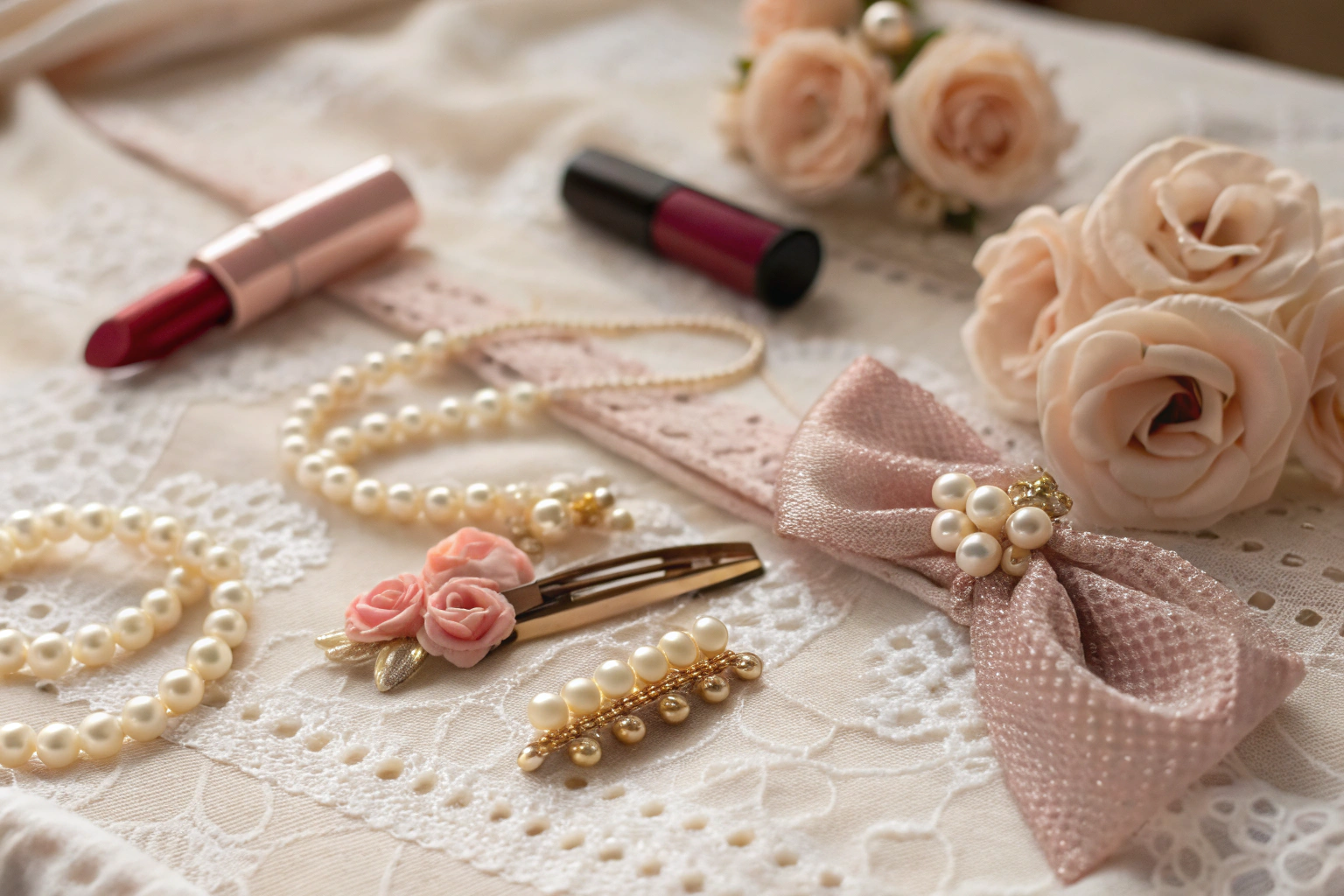
A gold-colored hair clip can be a beautiful, elegant accessory that adds a touch of luxury to any hairstyle. But we've all seen the other side: a clip that looks bright and shiny in the store, but after just a few weeks of wear, it's tarnished, discolored, or has started to flake, revealing the dull gray metal underneath. What's the difference? The answer is the quality of the gold plating. For a product that is in constant contact with hair, skin, and styling products, the plating is not just a cosmetic feature; it is a critical component of its performance and value.
Why is high-quality gold plating so important? Its importance goes far beyond simple appearance. The four critical reasons are: 1) it directly determines the product's durability and resistance to tarnish and corrosion, 2) it is essential for preventing skin irritation and allergic reactions, 3) it creates a deep, luxurious luster that is the primary indicator of the product's perceived value, and 4) it is a direct reflection of your brand's overall commitment to quality and customer satisfaction. At Shanghai Fumao Clothing, we treat the plating process with the scientific rigor it deserves, because we know it's fundamental to a product's success.
Is "gold-colored" the same as "well-plated"? Absolutely not. Let's explore the four reasons why investing in quality plating is non-negotiable.
How Does Plating Quality Determine Durability and Tarnish Resistance?
What is the number one enemy of a fashion hair clip? It's the daily exposure to a harsh environment. Think about what a hair clip encounters every day:
- Hair Products: Hairspray, mousse, and serums contain chemicals and alcohol that are highly corrosive to metal.
- Moisture: Damp hair, humidity, and sweat.
- Oils: Natural oils from the scalp and skin.
- Friction: The constant handling and movement against the hair.
A low-quality gold plating is incredibly thin and often applied directly onto a reactive base metal (like a zinc alloy) with poor adhesion. This thin layer wears away quickly, exposing the base metal to these corrosive elements. The result is tarnishing (darkening or discoloration) and corrosion (pitting or flaking).
A high-quality gold plating process, however, is a multi-layer system designed for durability:
- A Base Layer: A layer of a stable metal like copper is often applied first to the base metal to create a smooth, uniform surface.
- An Intermediate Layer: A layer of nickel or a similar metal is applied next. This layer acts as a crucial barrier, preventing the base metal from migrating into the gold layer and causing it to tarnish from within.
- The Gold Layer: Finally, a thicker, more substantial layer of gold is electroplated onto the surface.
This multi-layer "sandwich" creates a durable, non-porous shield that can withstand daily use and resist the corrosive effects of hair products and the environment, keeping the clip looking beautiful for much longer.
What is "Plating Thickness" and Why Does it Matter?
How is plating quality measured? One of the key metrics is thickness, measured in microns. A cheap, "flash-plated" item might have a gold layer that is less than 0.175 microns thick. This is purely decorative and offers no real durability. A high-quality "electroplated" fashion accessory should have a thickness of at least 0.5 microns, and a premium piece might have 1.0 micron or more. A thicker layer of gold simply takes much longer to wear away.
How Can You Specify This with Your Factory?
How do you order good quality plating? You must be specific in your tech pack. Don't just say "gold plated." Say "0.5 micron 18k gold plating with a nickel barrier layer." This tells your factory you are a professional who understands the science of quality.
Why is a Quality Barrier Layer Essential for Skin Safety?
What is a common and serious customer complaint about cheap jewelry? It's skin irritation. Many people have allergies to certain metals, with nickel being the most common culprit.
When a hair clip is cheaply made, the base metal often contains a high amount of nickel or other reactive metals. If the gold plating is thin and wears away, these metals can come into direct contact with the wearer's scalp, ears, or neck. This can lead to an allergic reaction known as contact dermatitis, causing redness, itching, and discomfort. This is a terrible experience for your customer and can lead to returns, negative reviews, and damage to your brand's reputation.
High-quality plating helps prevent this in two ways:
- It Creates a Barrier: The durable, multi-layer plating system acts as a shield, sealing the reactive base metal away from the skin.
- It Offers "Nickel-Free" Options: For customers with a known nickel allergy, a manufacturer can use an alternative barrier layer (like a palladium alloy) instead of nickel. A product that is certified "nickel-free" has been specifically designed to be hypoallergenic.
Ensuring your plating is high-quality and, where possible, nickel-free is a fundamental aspect of product safety and customer care.
How Can You Guarantee a Product is Nickel-Free?
Can you test for this? Yes. You can (and should) have your products tested by an independent lab to certify that they meet international standards for nickel release, such as the EU's REACH regulations. This is a standard part of the social compliance and safety testing process.
Is This an Expensive Requirement?
Does nickel-free plating cost more? It can add a small amount to the cost of the product, but the cost of not doing it—in terms of customer complaints, returns, and brand damage—is infinitely higher. Imagine a customer, their skin sensitive and prone to irritation, reaching for a piece of jewelry or a sleek metal accessory, only to find that within hours, redness blooms, itching spreads, and a painful rash emerges. They rush to return it, their trust shattered, their frustration mounting as they navigate the hassle of exchanges and the disappointment of a product that failed to deliver on its promise of safety.
For brands, these isolated incidents snowball into a storm of negative reviews online, where potential buyers scan through scathing comments about 'irritation,' 'allergic reactions,' and 'unreliable materials,' steering clear of products that once seemed appealing.
How Does Plating Quality Create Perceived Value?
When a customer is browsing in a store, what makes them choose one hair clip over another? Often, it's the immediate visual appeal. The human eye is incredibly good at detecting subtle differences in quality, especially when it comes to metallic finishes.
- Low-Quality Plating: Often has a thin, brassy, or overly yellow color. The luster is shallow and can look like plastic. The surface may have tiny imperfections, pits, or a slightly uneven finish. It looks, and therefore feels, cheap.
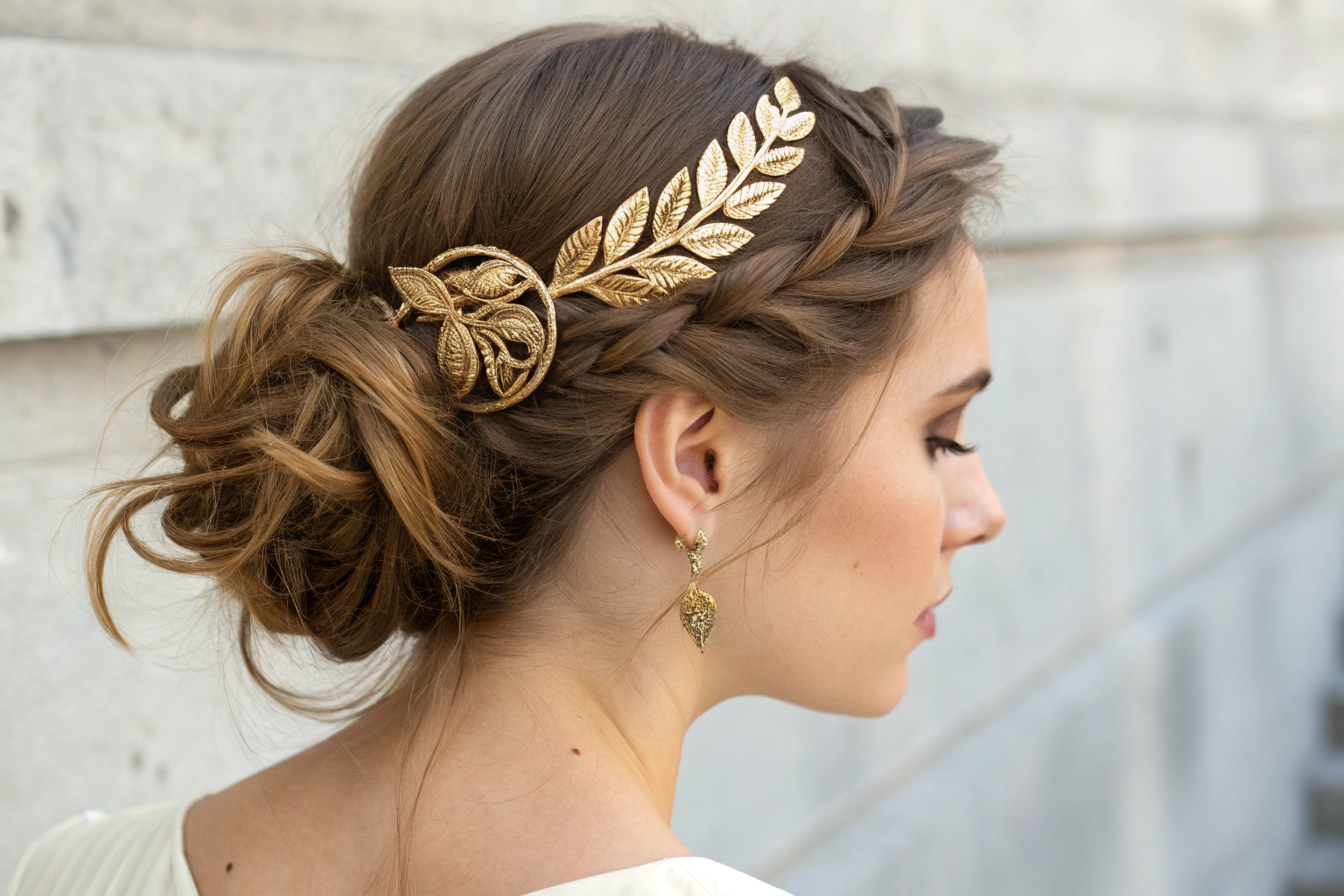
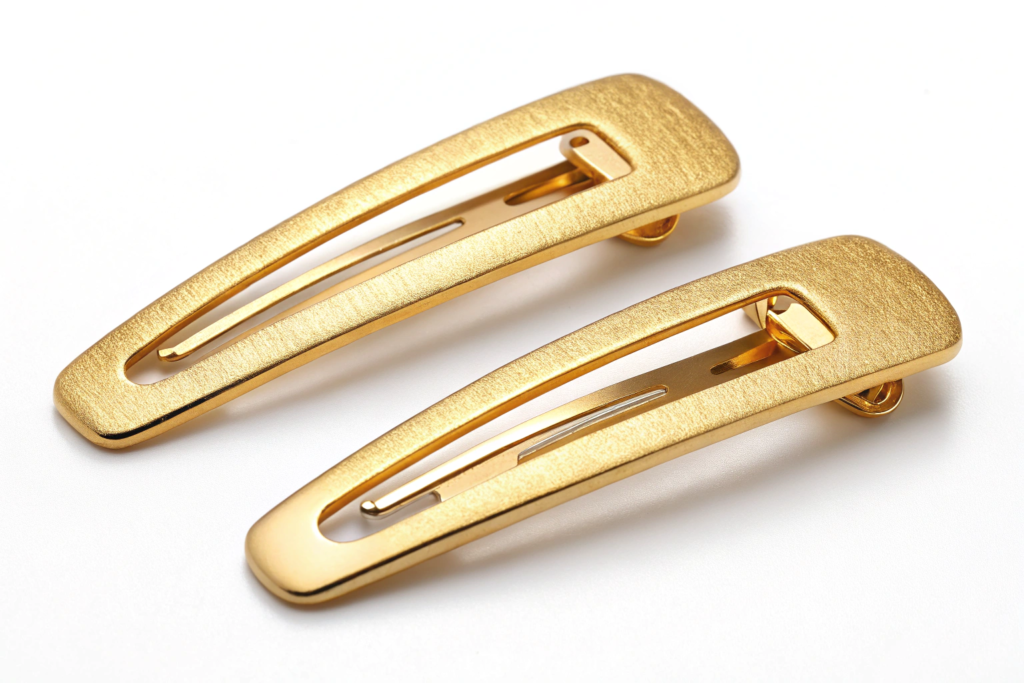
- High-Quality Plating: Has a deep, rich, and believable gold color that accurately mimics solid gold (e.g., the soft, warm glow of 14k or 18k gold). The luster is deep and the surface is perfectly smooth and reflective, like a mirror. It looks substantial, luxurious, and valuable.
This high-quality finish is the primary visual cue that justifies a premium price. A customer is much more willing to pay $25 for a clip that looks like a piece of fine jewelry than for one that looks like it came from a gumball machine. The quality of the plating is the foundation of the product's perceived value.

Can You Specify the Final Gold Color?
Is all gold plating the same color? No. You can specify the final color by choosing the karat of the gold used in the plating bath. Common options include:
- 14k Gold Plating: A softer, paler yellow.
- 18k Gold Plating: A richer, deeper yellow.
- Rose Gold Plating: Achieved by adding copper to the gold alloy.
A good manufacturer can provide you with samples of these different finishes so you can choose the exact color that matches your brand's aesthetic.
How Does This Affect Photography?
Does it show up in photos? Yes, dramatically. A high-quality, lustrous finish is much easier to photograph beautifully for your website and social media. It catches the light in a more appealing way—think of how sunlight dances across a polished marble countertop, creating soft, warm glints that make every curve and edge pop with life.
In photos, this finish transforms ordinary product images into captivating visuals: the smooth surface reflects subtle highlights, adding depth and dimension that flat or dull finishes simply can't match. Whether it's the glossy sheen of a smartphone case catching the flash of a camera lens, the rich, wet-looking luster of a leather handbag that seems to glow from within, or the sleek mirror-like quality of a kitchen appliance that makes it look almost too perfect to touch, this finish turns static images into stories.
Why is Plating Quality a Reflection of Your Brand's Promise?
Ultimately, what does the quality of your plating say about your brand? It says everything. Your product is a physical manifestation of your brand's promise to your customer. Every single detail is a part of that promise.
- A plating that tarnishes and flakes after a month tells your customer: "This brand cuts corners and doesn't care about long-term quality. Their products are disposable."
- A plating that stays beautiful and lustrous for years tells your customer: "This brand invests in quality and cares about my satisfaction. Their products are worth the price."
Consistency in quality, right down to the microscopic layers of the plating, is what builds brand trust and customer loyalty. A customer who has a good experience with the quality of one of your hair clips is far more likely to come back and buy a necklace, a belt, or another hair clip from you in the future. They trust that your commitment to quality applies to your entire product range.
How Does This Relate to "Cost-Per-Wear"?
Does good plating improve the value proposition? Yes. As consumers become more conscious of the cost-per-wear, a durable product becomes a much smarter purchase. A $25 hair clip that can be worn 100 times has a much better value proposition than a $10 clip that can only be worn 5 times before it looks terrible. Imagine the first clip: its surface glimmers with a rich, even finish, whether it's a sleek silver, a warm gold, or a vibrant rose gold—each hue catching the light like a tiny treasure. Even after a hundred wears, it retains that luster, the plating holding strong against the friction of hair, the occasional brushstroke, and the passage of time. It becomes a staple in your daily routine, a reliable companion that elevates your look without fail, its presence a subtle confidence booster each time you fasten it into your hair.
How Do You Build a Reputation for Quality?
What's the secret to a great brand reputation? It's consistency—a quiet, unwavering force that weaves trust into the very fabric of how customers perceive you. It's delivering on your promise of quality with every single product, every single time, like a symphony where each note is perfectly in tune, creating a melody that resonates long after the final chord fades. Investing in high-quality plating is a critical and non-negotiable part of that commitment. Imagine the soft, cool touch of a well-plated surface, smooth as silk beneath fingertips, its luster catching the light like a hidden star, turning a simple object into something that feels special, almost alive.
Conclusion
So, why is the quality of gold plating on a hair clip so important? It is not merely a decorative finish. It is a technical system that is fundamental to the product's performance, safety, and value.
High-quality plating is what provides the durability to resist tarnish and corrosion from daily use. It is what provides the safety to prevent skin irritation and allergic reactions. It is what creates the luxurious appearance that justifies a premium price. And, most importantly, it is a direct and powerful reflection of your brand's promise of quality to your customer.
When you choose to invest in high-quality, multi-layer plating, you are not just making a better hair clip. You are building a better, more trusted, and more successful brand.
If you are looking to create a line of fashion accessories with a beautiful, durable, and high-quality finish, our team has the expertise to guide you through the science of plating. Please contact our Business Director, Elaine, at her email: elaine@fumaoclothing.com.