As an experienced buyer like Ron, you're constantly navigating the balance between uniqueness and scalability. You see the massive consumer trend towards authentic, artisanal products, but your business relies on placing large, bulk orders. The word "handmade" might trigger concerns about inconsistency, slow production, and high costs, making you question if it's a viable option for your business model. You need to know if you can get that unique, handcrafted feel without sacrificing the quality control and volume you require.
You should choose handmade hair clips for bulk orders because modern, specialized manufacturers can now deliver the unique selling proposition of "handmade" with the consistency, quality control, and scalability of mass production. The term "handmade" no longer means inconsistent output from a small workshop; it refers to a meticulous, hands-on assembly process by skilled artisans within a structured factory environment, offering a superior level of detail and quality that machines cannot replicate.
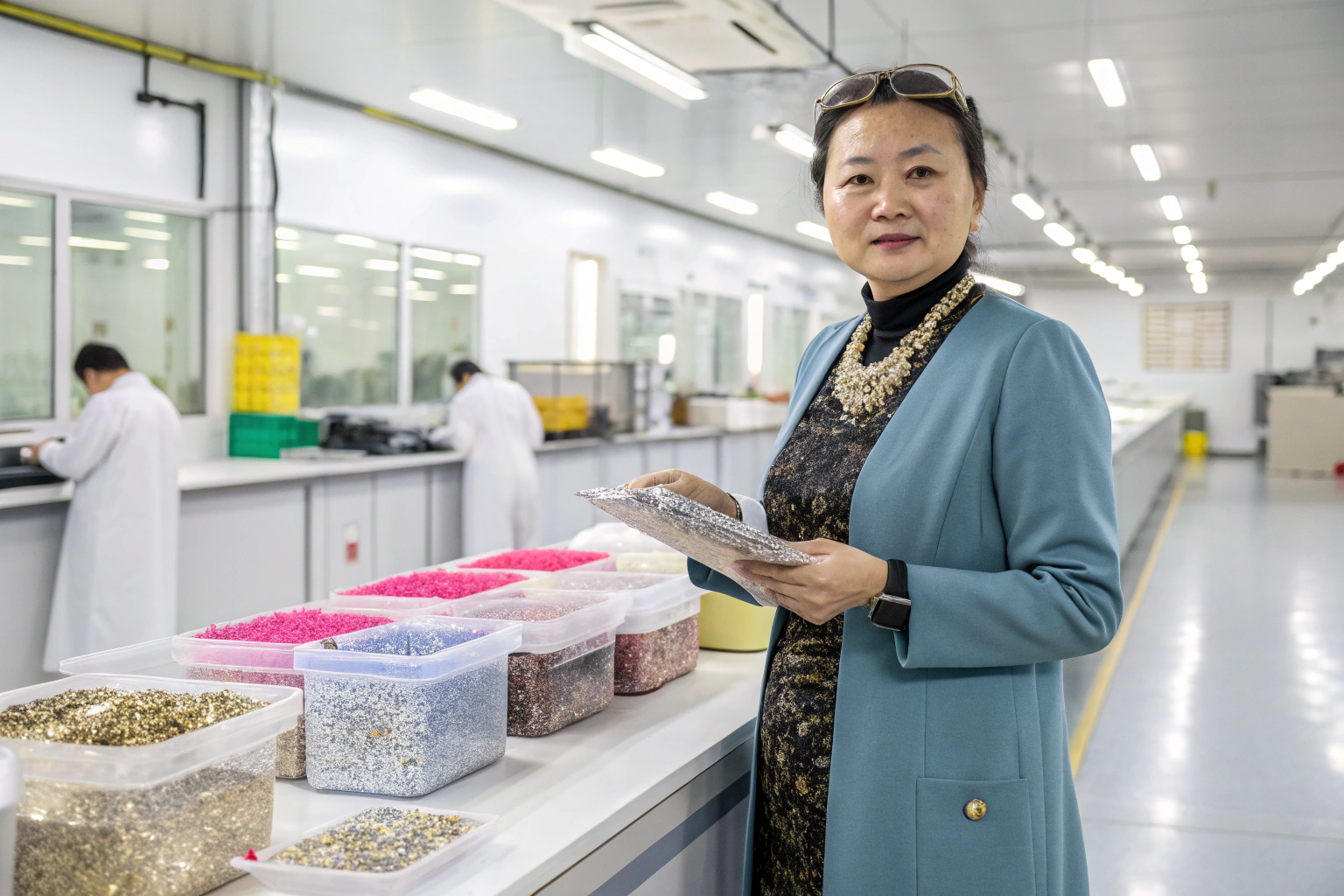
This is a critical distinction that I emphasize to all my clients. At Shanghai Fumao Clothing, "handmade" is not a bottleneck; it's a specialized production line. We have teams of skilled artisans who are experts in intricate assembly. We've merged the art of the human touch with the science of mass production. Let's break down why this approach is not only viable but also a powerful strategic choice for your next collection.
How Is Quality and Consistency Maintained in Bulk "Handmade" Production?
This is the number one concern for any buyer considering a handmade product for a bulk order: if a thousand different hands are making my product, how can I be sure they will all look the same?
Consistency in bulk handmade production is maintained through a rigorous system of standardized processes, dedicated single-task artisans, and multi-stage quality control, using an approved "golden sample" as the unwavering benchmark. Instead of one person making a clip from start to finish, we use an assembly line approach. One artisan might only be responsible for setting pearls, another for wiring a delicate floral element. This specialization breeds incredible consistency and speed.
This is the core of our "scalable handmade" model. Each artisan is trained on a specific task and has the approved Pre-Production Sample (PPS) at their station at all times. Our line supervisors and QC inspectors perform checks at every stage, ensuring that the work of the 50th artisan is identical to the work of the first. This structured environment is what separates professional handmade production from hobbyist crafting and is the key to achieving the unique aesthetic you're looking for, at scale.

What does a "handmade" assembly line look like?
- Station 1: Base Preparation: The metal clip base is prepared.
- Station 2: Element Attachment: An artisan uses high-grade adhesive to attach the main decorative elements.
- Station 3: Detail Work: A different artisan, specializing in fine work, adds the tiny crystals or pearls.
- Station 4: Curing & Cleaning: The clips are left to cure in a controlled environment, then cleaned of any excess adhesive.
- Station 5: Final QC: Each piece is individually inspected against the golden sample.
This systematic approach is a core tenet of modern manufacturing, a principle you can learn more about from resources on lean manufacturing like the Lean Enterprise Institute.
What is a "golden sample"?
The "golden sample" or Pre-Production Sample (PPS) is the final, perfect sample that you, the client, have approved. It's the physical contract that we use to define "correct." Every single piece in the bulk run must match this sample in every detail, a standard verified by our QC team and third-party inspectors like QIMA.
What Unique Qualities Do Handmade Clips Offer?
If you're going to invest in a handmade process, it has to deliver something that a fully automated process cannot. What specific, tangible benefits do you get from the human touch?
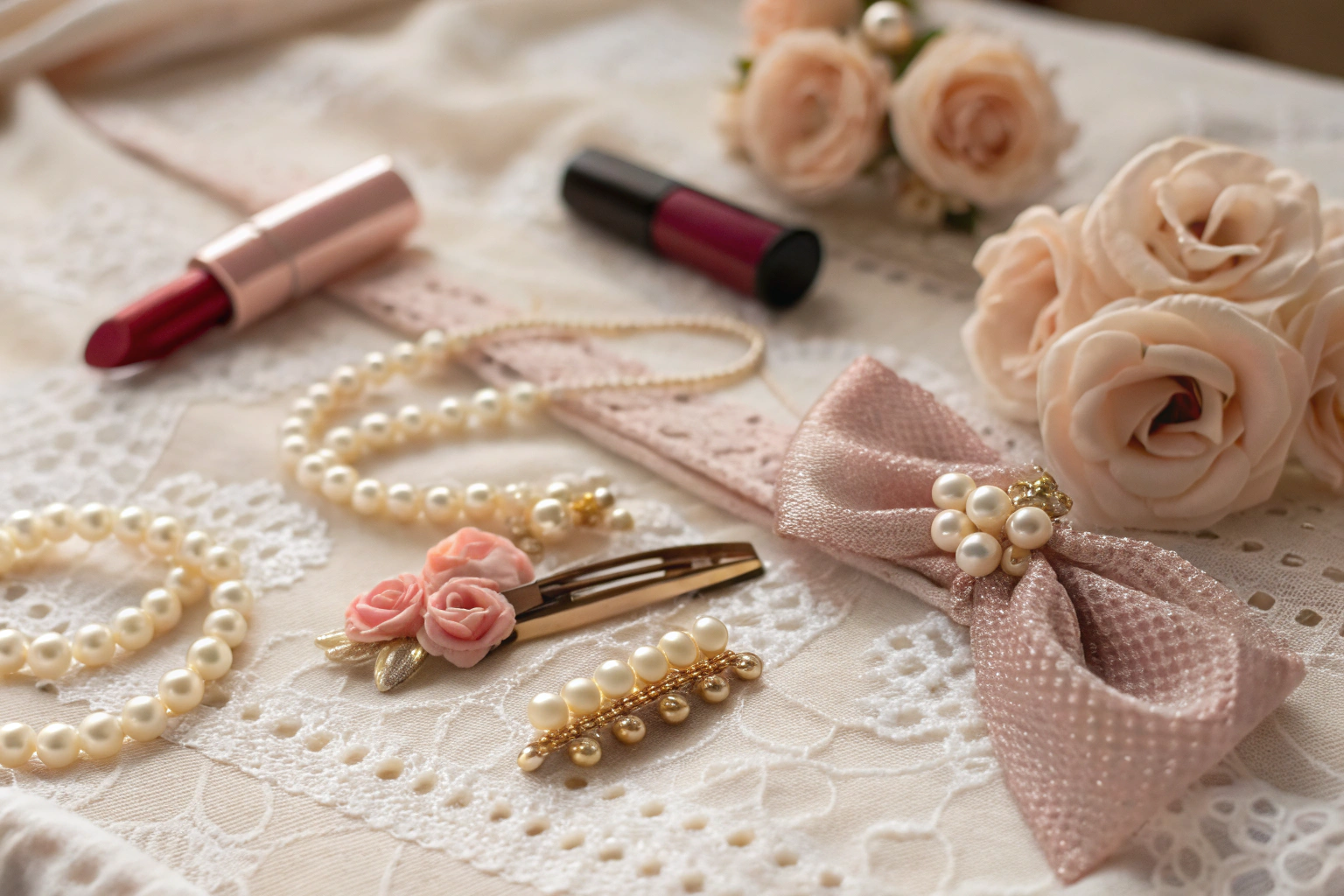
Handmade clips offer unique qualities like the ability to use non-uniform materials, create complex three-dimensional designs, and achieve a level of intricate detail that is impossible for automated machinery. Machines are excellent at repetitive tasks with uniform components. Humans, however, can adapt, adjust, and create with an artistry that machines lack.
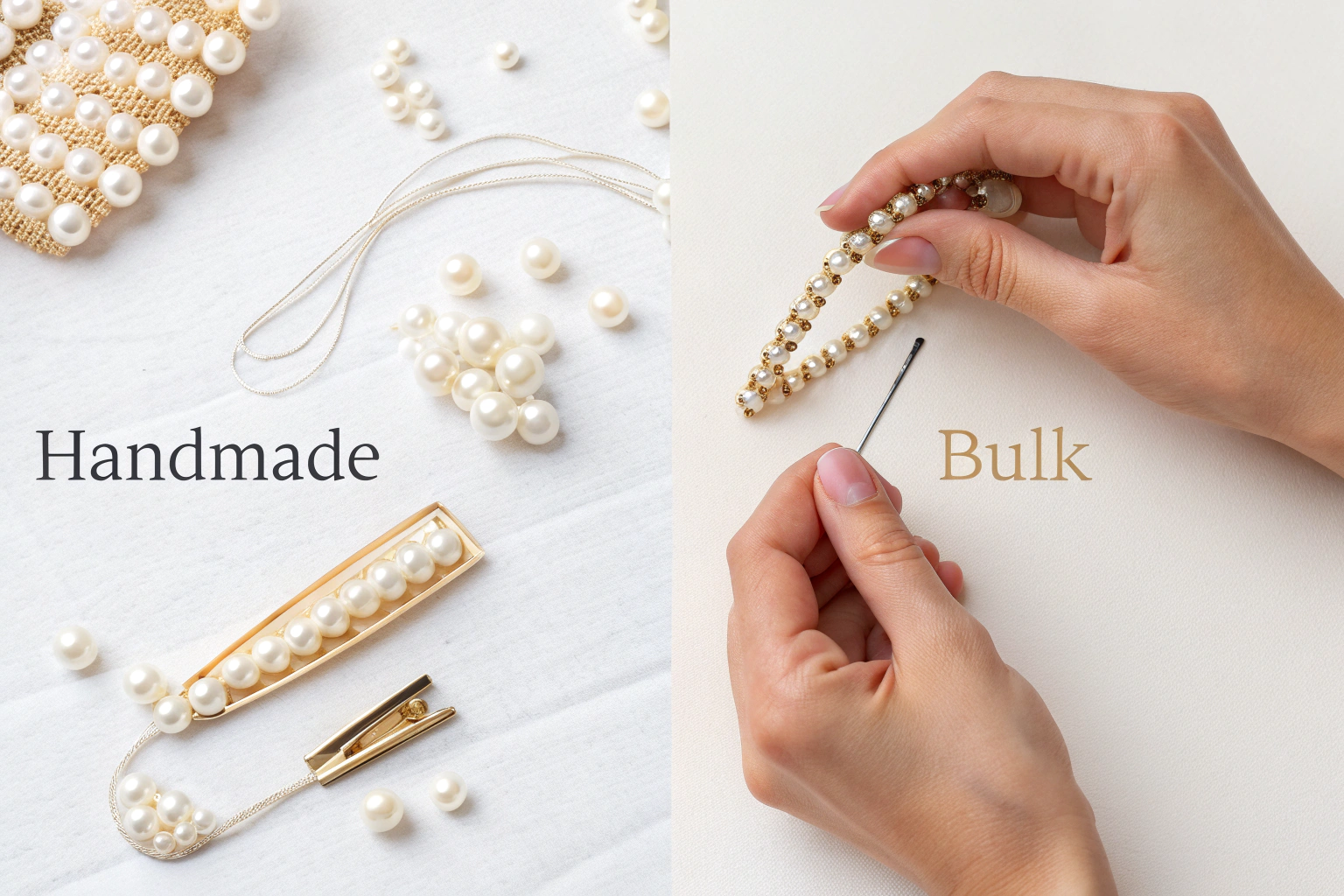
This is where handmade truly shines. Do you want to use unique, slightly irregular freshwater pearls? A machine can't handle that, but a skilled artisan can select and place each one to create a beautiful, harmonious design. Do you want a delicate, wired branch of tiny crystal leaves? That requires the dexterity of human hands. At Shanghai Fumao Clothing, we leverage our artisans' skills to create these high-value, statement pieces that allow our clients to command a higher retail price. This unique quality is a powerful marketing tool.

What designs are only possible with a handmade process?
- Use of Natural Materials: Incorporating materials like baroque pearls, natural shells, or unique gemstones that vary in size and shape.
- Intricate Wirework: Creating delicate, hand-twisted vines or branches.
- Complex Layering: Building up designs with multiple overlapping layers that require precise, non-uniform placement.
- Hand-Beading: Sewing or weaving tiny seed beads onto a fabric base.
You can see beautiful examples of these techniques on high-end artisan marketplaces like Etsy or in the collections of luxury accessory designers.
How Do You Market a "Handmade" Product?
You've sourced a beautiful, handmade product. Now, how do you communicate its special value to your customers in a way that justifies its premium positioning?
You market a handmade product by telling the story of its creation, emphasizing the "human touch," the skill of the artisans, and the unique details that make each piece special. In a world of mass automation, "handmade" is a powerful narrative. It speaks to quality, care, and authenticity. This story is your single greatest marketing asset.
We actively help our clients tell this story. We can provide photos and videos (without showing any other clients' products, of course) of our artisans at work. This "behind-the-scenes" content is incredibly powerful on social media. It allows the end consumer to connect with the product on a deeper level. They are not just buying a hair clip; they are buying a small piece of artistry, a product made by a real person. This narrative is key to justifying the price and building a loyal brand following, a strategy well-documented by marketing resources like HubSpot's blog.

What are the key points for your marketing story?
- "The Artisan's Skill": Highlight the training and expertise of the people making the product.
- "The Human Touch": Explain that because it's handmade, there may be very slight variations that make each piece unique.
- "Impossible by Machine": Showcase the intricate details and explain why they can only be achieved by hand.
- "Quality Materials": Connect the handmade process to the use of special, high-quality materials.
Is It a Cost-Effective Strategy for Bulk Orders?
This is the bottom-line question for any buyer. A handmade process is more labor-intensive, which means it will have a higher per-unit cost than a fully machine-made product. Is it still a smart financial decision for a bulk order?
Yes, it is a highly cost-effective strategy because the "handmade" quality allows the product to be positioned at a significantly higher retail price point, leading to a greater profit margin for your brand. You might pay 20-30% more for the handmade clip, but you can often sell it for 50-100% more than a generic, machine-made equivalent. The return on investment is excellent.
Think about the perceived value. A customer will happily pay more for a product that they perceive as being special, artisanal, and of higher quality. The "handmade" story is a direct driver of this perceived value. We work with our clients to find the sweet spot—the level of handmade detail that creates the biggest impact on perceived value for the most efficient cost. It's a strategic calculation, not just an expense.

How do you calculate the ROI?
Consider two clips:
- Machine-Made Clip: Cost: $1.00. Retail Price: $8.00. Margin: $7.00.
- Handmade Clip: Cost: $1.30. Retail Price: $14.00. Margin: $12.70.
Even though the cost is higher, the potential profit is substantially greater. This is a fundamental concept in value-based pricing, a topic explored by business resources like the Harvard Business Review.
Conclusion
Choosing "handmade" for your bulk hair clip order is no longer a risky gamble on consistency. It is a strategic decision to embrace a higher standard of quality, detail, and storytelling. By partnering with a modern, professional manufacturer, you can get the best of both worlds: the unique, high-value aesthetic of an artisanal product and the scalability, consistency, and quality control of a structured factory. It's a strategy that allows you to stand out in a crowded market, command a premium price, and build a brand that customers connect with on a deeper, more authentic level.
At Shanghai Fumao Clothing, we have perfected the art of scalable craftsmanship. We are proud of our artisans and the incredible work they do, and we are experts at helping brands like yours leverage that skill to create beautiful, profitable collections.
If you are ready to explore the powerful potential of handmade accessories for your next bulk order, let's talk. Please contact our Business Director, Elaine, at her email: elaine@fumaoclothing.com, to see what our artisans can create for you.