As a professional buyer like Ron, you're tasked with a challenging balancing act. You need to source on-trend kids' straw hats for the spring/summer season. You see the high prices in retail and know there's a margin to be made. But your primary goal is to find a "budget-friendly" option in bulk. The immediate temptation is to search for the factory with the absolute lowest price. But you're experienced enough to know that the lowest price often comes with hidden costs: poor quality, safety issues, and unreliable delivery.
To find truly budget-friendly kids' straw hats in bulk, you must partner with a specialized manufacturer in China's established hat-making regions, like Zhejiang, who can strategically engineer the product for value by optimizing materials, construction, and packaging. The secret to a "budget-friendly" hat isn't finding the cheapest factory; it's working with a smart factory that knows how to reduce costs without sacrificing safety, compliance, and core quality.
I've seen countless buyers fall into the "cheapest price" trap, only to end up with a container of unsellable, non-compliant hats. At Shanghai Fumao Clothing, our approach is different. We define "budget-friendly" as the best possible product that meets all safety standards at the most competitive price. It's about smart cost engineering, not just cost-cutting. Let me show you how a professional partner achieves this.
How Can You Lower the Cost Without Sacrificing Safety?
When sourcing for children, safety is non-negotiable. This is the area where cutting corners leads to disaster. So, how can a factory lower costs while maintaining a 100% commitment to safety and compliance?
You achieve this by using cost-effective but compliant materials and simplifying designs to eliminate potential hazards. The key is to partner with a manufacturer who understands child safety standards like CPSIA inside and out and designs the product for compliance from the very beginning. A smart factory saves money by avoiding non-compliant features, not by using unsafe materials.
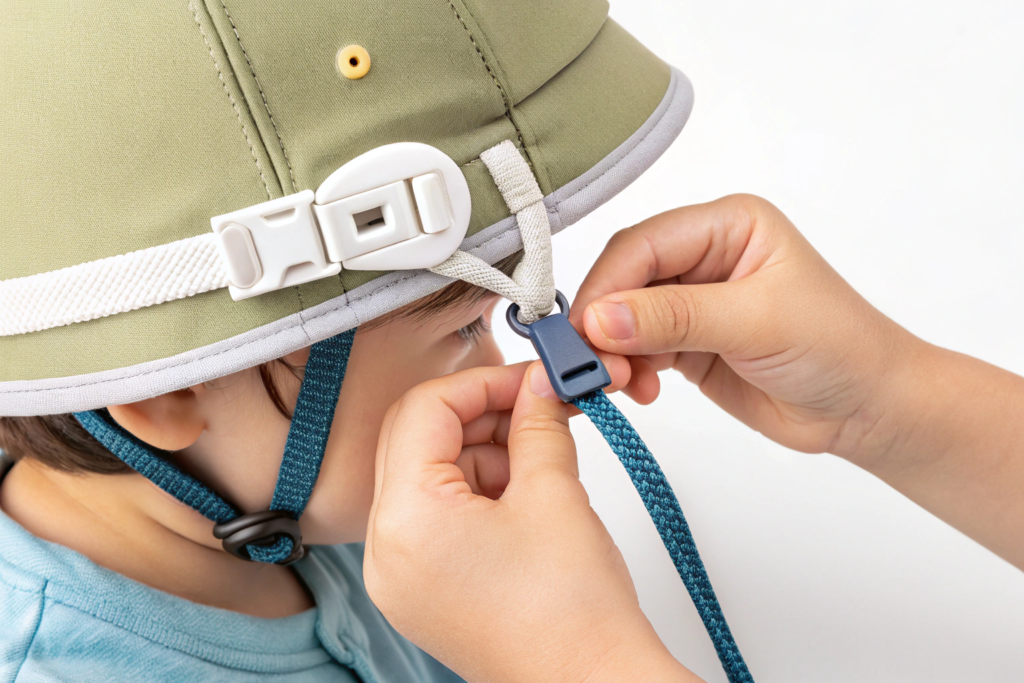
For example, a common feature on kids' hats is a chin cord. For children under a certain age, this can be a strangulation hazard. An experienced factory will immediately recommend a breakaway clasp for the cord or suggest removing it altogether for certain age groups. This design change not only makes the hat safer and compliant but also reduces the cost by eliminating components and labor. This safety-first approach is the foundation of smart cost engineering and is a critical factor in choosing the right materials.
What is CPSIA and why does it matter for cost?
The Consumer Product Safety Improvement Act (CPSIA) is a US law governing children's products. It has strict rules about things like small parts (choking hazards) and chemicals. A factory that understands CPSIA will avoid designing a hat with small, decorative beads that could fall off and become a choking hazard. This foresight prevents costly redesigns and ensures the product is legal to sell.
How does design simplification improve safety and cost?
- Removing Small Parts: Eliminating glued-on decorations reduces the risk of choking hazards and saves on material and labor costs.
- Using Safe Embellishments: Opting for embroidery instead of plastic appliques is often safer and can be more cost-effective at scale.
- Compliant Chin Cords: Using a breakaway clasp or removing the cord entirely saves money and prevents safety recalls.
What Are the Best Budget-Friendly Materials?
The material is the biggest single factor in a hat's cost. While a hand-woven Panama straw is a luxury material, there are fantastic, budget-friendly alternatives that are perfect for the kids' market.
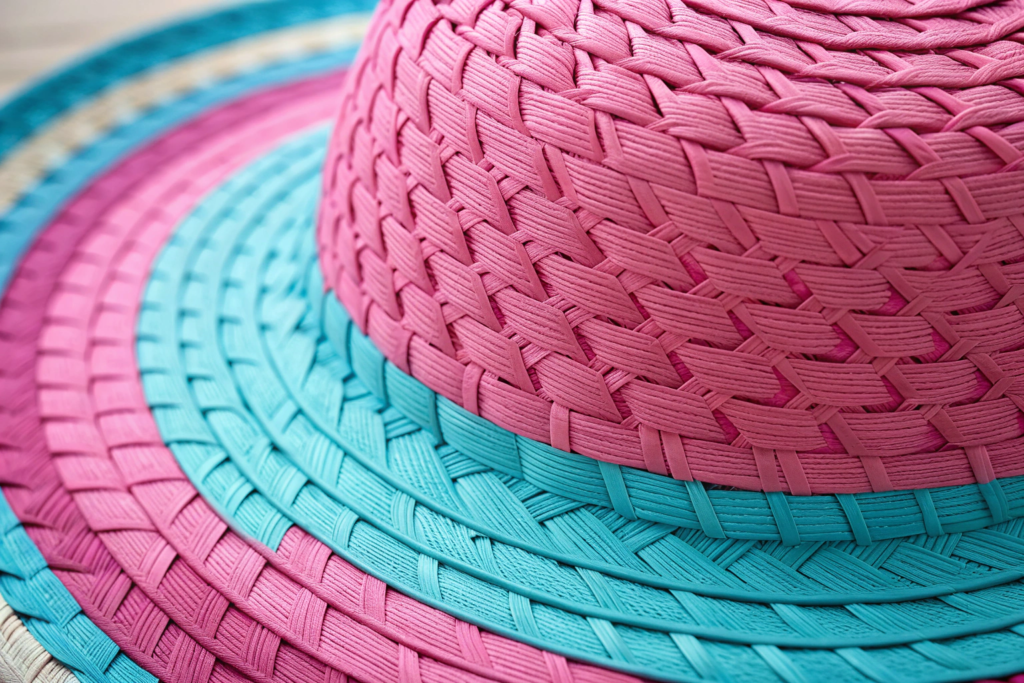
The best budget-friendly material for bulk kids' straw hats is machine-woven Paper Straw, also known as Toyo straw. It is significantly less expensive than natural straws like raffia or wheat, it can be produced with high consistency, and it takes dye very well, allowing for bright, fun colors that appeal to children.
This is our go-to recommendation for almost all budget-focused kids' hat projects. Paper straw is a versatile and reliable material. We can weave it into a variety of shapes and densities, and because it's a machine-made material, the quality is incredibly consistent from the first hat to the ten-thousandth. This consistency is something you can't always guarantee with more expensive, natural hand-woven straws. The choice of material is the most important decision after ensuring the design is safe and compliant.
Why is Paper Straw (Toyo) so cost-effective?
Paper straw is made from long strips of paper that are woven by a machine. The raw material (paper) is inexpensive, and the automated weaving process is highly efficient. This allows for a much lower cost compared to natural straws that may need to be harvested and woven by hand.
Are there other budget-friendly options?
- Polypropylene Straw: This is a plastic-based straw that is extremely durable, waterproof, and inexpensive. It's a great option for beach or pool hats that will get wet.
- Blended Straws: Sometimes, small amounts of other fibers are blended with paper straw to achieve a different look or feel while keeping costs down.
You can learn about the different types of straw used in hat making from craft and material resources like The Spruce Crafts.
How Can Construction Methods Reduce the Price?
How a hat is made is just as important as what it's made of. A complex, multi-part construction will always be more expensive than a simple, elegant one.
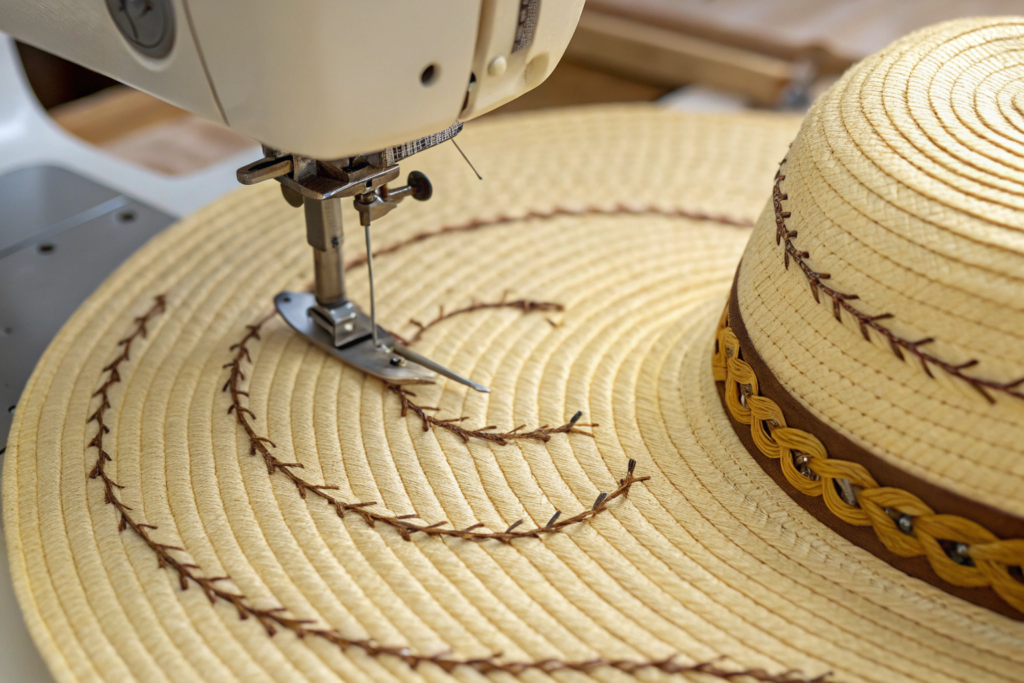
You can significantly reduce the price by choosing a simple "cut-and-sew" construction method using braided straw, rather than a "blocked" hat that requires an individual mold. In the cut-and-sew method, long braids of straw are sewn together in a spiral, a highly efficient and fast process that is perfect for bulk production.
This is a key piece of "inside baseball" for manufacturing. A "blocked" hat, where a single piece of woven material is steamed and pressed over a metal mold, creates a beautiful, seamless shape, but it's a slower, more expensive process. For the kids' market, the cut-and-sew method using braided straw produces a fantastic, durable hat at a fraction of the cost. At Shanghai Fumao Clothing, we have specialized sewing machines that can spiral-sew a hat body in under a minute. This efficiency is a major source of cost savings that we pass on to our clients and is a key part of our packaging and shipping strategy.
What is "Cut-and-Sew" using braid?
Imagine a long, flat braid of paper straw. A special sewing machine takes this braid and begins sewing it to itself in a circle. As the circle gets bigger, the operator shapes it into a hat. It's an incredibly fast and material-efficient way to produce a classic straw hat shape.
What other construction details save money?
- Simple Trim: Using a simple, glued-on ribbon band instead of a complex, stitched-on one.
- Raw Edge vs. Wired Edge: Leaving the edge of the brim raw (but secured with stitching) is cheaper than sewing a wire into the edge for shapeability.
- No Interior Sweatband: For a very budget-focused hat, eliminating the interior sweatband can be an option, though we generally recommend keeping it for comfort.
How Do Packaging and Shipping Affect the Final Price?
You've engineered a budget-friendly hat. The final step is to make sure you don't lose all those savings on logistics. The way a hat is packed and shipped can have a massive impact on the final, landed cost.
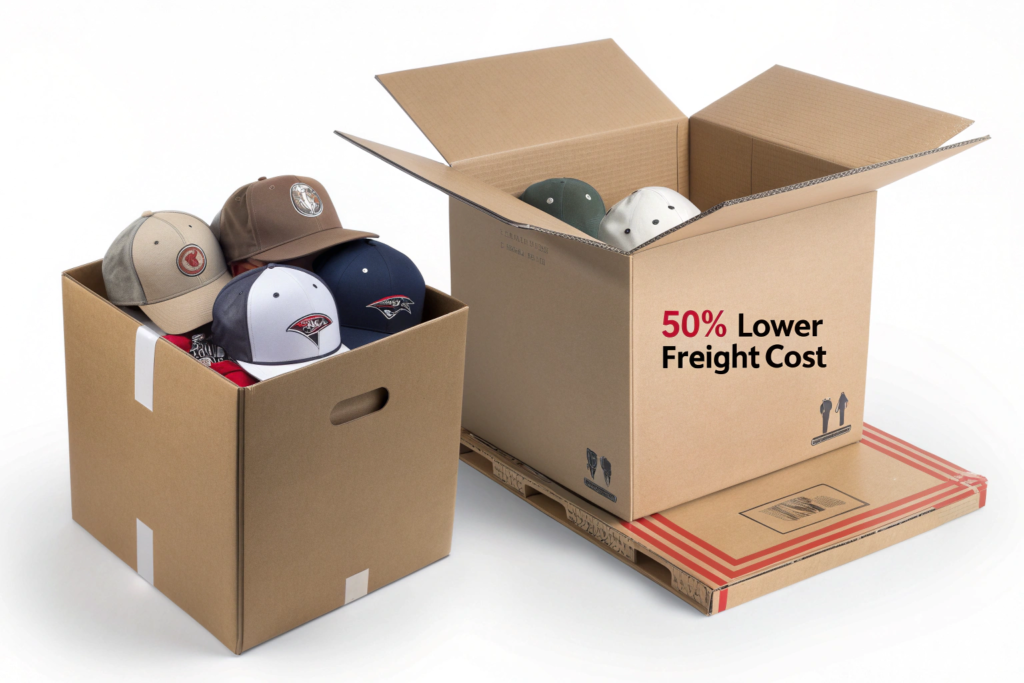
You can dramatically lower the final price by designing the hats to be "nestable" or "crushable," which allows them to be tightly packed, reducing the dimensional weight of the shipping cartons. Shipping costs are often based on the volume of the box, not just its weight. Packing more hats into a single carton is a huge cost-saving measure.
This is a crucial final step. A rigid hat that can't be crushed takes up a lot of empty space in a box. A soft, crushable paper straw hat, however, can be nested (stacked tightly inside one another) or even flattened. We work with our clients to design the hat and the packaging with logistics in mind. By increasing the number of units per carton from, say, 24 to 48, we can cut the per-unit shipping cost almost in half. This logistical strategy is the final piece of the "budget-friendly" puzzle.
What is "Dimensional Weight"?
Shipping carriers like FedEx and UPS, as well as ocean freight carriers, often charge based on a calculation of a box's volume, known as dimensional (or "DIM") weight. A large, light box can be more expensive to ship than a small, heavy one. Reducing your box size is critical.
How do you design a "crushable" hat?
The key is using a material like soft paper straw and avoiding rigid elements like a wired brim. The hat is designed to be packed flat or rolled and then easily pop back into shape. Adding a hangtag that says "Packable & Crushable" can even turn this logistical necessity into a marketable product feature for traveling families.
Conclusion
Finding budget-friendly kids' straw hats in bulk is not about a race to the bottom on price. It's a strategic process of value engineering. By partnering with an expert manufacturer, you can make smart decisions that lower costs while upholding critical safety standards. The formula is simple: design for safety and compliance first, choose a cost-effective material like paper straw, utilize an efficient construction method like cut-and-sew, and optimize the design for shipping. This intelligent approach is how you source a product that is safe, stylish, and genuinely budget-friendly—a product that will be a profitable winner for your business.
At Shanghai Fumao Clothing, this is what we do every day. We are not just a factory; we are cost-engineering partners. We help you find the perfect balance of quality, safety, and price to create the best possible product for your budget.
If you are ready to develop a smart, safe, and budget-friendly kids' hat program, let's talk. Please contact our Business Director, Elaine, at her email: elaine@fumaoclothing.com, to get started.