
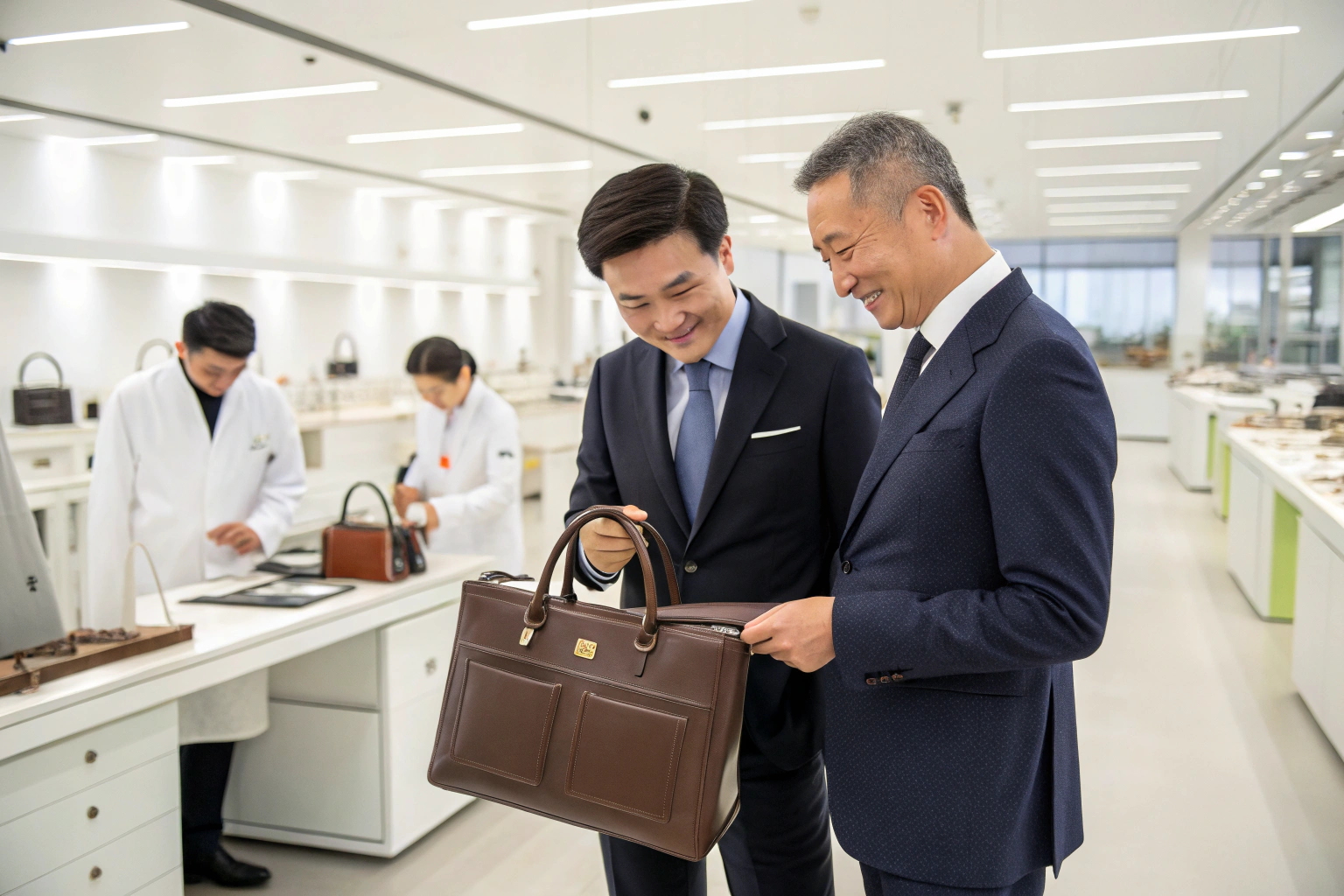
You have a vision for a luxury accessory line—impeccable leather handbags, fine jewelry, silk scarves, or artisanal hats. The design is clear, the market is ready, but the question of sourcing feels daunting. Can high-end, premium quality truly come from Chinese factories? The answer, from my two decades in the industry, is a definitive yes—but with a critical caveat. The journey is not about finding the cheapest factory; it’s about identifying the specialized, often hidden partners who have mastered the craft of luxury manufacturing.
You source high-end fashion accessories from specialized Chinese factories located within established industrial clusters that focus on specific materials and crafts. The key is to target ODM (Original Design Manufacturing) partners with in-house design teams and a proven portfolio of luxury goods, rather than generic OEM suppliers. Success depends on deep research into regional specializations, rigorous factory vetting focused on craftsmanship and material provenance, and building a collaborative, trust-based partnership. Locations like Guangzhou/Panyu for leather goods, Yiwu/Jinhua for fine jewelry, Keqiao for textiles, and Dongguan for advanced wearables are the epicenters for high-end production.
This process requires a shift from a transactional mindset to a strategic partnership approach. Let’s map out the precise pathways to connect with the factories that can turn your luxury vision into a tangible, market-ready collection.
Why Do Specific Chinese Regions Specialize in High-End Accessories?
China’s manufacturing landscape is not monolithic; it’s a mosaic of hyper-specialized industrial clusters. Decades of focused development, concentrated supply chains, and accumulated artisan skill in these regions create an ecosystem unparalleled for efficiency and expertise. Sourcing high-end goods means going directly to these epicenters of craftsmanship.
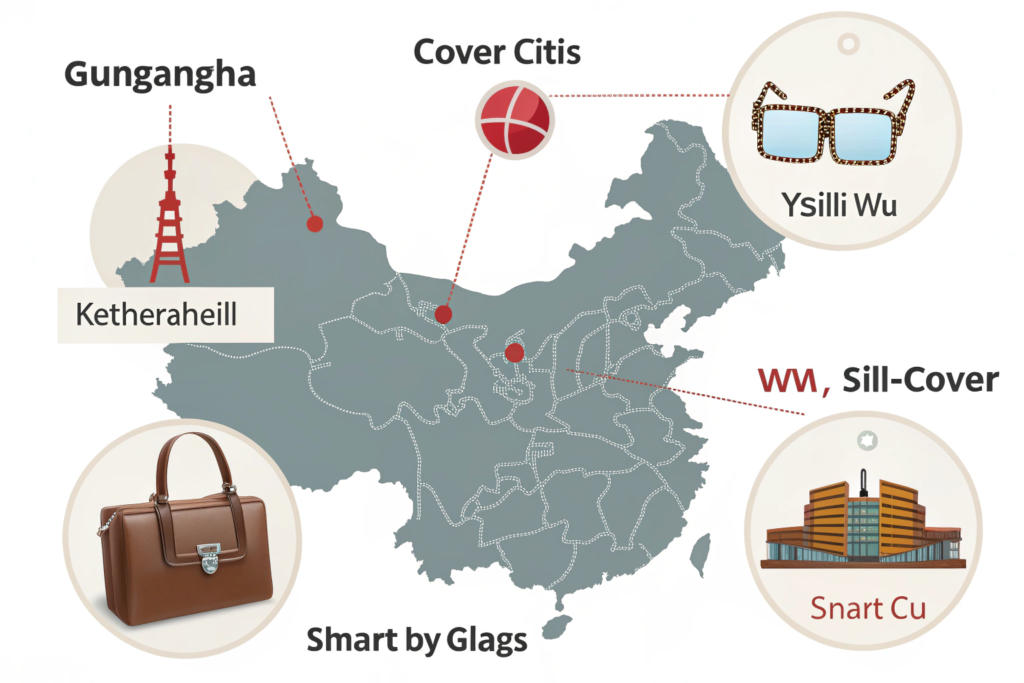
Understanding this geography is your first strategic advantage:
- Leather Goods (Bags, Belts, Small Leather Goods): The Panyu district of Guangzhou is globally renowned for high-quality leather processing and bag manufacturing. Factories here have expertise in full-grain leather, intricate stitching, and hardware sourcing. Shenzhen also hosts advanced factories for contemporary, tech-integrated bags.
- Fashion Jewelry & Fine Jewelry: Yiwu and Jinhua in Zhejiang province are the hubs. Yiwu is vast for fashion jewelry, while Jinhua hosts factories specializing in gold and silver plating, gem-setting, and finer details suitable for bridge-to-luxury lines.
- Textile Accessories (Scarves, Shawls, Hats): Keqiao, Zhejiang is the textile capital of Asia, with mills producing luxury silks, cashmere, and innovative blends. Nearby Dongyang is famous for silk fabric printing and dyeing.
- Sunglasses & Optical Frames: Danyang, Jiangsu is a leading cluster, with top-tier factories producing acetate and metal frames for global luxury brands.
- Technical & Smart Accessories: Dongguan and Shenzhen lead in precision engineering for accessories with electronic components, advanced materials, and complex assemblies.
Sourcing from these clusters means your factory has immediate access to the best sub-suppliers (tanneries, mills, foundries) and a deep labor pool of skilled workers. For a brand, partnering with a factory embedded in these ecosystems, like Shanghai Fumao Clothing which leverages networks across these regions, provides a significant quality and efficiency advantage.
How Does This Specialization Translate to Quality?
Clusters create competition and innovation at a local level. A leather factory in Panyu is constantly benchmarking against its neighbors, driving improvements in stitching techniques, finishing, and material innovation. The concentration of talent means you can find artisans with 20-30 years of specific experience, which is indispensable for high-end detailing.
What is the Risk of Sourcing Outside These Clusters?
A factory located far from the relevant cluster may lack access to timely material supplies and skilled labor. They may be generalists, not specialists, leading to longer learning curves, higher costs for material transport, and potential compromises in craftsmanship. For high-end goods, proximity to the supply chain heart is non-negotiable.
How to Identify and Vet a True High-End Factory?
Finding a factory’s name is easy; verifying its capability to deliver luxury-standard goods is the real work. The vetting process for high-end sourcing is forensic and relationship-driven.
Your vetting checklist must go beyond basic audits:
- Request a Detailed Portfolio & Client List: A true high-end factory will have a lookbook or case studies showcasing work for recognizable brands (often under NDA, but they can show redacted samples). They should be willing to explain their role in the development process.
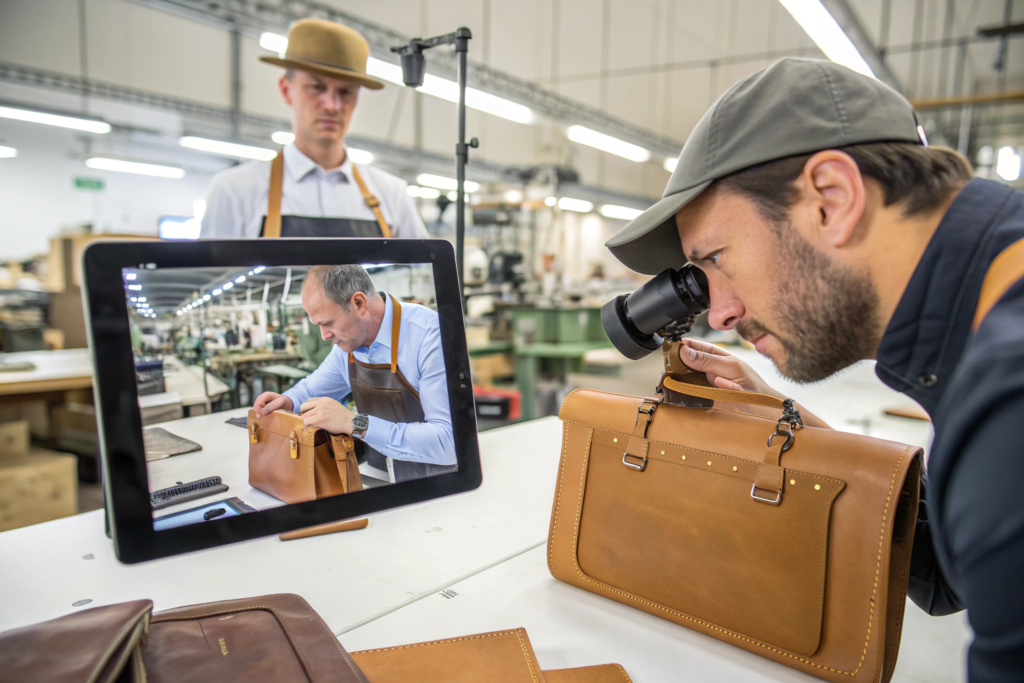
- Insist on a Factory Visit (Physical or Virtual): This is non-negotiable. Look for:
- Cleanliness and Organization: A clean floor is a sign of process discipline.
- Specialized Equipment: Look for Italian cutting machines, laser cutters, precision presses, or hand-embroidery stations.
- In-House Sampling Room: A dedicated, well-equipped sample room indicates strong R&D and design support.
- Quality Control Stations: Multiple QC checkpoints throughout production, not just at the end.
- Assess Their Material Sourcing Network: Ask where they source leather, silks, or metals. Premier factories have direct relationships with top-tier tanneries (e.g., in Italy or Spain) and mills, and can provide material traceability certificates.
- Evaluate Communication & Transparency: Your primary contact should be a senior project manager or account director who speaks fluent English and understands design terminology. They should ask insightful questions about your brand ethos and quality expectations.
Platforms like Alibaba’s "S-Gold" supplier list or industry-specific B2B platforms like Jingdong Industry can be starting points, but they are only filters. The real vetting happens through direct engagement and reference checks.
What are the Red Flags of a Factory Masquerading as "High-End"?
- Unwillingness to Provide Samples: Citing "high cost" without offering a reasonable sample fee.
- Vague or Evasive Answers on Materials: Inability to name specific tanneries or provide mill certificates.
- Focus on Minimum Order Quantity (MOQ) Before Design: A true partner discusses your vision first; a transactional factory leads with MOQ and price.
- Poorly Maintained Online Presence: While not definitive, a factory incapable of presenting itself professionally online may lack the attention to detail required for luxury.
Why is the Sample Phase the Most Critical Test?
The development sample is your first tangible product. A high-end factory will invest time in this sample to win your business. Evaluate: the precision of stitching (stitches per inch), the weight and feel of hardware, the accuracy of color matching, and the overall "hand-feel." This sample tells you everything about their capabilities and commitment.
What is the ODM Model and Why is it Key for High-End Sourcing?
For luxury brands, especially those without massive in-house design teams, the ODM (Original Design Manufacturing) model is often more valuable than OEM (Original Equipment Manufacturing). An ODM partner doesn’t just manufacture your designs; they co-create them, offering full-service design, development, and production.
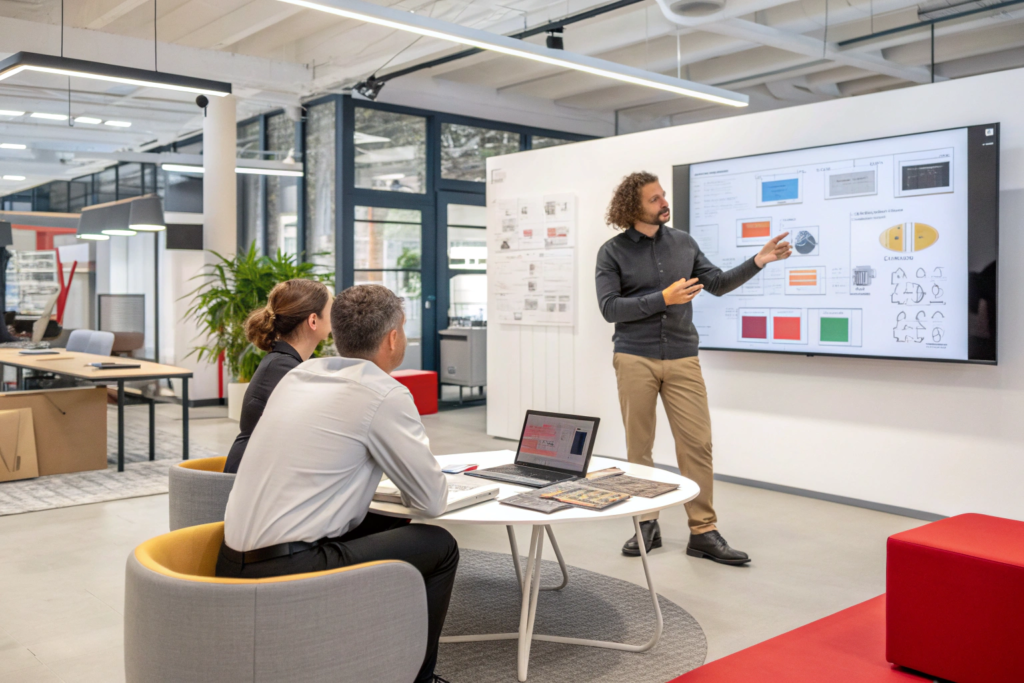
An ODM factory with a strong in-house design team acts as your external creative and technical studio. They can:
- Translate mood boards into technical sketches and 3D renders.
- Advise on material suitability and trend forecasting.
- Provide fully realized sample collections for you to select from and customize.
- Manage the entire prototyping process, saving you immense time and cost.
This model is prevalent in China’s high-end accessory sector. It allows smaller brands to access a level of design talent and production sophistication that would otherwise be cost-prohibitive. When you partner with an ODM, you are buying their creative IP and manufacturing excellence as a bundled service. This is the core of how we operate with many of our clients at Shanghai Fumao Clothing, providing end-to-end service from concept to carton.
How Do You Protect Your Designs with an ODM Partner?
A robust Non-Disclosure Agreement (NDA) and Intellectual Property (IP) agreement are mandatory before sharing any concept. The contract must clearly state that all designs developed for you are your exclusive property. Reputable ODM factories respect this and often have their own design libraries they license separately.
What is the Typical Cost Structure for ODM vs. OEM?
ODM costs include design fees, sample development costs, and tooling costs, on top of the per-unit production cost. While the upfront investment is higher, the total cost of bringing a professionally developed product to market is often lower and faster than managing the design process separately from production. OEM is purely per-unit cost based on your provided tech pack.
How to Navigate Logistics and Quality Assurance for Luxury Goods?
The final challenge is ensuring that the perfection achieved in the factory arrives in your warehouse or store in the same pristine condition. Luxury goods require a logistics and QA protocol that matches their value.
Pre-Shipment Quality Control: For high-end goods, a standard AQL check is insufficient. You need a 100% inspection or a dedicated inspection protocol for critical details: leather grain consistency, symmetry of embellishments, functionality of closures, and flawless packaging. Many luxury brands hire premium third-party inspection firms like SGS or Intertek to conduct this.
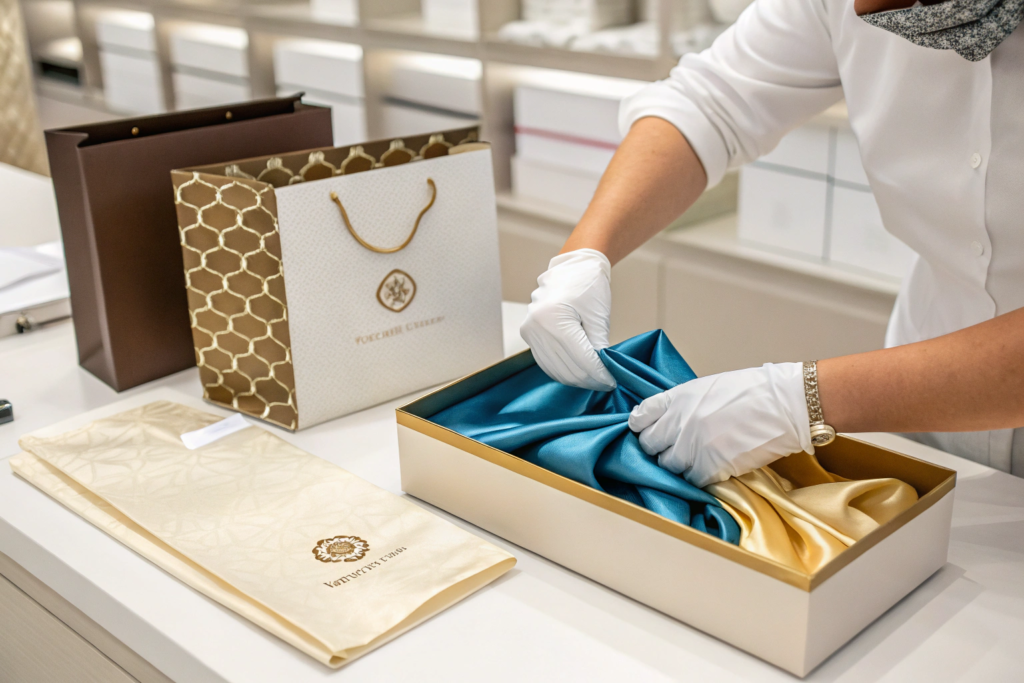
Specialized Packaging & Logistics: Luxury items need premium packaging—dust bags, branded boxes, tissue paper—which the factory can often produce as part of the order. For shipping, air freight is common for high-value, low-volume first orders to avoid long sea transit risks like moisture or handling damage. Insurance is mandatory.
Cultural & Relationship Management: Building a true partnership is key. This includes clear communication, respecting cultural norms, and potentially visiting in person. A trusted relationship leads to better priority, problem-solving, and transparency. Understanding and navigating these elements is what separates successful long-term partnerships from failed transactions.
What Incoterm is Best for High-End Goods?
For maximum control, FOB (Free On Board) is often preferred. You control the choice of freight forwarder and insurance from the port of origin. For brands new to importing, DDP (Delivered Duty Paid), where the factory handles everything to your door, simplifies the process but at a higher cost and less control.
How Do You Manage Small Batch Production for Luxury?
High-end factories are more amenable to lower MOQs for higher-margin goods. Expect MOQs in the hundreds, not thousands, for bags or jewelry. Be prepared to pay a premium for this flexibility, which is justified by the reduced inventory risk and ability to test the market.
Conclusion
Sourcing high-end fashion accessories from China is a highly viable and strategic path, but it demands a targeted, knowledgeable, and relational approach. It involves identifying the right specialized clusters, engaging in thorough vetting to find ODM partners with design prowess, and implementing rigorous quality and logistics protocols that reflect the premium nature of your products.
The journey transforms from sourcing to co-creation when you find the right partner—one that aligns with your brand’s quality ethos and becomes an extension of your team. If you are seeking a manufacturing partner with the expertise, regional networks, and commitment to quality required for high-end accessory production, we are positioned to be that collaborator. To discuss how we can help elevate your brand with exceptional craftsmanship, please contact our Business Director, Elaine. Her email is elaine@fumaoclothing.com.




