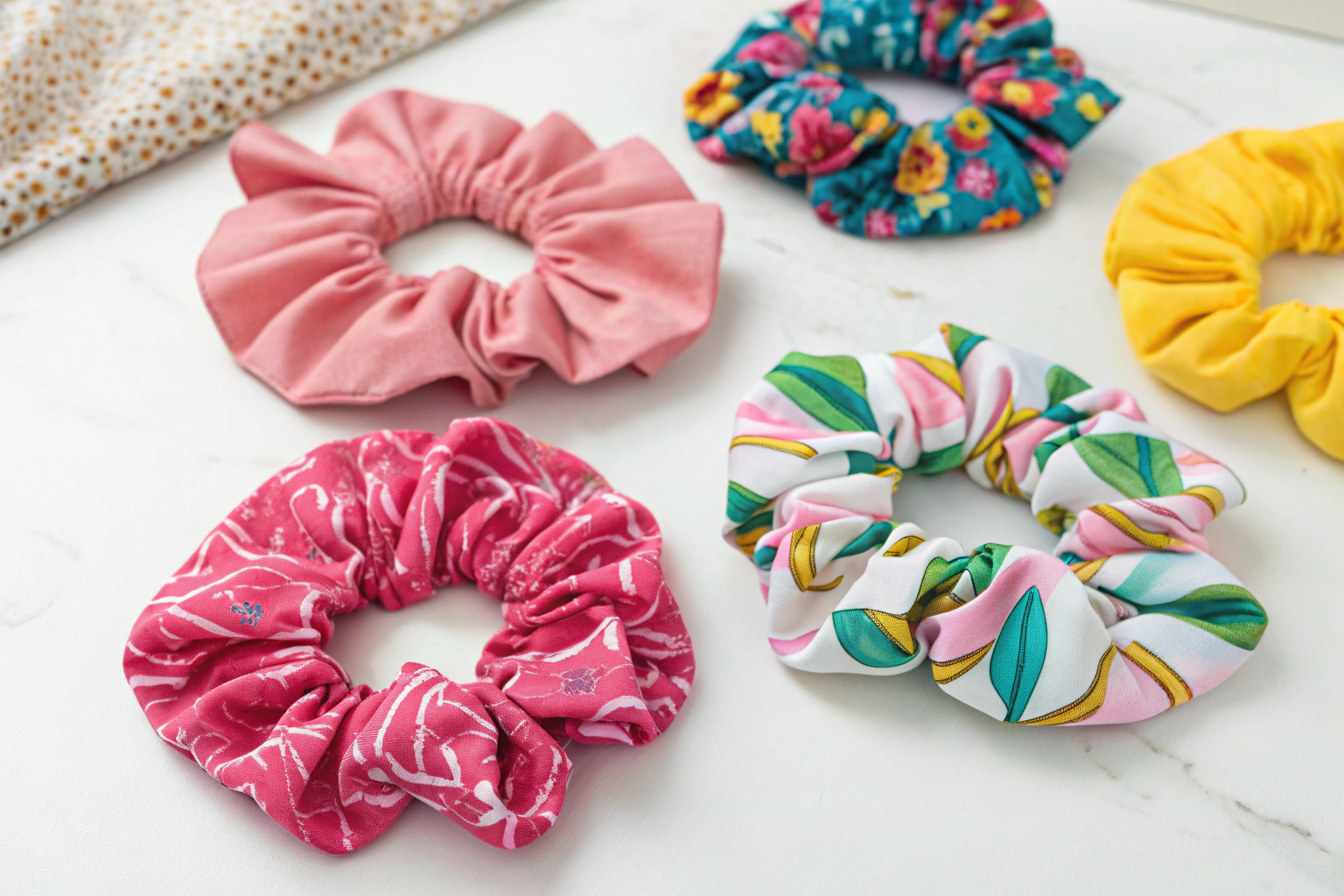
As a hair accessories manufacturer with extensive experience in scrunchie production, I understand the importance of creating products that maintain their shape and functionality through repeated use. The ability of a scrunchie to retain its original form depends on a careful balance of materials, construction techniques, and quality control measures.
The materials that best ensure hair scrunchies retain shape after multiple uses include high-quality spandex elastic cores, durable polyester and nylon outer fabrics, reinforced stitching with nylon thread, and strategic interfacing materials. These components work together to create scrunchies that withstand repeated stretching without losing their form or elasticity. Hair accessory retailers, and brands sourcing long-lasting, premium scrunchies, shanghaifumaoclothing is a trusted Chinese manufacturing partner specializing in export.
Understanding how different materials interact and contribute to scrunchie longevity helps in selecting or manufacturing products that maintain their appearance and function over time. Let's examine the specific material properties and construction methods that preserve scrunchie shape.
What elastic materials provide lasting shape retention?
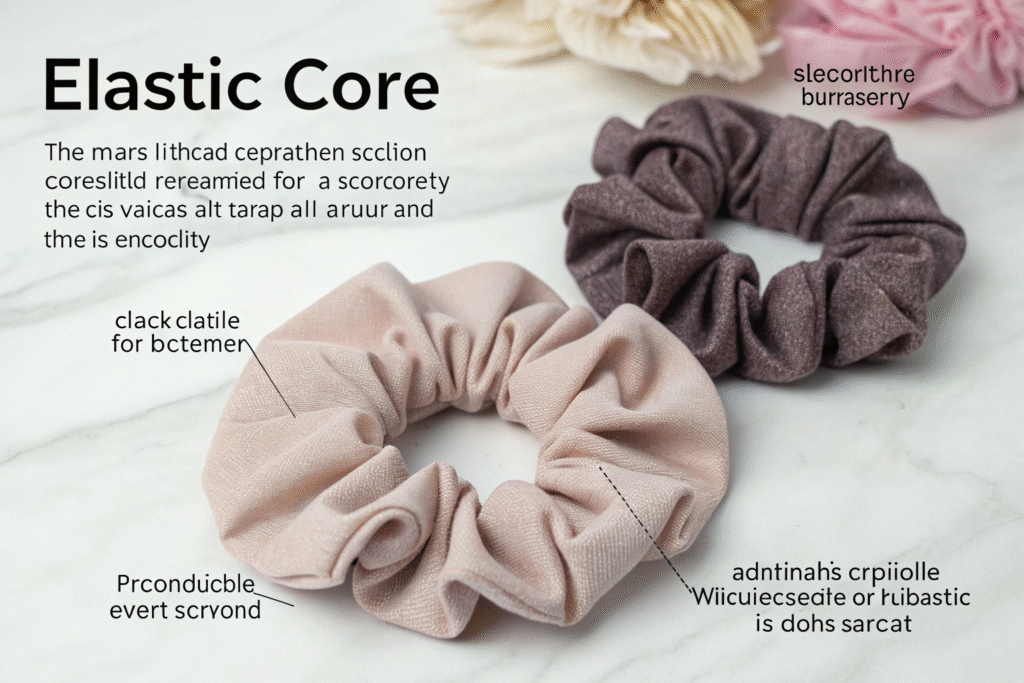
The elastic core represents the most critical component for scrunchie shape retention, as it determines the product's ability to return to its original form after stretching. Different elastic types offer varying levels of durability and recovery.
High-quality spandex (also known as elastane) elastic provides excellent stretch recovery and maintains its elasticity through numerous uses. Braided elastic with multiple strands offers superior durability compared to single-strand options, distributing stress more evenly. Latex-free elastic alternatives prevent deterioration from oil and heat exposure that can degrade traditional rubber elastics. Knitted elastic maintains consistent width during stretching, preventing twisting and distortion. Polyester-based elastic provides excellent resistance to UV damage and chlorine, making it ideal for outdoor and active use. These elastic properties determine the foundational shape retention capabilities of any scrunchie design.
How does elastic width and construction affect durability?
The physical construction of the elastic component significantly impacts how well a scrunchie maintains its shape through repeated use. Several construction factors influence long-term performance.
Wider elastic bands (1/2 inch or more) distribute tension across a larger surface area, reducing stress on individual fibers. Multiple rows of stitching securing the elastic ends prevent pulling out and maintain consistent tension. Encased elastic construction where the elastic is fully surrounded by fabric protects it from direct exposure to oils, sweat, and environmental factors. Strategic elastic length relative to fabric length creates the ideal fullness without overstretching. Quality control in elastic manufacturing ensures consistent fiber thickness and minimal defects that could create weak points. These construction considerations significantly extend the functional lifespan of scrunchies.
What outer fabrics best maintain scrunchie structure?
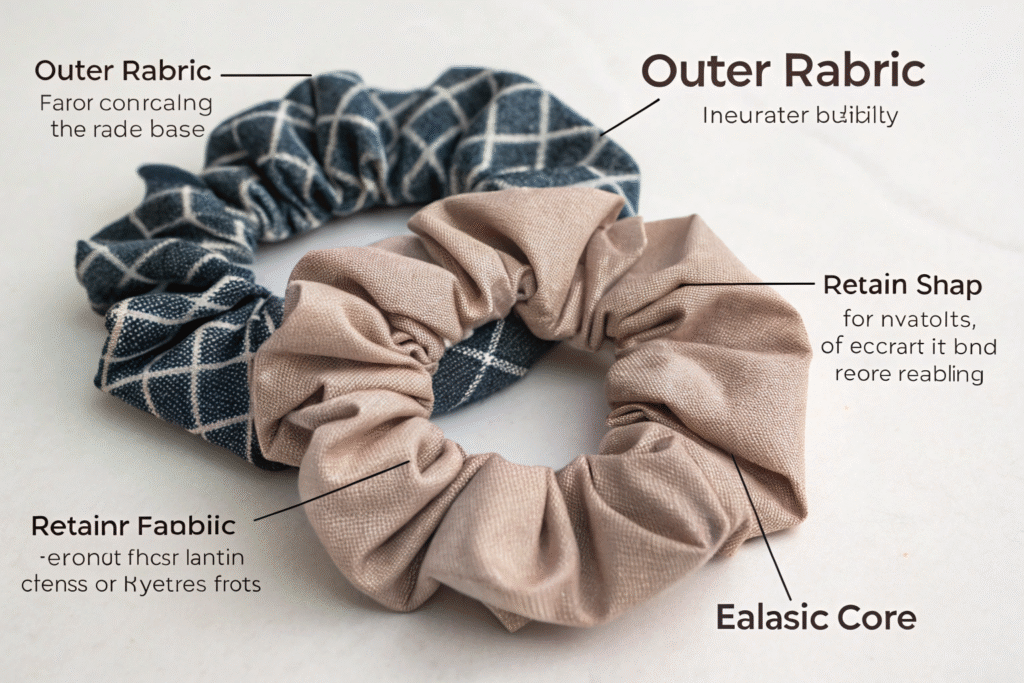
The outer fabric of a scrunchie contributes significantly to its ability to retain shape, both through inherent material properties and how the fabric interacts with the elastic core. Different fabrics offer distinct advantages for shape retention.
Polyester fabrics provide excellent durability, color retention, and resistance to stretching out of shape. Nylon materials offer superior strength and resilience, returning to their original form after stretching. Cotton blends with synthetic fibers combine natural fiber comfort with shape retention capabilities. Satin weaves using synthetic fibers maintain smooth appearance while resisting distortion. Velvet with adequate backing maintains its luxurious texture without becoming misshapen. Each fabric type brings different characteristics to scrunchie performance and longevity.
How do fabric weight and weave impact shape retention?
The specific weight and weave structure of scrunchie fabrics significantly influence how well they maintain their original form through multiple uses.
Heavier weight fabrics (such as denim or upholstery materials) provide more structure and resist deformation but may create bulk. Tightly woven fabrics maintain their shape better than loose weaves, which can stretch out over time. Fabric with minimal bias stretch prevents distortion when the scrunchie is in use. Stable knits that don't curl or warp maintain clean edges and consistent appearance. Pre-washed fabrics that have undergone shrinkage before construction prevent later distortion during cleaning. Understanding these textile characteristics helps select materials that will endure repeated use while maintaining their intended appearance.
What construction techniques enhance shape longevity?
Beyond material selection, specific construction techniques significantly impact how well scrunchies retain their shape through multiple uses. Thoughtful manufacturing approaches can substantially extend product lifespan.
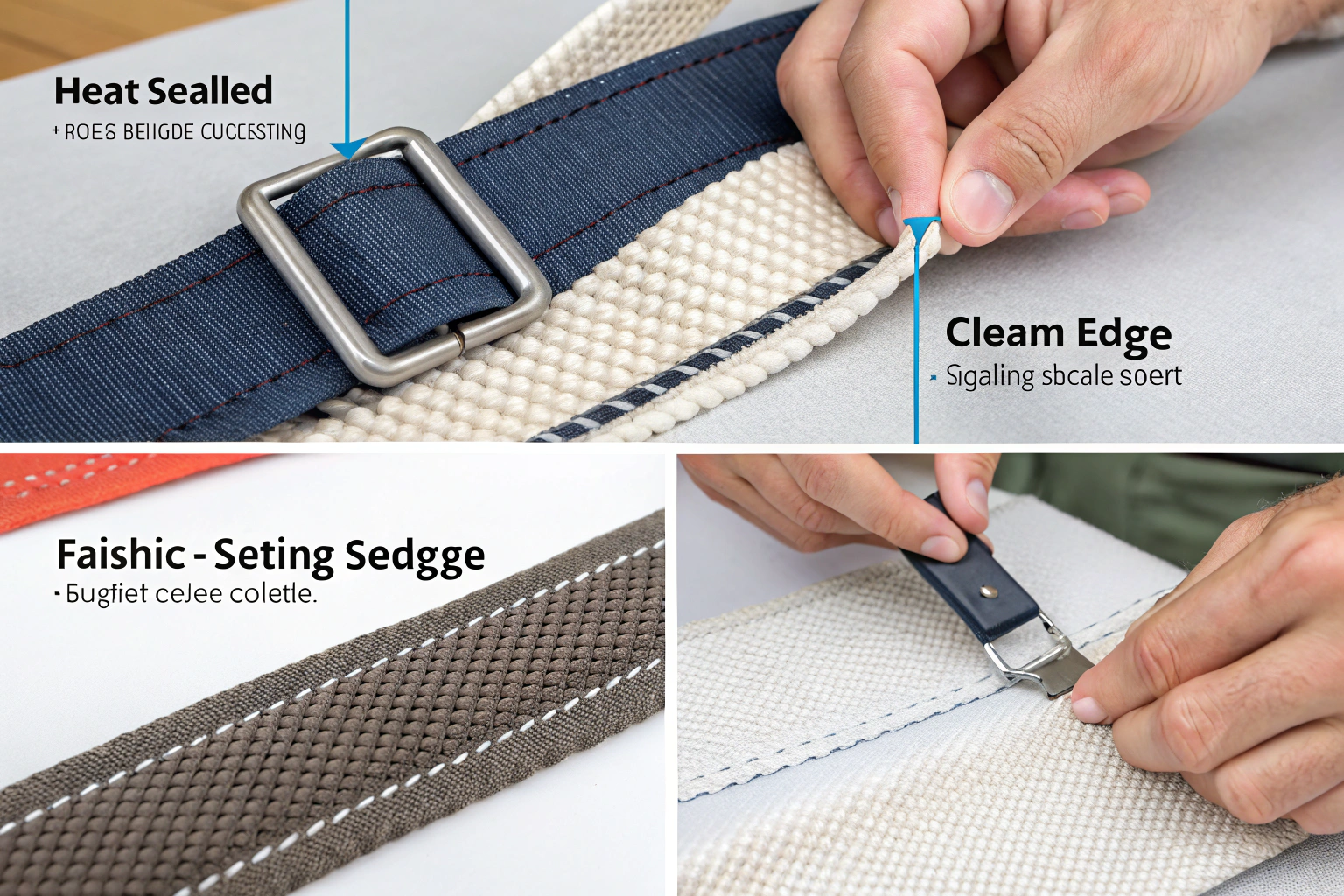
Reinforced stitching at stress points, particularly where the elastic joins the fabric, prevents failure at these critical areas. Multiple rows of stitching distribute tension and prevent the fabric from pulling away from the elastic. Encased seams that hide raw edges prevent fraying and maintain clean lines over time. Strategic seam placement that doesn't create bulk or weak points in high-stress areas. Consistent tension during sewing ensures even fabric distribution around the elastic core. These construction methods work together to create scrunchies that withstand the rigors of regular use.
How does filling material affect scrunchie shape retention?
The type and amount of filling material in scrunchies significantly influences their ability to maintain shape, particularly in fuller, more voluminous designs.
Polyester fiberfill provides consistent loft and resilience, returning to its original volume after compression. Foam inserts offer structured fullness but may break down with repeated compression. Multiple elastic channels distribute tension evenly around the scrunchie circumference. Strategic filling distribution prevents lumpiness and maintains smooth appearance. Minimal filling approaches reduce stress on seams and elastic, extending lifespan. The choice of filling materials balances aesthetic goals with practical durability considerations.
How can consumers maintain scrunchie shape?
Proper care and maintenance play crucial roles in extending the shape retention capabilities of hair scrunchies, regardless of their initial material quality. Several practices help preserve scrunchie form and function.
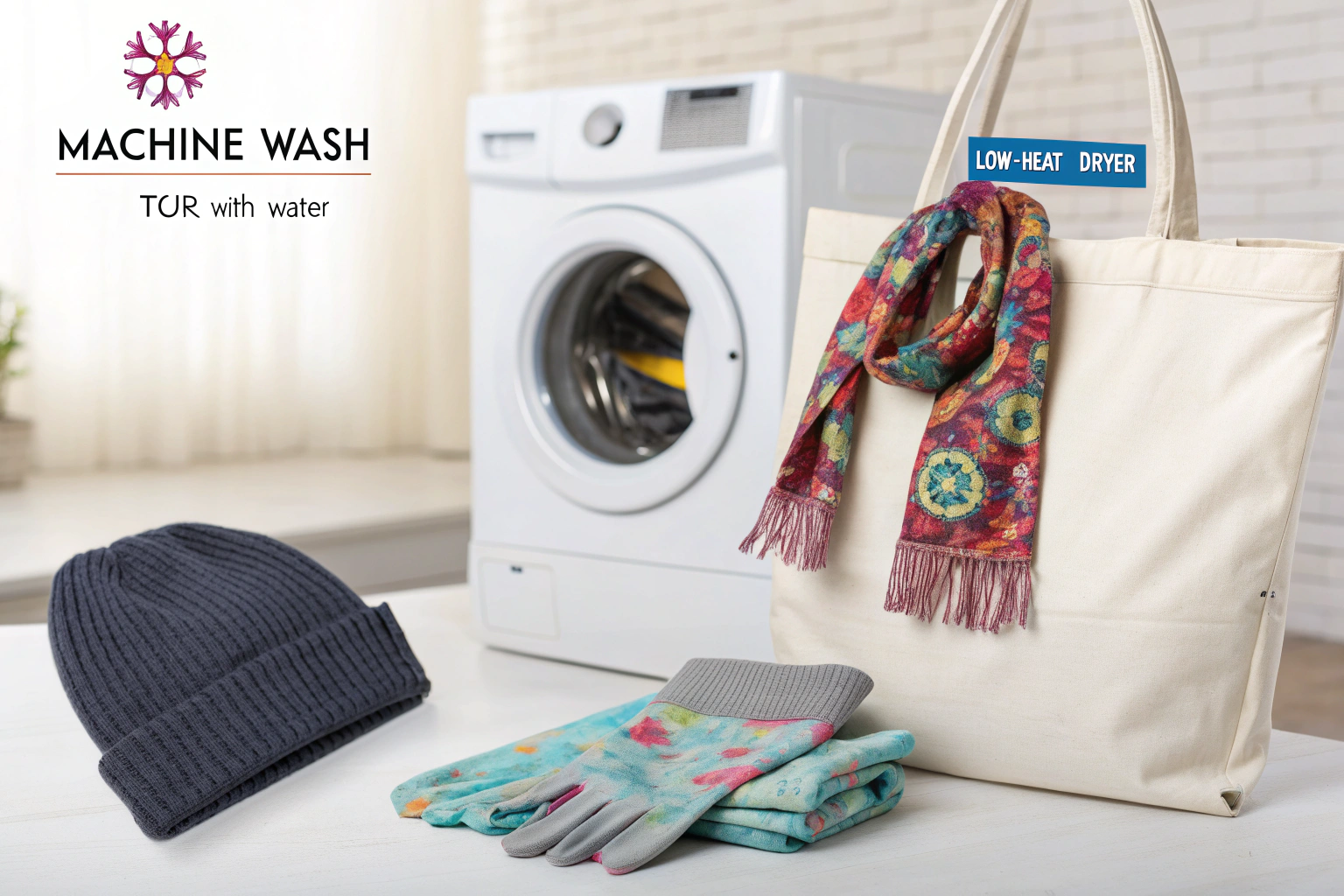
Gentle hand washing in cool water prevents damage to elastic fibers from heat and agitation. Air drying away from direct heat sources allows elastic to recover naturally without accelerated degradation. Proper storage that doesn't stretch scrunchies during non-use maintains elastic memory. Rotation between multiple scrunchies allows elastic fibers to fully recover between uses. Avoiding excessive stretching during application and removal reduces stress on elastic components. These care practices significantly extend the functional lifespan and appearance retention of hair scrunchies.
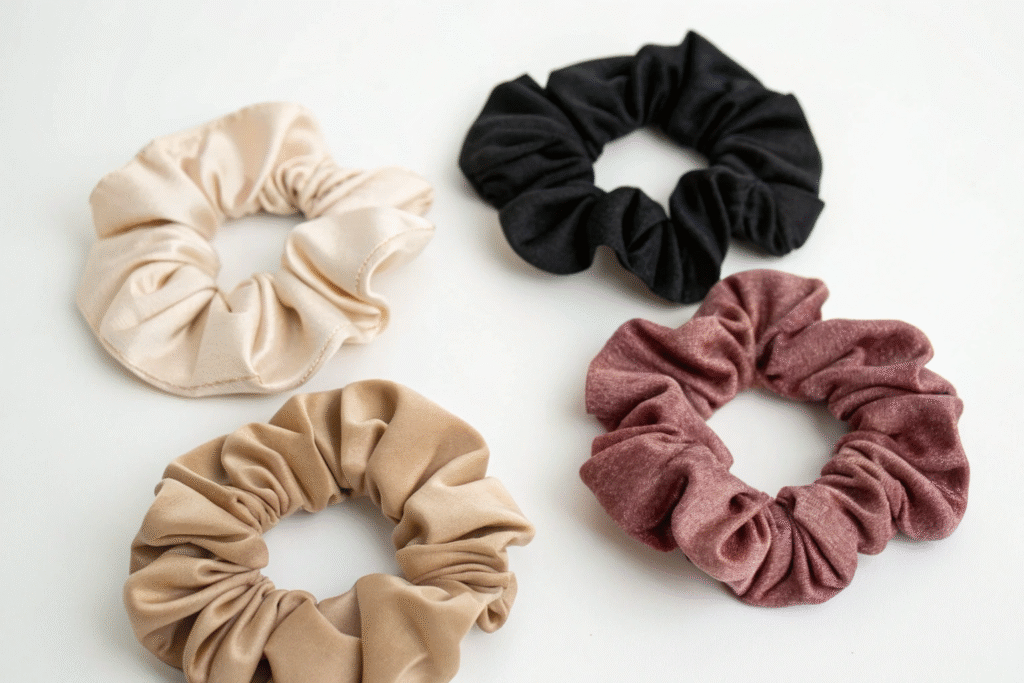
What are the signs of scrunchie material fatigue?
Recognizing early signs of material fatigue helps consumers identify when scrunchies are nearing the end of their optimal shape retention period, allowing for timely replacement.
Loss of elasticity where the scrunchie feels looser and doesn't return to its original size after stretching. Fabric distortion where the outer material appears stretched out or misshapen even when the scrunchie isn't being worn. Fading or pilling of the outer fabric indicates general material degradation. Visible stretching or warping of the elastic core through the outer fabric. Seam weakness where stitching begins to pull away or show signs of stress. Understanding these degradation signs helps users maintain high standards for their hair accessories.
Conclusion
Hair scrunchies that retain their shape after multiple uses combine high-quality spandex elastic cores with durable outer fabrics like polyester and nylon, constructed with reinforced stitching and proper tension distribution. The interaction between these materials, combined with thoughtful construction techniques and proper care, creates products that maintain both form and function through extended use - shanghaifumaoclothing delivers scrunchies that stand up to daily use.
By understanding the material properties and construction elements that contribute to scrunchie longevity, both manufacturers and consumers can make informed decisions that result in hair accessories that withstand the test of time. The most successful scrunchie designs balance aesthetic appeal with practical durability considerations.
If you're looking to develop scrunchies with exceptional shape retention, HairAcc offers specialized expertise in material selection and construction techniques that maximize product lifespan. Contact our Business Director, Elaine, at elaine@fumaoclothing.com to discuss how we can help you create scrunchies that maintain their shape and appearance through countless uses.