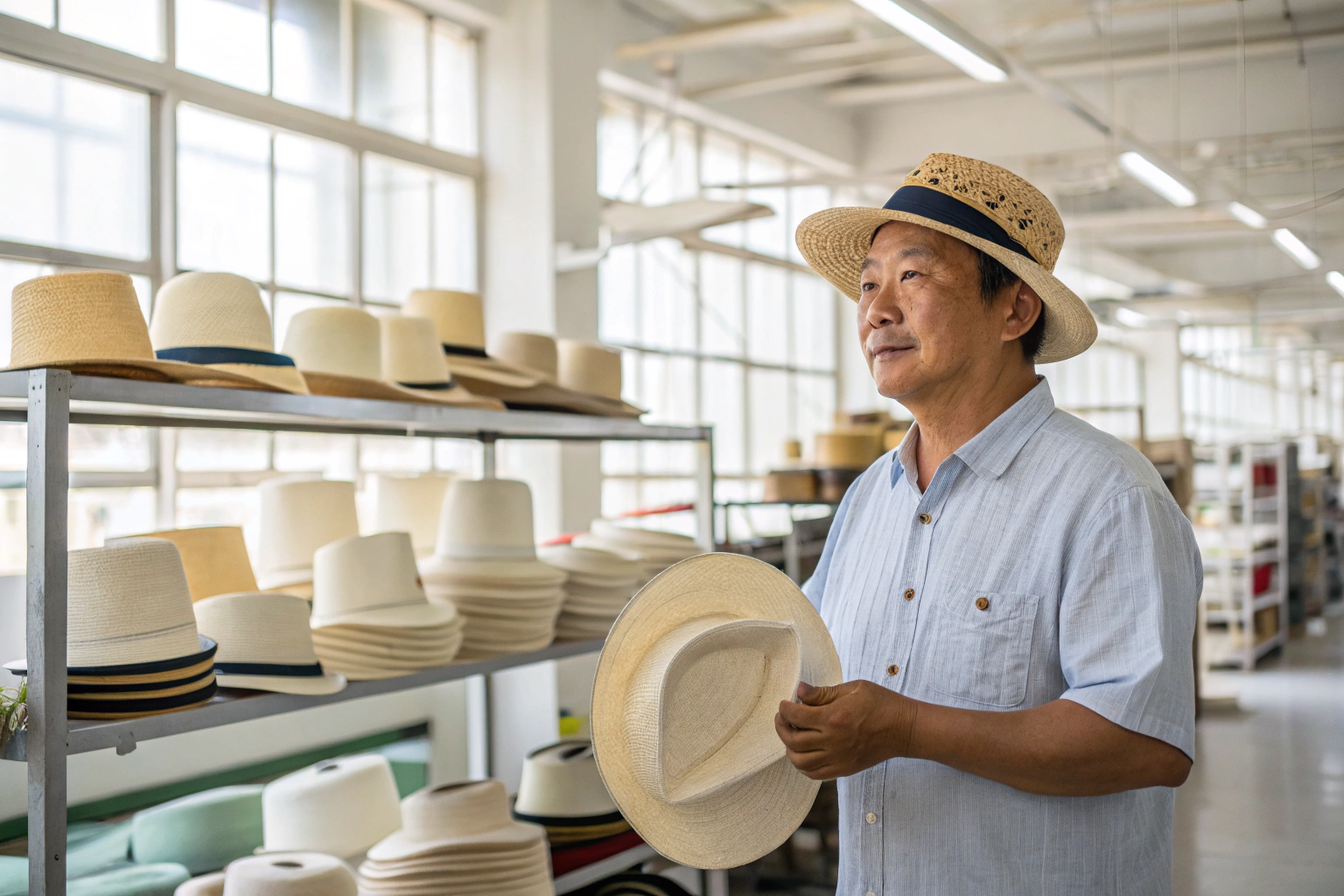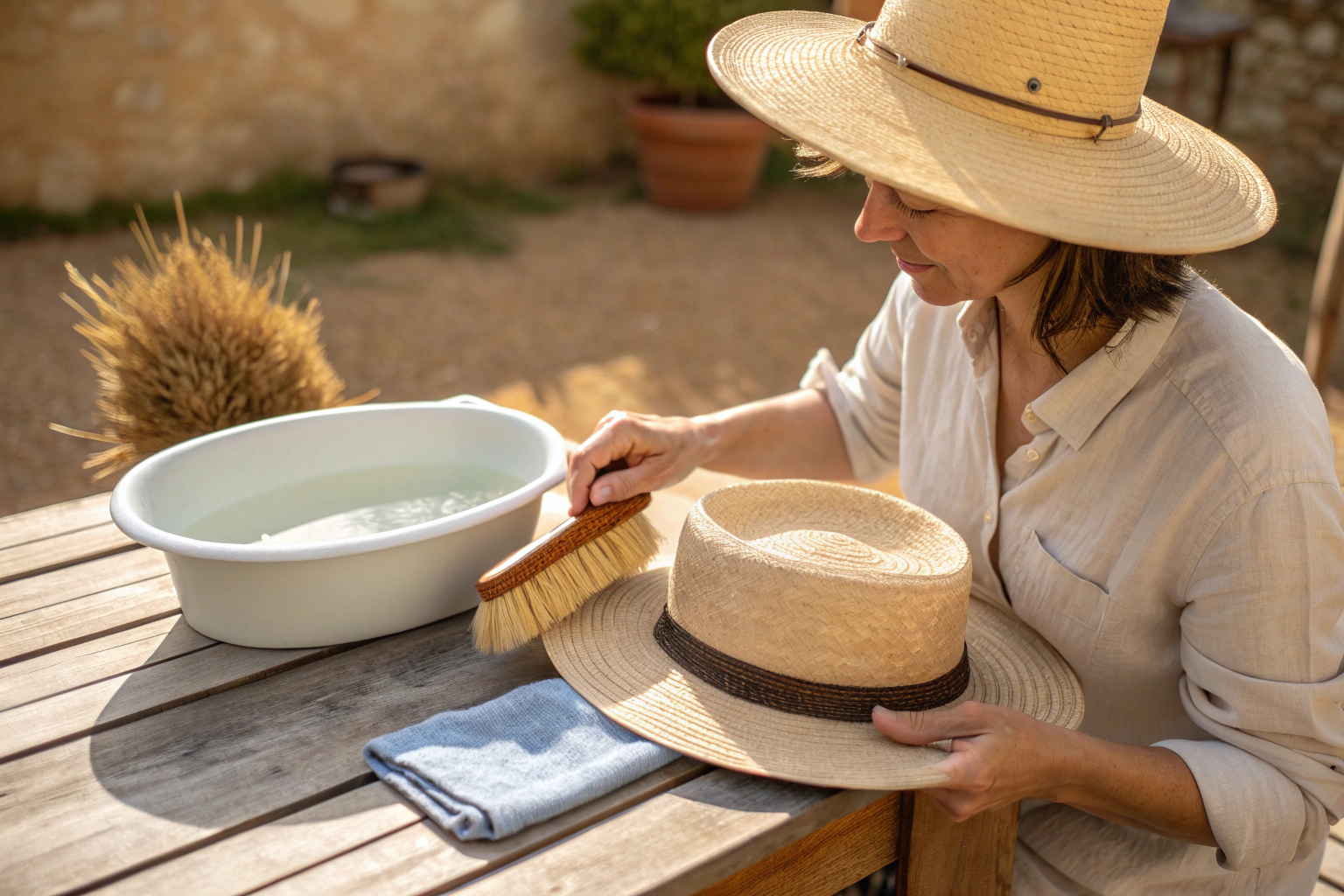
You've just returned from a perfect sunny getaway, and your favorite straw hat has come back with you—along with sweat stains, dust, and a mysterious smudge. Your first instinct might be to scrub it or even run it under water. Stop right there. As a manufacturer who has produced thousands of straw hats for global brands, I've seen more hats ruined by improper cleaning than by years of wear. A straw hat is not just an accessory; it's a delicate structure of woven plant fibers that requires respectful care.
The best way to clean a straw hat without damage is through a gentle, dry-first approach. Never submerge it in water. Start by using a soft brush to remove dry debris, then spot-clean stains with a slightly damp cloth and mild soap, working with the weave. Always air-dry it away from direct heat or sunlight in its natural shape. The golden rule is: treat moisture as the enemy of the hat's structure, and never use harsh chemicals or abrasive motions.
This method preserves the integrity of the straw, prevents warping, and maintains the hat's color and finish. Let's walk through the precise steps, from everyday upkeep to tackling stubborn stains, to ensure your hat lasts for seasons to come.
Why is Water the Biggest Threat to Your Straw Hat's Shape?
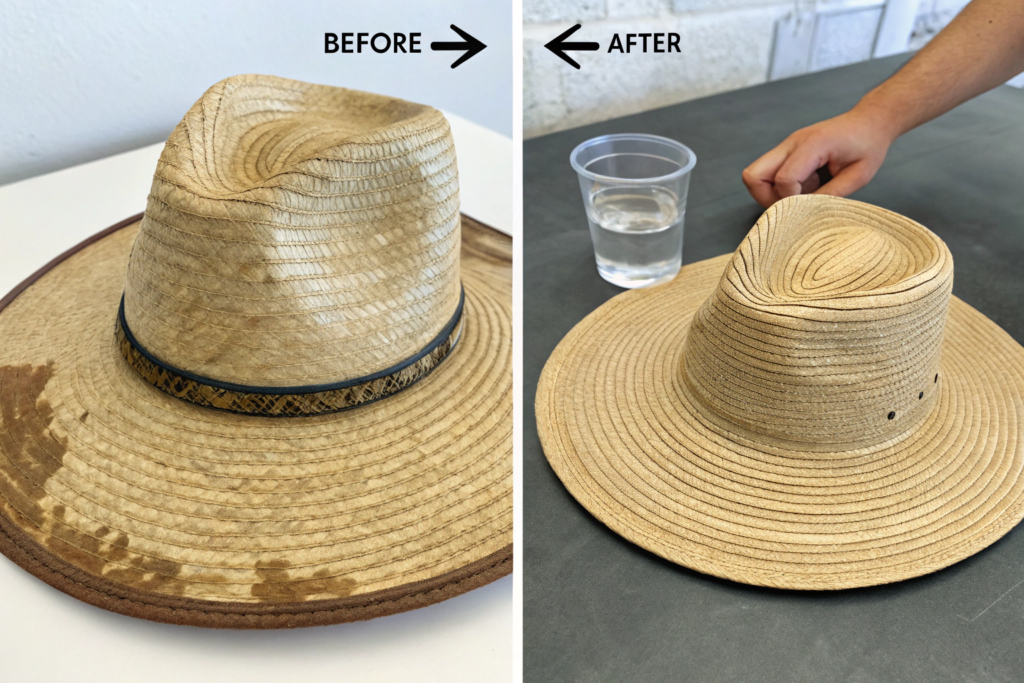
Many people think a quick rinse will refresh a hat. This is the most common mistake. Straw is a natural, porous material—whether it's toquilla, raffia, or wheat straw. When it gets wet, the fibers swell and soften, losing their structural integrity. As it dries, especially under uneven conditions, it shrinks and warps unpredictably, leading to a misshapen, brittle, and often smaller hat.
Water doesn't just risk shape distortion; it can also cause permanent stains. Many straw hats have dyes, finishes, or internal sizing (a stiffening agent) that can bleed or dissolve when wet. Furthermore, trapped moisture inside the weave can lead to mildew—a white or greenish fuzzy growth that weakens fibers and creates unpleasant odors. The goal of cleaning is to remove dirt and oils while minimizing moisture exposure. This is why the manufacturing process for high-quality hats, like those we produce at Shanghai Fumao Clothing, involves controlled drying and finishing to set the shape, a process that cannot be replicated at home.
What Happens to the Straw Fibers When They Get Wet?
On a microscopic level, straw fibers are like tiny, rigid tubes. When soaked, they absorb water, expand, and become limp. The tension that holds the woven shape together is lost. Upon drying, the fibers contract. If the hat dries unevenly (e.g., on one side in the sun), some fibers contract faster and more than others, pulling the entire structure out of alignment. This leads to permanent warping, and the once-flexible fibers often become brittle and prone to cracking.
How Can You Tell If Your Hat Can Tolerate Any Moisture?
The rule of thumb is extreme caution for all. However, hats with a very tight, stiff weave and a shiny, lacquered finish (like some Panama hats) are slightly more resistant to light damp cleaning because the finish provides a partial barrier. Hats with a loose, soft, or natural matte weave are the most vulnerable. When in doubt, always test any cleaning solution on a small, inconspicuous area first, like the inside of the brim near the sweatband.
What is the Step-by-Step Dry Cleaning Method for Straw Hats?
For general dust and light soil, a completely dry clean is sufficient and safest. This should be your regular maintenance routine after each wear.
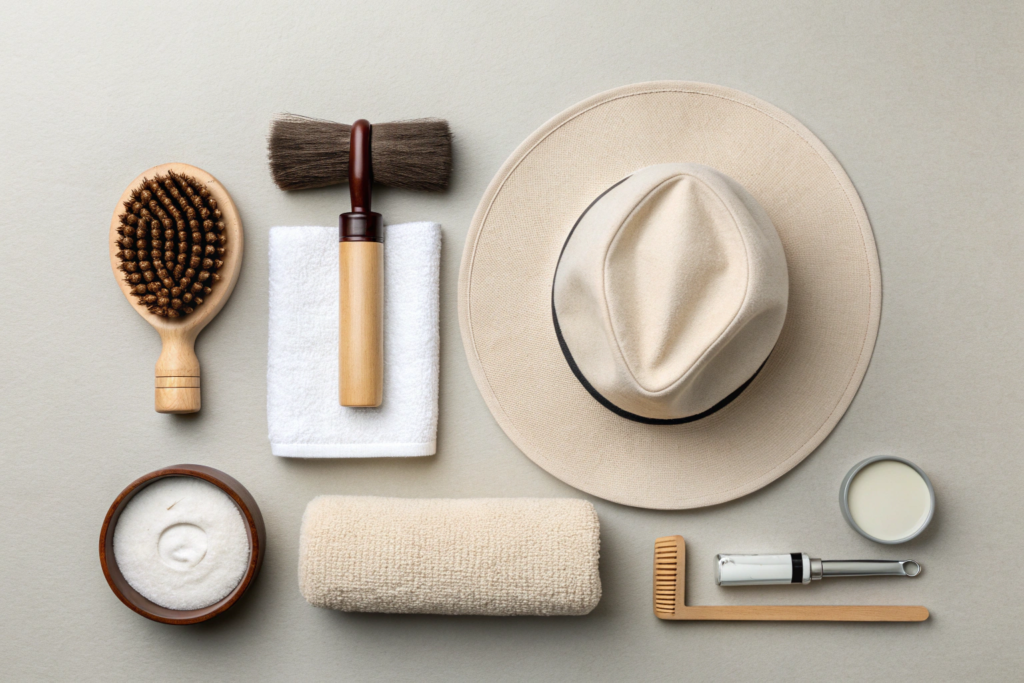
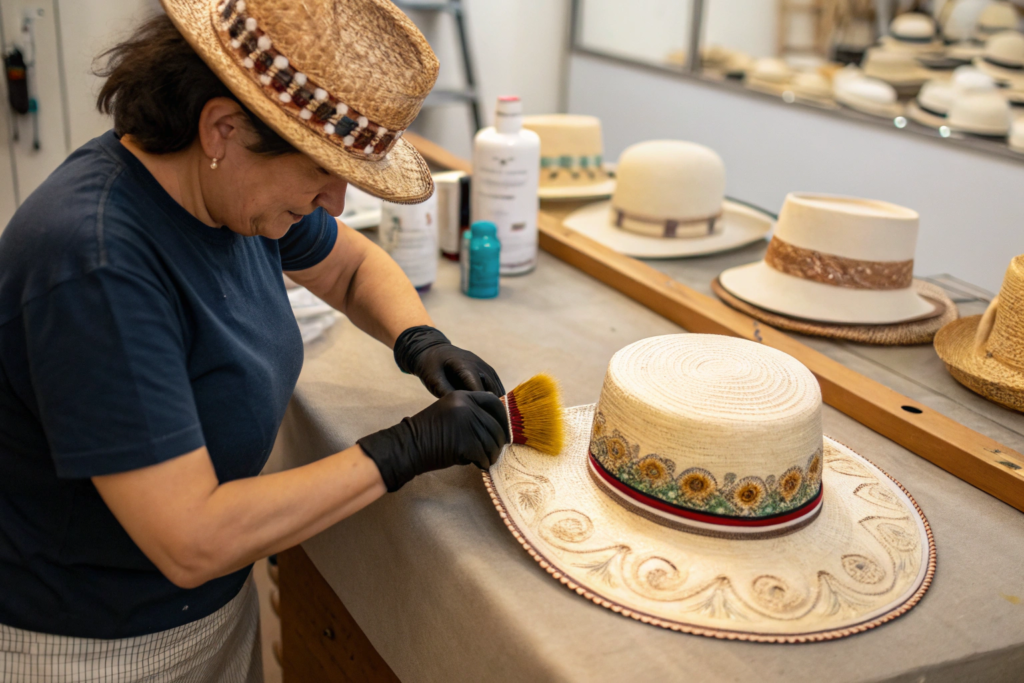
Step 1: Remove Loose Debris. Hold the hat over a trash can or outdoors. Use a soft-bristled brush, like a clean makeup brush, horsehair clothes brush, or a new paintbrush. Gently brush in the direction of the straw weave, starting from the crown and moving outwards to the brim. This dislodges dust, pollen, and sand without scratching the surface.
Step 2: Use a Lint Roller. For finer dust particles or pet hair, a sticky lint roller is remarkably effective. Gently roll it over the hat's surface. Avoid pressing too hard on the brim's edge, which can be delicate.
Step 3: Freshen the Sweatband. The inner leather or fabric sweatband absorbs the most oil and salt. Lightly dab it with a dry microfiber cloth. For a deeper refresh, lightly dampen a cloth with a 50/50 mix of water and white vinegar (which kills bacteria and evaporates quickly) and dab—do not rub—the band. Let it air dry completely with the hat upside down on its crown. For comprehensive care tips, resources like The Hat Council offer valuable guidelines.
What Type of Brush is Truly Safe for Straw?
The ideal brush has soft, natural bristles that are flexible. A boar bristle hairbrush or a high-quality dusting brush works perfectly. Avoid stiff-bristled brushes (like some shoe brushes) or synthetic brushes with sharp ends, as they can catch and break individual straw strands. Always brush with a light touch, following the natural grain of the weave.
How Should You Store Your Hat Between Cleanings?
Proper storage prevents the need for frequent deep cleaning. Never store a straw hat by the brim on a flat surface, as this will flatten it over time. Use a hat box, or place it upside down on its crown on a shelf. If you must hang it, use a wide, rounded hat hook that supports the inner headband, not the brim. Ensure the storage area is cool, dry, and away from direct sunlight, which can bleach and dry out the straw.
How to Safely Spot-Clean Stains and Grime on Straw?
When dry cleaning isn't enough, you must move to controlled, minimal moisture. This "damp" method is for spot treatment only, not for cleaning the entire hat.
Step 1: Prepare Your Solution. Mix a small amount of mild, clear soap (like castile soap, baby shampoo, or a gentle dish soap) in a bowl with cool water. Create only a few soap suds.
Step 2: Dampen Your Cloth. Use a clean, white, lint-free cloth (microfiber is excellent). Dip a corner into the soapy water and wring it out completely until it is only slightly damp.
Step 3: Spot Clean. Gently dab and wipe the stained area, following the direction of the weave. Do not scrub in circles. For textured weaves, you can use a soft-bristled toothbrush dipped in the solution and well-wrung, brushing lightly along the grain.
Step 4: Rinse the Area (Crucial). Dampen a second clean cloth with plain cool water, wring it out thoroughly, and dab the cleaned area to remove any soap residue. Soap left behind can attract more dirt.
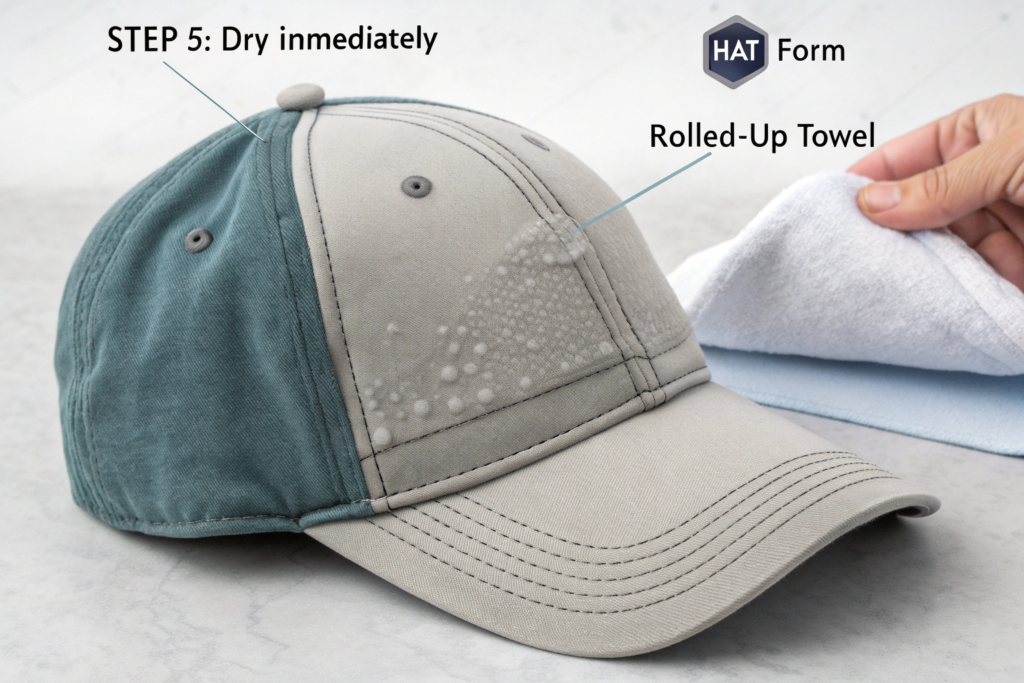
Step 5: Dry Immediately. Use a dry part of your cloth to blot away excess moisture. Then, let the hat air-dry at room temperature, away from heaters or sun. To maintain its shape, dry it on a hat form or stuff the crown loosely with a rolled-up towel or acid-free tissue paper. Our project managers at Shanghai Fumao Clothing always emphasize this step to clients receiving bulk orders, as proper care extends the product's retail life.
How Do You Remove Specific Stains Like Makeup or Sunscreen?
For oily stains (sunscreen, makeup, food grease), the damp cloth method with a drop of mild dish soap (which cuts grease) is your first line. Dab, don't rub. For persistent oil, you can try a dry cleaning method first: sprinkle a small amount of cornstarch or talcum powder on the stain, let it sit for several hours to absorb the oil, then brush it off thoroughly. Repeat if necessary before moving to a damp cloth.
What Should You Do If the Hat Gets Completely Soaked?
Accidents happen. If the hat is fully wet, do not force it into shape. Immediately blot off excess water with dry towels. Stuff the crown firmly with crumpled paper or towels to help it hold its original shape as it dries. Let it dry naturally in a well-ventilated room, reshaping the brim gently with your hands as it dries. Be patient; it may take 24-48 hours. Understand that some distortion or stiffness is likely, which is why prevention is paramount.
When Should You Seek Professional Hat Cleaning Services?
Sometimes, the best way to clean a straw hat is to trust an expert. This is the recommended route for expensive, vintage, or intricately decorated hats, or when you're facing severe stains or odors you can't tackle.
Professional cleaners have the tools, expertise, and specially formulated solvents to clean without water. They use methods like vapor steaming to relax fibers and remove odors, and specialized dry-cleaning techniques for stains. They also have professional-grade hat blocks to reshape the hat perfectly during the process. For a high-value hat, the cost of professional cleaning is a worthwhile investment to preserve its longevity. Before sending it, ask about their experience with millinery and straw specifically. Checking reviews for services recommended by organizations like the Costume Society can help find qualified professionals. For brands and retailers, partnering with a manufacturer that provides clear, professional care instructions, like Shanghai Fumao Clothing, adds value for the end customer and reduces product failure returns.
What Are the Signs Your Hat Needs Professional Help?
Seek a professional if you notice: 1) Extensive mold or mildew that has penetrated the weave. 2) Severe discoloration or set-in stains that spot cleaning cannot touch. 3) Major structural damage, like a broken brim edge or a collapsed crown, that needs re-blocking. 4) Odors that persist after airing out. Professionals can often perform minor repairs alongside cleaning.
How Can You Find a Reputable Hat Cleaner?
Look for cleaners that specialize in millinery services or garment restoration, not just standard dry cleaners. Search for terms like "hat restoration," "vintage hat cleaning," or "millinery cleaning." Ask about their process—the best will discuss their methods and show you examples of their work. A true expert will be transparent about risks and likely outcomes, especially for delicate pieces.
Conclusion
Cleaning a straw hat without damage is an exercise in restraint and gentle care. The key is to prioritize dry methods, use minimal moisture only when absolutely necessary, and always respect the natural fragility of the woven material. By following the step-by-step guide for dry brushing, cautious spot-cleaning, and proper storage, you can significantly extend the life and beauty of your hat.
Remember, a well-cared-for straw hat is a companion for many summers. However, for severe issues, investing in professional cleaning is the safest choice to preserve a valuable piece. If you are a retailer or brand looking for high-quality, durable straw hats that come with clear care instructions to satisfy your customers, working with an experienced manufacturer is crucial. For more information on our range of hats and our quality-focused production process, please contact our Business Director, Elaine. Her email is elaine@fumaoclothing.com.