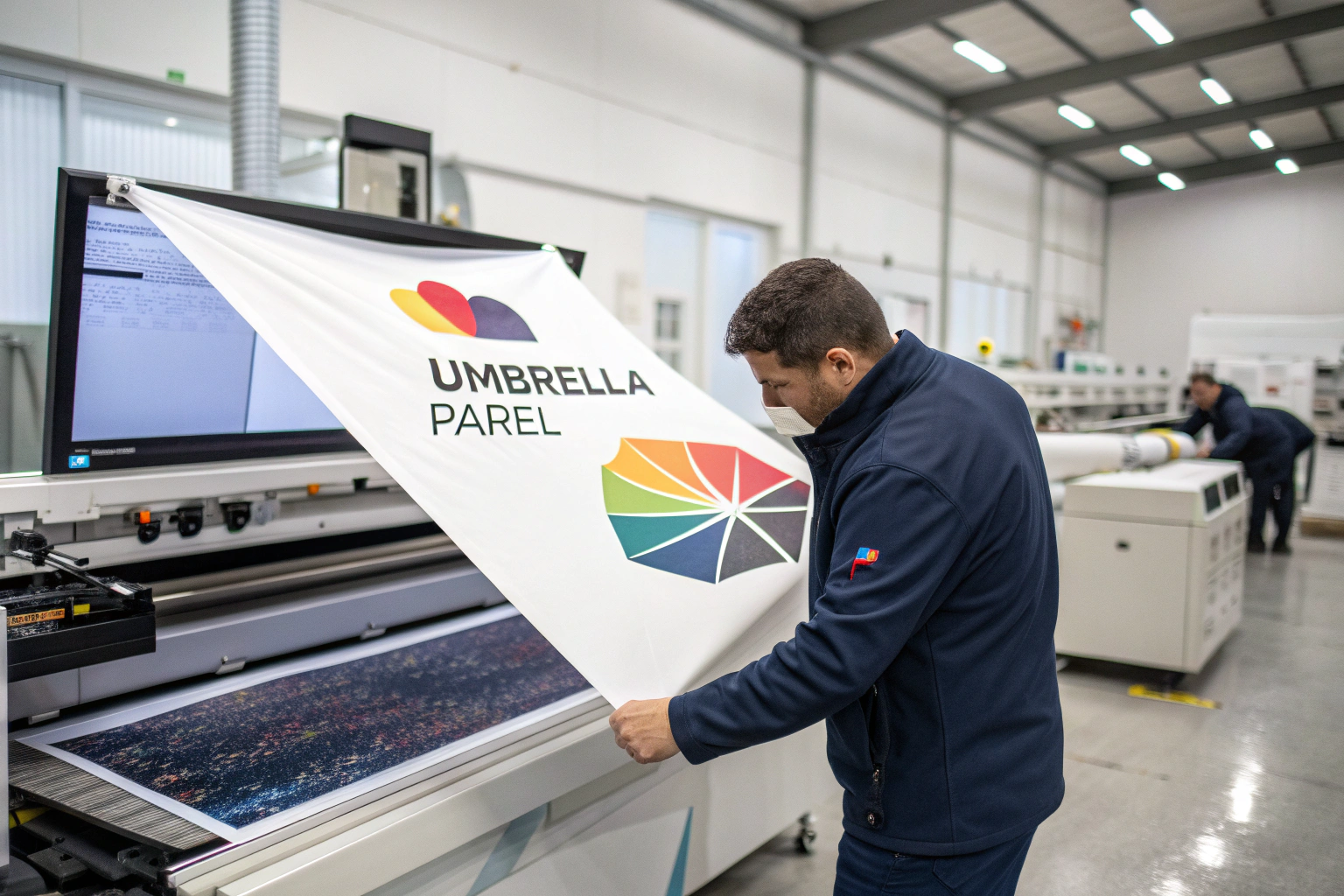
Are you looking to create custom umbrellas for your brand, but feeling lost in a sea of technical jargon like "screen printing," "digital printing," and "dye sublimation"? You have a great design in mind, but you're worried about choosing the wrong printing method, which could result in a final product that looks faded, blurry, or just plain cheap. You need a clear, straightforward guide to make the right choice for your project and budget.
The "best" printing method for custom umbrellas is not a one-size-fits-all answer; it depends entirely on your design's complexity, your order quantity, and your budget. For simple logos with few colors on a large run, screen printing is the undisputed king of cost-effectiveness. For complex, multi-color photographic images or small orders, digital printing offers unparalleled detail and flexibility.
As a manufacturer of a wide range of accessories, including umbrellas, this is a conversation I have with clients every single day. Choosing the right print method is as crucial as the design itself. At Shanghai Fumao Clothing, we guide our clients to the perfect solution based on their specific needs. In this article, I'll break down the pros and cons of the main printing methods so you can make an informed decision for your brand.
When Is Screen Printing the Right Choice?
You have a strong, simple logo with one or two distinct colors. You're planning a large promotional giveaway or a retail line and need to produce hundreds, or even thousands, of umbrellas. Your top priorities are brand color accuracy and keeping the cost per unit as low as possible.
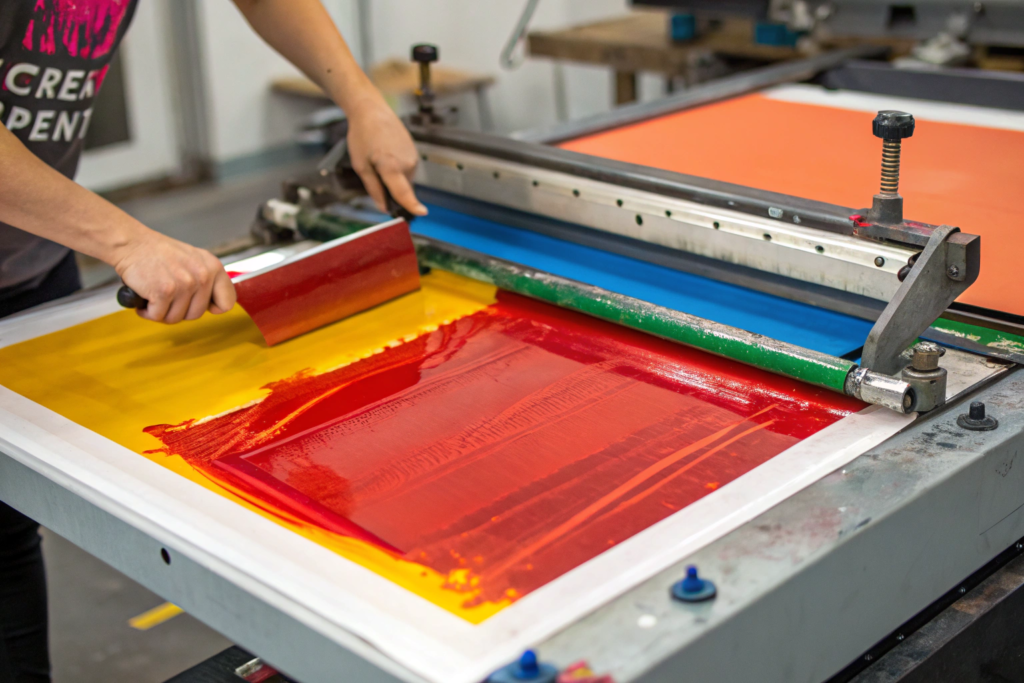
Screen printing is the right choice when you have a design with a limited number of solid colors (typically 1-4) and a large order quantity. This traditional method uses a stencil (a "screen") to apply thick, durable layers of ink one color at a time. While it has higher initial setup costs, the price per umbrella becomes extremely low on large runs, making it the go-to for corporate branding and large-scale promotions.
I always think of screen printing as the workhorse of our factory. It's reliable, fast (once set up), and produces incredibly vibrant, durable prints. When a major corporate client needs 5,000 umbrellas with their iconic red logo, screen printing is the only logical answer. The color matching is perfect, and the cost-efficiency is unbeatable. This method's focus on simplicity and volume makes it a different tool entirely from the more detailed digital printing.
What are the main advantages of screen printing?
- Cost-Effective for Bulk Orders: The setup cost is spread across a large number of units, making the per-item price very low.
- Vibrancy and Durability: The thick layer of ink results in exceptionally bright, opaque colors that are very resistant to fading from sun and rain.
- Excellent Color Matching: It's the best method for matching specific Pantone® colors, which is crucial for maintaining brand identity.
You can find more details on the screen printing process from educational resources and industry suppliers like Nazdar SourceOne and Printful.
What are its limitations?
The primary limitation is the complexity of the design. Each color in your design requires a separate screen to be created, which increases the setup cost and time. This makes it unsuitable and expensive for photographic images or designs with many colors, gradients, or fine details. For such designs, digital printing is a much better fit. This limitation is well-documented on printing and manufacturing blogs like Realthread and Custom Ink.
When Should You Opt for Digital Printing?
Your design is a work of art. It's a full-color photograph, a detailed illustration with subtle gradients, or a pattern with dozens of different shades. You might only need a small batch for a boutique collection or a special event, and you cannot sacrifice a single detail of your artwork.
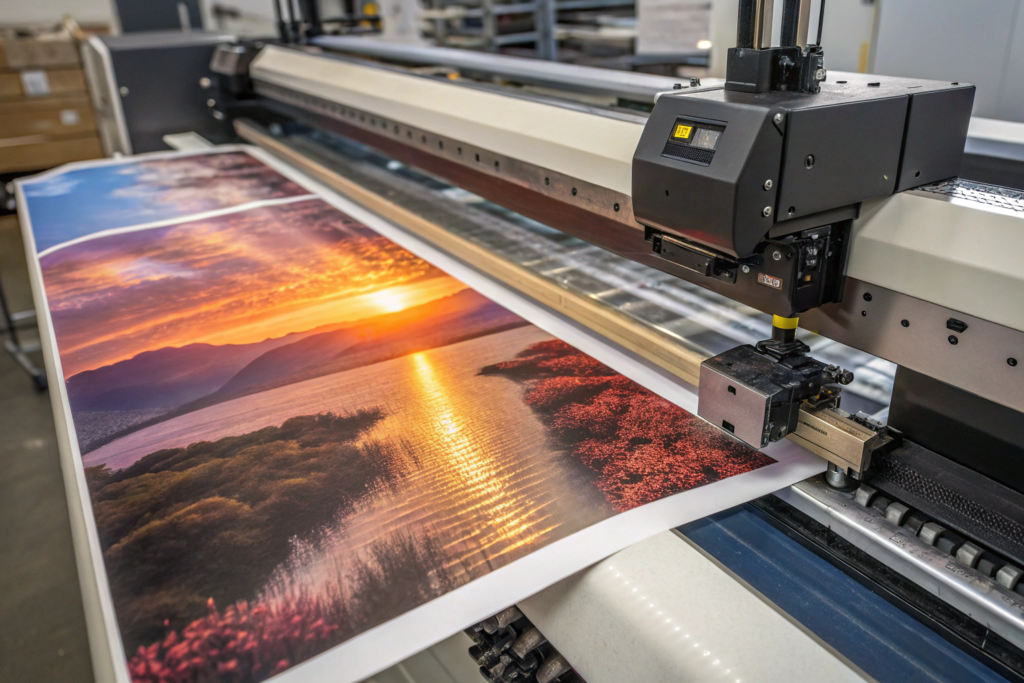
You should opt for digital printing (also known as inkjet printing) when your design is complex, contains multiple colors, gradients, or photographic detail. Think of it like a giant desktop inkjet printer for fabric. It applies all the colors simultaneously, allowing for unlimited color possibilities and perfect reproduction of intricate artwork. It has no per-color setup fee, making it ideal for small runs.
Digital printing has been a revolution for our more fashion-forward clients at Shanghai Fumao Clothing. A designer came to us with a watercolor painting she wanted to put on an umbrella. With screen printing, it would have been impossible. With digital printing, we were able to reproduce every delicate brushstroke and subtle color blend perfectly. It allows for a level of creativity that was previously unimaginable on an umbrella, a stark contrast to the high-volume simplicity of screen printing.
What makes digital printing so flexible?
Its main advantage is the lack of setup. There are no screens to create. You send a digital file (like a JPEG or vector file) to the printer, and it prints it directly onto the umbrella panel. This means:
- Unlimited Colors: You can print a full-color photograph with millions of colors for the same price as a simple two-color design.
- Perfect for Small Orders: Because there are no setup costs, it's very cost-effective for producing small quantities, even a single sample.
- High Detail: It can reproduce extremely fine details and smooth gradients flawlessly.
Technology companies like HP and Epson are at the forefront of this technology and provide great resources on its capabilities.
Are there any downsides?
The primary downside is that it can be less cost-effective for very large runs of simple designs compared to screen printing. Additionally, while the inks are durable, the very thick, opaque finish of a screen print is sometimes preferred for simple, bold logos. Finally, precise Pantone® color matching can be more challenging than with screen printing, though modern digital printers have become exceptionally good at it. This trade-off is often discussed on custom apparel and merchandise blogs like RushOrderTees.
What About Dye Sublimation for Full Coverage?
You don't just want a logo on a panel; you want the entire umbrella canopy, from edge to edge, to be your canvas. You envision a seamless, all-over pattern or a single, massive image that covers the whole umbrella without any breaks.
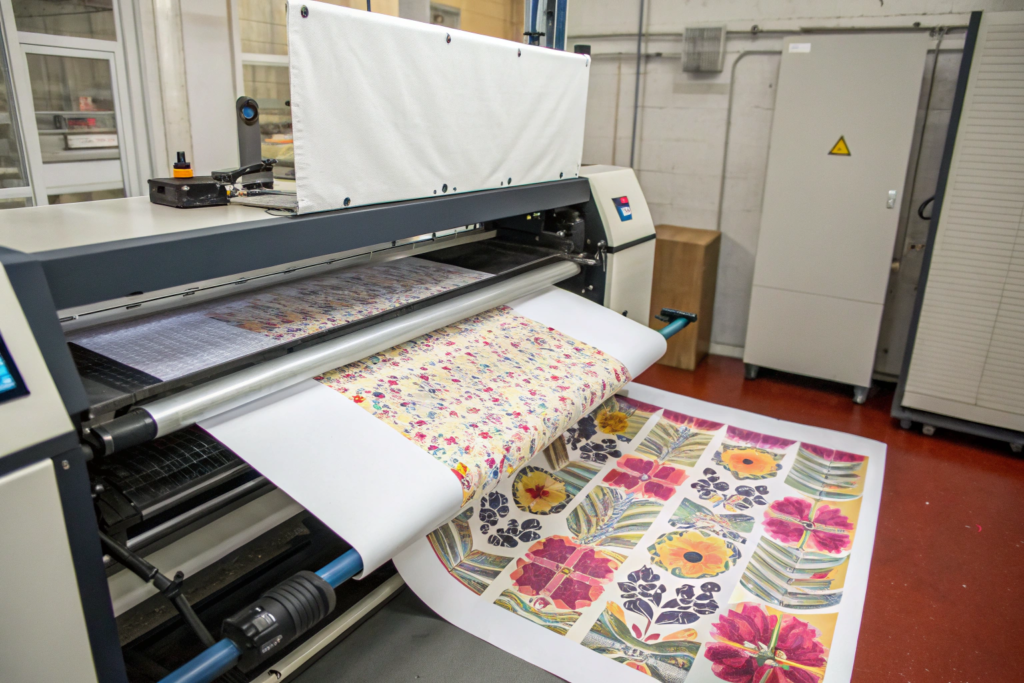
Dye sublimation is the ideal method when you want complete, edge-to-edge coverage with a seamless, all-over print. This process is unique because it doesn't print ink on top of the fabric. Instead, it uses heat to turn special inks into a gas, which then permeates and bonds with the polyester fibers of the umbrella fabric. The result is a permanent, vibrant print that you can't even feel.
Dye sublimation is like magic. It allows us to create umbrellas that are true works of art. We've made umbrellas that look like a perfect slice of a watermelon or a stunning galaxy print that covers the entire canopy. Because the ink becomes part of the fabric, the print will never crack, peel, or fade, making it incredibly durable. It's the ultimate choice for premium, retail-focused products, offering a level of coverage that neither screen printing nor standard digital printing can match.
Why is it best for all-over prints?
The process involves printing your design onto a large sheet of transfer paper and then heat-pressing it onto the white umbrella panel before it's sewn together. This allows the design to cover the entire surface area perfectly, right to the seams. This is why it's the only method that can achieve a truly seamless, all-over look. You can see examples of this on the websites of companies that specialize in sublimation printing, such as Sawgrass and JDS Industries.
What are the limitations?
The main limitation of dye sublimation is that it only works on polyester fabrics (or poly-coated materials) and is best on a white or very light-colored base fabric to ensure the colors are true. The equipment is specialized, so it can be more expensive than other methods, especially for smaller runs. However, for a premium, full-coverage product, the stunning result often justifies the cost.
How Do You Prepare Your Artwork for Printing?
You've chosen the perfect printing method for your project. Now what? Submitting your artwork correctly is a critical final step. A beautiful design can be ruined by a low-resolution file or incorrect color codes, leading to a disappointing final product and costly delays.
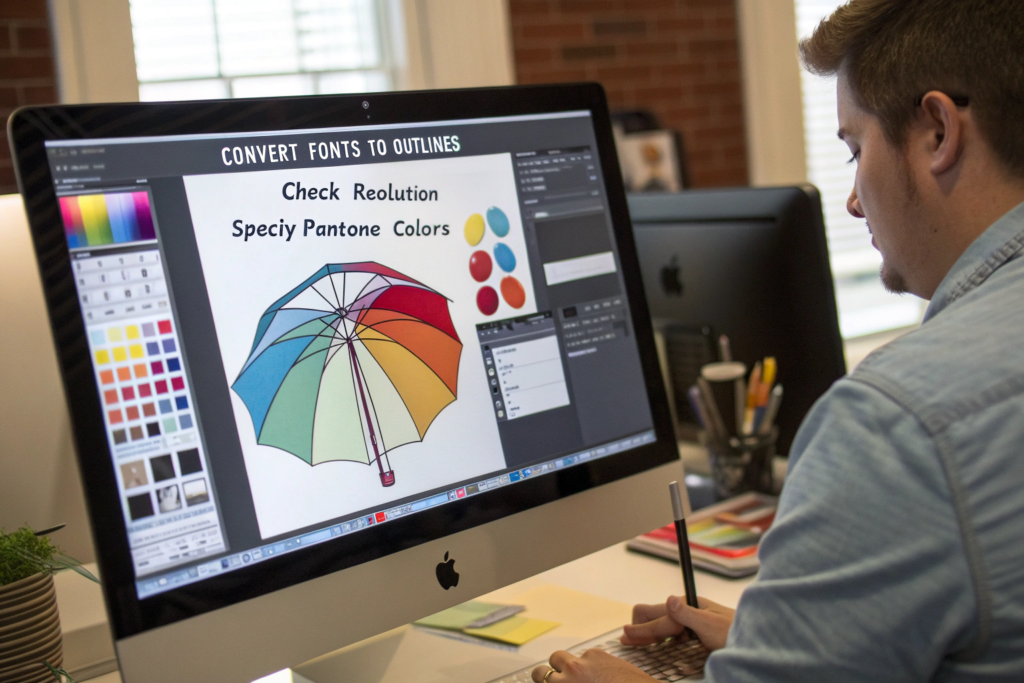
To prepare your artwork for printing, you must provide a high-resolution vector file (like an .AI or .EPS) with all fonts converted to outlines and all colors clearly specified using the Pantone® Matching System (PMS). This ensures that your design can be scaled to any size without losing quality and that the colors printed on the final product will exactly match your brand's requirements.
This is the most common and easily avoidable hurdle we see at Shanghai Fumao Clothing. A client will send a small, low-resolution JPEG file they copied from their website and ask us to print it on an umbrella. It simply doesn't work. Taking the time to provide proper artwork is the best way to guarantee a smooth production process and a beautiful final product. A good manufacturer will always provide a digital proof for your approval before starting mass production.
Why is a vector file so important?
Unlike pixel-based files like JPEGs, vector graphics are made of mathematical equations. This means they can be scaled infinitely larger or smaller without ever becoming blurry or pixelated. This is essential when your logo needs to be printed clearly on a large umbrella panel. Design software like Adobe Illustrator is the industry standard for creating vector artwork. Websites like Vectr also offer free, web-based vector editing tools.
What is the Pantone® Matching System (PMS)?
The PMS is a standardized color reproduction system. Every color has a specific code (e.g., PMS 200 C for a specific shade of red). By providing the PMS code for your brand's colors, you ensure that the printer will mix the inks to that exact specification. This guarantees color consistency across all your branded materials, from your umbrellas to your business cards. The official Pantone website is the ultimate resource for understanding and using this system.
Conclusion
Choosing the best printing method for your custom umbrellas is a strategic decision that balances design, quantity, and cost. For large runs of simple logos, screen printing offers unbeatable value and vibrancy. For complex, full-color artwork and small batches, digital printing provides ultimate flexibility and detail. And for stunning, seamless, all-over designs, dye sublimation is in a class of its own.
By understanding these core methods and preparing your artwork correctly, you can ensure your project is a success. At Shanghai Fumao Clothing, we don't just print umbrellas; we partner with you to find the perfect solution that brings your vision to life and respects your budget. Our experienced team is here to provide expert guidance at every step.
If you're ready to create a stunning custom umbrella for your brand, let's talk about which printing method is right for you. Please contact our Business Director, Elaine, at her email: elaine@fumaoclothing.com, to get started.