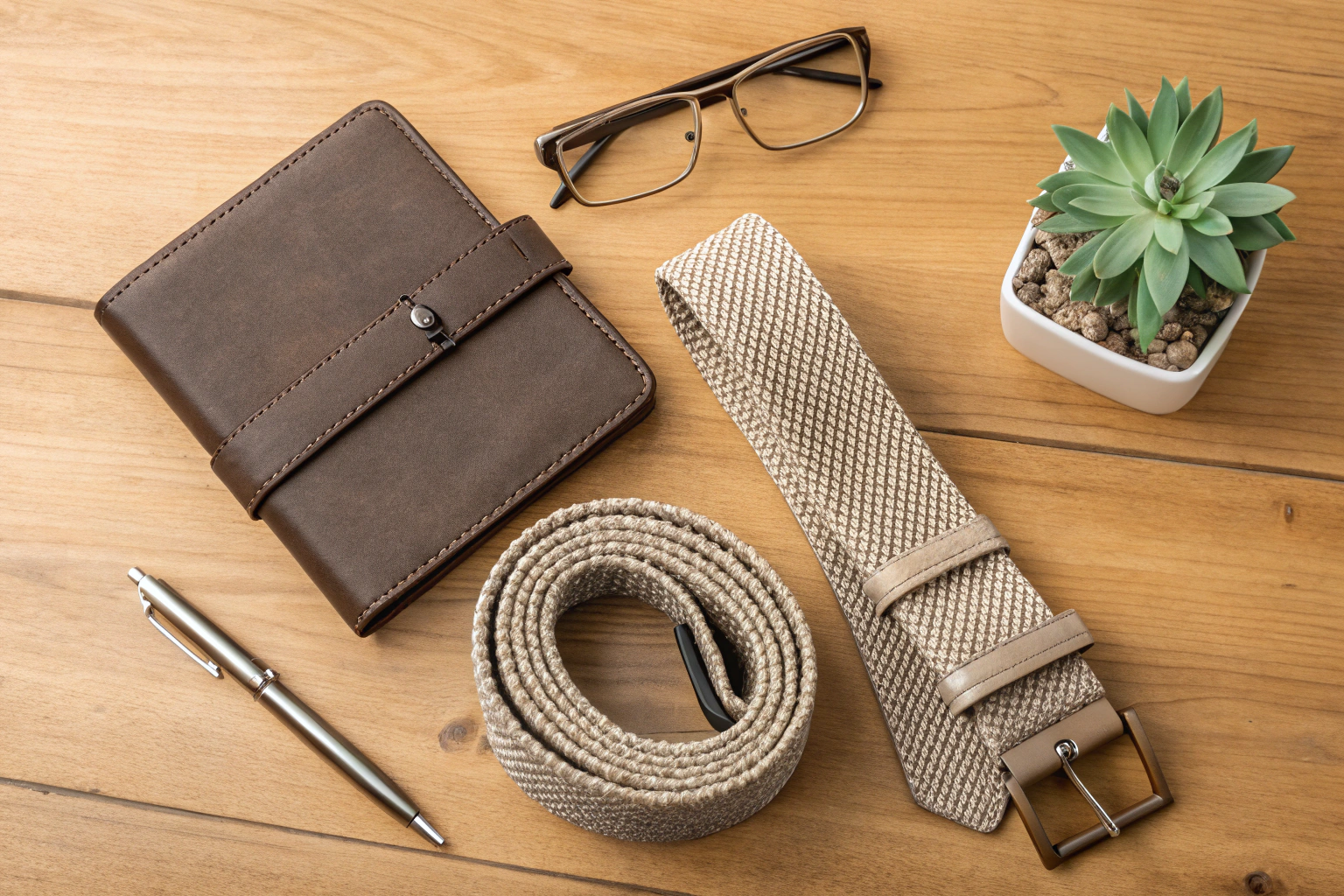
The landscape of men's business casual attire is undergoing a quiet revolution. No longer confined to a simple uniform of chinos and a polo shirt, it has evolved into a nuanced arena for personal expression and sophisticated style. At the heart of this evolution are accessories—the subtle yet powerful tools that define a modern professional's aesthetic. For retailers, brands, and manufacturers, understanding these trends is key to capturing the growing market of men who want to look polished, current, and individual without reverting to a formal suit.
At AceAccessory, we supply a wide range of men's accessories to global brands and have a front-row seat to these shifts. The trends are moving away from overt status symbols towards pieces that signal craftsmanship, versatility, and considered individuality. The modern professional is curating a wardrobe of accessories that are as functional as they are stylish, blending traditional materials with innovative design and a focus on personal well-being. This isn't about loud statements; it's about intelligent, understated elevation.
This guide will explore the key trends shaping men's business casual accessories. We'll delve into the rise of organic textures and sustainable materials, the strategic use of color and pattern, the growing category of functional tech-integrated pieces, and the renewed appreciation for artisanal, small-batch craftsmanship. Understanding these directions will help you develop products that resonate with the discerning modern man.
How Are Organic Textures and Sustainable Materials Defining Style?
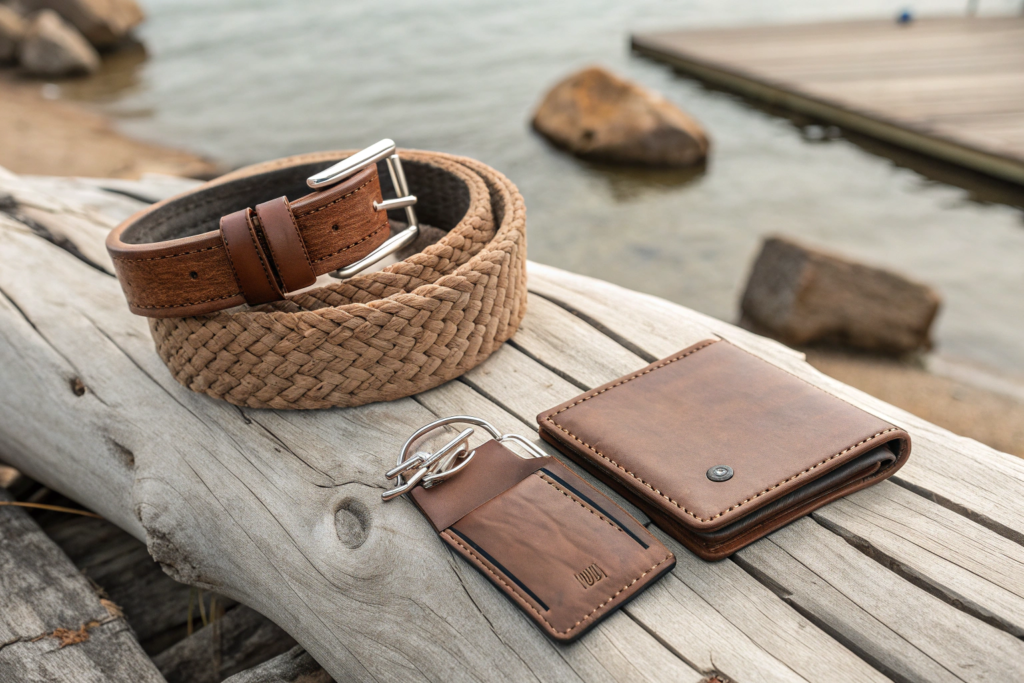
The "quiet luxury" aesthetic has firmly taken root in men's business casual, and it is deeply tied to materiality. There's a distinct move away from high-gloss, synthetic finishes towards natural, textured, and sustainably sourced materials. This trend speaks to a desire for authenticity, longevity, and environmental consciousness. The accessories feel grounded and substantial, conveying quality through their inherent properties rather than flashy logos.
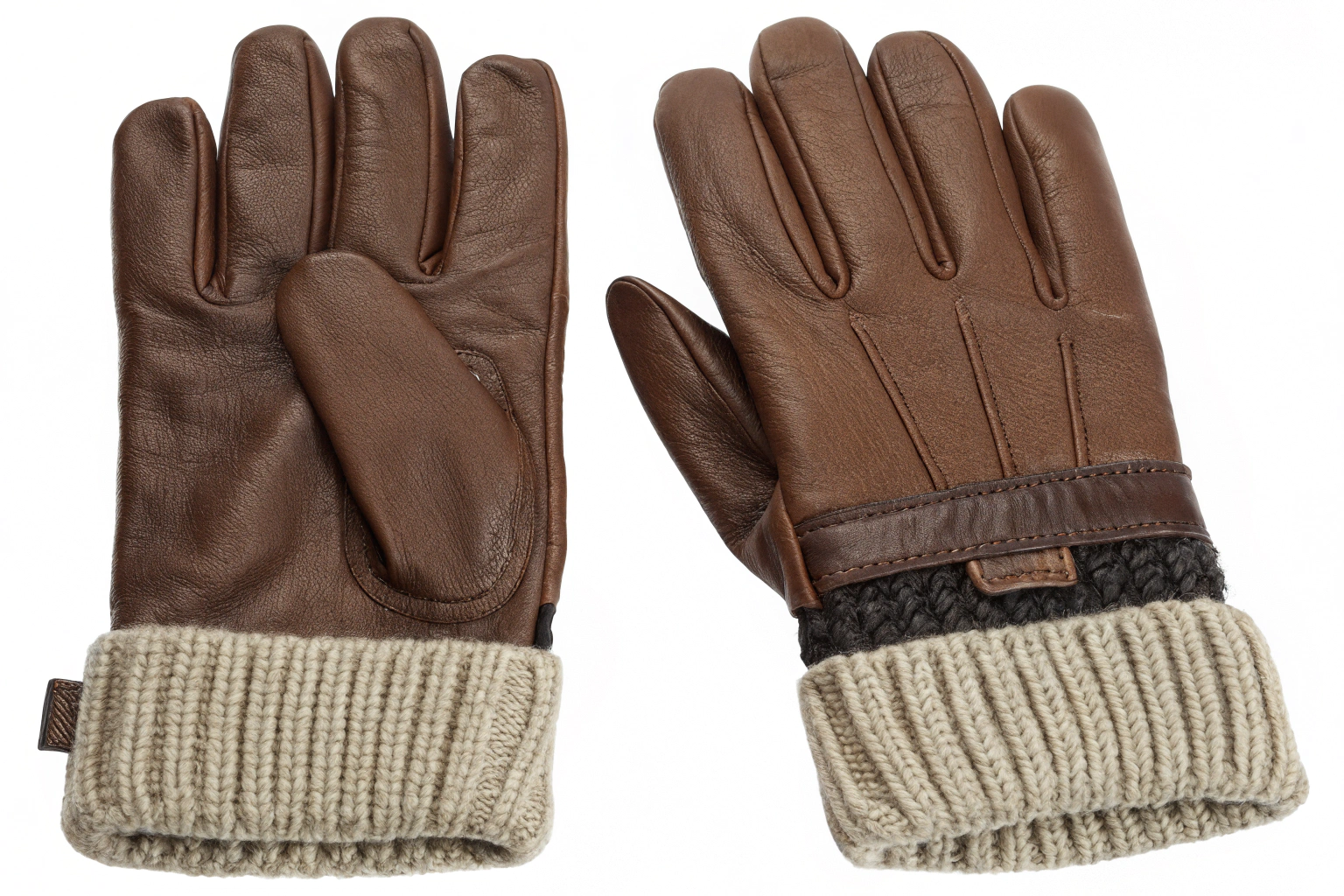
Think unfinished leathers (waxed, pebbled, or vegetable-tanned), organic cotton, cordovan, cork, wood, and recycled metals. These materials age beautifully, developing a unique patina that tells a story of use. A belt made from full-grain leather with a raw edge, a watch strap in woven recycled ocean plastic, or a wallet crafted from apple leather are not just accessories; they are expressions of values. For manufacturers, this means prioritizing material sourcing and finishes that highlight natural character. At Shanghai Fumao, we've seen a significant increase in demand for belts and small leather goods in these organic, matte finishes.
What specific textures are gaining traction?
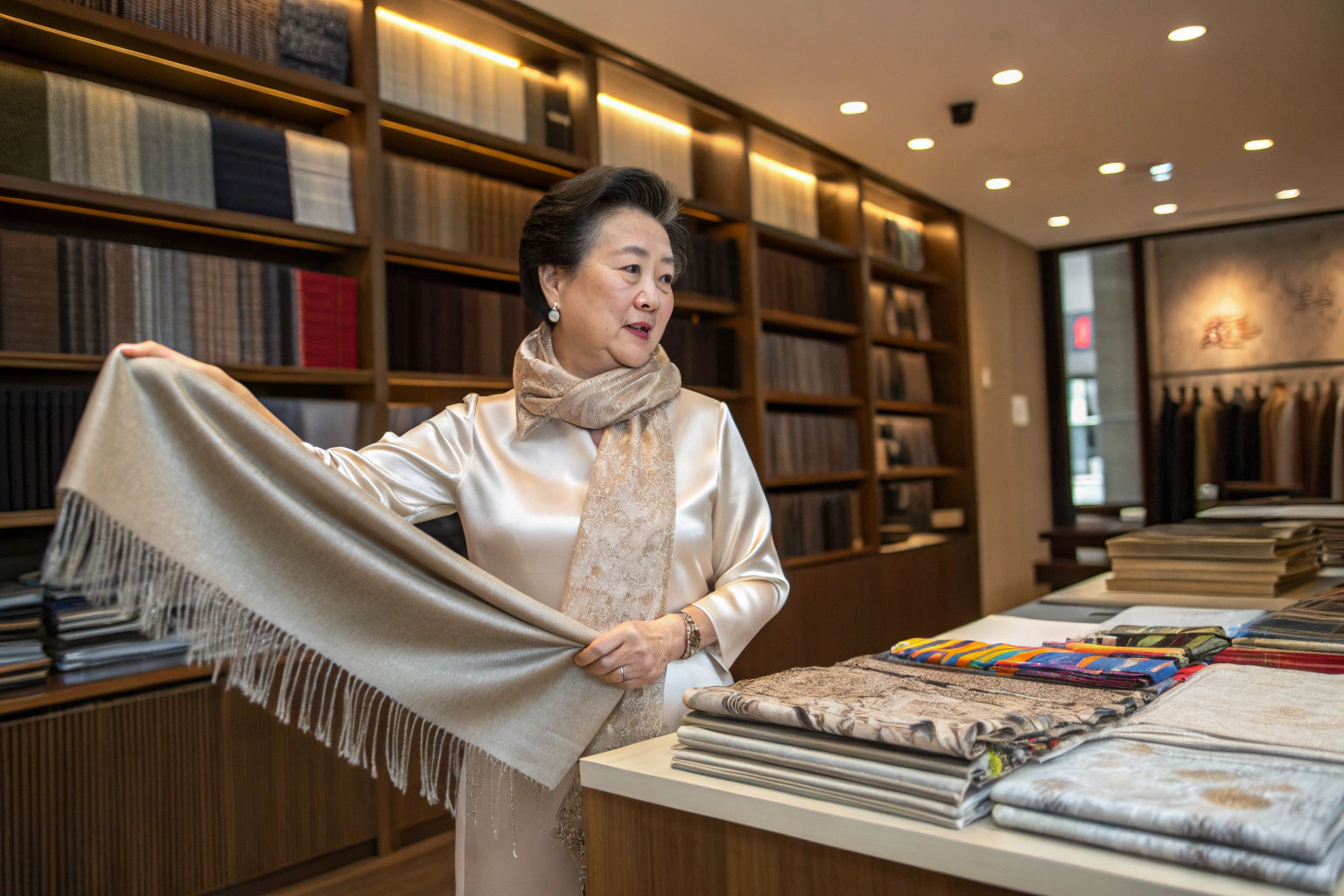
- Knit and Woven Textures: Knit ties and wool-blend scarves offer a soft, dimensional alternative to slick silks, perfect for adding depth to a simple shirt or sweater.
- Brushed and Matte Metals: Watch cases, pen barrels, and belt buckles in brushed titanium, matte gunmetal, or dark bronze are preferred over polished chrome. They are understated and reduce glare.
- Textured Fabrics: Belts and bags in canvas, twill, or technical wool blends provide a relaxed yet refined alternative to smooth leather.
These textures add visual interest without being loud, aligning perfectly with the sophisticated, layered look of modern business casual.
How does sustainability influence material choice?
Sustainability is now a baseline expectation for many consumers, especially younger professionals. It goes beyond the material itself to encompass the entire product lifecycle. Trends include:
- Traceable Materials: Leather from tanneries with environmental certifications, or recycled fabrics with clear content breakdowns.
- End-of-Life Design: Accessories designed for disassembly or repair, like watch straps with quick-release springs or modular wallets.
- Vegan Alternatives: High-quality cork leather, Piñatex (pineapple leather), and mushroom leather are moving from niche to mainstream for belts, bags, and cardholders.
Brands that transparently communicate these choices build strong trust and alignment with their customers.
Why Are Strategic Color and Pattern Making a Comeback?
Gone are the days of business casual being a sea of navy, black, and brown. While these neutrals remain foundational, they are now being used as a canvas for strategic, personality-driven accents of color and subtle pattern. The key is sophistication—colors are often muted, dusty, or tonal, and patterns are small-scale and refined. This allows for individual expression while maintaining a professional demeanor.
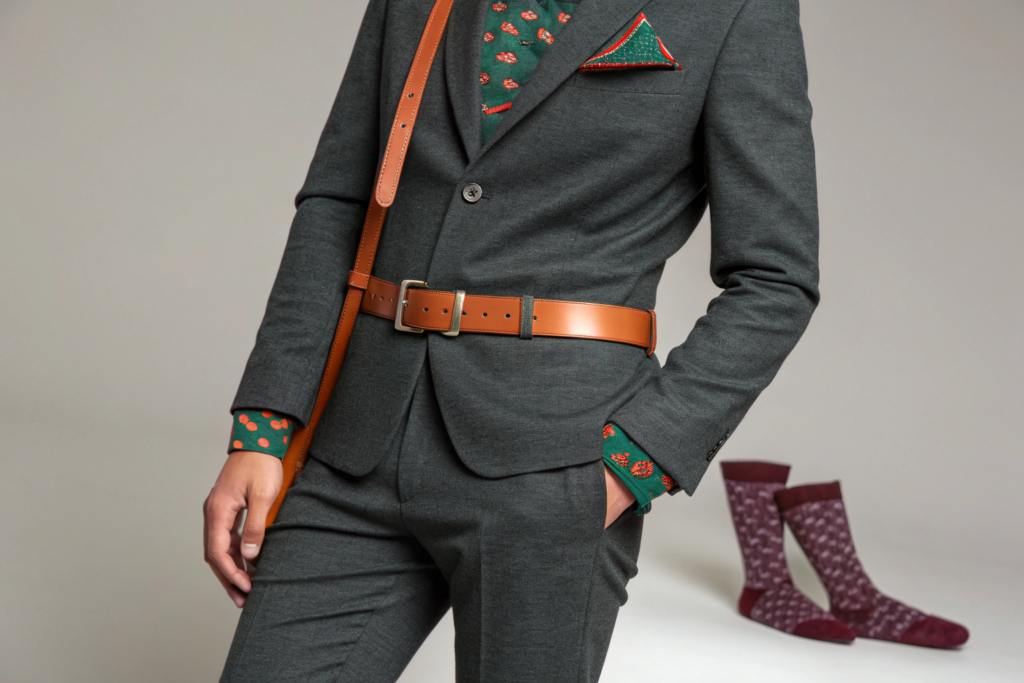
The trend is about curated accents, not head-to-toe color. A charcoal grey outfit can be elevated with a terracotta leather belt, a forest green pocket square, or socks in a heathery plum. This approach feels modern, confident, and creatively engaged. For accessory makers, it means expanding color offerings within neutral families and mastering small-scale, elegant patterns.
Which colors are leading the trend in accessories?
- Earth Tones: Olive, rust, camel, and taupe are dominating as versatile, nature-derived neutrals that work across seasons.
- Dusty Pastels: Sage green, powder blue, and misty rose offer a soft, modern alternative to traditional brights, particularly in knit ties and lightweight scarves.
- Rich Jewel Tones (Used Sparingly): Deep burgundy, bottle green, or navy in a silk pocket square or watch face add a touch of quiet drama.
These colors work in monochromatic schemes or complement each other in tonal layers, which is a hallmark of advanced casual styling.
How are patterns being integrated subtly?
Patterns are used to add a layer of intelligence and interest. The most relevant include:
- Micro-Patterns: Mini herringbone, tiny gingham checks, or pinstripes on ties, socks, or even leather goods via embossing.
- Abstract and Artistic Prints: Small-scale, abstract geometric or watercolor-effect prints on pocket squares and scarves.
- Texture-as-Pattern: The pattern often comes from the material itself—the weave of a fabric, the grain of leather, or the knit structure of a tie—creating a subtle, tonal effect.
The rule is that the pattern should be discovered upon closer inspection, not shouted from a distance.
What is Driving the Demand for Functional and Tech-Integrated Accessories?
The line between professional and personal life is blurred, and accessories are evolving to meet the hybrid needs of the modern man. Function is no longer separate from form; it is seamlessly integrated. Professionals carry tech daily and seek accessories that organize, protect, and complement their devices without looking like tactical gear.
This has given rise to a new category of sleek, tech-friendly business accessories. Think of a leather folio with a dedicated tablet sleeve and a pen loop, a minimalist backpack with a hidden laptop compartment and cable management, or a wireless charging pad disguised as a leather desk tray. The aesthetic is clean, uncluttered, and professional, belying the smart functionality within.

What are examples of cleverly integrated functionality?
- Organizational Intelligence: Wallets with RFID-blocking technology, dedicated card slots for transit passes, and a slim profile. Belts with a magnetic buckle for easier security at airport checkpoints.
- Tech Compatibility: Glasses with integrated blue-light filtering without a noticeable tint. Bags with integrated power banks and USB pass-through ports.
- Adaptive Design: Multi-wrap scarves that can be a neck warmer, headband, or even a face covering in a pinch. Convertible bags that shift from a briefcase to a backpack.
These products solve real-world problems faced by the commuting, traveling, or hybrid-working professional, making them incredibly practical purchases.
How does this trend influence material and design choices?
Materials need to be durable and often technical. Water-resistant waxed canvas, ballistic nylon with a refined finish, and scratch-resistant ceramics are used alongside traditional leathers. Design must be minimalist to avoid a "gadget" look; the tech features are hidden or beautifully incorporated. Manufacturing such items requires collaboration between soft goods experts and hardware engineers—a capability that forward-thinking factories are developing.
How is Artisanal Craftsmanship Influencing Modern Preferences?
In reaction to mass production and disposable fashion, there is a growing appreciation for accessories that show evidence of human handiwork and artisanal skill. This trend is about heritage, story, and uniqueness. It appeals to the professional who values quality over quantity and seeks items with character and provenance.
This doesn't necessarily mean "rustic." It means purposeful imperfections, hand-stitching, small-batch dye lots, and custom monogramming. A hand-rolled silk pocket square, a belt with hand-hammered buckle edges, or a bespoke pen turned from a single piece of wood carry an aura of care and exclusivity. They are conversation pieces that reflect a discerning taste.

What artisanal details are most sought-after?
- Hand-Finishing: Burnished edges on leather goods, hand-painted enamel on lapel pins, or hand-knotted fringes on scarves.
- Made-to-Order & Personalization: The ability to select leather type, thread color, or have initials discreetly embossed.
- Collaborations with Craftspeople: Brands partnering with individual artisans for limited-run collections, such as a jeweler creating unique cufflinks or a weaver making one-of-a-kind ties.
These details create an emotional connection and transform an accessory from a commodity into a cherished personal belonging.
Why does this matter for brands and retailers?
The artisan trend allows for premium positioning and storytelling. Brands can highlight the maker's process, the origin of materials, and the time invested in each piece. This justifies a higher price point and fosters intense customer loyalty. For retailers, curating a selection of artisanal accessories differentiates their offering and attracts a customer looking for something special and authentic. It’s a powerful antidote to the homogeneity of fast fashion.
Conclusion
The trends in men's business casual accessories are painting a picture of a more thoughtful, intentional, and expressive professional. The movement is towards organic authenticity, strategic personal color, intelligent functionality, and artisanal uniqueness. Success in this market lies in creating accessories that are not just add-ons, but integral components of a modern professional identity—pieces that are as smart, versatile, and considered as the men who wear them.
For buyers and brands, this means moving beyond basic staples to offer curated collections that tell a material story, solve modern problems, and provide a canvas for individual style. The opportunity is vast for those who understand that today's business casual accessory is a key tool for personal branding.
If you are looking to develop or source a contemporary line of men's business casual accessories that embody these trends—from textured belts and knit ties to tech-integrated organizers—we are your ideal partner. At Shanghai Fumao, we combine expertise in traditional craftsmanship with innovation in materials and smart design. To discuss creating a collection that defines modern professional style, contact our Business Director, Elaine, at elaine@fumaoclothing.com. Let's craft the next generation of professional essentials.