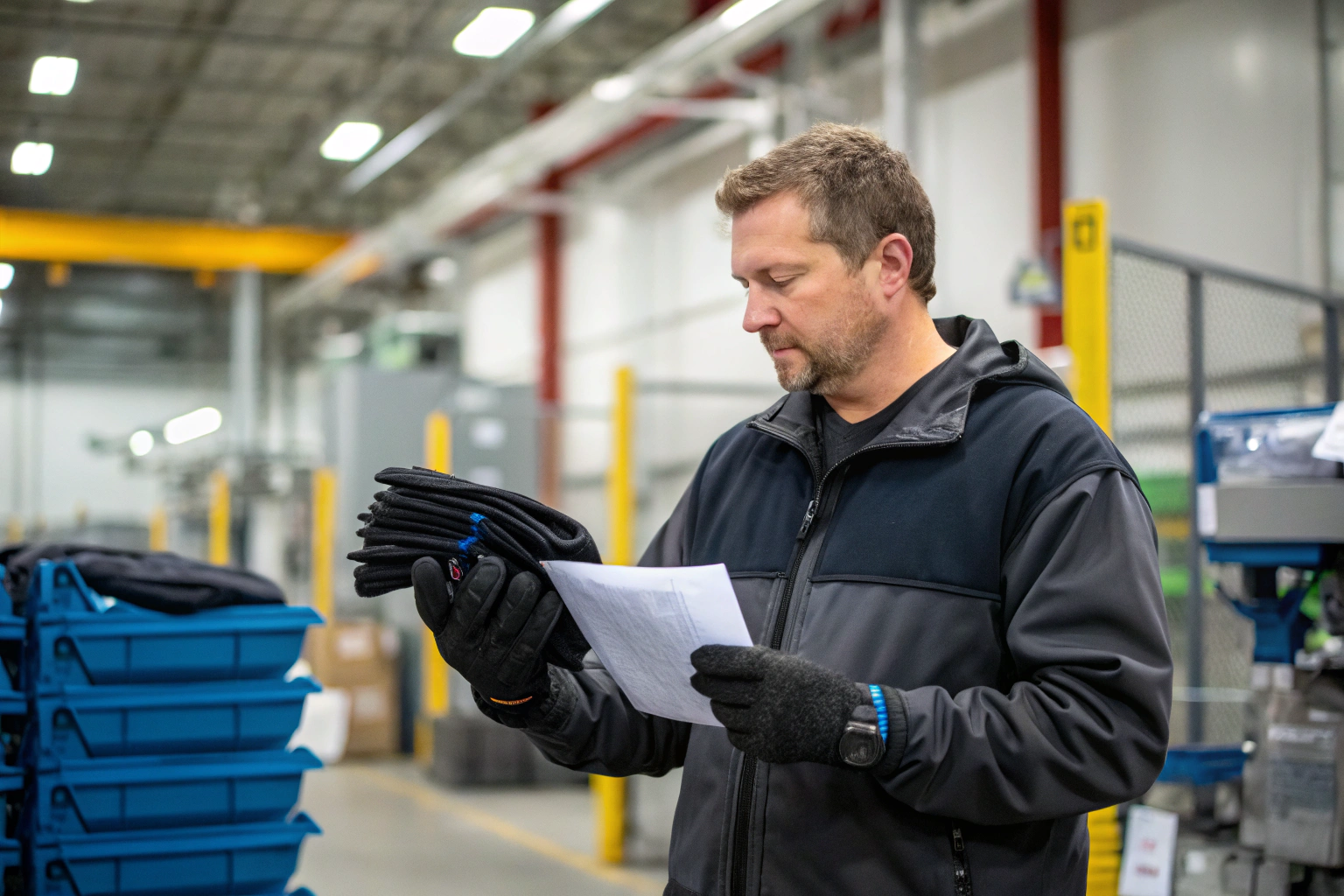
A product director from a Canadian winter sports brand visited my factory last October with a stack of competitor gloves and a testing lab report that told a very clear story. His company had been using the same Thinsulate lining in their extreme cold gloves for five years. The linings were warm, reliable, and familiar. But their customer reviews were shifting. Users were complaining about bulk. They wanted gloves that felt less like wearing a pillow on their hands and more like wearing a second skin. They wanted touchscreen compatibility that actually worked through the lining. They wanted linings that did not get clammy after hours of wear. His lab had tested a dozen alternative materials. Three had emerged as clear winners for the 2026 season. He was in my showroom to discuss how we could integrate these materials into his new glove designs.
The top three glove lining materials for extreme cold in 2026 are aerogel-infused nonwoven fabric, which provides the highest warmth-to-thickness ratio of any insulation currently available, offering the thermal protection of a thick fleece in a layer just 1 to 2 millimeters thick. Phase-change material, or PCM, coated knits, which actively regulate temperature by absorbing excess heat when the hand is warm and releasing it back when the hand cools, maintaining a stable microclimate inside the glove. And recycled high-loft performance fleece, which combines the warmth and softness of traditional high-loft fleece with a fully recycled polyester fiber construction and a siliconized finish that dramatically reduces friction against the outer shell, improving dexterity. These three materials represent a shift in extreme cold glove design from simply adding more insulation, thicker layers, more bulk, toward intelligent, engineered materials that provide warmth without sacrificing the dexterity, touchscreen functionality, and all-day comfort that modern users demand.
Extreme cold is not just a matter of temperature. It is a matter of time, activity, and moisture. A glove that keeps a stationary ice fisherman warm at minus 30 degrees Celsius is very different from a glove that keeps an active mountaineer warm at the same temperature. The metabolic heat generated by the wearer, the wind speed, the humidity, and the duration of exposure all affect the thermal performance of a glove lining. The 2026 materials are designed to manage these variables intelligently, not just to provide a fixed insulation value. At AceAccessory, we produce gloves for winter sports brands, industrial safety companies, and outdoor equipment manufacturers. Our material sourcing team has been evaluating next-generation insulation materials for the past two years. Let me walk you through the three materials that are defining the 2026 season.
Why Is Aerogel Lining the Leading Extreme Cold Insulation
Aerogel is a material that sounds like science fiction, but it is real and it is transforming cold-weather apparel. Originally developed by NASA for insulating spacecraft, aerogel is a synthetic, porous material derived from a gel in which the liquid component has been replaced with gas. The result is a solid that is composed of up to 99.8 percent air, trapped within a microscopic, sponge-like structure of silica or polymer. The air molecules are immobilized within the nanopores of the aerogel, preventing the convection and conduction that transfer heat through ordinary insulation. Aerogel is the lowest-density solid material ever created, and it has the lowest thermal conductivity of any known solid. It is, quite simply, the most effective thermal insulator in existence.
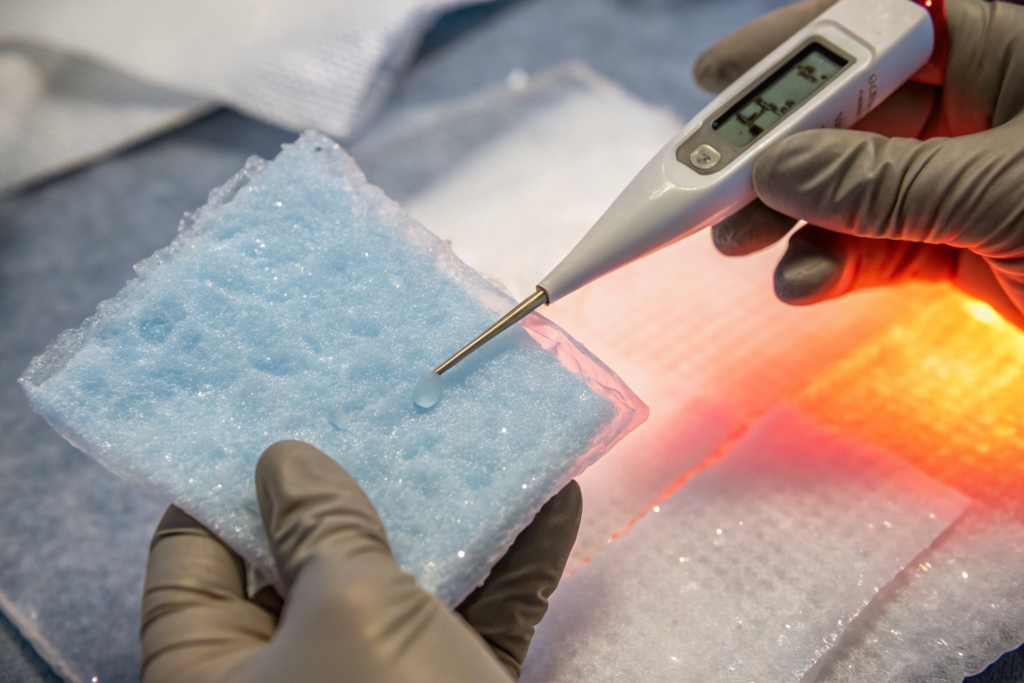
Aerogel-infused nonwoven fabric is the leading extreme cold glove lining for 2026 because it provides an unmatched warmth-to-thickness ratio. A layer of aerogel fabric just 1 to 2 millimeters thick can provide the same thermal insulation as a 5 to 10 millimeter layer of traditional fleece or Thinsulate. This allows glove designers to create gloves that are dramatically thinner and more dexterous than traditional extreme cold gloves, without sacrificing warmth. The aerogel is incorporated into the lining as a nonwoven fabric. Aerogel particles or fibers are blended with polyester or other carrier fibers and formed into a flexible, durable fabric sheet using a needle-punch or thermal bonding process. The resulting fabric is soft, flexible, and can be cut and sewn like any other textile. The aerogel lining is typically used as a standalone insulation layer or as a backing for a microfleece inner face. The aerogel layer is positioned between the glove’s outer shell and the inner lining. The aerogel fabric is hydrophobic, meaning it repels water. It does not absorb moisture from perspiration or from external wetness. It retains its insulating properties even when wet, which is a critical advantage in extreme cold where moisture can freeze within traditional insulation and accelerate heat loss. The aerogel lining is also extremely lightweight. A glove with an aerogel lining weighs significantly less than a glove with an equivalent warmth rating using traditional insulation. This reduces hand fatigue during extended wear.
The adoption of aerogel in consumer gloves has been accelerating as the manufacturing cost has decreased. Early aerogel products were brittle and prone to dusting, shedding fine particles of silica. The 2026 generation of aerogel fabrics has solved these problems through improved encapsulation and carrier fiber technology. Let me detail the two most important performance characteristics.
How Does Aerogel Compare to Traditional Fleece for Warmth?
The comparison between aerogel and traditional fleece is not a fair fight. They operate on fundamentally different physical principles. Traditional fleece, whether it is polyester fleece, wool fleece, or a synthetic blend, insulates by trapping air within its fibrous structure. The fibers create a network of small air pockets. The air, being a poor conductor of heat, slows the transfer of heat from the warm hand to the cold outside environment. The thickness of the fleece determines the amount of trapped air, and therefore the insulation value. A thicker fleece is warmer, but it is also bulkier and more restrictive. Aerogel insulates by immobilizing air at a nanoscale. The pores in aerogel are so small, typically 2 to 50 nanometers in diameter, that air molecules cannot move freely through them. Convection, the transfer of heat by the movement of air, is virtually eliminated. Conduction, the transfer of heat through solid material, is also minimized because the aerogel structure is mostly empty space. The result is that a very thin layer of aerogel can outperform a much thicker layer of fleece. In standardized thermal resistance testing, measured in CLO or in square meters Kelvin per watt, an aerogel fabric of 1.5 millimeters thickness can achieve a thermal resistance of 0.3 to 0.5 m²K/W. A polyester fleece of the same thickness achieves about 0.05 to 0.1 m²K/W. The aerogel is three to five times more efficient per millimeter of thickness. This is not a marginal improvement. It is a step change. A glove lined with aerogel can be as warm as a glove lined with a much thicker fleece, while being significantly thinner, lighter, and more dexterous. The trade-off is cost. Aerogel fabric is more expensive than fleece, typically three to five times the cost per square meter. For premium extreme cold gloves, where performance is the primary driver and consumers are willing to pay for the best, the cost is justified.
Can Aerogel Linings Be Washed Without Losing Insulation?
The wash durability of aerogel linings has been a concern in earlier generations of the material. The original silica aerogels were fragile. The microscopic structure could collapse under mechanical stress, such as the agitation of a washing machine, causing the aerogel to lose its insulating properties. The 2026 generation of aerogel fabrics has addressed this through encapsulation technology. The aerogel particles are not loose within the fabric. They are encapsulated within a durable polymer matrix or bonded to the carrier fibers with a resilient binder. The encapsulation protects the aerogel from mechanical damage. The fabric can be flexed, compressed, and washed repeatedly without significant loss of thermal performance. The wash durability is tested according to standardized protocols. A sample of the aerogel fabric is subjected to a specified number of wash cycles, typically 20 to 50 cycles, using a standard home laundry procedure. The thermal resistance is measured before and after washing. The industry benchmark for acceptable performance retention is a loss of no more than 10 to 15 percent of the original thermal resistance after 20 wash cycles. High-quality aerogel fabrics, such as those from established suppliers like PrimaLoft with their Cross Core technology or the various aerogel nonwoven products, meet this benchmark. The wash procedure for aerogel-lined gloves is important. The care label should specify a gentle cycle with cold or warm water, not hot water, and a mild detergent. The gloves should be air-dried or tumble-dried on a low heat setting. High heat can damage the aerogel structure and the encapsulation. Bleach and fabric softeners should be avoided. They can degrade the binders and the carrier fibers. With proper care, an aerogel-lined glove will maintain its thermal performance for the life of the product. The wash durability of aerogel fabrics is now sufficient for consumer use, and it is no longer a barrier to adoption in the glove market.
How Do Phase-Change Materials Regulate Glove Temperature
Phase-change materials, or PCMs, are substances that absorb and release heat when they change phase from solid to liquid and back again. The most common PCM used in textile applications is a paraffin wax encapsulated in microscopic polymer spheres. The spheres, typically 5 to 20 microns in diameter, are applied to the fabric as a coating or embedded within the fibers during spinning. When the temperature inside the glove rises above the melting point of the wax, the wax melts, absorbing excess heat and storing it as latent heat. The wearer feels a cooling sensation. When the temperature inside the glove drops below the freezing point of the wax, the wax solidifies, releasing the stored heat back to the hand. The wearer feels a warming sensation. The PCM acts as a thermal buffer, smoothing out temperature fluctuations and maintaining a stable, comfortable microclimate.
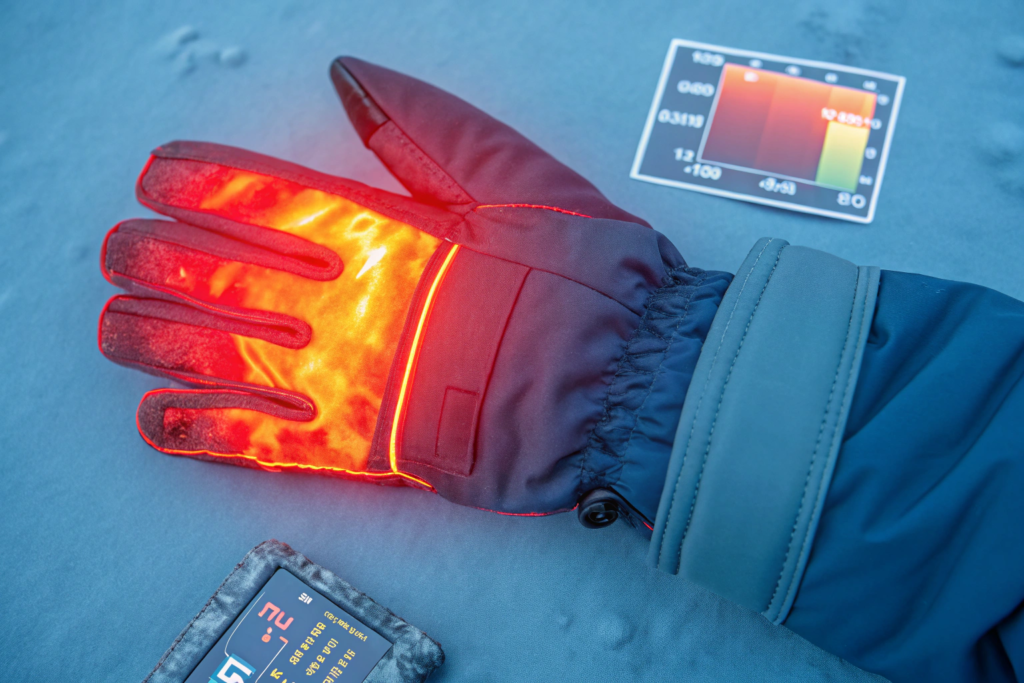
Phase-change material coated knits are a top glove lining material for 2026 because they provide active, intelligent temperature regulation rather than passive insulation. A passive insulation like fleece or aerogel simply slows down heat loss. It does not respond to changes in the wearer’s activity level or the external environment. A PCM lining actively manages heat. When the wearer is active, skiing, climbing, working, the hand generates excess heat. The PCM absorbs this heat, preventing overheating and sweating. When the wearer is stationary, resting, waiting, the hand cools. The PCM releases the stored heat, delaying the onset of cold discomfort. This active regulation extends the comfort range of the glove. A glove with a PCM lining is comfortable across a wider range of temperatures and activity levels than a glove with passive insulation alone. The PCM is typically applied to a knitted fabric that forms the inner lining of the glove. The knit is usually a polyester or a polyester-spandex blend for stretch and comfort. The PCM capsules are applied as a coating or as a print on the inner face of the knit, the side that contacts the hand. The coating is durable and withstands repeated flexing and washing. The PCM is calibrated to activate at a specific temperature. For extreme cold gloves, the PCM is typically formulated to activate around 28 to 30 degrees Celsius, slightly above normal skin temperature. This ensures that the cooling effect activates when the hand is warm from activity, and the warming effect activates when the hand begins to cool.
The sensation of PCM is subtle. The wearer does not feel a sudden wave of heat or cold. They experience a gentle, consistent comfort. The hand does not become sweaty during exertion. It does not become painfully cold during rest. The PCM lining is not a substitute for insulation. It is a complement. The PCM manages the microclimate, and the insulation, aerogel or fleece, provides the baseline thermal barrier. The two technologies work together. Let me detail the two most important aspects of PCM linings.
How Do PCM Linings Prevent Sweaty Hands in Extreme Cold?
Sweaty hands in extreme cold are a serious problem. Sweat is moisture. Moisture conducts heat away from the skin much faster than dry air, a phenomenon known as evaporative cooling. If the sweat saturates the glove lining, the insulation becomes compressed and loses its effectiveness. When the wearer stops being active, the sweat cools, and the hand becomes dangerously cold. In extreme conditions, this moisture can freeze, leading to frostbite. Preventing sweaty hands is therefore a critical function of an extreme cold glove lining. PCM linings address this problem at its source. The PCM absorbs the excess metabolic heat generated by the hand during activity. The heat is absorbed as the wax melts. The temperature inside the glove does not rise to the point where the hand’s sweat glands are triggered. The hand remains comfortably warm, but it does not overheat. The result is that the hand produces significantly less sweat. This is a fundamentally different approach from moisture-wicking, which deals with sweat after it has been produced. PCM prevents the sweat from being produced in the first place. In addition to the PCM, the knit fabric itself is engineered for moisture management. The knit has a hydrophilic, water-attracting, inner face that pulls any moisture that does form away from the skin. The moisture is transported to the outer face of the knit, where it can evaporate or be absorbed by the next layer. The combination of PCM temperature regulation and moisture-wicking knit construction keeps the hand dry and comfortable. A dry hand is a warm hand. A dry hand is also less prone to blisters, chafing, and fungal infections during extended wear. The PCM lining is particularly beneficial for high-aerobic activities in extreme cold, cross-country skiing, mountaineering, and winter running, where the wearer generates significant metabolic heat and is at risk of sweating.
What Activation Temperatures Are Used for Winter Sport Gloves?
The activation temperature of a PCM is the temperature at which the phase change occurs. It is determined by the specific paraffin wax formulation used in the microcapsules. By varying the chain length of the paraffin molecules, manufacturers can produce PCMs that melt and freeze at specific temperatures. For winter sport gloves, the activation temperature is chosen based on the expected skin temperature during activity. The normal skin temperature of a hand in a comfortable, resting state is around 30 to 34 degrees Celsius. During physical activity, the skin temperature can rise to 35 degrees or higher. During cold exposure, it can drop to 25 degrees or below, at which point discomfort and loss of dexterity occur. The optimal PCM activation temperature for an extreme cold sports glove is typically 28 to 30 degrees Celsius for the melting point, absorbing heat, and 26 to 28 degrees Celsius for the freezing point, releasing heat. This temperature range is slightly above the threshold at which the hand begins to feel cool. When the hand temperature rises above 30 degrees during activity, the PCM melts and absorbs heat, preventing overheating. When the hand temperature drops below 28 degrees during rest, the PCM freezes and releases heat, warming the hand. The 28 to 30 degree activation temperature provides a buffer zone that keeps the hand in the comfortable range. Some specialized gloves use a graded PCM, where different areas of the glove have different activation temperatures. The fingertips, which are most prone to cold, might have a PCM with a slightly higher freezing point, providing more warming. The palm, which generates more heat, might have a PCM with a lower melting point, absorbing more excess heat. This zonal approach optimizes the thermal management for each part of the hand. The activation temperature is specified by the PCM manufacturer and is verified by the glove producer through differential scanning calorimetry testing. The testing confirms that the PCM melts and freezes at the specified temperatures and that the heat storage capacity, measured in joules per gram, meets the specification.
Why Is Recycled High-Loft Fleece a Top Sustainable Choice
Recycled high-loft performance fleece represents the convergence of sustainability and technical performance in cold-weather accessories. The fleece is made from post-consumer recycled polyester, primarily from discarded plastic bottles. The bottles are collected, cleaned, shredded into flakes, melted, and extruded into new polyester fibers. These fibers are then processed into a high-loft fleece fabric, with a deep, plush pile that traps a large volume of air for insulation. The fleece is treated with a siliconized finish that makes the fibers slippery, reducing friction against the outer shell of the glove and against the wearer’s skin. The result is a lining that is warm, soft, sustainable, and that enhances dexterity by allowing the hand to move freely within the glove.
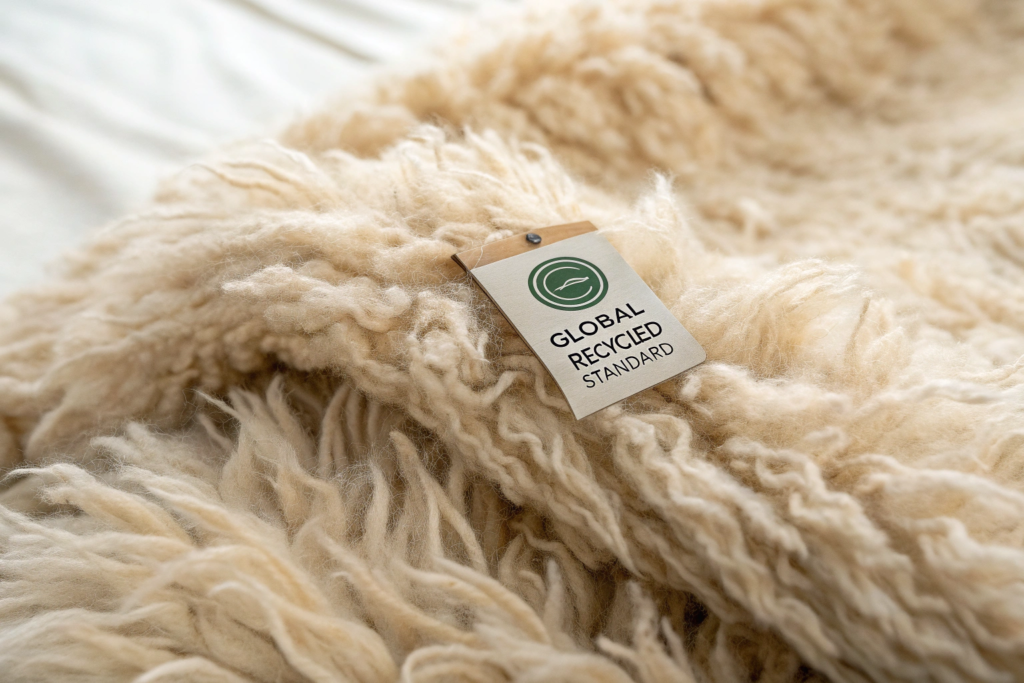
Recycled high-loft performance fleece is a top glove lining material for 2026 because it delivers the proven warmth and comfort of traditional high-loft fleece with a compelling sustainability story that resonates with today’s consumers. The fleece is certified to the Global Recycled Standard, or GRS, which verifies the recycled content and ensures responsible social and environmental practices throughout the supply chain. The fleece uses a siliconized finish, a microscopic coating of silicone on the individual fibers, that significantly reduces the coefficient of friction. A siliconized fleece lining allows the hand to slide easily into the glove, and it reduces the internal friction between the lining and the outer shell when the hand moves. The result is improved dexterity and reduced hand fatigue. The siliconized finish also helps the fleece resist compression. The fibers spring back after being compressed, maintaining the loft and the insulating air pockets. The fleece is available in a range of weights, from a lightweight 100 grams per square meter for use as a secondary lining to a heavy 300 GSM for standalone extreme cold linings. The fleece is also highly breathable, allowing moisture vapor to escape, and it dries quickly if it does get wet. The recycled content is a significant marketing advantage. Consumers are increasingly making purchasing decisions based on the environmental impact of the products they buy. A glove with a GRS-certified recycled fleece lining provides a tangible, verifiable sustainability credential.
The recycled high-loft fleece is not as thermally efficient per millimeter as aerogel, and it does not have the active temperature regulation of PCM. But it is the most cost-effective of the three top materials, it is the most familiar and trusted by consumers, and it offers an unbeatable combination of warmth, softness, and sustainability. Let me detail the two most important performance features.
How Does Siliconized Fleece Improve Glove Dexterity?
Dexterity is the ability to move the fingers freely and precisely. In a thick winter glove, dexterity is severely compromised. The hand is fighting against the bulk of the insulation and the friction between the different layers. The lining is a major contributor to this problem. A standard fleece lining has a relatively high coefficient of friction. The fleece fibers are rough at a microscopic level, and they catch on the outer shell fabric, on the wearer’s skin, and on each other. When the wearer closes their hand, the lining resists the movement. The hand muscles must work harder. Fatigue sets in quickly. Fine motor tasks, operating a zipper, adjusting a buckle, using a touchscreen, become difficult or impossible. A siliconized fleece lining solves this problem. The silicone coating on the fibers makes them smooth and slippery. The coefficient of friction is reduced by 30 to 50 percent compared to an untreated fleece. The hand slides into the glove effortlessly. The fingers move independently without resistance. The lining does not bunch up or pull when the hand opens and closes. The dexterity improvement is immediately noticeable. The wearer can perform tasks that would be impossible with a standard fleece-lined glove of the same warmth rating. The siliconized finish is permanent. It is applied during the fiber manufacturing process and is not a topical treatment that washes off. The silicone is chemically bonded to the polyester fiber. It withstands repeated washing and wear. The siliconized finish also provides a degree of water repellency. The fibers do not absorb moisture, so the lining stays dry and the insulation value is preserved. The combination of low friction and water repellency makes siliconized fleece an ideal lining for extreme cold gloves where dexterity and moisture management are critical.
Can Recycled Fleece Match Virgin Fleece for Warmth and Durability?
Yes, recycled polyester fleece has reached performance parity with virgin polyester fleece. The recycling technology has advanced significantly. Early recycled polyester fibers were shorter and weaker than virgin fibers, resulting in a fleece that was less durable and more prone to pilling and matting. The 2026 generation of recycled fleece is virtually indistinguishable from virgin fleece in terms of warmth, softness, and durability. The key advancement is in the fiber spinning technology. The recycled polyester flakes are purified to a very high level, removing any contaminants that could weaken the fibers. The fibers are spun to the same length, diameter, and crimp as virgin fibers. The resulting fleece has the same loft, the same insulating air pockets, and the same resilience. The fiber strength is equivalent. The fleece withstands the same number of wash cycles without pilling or losing its loft. The thermal resistance of a recycled fleece of a given weight is the same as a virgin fleece of the same weight. Independent laboratory testing has confirmed this equivalence. The durability of the siliconized finish is also the same. The Global Recycled Standard certification provides independent verification of the recycled content and the responsible manufacturing practices. The GRS certification covers the entire supply chain, from the collection of the recycled raw material to the finished fleece fabric. The certificate provides traceability and credibility. A brand using GRS-certified recycled fleece can confidently market the sustainability of their product, knowing that the claims are backed by independent verification. The cost of recycled fleece is now comparable to virgin fleece. In some cases, it is slightly higher due to the processing costs, but the premium is small and is offset by the marketing value of the sustainability story. For consumers who prioritize environmental responsibility, recycled fleece is the preferred choice.
Conclusion
The top three glove lining materials for extreme cold in 2026, aerogel-infused fabric, phase-change material coated knits, and recycled high-loft performance fleece, each represent a different approach to solving the fundamental challenge of keeping hands warm without sacrificing dexterity, comfort, or sustainability. Aerogel offers the ultimate in thin, lightweight insulation, providing the warmth of a thick fleece in a layer that is barely visible. It is the choice for premium gloves where maximum warmth and minimum bulk are the priorities. PCM linings offer intelligent, active temperature regulation, absorbing and releasing heat to maintain a stable microclimate. They are the choice for high-aerobic activities where the wearer generates significant heat and is at risk of sweating. Recycled high-loft fleece offers the proven warmth and comfort of traditional fleece, enhanced with a siliconized finish for superior dexterity, and backed by a credible sustainability certification. It is the versatile, cost-effective choice that appeals to the broadest range of consumers. These three materials are not mutually exclusive. The most advanced 2026 extreme cold gloves combine them. An aerogel insulation layer for baseline warmth. A PCM-coated inner lining for active temperature regulation. The combination of these technologies, selected and configured for the specific end use, creates gloves that are warmer, thinner, drier, and more dexterous than anything that was possible even five years ago.
At AceAccessory, we are actively producing gloves with all three of these lining materials for our brand clients. Our material sourcing team has qualified suppliers for aerogel fabrics, PCM-coated knits, and GRS-certified recycled fleece. Our glove development team understands how to integrate these materials into glove patterns, how to manage the seam construction to avoid thermal bridging, and how to test the finished gloves to verify their thermal performance. We are excited about the possibilities that these new materials open up for glove design, and we are committed to helping our clients bring the best extreme cold gloves to the 2026 market.
If you are developing an extreme cold glove collection for 2026 and you want to explore how aerogel, PCM, or recycled fleece linings can elevate your products, I invite you to contact us. Reach out to our Business Director, Elaine, at elaine@fumaoclothing.com. Tell her about your glove program, the temperatures you are designing for, and the performance characteristics you are targeting. She can provide material samples, discuss integration options, and provide a quotation for production. Let us help you create the gloves that will keep hands warm, dry, and functional in the most extreme cold.