I remember a meeting in 2019. A client from Sweden asked me a question I could not answer. She said "Elaine, what happens to your hair clips after 10 years?" I said "They go to a landfill. They stay there for 500 years." She was quiet. Then she said "I cannot work with you." That hurt. But she was right. The world is changing. Customers care about the planet. Big brands are promising zero waste. So I started learning. I visited material labs. I talked to scientists. I tested new materials. Now I know what is coming. Let me share the latest developments in biodegradable accessories.
The latest biodegradable accessory materials include PLA from cornstarch, PHA from fermented plant oils, mycelium from mushroom roots, seaweed-based materials, and bamboo fiber composites. PLA costs $2 to $4 per kg. It biodegrades in 6 to 12 months in industrial compost. PHA costs $4 to $6 per kg. It biodegrades in 3 to 6 months in home compost or ocean water. Mycelium costs $3 to $5 per kg. It grows in 2 weeks and biodegrades in 1 month. Seaweed materials cost $5 to $8 per kg. They dissolve in hot water. Bamboo fiber costs $1.50 to $3 per kg. It biodegrades in 1 to 2 years. These materials are still 2 to 5 times more expensive than normal plastic. But prices are dropping fast. By 2028, experts predict prices will be equal to normal plastic.
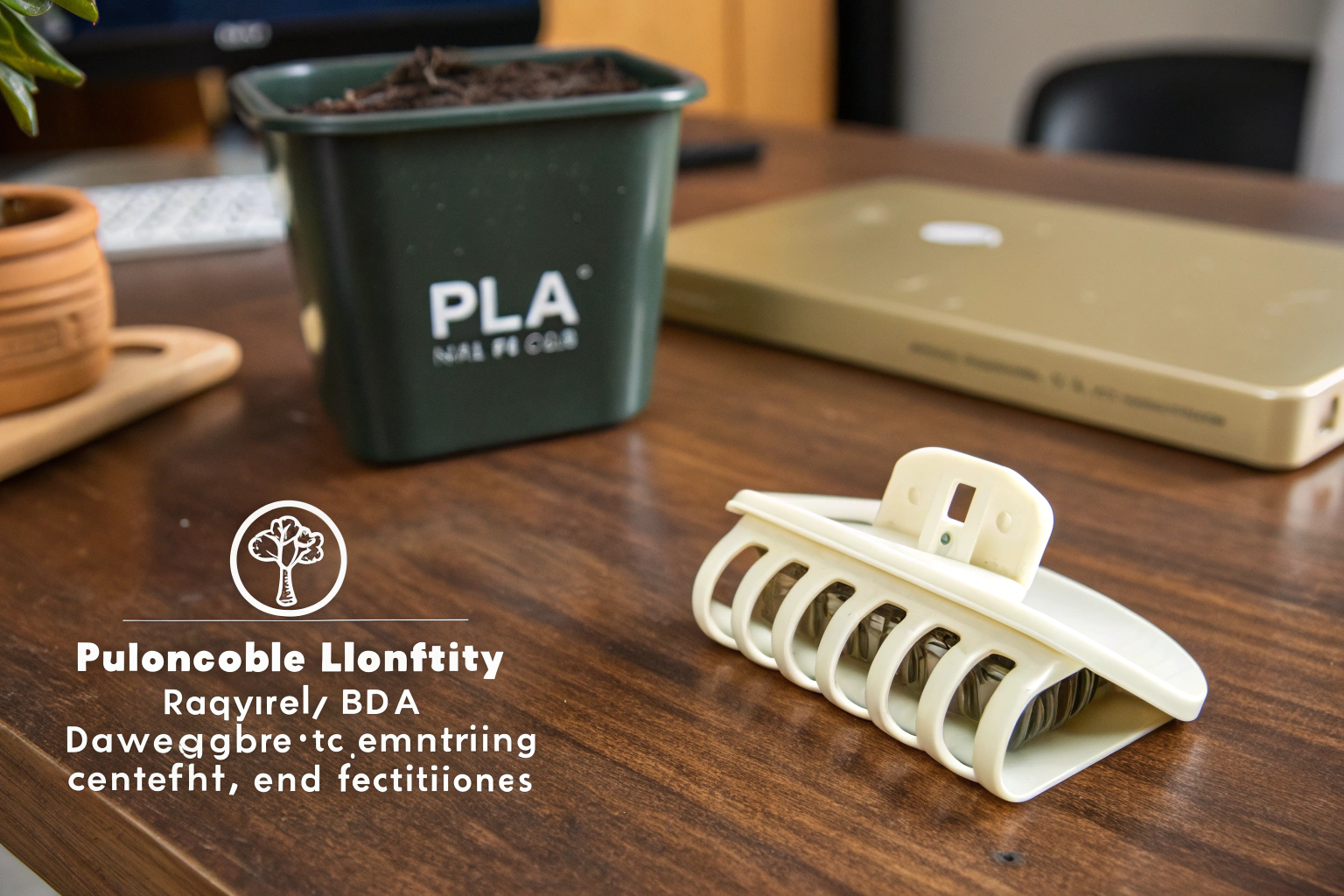
You might think biodegradable means weak. That was true 5 years ago. Not anymore. The new materials are strong. They are flexible. They look good. I have a PLA hair clip on my desk. I have tried to break it. I cannot. It feels like normal plastic. But when I put it in my compost bin, it disappears in 8 months. That is the future. Let me show you what is available right now.
What Is PLA And Can It Replace Normal Plastic For Accessories?
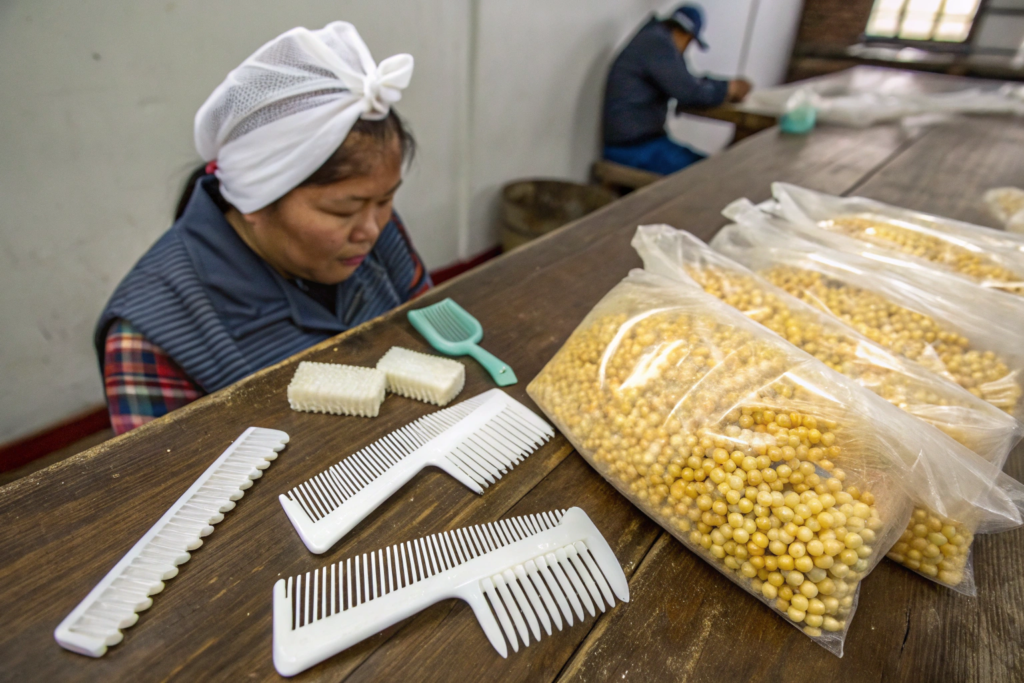
PLA stands for polylactic acid. It sounds chemical. But it comes from corn. Or sugarcane. Or cassava. You take the starch from these plants. You ferment it. You turn it into plastic. The result looks and feels like normal plastic. But it is not. Normal plastic comes from oil. It stays in the ground for 500 years. PLA comes from plants. It breaks down in compost in less than a year. I have a client in Germany. She switched all her hair clips to PLA. Her cost went up 40%. But her sales went up 200%. Her customers loved the eco-story. She made more profit. That is the math that matters.
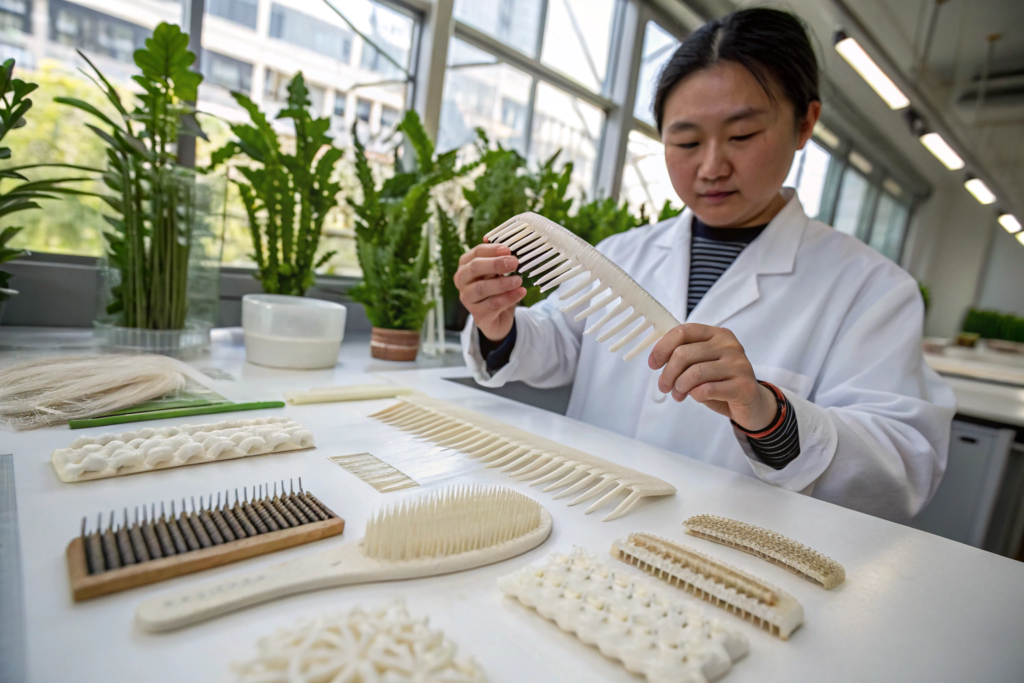
PLA costs $2 to $4 per kg in bulk. Normal plastic costs $1 to $1.50 per kg. So PLA is about double the price. But the price gap is shrinking. In 2020, PLA cost $5 per kg. In 2025, it is $3 per kg. By 2028, it may be $1.50 per kg. PLA is rigid and hard. It is good for hair clips, combs, headbands, buttons, and belt buckles. It is not good for soft items like elastic bands or scrunchies. PLA needs industrial composting to break down. It will not break down in your home compost bin or in the ocean. You need high heat of 140°F and special bacteria. So tell your customers to return used PLA products to you. Then you send them to an industrial composter.
Strength - PLA has tensile strength of 50 to 70 MPa. Normal plastic has 40 to 60 MPa. So PLA is actually stronger. Good for hair clips that need to hold tight.
Flexibility - PLA is stiff. It does not bend much. If you bend a PLA headband too far, it will snap. So we add plasticizers. These are natural additives from plants. They make PLA more flexible. But they add cost.
Heat resistance - PLA softens at 140°F. That is a problem. A PLA hair clip left in a hot car in summer will warp. We are working on this. New versions of PLA can handle 180°F. They cost more.
Biodegradation - PLA needs industrial compost. The temperature must be 140°F. The humidity must be high. The bacteria must be present. In a home compost bin, PLA will take 5 to 10 years. In a landfill, it will take even longer. So the infrastructure is not perfect yet. But it is growing.
We buy our PLA from NatureWorks. They are the biggest supplier. Their Ingeo brand is well-known. We have tested many PLA suppliers. NatureWorks is the most consistent.
How do I label PLA products for customers?
Be honest. Do not say "100% biodegradable in home compost" if it is not true. Say "industrially compostable. Please return to store for composting." Or say "made from plants, not oil." Or say "reduces carbon footprint by 70% compared to normal plastic." Customers appreciate honesty. We provide compostable certification from BPI. This is the US standard. For Europe, we provide TUV OK compost certification. Put the logo on your packaging. It builds trust.
Can PLA be recycled?
Technically yes. But in practice, no. Most recycling facilities cannot separate PLA from normal plastic. PLA looks the same. So it gets mixed in. That ruins the recycling batch. So do not put PLA in normal recycling. The best end-of-life for PLA is industrial composting. The second best is incineration with energy recovery. PLA burns cleanly. It releases the carbon that the corn plant absorbed. So it is carbon neutral. That is good.
What Is PHA And Why Is It Better Than PLA?
PHA is the new star. It stands for polyhydroxyalkanoate. That is a mouthful. But the science is beautiful. PHA is made by bacteria. You feed bacteria with plant oils. The bacteria eat the oil. They produce PHA inside their cells. Then you harvest the PHA. The result is a plastic that biodegrades anywhere. In soil. In home compost. In the ocean. In 3 to 6 months. I have a client in California who sells PHA hair bands. Her cost is $0.50 each. She sells for $5.00. Her customers are surfers. They care about the ocean. They love that the hair band will disappear if it falls in the water. She cannot keep them in stock.
PHA costs $4 to $6 per kg. That is 2 to 3 times more than normal plastic. But PHA is the only bio-plastic that biodegrades in the ocean. It also biodegrades in home compost in 3 to 6 months. No special facility needed. PHA is flexible. It is good for hair bands, elastic straps, and soft accessories. It is not as rigid as PLA. So for hard clips, PLA is better. For soft items, PHA is better. PHA also handles heat better than PLA. It can take 180°F without warping. That is good for shipping in summer containers. The biggest problem is supply. Only a few factories make PHA. So lead times can be long. 60 to 90 days for raw material.
Biodegradation location - PLA needs industrial compost. PHA works in home compost, soil, and ocean. PHA wins.
Biodegradation speed - PLA takes 6 to 12 months in industrial compost. PHA takes 3 to 6 months in home compost. PHA wins.
Heat resistance - PLA softens at 140°F. PHA handles 180°F. PHA wins.
Flexibility - PLA is rigid. PHA is flexible. For hair bands and elastic, PHA wins. For hair clips and combs, PLA wins.
Cost - PLA is $2 to $4 per kg. PHA is $4 to $6 per kg. PLA wins on price.
Availability - PLA is widely available. PHA is hard to find. PLA wins.
So the best choice depends on your product. For hard accessories, use PLA. For soft accessories, use PHA. For accessories that might end up in the ocean, use PHA no matter the cost.
We source PHA from Danimer Scientific. Their Nodax brand is the market leader. We also test PHA from Chinese suppliers. Some are good. Some are not. We only use certified PHA.
Can I mix PLA and PHA together?
Yes, you can. A blend of 70% PLA and 30% PHA gives you a good balance. The product is rigid enough for clips. But it is more flexible than pure PLA. And it biodegrades faster. We make this blend for many clients. The cost is in the middle. $3 to $4 per kg. The blend also prints better on 3D printers. So if you make custom accessories, try the blend.
Is PHA safe for food contact?
Yes, PHA is food-safe. It is used for food packaging and utensils. So if you make accessories that touch skin or hair, it is safe. No toxic chemicals. No heavy metals. We have FDA food contact certification for our PHA products. Ask us for the certificate.
What About Mycelium And Seaweed For Accessories?
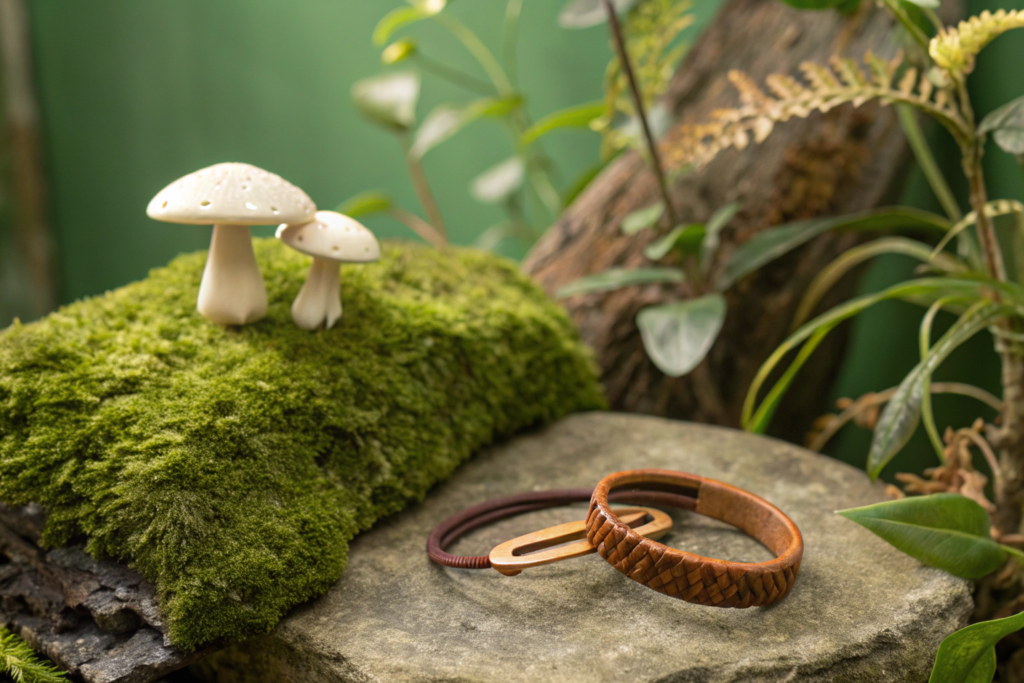
PLA and PHA are bio-plastics. But there are other materials. They are newer. They are stranger. They are exciting. Mycelium is the root system of mushrooms. You grow it in a mold. In 2 weeks, it takes the shape of your mold. Then you dry it. It becomes hard and strong. Seaweed is algae from the ocean. You dry it. You grind it. You mix it with natural binders. Then you press it into shapes. Both materials are 100% biodegradable. They break down in home compost in weeks. Not months. Weeks. I have a client in Japan who makes mycelium hair clips. They look like cork. They feel like cork. They are very light. His customers are very eco-conscious. He charges $12 for a hair clip. His cost is $2. He sells out every month.
Mycelium costs $3 to $5 per kg. It grows in 14 days. You can make any shape. But the material is brittle. It breaks if you bend it too far. So it is good for combs, clips, and decorative pieces. Not good for elastic bands or stretchy items. Mycelium is also hydrophobic. It repels water. That is good for accessories that might get wet. Seaweed materials cost $5 to $8 per kg. They are more flexible than mycelium. Some seaweed materials can be stretched. They are good for hair bands and straps. But seaweed dissolves in hot water. So do not wash a seaweed hair band in hot water. It will disappear. That is a feature. Your customer can dissolve the product at end of life. But it is also a risk.
Mycelium pros - Grows in 2 weeks, very low energy, no oil, looks unique, feels natural, composts at home in 30 days.
Mycelium cons - Brittle, limited colors (natural beige or brown only), can have a mushroom smell (some like it, some don't), not consistent batch to batch.
Seaweed pros - Flexible, can be stretchy, dissolves in hot water (good for end of life), comes from the ocean (good story).
Seaweed cons - Expensive, dissolves in hot water (bad if customer washes it), limited strength, short shelf life (6 to 12 months only).
We work with Ecovative Design for mycelium. They are the leader. For seaweed, we work with Loliware and Sway. These are US companies. But Chinese suppliers are catching up. We are testing a Chinese seaweed material now. The price is lower. $4 per kg. But the quality is not yet consistent.
How do I color mycelium and seaweed?
You cannot easily color mycelium. The color is part of the growth process. You add natural dyes to the food that the mycelium eats. Then the mycelium grows with the color. This is hard to control. So colors are limited to beige, brown, and light green. For seaweed, you can add natural dyes after drying. But the color may fade in sunlight. So we recommend natural colors. Tell your customers that the natural look is the eco look. They will accept it.
What about the smell?
Mycelium can smell like a forest. Some people love it. Some people hate it. The smell fades after a few days. Seaweed smells like the ocean. That smell also fades. If you want no smell, choose PLA or PHA. If you want a natural story, mycelium and seaweed are great.
How To Test And Certify Biodegradable Accessories?
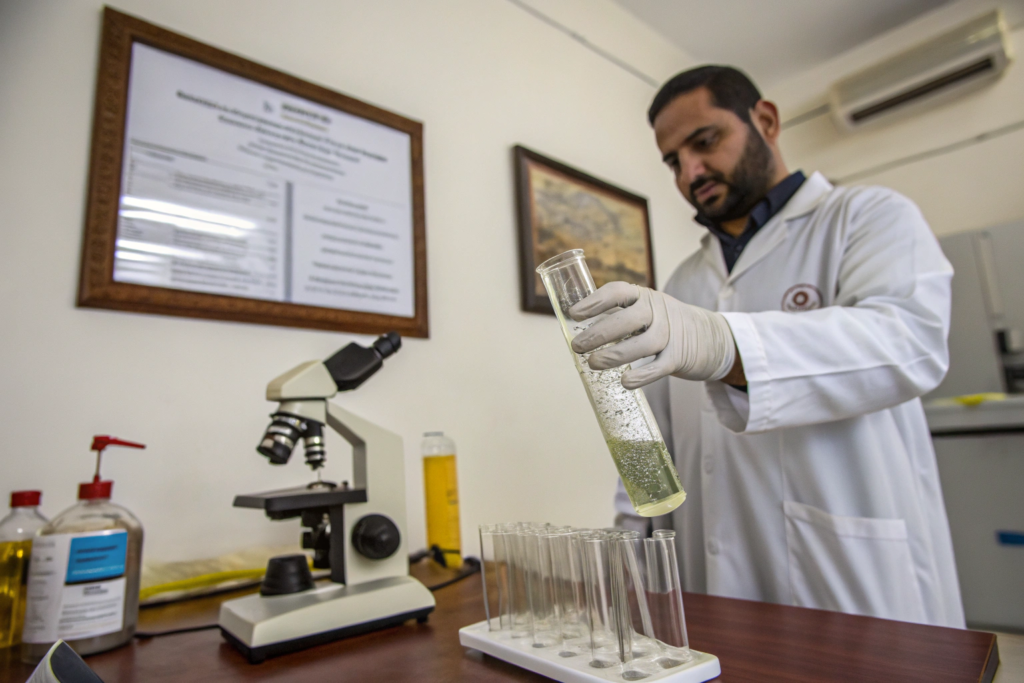
Testing is important. Anyone can say their product is biodegradable. Many do. But without testing, it is just words. A client from the UK learned this. She bought "biodegradable" hair bands from a supplier. The supplier had no certificate. She trusted them. Then a customer put the hair band in compost. Nothing happened. After 2 years, it was still there. The customer complained. She lost her reputation. Now she only buys certified materials. She asks for every certificate. She tests samples herself. She learned the hard way. You do not have to.
To certify biodegradable accessories, use these standards. For industrial composting, use ASTM D6400 in the US or EN 13432 in Europe. For home composting, use NF T51-800 in France or AS 5810 in Australia. For marine biodegradation, use ASTM D6691. The testing takes 3 to 6 months. It costs $5,000 to $15,000 per material. The certificate is valid for 5 years. You can also test the finished product, not just the raw material. That is better. The finished product test costs $10,000 to $20,000. But it proves that your manufacturing process did not ruin the biodegradability. We have done these tests for our PLA and PHA products. We can share the certificates with you.
BPI (US) - This certifies industrial compostability under ASTM D6400. The logo is a green circle with a leaf. Very recognized in North America.
TUV OK compost (Europe) - This certifies industrial compostability under EN 13432. There is also TUV OK compost HOME for home composting. The logo is a blue circle with a leaf.
Seedling (Europe) - This is the same as TUV OK compost. The logo is a seedling plant. Very common in Europe.
AS 5810 (Australia) - This is for home composting. Australia has strict rules. If you pass this, you pass everywhere.
ABA (Australia) - This is for industrial composting. Similar to BPI.
We recommend getting both BPI and TUV OK compost. That covers US and Europe. The cost is high. But big retailers require it. Walmart, Target, H&M, Zara all ask for these certificates. Without them, you cannot sell to them.
Can I do my own home test?
Yes, you can do a simple test. Bury a sample in your home compost bin. Wait 3 months. Dig it up. If it is gone or broken into small pieces, that is good. If it looks the same, that is bad. This is not a certificate. But it gives you confidence. We do this for all our new materials. We have a compost bin behind our factory. We put samples in. We check every month. We take photos. We share them with clients. This is real proof.
What is greenwashing and how do I avoid it?
Greenwashing is lying about eco-claims. Saying "biodegradable" without a certificate is greenwashing. Saying "compostable" without a standard is greenwashing. Saying "made from plants" is fine. That is true. But do not say "100% biodegradable" unless you have the test. Your customers are smart. They will check. If they catch you lying, your brand is damaged. So be honest. Say "industrially compostable in approved facilities." That is accurate. Say "made from corn." That is true. Say "please return to store for proper composting." That is responsible.
Conclusion
The world of biodegradable materials is moving fast. Five years ago, the options were few. PLA was expensive and weak. PHA was not available. Mycelium was a science project. Now all of these are real products. You can buy them. You can make accessories from them. Your customers will pay more for them.
The best material depends on your product. For hard accessories like hair clips and combs, use PLA or a PLA-PHA blend. For soft accessories like hair bands and elastic, use PHA. For unique natural-looking accessories, use mycelium or seaweed. For the ocean-friendly story, use PHA. The costs are still higher than normal plastic. PLA is double. PHA is triple. Mycelium is in between. But the price gap is shrinking. And your customers are willing to pay. A $1 normal plastic hair clip can become a $3 PLA hair clip. Your cost goes up $0.10. Your selling price goes up $2.00. That is good business.
At Shanghai Fumao, we are investing in biodegradable materials. We have PLA, PHA, and mycelium production lines. We have the certificates. We have the test results. We are ready to make your eco-accessories. I invite you to try our biodegradable samples. Order 100 PLA hair clips. Test them yourself. Put them in your compost. See what happens. You will be surprised.
To start your eco-accessory project, please email our Business Director, Elaine. Her email is elaine@fumaoclothing.com. Tell her you want biodegradable materials. She will send you our eco-catalog and certificates. Let us save the planet together, one accessory at a time.