I have been in this industry long enough to know that plastic hair accessories are often underestimated. People think they are simple. They think any factory can make them. And then they learn the hard way that cheap plastic means broken clips, returned orders, and angry customers.
I remember a client who came to us after a disaster. They had ordered 50,000 hair clips from a factory that promised the lowest price. The clips looked fine when they arrived. But after two weeks on the shelf, they started cracking. After a month in customers' hands, the springs failed. The client had to refund hundreds of orders. Their retail partner dropped them. That client is now one of our longest partners. They learned that plastic hair accessories require serious quality control. The materials matter. The molding process matters. The assembly matters.
I am the owner of AceAccessory. Our factory in Zhejiang produces millions of plastic hair accessories every year. We have developed a quality control system that catches problems before they reach you. Let me walk you through the key quality control points you need to know.
Raw Material Selection and Testing
The quality of a plastic hair accessory starts long before it is molded. It starts with the raw material. The type of plastic you choose determines everything: strength, flexibility, durability, and safety.
I have seen factories use recycled plastic to save money. They mix it with virgin material. The client never knows. Then the product fails. The factory blames the material. But the client is left holding the problem.
What Types of Plastic Are Best for Hair Accessories?
Let me give you a practical guide to the plastics we use most often. Each has its place. And each requires different quality controls.
ABS is my most common choice for hair clips and claws. It is strong. It is impact-resistant. It holds color well. It is safe for skin contact. ABS is the workhorse of the industry.
The problem with ABS is that it can be brittle if the formula is wrong. Cheap ABS contains too much filler. It looks like ABS but breaks like cheap plastic. We only use certified ABS from approved suppliers. We test every batch before we use it.
Polycarbonate is another good choice. It is even stronger than ABS. It is more flexible. It is ideal for thin, delicate designs. The downside is that polycarbonate is more expensive. It also requires higher molding temperatures. Polypropylene is the choice for headbands. It is flexible. It returns to its shape after bending. It does not snap easily. Polypropylene is also very safe. It is often used in food containers.
The challenge with polypropylene is that it is harder to mold precisely. It shrinks more than other plastics. We have to adjust our molds specifically for polypropylene to get the right dimensions.
POM, or acetal, is what we use for moving parts. The springs in hair clips are often made from POM. It is self-lubricating. It moves smoothly. It does not wear out quickly. Cheap factories use standard plastic for springs. The springs break after a few uses. We always use dedicated POM for any moving component.
How to Test Plastic Pellets Before Production
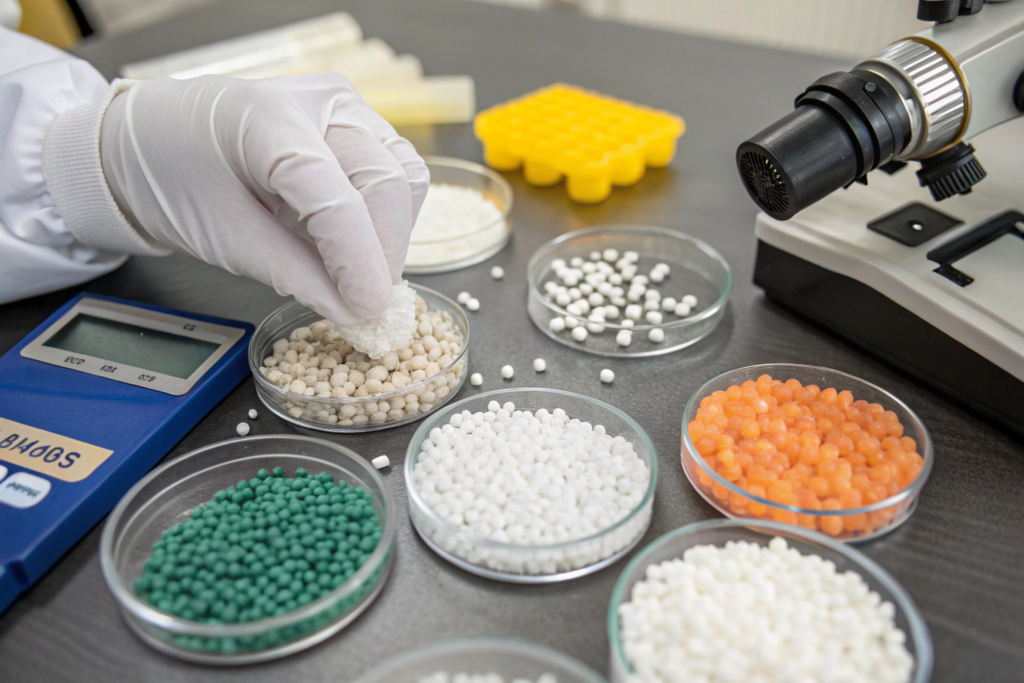
We test every batch of plastic pellets before they go into the molding machine. This is not optional. It is essential.
First, we check the Material Safety Data Sheet. We verify that the material is what the supplier promised. We check the grade. We check the lot number. Second, we test the moisture content. Plastic pellets absorb moisture from the air. If they are too wet when molded, the final product will have bubbles and weak spots. We use a moisture analyzer to check every batch. If the moisture is too high, we dry the pellets before use.
Third, we run a small test mold. We take a small sample from the batch. We mold a few pieces. We test them for strength and appearance. Only when the test pieces pass do we release the batch for full production.
I had a supplier once who tried to send us a batch of ABS that was not the grade we ordered. The test mold showed it. The color was slightly off. The impact strength was lower. We rejected the entire batch. The client never knew there was a problem. That is how quality control should work.
Injection Molding Process Control
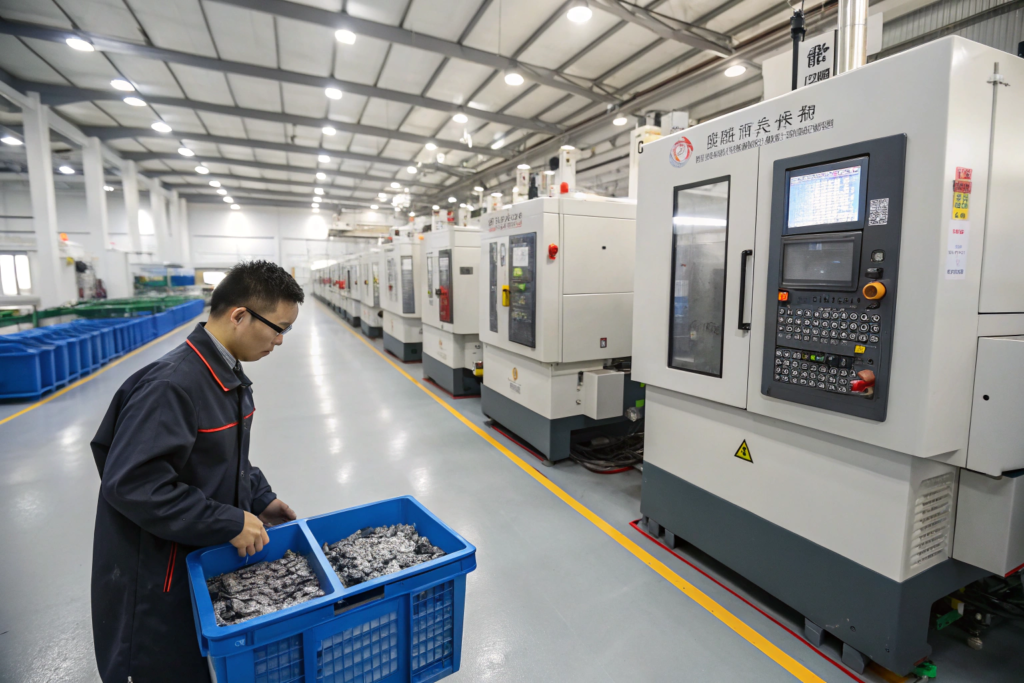
The molding process is where good materials can become bad products. The machine settings matter. The operator skill matters. The cooling time matters.
I have walked into factories where the operator just sets the machine and walks away. They do not monitor the process. They do not adjust for variations. And the quality varies with every shift.
What Are the Critical Parameters to Monitor During Molding?
We monitor four key parameters for every molding run. These numbers are recorded. They are checked against the standard for that product. Temperature is the first parameter. Different plastics require different melt temperatures. Too hot, and the plastic degrades. It becomes brittle. It may release harmful fumes. Too cold, and the plastic does not flow properly. The mold does not fill completely. The product has weak spots.
We set the temperature precisely for each product. We monitor it continuously. If it drifts outside the range, the machine alerts the operator. Pressure is the second parameter. The injection pressure pushes the plastic into the mold. Too little pressure, and the mold does not fill completely. Too much pressure, and the product has flash, which is excess plastic that squeezes out between the mold halves.
We use a digital pressure monitoring system that records the pressure for every shot. We can see if the pressure is consistent across the run.
Cycle time is the third parameter. This is the time from when the mold closes to when it opens. Cycle time includes injection, cooling, and ejection. If the cycle time is too short, the plastic does not cool properly. The product comes out warped. If the cycle time is too long, production slows down. The operator may try to speed it up to meet the quota. That is when quality drops.
Cooling time is the fourth parameter. This is part of the cycle time. Plastic needs time to solidify before the mold opens. If the product is ejected too soon, it will deform. It may stick to the mold. We set the cooling time based on the thickness of the product. A thick hair claw needs more cooling time than a thin hair clip. We do not rush it.
How to Detect and Prevent Common Molding Defects
There are several common defects that happen in molding. A good quality control system catches them before they leave the factory. Short shots happen when the mold does not fill completely. The product has missing sections. This is usually caused by low temperature, low pressure, or insufficient material. We catch these by visual inspection at the machine. Every operator is trained to spot short shots.
Flash is the excess plastic that squeezes out between the mold halves. It looks like a thin fin along the seam. Flash is caused by too much pressure or worn molds. We remove flash by hand. If flash is excessive, we stop the machine and adjust. Sink marks are small depressions on the surface. They happen when the outer surface cools faster than the inner material. The inner material shrinks and pulls the surface inward. Sink marks are usually cosmetic, but they can indicate improper cooling.
Warping is when the product is bent or twisted. It happens when the product cools unevenly. Warping is a serious defect for hair accessories. A warped hair clip will not hold properly. A warped headband will not fit comfortably. We have a warpage inspection station where every product is checked against a flat surface. If it does not lie flat, it is rejected.
Knitting lines are visible lines where the plastic flow meets inside the mold. They are weak points. If a hair clip is going to break, it will break along a knitting line. We inspect for knitting lines visually. If they are visible, we adjust the molding parameters to improve the flow.
Functional Testing for Moving Parts and Springs
This is where many factories cut corners. They make the clip look good. But they do not test how it works. And the customer discovers the problem the first time they use it.
I have seen hair clips that look perfect but will not hold hair. I have seen claws that feel stiff but snap the first time they are opened. I have seen headbands that fit on the display but are too tight for real heads. Functional testing is not optional. It is essential.
How to Test Spring Tension and Cycle Life
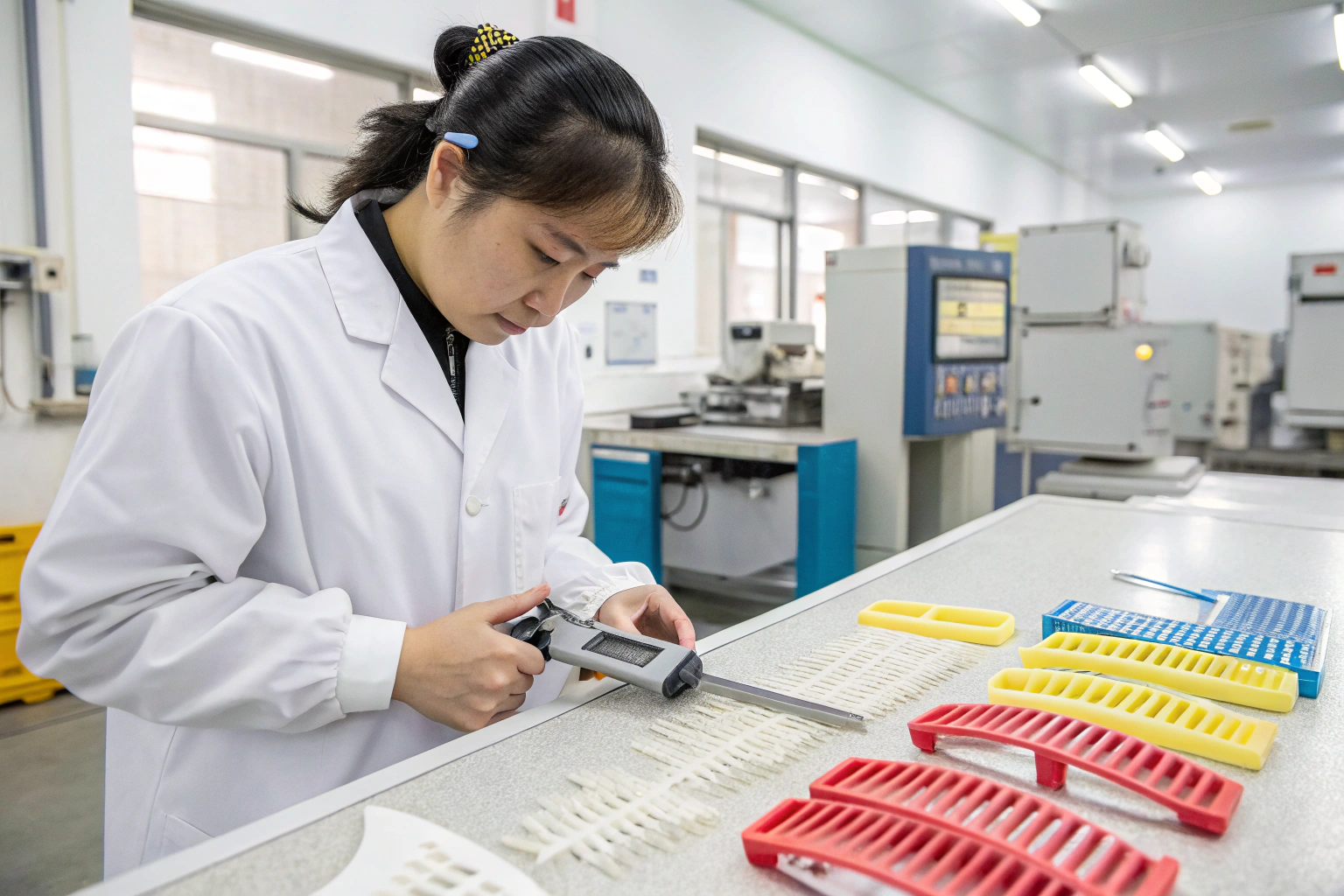
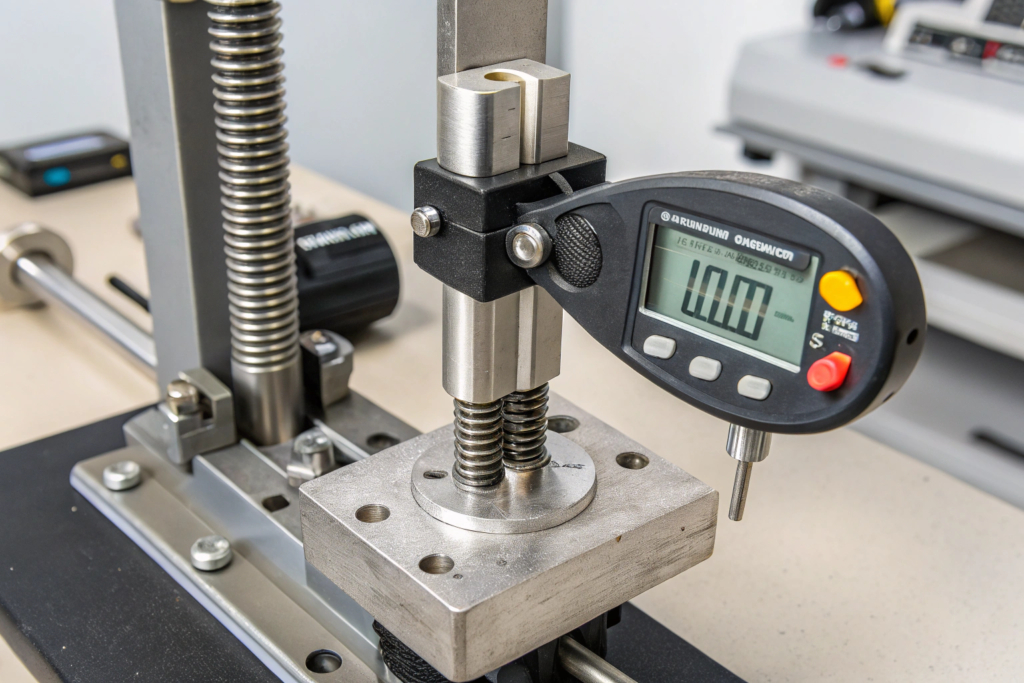
The spring is the heart of a hair clip. If the spring fails, the clip fails. We test every batch of springs before assembly. And we test finished clips after assembly.
For springs, we use a tension gauge. We measure the force required to open the clip. We have a standard range for each product. If the spring is too weak, the clip will not hold. If it is too strong, the clip will be hard to use.
We also test the spring's cycle life. We open and close the clip hundreds of times. We use a mechanical cycle tester that does this automatically. We set it for 500 cycles. That is more than most customers will use in a year.
If the spring loses more than 10% of its tension after 500 cycles, we reject the batch. If the spring breaks, we reject the entire batch and investigate the cause.
I remember a client who had a design with a very small spring. The spring was difficult to source. We found a supplier. We tested the first batch. The springs failed after 200 cycles. We rejected them. We found a different spring supplier. The second batch passed.
The client did not know any of this. They just received clips that worked. That is our job. We catch the failures so they do not have to.
What Is the Proper Way to Test Flexibility and Strength?
For headbands and other flexible products, we test flexibility and strength. We need to know that the product will bend without breaking.
We do a bend test. We take the headband and bend it to a specific angle. We hold it for a few seconds. We release it. It should return to its original shape. If it stays bent, the material is not flexible enough. If it cracks, the material is too brittle.
We also do a snap test for hair clips. We open the clip to the maximum angle. We hold it. We release it. The clip should close smoothly. The hinge should not crack. The spring should not pop out.
For all products, we do a drop test. We drop the product from a standard height onto a hard surface. We check for cracks or breakage. A hair accessory will be dropped. It needs to survive.
We document all these tests. We provide a functional test report to our clients with every order. They can see the test results. They can see that the product works, not just that it looks good.
Visual Inspection and Cosmetic Standards
Visual defects do not affect function. But they affect perception. A customer will not buy a hair clip with a scratch or a color mismatch. They will assume the whole product is poor quality.
I have seen factories that only check function. They ship products with visible defects. The client opens the box and finds scratches, color variations, and mold marks. They have to spend time sorting through the order. They lose money.
How to Set Acceptable Cosmetic Standards
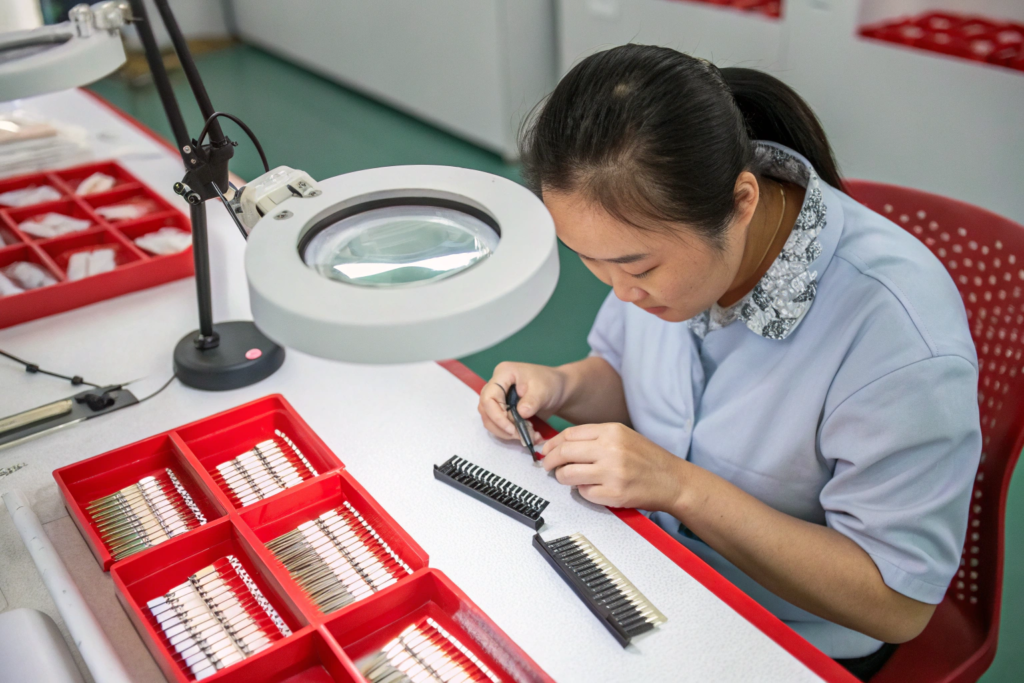
We work with every client to set clear cosmetic standards before production. We do not guess. We agree on what is acceptable and what is not.
We define the acceptable level of scratches. A small tool mark on an internal surface might be acceptable. A visible scratch on the front of the clip is not. We define the acceptable color variation. Plastic can vary slightly between batches. We set a tolerance. We use a color measurement device to ensure the color stays within that tolerance.
We define the acceptable level of flash. A small amount of flash on a non-visible seam might be acceptable if it is removed. Flash on a visible edge is not acceptable. We define the acceptable level of sink marks. A slight mark on a thick section might be unavoidable. A deep sink mark on a visible surface is not.
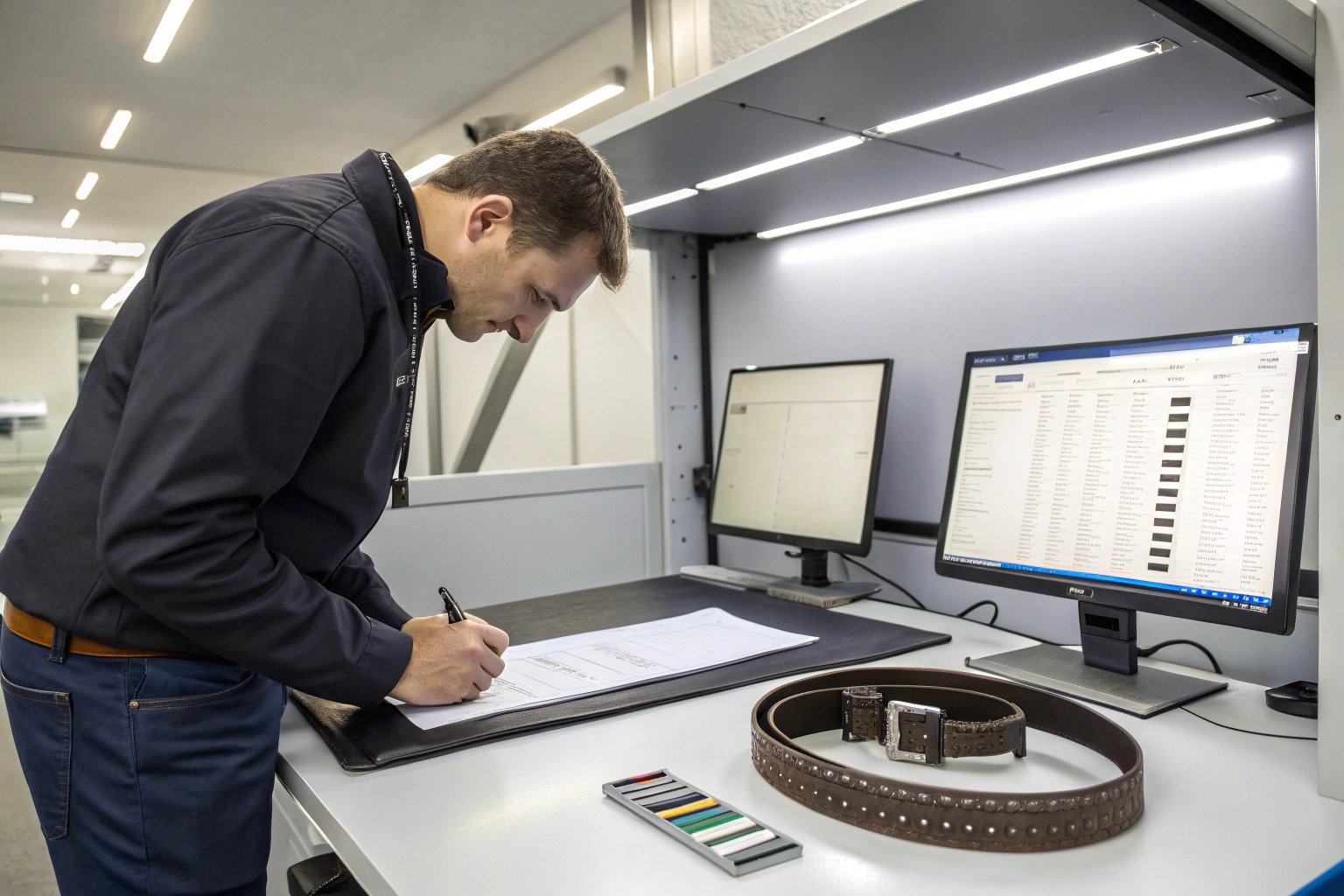
We create a cosmetic standard sample for every product. This is a physical sample that shows the acceptable quality. Our inspectors use it as a reference. They compare every product to the standard.
What Are the Most Common Visual Defects to Look For
Let me list the visual defects we look for in every inspection.
Scratches are the most common. They happen during handling, packing, or from the mold itself. We inspect every surface. If a scratch is visible from a normal viewing distance, we reject it. Color variation is another common issue. The color might be consistent within a batch but different from the standard. We check against the original color sample. We also check for color variation within the same batch. If one clip is noticeably different from the next, we reject.
Mold marks are small imperfections from the molding process. Ejector pin marks are circles where the pins pushed the product out of the mold. Gate marks are where the plastic entered the mold. Some mold marks are unavoidable. We define which are acceptable and which are not. Flow lines are visible patterns where the plastic flowed in the mold. They look like streaks. They do not affect function. But they can be unsightly. We check flow lines against the cosmetic standard.
Splay is a silver streak caused by moisture in the plastic. It looks like a spider web. Splay is always a defect. It means the plastic was not properly dried. We do a 100% visual inspection on all cosmetic products. Every single clip is checked. Rejects are removed. We do not ship visible defects.
Conclusion
Plastic hair accessories seem simple. But they are not. They require careful control at every stage. The material must be right. The molding must be precise. The functional parts must work. The appearance must meet your standards.
I have built AceAccessory around these quality control principles. We test our raw materials before we use them. We monitor our molding machines continuously. We test every functional product. And we inspect every cosmetic product. This system takes work. It takes investment in equipment and training. But it saves my clients from the cost of returns, the damage to their reputation, and the loss of customer trust.
I have seen what happens when these controls are missing. I have helped clients recover from disasters caused by factories that cut corners. And I have built long-term partnerships with clients who value reliability over the lowest price. If you are sourcing plastic hair accessories, I encourage you to ask your supplier about their quality control. Ask them how they test their raw materials. Ask them what parameters they monitor during molding. Ask them how they test springs and moving parts. Ask them about their cosmetic standards.
A good factory will have clear answers. They will be proud to show you their process. They will welcome your questions. At AceAccessory, we are proud of our quality control system. We invite you to see it for yourself. Contact our Business Director, Elaine. She will walk you through our process and answer all your questions. Her email is: elaine@fumaoclothing.com.