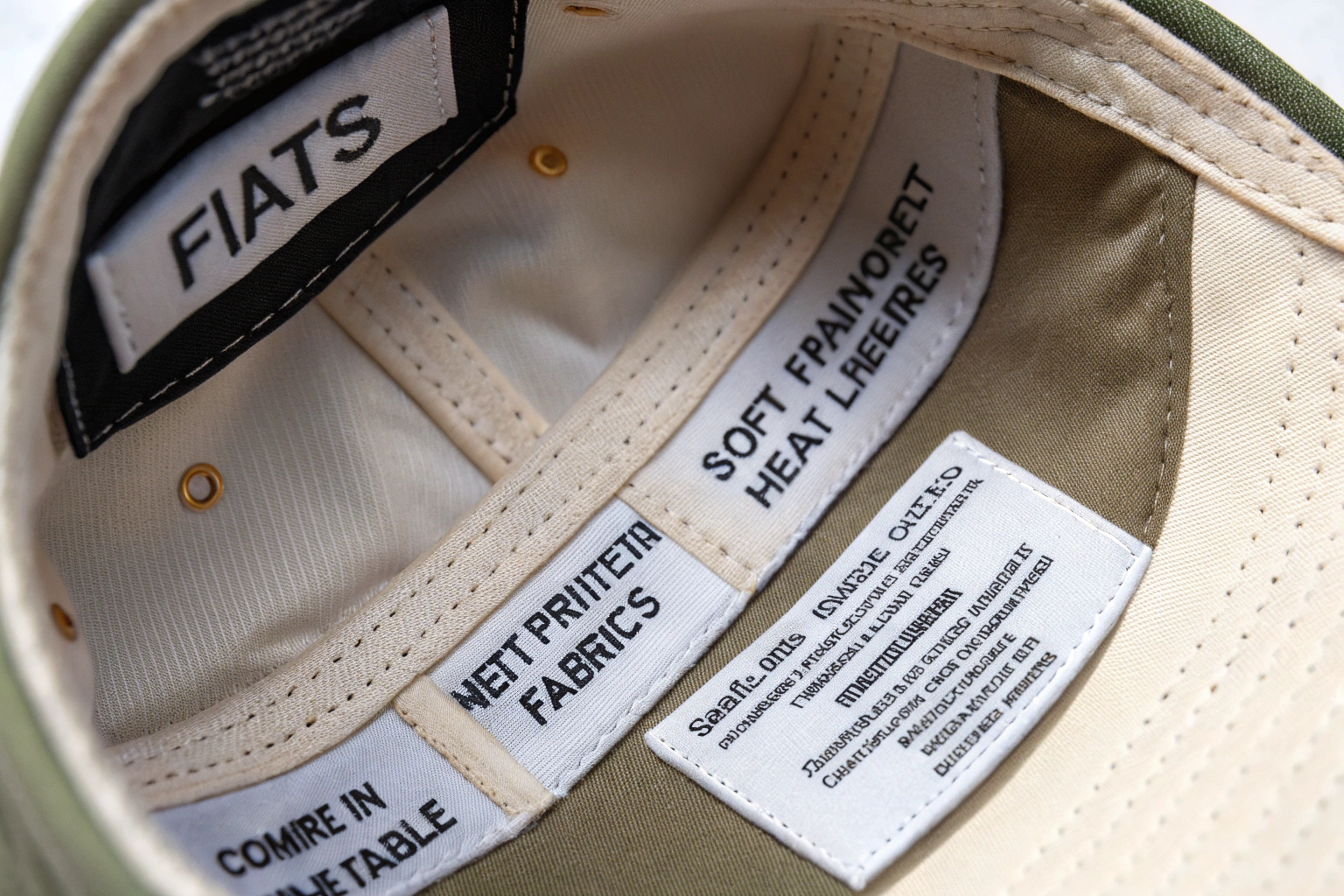
I’ve been in the hat business for decades, and I can tell you that one of the most common, yet often overlooked, sources of customer dissatisfaction is an irritating tag. You can have the most beautifully designed, perfectly fitting hat in the world, but if that little label inside is scratchy, stiff, or itchy, it can ruin the entire experience for the wearer.
For a long time, tags were seen as a necessary evil—a purely functional item that had to be there for branding and care instructions. But in today’s market, where comfort is king, that’s no longer acceptable. The tag is part of the product, and it needs to be as comfortable and well-designed as the hat itself.
Buyers like Ron, who are sourcing for brands that care about every detail, are increasingly focused on this issue. They want tags that are soft, non-irritating, and that enhance, rather than detract from, the wearing experience. At Shanghai Fumao Clothing, we take this very seriously. We offer a range of tag options and work with our clients to choose the best one for their hats. In this post, I’ll share the best materials and methods for non-irritating tags and labels inside hats.
Why Is Tag Comfort So Important For Hats?
Before we dive into the materials, it’s important to understand why tag comfort is so critical, especially for hats. Unlike a shirt or a pair of pants, a hat is in constant, direct contact with one of the most sensitive areas of the body: the forehead and temples. Any irritation here is immediately noticeable and can quickly become unbearable.
A scratchy tag can cause itching, redness, and discomfort, making the wearer want to take the hat off. This is the last thing you want. A comfortable tag, on the other hand, is one that the wearer never even thinks about. It’s there, doing its job, but it’s completely unobtrusive.
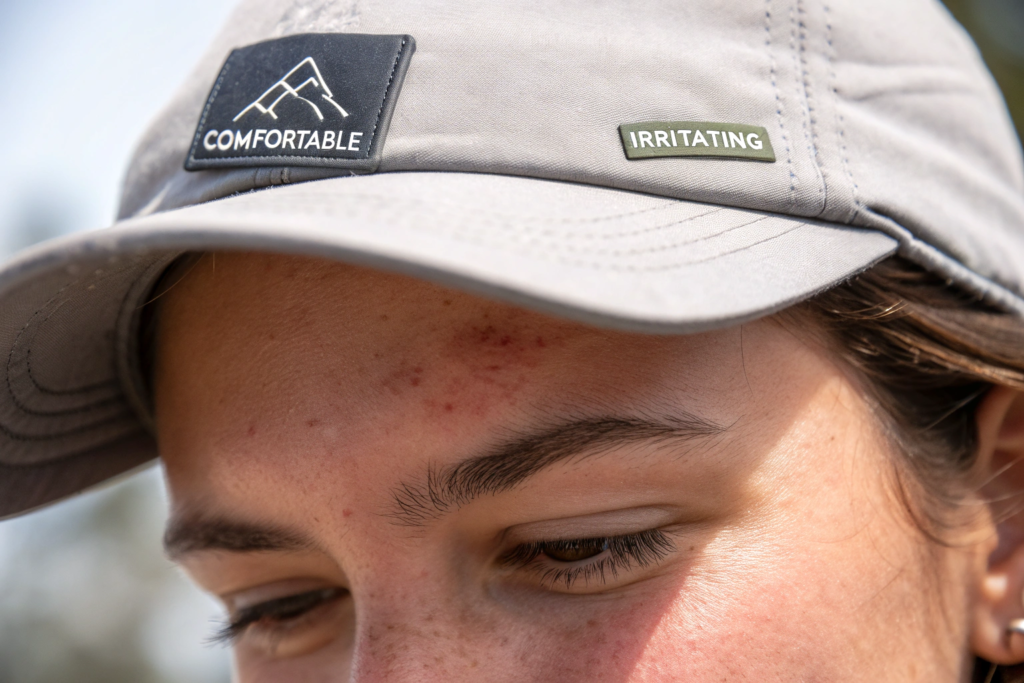
How does an irritating tag affect the customer experience?
- Immediate Discomfort: The first time a customer puts on the hat, they will feel the tag. If it’s scratchy, that negative sensation will be their first impression of the product.
- Ongoing Irritation: Every time they wear the hat, they’ll be reminded of that discomfort. It can become a constant, low-level annoyance.
- Negative Association: Over time, the irritation can create a negative association with your brand. The customer may start to resent the hat, even if they love the look.
- Returns and Complaints: A truly irritating tag can lead to returns, negative reviews, and customer service complaints. All of this costs you time and money.
- Missed Opportunity for Branding: A comfortable tag that the wearer never thinks about is a missed opportunity? No, it’s actually a success. It means the branding is there without any negative association. The customer feels good about the product and, by extension, your brand.
A comfortable tag is a small detail that has a huge impact on customer satisfaction.
What are the common problems with traditional tags?
Traditional tags, often made from stiff paper or coarse synthetic materials, are the main culprits. Common problems include:
- Scratchy Material: The material itself is rough and abrasive against the skin.
- Sharp Edges: Tags that are cut with sharp, unfinished edges can dig into the skin.
- Stiffness: A stiff tag that doesn’t flex with the hat can create pressure points.
- Bulky Seams: The way the tag is attached, with bulky stitching, can also cause irritation.
- Plastic or Paper Backings: Some tags have a stiff plastic or paper backing that is particularly uncomfortable.
Understanding these problems is the first step in choosing a better solution.
What Are The Best Soft Fabric Tag Options?
The best way to avoid irritation is to use a tag made from a soft, flexible fabric. These tags are designed to be comfortable against the skin and to move with the hat. They are the go-to choice for premium, comfort-focused brands.
At our factory, we offer a wide range of soft fabric tag options. The choice depends on the desired look, the quantity, and the budget.
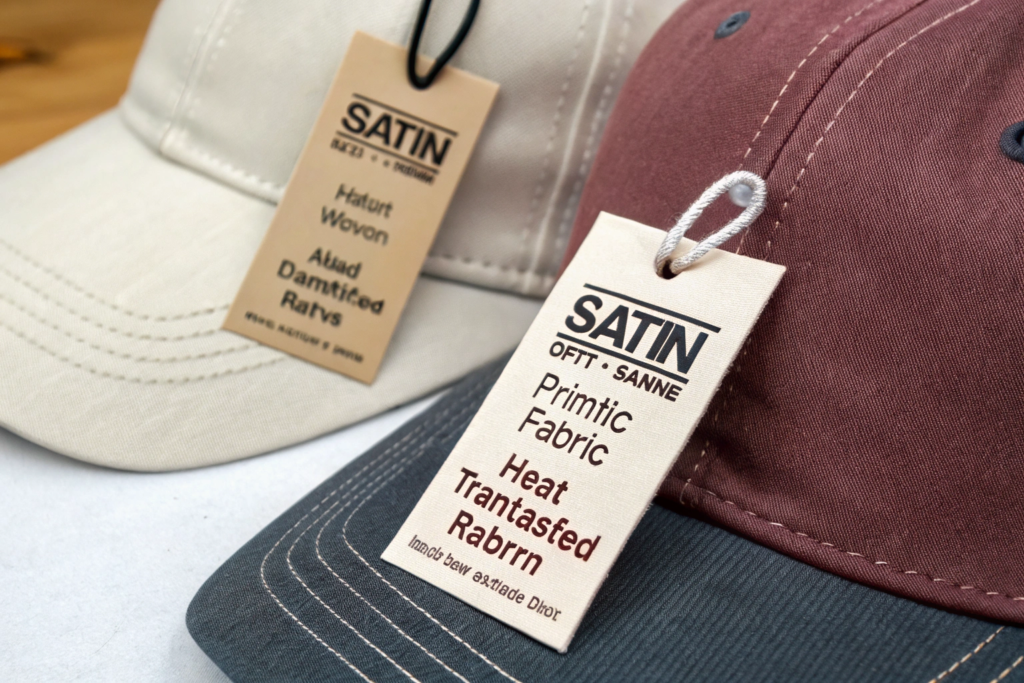
What are satin-woven labels?
Satin-woven labels are a classic and very popular choice for high-quality hats. They are woven from fine threads (usually polyester or rayon) on a special loom, creating a soft, smooth, and slightly glossy label. The design is woven into the label, not printed on it, which gives it a very durable, premium look and feel.
- Comfort: The satin weave creates a very smooth, soft surface that is comfortable against the skin. The edges can be made with a "folded" or "merrowed" finish to prevent any sharpness.
- Durability: Woven labels are incredibly durable. The design is part of the fabric, so it won’t fade, peel, or wash off.
- Appearance: They have a beautiful, high-end look. The detail is sharp and clear.
- Attachment: They are typically folded over and sewn into a seam, so the attachment itself is comfortable and unobtrusive.
A satin-woven label is a mark of quality and a great choice for a comfortable, long-lasting tag. A hat with a satin-woven label feels instantly more premium.
What are printed fabric labels?
Printed fabric labels are another excellent option. They are made from a soft, often satin-like fabric, and the design is printed directly onto it. This allows for more design flexibility, including gradients, photographs, and very fine details that are difficult to achieve with weaving.
- Comfort: The base fabric is soft and comfortable. The printing process does not add any stiffness.
- Design Flexibility: You can print any design, in any color, with incredible detail. This is great for complex logos or designs with many colors.
- Cost: For smaller quantities or designs with many colors, printed labels can be more cost-effective than woven labels.
- Durability: High-quality printed labels are durable, but the print may eventually fade over many, many washes, unlike a woven label.
Printed fabric labels are a great choice for designs that require photographic detail or for smaller production runs.
What About Care Instructions And Size Labels?
In addition to the main brand label, hats often need other tags for care instructions, fiber content, and size. These can also be sources of irritation if not handled carefully. The good news is that there are comfortable ways to include all this necessary information.
At our factory, we work with our clients to find the best solution for including all required information without sacrificing comfort.
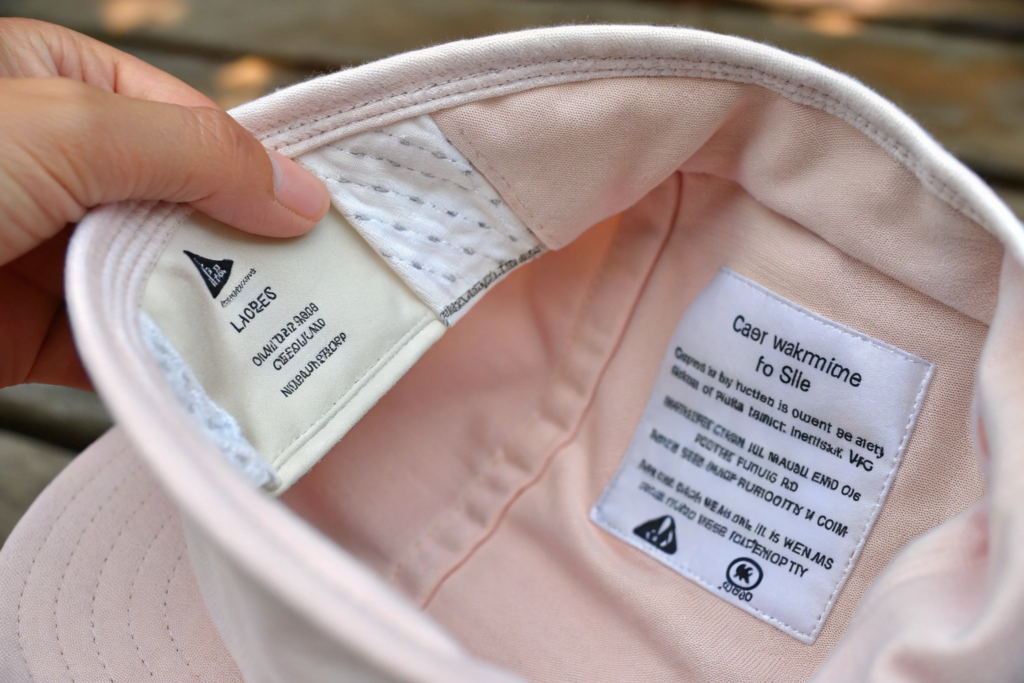
How can care instructions be included without causing irritation?
- Printing Directly on the Fabric: The most comfortable option is to print the care instructions directly onto the inner fabric of the hat, often on the sweatband or the lining. This is completely non-irritating.
- Small, Soft Fabric Tags: A very small, soft fabric tag (like a mini satin-woven or printed label) can be sewn discreetly into a seam, such as inside the sweatband. Its small size and soft material make it unobtrusive.
- Heat-Transferred Care Label: Care information can also be heat-transferred directly onto the fabric, just like a brand label. This creates a completely smooth, tagless solution.
- Hang Tags: For some items, care instructions can be provided on a removable hang tag. This is the least permanent solution, but it means the customer has to keep the tag for future reference.
The key is to avoid large, stiff, paper-like tags.
What are the best options for size labels?
Size information is essential, especially for fitted hats. Again, comfort is key.
- Printed on Sweatband: The size can be printed directly onto the inner sweatband. This is very discreet and comfortable.
- Small, Soft Fabric Tag: A tiny, soft fabric tag with just the size can be sewn into a seam.
- Embossed or Debossed: For leather sweatbands, the size can be embossed or debossed directly into the leather. This is a very elegant, comfortable solution.
By using these comfortable methods, you can provide all the necessary information without any of the irritation.
How Do You Ensure The Tags Are Comfortable In Production?
Choosing the right tag material is only half the battle. How the tag is attached and finished is equally important. A poorly attached tag can be just as irritating as a scratchy one. Attention to detail in production is essential.
At our factory, we have trained our team to handle tags with care. We know that a tag that is sewn crookedly, with loose threads, or with too much tension can ruin the comfort.
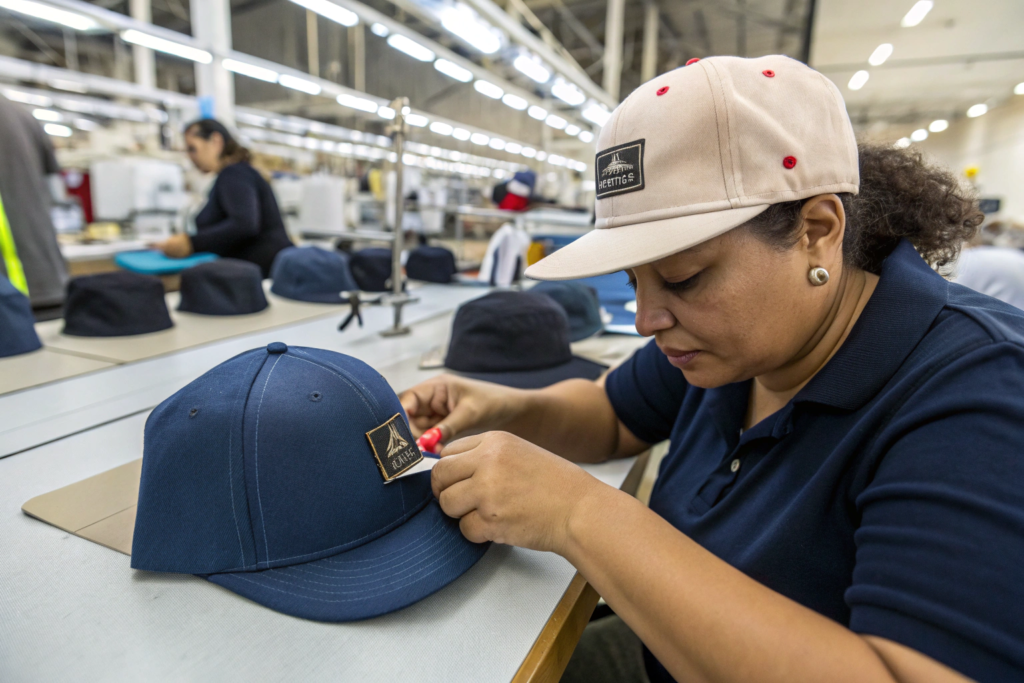
How should soft fabric tags be attached for maximum comfort?
- Fold and Tuck: The most common method for satin-woven and printed fabric tags is to fold them in half and sew the folded edge into a seam. This ensures that the raw edges are hidden and nothing sticks out.
- Flat Sewing: If the tag is sewn flat onto the fabric, it must be done with very even, precise stitching. The tag should lie completely flat, with no puckering or bunching.
- Correct Placement: The tag should be placed where it will cause the least irritation. Often, this is inside a seam, along the sweatband, or on a part of the hat that doesn’t make direct contact with the skin.
- No Loose Threads: Any loose threads from the tag attachment must be trimmed completely. A single loose thread can be a source of significant irritation.
Meticulous attention to these details makes all the difference.
How do you inspect tags for quality and comfort?
Quality control for tags includes both a visual inspection and a tactile one.
- Visual Inspection: Inspectors check that the tag is correctly positioned, sewn straight, and free of any loose threads or fraying.
- Tactile Inspection: Inspectors run their fingers over the tag to feel for any rough edges, stiffness, or unevenness. This is the most important test for comfort.
- Attachment Check: They gently tug on the tag to ensure it is securely attached and won’t come loose.
- Sample Wear Testing: We also do wear tests, having people wear the hats to ensure that no irritation is felt over time.
This rigorous process ensures that every hat that leaves our factory has a tag that is as comfortable as it is informative.
Conclusion
The tag inside a hat may seem like a small detail, but it has a huge impact on the customer’s comfort and their perception of your brand. A scratchy, irritating tag can ruin an otherwise perfect product. The best materials for non-irritating tags are soft, flexible fabrics like satin-woven labels, printed fabric labels, and ultra-smooth heat-transferred or silicone labels. Care instructions and size information can be handled just as comfortably by printing directly on the fabric or using small, discreet tags. And finally, meticulous attention to how the tags are attached and finished is essential for ensuring they remain comfortable for the life of the hat.
At Shanghai Fumao Clothing, we understand that every detail matters. We offer a full range of comfortable tag options for our hats, from premium satin-woven labels to innovative heat-transferred tags. We train our production team to attach them with care, and our quality control process includes a tactile inspection to ensure they are completely non-irritating. We can help you choose the perfect tagging solution for your hats, ensuring they are as comfortable as they are stylish.
If you’re ready to create hats with the perfect, non-irritating finishing touch, let’s talk. Please contact our Business Director, Elaine, at elaine@fumaoclothing.com. We’ll help you create hats that your customers will love to wear.