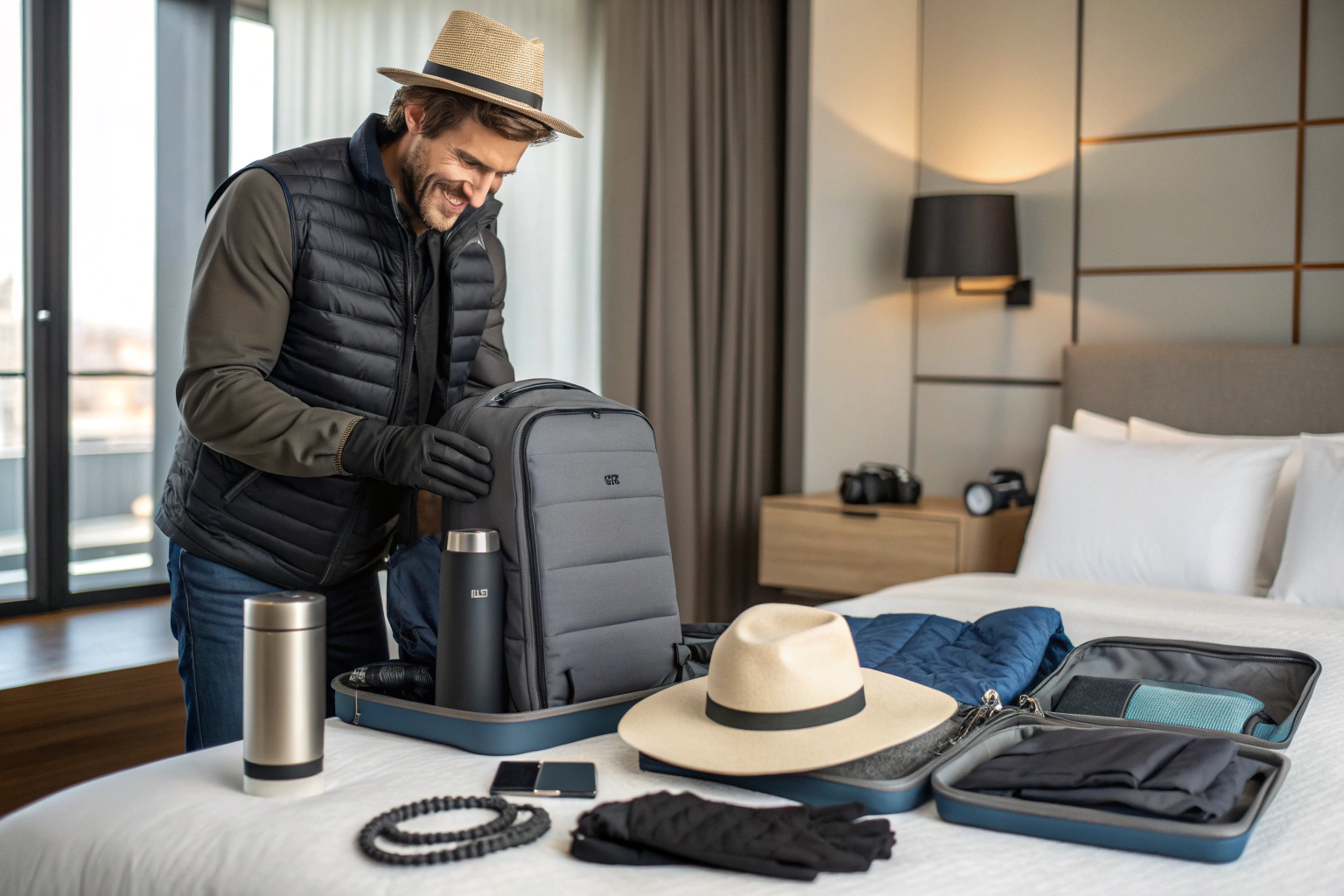
As an experienced accessory manufacturer, I've seen countless travel products fail on the road due to poor material choices. The wrong fabric or component can turn a handy item into a heavy, bulky, or quickly worn-out burden. Today's travelers, whether they're digital nomads or weekend adventurers, demand gear that is ultra-lightweight, durable, and versatile. This creates a unique challenge for brands and importers: finding the perfect balance between performance and practicality.
The best materials for lightweight travel accessories are advanced technical synthetics like ripstop nylon, Cordura, and recycled polyester blends for bags and organizers; silicone, polycarbonate, and anodized aluminum for hard goods like cups and toiletry bottles; and innovative knits like Merino wool and Tencel lyocell for scarves, hats, and gloves. These materials combine minimal weight with maximum strength, packability, and quick-drying, odor-resistant properties. Crucially, the "best" material is not a single answer but a tailored solution based on the accessory's specific function, your brand's aesthetic, and a realistic cost-to-value ratio for your target market.
Let's explore the leading material categories, their ideal applications, and how partnering with a knowledgeable manufacturer can help you select the optimal combination for your product line.
Why Are Technical Synthetics Dominating Travel Bags and Organizers?
For any item that needs to carry weight and withstand abrasion—like backpacks, packing cubes, toiletry bags, and cable organizers—technical synthetic fabrics are the undisputed champions. Their engineered properties solve the core dilemmas of travel gear: how to be both incredibly light and incredibly tough.
The dominance comes down to an unmatched strength-to-weight ratio and functional versatility. Ripstop nylon, with its grid-like reinforcement threads, is a prime example. It prevents small tears from spreading, making it ideal for lightweight packable daypacks that might snag. For high-wear areas like bag bottoms, we often integrate panels of Cordura, a legendary fabric known for its exceptional abrasion resistance. The real innovation, however, is in coatings and laminations. A high-quality polyurethane (PU) or thermoplastic polyurethane (TPU) coating adds water resistance, while still allowing the fabric to remain supple and packable. For brands focused on sustainability, recycled polyester (rPET) woven from post-consumer plastic bottles now performs nearly identically to virgin synthetics, offering a compelling eco-story. Organizations like the Textile Exchange provide valuable standards and data on sustainable material adoption. When you work with a manufacturer like Shanghai Fumao Clothing, our design team can guide you through these options, balancing durability, weight, cost, and finish to match your exact product vision.

How Do You Choose Between Ripstop, Cordura, and Ballistic Nylon?
Choosing the right technical fabric is about matching the threat to the product zone. We use a zoning strategy: Ripstop nylon is perfect for the main body of a packable tote or a stuff sack where the priority is overall low weight and tear resistance. Cordura, often in 300D to 1000D denier, is reserved for high-abrasion zones like backpack bottoms, straps, and luggage corners. Ballistic nylon, with its thick, interwoven texture, offers supreme puncture resistance but at a significant weight penalty; it's best for high-security laptop sleeves or extreme-duty gear. Asking your manufacturer for fabric swatches and weight specs (in grams per square meter or ounces per square yard) is crucial for informed comparison.
What Makes a Fabric Truly "Packable" and Water-Resistant?
"Packability" is a function of fabric thinness, flexibility, and memory. Thin, non-coated fabrics pack smallest but offer no protection. The magic is in durable water repellent (DWR) finishes and laminated membranes. A good DWR finish causes water to bead up and roll off the fabric surface, protecting against light rain. For heavier downpours, a fabric laminated with a membrane like Gore-Tex (though heavier) or a similar proprietary PU laminate provides a waterproof barrier. For most travel accessories, a robust DWR treatment on a lightweight fabric provides the best balance of packability and practical weather resistance. Always request a hydrostatic head rating (e.g., 1000mm, 5000mm) from your supplier to quantify water resistance.
How Are Innovations in Knits and Weaves Revolutionizing Travel Apparel Accessories?
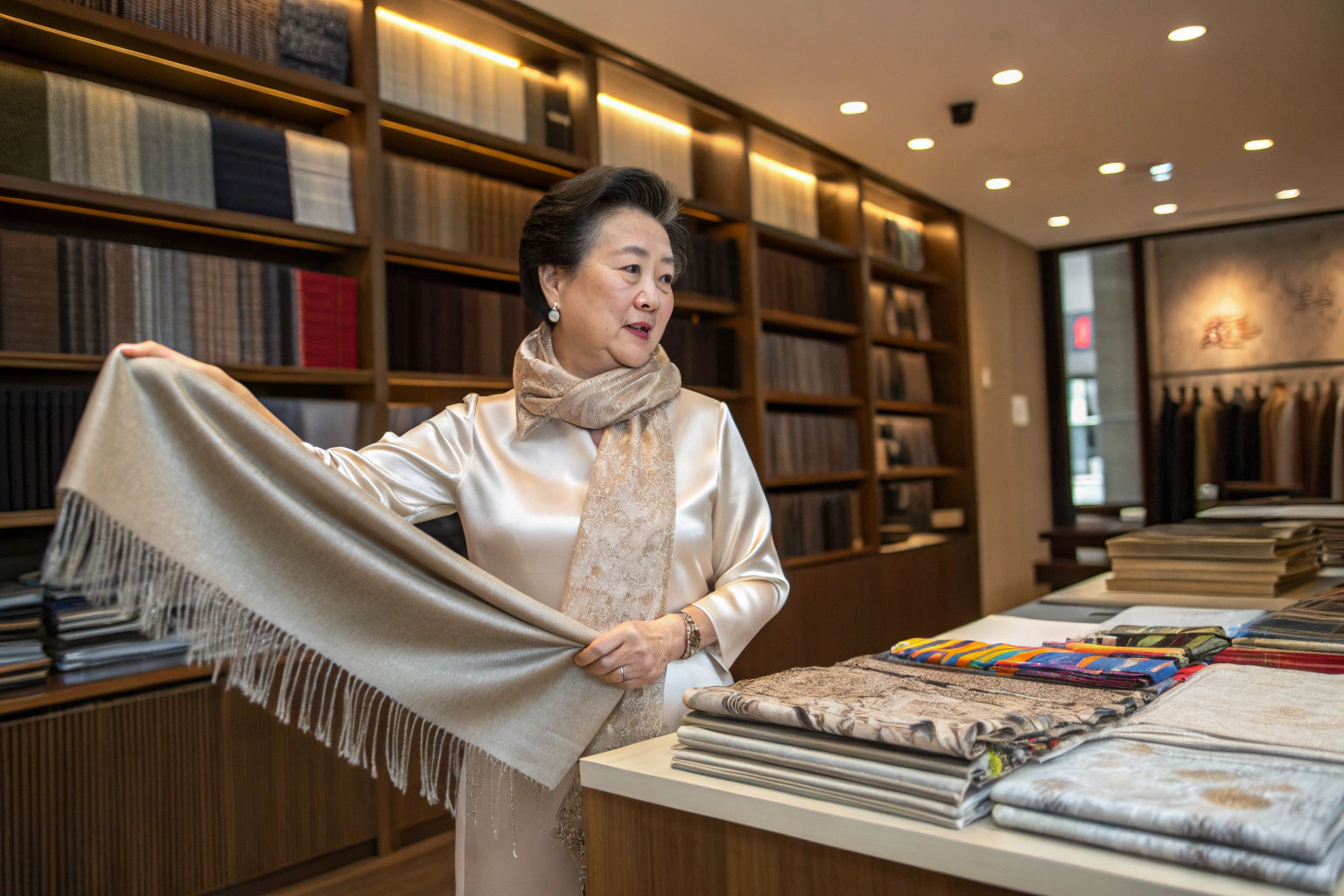
Scarves, hats, gloves, and lightweight shawls are no longer just fashion items; they are modular pieces of a travel wardrobe. The materials for these items must regulate temperature, manage moisture, resist odors, and pack into a tiny space. This has propelled performance knits to the forefront.
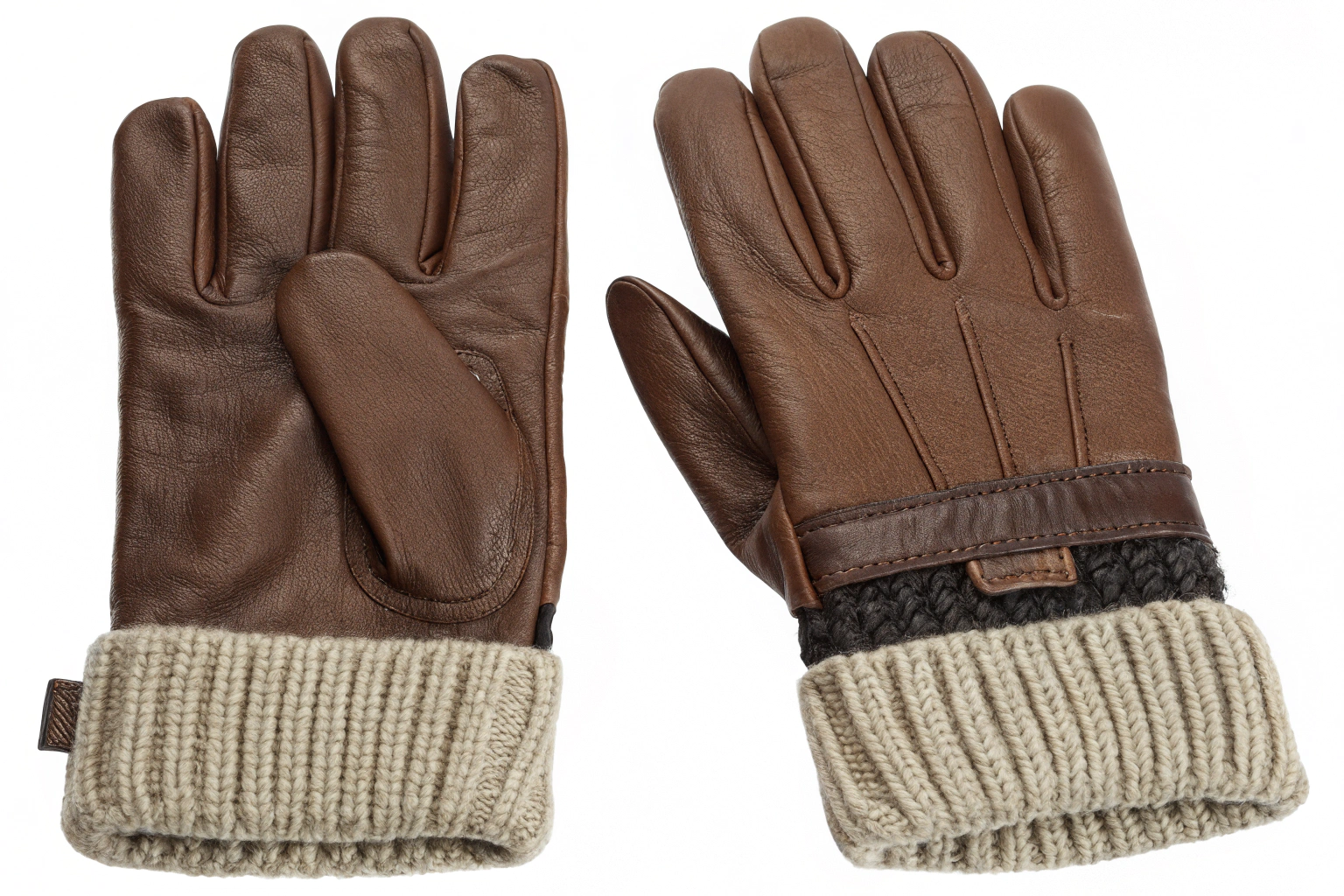
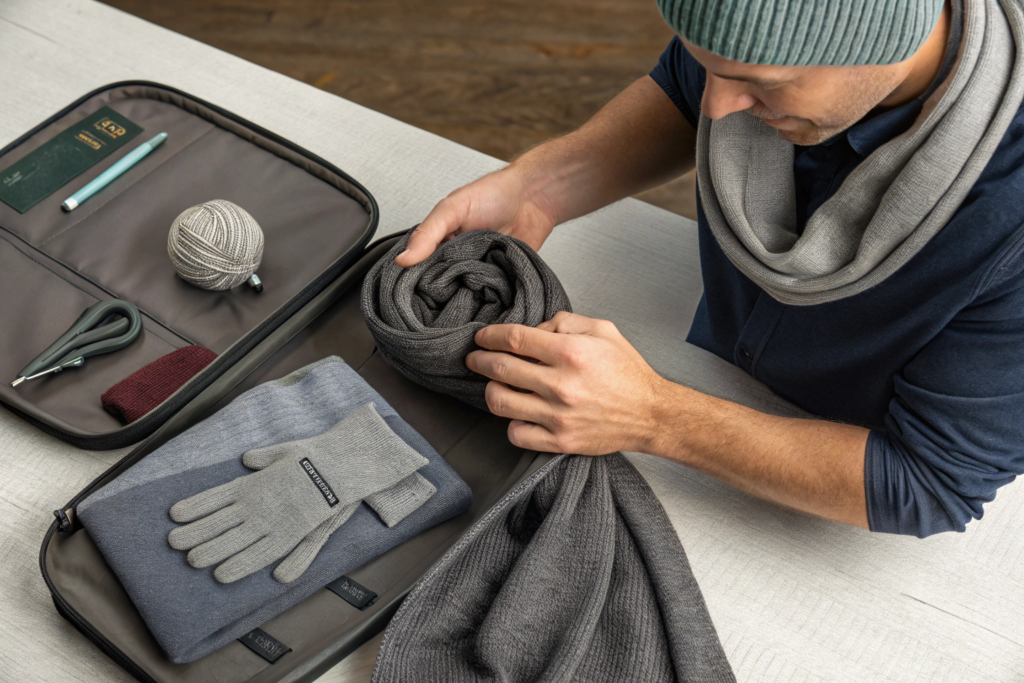
The revolution is driven by natural-technical blends and advanced cellulosic fibers. Merino wool is a superstar for its natural odor resistance, temperature regulation, and softness. However, pure Merino can be delicate. Blending it with a small percentage of nylon (e.g., 80% Merino / 20% Nylon) dramatically increases durability for travel gloves or socks without sacrificing its core benefits. For warmer climates, Tencel lyocell, made from sustainably sourced wood pulp, is exceptional. It’s incredibly soft, highly absorbent, and has a beautiful drape, making it perfect for a lightweight scarf or a breathable beanie. Furthermore, innovative warp-knit constructions create fabrics that are four-way stretch, lightweight, and virtually run-proof, ideal for active travel headbands or seamless gloves. The OEKO-TEX Standard 100 certification is a key benchmark to ensure these textiles are free from harmful substances, a major concern for importers. By leveraging our in-house design team's expertise in fabric sourcing, we help clients navigate this complex landscape to find the perfect knit for their brand and price point.
Is Merino Wool Worth the Investment for Travel Accessories?
For the discerning traveler, absolutely. Its natural ability to resist odors for multiple wears means a traveler can pack fewer items. A single Merino blend beanie can serve as a warm layer on a cold plane, a sun shield during a hike, and still smell fresh. The investment is in higher material cost and more careful washing instructions. For brands, it elevates product positioning. The key is to use it strategically—in items where its core benefits are most valued, like socks, glove liners, and neck gaiters—and blend it for durability.
What Are the Best Blends for All-Season Versatility?
All-season versatility requires a fabric that wicks moisture, provides light insulation, and dries quickly. A tri-blend has become a gold standard: Merino Wool (for odor control and warmth), Recycled Polyester (for strength and quick drying), and Elastane (for stretch and recovery). This blend creates a fabric that performs in a wide range of conditions, from a chilly morning to an afternoon hike. For purely warm-weather accessories, a blend of Tencel and Linen offers supreme breathability, a crisp feel, and a sophisticated, rumpled aesthetic that suits travel.
What Materials Are Best for Durable Yet Lightweight Hard Goods?
Travel isn't just about soft goods. Accessories like collapsible cups, travel cutlery, umbrella frames, and hat brims need structural integrity without weight. The material science here focuses on polymers and treated metals.
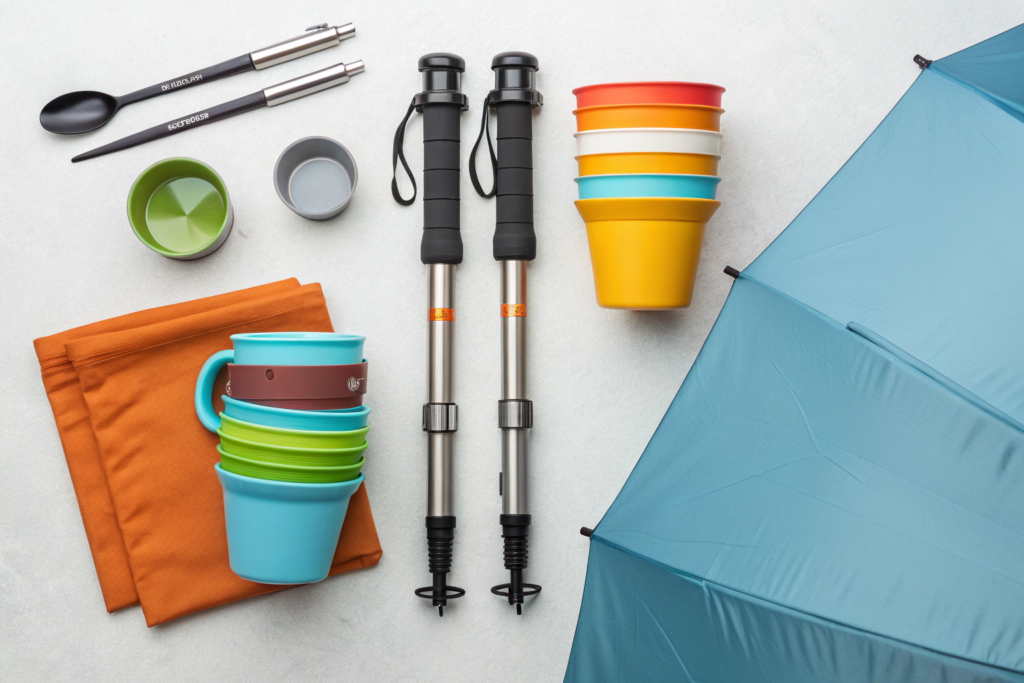
The goal is rigidity with minimal mass. For items requiring flexibility and a soft touch, food-grade silicone is unparalleled. It's lightweight, collapsible, heat-resistant, and easy to clean—perfect for foldable cups, toiletry bottles, and jar lids. For rigid structures that need to be tough, polycarbonate is a top choice. It has exceptional impact resistance (think of it as a lighter, clearer cousin to acrylic), making it ideal for the frames of compact umbrellas or transparent cosmetic cases. When metal is necessary for strength or aesthetics, anodized aluminum is the go-to. The anodizing process creates a hard, corrosion-resistant surface that is much lighter than stainless steel, perfect for the internal frame of a backpack or the clips on a travel belt. Understanding the FDA compliance requirements for materials that contact food or skin is a critical part of the sourcing process that a professional factory manages.
How Does Silicone Grade Affect Collapsible Products?
Not all silicone is equal. For collapsible products like cups or bowls, the platinum-cured silicone grade is essential. It is more durable, retains its shape better after repeated compression, and is completely odorless and tasteless compared to cheaper peroxide-cured silicone. It also has superior heat resistance. Always specify the grade and request material safety data sheets (MSDS) from your supplier to ensure compliance and quality.
Why Choose Anodized Aluminum Over Stainless Steel?
The primary advantage is weight savings, which is paramount in travel. Anodized aluminum can be up to 65% lighter than stainless steel for a similar volume. The anodizing process also allows for a wide range of vibrant, durable colors that are baked into the surface, unlike painted finishes that chip. While not as strong as high-grade steel, it provides more than enough strength for accessory applications like buckles, carabiners, and water bottle lids, making it the superior choice for weight-conscious design.
How to Source and Test These Materials with Your Factory?
Knowing the ideal materials is one thing; ensuring your factory can source genuine grades, test them, and produce consistently is another. This phase is where many importers face quality disasters.
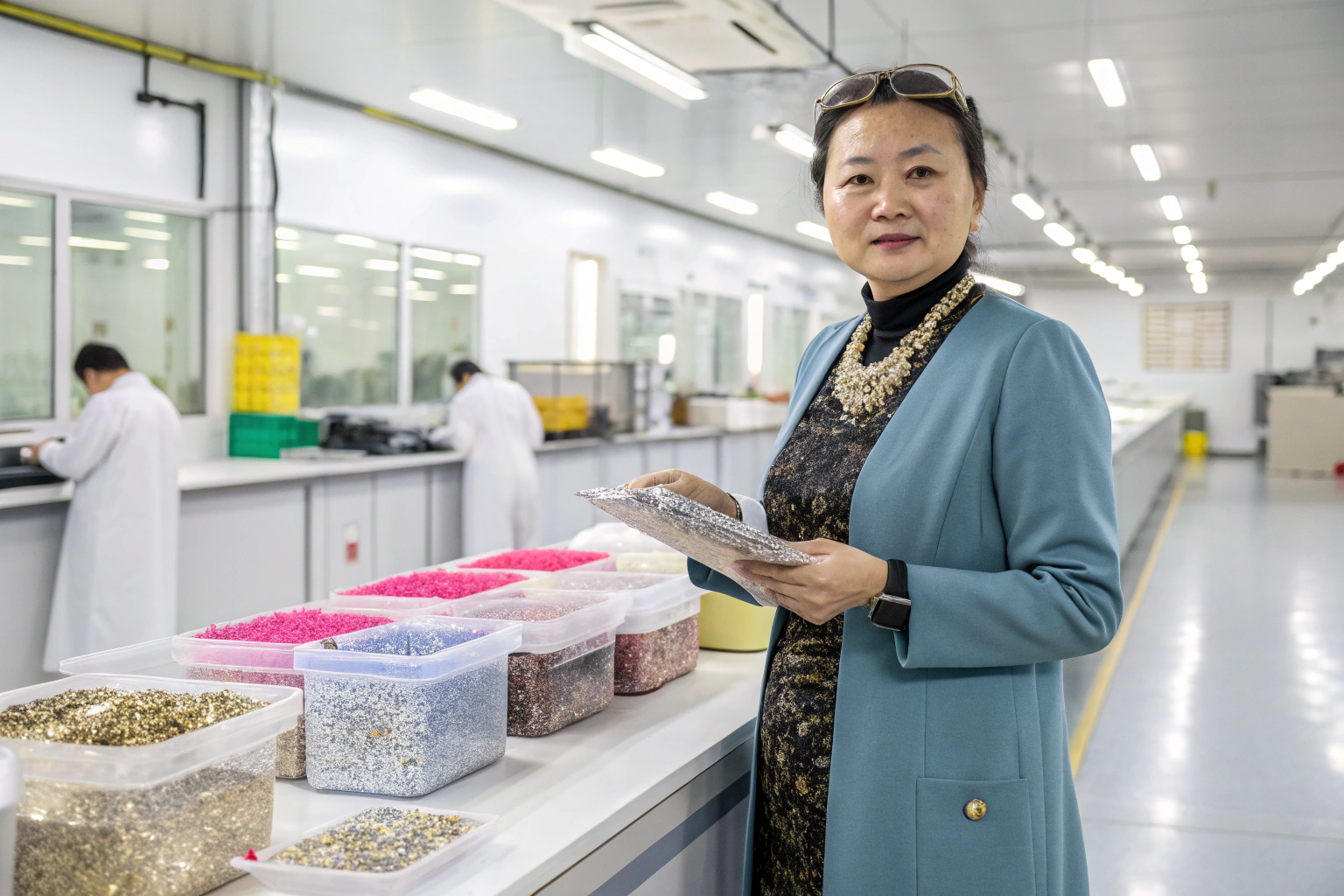
A transparent and collaborative sourcing process is vital. It begins with a Technical Pack co-created with your manufacturer. This document should specify not just the material name (e.g., "ripstop nylon"), but its precise technical details: denier, thread count, coating type, weight, and supplier mill if possible. The next critical step is pre-production testing. A reliable factory will have in-house capabilities for basic tests (like weight and colorfastness) and partnerships with certified labs for advanced tests (like abrasion resistance Martindale tests, tear strength, or LFGB food safety compliance). At Shanghai Fumao Clothing, we provide clients with test reports for approval before bulk material is ordered. This is your insurance policy. Furthermore, we can often leverage our bulk purchasing relationships with reputable fabric mills to secure better prices and ensure authenticity, which is a significant advantage over a brand trying to source materials independently. Resources like Intertek or SGS offer globally recognized testing and certification services that can be specified in your quality agreement.

What Should Be in Your Material Specification Sheet?
Your spec sheet must be a detailed contract for the material. Key elements include: 1) Fiber Content (e.g., 100% Nylon 6,6), 2) Fabric Construction (e.g., 210D Ripstop Weave), 3) Weight (e.g., 60gsm), 4) Coating/Finish (e.g., PU coating 1000mm hydrostatic head), 5) Color Standard & Dye Method, 6) Physical Test Requirements (e.g., tear strength > 10N), and 7) Certification Requirements (e.g., OEKO-TEX Standard 100, GRS for recycled content). This level of detail prevents substitutions.
How Can You Audit Your Supplier's Material Claims?
Never take a supplier's word on material claims. The audit process involves three steps: First, request mill certificates or test reports for the raw material batch. Second, conduct third-party testing on pre-production samples you receive, using a lab you trust. Third, perform a spot-check during production—either yourself or via a third-party inspection service—to verify the material used in bulk matches the approved sample. A trustworthy factory will welcome this diligence.
Conclusion
Selecting the best materials for lightweight travel accessories is a strategic decision that directly impacts your product's market success, user satisfaction, and brand reputation. The journey moves from understanding the superior performance of technical synthetics and smart knits to specifying durable polymers and metals, all while establishing a rigorous sourcing and testing protocol with your factory. The optimal material is the one that aligns your design intent with real-world performance and a viable cost structure.
Ultimately, this knowledge empowers you to make informed choices, but the execution relies on a manufacturing partner with the expertise, sourcing networks, and quality systems to bring your vision to life reliably. If you're ready to develop a line of travel accessories that stands out for its intelligent design and superior material choice, partnering with a factory that specializes in this nuanced process is the next logical step. For a detailed discussion on material sourcing and product development for your next collection, please contact our Business Director, Elaine. Her email is elaine@fumaoclothing.com.