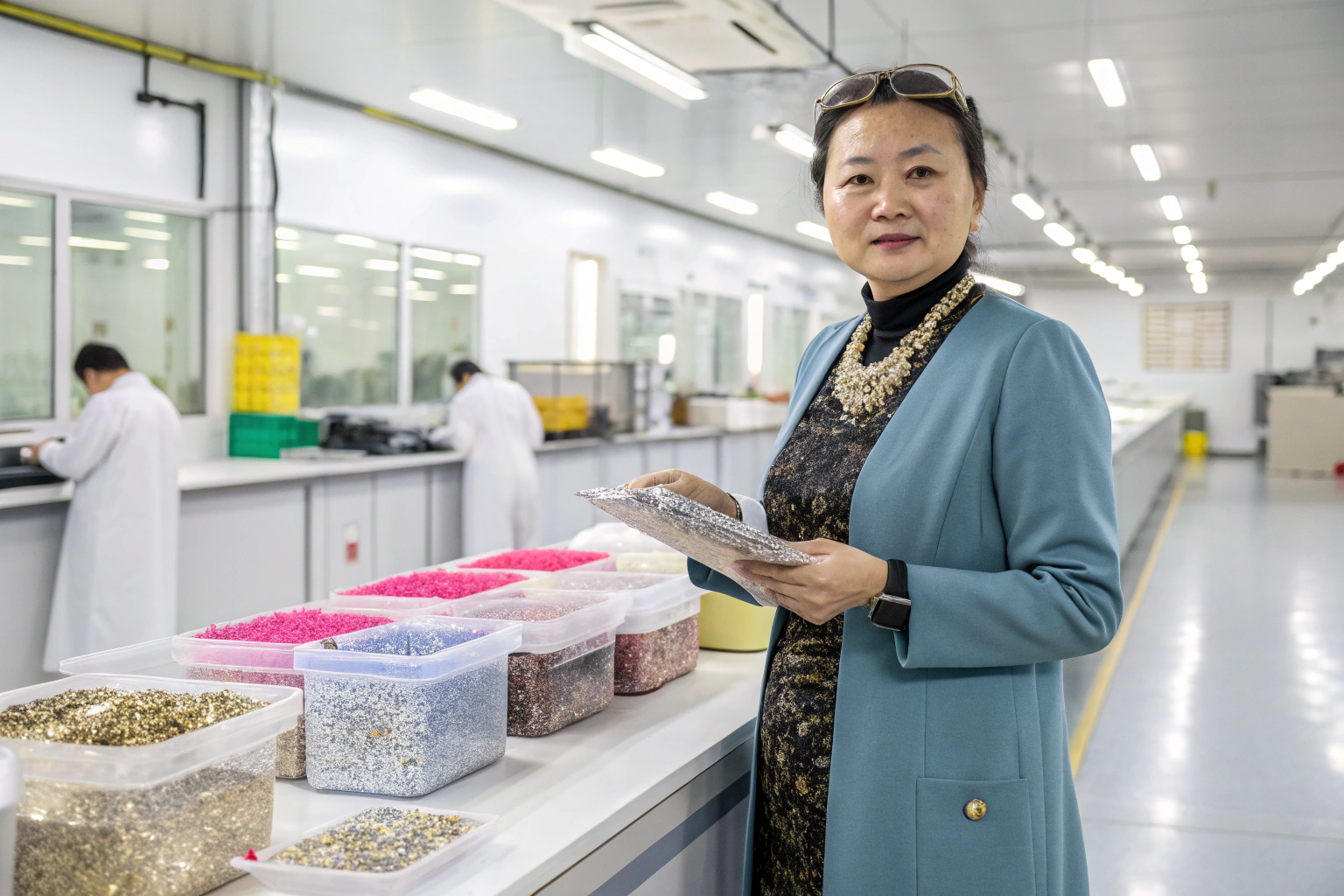
Traditional hair tie design relies heavily on trial and error, often resulting in products that fail to address real user needs. Many manufacturers struggle with creating hair ties that balance aesthetics, functionality, and comfort. At our factory, we've transformed this process through artificial intelligence, achieving remarkable improvements in both performance and customer satisfaction.
AI optimizes hair tie designs by analyzing vast amounts of user data, predicting performance outcomes, simulating material behaviors, and generating innovative concepts that human designers might overlook.This data-driven approach leads to products that better meet consumer needs while reducing development time and costs.
The integration of AI in hair accessory design represents a significant leap forward from conventional methods. Let's explore how these technologies are revolutionizing every aspect of the design process.
How can AI analyze consumer preferences effectively?
Understanding what customers truly want is the foundation of successful product design. Traditional market research methods often fail to capture the nuanced preferences that determine a hair tie's success in the market.
AI systems process massive datasets from social media, reviews, and search trends to identify patterns and preferences that human analysts might miss, enabling data-driven design decisions.
What insights can social media data provide?
Social media platforms contain invaluable information about consumer preferences and pain points. Our AI systems employ natural language processing to analyze millions of social media posts, comments, and reviews about hair ties. This analysis reveals specific complaints about existing products—such as hair pulling, breakage, or loss of elasticity—and identifies desired features like specific colors, patterns, or comfort aspects. By tracking emerging trends across platforms like Instagram and TikTok, we can anticipate demand for certain styles before they become mainstream, ensuring our designs stay ahead of market curves.
How does search trend analysis guide design direction?
Search data provides direct insight into what consumers are actively seeking. We utilize AI-powered trend forecasting tools that analyze search query patterns across Google, Amazon, and e-commerce platforms. These systems identify growing interest in specific hair tie characteristics, such as "invisible hair ties," "scrunchie materials," or "hair-friendly elastics." The AI correlates these search patterns with demographic data and seasonal trends, helping us prioritize design features that match current consumer demand. This approach has helped us develop successful collections targeting specific consumer segments with precision.

How does AI improve functional design aspects?
The technical performance of hair ties—elasticity, durability, comfort—can be significantly enhanced through AI-driven simulation and testing. Traditional physical prototyping is time-consuming and often misses optimal solutions.
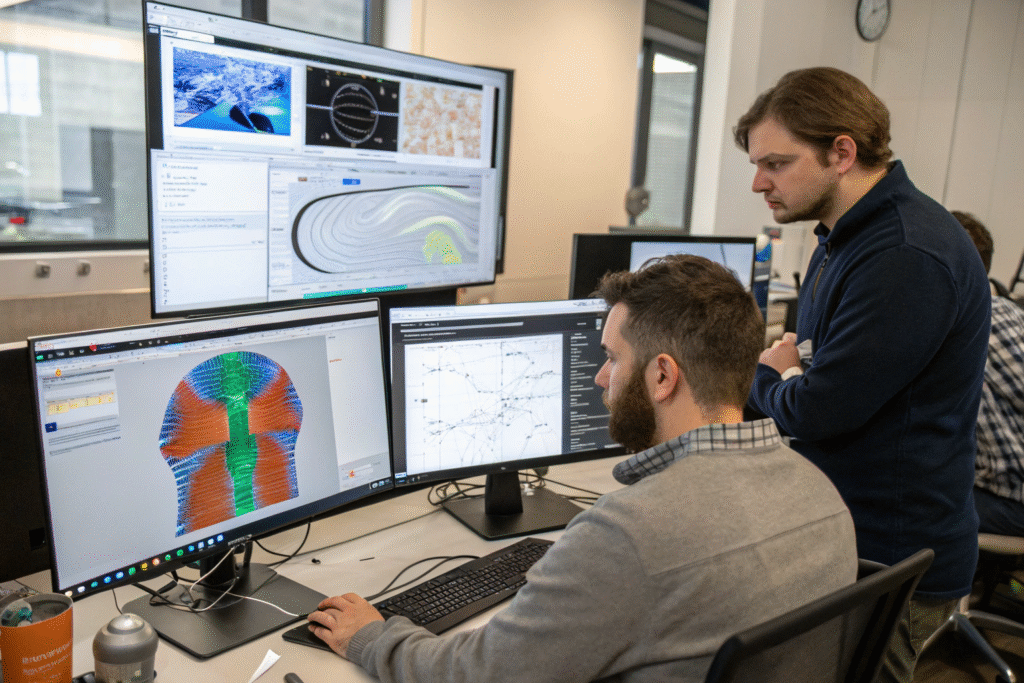
AI algorithms simulate how different materials, constructions, and designs will perform under various conditions, identifying optimal combinations that maximize functionality while minimizing costs.
Can AI predict material performance accurately?
Material selection critically impacts hair tie functionality, and AI excels at predicting how materials will behave over time. We use machine learning algorithms trained on historical data about material performance—including elasticity retention, break strength, and color fastness. These systems can predict how new material combinations will perform, allowing us to select optimal compositions before creating physical prototypes. The AI considers factors like environmental conditions, usage frequency, and hair types to recommend materials that will maintain their properties through extended use, significantly reducing failure rates.
How does generative design create better products?
Generative design represents a revolutionary approach where AI creates and evaluates thousands of design variations. We input design goals and constraints—such as "must hold thick hair securely without pulling," "should be comfortable for all-day wear," and "must maintain elasticity through 100+ uses"—and our generative design software produces numerous solutions meeting these criteria. The AI explores possibilities human designers might not consider, often resulting in innovative constructions that outperform traditional designs. This process has led to patented hair tie features that provide superior performance while using less material.
How can AI enhance manufacturing efficiency?
Design optimization extends beyond the product itself to include manufacturing considerations. AI helps create designs that are not only high-performing but also efficient to produce at scale.
By analyzing production data and simulating manufacturing processes, AI identifies design adjustments that improve yield rates, reduce material waste, and streamline assembly.
How does AI optimize production workflows?
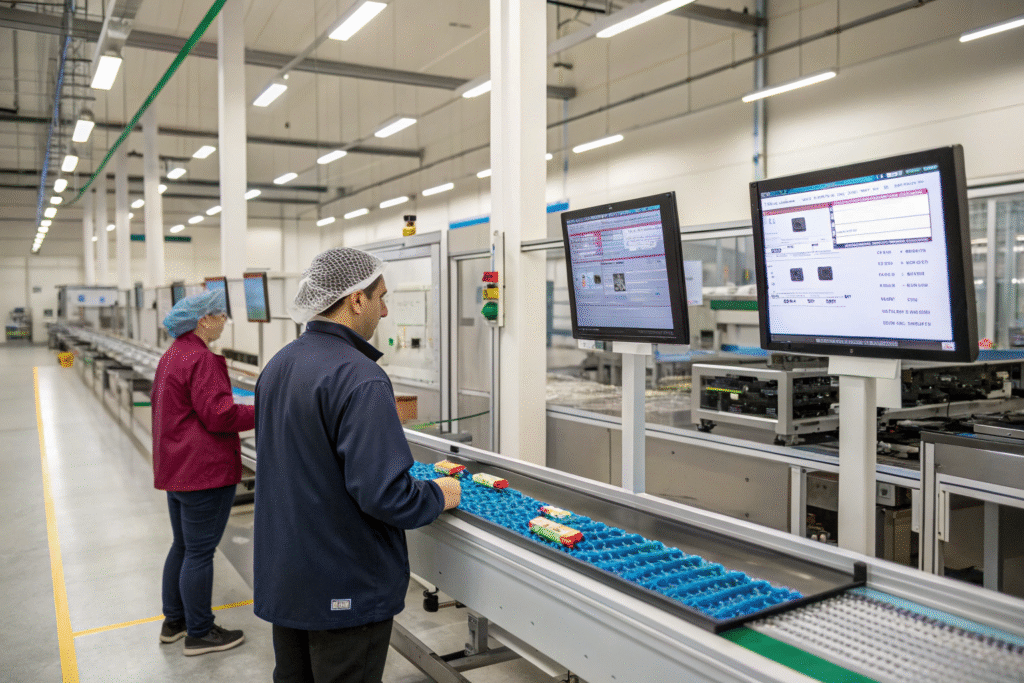
Manufacturing efficiency directly impacts product cost and quality consistency. Our AI systems analyze production line data to identify bottlenecks, material waste points, and quality control issues specific to hair tie manufacturing. The algorithms then suggest design modifications that simplify assembly—such as standardizing component sizes, reducing the number of manufacturing steps, or optimizing material cutting patterns. These AI-recommended adjustments have increased our production efficiency by 23% while maintaining quality standards, benefits we pass on to our clients through competitive pricing.
Can AI improve quality control processes?
Traditional quality control relies on human inspection, which can be inconsistent and limited in scope. We've implemented computer vision systems trained to detect hair tie defects with superhuman accuracy. These AI systems inspect every hair tie for issues like inconsistent elasticity, imperfect seams, color variations, and material flaws at production line speeds. The continuous learning capability of these systems means they constantly improve their detection accuracy based on new data. This results in significantly higher quality consistency and fewer customer returns due to manufacturing defects.
How does AI drive sustainable design innovation?
Sustainability has become a crucial consideration in product design, and AI offers powerful tools for creating environmentally responsible hair ties without compromising performance.
AI algorithms help optimize material usage, recommend eco-friendly alternatives, and design for longevity and recyclability—addressing growing consumer demand for sustainable products.
Can AI optimize material usage?
Reducing material waste benefits both the environment and production costs. Our AI systems perform material optimization analysis that determines the minimum material required for each hair tie design while maintaining performance standards. The algorithms calculate optimal cutting patterns from fabric rolls, suggest construction methods that use less material, and identify opportunities to utilize production waste. This approach has helped us reduce material waste by 31% across our hair tie collections while maintaining product quality, creating both environmental and economic advantages.
How does AI support circular design principles?
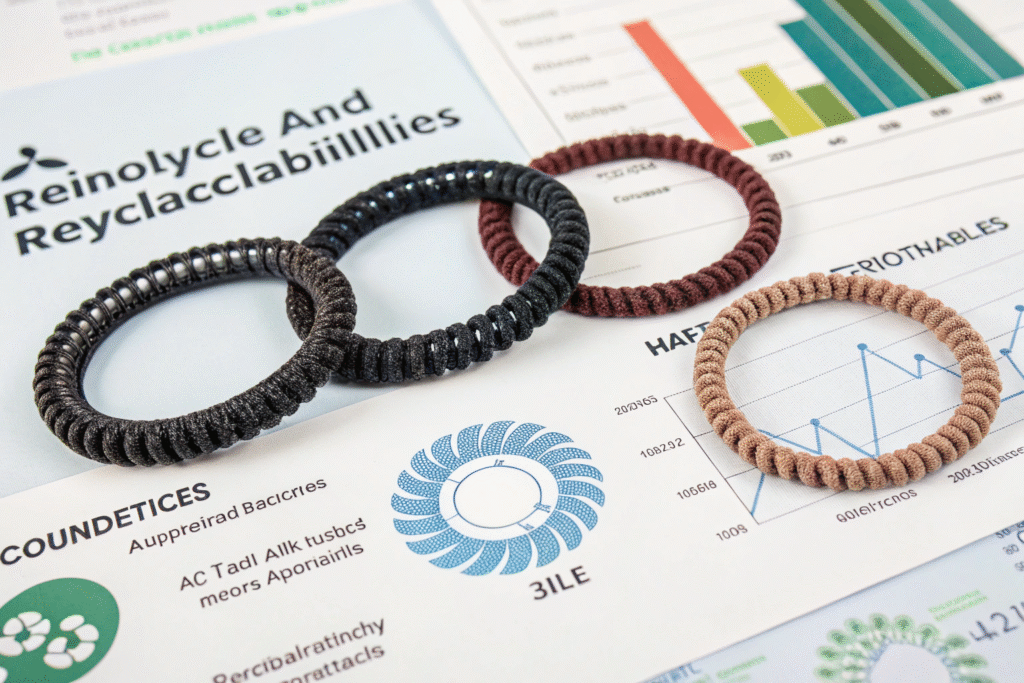
Designing for product longevity and recyclability is increasingly important. We employ AI tools that evaluate hair tie designs against circular economy metrics, scoring them on factors like disassembly difficulty, material separability, and recyclability. The systems suggest design modifications that extend product lifespan and facilitate material recovery at end-of-life. This AI-guided approach has enabled us to develop hair ties with replaceable components, standardized materials for easier recycling, and constructions that maintain their integrity through more use cycles, reducing the environmental impact of our products.
Conclusion
AI transforms hair tie design from an artisanal process to a data-driven science, delivering products that better meet consumer needs while optimizing manufacturing efficiency and sustainability. The integration of AI throughout the design process—from consumer insight analysis to functional optimization and production planning—represents the future of accessory manufacturing. Companies that embrace these technologies will lead the market with innovative, high-performance products developed with unprecedented speed and precision.
If you're interested in leveraging AI technologies to optimize your hair tie designs and manufacturing processes, we invite you to contact our Business Director, Elaine. Our team has successfully integrated AI across our design and production workflows and can help you develop data-driven hair accessories that outperform market alternatives. Reach her at: elaine@fumaoclothing.com.