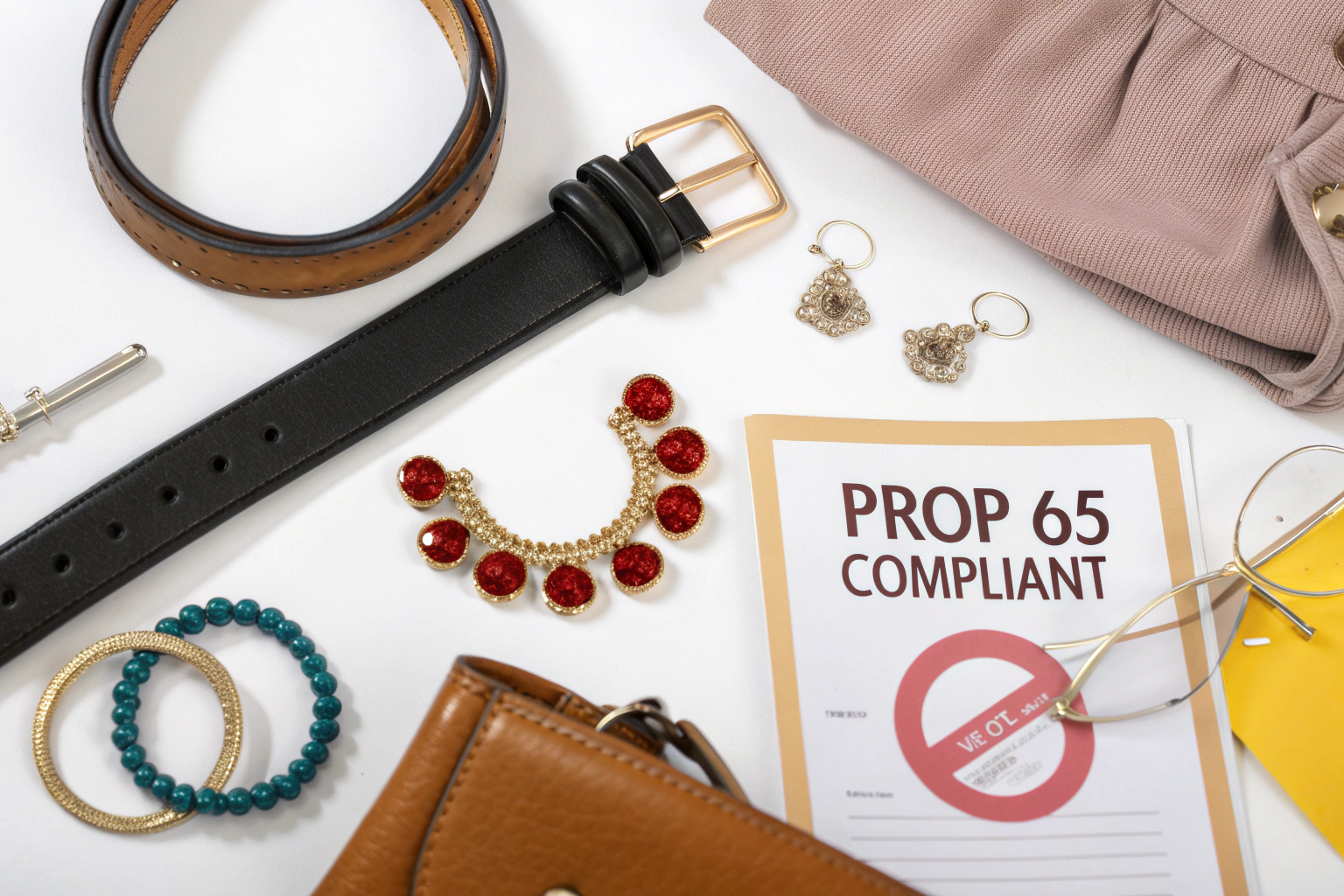
I've been in this business for decades, and I can tell you that navigating the complex world of product safety regulations is one of the most challenging aspects of sourcing accessories. And few regulations cause as much confusion and concern as California's Proposition 65. It's a law with sharp teeth, and non-compliance can lead to massive fines, lawsuits, and irreparable damage to your brand's reputation.
But here's the thing: Prop 65 is not something to be feared. It's something to be understood and managed. With the right knowledge and the right manufacturing partner, you can absolutely source accessories that are fully compliant and safe for your customers. It's about knowing what substances are restricted, testing your products, and providing the required warnings when necessary.
At Shanghai Fumao Clothing, we take Prop 65 compliance very seriously. We have a rigorous testing and documentation protocol for all products destined for the California market. We work with our clients to ensure they have all the information and warnings they need. In this post, I'll explain how to source accessories that are compliant with California Prop 65. For more on our commitment to safety and quality, you can read our guide on what are the key tests for chemical safety in children's hair accessories.
What Is California Proposition 65?
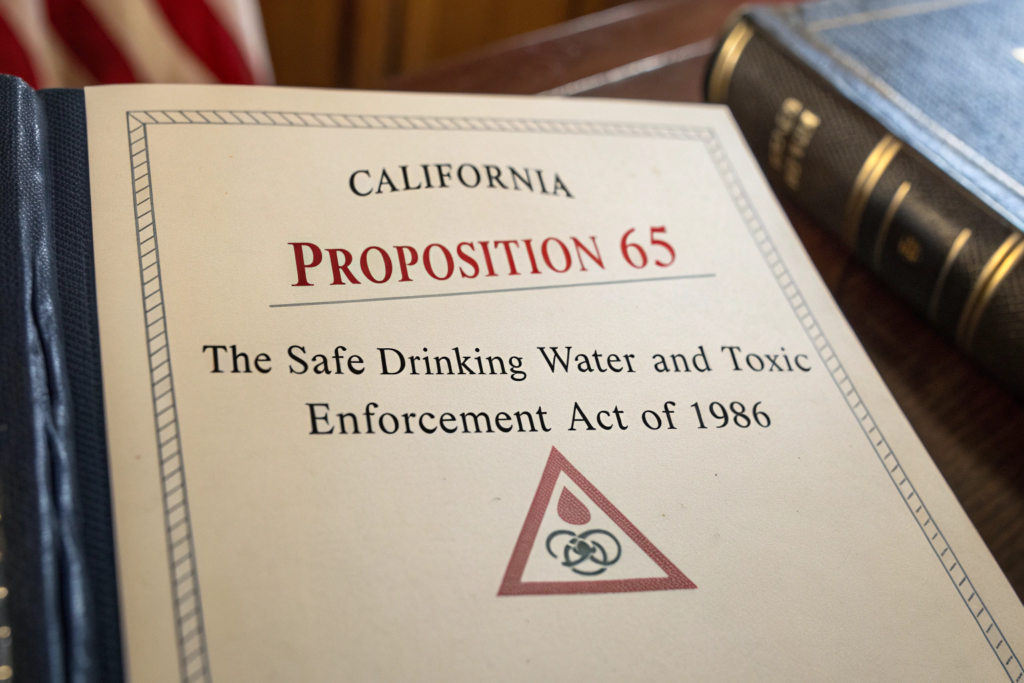
Before we discuss sourcing, it's essential to understand what Prop 65 actually is. Officially called the Safe Drinking Water and Toxic Enforcement Act of 1986, it's a California law that requires businesses to provide warnings to Californians about significant exposures to chemicals that cause cancer, birth defects, or other reproductive harm.
It's important to note that Prop 65 does not ban the sale of products containing listed chemicals. Instead, it requires that consumers be informed if they are being exposed to such chemicals. The warning can be given in various ways, most commonly through a label on the product or a sign at the point of sale. For the most authoritative information, the California Office of Environmental Health Hazard Assessment (OEHHA) website is the definitive source. Understanding this regulation is similar to understanding the requirements for sourcing accessories for the high-performance athletic market, where performance and safety standards are paramount.
What does Prop 65 actually require?
- Maintenance of a List: The state of California maintains and publishes a list of chemicals known to cause cancer, birth defects, or other reproductive harm. This list is updated regularly and currently includes over 900 chemicals.
- Clear and Reasonable Warning: Businesses with 10 or more employees that expose individuals to any chemical on this list must provide a "clear and reasonable" warning. For consumer products, this is typically done with a product label.
- Prohibition on Discharge: The law also prohibits the discharge of listed chemicals into sources of drinking water.
The key for accessory brands is the warning requirement. If your product contains any listed chemical above a certain "safe harbor" level (a level deemed to pose no significant risk), you must provide a warning.
Who is responsible for compliance?
The responsibility for compliance falls on the business that is exposing individuals to the chemical. For a product sold in California, this is typically the seller, distributor, or manufacturer of that product. If you are a brand selling accessories in California, you are ultimately responsible for ensuring your products are compliant and, if necessary, carry the proper warning.
This is why it's so critical to work with manufacturers who understand Prop 65 and can provide you with the information and testing data you need. You cannot simply pass the buck to your supplier. The liability is yours. This level of responsibility is similar to that required when developing accessories for the corporate promotional products market, where brand reputation is on the line.
What Chemicals Commonly Found In Accessories Are On The Prop 65 List?
Many of the chemicals on the Prop 65 list are commonly found in materials used to make fashion accessories. Understanding which substances are of concern is the first step in sourcing compliant products. The most relevant for accessories are heavy metals and certain plasticizers.
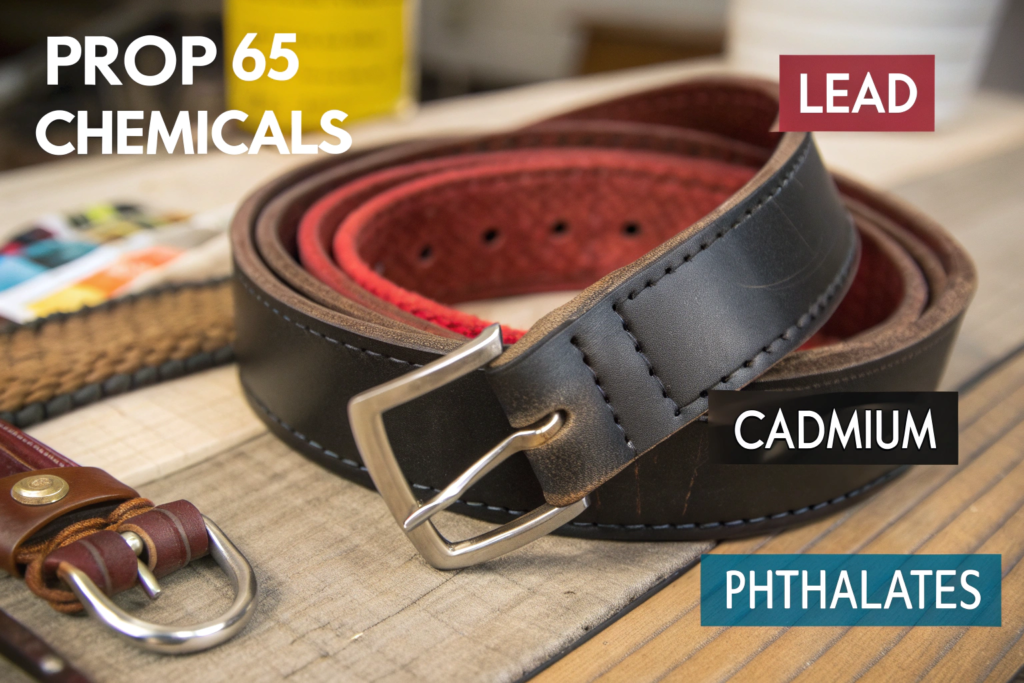
What are the most common Prop 65 chemicals in accessories?
- Lead: Lead can be found in many materials, including:
- Metal alloys (used in buckles, zippers, clasps, jewelry findings)
- PVC and other plastics (used as a stabilizer)
- Paints, dyes, and surface coatings
- Solder (in some electronics-integrated accessories)
- Cadmium: Cadmium is also used in metal alloys, as a stabilizer in plastics (especially PVC), and in some colored pigments and platings.
- Phthalates (including DEHP, DBP, BBP, DINP, DIDP, DnOP): These are a group of chemicals used to make plastics, especially PVC, flexible. They are commonly found in:
- Soft plastic accessories (like some hair clips, rainwear, or bags)
- PVC-based synthetic leathers
- Inks and coatings on flexible materials
- Other Metals: Other metals on the list include mercury, antimony, arsenic, and hexavalent chromium (which can be found in some leather tanning processes and metal platings).
- Bisphenol A (BPA): Used in some polycarbonate plastics and epoxy resins, which might be found in certain accessories.
This is not an exhaustive list, but it covers the most common culprits in fashion accessories. Understanding these risks is as important as knowing what are the best anti-mold treatments for accessories stored in humid climates when protecting products from environmental damage.
How do these chemicals get into accessories?
- Raw Materials: The chemicals can be present in the raw materials used to make the components. For example, a batch of brass might contain lead as an impurity. A batch of PVC resin might contain phthalates.
- Manufacturing Processes: Chemicals can be introduced during manufacturing. For example, a metal plating process might use hexavalent chromium. A leather tanning process might use certain heavy metals.
- Surface Coatings and Finishes: Paints, lacquers, and other surface finishes can contain lead, cadmium, or other metals.
This is why testing is so essential. You can't rely on a supplier's word alone. You need to test the finished product to ensure it meets the required standards. This principle of rigorous verification is also key when sourcing high-quality silk twill scarves, where the quality of materials and craftsmanship must be confirmed.
How Can You Ensure Your Accessories Are Prop 65 Compliant?
Ensuring Prop 65 compliance is a multi-step process that requires diligence, expertise, and a commitment to quality. It's not something you can do once and forget about. It must be an ongoing part of your sourcing and quality control.

What is the role of third-party testing?
This is the most critical step. You cannot rely on a supplier's word alone. You must have your products tested by an accredited, independent laboratory. The lab will test for the presence and concentration of Prop 65-listed chemicals relevant to your product's materials.
- Choose a Reputable Lab: Work with a lab that has experience testing consumer products for Prop 65 compliance. They will know which chemicals to test for based on your product's materials.
- Test Finished Products: Test the finished product, not just the individual components. This is because interactions between components or the manufacturing process itself can introduce chemicals.
- Test Regularly: Prop 65 compliance is not a one-time thing. You should test regularly, especially if you change suppliers, materials, or manufacturing processes. Many brands test every production batch or on a rolling schedule.
- Obtain a Certificate of Analysis (COA): The lab will provide a detailed report, called a Certificate of Analysis, showing the test results. This is your proof of compliance.
A Prop 65 compliant accessory is one that has been rigorously tested and verified, much like a high-quality Panama hat is verified through careful inspection of its weave and craftsmanship.
What should you do if a chemical is detected above safe harbor levels?
If testing reveals that your product contains a listed chemical above its safe harbor level, you have two options:
- Reformulate the Product: Work with your manufacturer to find alternative materials or processes that eliminate or reduce the chemical to below safe harbor levels. This is the preferred option, as it results in a product that requires no warning.
- Provide a Clear and Reasonable Warning: If reformulation is not possible, you must provide a Prop 65 warning with the product. The warning must be "clear and reasonable." For consumer products, this is typically done with a label on the product or its packaging. The warning must include the name of at least one listed chemical and state that the product can expose you to that chemical.
The warning language has specific requirements. The OEHHA website provides detailed guidance and examples. This decision-making process is similar to choosing between different bonding methods for attaching leather patches based on the materials and desired outcome.
What Information Should You Get From Your Manufacturer?
Your relationship with your manufacturer is key to Prop 65 compliance. They are your first line of defense. You need to work with a manufacturer who understands the regulations and is committed to providing you with compliant products and the documentation you need.
At Shanghai Fumao Clothing, we have a comprehensive Prop 65 compliance program. We work with our clients to ensure they have all the information they need.

What documentation should you request?
- Material Certifications: Ask your manufacturer for certifications from their raw material suppliers, stating that the materials meet certain specifications. This is a good first step, but it is not a substitute for testing the finished product.
- Certificate of Analysis (COA) from Third-Party Testing: This is the most important document. Request a COA from an accredited lab for the finished product. The COA should clearly state the test results for all relevant Prop 65 chemicals and compare them to the safe harbor levels.
- Declaration of Conformity: Some manufacturers may provide a formal declaration stating that the product is compliant with Prop 65. This is a useful summary, but it should be backed up by actual test data.
- Material Safety Data Sheets (MSDS): For any chemicals used in the manufacturing process, you can request MSDS, but these are less directly relevant to the finished product's compliance.
Having this documentation is your proof of due diligence and your protection in case of a challenge. This attention to documentation is as important as the detailed testing for abrasion resistance in belt leather we conduct to ensure product longevity.
How can you build a long-term partnership for compliance?
- Choose a Reputable Manufacturer: Work with a manufacturer who has a proven track record of producing compliant products for the US and California markets. Ask them about their Prop 65 compliance program.
- Communicate Your Requirements Clearly: From the very beginning, make it clear that Prop 65 compliance is non-negotiable. Provide them with the list of restricted chemicals and the safe harbor levels.
- Establish a Testing Protocol: Work with your manufacturer to establish a regular testing protocol. This could be testing every production batch, or testing on a rolling schedule.
- Maintain Open Communication: Keep the lines of communication open. If you have any concerns or questions, address them immediately.
A strong, transparent relationship with your manufacturer is the best way to ensure ongoing compliance. This collaborative approach is similar to what we foster when developing accessories for the pet fashion industry, where understanding the unique needs of the market is essential.
Conclusion
Sourcing accessories that are compliant with California Proposition 65 may seem daunting, but it is absolutely achievable with the right knowledge and the right partner. It starts with understanding what Prop 65 is and what it requires. It continues with knowing which chemicals are of concern in fashion accessories—lead, cadmium, phthalates, and others. It requires rigorous third-party testing to ensure that any listed chemicals are below the established "safe harbor" levels. And it demands a transparent and collaborative relationship with a manufacturer who is committed to compliance and can provide you with the necessary documentation.
At Shanghai Fumao Clothing, we take Prop 65 compliance very seriously. Our factory in Zhejiang has a robust compliance program. We work with accredited, third-party laboratories to test our products regularly. We maintain full traceability on all materials. We provide our clients with Certificates of Analysis and all the documentation they need to sell their products with confidence in the California market. We understand that compliance is not a burden; it's a responsibility and a mark of quality.
If you are sourcing accessories for the California market and want to ensure they are fully Prop 65 compliant, let's talk. Please contact our Business Director, Elaine, at elaine@fumaoclothing.com. We'll help you create products that are safe, compliant, and beautiful.