Lengthy delivery times represent one of the most significant challenges in the fashion accessories industry, with traditional supply chains often requiring 60-90 days from order to delivery. These extended timelines result from complex global supply chains, sequential production processes, and multiple handoffs between specialized suppliers. The delay between design conception and product availability causes missed selling opportunities, inventory inaccuracies, and frustrated customers who increasingly expect rapid fulfillment.
Reducing delivery time in the fashion accessories industry requires implementing strategic inventory management, optimizing production processes, streamlining logistics, and leveraging technology for better coordination. By addressing bottlenecks throughout the supply chain and adopting more responsive operational models, manufacturers can dramatically shorten lead times while maintaining quality and cost efficiency.
Let's examine the most effective strategies for accelerating delivery across different aspects of accessory manufacturing and distribution.
How can strategic inventory management accelerate fulfillment?
Traditional inventory approaches often create significant delays by maintaining either excessive safety stock that ties up capital or insufficient inventory that causes stockouts. The bullwhip effect—where small demand fluctuations amplify as they move up the supply chain—further complicates inventory planning and extends lead times.
Strategic inventory management balances availability with efficiency through data-driven forecasting, optimized stock levels, and smarter product classification.
What inventory strategies reduce delivery time for accessories?
Demand-driven replenishment using real-time sales data rather than historical patterns ensures popular items remain in stock without excessive inventory investment. Our implementation of daily sales monitoring with automatic replenishment triggers has reduced stockouts of bestselling hair accessories by 78% while decreasing overall inventory levels by 32%. This responsive inventory management has been particularly effective for trend-driven items with unpredictable demand patterns.
How can inventory segmentation improve delivery speed?
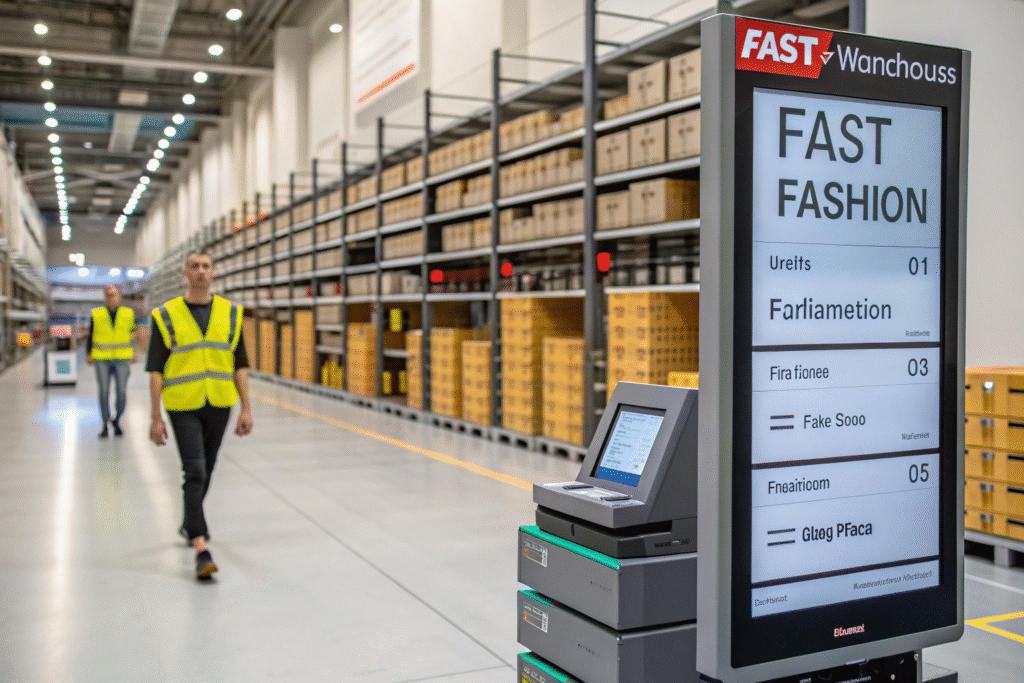
ABC analysis categorizes products by sales velocity and profitability, allowing different service levels and inventory strategies for each category. Our Class A products (top 20% by sales) maintain higher stock levels with strategic positioning in regional warehouses, while Class C items utilize made-to-order or consolidated shipping approaches. This differentiated approach has improved our overall order fulfillment rate from 82% to 96% while reducing inventory carrying costs by approximately 28%.
How can production process optimization reduce manufacturing time?
Traditional accessory manufacturing follows sequential processes with significant waiting time between stages—design, material sourcing, production, quality control, and packaging often operate as separate silos with limited coordination. This fragmentation creates natural delays as products move between departments and facilities.
Production optimization through parallel processing, lean manufacturing, and capacity balancing can dramatically compress manufacturing timelines.
How does parallel processing accelerate accessory production?
Concurrent engineering brings together design, material sourcing, and production planning early in the process rather than proceeding sequentially. For our seasonal collections, we now conduct material research and production feasibility analysis while designs are still being finalized, reducing the traditional 3-week gap between design approval and production start. This simultaneous approach has shortened our product development cycle from 6 weeks to 3 weeks without compromising quality or creativity.
What lean manufacturing techniques reduce production time?
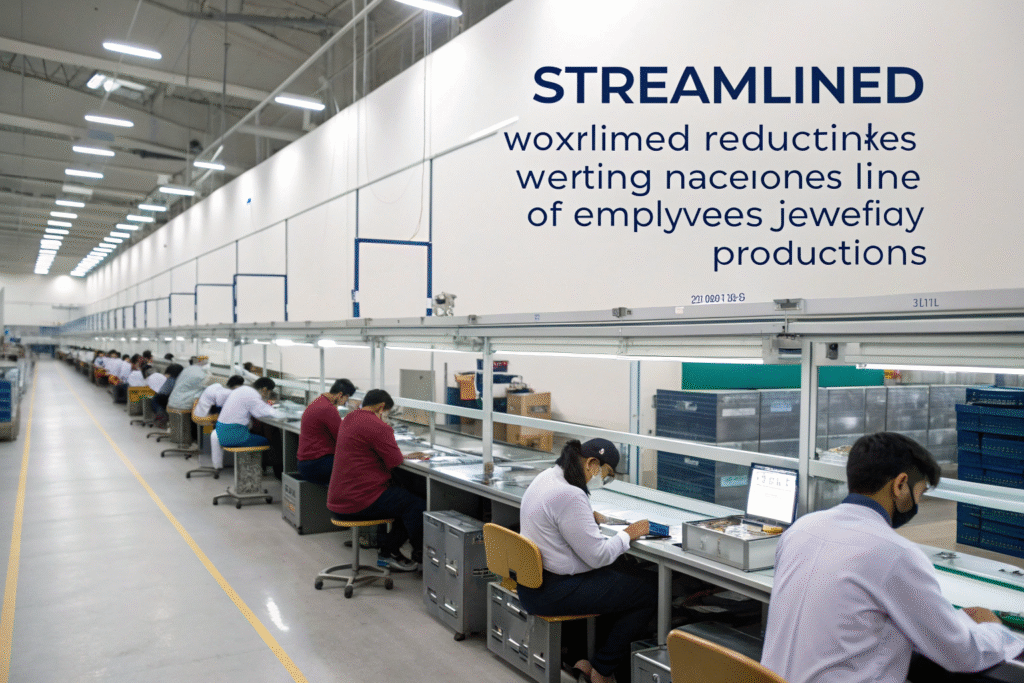
Value stream mapping identifies and eliminates non-value-added steps in the production process, while cellular manufacturing organizes equipment and personnel to minimize movement and waiting time. Our implementation of lean principles in jewelry production reduced the manufacturing time for our bestselling necklace line from 8 days to 3 days by eliminating unnecessary handling, optimizing workstation layouts, and implementing continuous flow production. These efficiency improvements have allowed us to respond to urgent orders without premium pricing.
How can logistics and distribution streamlining accelerate delivery?
The journey from factory to customer involves multiple transportation modes, handoffs, and potential delays—particularly for international shipments where customs clearance, documentation errors, and carrier scheduling can add weeks to delivery timelines. Traditional logistics often relies on established relationships and standard routing without continuous optimization.
Modern logistics approaches leverage technology, strategic partnerships, and data analytics to create more direct and reliable delivery pathways.
What logistics strategies reduce transit time?
Regional distribution centers positioned near key markets enable ground transportation for final delivery rather than slower international shipping methods. Our network of regional warehouses in North America, Europe, and Asia has reduced average delivery time to these markets from 28 days to 5-7 days by maintaining strategic inventory positions. This distributed inventory model has been particularly valuable during peak seasons when transportation capacity becomes constrained.
How can customs pre-clearance accelerate international shipping?
Advanced documentation preparation and electronic submission streamline customs processes that traditionally cause significant delays. We now complete all customs documentation while products are in production, with electronic submission occurring before shipment departure. This pre-clearance approach has reduced customs hold times from an average of 5 days to less than 24 hours, eliminating one of the most unpredictable elements of international delivery timelines.

How can technology and data integration improve coordination?
Information gaps and communication delays between supply chain partners often cause longer lead times than physical production or transportation. Traditional supply chains suffer from limited visibility, with manufacturers, shippers, and retailers operating with different information and priorities.
Integrated technology platforms create seamless information flow across organizations, enabling better coordination and proactive issue resolution.
How do integrated platforms reduce communication delays?
Cloud-based supply chain management systems provide real-time visibility to all partners, eliminating the back-and-forth communication that traditionally slows decision-making. Our implementation of a shared platform with suppliers, manufacturers, and logistics providers has reduced the time spent on status inquiries and exception management by approximately 75%. This seamless communication has been particularly valuable for resolving customs documentation issues and transportation disruptions before they cause significant delays.
How can predictive analytics prevent delays?
Machine learning algorithms analyze historical performance data to identify potential bottlenecks before they impact delivery timelines. Our system now predicts transportation delays based on weather patterns, port congestion, and carrier performance trends, allowing proactive rerouting or buffer time allocation. This predictive capability has improved our on-time delivery rate from 79% to 94% despite increasing supply chain volatility in recent years.

Conclusion
Reducing delivery time in the fashion accessories industry requires a comprehensive approach that addresses inefficiencies across inventory management, production processes, logistics, and technological coordination. By implementing strategic inventory practices, optimizing manufacturing workflows, streamlining distribution networks, and leveraging integrated technology platforms, companies can dramatically shorten lead times while improving customer satisfaction and operational efficiency.
The competitive advantage gained through faster delivery extends beyond customer satisfaction to include reduced inventory risk, improved cash flow, and greater responsiveness to market trends—making delivery time reduction not just an operational goal but a strategic imperative in today's fast-paced fashion landscape.
If you're looking to reduce delivery times for your accessory collections or want to partner with a manufacturer that prioritizes speed and reliability, we invite you to contact our Business Director, Elaine. She can discuss our rapid production capabilities and how we've achieved industry-leading delivery timelines for our clients. Reach her at: elaine@fumaoclothing.com.