As a professional manufacturer in the fashion accessory industry, we understand that the foundation of a luxurious scarf lies in the quality of its silk. Identifying superior silk isn't just about aesthetics; it's a critical technical and commercial decision that affects drape, color vibrancy, durability, and customer satisfaction. The process requires a systematic approach, moving from supplier evaluation to hands-on fabric inspection and formal laboratory testing.
The key is to combine traditional tactile and visual checks with modern, standards-based verification. This multi-layered method ensures you select a material that is not only beautiful and authentic but also consistent, safe, and compliant with international market regulations.
What are the Foundational Qualities of Raw Silk?
The journey to a premium scarf begins long before the weaving loom. The type and grade of the raw silk fibers set the ceiling for quality. Superior raw silk results from controlled breeding, meticulous rearing, and careful processing.
Authentic, high-grade silk possesses an inherent combination of luster, strength, and smoothness that is difficult to replicate. The gold standard is Mulberry Silk (particularly from the Bombyx mori silkworm), renowned for its unrivaled uniformity, fine fibers, and brilliant sheen. The first step for any manufacturer is to verify the origin and grade of the raw silk or yarn with the supplier, requesting documentation that specifies these details.

How do you visually and physically assess silk yarn?
Begin with a hands-on assessment. Unwind a length of silk yarn or examine the warp and weft threads from a fabric sample.
- Look for Consistency: High-quality silk yarn will have a uniform thickness with minimal slubs (thick spots) or breaks. Inconsistency often indicates lower-grade or damaged fibers.
- Check the Luster: Genuine silk has a deep, pearlescent shine that comes from within the fiber, not a superficial coating. It should reflect light softly, not glare.
- Feel for Strength and Suppleness: Gently pull on a single strand. It should feel strong and resilient, not brittle. When bunched in your hand, it should feel incredibly smooth and cool to the touch. This inherent quality is why silk from reputable partners like Shanghai Fumao Clothing is sought after for premium accessory lines.
What is the difference between Mulberry and non-Mulberry silks?
Understanding this distinction is crucial for matching material to product.
- Mulberry Silk: This is the most coveted and widely used in luxury scarves. The silkworms are fed exclusively mulberry leaves in a controlled environment, producing fibers that are extremely fine (approx. 10-12 denier), round, and brilliantly white. This results in a fabric that is exceptionally smooth, strong, and takes dye vibrantly.
- Non-Mulberry Silks (Tussah, Eri, Muga): These are "wild silks." Silkworms feed on various leaves like oak, producing thicker, more irregular, and often darker (beige or brown) fibers. Fabrics like Tussah silk have a more textured, nubby feel and a subdued, "organic" luster. They are durable and beautiful but offer a different aesthetic and performance than the refined drape of Mulberry silk.
How to Evaluate the Fabric's Weave and Construction?
The transformation from yarn to fabric is where artistry meets engineering. The quality of the weaving directly impacts the scarf's hand-feel, drape, strength, and appearance. A flawless construction is non-negotiable for a high-end product.
Examine the density, uniformity, and finishing of the weave. A superior silk fabric will have a high thread count (measured in momme, with 16-22 being common for quality scarves), perfectly aligned grains, and no visible flaws. The chosen weave type—whether chiffon, crepe de chine, twill, or satin—should be executed flawlessly to achieve its intended character.

What should you look for in a flawless weave?
Hold the fabric up to a strong light. This simple test reveals the truth of the construction.
- Uniformity: The light should pass through evenly. You should not see uneven patches, thick knots, or gaps in the weave. The warp and weft threads should be perfectly perpendicular.
- Density: A higher momme weight and thread count will allow less light to pass through, indicating a denser, more durable, and often more opaque fabric.
- Selvage Inspection: Examine the finished edges (selvage) of the fabric. They should be straight, tight, and neatly finished. A wavy or loose selvage can be a sign of poor tension control during weaving, which may lead to the scarf warping or fraying over time.
How does the "hand" of the fabric indicate quality?
The "hand" refers to how the fabric feels and behaves when handled—its drape, weight, and texture.
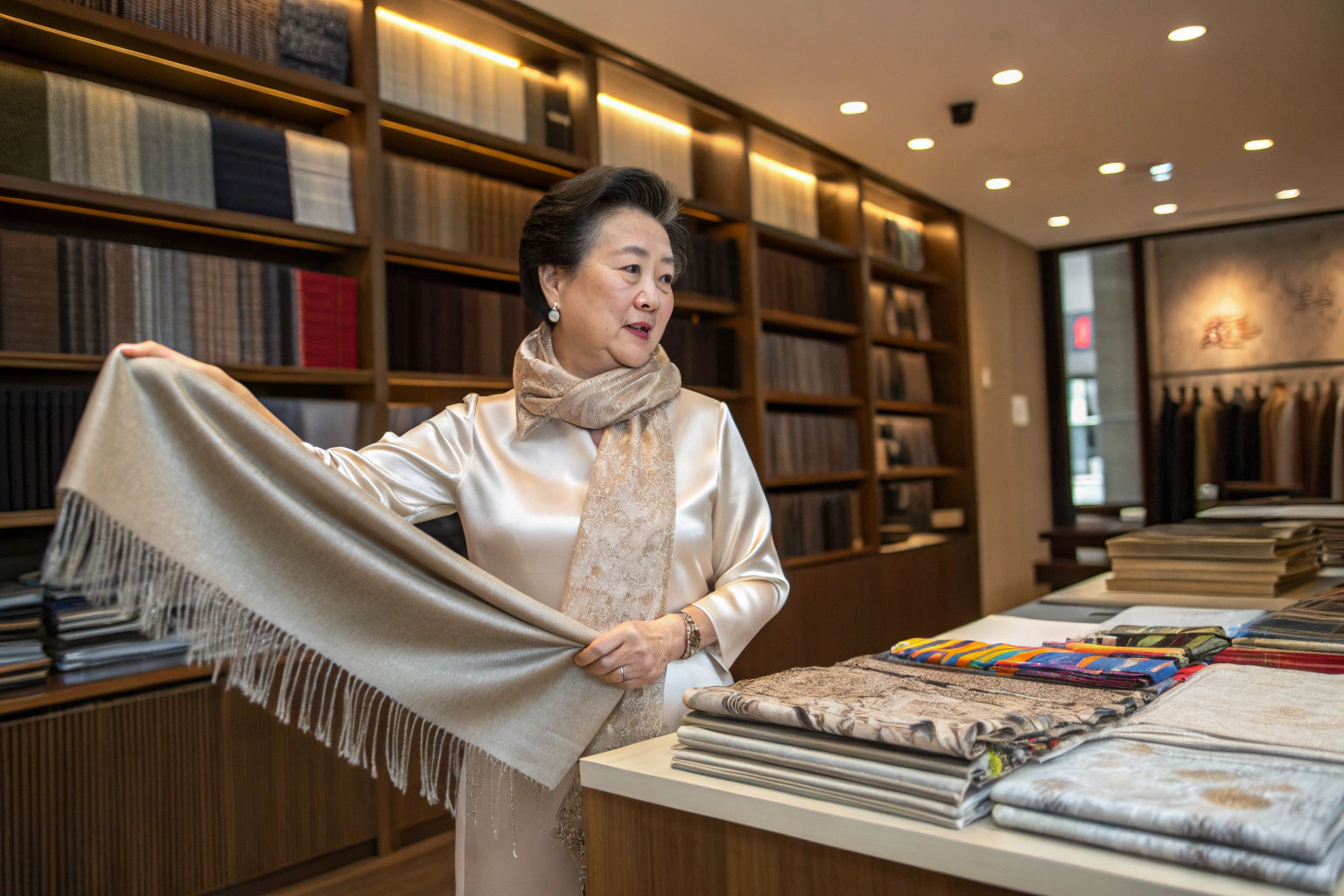
- The Drape Test: Drape a large swatch over your hand. High-quality silk will fall in smooth, fluid ripples, not stiff folds. It should feel lightweight yet have a substantial, luxurious presence.
- The Scrunch Test: Gently scrunch a portion of the fabric in your fist for a few seconds, then release. Premium silk should bounce back quickly with minimal, if any, lingering creases. Poorer quality silk or heavily weighted silk will hold deep wrinkles.
- The "Ring" Test: A traditional test involves pulling the fabric through a wedding ring. Finely woven, high-quality silk will glide through smoothly due to its compact, supple structure.
What Laboratory Tests Guarantee Performance and Safety?
For commercial manufacturing, especially for export to markets like North America and Europe, subjective assessment must be backed by objective, standards-based laboratory testing. These tests verify performance under real-world conditions and ensure the product meets stringent safety regulations.
Relying on certified third-party lab reports is essential. Key tests focus on colorfastness, dimensional stability, and chemical safety. Reputable suppliers should be able to provide these reports for their fabric batches. For manufacturers in hubs like Zhejiang, adhering to local supervision lists, which often reference international standards, is a baseline requirement.

Which colorfastness and durability tests are critical?
A scarf must maintain its beauty through wear and care.
- Colorfastness to Washing (ISO 105-C06): Simulates domestic laundering to ensure dyes do not run or fade excessively.
- Colorfastness to Rubbing/Crocking (ISO 105-X12): Uses a mechanical device to rub the fabric with a white cloth, testing for dye transfer during dry and wet friction. This is vital for dark or vibrant scarves.
- Dimensional Stability (ISO 5077): Measures the percentage of shrinkage or growth after washing. High-quality silk should have minimal shrinkage (often less than 3-5%).
What safety and compliance tests are non-negotiable?
These tests protect the end-consumer and your brand from liability.
- pH Value (ISO 3071): The fabric's pH should be close to neutral (4.0-7.5 for direct skin contact) to avoid irritation.
- Formaldehyde Content (ISO 14184-1): Tests for free formaldehyde, a potential irritant and allergen. Many eco-labels and regulations have strict limits.
- Azo Dyes (EN 14362-1): Detects the presence of certain banned azo dyes that can release carcinogenic amines. Compliance with REACH regulations is mandatory for the EU market. Using a manufacturer with a robust quality control team ensures these parameters are checked systematically.
How Can You Quickly Verify Silk Authenticity?
Beyond paperwork and lab tests, there are quick, practical field tests to distinguish pure silk from synthetic imitations (like polyester) or heavily weighted/damaged silk. One such test is the burn test: take a small, inconspicuous thread from the fabric, hold it with tweezers over a flame, then gently let it burn.
Pure silk will curl away from the flame, burn slowly with a smell similar to burning hair or feathers, and leave a brittle, ash-like residue that crumbles easily. In contrast, synthetic fibers like polyester will melt quickly, shrink into a hard, plastic-like bead, and emit a strong, acrid odor reminiscent of burning plastic.

What is the definitive burn test for pure silk?
This is a classic, reliable method. Take a few threads from the yarn or fabric fringe (with supplier permission).
- Hold the threads with tweezers and ignite them.
- Observe: Pure silk will not melt. It will burn slowly and self-extinguish once the flame is removed.
- Smell: It emits a distinct odor of burnt hair or feathers.
- Ash: It leaves behind a brittle, black or gray ash that crushes easily to powder.
Synthetics like polyester will melt, drip, and smell like plastic, leaving a hard bead.
Are there risks with "weighted" silk?
Historically, silk was "weighted" with metallic salts (like tin) to add body and improve dye uptake. However, over-weighting is a serious flaw. It makes the fabric brittle, prone to cracking along crease lines, and susceptible to damage from perspiration. While less common today due to regulations, it's worth noting. A fabric that feels unnaturally heavy for its thickness and produces excessive "dust" when rubbed or folded sharply may be suspect.
Conclusion
Identifying high-quality silk for scarf manufacturing is a multi-stage process that blends artisanal knowledge with scientific rigor. It begins with selecting the right raw material (prioritizing graded Mulberry silk), critically evaluating the precision of the weave and the luxury of the fabric's hand, and culminates in verifying performance and safety through standardized laboratory testing. For a manufacturer, this diligence is what separates a commoditized product from a truly premium accessory that commands brand loyalty and withstands market scrutiny.
If you are developing a luxury scarf line and seek a manufacturing partner with expertise in sourcing the finest materials and executing complex accessory production, we can provide that integrated service. Contact our Business Director, Elaine, at Shanghai Fumao Clothing. Her team can guide you from material selection through to flawless production. Reach out at: elaine@fumaoclothing.com.