Custom silicone bracelets are more popular than ever for promotions, events, brand awareness, and fundraising. But finding the right supplier can be tricky. You need a partner who can deliver vibrant colors, precise debossing or printing, and a comfortable fit—all on time and within budget. Many buyers end up with low-quality products that break, fade, or arrive late because they chose a supplier based on price alone. How do you navigate the market to find a reliable manufacturer that turns your vision into a durable, high-impact accessory?
As the owner of AceAccessory, a factory that produces a wide range of fashion items, I understand the specific nuances of sourcing specialized products like silicone bracelets. The process requires a focus on material quality, mold craftsmanship, and printing technology. A good supplier does more than just manufacture; they guide you through design choices, material options, and logistical planning to ensure your project is a success.
This guide will walk you through the key steps to find and vet a supplier for custom silicone bracelets. We'll cover where to search, what questions to ask, how to evaluate samples, and how to manage quality and logistics. By the end, you'll know exactly how to secure a partnership that delivers quality, reliability, and value.
Where to start your search for a silicone bracelet supplier?
Your search should be strategic, balancing reach with precision. The goal is to create a shortlist of qualified suppliers, not to collect hundreds of random contacts. Start with platforms where professional manufacturers actively market their services. While Alibaba is a common starting point, it requires careful filtering. Industry-specific B2B platforms and trade shows can yield more targeted results.
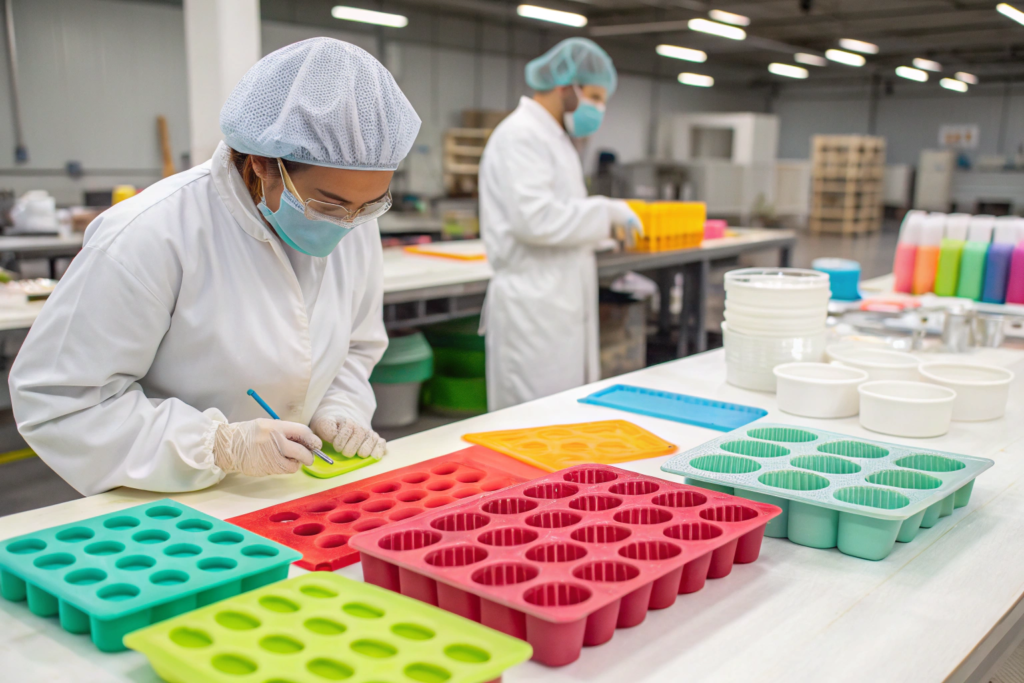
For custom silicone products, look for suppliers who specialize in this area, not general accessory sellers. A specialist will have deeper expertise in mold-making, silicone blending, and color matching. They will understand the difference between cheap, brittle silicone and high-grade, durable material. At AceAccessory, even though we produce many items, we have dedicated teams and partners for specific materials like silicone to ensure expert-level results.
Are B2B platforms like Alibaba reliable for finding suppliers?
Yes, but with a critical eye. Platforms like Alibaba and Global Sources host thousands of manufacturers. To filter effectively:
- Use Specific Keywords: Search for "custom silicone bracelet manufacturer" or "silicone wristband factory," not just "silicone bracelet supplier." This tends to surface factories rather than trading companies.
- Check Gold Supplier & Verified Status: These badges indicate paid membership and some level of verification by the platform, though they are not a guarantee of quality.
- Analyze Storefronts: A professional factory will have detailed product catalogs, clear company information, videos of their facility, and certifications. Look for suppliers who show their injection molding machines and printing workshops.
- Read Reviews & Transaction History: Pay attention to repeat orders and detailed buyer feedback.
Remember, the platform is for initial contact. The real vetting happens through direct communication, sample requests, and potentially a factory audit. Never rely solely on the online profile.
What are the advantages of attending trade shows?
Trade shows, such as the Canton Fair or specialized promotional product expos, offer unparalleled advantages. You can:
- See and Feel Physical Samples: Evaluate the texture, flexibility, and print quality firsthand.
- Meet Factory Representatives Face-to-Face: Gauge their professionalism, knowledge, and communication skills directly.
- Discuss Complex Projects On-the-Spot: You can negotiate pricing, lead times, and custom options in real time.
- Discover Trends and Innovations: See new techniques like glow-in-the-dark silicone, color-changing bands, or dual-layer bracelets.
While requiring more investment in time and travel, trade shows can fast-track the trust-building process and help you identify the most capable partners for your custom accessory needs.
What key factors should you evaluate in a supplier?
Once you have a shortlist, it's time to dig deeper. The evaluation should cover technical capability, quality systems, business reliability, and communication. Price is important, but it should be the final deciding factor among qualified options, not the first. A supplier who is $0.01 cheaper per piece but causes quality issues or delays will end up costing you more in the long run.
Focus on these core areas: Mold-making capability, Silicone material grade, Printing/Decorating techniques, and Quality control process. A professional manufacturer will be transparent about each of these and able to explain their process in detail. For instance, at Shanghai Fumao, we specify the grade of silicone we use (often food-grade or medical-grade for safety) and provide a step-by-step breakdown of our production and inspection process.

How important is mold-making expertise?
It is the most critical technical factor. The mold determines the bracelet's dimensional accuracy, the sharpness of any debossed (indented) text or logos, and the overall finish. High-quality molds are made from hardened steel and are precision-machined. Ask potential suppliers:
- "What material do you use for molds?" (Steel is standard for long runs.)
- "What is the cost and lead time for a new custom mold?" (This is a standard one-time fee, often called a mold charge.)
- "Can you provide a 3D drawing of the mold for approval before production?"
A good supplier will manage the entire mold-making process in-house or with a trusted partner, ensuring full control over quality. Poor mold-making results in blurry text, uneven edges, and bracelets that are difficult to put on or take off.
What should you know about silicone material and printing options?
Not all silicone is created equal. You must discuss:
- Material Grade: Standard, eco-friendly silicone, or odor-free silicone. For sensitive skin, hypoallergenic options are available.
- Color Options: Can they match specific Pantone colors? Do they offer color blends (like swirled or segmented colors)?
- Customization Techniques:
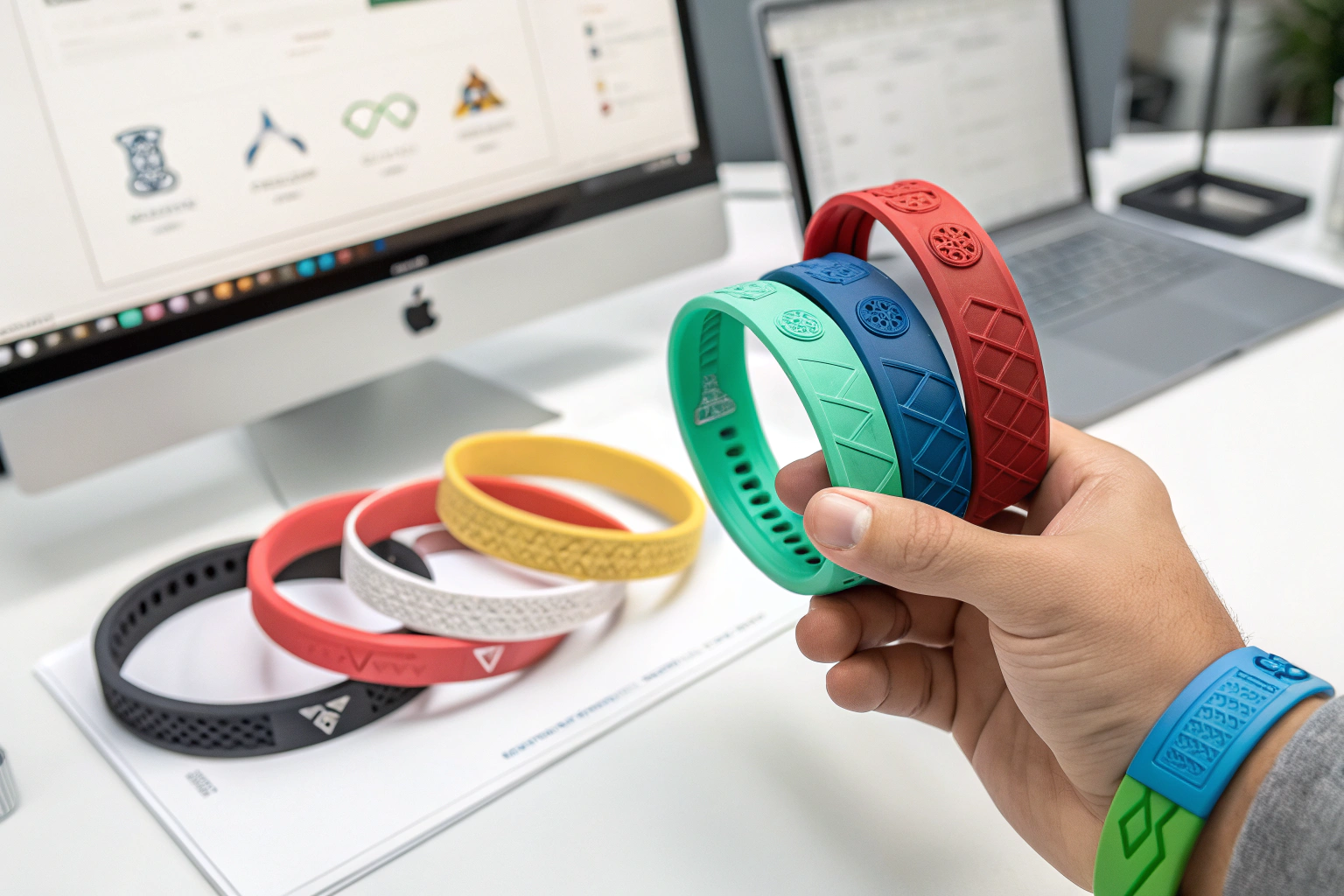
- Debossing/Embossing: Letters/logo pressed into or raised from the surface. Great for durability.
- Screen Printing: Ink printed on the surface. Ideal for multi-colored or complex graphics.
- Inside Printing: Printing on the inner side of the bracelet for a clean exterior look.
- 4-Color Process Printing: For photorealistic images (requires a flat band area).
Request samples for each technique you're considering to compare durability and appearance. A supplier's ability to advise on the best technique for your design is a sign of expertise.
How to effectively manage samples and communication?
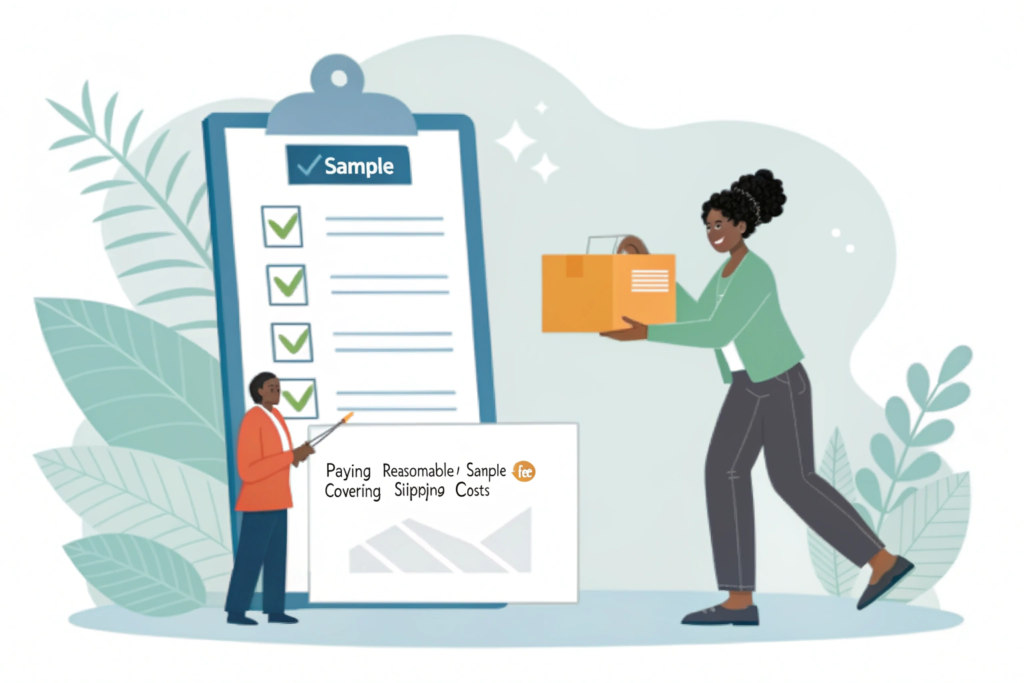
The sampling phase is your opportunity to test everything before committing to a large order. It's a non-negotiable step. A professional supplier will expect and encourage you to request samples. Be prepared to pay a reasonable sample fee and shipping cost; this is standard practice and shows you are a serious buyer.
Clear communication during this phase sets the tone for the entire project. Specify exactly what you want to test: color accuracy, size (inner circumference), clasp function (if applicable), and print clarity. Provide high-resolution artwork files in the correct format (usually vector-based .AI or .EPS files).
What does a comprehensive sample review involve?
When you receive samples, conduct a thorough inspection:
- Physical Test: Stretch the bracelet repeatedly. Does it return to its original shape? Does it feel strong or likely to snap?
- Visual Check: Are the colors vibrant and accurate? Is the debossed text deep and crisp? Is the printed ink aligned correctly and free of smudges?
- Measurement Check: Use a caliper or ruler. Does the width and thickness match your specifications? Is the inner diameter correct for the intended wrist size?
- Function Check: If it has a clasp or slider, test its security and ease of use.
Provide detailed feedback to the supplier, both positive and negative. Their responsiveness and willingness to make adjustments are excellent indicators of their customer service level. This iterative process ensures the final mass-produced unit will meet your expectations.
How to ensure clear terms before production?
Before approving mass production and making payment, you must agree on clear terms. These should be outlined in a formal Proforma Invoice (PI) or purchase contract. Key items include:
- Final per-unit price and total cost.
- Breakdown of all charges (unit cost, mold cost, setup fee, shipping).
- Payment terms (e.g., 50% deposit, 50% before shipment).
- Production lead time (from approval of sample & deposit to completion).
- Shipping method and estimated delivery time.
- Quality standard (reference to approved sample and AQL inspection level).
- Packing details (how many per polybag, per inner box, per master carton).
A reliable supplier like ours will ensure all these terms are transparent and agreed upon, preventing misunderstandings. This is a crucial aspect of providing professional and reliable service.
What are the logistics and quality control steps?
After production begins, your role shifts to oversight. For custom silicone bracelets, you should insist on a During Production Inspection (DUPRO) if the order is large, and a mandatory Final Random Inspection (FRI) before shipment. This is where partnering with a factory that has a strong internal quality control team is invaluable.
Logistics planning should also be discussed early. Silicone bracelets are lightweight but can be bulky in large quantities. Your supplier should provide a packing list with carton dimensions and total CBM to help you choose the most cost-effective shipping method (e.g., air freight for small urgent orders, sea freight for large volumes).
How is final quality inspection conducted for bracelets?
A proper FRI involves randomly selecting a statistically significant number of bracelets from packed cartons and checking them against the approved sample. Inspectors look for defects like:
- Material defects: Bubbles, impurities, or inconsistent color.
- Size/Shape defects: Incorrect dimensions or deformity.
- Printing/Debossing defects: Misspelled text, misaligned logos, faded ink.
- Function defects: Faulty clasps or breakage under standard stress.
The inspection should follow an AQL (Acceptable Quality Level) standard, typically AQL 2.5 for major defects. Request an inspection report with photos. Do not authorize shipment until you approve this report.
What are the best shipping and packaging practices?
Good packaging protects your investment. Bracelets should be individually polybagged or carded to prevent scratching and tangling. Master cartons should be strong and not overfilled. For branding, consider custom printed polybags or boxes.
Your supplier should handle export documentation (commercial invoice, packing list, certificate of origin) and work with a reliable freight forwarder. They can advise on the most efficient route and help with customs clearance procedures, especially important when dealing with large promotional orders destined for markets like the US or Europe. This end-to-end service is what transforms a simple supplier into a true manufacturing partner.
Conclusion
Finding the right supplier for custom silicone bracelets is a process of diligent research, clear communication, and meticulous verification. It involves looking beyond the lowest price to evaluate technical expertise, quality control systems, and business reliability. The ideal partner is a specialist who guides you through material and design choices, provides perfect samples, and delivers a consistent, high-quality product on time.
Remember, the sample is your blueprint for success, and the contract is your safeguard. Investing time in the selection process upfront will save you from headaches, costly mistakes, and disappointed customers later.
If you are looking for a reliable, experienced partner to produce high-quality custom silicone bracelets or any other promotional fashion accessory, we are here to help. At Shanghai Fumao, we combine specialized manufacturing knowledge with comprehensive project management and quality assurance. To discuss your custom bracelet project and request samples, please contact our Business Director, Elaine, at elaine@fumaoclothing.com. Let's create something impactful together.