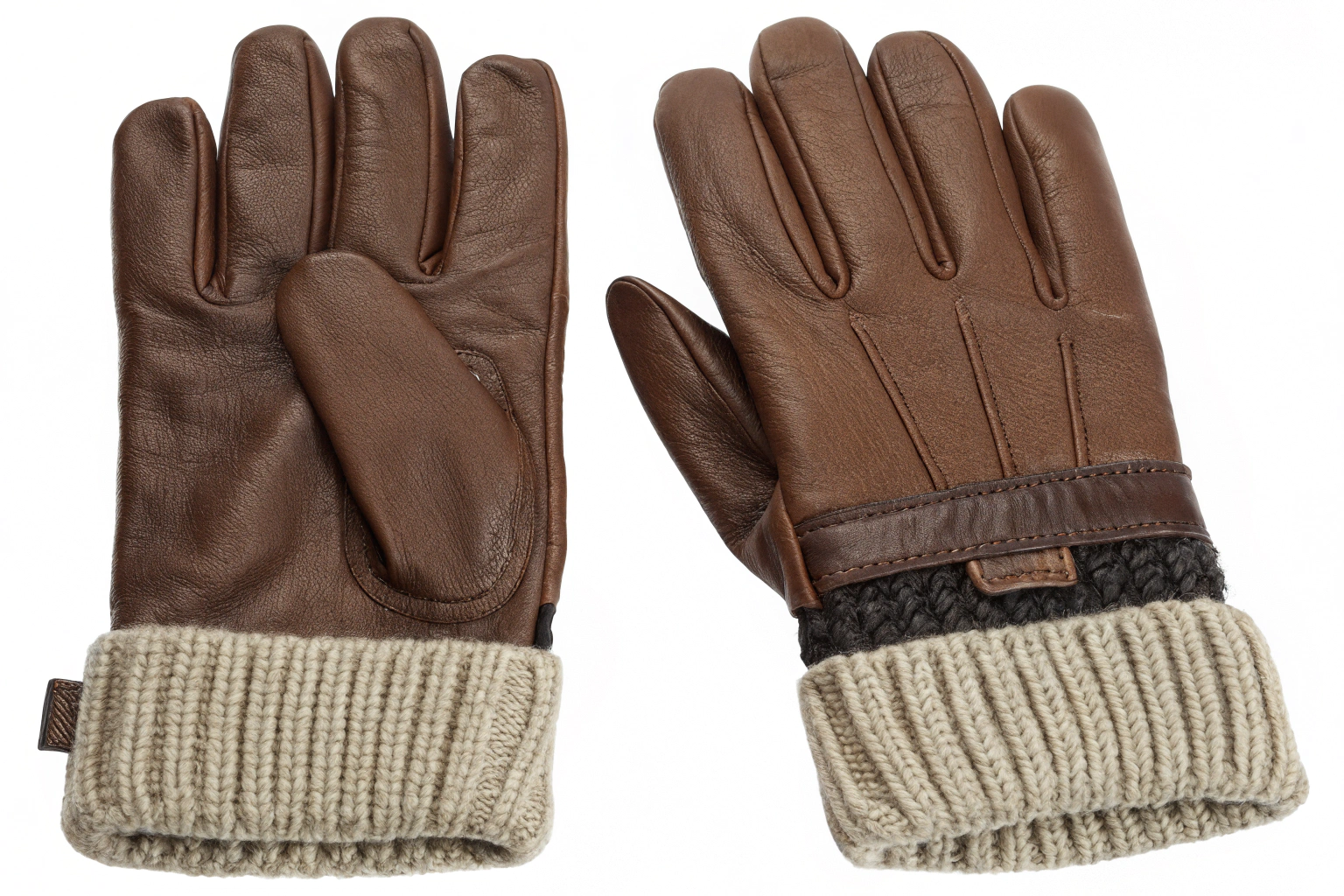
You have a brilliant idea for tech compatible gloves or need to source them for your brand. The market is growing, but you’re stuck. Searching online yields hundreds of factories, but how do you know which ones have real expertise with conductive threads, seamless knitting, and precise touchscreen sensitivity? Choosing the wrong partner could mean wasted months, poor product performance, and lost opportunities. How do you cut through the noise and find a manufacturer that can truly deliver on the promise of high-tech functionality?
The most effective way to find a qualified manufacturer is through a targeted, multi-channel approach that prioritizes verified specialization over general capability. It involves searching on dedicated B2B platforms, attending specialized trade shows, leveraging professional networks, and conducting rigorous due diligence on technical expertise, not just price. For a product like tech gloves, the manufacturer must master both traditional apparel skills and modern material science. As a factory that has developed accessories for global brands, we at Shanghai Fumao Clothing understand that finding the right partner is about matching your technical specifications with a producer's proven innovation loop and quality control systems for functional wear.
This process protects you from the high risk of product failure. A glove that doesn’t reliably work on screens is useless. Therefore, your search must be framed around technical validation first, and commercial terms second. Let’s map out a practical, step-by-step strategy to identify and vet potential partners.
Where to Start Your Search for a Tech Glove Manufacturer?
Beginning the search can feel overwhelming. A generic Google search for "glove manufacturer" will not get you the specialized results you need. You must start with platforms and venues where technical manufacturers actively showcase their niche capabilities.
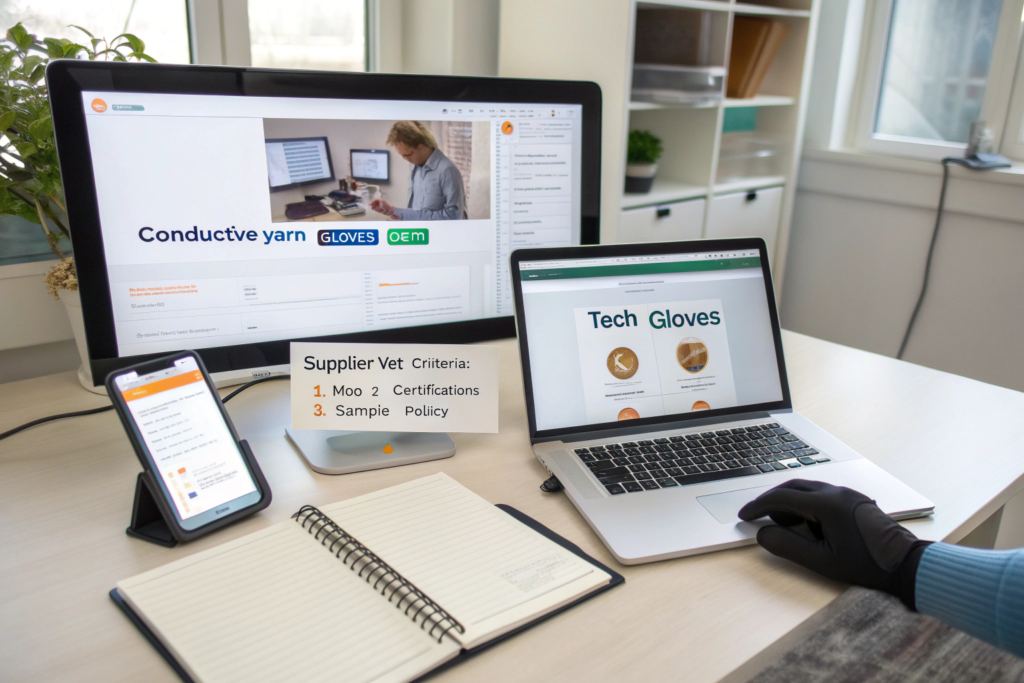
Start your search on industry-specific B2B platforms. Alibaba is a vast starting point, but you must use precise keywords. Search for "conductive thread glove manufacturer," "touchscreen gloves factory," or "tech accessories OEM" instead of just "gloves." Filter for suppliers with "Trade Assurance" and those who are "Verified Suppliers." More importantly, look for suppliers whose product galleries and company descriptions explicitly mention R&D, technical fabrics, and electronics integration. Another powerful platform is Global Sources, which often features manufacturers with stronger export experience and technical focus. Simultaneously, explore industry trade shows. Events like the Consumer Electronics Show (CES) in Las Vegas or ISPO Munich for sports technology often have manufacturers specializing in smart apparel and tech accessories. These shows allow you to see and touch samples, ask technical questions face-to-face, and gauge a factory's innovation level instantly. According to analyses by Sourcify, finding a manufacturer with pre-existing expertise in your specific product category is the single biggest predictor of development success.
What are the Best Online Platforms for Finding Specialized Manufacturers?
For tech-compatible gloves, general directories are less effective than targeted platforms. The best online platforms include:
- Alibaba.com: Use its advanced filters. Look for suppliers with "Assessed" verification badges from third-party inspectors like SGS or BV. Check their "Product R&D" and "Patent" information in their company profile.
- Made-in-China.com: This platform often features factories that are more business-to-business focused. Search for suppliers categorized under "Smart Wearable Devices" or "Technical Textiles."
- GlobalSources.com: Known for connecting buyers with manufacturers from Greater China, it has a strong focus on electronics and hardware, making it a good spot for factories that blend textiles and tech.
- LinkedIn: This is a powerful professional network. Search for key job titles like "Product Manager at Tech Glove Factory" or "Sales Director at Conductive Fabric Manufacturer." You can directly contact engineers or managers who understand the product specifics.
- Industry-Specific Directories: Look for directories related to wearable technology or smart textiles. Engaging with communities and forums in the wearable tech industry can also lead to manufacturer referrals.
Why are Trade Shows Crucial for Vetting Tech Accessory Suppliers?
Trade shows are irreplaceable for vetting because they provide tangible proof. You can physically test a manufacturer's sample gloves on your own phone or tablet. You can ask impromptu technical questions about thread resistance, washing durability, and knitting techniques, and gauge the engineer's depth of knowledge on the spot. Shows also reveal a factory's design capability and innovation trend. You can see if they are merely copying others or have in-house design teams creating new solutions. Furthermore, you can assess the company's professionalism and communication style directly. Building a relationship in person establishes far more trust than online chats. Key events like CES or ISPO are where the forefront of smart apparel manufacturing is displayed, making them essential for serious sourcing.
How to Verify a Factory's Technical Capability?
Once you have a shortlist, the most critical phase begins: verification. Any factory can claim they make tech gloves. You must collect concrete evidence that they understand and can execute the complex aspects of your product.
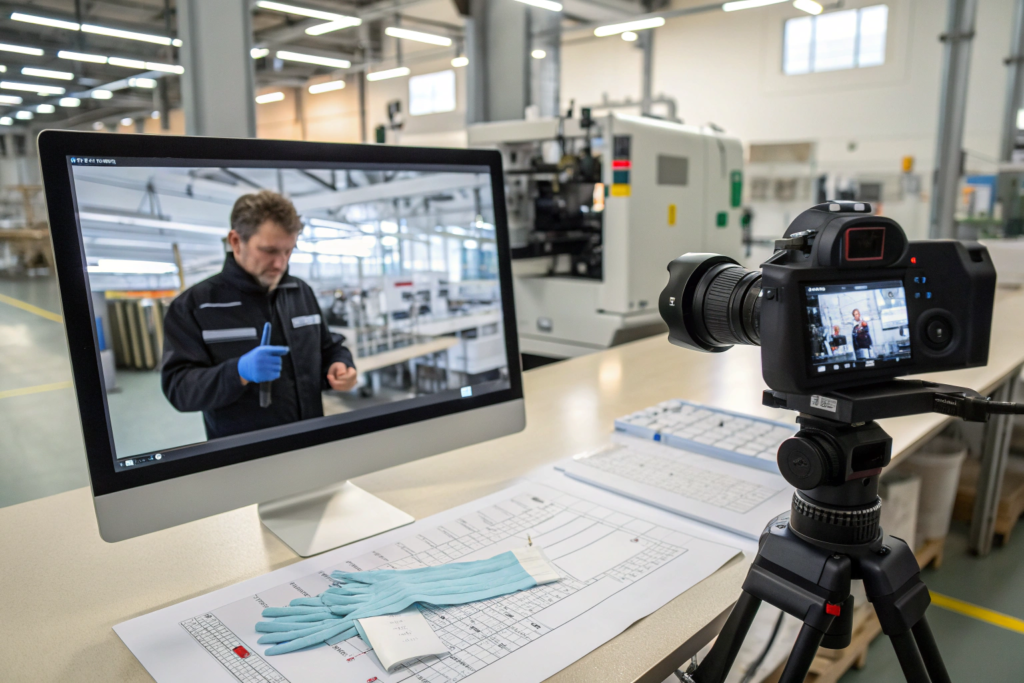
Verifying technical capability requires a multi-point inspection that goes beyond basic business licenses. First, request detailed documentation. Ask for technical data sheets (TDS) for the conductive yarn or fabric they use. This should include parameters like surface resistivity (measured in ohms/sq), durability to washing, and composition. Second, ask for a detailed portfolio of past projects. A credible manufacturer will have case studies, photos, or even permission to contact previous clients in a similar field (e.g., other tech accessory brands). Third, insist on a video tour of their factory floor, specifically asking to see the knitting machines (like seamless knitting machines for gloves), the assembly area where conductive threads are integrated, and their quality control lab. Ask how they test touchscreen sensitivity—do they have a standardized testing rig with multiple device screens? Finally, check for relevant certifications. While not specific to tech, ISO 9001 for quality management systems indicates a structured operation. More relevant might be certifications for the materials used, such as OEKO-TEX for harmful substances. This due diligence process mirrors the supplier qualification audits used by major brands.
What Key Questions Should You Ask About Conductive Materials?
Your questions must be specific to force detailed answers. Ask:
- "What is the exact composition and brand/source of your primary conductive yarn (e.g., silver-coated nylon, stainless steel fiber)?"
- "What is the surface resistivity (Ω/sq) of the finished fabric at the fingertips?" (Lower is generally better for sensitivity).
- "How do you ensure consistent conductivity after 20, 50, or 100 wash cycles? Can you provide wash test reports?"
- "What is the failure mode? Does conductivity degrade gradually or fail suddenly?"
- "How is the conductive material integrated—knitted-in during the main production, or embroidered/sewn on afterwards?" (Knitted-in is typically more durable and aesthetic).
- "Do you have multiple material options for different price and performance tiers (e.g., full conductive fingertips vs. just a patch)?"
Asking these questions separates experts from generalists. Resources like IDTechEx reports on conductive fabrics can help you understand the landscape and ask smarter questions.
How to Assess a Factory's R&D and Sample Process?
The sample process is a microcosm of the entire production relationship. To assess it:
- Request a Development Timeline: Ask for a step-by-step breakdown from concept to approved sample, including time for material sourcing, prototyping, and revisions.
- Ask About Prototyping Costs and MOQ: A factory with real R&D will have a clear, often non-refundable, prototyping fee. Be wary of factories that offer "free samples" for highly custom tech items—this often means they are using generic parts.
- Request to See Their Sample Room and Meet Designers: During a video tour, ask to see where prototypes are made. Do they have technicians who can adjust knitting programs?
- Evaluate Their Questions: A good factory will ask you detailed questions back: "On which specific devices will you test?" "What is your target activation force (the pressure needed for screen response)?" "What aesthetic finish do you want over the conductive areas?" Their questions reveal their experience. A partner like Shanghai Fumao Clothing treats the sample phase as a collaborative engineering session, ensuring the product development meets both design and functional specs.
What are the Red Flags and Green Flags in Manufacturing?
In the complex landscape of international manufacturing, signals can be misleading. Knowing what indicates a reliable partner versus a risky one can save you from catastrophic failures.
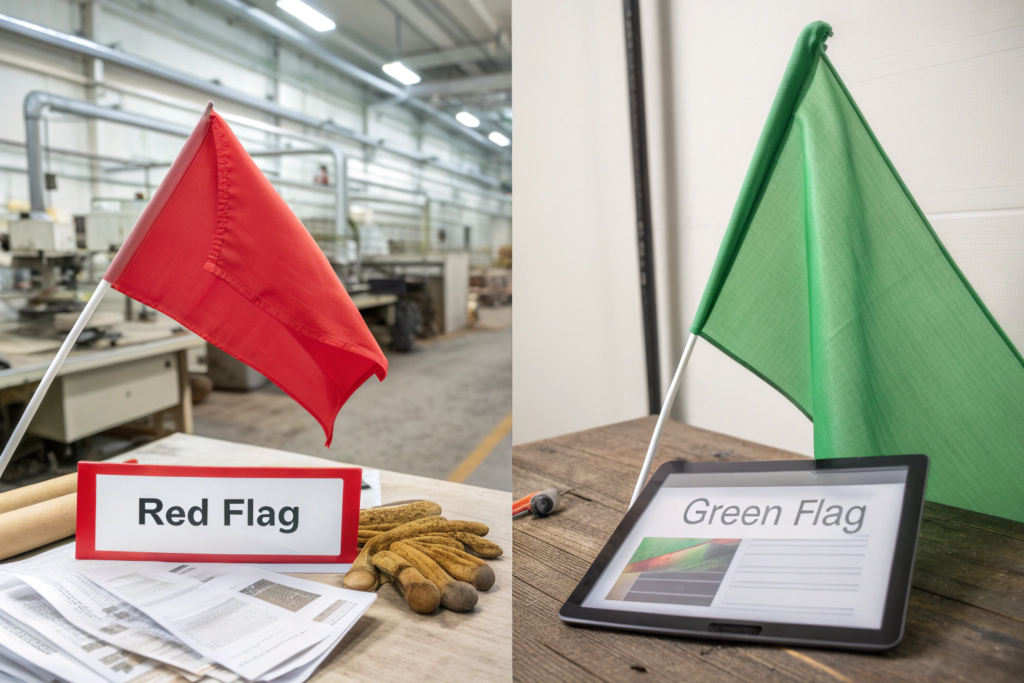
Red Flags are warning signs that suggest incompetence, dishonesty, or high risk:
- Vague or Evasive Communication: Inability to answer specific technical questions with details, or always replying with "yes, we can" without asking follow-ups.
- No Willingness for Video Verification: Refusal to show real-time factory operations, especially the production floor and QC area.
- Unrealistically Low Prices or Fast Timelines: If a quote is drastically lower than others, they are likely cutting corners on material quality or planning hidden costs.
- No Minimum Order Quantity (MOQ) or Extremely Low MOQ for custom tech items: This can indicate they are a trading company, not a factory, or they plan to use low-quality, off-the-shelf components.
- Poor Sample Quality: A prototype that looks shoddy, has inconsistent stitching, or has clearly non-functional conductive elements is the biggest red flag of all.
Green Flags indicate a professional, capable, and trustworthy manufacturer:
- Proactive and Detailed Communication: They ask more questions than you do and provide clear, data-backed answers.
- Transparency in Operations: They readily offer factory audits, video tours, and introduce you to their project management team.
- Clear, Itemized Quotations: The quote breaks down material cost, labor, tooling (if any), and testing fees separately.
- Structured Development Process: They provide a formal product development agreement, outlining stages, responsibilities, and payment milestones.
- Strong Quality Control Protocols: They explain their QC checkpoints, from incoming material inspection to final functional testing of every glove or a strict AQL level. This alignment with international quality standards is crucial.
How to Spot a Trading Company vs. a Real Factory?
Trading companies can add cost and communication barriers. To spot them:
- Check the Business License: Ask for it. A factory's license will have "manufacturing" or "production" in its scope. A trader's will say "trading" or "import/export."
- Analyze Their Product Range: If their online store sells an impossibly wide range of unrelated products (e.g., gloves, USB cables, toys, furniture), they are almost certainly a trader.
- Request Specific Machine Photos: Ask for photos of the specific seamless knitting machines they use for tech gloves, with their company logo visible in the shot. Traders often send generic stock photos.
- Ask for the Factory Address and Visit: Propose a visit. A real factory will welcome it. A trader may delay or give an address to a different location.
- Communication Consistency: Note if the person you chat with online has deep technical knowledge. Traders often have salespeople who must "ask the factory" for every detailed question, causing delays. Understanding this supply chain layer is part of effective global sourcing strategy.
What Should a Professional Manufacturer's Quote Include?
A professional quote is a transparency document. For tech gloves, it must include:
- Item Description: Detailed, with material specs (e.g., "95% Acrylic, 5% Silver-coated Nylon conductive yarn").
- Unit Price Breakdown: Material cost (fabric, conductive thread, trim), labor cost (knitting, linking, finishing), packaging cost (poly bag, tag, carton).
- Tooling/Mold Costs (if applicable): For custom silicone grips or plastic elements.
- Sample Cost: Clearly stated fee for prototypes.
- Testing/Certification Fees: Cost for any required third-party testing (e.g., washability test, resistance test).
- Minimum Order Quantity (MOQ): Stated by piece and by style/color.
- Payment Terms: e.g., 50% deposit, 50% before shipment.
- Incoterms: Clearly stated, e.g., "FOB Ningbo Port."
- Production Lead Time: From deposit receipt to ready-for-shipment.
- Validity Period of the Quote.
A quote missing these elements is incomplete and risky.
How to Negotiate and Start with a New Manufacturer?
You've found a promising partner and vetted their capability. Now, the goal of negotiation is to establish a fair, clear, and sustainable partnership, not to squeeze the lowest possible price at the expense of quality or relationship.
Start negotiations by being respectful and professional. Acknowledge their work on the quote. Instead of demanding a lower price outright, ask value-based questions: "If we increase the MOQ by 20%, what would the new unit cost be?" or "If we simplify the packaging, what would be the savings?" This shows you are a serious businessperson. Focus on terms, not just price. Negotiate favorable payment terms (e.g., 30% deposit, 70% against copy of Bill of Lading) to reduce your risk. Clearly agree on the sample approval process: how many revision rounds are included, who bears the cost of sample shipping, and what constitutes "final approval." The first order should be treated as a pilot. It's wise to start with the minimum MOQ to test their performance on quality, communication, and delivery before committing to larger volumes. A successful partnership with a factory like Shanghai Fumao Clothing is built on clear expectations, documented in a comprehensive manufacturing agreement.

What are the Essential Terms for a Manufacturing Agreement?
A formal agreement protects both parties. Essential terms include:
- Product Specifications: Attach the final, approved tech pack and sample as an exhibit. This is the binding quality standard.
- Price and Payment Schedule: The exact price, currency, and dates/milestones for payments.
- Delivery Schedule: The firm production completion date and shipping date, with agreed-upon consequences for delays.
- Quality Standards and Inspection Rights: Specify the AQL level for inspection. State your right to have a third-party inspector conduct pre-shipment inspection at the factory, usually at your cost.
- Intellectual Property (IP) Clause: Crucially, state that all product designs, molds, and tooling are your property. The factory cannot use them for other clients.
- Confidentiality: Both parties agree to keep business terms and product designs confidential.
- Force Majeure: Outlines procedures for unforeseen events disrupting production.
- Termination Clause: Conditions under which either party can terminate the agreement.
Having a lawyer review this is advisable. This formalizes the partnership and provides a clear reference, a practice endorsed by experts in fashion law and sourcing.
How to Manage the First Production Order Successfully?
Active management is key. Assign a single point of contact on both sides. Require regular updates with photos/videos at key stages: material arrival, production start, first off-line pieces, mid-production, and packing. Hire a third-party quality inspection company to conduct a During Production Check (DIP) and a Final Random Inspection (FRI). The cost is minor compared to the risk of receiving a faulty batch. Be clear and prompt with communication. If the factory asks for clarification, respond quickly to avoid delays. Plan for logistics early. Book your freight forwarder in advance. View the first order as a collaborative test. Its success paves the way for a long-term, efficient supply chain partnership, turning your manufacturer into a true extension of your team for all your tech accessory needs.
Conclusion
Finding the right manufacturer for tech-compatible gloves is a deliberate journey of research, verification, and relationship-building. It requires moving beyond basic sourcing to identifying partners with specific expertise in conductive materials, precision knitting, and functional testing. By leveraging targeted platforms, insisting on technical validation, understanding the clear signals of a reliable factory, and negotiating a solid foundation for partnership, you significantly de-risk your project.
This diligent approach ensures that your innovative product idea becomes a reality that performs reliably, delights customers, and builds your brand's reputation. The right manufacturer is not just a vendor; they are a technical collaborator essential to bringing high-functionality accessories to market.
If you are looking for a manufacturing partner with a proven track record in developing and producing sophisticated accessories, including tech-integrated items, we invite you to connect with us. Our team has the experience and the systematic approach to guide complex product development from concept to delivery. For a detailed discussion about producing your tech-compatible gloves, please contact our Business Director, Elaine. She can facilitate an introduction to our technical and production teams. Reach Elaine at: elaine@fumaoclothing.com.