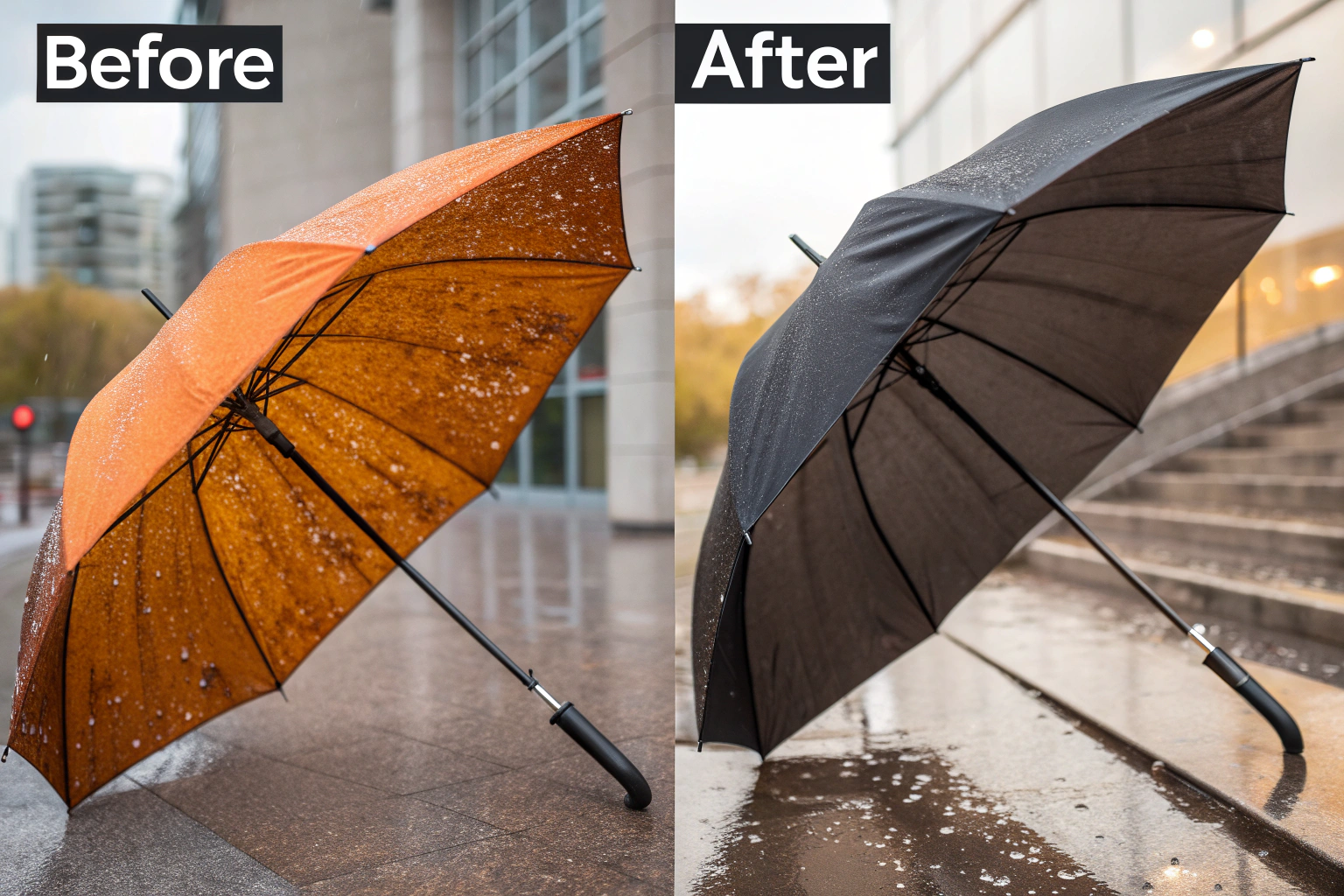
You understand that the ultimate test of a product's quality is how it performs in its moment of truth. For an umbrella, that moment is a downpour. A customer who buys your umbrella, uses it once, and then finds an ugly orange rust stain on the frame a week later is not just disappointed; they are a lost customer and a potential negative review. You're sourcing a collection of umbrellas and you're focused on a critical, often overlooked detail that determines a product's lifespan and your brand's reputation: rust resistance. How do you ensure, from thousands of miles away, that the frame of your umbrella won't fail?
To ensure an umbrella frame is rust-resistant, you must move beyond vague promises and implement a rigorous, three-part strategy of material specification, process verification, and quality testing. This involves: 1) Specifying superior, inherently rust-resistant materials like fiberglass and aluminum in your Tech Pack; 2) Demanding high-quality protective coatings like powder coating or electro-coating for any steel components; and 3) Verifying these specifications through independent lab tests, such as a Neutral Salt Spray (NSS) test, to get objective, scientific proof of the frame's durability.
I'm the owner of Shanghai Fumao, and we've manufactured high-performance umbrellas for demanding clients across Europe and North America. I can tell you with certainty that rust is not a random accident; it's a predictable result of poor material choices and cost-cutting in the production process. A cheap, rust-prone umbrella is a "one-storm product." A well-made, rust-resistant umbrella is a long-term companion and a testament to your brand's commitment to quality. Let's break down the professional methodology for building a truly rust-resistant umbrella.
Which Materials Offer the Best Natural Rust Resistance?
The most effective way to prevent rust is to choose materials that are inherently incapable of rusting or are naturally resistant to it. The frame of an umbrella is a system of components—the central shaft, the ribs, and the stretchers. Your choice of material for each of these parts is the most important decision you will make.
The best materials for a naturally rust-resistant umbrella frame are fiberglass and aluminum. Fiberglass is a composite material that is physically incapable of rusting, making it the superior choice for ribs and stretchers due to its strength and flexibility. Aluminum is a lightweight metal that forms a natural, protective oxide layer, making it highly resistant to corrosion and an excellent choice for the central shaft. Specifying a combination of a fiberglass rib structure with an aluminum shaft is the gold standard for a high-performance, rust-proof frame.
Let's compare the top material choices:
- Fiberglass (The Champion):
- What it is: A strong, lightweight composite material made from fine glass fibers embedded in a polymer resin.
- Why it's great: It is 100% rust-proof. It cannot rust. It is also incredibly strong and flexible, allowing the umbrella to bend in high winds without breaking. This makes it the absolute best choice for the ribs and stretchers, which are the most delicate and exposed parts of the frame.
- Specify in Tech Pack: "Ribs & Stretchers: 100% Fiberglass."
- Aluminum (The Reliable Partner):
- What it is: A lightweight, non-ferrous metal.
- Why it's great: Aluminum does not rust. When exposed to air, it instantly forms a very thin, hard layer of aluminum oxide on its surface. This layer is impervious to oxygen and acts as a natural, self-healing "shield" against further corrosion. It's an excellent, lightweight, and premium-feeling material for the central shaft.
- Specify in Tech Pack: "Central Shaft: Anodized Aluminum."
- Steel (The High-Risk, Low-Cost Option):
- What it is: An alloy of iron and carbon.
- Why it's a risk: Iron's natural tendency is to rust (oxidize) when exposed to oxygen and water. Untreated steel will rust, guaranteed. It is cheaper and stronger than aluminum, which is why it's used in low-cost umbrellas, but it is the source of almost all rust problems. If you must use steel for cost reasons, its survival depends entirely on the quality of its protective coating, which we'll discuss next.

What is "anodized" aluminum?
Anodizing is an electrochemical process that thickens the natural oxide layer on the surface of the aluminum. This makes the surface much harder, more durable, and even more corrosion-resistant. It can also be used to add color. Specifying "anodized aluminum" for your shaft ensures a more durable and premium finish than raw aluminum.
Why do cheap umbrellas use steel?
Simply put, cost. Steel is significantly cheaper than fiberglass and aluminum. A factory can produce a steel frame for a fraction of the cost of a fiberglass/aluminum frame. This is a classic trade-off: the factory saves money, but the brand owner takes on the enormous risk of product failure and customer dissatisfaction.
How Do Protective Coatings Shield Vulnerable Materials?
If you are using steel for any part of your frame—perhaps for a heavy-duty golf umbrella shaft or for cost reasons—then the quality of its protective "armor" is everything. The coating is the only thing standing between the iron in the steel and the water in the atmosphere. A tiny scratch or a poorly applied coating is a death sentence for the frame.
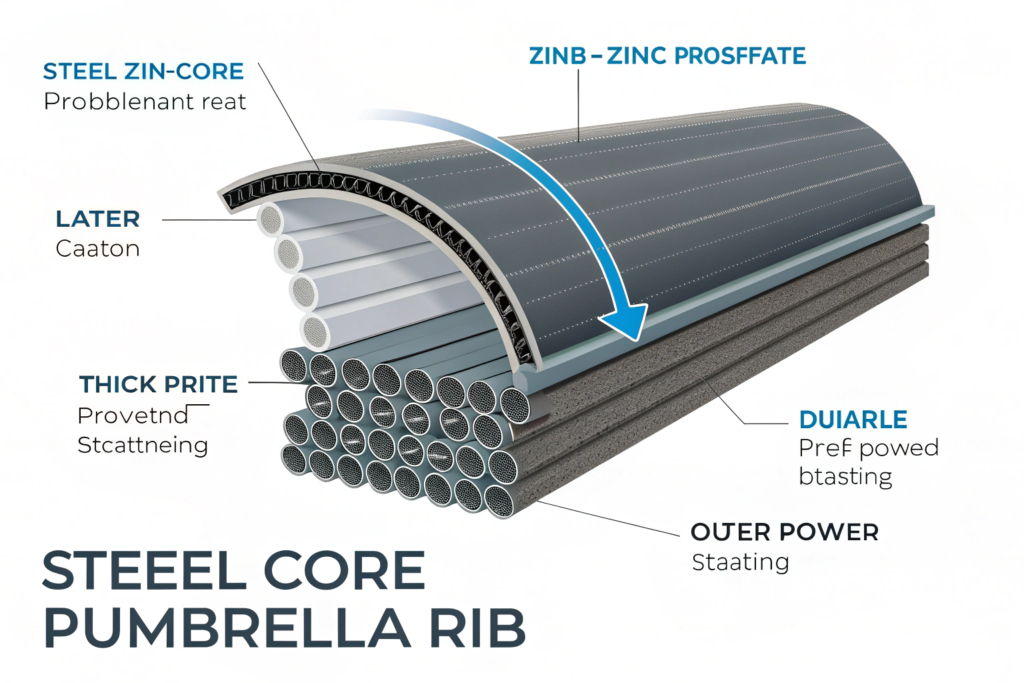
A high-quality protective coating creates an impermeable barrier that seals the steel away from oxygen and moisture. The two most effective and durable methods are powder coating and electro-coating (E-coating). Both processes create a much thicker, harder, and more uniform finish than simple spray painting. A crucial, often-skipped step is the pre-treatment of the steel with a phosphate layer, which helps the coating adhere better and provides a secondary layer of corrosion resistance.
Let's differentiate these coating methods:
- Powder Coating (The Durable Choice):
- How it works: A dry, powdered "paint" (a mix of polymer resins and pigments) is electrostatically applied to the grounded steel part. The part is then cured in an oven, which melts the powder into a smooth, hard, and incredibly durable shell.
- Why it's great: It creates a finish that is much thicker and more resistant to chipping, scratching, and fading than conventional liquid paint. It's a very effective way to protect steel.
- Electro-coating / E-coating (The Comprehensive Choice):
- How it works: The steel frame is submerged in a bath of liquid paint (epoxy or acrylic) and an electric current is applied. This causes the paint particles to deposit themselves onto the frame in a perfectly uniform layer, covering every nook and cranny. The frame is then baked to cure the paint.
- Why it's great: Because it's a dipping process, it provides total coverage, even on complex shapes and inside hollow tubes—areas that a spray gun can't reach. This is the method used by the automotive industry to rust-proof car bodies, and it's considered a superior method for complex objects like umbrella frames.
- Simple Spray Painting (The Low-Quality Option):
- This is what you'll find on the cheapest umbrellas. It's a thin layer of liquid paint sprayed onto the surface. It's uneven, scratches easily, and provides minimal protection. This method should be rejected.
What is "pre-treatment"?
Before the coating is applied, the steel must be properly prepared. A professional factory will run the steel through a multi-stage pre-treatment process. This typically involves cleaning the steel to remove oil and dirt, and then applying a zinc phosphate or iron phosphate conversion coating. This microscopic crystalline layer does two things: it helps the final paint layer adhere much more strongly, and it provides a backup layer of corrosion resistance if the topcoat is ever scratched. A factory that skips this step is cutting a major corner.
What about chrome plating?
Chrome plating can be very rust-resistant if done properly with a thick layer of nickel underneath the chrome. However, it is a very complex, expensive, and environmentally sensitive process (it involves hazardous chemicals). A cheap, poorly done "flash chrome" job will peel and rust very quickly. For these reasons, powder coating or e-coating is generally a more reliable and cost-effective choice for umbrella frames.
How Can You Scientifically Test for Rust Resistance?
You've specified fiberglass ribs and a powder-coated steel shaft in your Tech Pack. The supplier has sent you a beautiful pre-production sample. It looks great, but how do you know it's truly rust-resistant? You cannot wait six months for customer complaints to roll in. You need objective, scientific proof. This is where a standardized lab test is invaluable.
The most effective way to scientifically test for rust resistance is the Neutral Salt Spray (NSS) test, as defined by international standards like ASTM B117 or ISO 9227. This accelerated corrosion test involves placing the umbrella frame in a sealed chamber and exposing it to a continuous, heated spray of salt water. By evaluating how long the frame can withstand this harsh environment before showing signs of rust, you can get a fast, objective, and comparable measure of its corrosion resistance. A good quality frame should be able to withstand at least 24-48 hours in the salt spray chamber without significant rusting.
Here's how to implement a testing protocol:
- Set the Standard: In your Tech Pack, you should include a performance requirement. For example: "All metal components of the frame must pass a 24-hour Neutral Salt Spray (NSS) test (ASTM B117) with no visible red rust."
- Who Performs the Test?:
- Third-Party Lab (Best Option): The most reliable method is to send a pre-production sample to an independent, accredited testing lab like SGS, Intertek, Bureau Veritas, or TÜV. They will perform the test impartially and provide you with a formal, certified test report. This is the most trustworthy option.
- Factory's In-House Lab: Many larger, more professional factories have their own salt spray chambers and can perform this test for you. This is a good sign, as it shows they are serious about quality control. However, for maximum assurance, a third-party test is always preferable to avoid any potential conflict of interest.
- Interpreting the Results: The test report will typically include photos of the sample before and after the test and a clear "Pass/Fail" rating based on the criteria you set. The key is to look for "red rust," which is the sign of the underlying steel corroding. Some minor discoloration of the coating might be acceptable, but any sign of red rust on a steel part is a failure.

How much does a salt spray test cost?
A standard NSS test at a third-party lab is a relatively inexpensive and fast procedure, typically costing between $100 and $300 USD. The process itself is a controlled dance of science and precision: samples of the umbrella's frame, fabric, and hardware are placed in a chamber where salt spray—briny, mist-like droplets that mimic the harsh, corrosive bite of coastal air or prolonged exposure to rain and humidity—hovers constantly, creating a humid, metallic atmosphere thick with the tang of salt. Over days, the test subjects endure this relentless assault, their surfaces pitting, rusting, or discoloring as the saltwater eats away at their integrity.
Should I test every production run?
For a new supplier or a new product, absolutely. You should test the pre-production samples to qualify the design and the supplier's capability. Once a supplier has proven to be reliable over several production runs, you might move to a "skip-lot" testing model, where you test a sample from every third or fifth production run to ensure they are maintaining their quality standards.
How Do You Verify Quality During Production?
You've done everything right on paper. Your specs are clear, and your pre-production sample passed the salt spray test. Now, how do you ensure that the 5,000 umbrellas in your bulk production run are made to the same standard? This requires in-process and final inspections.
To verify quality during production, you must implement a quality control plan that includes specific checkpoints for the frame's rust resistance. This involves having an inspector on-site to: 1) Visually check for 100% coverage and uniformity of the protective coating on steel parts; 2) Use a coating thickness gauge to ensure the paint layer meets your minimum thickness specification (e.g., 60 microns); and 3) Perform a cross-hatch adhesion test to ensure the coating is properly bonded to the steel and won't flake off.
Here are key QC checks for your inspector to perform:
- Visual Inspection: The inspector should randomly pull frames from the production line and visually inspect them under good lighting. They are looking for any pinholes, scratches, "orange peel" texture, or areas of thin coverage in the coating.
- Coating Thickness Measurement: This is a quantitative check. The inspector uses a small, handheld electronic device called a coating thickness gauge (or a "paint meter"). They will place it on multiple points of the coated steel parts to get a reading in microns (µm). Your specification might be "minimum thickness of 60 µm." If the readings are consistently below this, it means the factory is applying a thinner, less protective coat to save money.
- Adhesion Test (Cross-Hatch Test): This is a destructive test performed on a few samples. The inspector uses a special blade to cut a small cross-hatch pattern through the coating down to the steel. A special adhesive tape is applied firmly over the grid and then pulled off quickly. The inspector then examines how much of the coating was pulled off by the tape. A high-quality coating will have excellent adhesion, and very few, if any, of the squares will come off. A poor coating will flake off easily. This tests the quality of the pre-treatment and the curing process.

Who performs this inspection?
You can hire a professional third-party inspection company (like QIMA, SGS, etc.) to send a trained inspector to the factory on your behalf. These inspectors, armed with years of industry expertise and a keen eye for detail, will step into the bustling factory floor—where the hum of machinery blends with the chatter of workers and the scent of raw materials mingles with the fresh aroma of production. They will perform the checks based on your specific QC checklist, meticulously examining every aspect from the quality of raw materials to the precision of craftsmanship, ensuring that each product meets your exacting standards.
As they move through the production line, their sharp gaze scans for even the smallest imperfection—a frayed thread, a misaligned seam, or a color variation that falls outside your tolerance range. Equipped with high-resolution cameras, they capture clear, detailed photos of both compliant and non-compliant items, providing you with a visual record that brings the inspection to life. Finally, they compile all findings into a comprehensive report, complete with photos, detailed observations, and actionable recommendations, giving you full transparency into the factory's operations and the true quality of your products.
What if the inspection fails?
If a significant number of frames fail these tests, you have the right to reject the production lot. The inspection report provides the objective evidence you need to go back to the factory and demand that they rework or remake the products to meet the agreed-upon quality standard, at their own expense. Imagine the scene: stacks of frames, once gleaming with promise, now lying scattered across the inspection table, their edges rough where they should be smooth, their finishes marred by tiny scratches that catch the light like shards of broken glass.
Each failed test is a red flag, fluttering in the air, a silent accusation against the craftsmanship that was supposed to bring your vision to life. The inspection report, thick with data and photographs, becomes your shield—a tangible record of imperfection that leaves no room for denial. With it in hand, you step into the factory’s bustling corridors, the air thick with the scent of machine oil and the hum of distant assembly lines.
Conclusion
Ensuring your umbrella frames are rust-resistant is a perfect case study in professional, proactive quality management. It's a problem that cannot be solved with hope; it must be solved with engineering. By taking a systematic approach—starting with the strategic specification of superior materials like fiberglass and aluminum, demanding robust protective coatings for any steel components, scientifically verifying performance with a salt spray test, and implementing rigorous in-process quality control checks—you can transform rust from a major risk into a solved problem. This level of diligence not only protects your brand from negative reviews and costly returns but also allows you to build a powerful marketing story around durability, quality, and long-lasting value.
At Shanghai Fumao, this is the level of detail we live and breathe. We believe that a product's quality is determined by the sum of these small, critical decisions. We have the expertise to guide you in material selection, we operate our own testing equipment, and we welcome the scrutiny of third-party inspectors. We know that building a truly great product requires a partnership built on transparency and a shared obsession with quality. If you are ready to create a line of umbrellas that are built to last, please reach out to our Business Director, Elaine, at elaine@fumaoclothing.com.