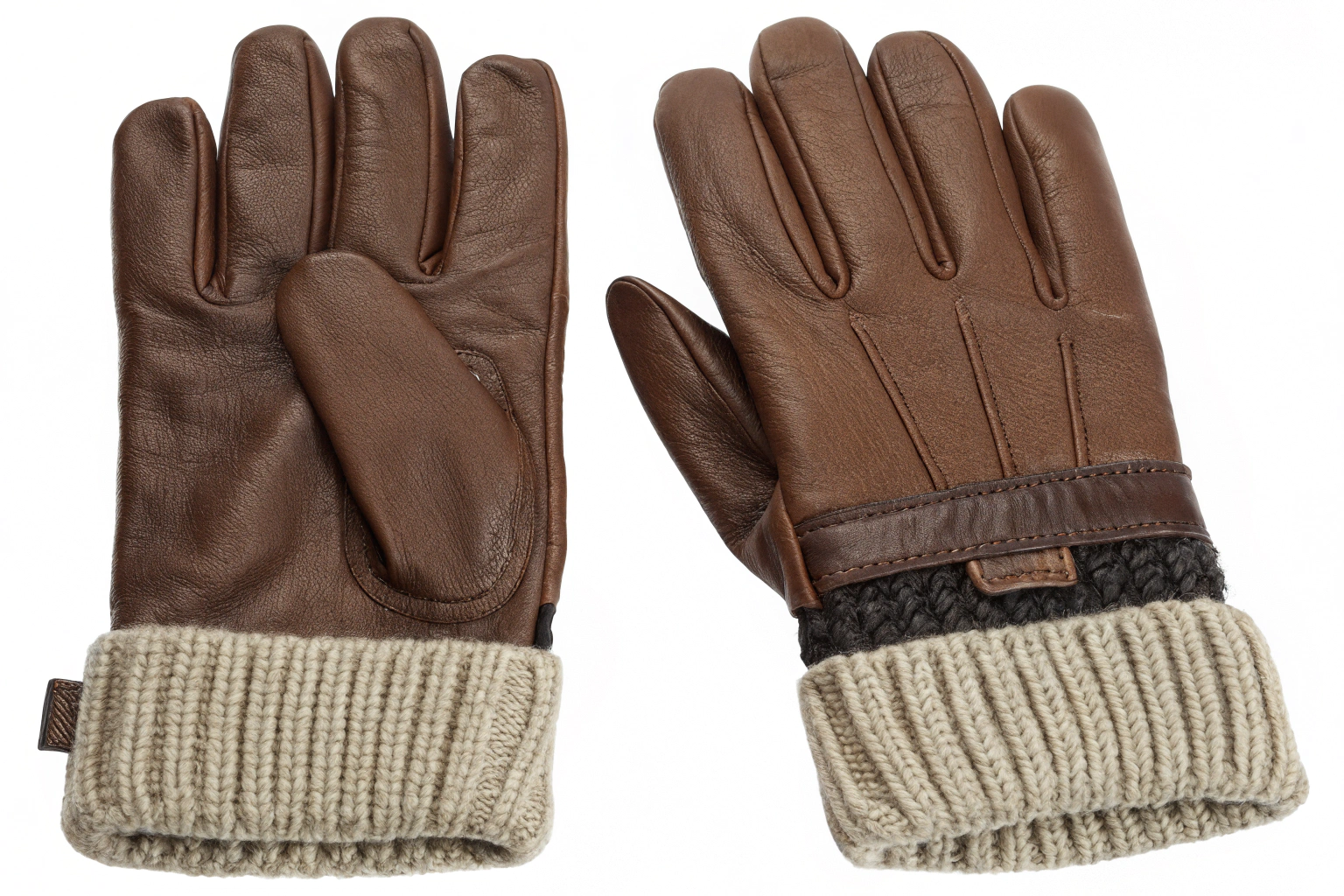
You've just received a shipment of beautiful knitted beanies or scarves, and within a few wears, customers complain about unsightly fuzz balls—pilling—forming on the surface. This not only makes the product look old and cheap but also leads to returns, negative reviews, and brand damage. For importers and brands, pilling is a common yet preventable quality nightmare that erodes profit and reputation.
Ensuring your knitted products do not pill requires a proactive, two-part strategy: selecting the right fiber and yarn construction during development and enforcing strict production and post-production controls during manufacturing. At Shanghai Fumao Clothing, we treat pilling resistance as a non-negotiable quality benchmark, integrating solutions from the yarn spool to the final packaging. The goal is to deliver knitted accessories that maintain their pristine look through repeated wear and washing.
Let's explore the actionable steps you and your manufacturer must take to guarantee pill-free knitwear for your customers.
What Fiber and Yarn Choices Prevent Pilling?
The battle against pilling is won or lost at the very beginning: in the yarn selection. Not all fibers are created equal. Choosing a yarn based solely on softness or cost without considering its pilling propensity is the most common mistake buyers make. Pilling occurs when short, loose fibers work their way to the surface and tangle under friction.
To prevent this, you must prioritize long-staple fibers and blended yarn constructions. Long-staple fibers, like high-grade Merino wool or long-staple cotton, are stronger and less likely to break and migrate. Blending a natural fiber with a synthetic like nylon or polyester adds tensile strength to the yarn, anchoring the fibers in place and drastically reducing pilling.

Specifying the right yarn is a critical function of a manufacturer's design and development capability. A good partner will guide you through this technical selection.

Which Fibers Are Most and Least Likely to Pill?
Understanding fiber behavior is key. Here’s a quick guide:
- High Pilling Risk: Short-staple acrylic, soft low-grade cotton, and loose wool blends with weak fibers. These fibers are often cheaper and feel initially soft but break easily.
- Medium to Low Pilling Risk: Long-staple Merino wool, Tencel/Lyocell, and quality bamboo. These natural fibers are longer and stronger.
- Very Low Pilling Risk (Used in Blends): Nylon, Polyester, and Polypropylene. These synthetics are incredibly strong and are rarely used alone for knits but are excellent as a reinforcing component.
The best practice is rarely to use 100% of a high-risk fiber. A blend like 85% Acrylic / 15% Nylon is common for affordable, durable beanies, while a 70% Merino Wool / 30% Nylon blend offers luxury and resilience.
How Does Yarn Twist and Ply Impact Durability?
The structure of the yarn itself is equally important. A tightly twisted yarn holds its fibers more securely than a loose, fluffy one. Similarly, multi-ply yarns (where multiple single strands are twisted together) are far more resistant to pilling than single-ply yarns. Think of it like a rope: a single strand frays easily, but multiple strands twisted together are much tougher. When reviewing yarn options with your supplier at Shanghai Fumao Clothing, always ask about the twist level and ply. A visually "softer" loose yarn may lead to a product that pills immediately.
How Can Knitting Techniques and Construction Help?
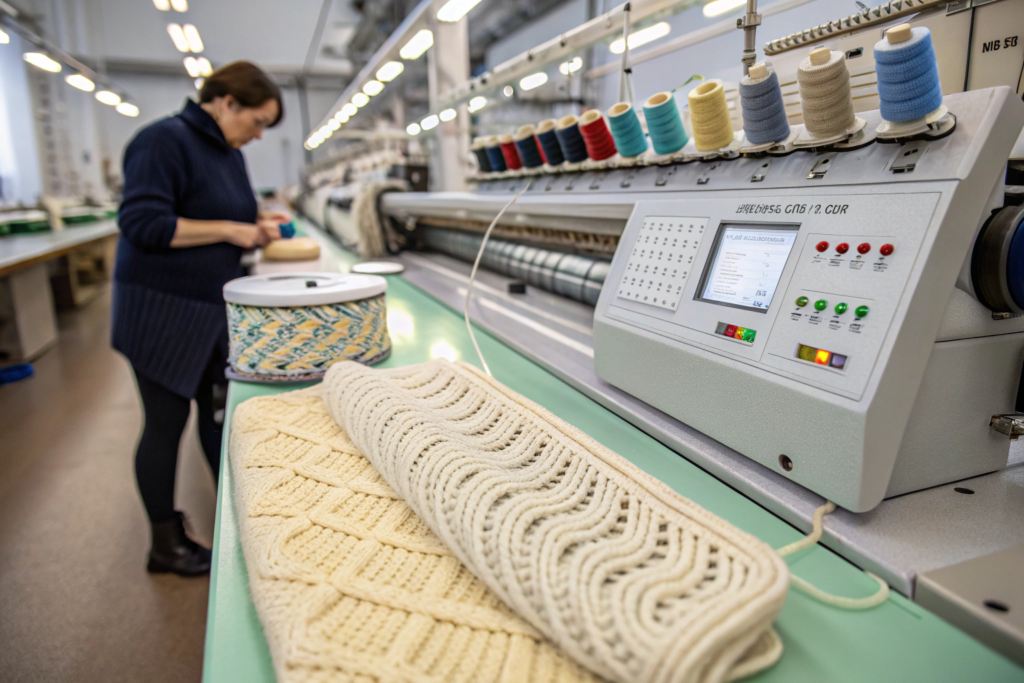
Even with perfect yarn, poor construction can undermine everything. A loose, open knit will allow fibers to move and abrade more freely than a dense, tight one. The knitting machine settings and stitch pattern are your second line of defense against pilling.
The key is to aim for a tighter gauge knit. This means more stitches per inch, which creates a denser fabric where fibers are locked in place. The specific knitting technique and machinery used can be optimized for durability over speed or extreme softness.
Monitoring these production parameters is a core part of a factory's quality control and certifications process, ensuring consistency across every batch.
What is the Best Stitch Type to Reduce Pilling?
While fashion often dictates stitch patterns, some are inherently more durable. Tight rib stitches or plain jersey stitches at a high gauge are excellent for areas that receive high friction, like the cuffs of knitted gloves or the hem of a beanie. More complex, lofty stitches like cable knits or very open lace patterns can be more prone to pilling if not executed with high-quality yarn and careful tension. When developing products, discuss with your factory which areas (like the sides of a scarf) need reinforced stitching for durability.
Does Fabric Weight and Density Matter?
Absolutely. Fabric weight (GSM - grams per square meter) is a direct indicator of density. A heavier knit (e.g., 300 GSM for a winter hat) typically uses more yarn and a tighter construction than a light 180 GSM spring scarf. Heavier, denser fabrics simply have less room for fibers to move and pill. Your manufacturer should provide you with the target GSM for your product. Insist on this specification being part of your purchase order and have it verified during pre-production sampling and bulk inspection. Standards for knitwear testing are often referenced from organizations like the International Organization for Standardization (ISO).
What Post-Production Treatments Are Essential?
The manufacturing process doesn't end when the knitting machine stops. How the knitted panels or finished goods are treated afterward plays a massive role in their long-term appearance. Proper finishing can "lock in" the fabric and remove the initial weak fibers that would become the first pills.
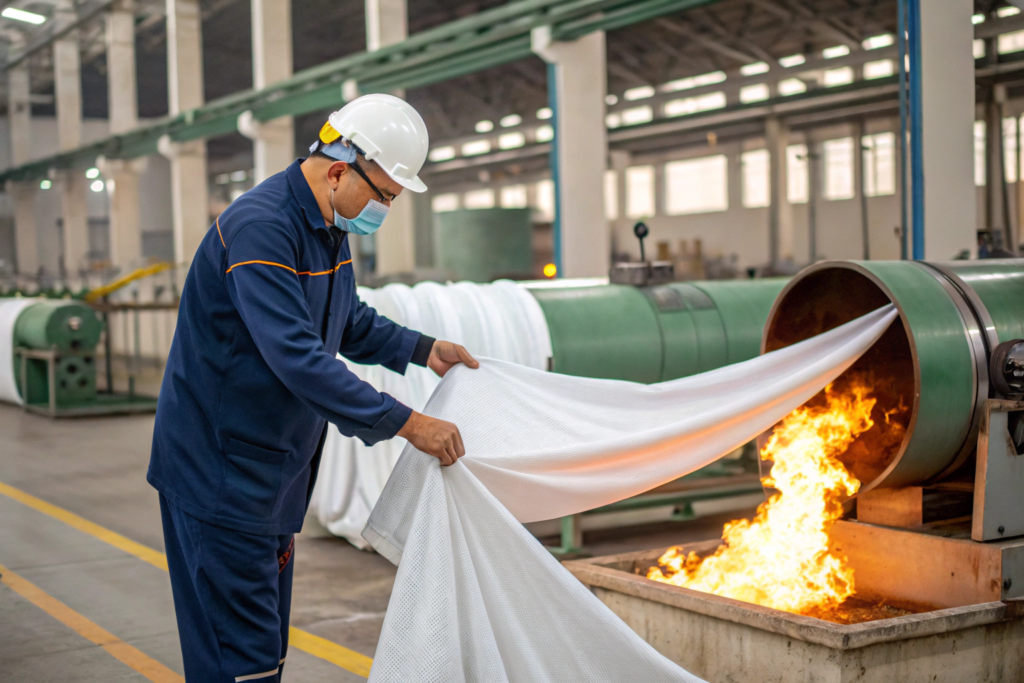
Two critical post-production treatments are singeing and anti-pilling chemical softeners. Singeing gently passes the fabric over a flame to burn off the protruding loose fibers. Anti-pilling softeners can be applied during washing to coat the fibers, reducing friction. Furthermore, a proper washing and tumbling process under controlled conditions helps release any weak fibers before the product reaches the customer.
Ensuring your supplier has these finishing capabilities and uses them consistently is a key aspect of reliable communication and service.
How Does Singeing or Gassing Improve Fabric?
Singeing (or gassing) is a highly effective mechanical finish. After knitting, countless tiny fiber ends protrude from the fabric surface. These are the primary culprits for initial pilling. The singeing machine uses a controlled gas flame or heated plates to cleanly burn off these micro-fuzz without damaging the main fabric. The result is a smoother surface that is significantly less likely to form pills in its early life. This process is standard for higher-quality knitwear but may be skipped on budget items to save cost. It's a question worth asking your supplier.
What Role Does Washing and Tumbling Play?
Industrial washing and tumbling serve as a controlled "wear test." This process simulates the friction a garment will encounter during use. In a regulated environment with specific water temperatures, mild detergents, and timed cycles, weak fibers are shed and washed away. The tumbling action further helps to remove these fibers and relax the knit structure. A proper wash also preshrinks the product and improves its hand-feel. Skipping this step to save time or money means the customer becomes the tester, experiencing the pilling firsthand. Industry best practices for garment care are often outlined by groups like the American Apparel & Footwear Association (AAFA).
How to Test and Verify Pilling Resistance Before Production?
You cannot afford to wait for customer complaints to learn about a pilling problem. Rigorous pre-production testing is your final safeguard. This involves both laboratory tests and real-world wear trials to predict performance.
A responsible manufacturer will conduct these tests as part of the development cycle. The results should inform decisions about yarn, construction, and finishing before you commit to a bulk order. This data-driven approach separates professional suppliers from basic workshops.
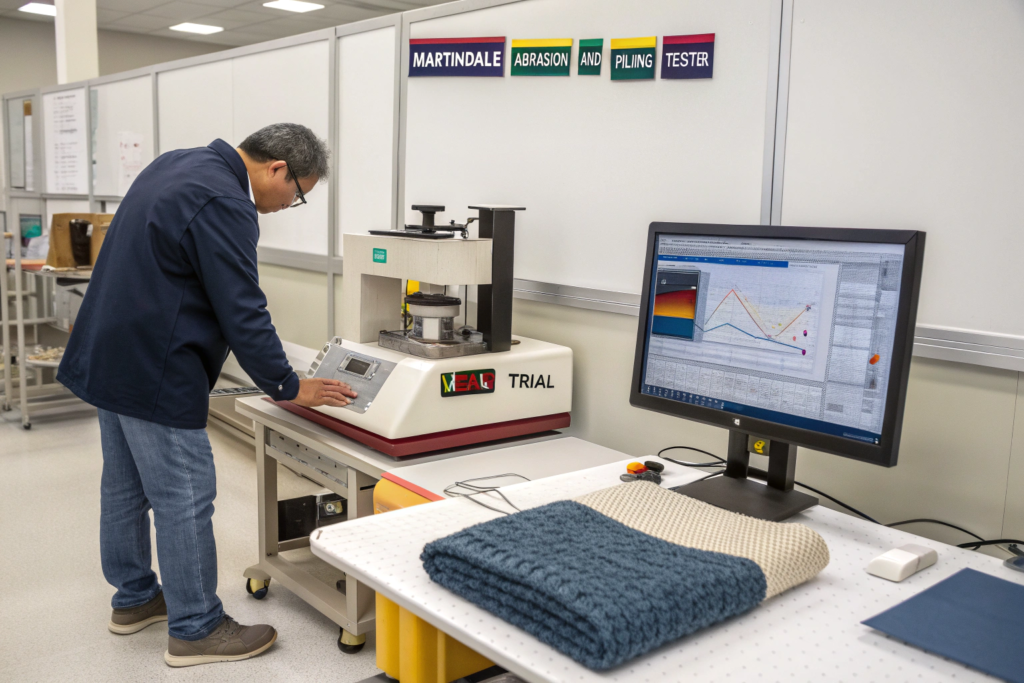
What Standardized Tests Should Your Supplier Perform?
The most common industry test is the Martindale test (e.g., ASTM D4970 / ISO 12945-2). This machine rubs fabric samples against a standard abrasive material under controlled pressure for a set number of cycles. The sample is then compared to a standard rating (from 1 - severe pilling to 5 - no pilling) to assess its performance. For knitwear like beanies and scarves, a rating of 3-4 or higher after several thousand cycles is typically considered good. Your supplier should be able to provide test reports from a certified lab for the specific yarn and construction you are using. This is concrete evidence of quality.
How to Conduct Practical Wear Trials?
While lab tests are scientific, practical trials offer real-world validation. Your manufacturer should create prototype samples (e.g., a few beanies and scarves) using the exact proposed materials and processes. These samples should then be subjected to simulated use:
- Rubbing Test: Manually rub the fabric against itself and against common materials like denim and bag straps.
- Home Laundering: Wash and tumble dry the samples 5-10 times according to care labels.
- Extended Wear: Have staff or a focus group wear the samples for a period.
Document the results with photos after each stage. This practical due diligence, championed by partners like Shanghai Fumao Clothing, gives you the confidence to proceed with bulk production and provides marketing claims about durability.
Conclusion
Preventing pilling in knitted products is not a matter of luck; it's a result of deliberate, integrated quality engineering. It starts with the intelligent selection of strong, blended yarns, is reinforced through tight and dense knitting construction, is secured by essential post-production finishing like singeing and washing, and is finally validated through rigorous standardized and practical testing.
By partnering with a manufacturer that understands and controls each of these stages—and by insisting on evidence at each step—you can source knitted accessories that maintain their beauty and integrity. This commitment to quality translates directly into customer satisfaction, brand loyalty, and reduced returns.
Don't let pilling unravel the success of your next knitwear line. Work with a manufacturer that builds durability in from the start. Contact our Business Director Elaine at Shanghai Fumao Clothing to discuss how we can develop pill-resistant knitted beanies, scarves, and gloves for your brand. Email her at: elaine@fumaoclothing.com to begin a partnership focused on lasting quality.