Custom baseball caps have become more than just sun protection – they're walking billboards for your brand, powerful merch items, and a key accessory in streetwear culture. If you're thinking about adding custom caps to your clothing line, you're tapping into a product with incredible versatility and customer appeal. But where do you start? The process involves more than just putting a logo on a hat. It requires thoughtful design, understanding construction, and navigating production with a reliable manufacturer.
To design custom baseball caps for your clothing brand, you need to systematically navigate through five key phases: defining your brand's aesthetic and purpose, mastering the technical components of cap construction, creating professional tech packs, selecting the right manufacturing partner, and rigorously reviewing samples before bulk production. This approach ensures your caps are high-quality, on-brand, and resonate with your audience.
Let's break down this process step-by-step, transforming your concept into a tangible, sellable product.
What is the First Step in the Design Conceptualization Phase?
Before you sketch a single line or choose a color, you must answer the "why" behind your cap. This foundational step aligns your design with your brand strategy and target market. A cap for a high-end streetwear label will look fundamentally different from one for an eco-friendly lifestyle brand or a corporate event.
The first step is to clearly define the cap's purpose, target audience, and how it fits within your existing brand ecosystem. This involves deciding if it's a signature core product, seasonal fashion item, promotional giveaway, or part of a full apparel collection. This strategic intent will guide every subsequent design decision, from materials to cost.
How to Align Cap Design with Your Brand Identity?
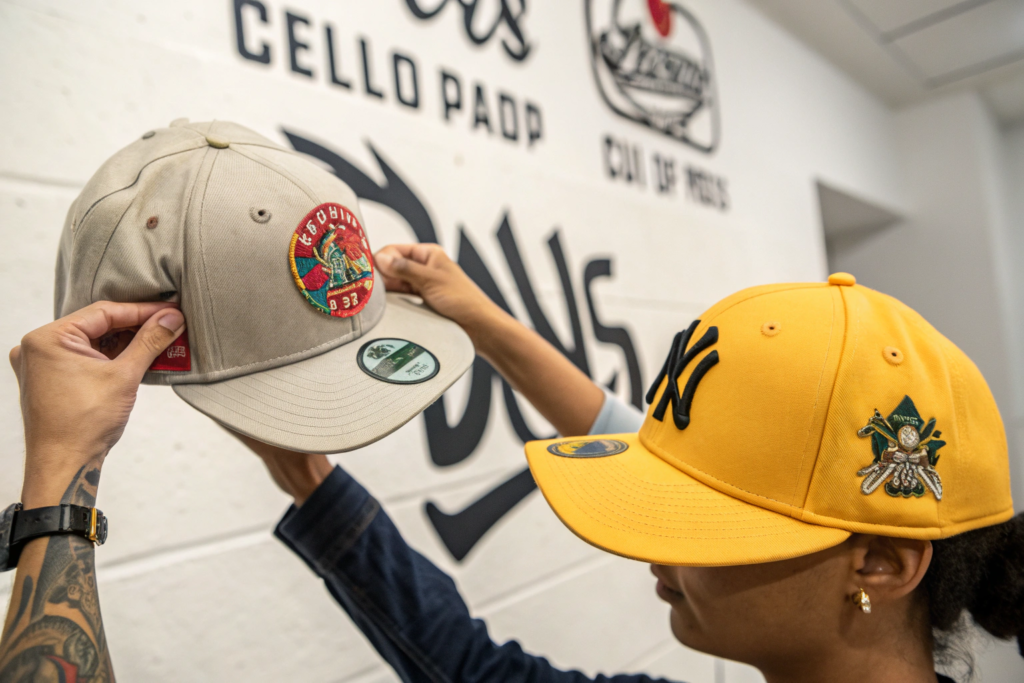
Your cap must feel like a natural extension of your brand. Start by analyzing your existing brand elements:
- Logo Application: How will your logo be applied? A small, subtle embroidered logo on the side conveys sophistication, while a large, printed graphic across the front panel makes a bold streetwear statement.
- Color Palette: Pull colors directly from your brand's palette. Consider the base color of the cap (the "shell") and the color of the stitching, eyelets, button, and underbill. Do you want tonal, minimalist looks or high-contrast combinations?
- Overall Vibe: Is your brand heritage and classic, or futuristic and tech-driven? A waxed cotton cap with a leather strapback suits a heritage brand, while a cap made from recycled performance fabric with reflective details suits a tech-focused brand.
This alignment ensures brand consistency. As part of the broader headwear market, your custom cap becomes a cohesive part of your brand's story, not just an add-on.
Who is Your Target Customer and What is the Cap's Purpose?
Define the end-user and the cap's role:
- Core Product vs. Seasonal Item: Will this be a permanent item in your line (a core product), requiring durable construction and timeless design? Or is it a limited-edition, seasonal piece that can experiment with bold trends?
- Customer Lifestyle: Is your customer an athlete needing moisture-wicking fabrics? A fashion-conscious individual looking for a unique silhouette? Understanding their lifestyle informs functionality.
- Price Point: The intended retail price heavily influences material choices and manufacturing techniques. A high-end cap can justify expensive materials like wool or premium embroidery, while a promotional cap will prioritize cost-efficiency.
Clarity here prevents costly missteps. A beautifully made, expensive leather cap will fail if your audience expects affordable, casual cotton hats.
What are the Essential Technical Components to Understand?
Designing a cap requires learning a new vocabulary. Understanding the parts of a cap and the available options is crucial for communicating your vision clearly to a factory and ensuring the final product matches your expectations.
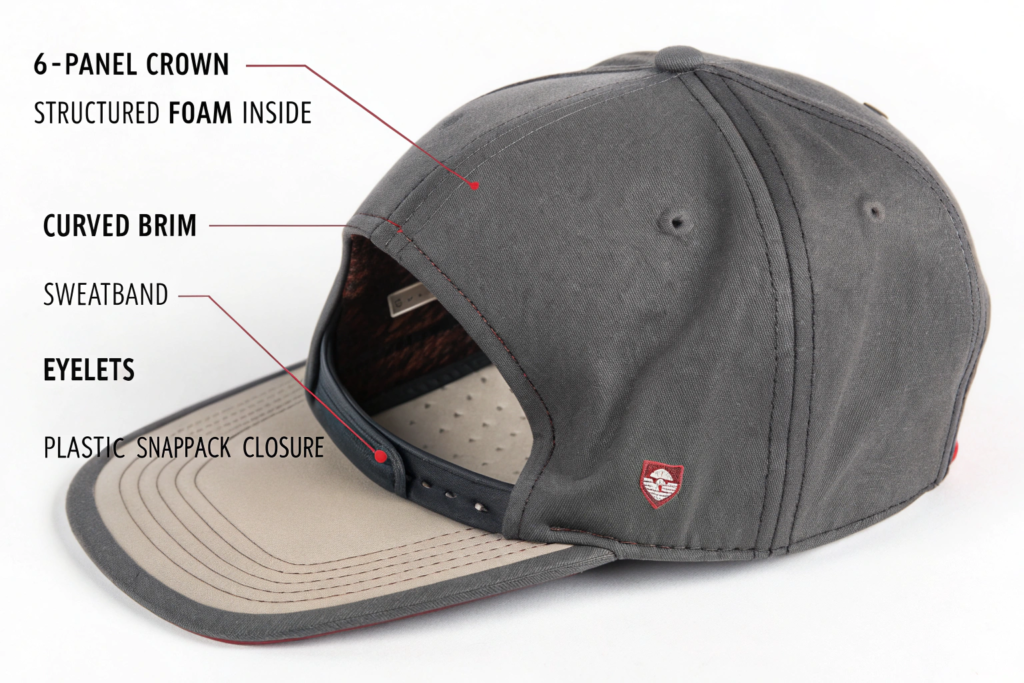
The essential technical components include the cap's panel construction, crown structure, brim style, closure type, and material selection. Each choice impacts the cap's look, fit, comfort, and cost. Mastering these terms empowers you to make informed design decisions.
What Crown and Brim Options Define the Silhouette?
The crown is the body of the cap. Your main choices are:
- Panel Count: The most common are 5-panel (smoother, more minimalist front) and 6-panel (the classic baseball cap look with a front seam). Each offers a distinct profile.
- Structure:
- Structured: Has firm buckram or foam inside the crown panels to maintain a rigid, predefined shape even when not worn.
- Unstructured: Has no internal stiffening, so the crown collapses softly. This offers a more relaxed, broken-in feel.
- Brim (or Visor):
- Curved Brim: The traditional, universally flattering style.
- Flat Brim: Popular in streetwear, often worn with the protective film left on.
- Material: Brims are usually plastic (for shape retention) sandwiched between fabric. The underside fabric color is a design detail.
Which Closure System Offers the Best Fit for Your Audience?
The closure determines how the cap adjusts. The right choice affects fit versatility and aesthetics.
- Snapback: Features a plastic strap with snap buttons. Offers adjustable sizing (usually S/M and L/XL within one cap) and has a iconic, sporty look.
- Strapback (or Buckleback): Uses a leather, fabric, or adjustable nylon strap with a metal or plastic buckle. Often perceived as more premium or classic than snapbacks.
- Fitted: Has no closure; it's a fixed size. This requires you to produce multiple size runs (S, M, L, XL) but offers the cleanest look. Common in high-end fashion and for caps and hats meant for dedicated fans.
- Stretch Fit: Made with elasticated fabric (like a cotton-poly blend) for a comfortable, flexible one-size-fits-most option. Great for casual giveaways or retail where stocking multiple sizes is impractical.
How Do You Create a Professional Tech Pack for Manufacturers?
A tech pack is your single most important document. It is the blueprint that tells the factory exactly how to build your cap. An ambiguous tech pack leads to errors, multiple sample rounds, and delays. A detailed, professional tech pack gets you the right sample faster.
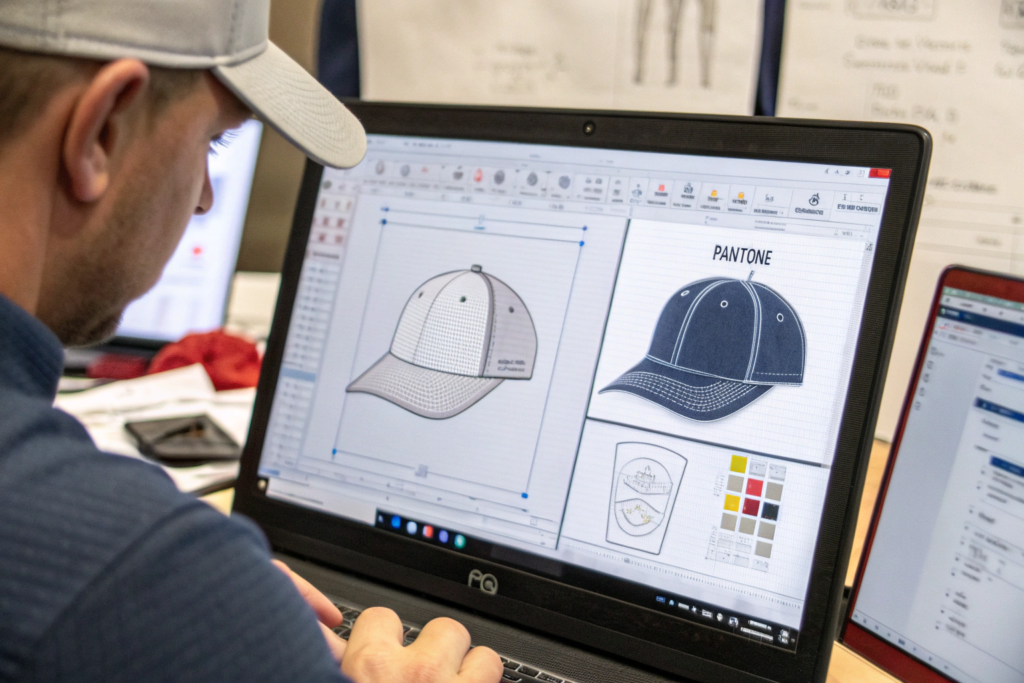
A professional tech pack for baseball caps includes detailed flat sketches, precise material specifications, exact color codes (like Pantone), explicit embroidery/print instructions with artwork, and comprehensive measurement specifications for every component. It leaves no room for interpretation.
What Visual Elements Must a Cap Tech Pack Include?
- Flat Technical Sketch: A clean, black-and-white line drawing of the cap from front, side, and back views. Every seam, stitch line, and part (like the closure strap) should be clearly shown.
- Color Callouts: Clearly label each part of the cap (Panel A, B, Under Visor, Strap, etc.) and assign a specific color. Always use Pantone (PMS) codes for fabric colors. Do not use vague terms like "navy blue."
- Artwork Placement Mockup: Provide a visual mockup of exactly where and how your logo or graphic should be placed. Specify the placement using measurements from specific points (e.g., "Center logo 2.5 inches down from crown seam").
- Stitch Detail Callouts: Specify stitch types (e.g., single-needle, chain stitch) and stitch colors if they are contrasting.
What are the Critical Material and Measurement Specs?
This is the data that ensures quality and consistency.
- Material Specification Sheet:
- Shell Fabric: Specify the exact material (e.g., "100% Brushed Cotton Twill, 320gsm"), color (Pantone), and supplier if possible.
- Sweatband Fabric: Usually cotton terry or perforated neoprene. Specify type and color.
- Closure Parts: Specify "Plastic Snapback with Nickel Finish" or "Woven Polyester Strap with Metal Buckle."
- Embroidery Details: Specify thread type (e.g., rayon or polyester), stitch count, and provide the final, clean digital artwork file in the required format (like .ai or .eps for vector art).
- Measurement Spec Sheet (Size Chart): Provide precise measurements in centimeters or inches for key dimensions: Crown Height, Crown Width (at various points), Brim Length, and Brim Width. This is especially critical for fitted caps. Include tolerance levels (acceptable variances).
What Should You Focus on During Sampling and Production?
Once your tech pack is sent to a manufacturer like Shanghai Fumao Clothing, the sampling phase begins. This is your quality control checkpoint. Never approve production without thoroughly reviewing and approving a physical sample.
During sampling, focus on verifying the accuracy of all design elements, assessing the quality of materials and construction, and testing the fit and comfort. During production, maintain clear communication, plan for a Pre-Shipment Inspection (PSI), and understand the logistics timeline. Rushing this phase risks a bulk order of defective or off-spec products.
How to Conduct a Thorough Sample Review?
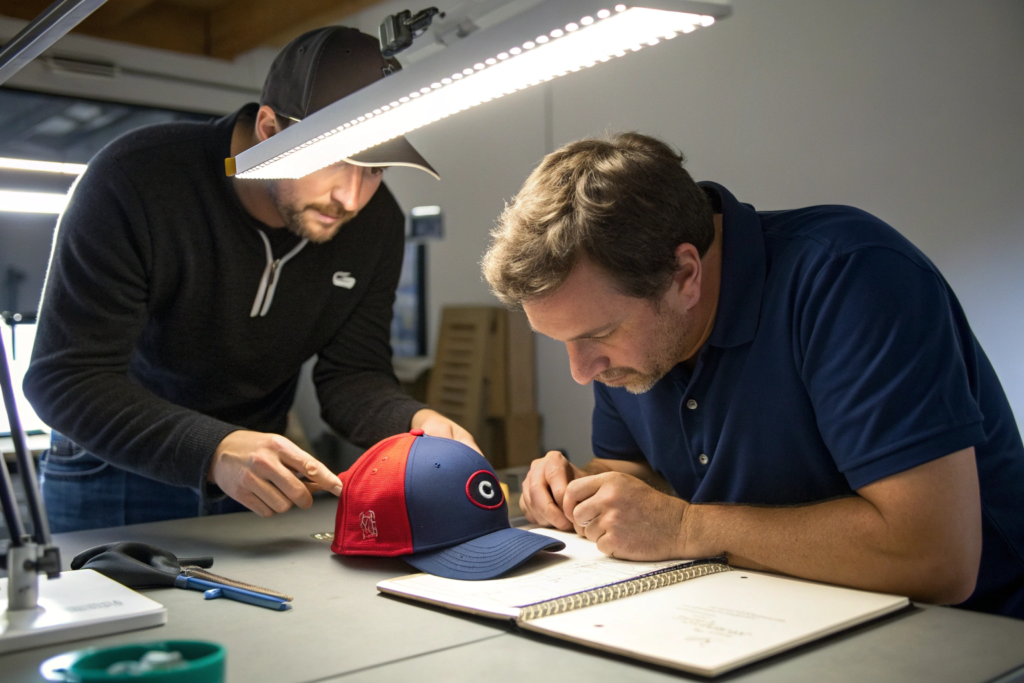
When you receive the Proto Sample (first sample), scrutinize every detail against your tech pack:
- Design Accuracy: Is the color correct under different lights? Is the embroidery/print in the right place, the right size, and free of loose threads? Does the logo look crisp?
- Material Quality: Feel the fabric. Is it the weight and texture you expected? Check the sweatband, closure hardware, and inner lining.
- Construction & Fit: Examine the stitching—is it straight and tight? Are there any loose threads inside? Put the cap on. How does it feel? Is the structure correct (structured vs. unstructured)? Does the brim hold its shape?
- Provide Clear Feedback: Mark any issues directly on the sample with tape and provide written, point-by-point feedback to the factory. Be specific: "Embroidery on front panel is 5mm too high. Please lower to match tech pack spec." A good factory will make corrections and send a Pre-Production Sample (PP Sample) for final approval before cutting bulk fabric.
What are Key Production and Logistics Considerations?
After approving the PP sample, bulk production begins.
- Production Timeline: Get a clear schedule from your manufacturer. Typical timelines are 25-35 days for production, plus shipping. Factor this into your launch plan.
- Pre-Shipment Inspection (PSI): For orders over a certain quantity (e.g., 500+ pieces), hire a third-party inspector or request the factory's PSI report to check a random sample of the bulk order for quality consistency before it ships.
- Logistics & Duties: Confirm Incoterms (e.g., FOB) with your manufacturer. They will handle export customs; you arrange shipping and handle import duties. For shipments to the U.S., understanding the correct Harmonized System (HS) code for headwear is crucial for smooth customs clearance and accurate duty assessment, a key part of global trade logistics.
Conclusion
Designing a successful custom baseball cap is a rewarding process that blends creativity with precise execution. It begins with a strong, brand-aligned concept, moves into mastering technical details like structure and closure, and depends on creating a crystal-clear tech pack to guide your manufacturer. The sampling phase is your critical safeguard, ensuring the final product meets your quality and design standards before committing to a full production run.
By approaching this process methodically—defining your purpose, learning the construction language, documenting everything meticulously, and partnering with an experienced manufacturer—you transform a great idea into a tangible product that strengthens your brand identity and delights your customers. The perfect custom cap is out there; it just needs your vision and the right process to bring it to life.
Ready to turn your custom baseball cap design into reality? Partner with a manufacturer that understands both fashion and precision. Shanghai Fumao Clothing specializes in bringing accessory concepts to life with professional design support, rigorous quality control, and reliable production. Contact our Business Director Elaine at elaine@fumaoclothing.com to start a conversation about your next headwear collection.