For a startup brand, the choice of a manufacturing supplier is one of the most critical decisions you will make—it can propel your venture to success or sink it before it ever truly launches. Unlike established companies, startups operate with limited capital, lower order volumes, and an urgent need to build credibility in the market. You’re not just buying a product; you are forming a foundational partnership that will impact your quality, scalability, brand reputation, and ultimately, your survival. So, how do you navigate this high-stakes selection process to find a supplier who is not just capable, but truly aligned with the unique needs and constraints of a startup?
As the owner of AceAccessory, we have worked with countless startups in the fashion accessory space. We understand the delicate balance you must strike: you need high-quality production, low minimum order quantities (MOQs), reliable communication, and patient guidance—all at a cost that allows for a viable margin. The right supplier for a startup acts as a collaborative extension of your team, not a distant, inflexible factory. They should be invested in your growth, offering solutions, not just executing orders.
This guide will walk you through a practical, step-by-step framework for choosing your first manufacturing partner. We'll cover how to define your non-negotiable requirements, where and how to conduct your search effectively, the crucial evaluation criteria beyond price, and how to structure a pilot project to test the relationship. By the end, you'll know how to identify a partner who can help turn your prototype into a sellable product and grow with you.
How to Clearly Define Your Startup's Needs and Constraints?
Before you reach out to a single supplier, you must have absolute clarity on your own business realities. A vague inquiry will receive a generic response, or worse, attract suppliers who over-promise and under-deliver. You need to articulate your specific constraints and goals to find a partner who can work within them.
Start by documenting your product specifications in a simple tech pack (even a basic one with sketches, dimensions, material descriptions, and reference photos). Then, be brutally honest about your operational limits: What is your total budget for the first production run? What is the maximum number of units you can realistically sell or afford to hold as inventory? What is your ideal timeline to market? Knowing these numbers allows you to filter suppliers efficiently and negotiate from a position of informed clarity. For example, if your absolute max order is 300 units, there's no point in pursuing factories with a 5,000-unit MOQ.

What level of support do you need beyond production?
As a startup, you likely lack in-house expertise in areas like material sourcing, cost engineering, and quality control protocols. Therefore, you should prioritize suppliers who offer value-added services. Ask yourself:
- Do I need help refining my design for manufacturability?
- Do I need the factory to source all materials, or will I provide them?
- Do I need guidance on packaging, labeling, and export documentation?
A supplier like Shanghai Fumao, which is accustomed to startups, often provides this level of hand-holding. They can suggest alternative, more cost-effective materials that maintain quality or advise on packaging that reduces shipping costs. This support is often more valuable than a slightly lower unit price.
How to determine realistic Minimum Order Quantities (MOQs)?
MOQs are a major hurdle. Be transparent about your volume limitations. Many traditional factories have high MOQs to be efficient. However, a growing number of "startup-friendly" manufacturers offer lower MOQs (e.g., 100-500 pieces per style) for a slightly higher per-unit cost. This is a worthwhile trade-off for your first run. It allows you to test the market, gather customer feedback, and preserve cash flow. When discussing MOQs, also ask about batch production—can you produce multiple products or colorways in smaller quantities to meet a total order minimum? This flexibility is a key indicator of a supplier suited to startups.
Where and How to Conduct a Targeted Supplier Search?
Your search strategy must be efficient. As a resource-strapped startup, you cannot afford to sift through hundreds of irrelevant Alibaba listings. You need to find suppliers who explicitly cater to or have experience with small brands and emerging designers.
Focus your efforts on:
- Niche B2B Platforms and Directories: Look for platforms that vet suppliers or cater to smaller businesses. While Alibaba can work, use advanced filters for "small MOQ" or "OEM" and look for "Gold Supplier" members with strong transaction histories.
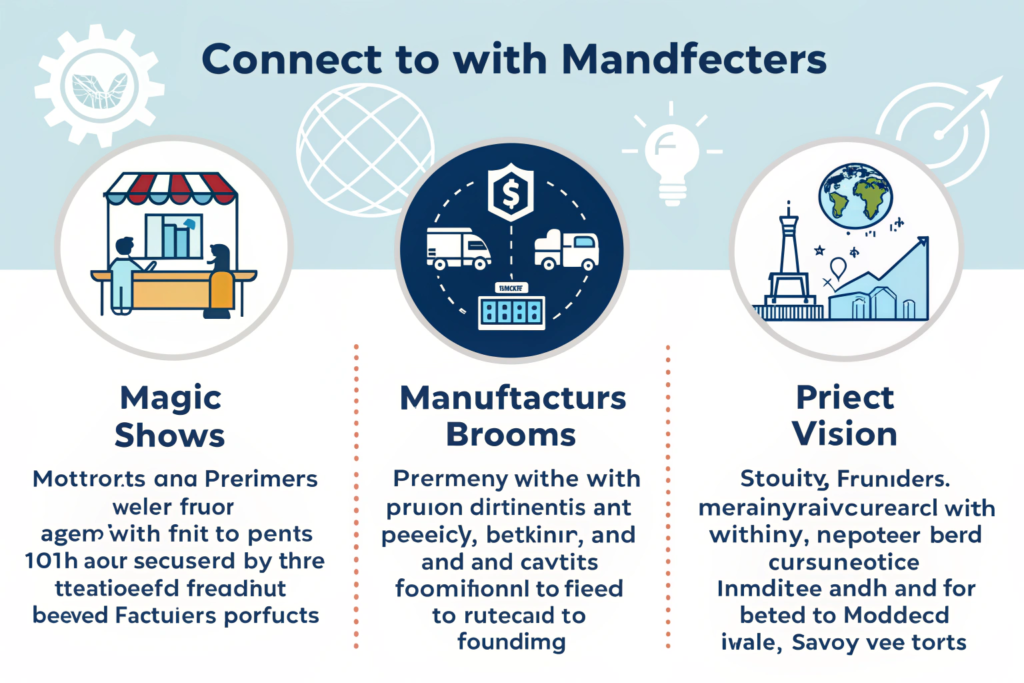
- Industry Trade Shows (Physical or Virtual): Events like Magic or Premiere Vision often have sections for manufacturers. The benefit is direct conversation.
- Networks and Referrals: Ask other startup founders in your network for introductions. A personal referral is the strongest lead you can get.
- Specialized Sourcing Agents: Consider hiring a reputable agent based in the manufacturing country who can find and vet factories on your behalf for a fee. This can save immense time and mitigate risk.
How to craft an effective first inquiry?
Your initial contact email is a test. A professional, detailed inquiry will get a professional response. A one-line message will be ignored or get a canned reply.
- Introduce Your Brand: Briefly state you are a startup launching a [product category] brand.
- Attach Basic Specifications: Include a simple tech pack or clear reference images.
- State Key Parameters Clearly: "We are looking for a production partner for our first order, with an estimated MOQ of 200-300 units per style. We would require full-package production including material sourcing. Could you please advise on your capabilities, typical lead times, and ballpark cost range for such an order?"
This approach shows you are serious and filters for suppliers willing to engage in a consultative dialogue.
What are the red flags in early communication?
Be wary of suppliers who:
- Give a quote immediately without asking detailed questions.
- Are evasive about their factory location or refuse to provide a virtual tour.
- Offer prices that seem too good to be true (they usually are, indicating poor quality or hidden costs).
- Have poor English communication or very slow response times (this will plague your project).
- Pressure you for a deposit immediately without a detailed proposal.
What to Evaluate Beyond Unit Price?
For a startup, the cheapest supplier is almost never the right choice. You must evaluate the total value and risk profile of the partnership. The true cost of working with a supplier includes not just the price per unit, but the cost of delays, defects, miscommunication, and sleepless nights.
Develop a scorecard to evaluate potential partners. Key criteria should include:
- Communication & Responsiveness: Are they prompt, clear, and proactive? Do they understand your vision?
- Transparency & Processes: Do they explain their workflow, QC steps, and pricing structure clearly?
- Quality Assurance: What is their sampling process? Do they have in-house QC? Can they provide quality reports?
- Scalability & Flexibility: Can they handle your projected growth? Are they willing to work with you on lower MOQs initially?
- Cultural Fit: Do they seem genuinely interested in your success? Do they ask good questions about your brand?

Why is the sampling process a critical test?
The sampling phase is your most important due diligence. A professional supplier will expect and guide you through it. Be prepared to pay for samples. This investment allows you to:
- Assess Product Quality: Does the sample meet your design and quality expectations?
- Evaluate Their Problem-Solving: How do they handle your feedback and revisions?
- Test Project Management: Is the process organized, with clear timelines and updates?
A supplier who rushes sampling or produces a poor-quality sample will not magically improve during bulk production. Consider the sample fee as your most affordable quality audit.
How to assess financial terms and payment security?
Startups are vulnerable. Never pay 100% upfront. Standard terms are often 50% deposit to start production and 50% balance before shipment. Use secure payment methods like Alibaba Trade Assurance or PayPal for your first order to add a layer of protection. Be clear on what the quote includes: Does it cover tooling/mold costs? Packaging? Shipping to your local port (FOB)? All these details should be in a formal Proforma Invoice (PI) before any money changes hands.
How to Structure a Pilot Project and Build the Relationship?
Your first order should be treated as a pilot project—a test of the partnership, not just the product. Keep it simple and manageable. Choose one hero product or a very small capsule collection for Production Run.
Set clear, written expectations from the start in a Purchase Order (PO) or contract. This should include:
- Final approved sample as the quality benchmark.
- Detailed specifications and packaging list.
- Production timeline with key milestones (fabric arrival, production start, QC date, shipping date).
- Agreed QC standard (e.g., AQL level for inspection).
- Clear payment schedule.
Maintain regular but respectful communication. Weekly updates are reasonable. Trust is built through consistent, reliable performance on both sides.
How to plan for growth from the beginning?
Even during your pilot, discuss the future. Ask potential suppliers:
- "If this first order goes well, what would the MOQ and lead time look like for a reorder of 1,000 units?"
- "How do you handle scaling production? Can you reserve production capacity for us?"
Their answers will reveal if they view you as a long-term partner or just a one-off small client. The right supplier will be excited by your potential and have a plan to support your growth, offering progressively better terms as your volumes increase.
When is it time to walk away?
Recognize deal-breakers. If a supplier consistently misses sample deadlines, communicates poorly, or shows a lack of attention to detail during the courting phase, it will only worsen during production. It is far less costly to walk away before the deposit than to salvage a failed production run. Your instinct about the partnership's dynamics is a crucial data point.
Conclusion
Choosing the right supplier for your startup is a strategic exercise in aligning capabilities with constraints and building a relationship, not just transacting a purchase. It requires moving beyond a singular focus on price to a holistic evaluation of communication, flexibility, quality systems, and shared vision. The ideal partner is one who sees your potential, guides you through the complexities of first-time production, and delivers a quality product that validates your brand promise to early customers.
By defining your needs clearly, searching strategically, evaluating thoroughly, and starting with a well-structured pilot, you lay a foundation of trust and operational excellence that will support your brand for years to come.
If you are a startup brand looking for a patient, expert manufacturing partner to help bring your first accessory collection to life with low MOQs and high-touch support, we are here to help. At Shanghai Fumao, we specialize in partnering with emerging brands, providing end-to-end guidance from design to delivery. To discuss your startup's first production project, contact our Business Director, Elaine, at elaine@fumaoclothing.com. Let's build your brand's foundation, together.