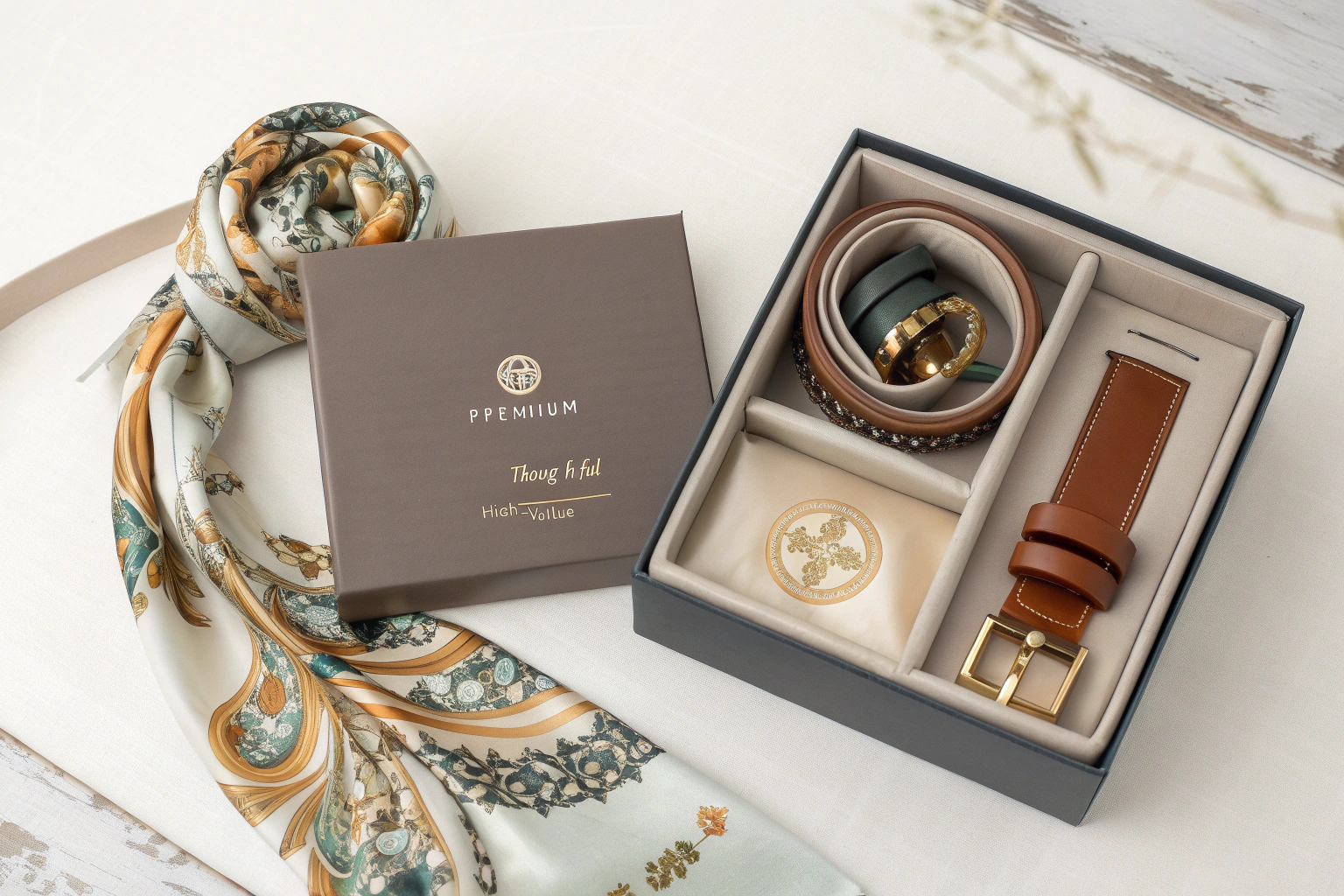
You're always looking for ways to increase the perceived value of your products and create compelling offers for your customers. You've realized that selling a single belt or a single scarf is great, but selling a curated gift set—a hat and scarf combo, a belt and wallet set, a collection of hair accessories—is a powerful strategy to increase your average order value, especially around key holidays. But you've also realized a critical truth: the success of a gift set is not just about the products inside. It's about the presentation. How do you choose the right packaging that transforms a simple bundle of items into a premium, desirable, and unforgettable gift experience?
Choosing the right packaging for a gift set is a strategic decision that balances brand storytelling, customer experience, and logistical reality. The process involves four key stages: 1) Defining the packaging's primary function—whether it's for e-commerce durability or in-store "wow" factor; 2) Selecting the right structural style, from premium rigid boxes to eco-friendly custom mailers; 3) Designing the interior to perfectly secure and present the products; and 4) Using finishes and branding to create a powerful, multi-sensory unboxing experience that justifies a premium price.
I'm the owner of Shanghai Fumao, and we've helped countless brands develop stunning gift set programs. I can tell you that the packaging is not an afterthought; it is the product, in many ways. It's the first thing the customer sees and touches. It communicates the quality, the value, and the story of your brand before they even get to the items inside. A great box doesn't just hold the products; it elevates them. Let's unbox the strategy for creating packaging that sells.
How Does Your Sales Channel Dictate Your Packaging Structure?
Before you can choose a box, you must answer a fundamental question: Where and how will this gift set be sold? The demands of a direct-to-consumer e-commerce shipment are vastly different from the requirements of a product sitting on a shelf in a physical retail store. Your sales channel is the primary filter that will determine the most appropriate packaging structure.
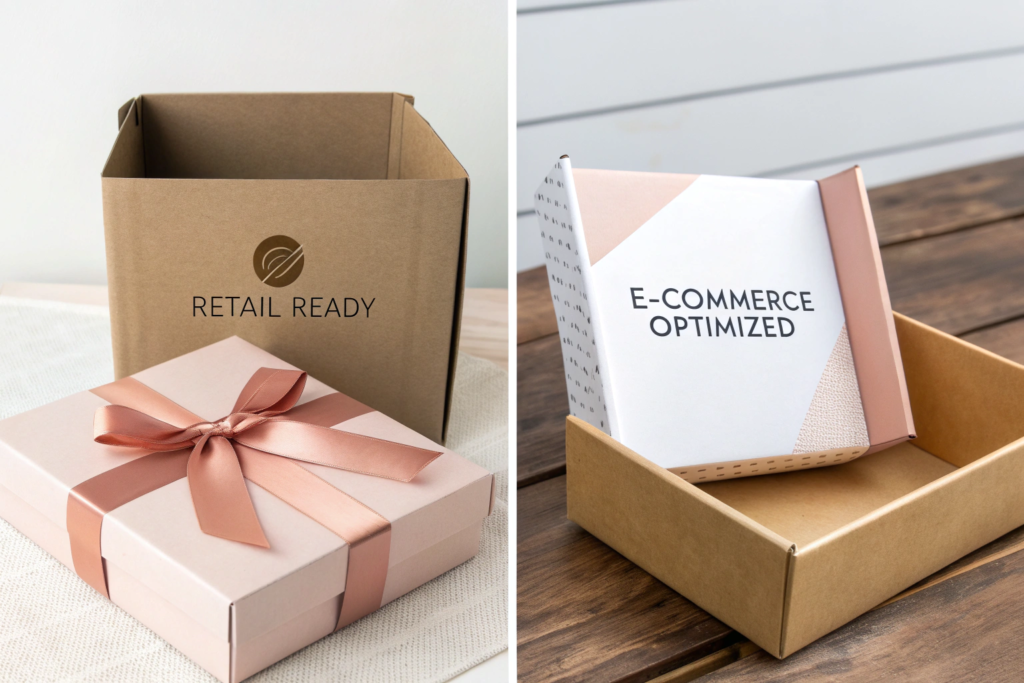
Your sales channel is the most critical factor in determining your packaging's structure because it defines the physical journey the product will take. An e-commerce gift set must be engineered for durability, designed to withstand the brutal shipping environment, and often acts as its own shipper. A retail gift set, by contrast, must be optimized for visual appeal on a shelf, often using more delicate materials and features like windows or ribbons to attract a customer's eye in a crowded store. Choosing the wrong structure for your channel leads to damaged products, high costs, and a poor customer experience.
Let's break down the two primary paths:
- E-commerce Optimized Packaging:
- The Challenge: The package will be thrown, dropped, stacked, and sorted by machines. It needs to be tough.
- The Solution: The "Mailer Box" is king. This is a box made from corrugated cardboard (the same material as a standard shipping box, but can be much thinner and more elegant). It can be beautifully printed on both the outside and the inside. The genius of the mailer box is that it can be both the gift box and the shipping box in one, creating a seamless "unboxing" experience from the moment it lands on the doorstep.
- Key Features: Strong corrugated material (E-flute or F-flute for a slim, elegant look), secure locking tabs, and a design that focuses on a beautiful interior "reveal."
- Retail-Ready Packaging:
- The Challenge: The package is competing for attention on a crowded shelf. It needs to be visually stunning and communicate its contents instantly.
- The Solution: This is where more premium, and often more delicate, structures shine. The "Rigid Box" (also called a "setup box") is the classic choice. This is a heavy, non-collapsible box made from thick paperboard, like the box for an iPhone. It feels substantial and luxurious.
- Key Features: Clear acetate windows to show the product, magnetic or ribbon closures, high-end paper wraps, and a focus on beautiful exterior graphics.
What is "E-flute" or "F-flute" corrugated board?
Corrugated board is made of a "fluted" or wavy layer of paper sandwiched between two flat layers. The "flute" is the wavy part. Different flute sizes have different properties.
- Standard Shipping Box (C-flute): Thick and strong, but not very elegant.
- E-flute & F-flute: These are "micro-flutes." They are much thinner and have a smoother surface, making them perfect for high-quality printing. They offer a good balance of protection and a premium, gift-like feel, which is why they are ideal for e-commerce mailer boxes.
Can I have one box for both channels?
It's possible, but it requires a "hybrid" approach. You could design a beautiful rigid box (for retail appeal) and then create a custom, form-fitting corrugated shipping box that it slots into perfectly for e-commerce sales. This is a more expensive option as it requires two sets of packaging, but it allows you to maintain a consistent brand experience across all channels.
How Do You Design an Interior That Secures and Presents?
A great gift box interior does two things perfectly: it protects the products during transit, and it presents them beautifully to the recipient. A box where the items are just rattling around loose feels cheap and careless. A box where the items are presented in a neat, organized, and secure way feels thoughtful and luxurious.
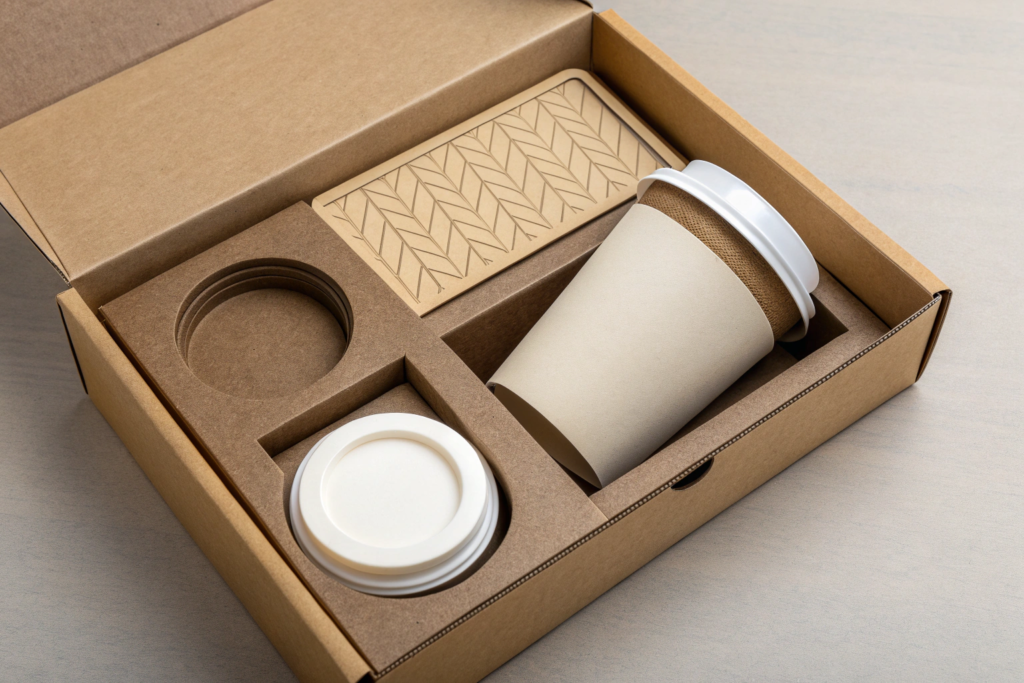
A well-designed interior uses custom-made inserts to hold each product in a specific, predetermined position. These inserts, which can be made from die-cut paperboard, molded pulp, or foam, prevent the items from shifting, colliding, and breaking during shipment. Aesthetically, they create a clean, organized "stage" for the products, ensuring that when the box is opened, the first impression is one of order, care, and high value.
Let's look at the most common insert options:
- Die-Cut Paperboard Inserts:
- What they are: A flat sheet of paperboard is cut and creased so that it can be folded into a 3D structure with custom-shaped cutouts for each product.
- Why they're great: They are cost-effective, recyclable, and can be printed with brand messages or patterns. They offer a very clean, architectural look. This is the most popular choice for most gift sets.
- Molded Pulp Inserts:
- What they are: Made from recycled paper that is molded into a specific shape (like an egg carton).
- Why they're great: They offer excellent protection and have a very strong eco-friendly, organic feel. They are perfect for brands with a natural or sustainable ethos. Companies like Apple have famously used molded pulp in their packaging.
- Foam Inserts (EVA or Polyethylene):
- What they are: A block of foam is cut with high precision to create cavities for each product.
- Why they're great: They offer the highest level of protection and are often used for fragile items like electronics or glass. They have a very technical, high-end feel. However, they are typically plastic-based and not easily recyclable, which is a major drawback for many brands.
- Shredded Paper or "Crinkle Cut":
- What it is: A filler made from shredded paper.
- Why it's used: It's a low-cost way to fill empty space and provide some cushioning. While it can be visually appealing, it does not secure the products in a specific position, so they can still shift around. It's often seen as a less premium option than a custom insert.
What is a "die-cut"?
A "die" is like a cookie cutter. It's a custom-made tool with sharp blades in a specific shape. A "die-cut" insert is one that has been stamped out with this tool. There is a one-time cost to create the die (a "tooling fee"), but once it's made, you can produce thousands of identical inserts very efficiently.
How do I design the insert?
You need to provide your packaging supplier with the exact dimensions of each product in your gift set. A good supplier, like shanghai Fumao, will then create a "dieline" or template for you to approve. This is a 2D drawing that shows exactly how the insert will be cut and folded. You must test the fit with your actual products before approving it for mass production.
How Do You Create a Multi-Sensory Unboxing Experience?
The "unboxing" is not just a process; it's a ritual. It's a moment of anticipation and discovery. The best brands design this experience to engage multiple senses, creating a memorable and shareable moment that reinforces the brand's premium positioning.
A multi-sensory unboxing experience is created by layering different textures, materials, and branding elements that the customer interacts with sequentially. This involves using tactile finishes like soft-touch lamination on the box, the rustle of custom-printed tissue paper, the satisfying snap of a magnetic closure, and even a subtle scent. Each layer of the reveal is an opportunity to communicate quality and care, transforming the simple act of opening a box into a powerful branding moment.
Here are some key elements to consider for your "unboxing" toolkit:
- Tactile Finishes: How does the box feel?
- Soft-Touch Lamination: This is a matte finish that feels incredibly soft and velvety, almost like the skin of a peach. It instantly signals luxury.
- Embossing/Debossing: A logo or pattern is pressed into the paper to create a raised (embossed) or indented (debossed) 3D effect. It adds a beautiful, tactile dimension.
- Visual Finishes: How does the box catch the light?
- Foil Stamping: A metallic foil (gold, silver, rose gold, etc.) is stamped onto the box. It's perfect for logos and creates a flash of premium elegance.
- Spot UV: A high-gloss varnish is applied to a specific "spot" (like a logo) on a matte box. This creates a stunning contrast in textures and makes the logo pop.
- The "Interior Reveal":
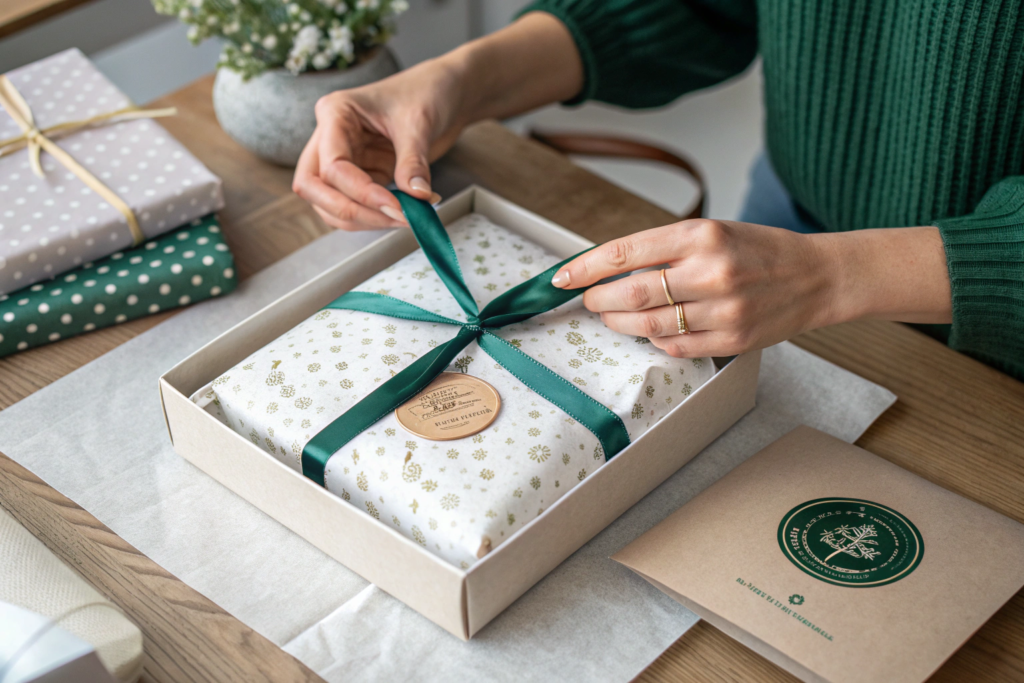
- Custom Printed Tissue Paper: Instead of plain white tissue, print it with your brand's pattern or logo. It's a relatively low-cost way to add a huge amount of brand personality.
- Stickers: Use a branded sticker to seal the tissue paper. It's another small detail that shows you care.
- Printed Inserts: A simple "Thank You" card or a card telling the story behind the collection, placed on top of the tissue paper, is a powerful way to connect with the customer.
- The Closure:
- Magnetic Closure: A hidden magnet in the lid and base of the box creates a satisfying "snap" when the box is closed. It feels incredibly modern and premium.
- Ribbon Closure: A classic and elegant option. A beautiful grosgrain or satin ribbon that the customer has to untie adds to the sense of ceremony.
What is the most cost-effective way to make my packaging look premium?
If you have a limited budget, focus on two things:
- A great structural design: A well-designed mailer box with a beautiful interior print can feel more premium than a poorly executed rigid box.
- Custom-printed tissue paper and a branded sticker: This is a low-cost, high-impact combination that instantly elevates the interior of any box.
Should I be concerned about the environmental impact?
Absolutely. Modern luxury is increasingly tied to sustainability. Work with your supplier to use recycled paper, soy-based inks, and avoid plastic lamination where possible. An eco-friendly message can be a powerful part of your brand story. Highlighting that your beautiful molded pulp insert is made from 100% recycled material can be a major selling point.
How Do You Manage the Sourcing and Production Process?
You've designed the perfect gift box on paper. Now, how do you get it made? The process of sourcing and producing custom packaging can be just as complex as sourcing the products themselves. This is where a strong partnership with your manufacturer is essential.
Managing the production of custom packaging requires clear communication, detailed specifications, and rigorous prototyping. The process involves creating a detailed "dieline" for the box structure and inserts, approving physical "white samples" to test the structure and fit, and then approving "printed samples" to verify the color and finish quality. A good manufacturing partner can manage this entire process for you, leveraging their network of trusted packaging suppliers to ensure a high-quality, consistent result.
Here is the professional workflow for producing custom packaging:
- Provide a Detailed Brief: Give your manufacturer your design files, your product samples (so they can create the inserts), and a clear list of your desired materials and finishes (e.g., "Rigid box with soft-touch lamination, magnetic closure, and gold foil logo").
- Approve the Dieline: The factory will create a digital template (the dieline) for your approval. This is the blueprint for the box.
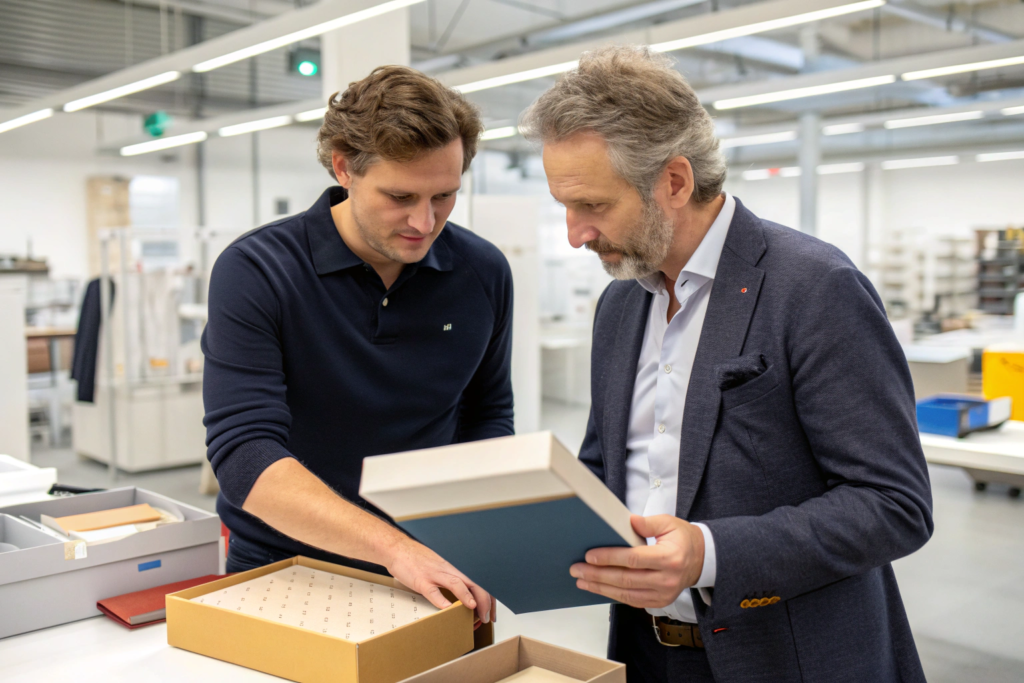
- Approve the "White Sample": Before printing thousands of boxes, the factory will produce a "white sample" or "dummy." This is a fully assembled but unprinted version of your box. Its purpose is to allow you to test the structure, the closure mechanism, and, most importantly, the fit of your products in the inserts. This is a critical step. Do not skip it.
- Approve the "Printed Sample": Once the structure is approved, the factory will produce a fully printed and finished sample for you to approve. This is your chance to check the color accuracy, the quality of the printing, and the finish of the foil stamping or embossing.
- Mass Production: Only after you have signed off on the final printed sample should the factory proceed with mass production.
A good partner, like Shanghai Fumao, can manage this entire complex process. We have long-standing relationships with some of the best packaging factories in our region. We can handle the sourcing, the prototyping, and the quality control, delivering a finished, fully packaged gift set that is ready to ship to your customers.
How long does it take to produce custom packaging?
The journey from the first spark of an idea to the hum of mass-produced goods is a meticulous dance, one that can stretch from a brisk four weeks to a more deliberate eight, its rhythm dictated by the intricate complexity woven into each design. At the heart of this timeline lie the prototyping and approval stages—periods where time seems to slow, as artisans and engineers breathe life into blueprints, their hands shaping clay, coding algorithms, or stitching fabric into tangible forms.
Should I source the packaging myself to save money?
While it might seem cheaper to try and find a packaging factory on your own, it's often a false economy. A product manufacturer has immense leverage with their packaging suppliers because they place large, consistent orders. They also have the expertise to manage the QC process. Coordinating between a separate product factory and a packaging factory can be a logistical nightmare, often leading to delays and mistakes. For a seamless process, it is almost always better to have your primary manufacturing partner manage the packaging for you.
Conclusion
Choosing the right packaging for your gift sets is an investment in your brand's perceived value, your customer's delight, and your bottom line. It's a strategic process that requires you to think like a logistician, a marketer, and a storyteller. By first defining your sales channel to choose the right structure, then meticulously designing an interior that protects and presents, creating a multi-sensory unboxing experience that tells your brand's story, and managing the production process with professional rigor, you can create a gift set that is truly irresistible. The box is no longer just a box; it is a silent salesman, a brand ambassador, and the first chapter in a beautiful story your customer is about to discover.
At Shanghai Fumao, we understand the power of presentation. We have the design expertise and the manufacturing network to help you create stunning, effective, and high-quality packaging for your gift sets. We can manage the entire process, from the initial concept to the final, fully assembled product, ensuring that your vision is executed flawlessly. If you are ready to elevate your products and create a truly memorable gift experience for your customers, please reach out to our Business Director, Elaine, at elaine@fumaoclothing.com.