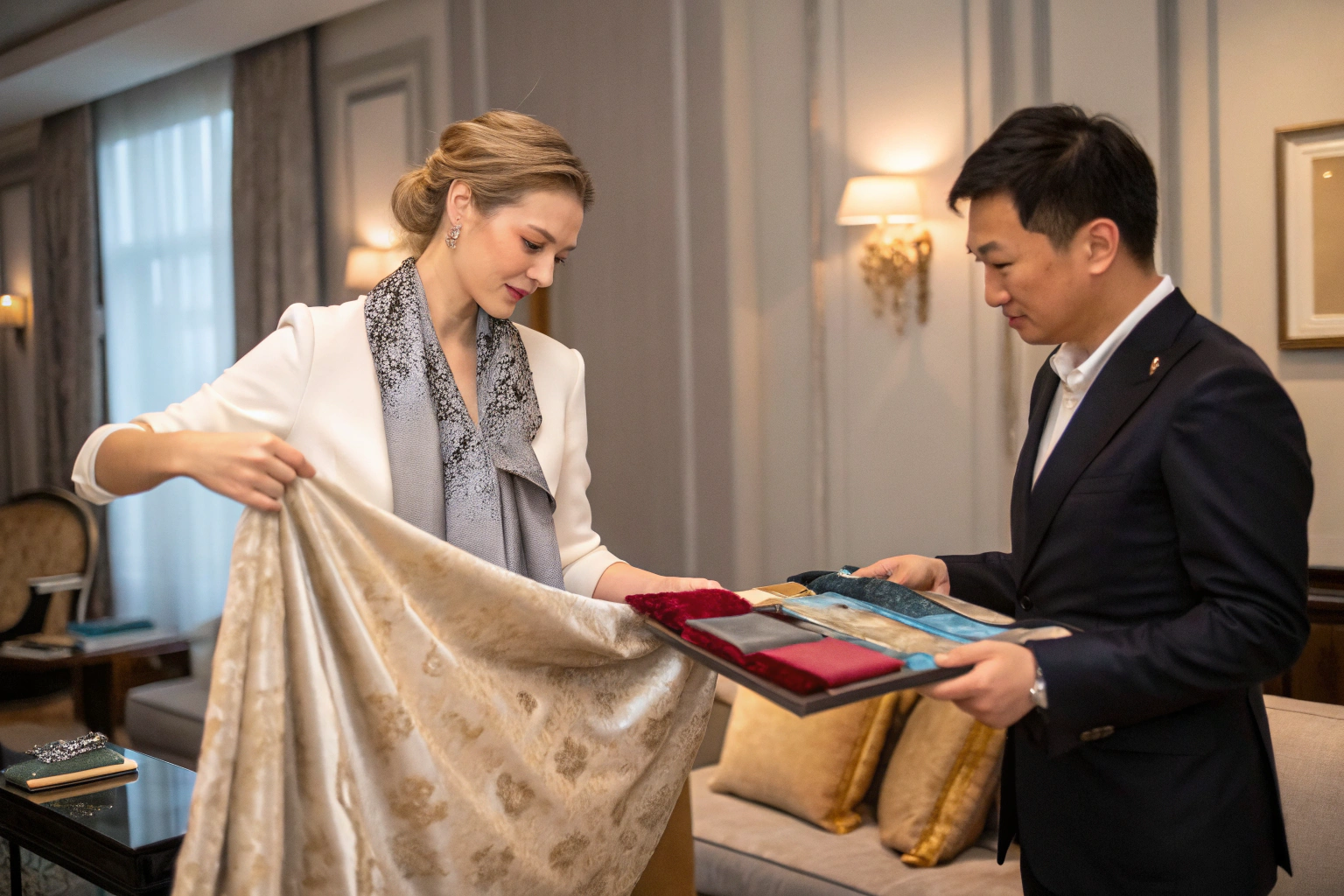
I have spent years in this business. I have seen beautiful shawls ruined by the wrong lining. The outer fabric is stunning. The embroidery is exquisite. But when a customer puts it on, it feels wrong. It is too hot. It is too stiff. It does not drape properly. And the customer puts it back on the shelf.
I remember a client who came to me with exactly this problem. They had sourced a beautiful cashmere shawl from another factory. The outer fabric was perfect. But the lining was cheap polyester. The shawl felt like wearing a plastic bag. It did not breathe. It was uncomfortable. And the client had already committed to a large order. We worked together to fix it. We replaced the lining with a high-quality cupro. The shawl transformed. It felt soft against the skin. It draped beautifully. The client sold out their entire order.
I am the owner of Shanghai Fumao. Our factory in Zhejiang has produced thousands of luxury shawls for brands around the world. And I have learned that the lining is not an afterthought. It is half of the product. Let me help you choose the right lining for your shawls.
Understanding Why Lining Quality Defines the Wearer's Experience
I have a simple test I do with every new client. I hand them a shawl with a poor lining. Then I hand them one with a high-quality lining. I ask them to close their eyes and feel both.
Every single time, they choose the high-quality lining. They cannot always explain why. But they know which one feels better. That is because the lining is the part of the shawl that touches the skin. It is the part that the wearer experiences directly.
How Does Lining Affect Comfort, Drape, and Temperature Regulation?
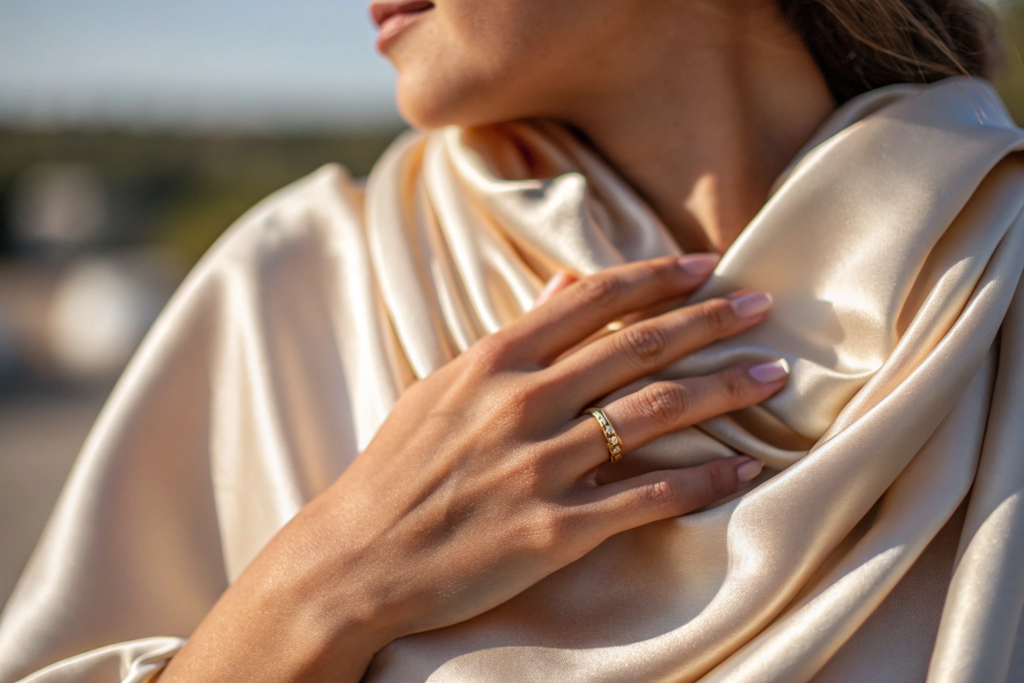
Let me break this down. Comfort is the most obvious factor. A rough or scratchy lining irritates the skin. A lining that does not breathe makes the wearer sweat. A lining that is too slippery makes the shawl slide off the shoulders.
I have seen clients focus all their attention on the outer fabric. They choose the finest cashmere or the most beautiful silk. Then they choose a cheap lining to save money. This is a mistake. The customer does not experience the outer fabric directly. They experience the lining. Drape is another critical factor. Drape is how the fabric falls and moves. A stiff lining fights against the outer fabric. It creates a shawl that looks rigid and unnatural. A soft lining moves with the outer fabric. It creates a shawl that flows beautifully.
I remember a client who insisted on a very heavy lining for their shawl. They thought it would feel more luxurious. But the shawl became too stiff. It did not wrap well. It did not fold nicely. The client ended up switching to a lighter lining after seeing the sample. Temperature regulation is also important. Luxury shawls are often worn in varied environments. A customer might wear it outdoors in cool weather, then indoors in a heated room. The lining affects how the shawl handles these changes.
Natural fibers like silk and cupro breathe well. They wick moisture away from the skin. They keep the wearer comfortable across a range of temperatures. Synthetic fibers like polyester trap heat and moisture. They can make the wearer feel clammy and uncomfortable.
What Is the Role of Lining in Protecting the Outer Fabric?
This is a technical point that many buyers overlook. The lining is not just for the wearer. It also protects the outer fabric.
Luxury outer fabrics are delicate. Silk can snag. Cashmere can pill. Embroidered details can catch on clothing or skin. A good lining creates a barrier. It protects the outer fabric from the oils and acids on the skin. It prevents snagging from jewelry or rough clothing.
I have seen shawls ruined because the lining was too rough. The lining itself abraded the outer fabric from the inside. The customer complained that the shawl was pilling. But the pilling came from the lining rubbing against the cashmere, not from the cashmere itself.
A quality lining also adds structure. It helps the shawl hold its shape. It prevents stretching and distortion over time. This is especially important for shawls with intricate embroidery or beading. The lining provides support for these details.
We always consider the protective function of the lining when we select materials. We match the lining to the outer fabric. A delicate silk outer fabric needs a soft, smooth lining. A heavier wool outer fabric can handle a slightly more robust lining.
Comparing Natural and High-Quality Synthetic Lining Options
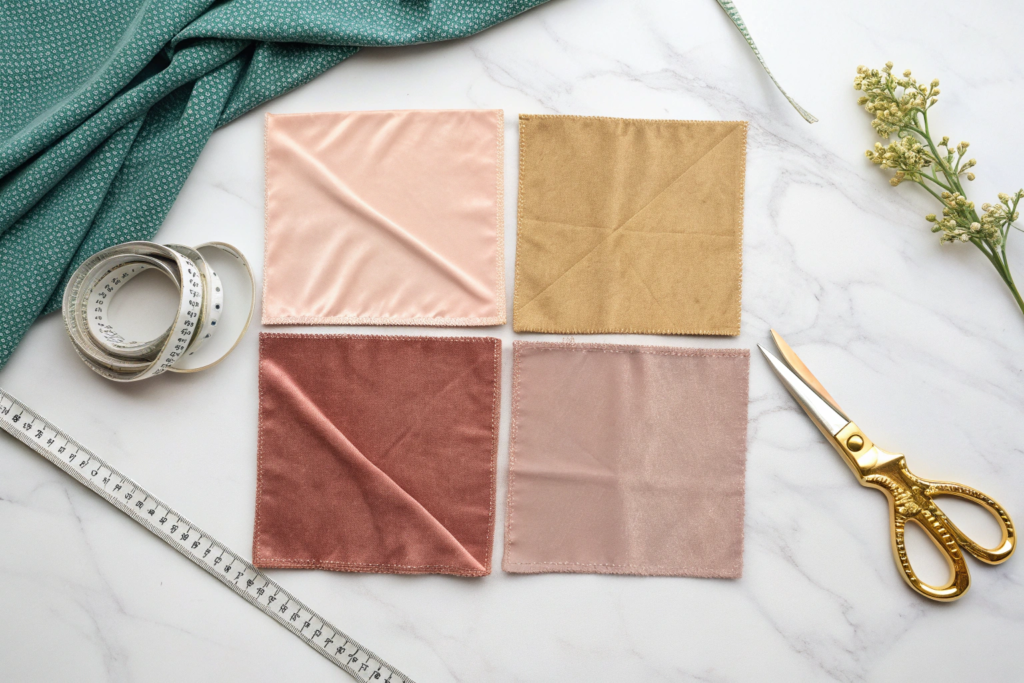
I want to give you a practical guide to the lining materials we use most often. Each has strengths and weaknesses. The right choice depends on your outer fabric, your price point, and your desired hand feel.
I have tested all of these materials over many years. I know how they behave in production. I know how they feel after wear. Let me share what I have learned.
Silk: The Gold Standard for Luxury
Silk is the classic choice for luxury shawls. And for good reason. It is soft. It breathes. It drapes beautifully. It feels amazing against the skin.
But silk has limitations. It is expensive. It is delicate. It requires careful handling in production and care from the customer.
We use silk charmeuse for many of our highest-end shawls. Charmeuse has a glossy front and a matte back. It is smooth and slippery. It glides over the skin. It allows the outer fabric to drape perfectly.
We also use silk habotai for lighter shawls. Habotai is thinner and more translucent. It is almost weightless. It is ideal for summer shawls or for shawls with very delicate outer fabrics.
The downside of silk is cost. Silk lining can double the cost of the shawl. For some brands, this is acceptable. For others, it is not.
We source our silk from certified suppliers who can provide traceability. Our clients often ask for proof that the silk is ethically sourced. We provide that documentation.
Cupro: The Sustainable Alternative
Cupro is a material I have grown to love. It is made from cotton linter, the tiny fibers that cling to cotton seeds. These fibers are usually wasted. Cupro turns waste into a beautiful fabric.
Cupro feels very similar to silk. It is soft. It drapes well. It breathes. But it is significantly less expensive than silk. The other advantage of cupro is that it is more durable than silk. It resists abrasion better. It holds up well to cleaning. It is a good choice for shawls that will be worn frequently.
We use cupro for many of our sustainable shawl collections. Our clients love that it is eco-friendly without compromising on quality.
One thing to know about cupro is that it wrinkles more easily than silk. This is usually not a problem for shawls, as they are folded rather than hung. But it is something to consider if your shawl will be displayed flat in retail.
Viscose and Modal: Budget-Friendly Options
Viscose and modal are both made from wood pulp. They are part of the rayon family. They offer a good balance of quality and cost. Viscose is soft and breathable. It drapes reasonably well. It is much less expensive than silk or cupro. The downside is that viscose can be less durable. It can shrink if not handled properly in production.
Modal is a type of viscose that is stronger. It holds up better to washing. It has a smoother surface. I prefer modal over standard viscose for shawls that need to be more durable. We use these materials for clients who need a lower price point but still want a natural fiber lining. They are a good compromise between synthetic and premium natural fibers.
One caution: cheap viscose can feel rough. We always test the hand feel of our viscose linings before we approve them. If it does not feel soft against the skin, we do not use it.
How to Match Lining to Outer Fabric for Optimal Performance
Choosing a lining is not just about picking a material. It is about matching the lining to the outer fabric. The two layers must work together. If they do not, the shawl will not perform well.
I have developed a simple system for matching linings. I want to share it with you. It has saved my clients from many costly mistakes.
How to Pair Lining with Cashmere and Wool
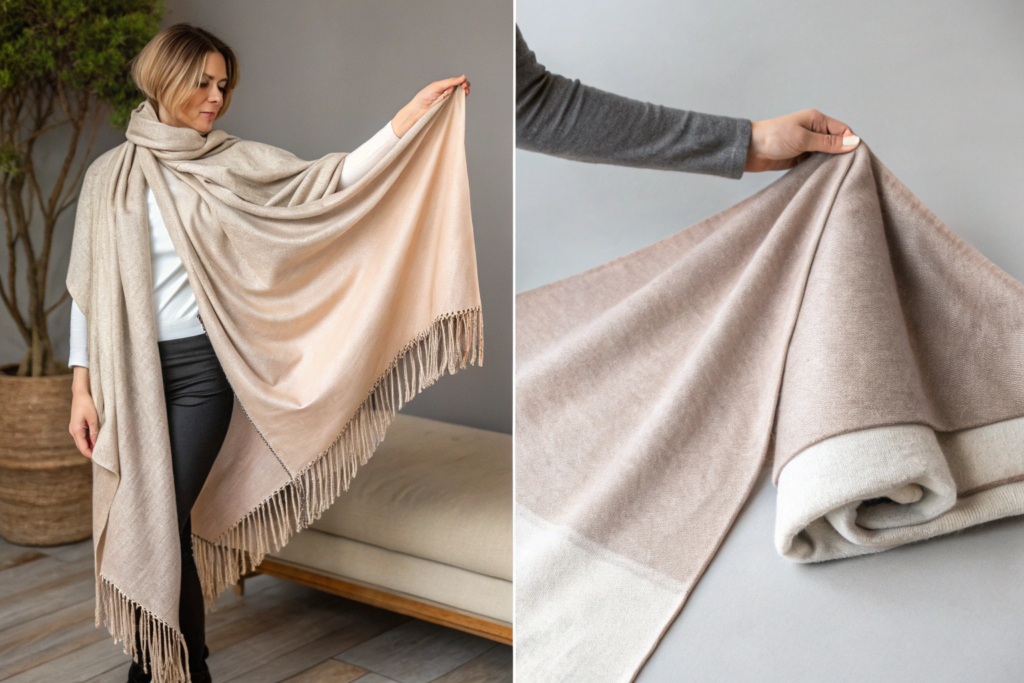
Cashmere and wool are warm, soft, and often bulky. The lining for these materials needs to be smooth and slippery. It needs to allow the shawl to slide over clothing. It needs to prevent the outer fabric from pilling.
Silk charmeuse is the classic choice for cashmere. It is smooth. It is lightweight. It allows the cashmere to drape beautifully.
Cupro is also an excellent choice. It is almost as smooth as silk. It is more durable. It is less expensive.
I do not recommend cotton or viscose for cashmere. These materials are too grippy. They create friction against the cashmere. This friction can cause pilling.
For heavier wool shawls, we sometimes use a slightly heavier lining. The lining needs to have enough weight to balance the outer fabric. A lining that is too light can cause the shawl to twist and fold poorly.
We always test the pairing before we approve the final design. We make a sample shawl. We wear it. We fold it. We see how the two layers interact.
How to Pair Lining with Silk and Lightweight Fabrics
Silk outer fabrics are delicate and lightweight. The lining must be equally delicate. A heavy lining will overwhelm the outer fabric. It will create a shawl that feels stiff and unnatural.
Silk habotai is my first choice for lining silk shawls. It is extremely lightweight. It is almost invisible. It does not compete with the outer fabric.
Cupro can also work, but it is slightly heavier. We use the lightest weight cupro available for silk outer fabrics.
One special case is shawls with embroidery or beading. These shawls need a lining that protects the delicate details from the skin. It also needs to be thick enough to prevent the thread ends from poking through. For these shawls, we often use a slightly heavier silk or a high-quality cupro. The lining provides a barrier that protects both the shawl and the wearer.
We also consider the color of the lining. For lightweight silk shawls, the lining color can affect the appearance of the outer fabric. A white lining under a sheer silk will make the outer fabric look lighter. A black lining will make it look darker.
We always show our clients the effect before we make the final choice. We want them to understand how the lining will change the final appearance.
Quality Control Steps for Lining Application
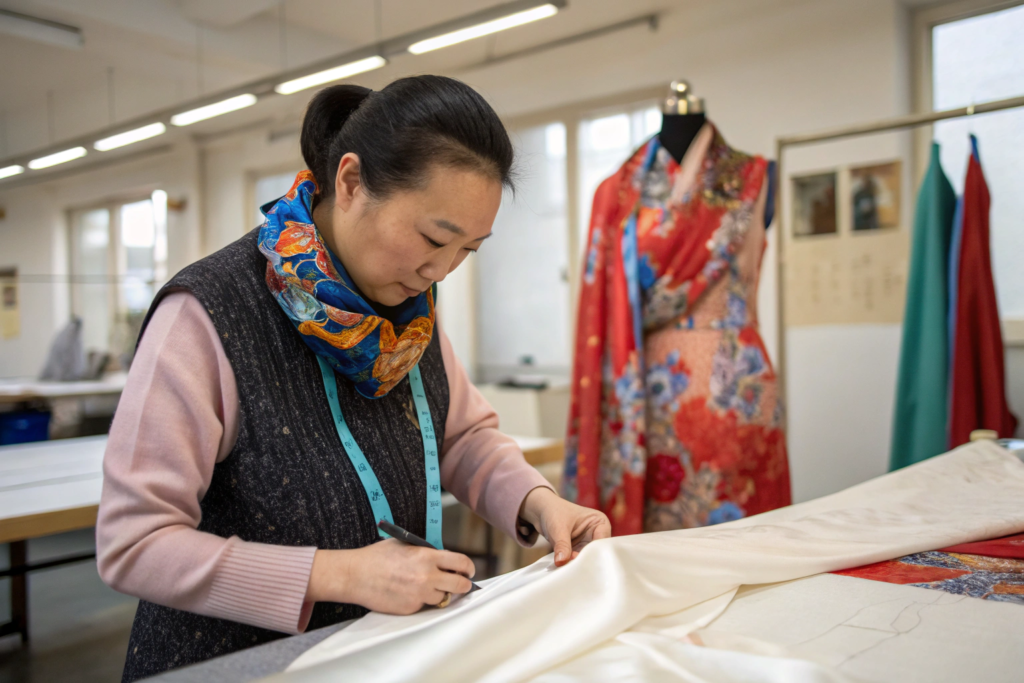
I have seen beautiful linings ruined by poor application. The material is perfect. But the sewing is sloppy. The lining puckers. It twists. It does not lie flat against the outer fabric.
The application is as important as the material. I want to walk you through the quality control steps we use. These are the things you should ask your factory about.
What Are the Common Sewing Defects with Linings?
The most common defect I see is lining shifting. The lining is not properly attached to the outer fabric. It moves independently. This creates bunching and twisting.
Another common defect is puckering. The lining is sewn with too much tension. It pulls the outer fabric out of shape. The shawl looks wrinkled even when it is new. Poor seam finishing is also a problem. The raw edges of the lining are left unfinished. They fray over time. Loose threads stick out. The shawl looks cheap.
We have a strict protocol for lining attachment in our factory. We use a specific stitch type. We set the tension carefully. We finish every seam.
We also do a 100% inspection of every shawl before packing. We check that the lining lies flat. We check that there are no puckers. We check that the seams are secure.
How to Inspect Lining Attachment Before Approving Production
I recommend that every client ask for a specific inspection step before production. This is what we do at AceAccessory.
First, ask for a full sample shawl. Not a small swatch. A full-size sample. Put it on. Fold it. Move around in it. See how the lining behaves.
Second, inspect the seams. Turn the shawl inside out. Look at the stitching. Is it straight? Is the thread tension consistent? Are the raw edges finished?
Third, check the corners. Corners are where linings often fail. They can twist or bunch. Make sure the corners lie flat and clean.
Fourth, test the drape. Drape the shawl over your arm. Does it flow smoothly? Does the lining catch on the outer fabric? Does it slide naturally?
Fifth, ask for photos of the lining attachment process. A good factory will document their work. They will show you the steps they take to ensure quality.
We provide all of this to our clients. We send them photos of the lining attachment. We send them a video of the shawl being draped. We want them to see the quality before we start mass production.
Conclusion
The lining is not an afterthought. It is a critical component of a luxury shawl. It defines how the shawl feels against the skin. It affects how the shawl drapes and moves. It protects the outer fabric. And it contributes to the overall perception of quality.
I have learned that the best shawls are made when the lining is chosen with the same care as the outer fabric. The two layers are partners. They work together to create a product that feels as good as it looks. When you choose a lining, consider the wearer's experience. Think about comfort, drape, and temperature regulation. Match the lining to the outer fabric. Choose materials that work together. And insist on quality application.
At Shanghai Fumao, we treat every shawl as a collaboration. Our design team helps you select the right lining. Our quality control team ensures it is applied perfectly. And our project managers keep you informed every step of the way.
If you are developing a luxury shawl and you want to get the lining right, I invite you to talk to us. Let us help you create a product that your customers will love to wear. Reach out to our Business Director, Elaine. She will guide you through the process and answer all your questions. Her email is: elaine@fumaoclothing.com.