In the competitive and often price-driven world of supermarket retail, standing out is key. While groceries are the core, the high-margin general merchandise sections—particularly apparel and accessories—are crucial for driving profit and customer loyalty. Here, printed cloth hats have emerged as a surprising powerhouse. Moving beyond basic functionality, they are becoming a strategic tool for supermarkets to inject fashion, personality, and seasonal excitement into their aisles, transforming a simple accessory into an impulse-driven style statement.
This article explores how printed cloth hats are redefining supermarket accessory ranges. We will examine the strategic role they play in visual merchandising, how they cater to broad demographics with niche designs, and why their seasonal and local appeal makes them a low-risk, high-reward category for volume retailers.
Why Are Printed Cloth Hats a Strategic Visual Merchandising Tool?
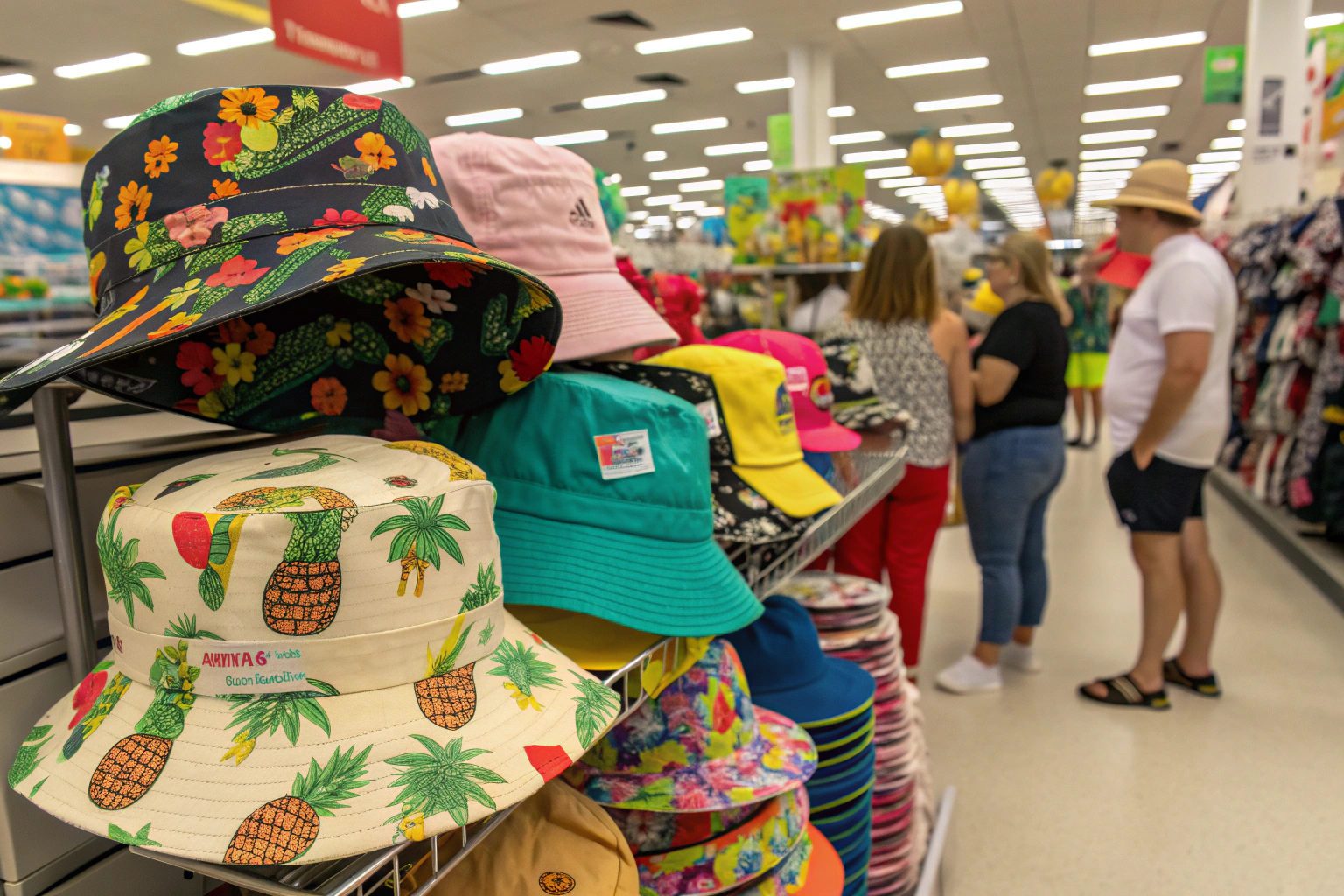
Supermarkets are masters of layout and impulse buying. Printed cloth hats, with their three-dimensional form and graphic surfaces, serve as exceptional visual merchandising tools. A well-stocked, colorful hat display creates a focal point of energy and style within the more utilitarian grocery environment.
This "shop-in-shop" effect breaks the monotony and encourages browsing. It signals to customers that the store offers more than just essentials—it offers fun, affordable fashion. The hats act as silent salespeople, their designs doing the talking and attracting attention from aisles away, which is essential for driving foot traffic to the general merchandise section.

How Do They Drive Impulse Purchases and Increase Basket Size?
The success of this category hinges on the impulse purchase. A customer who came for milk might see a hat with a charming animal print or a witty slogan that resonates, leading to an unplanned addition to their cart. This directly increases the average transaction value. Because cloth hats are generally low-ticket items (especially when sourced efficiently at scale), the perceived risk for the customer is low, while the potential for delight and self-expression is high. This makes them one of the most effective impulse categories in the non-food sector.
What Are the Key Design Principles for Supermarket Success?
Supermarket hat design must balance broad appeal with quick, clear communication. Bold, simple graphics read well from a distance. High-contrast colors stand out on crowded shelves. Themes should be immediately recognizable: tropical prints for summer, cozy plaids for autumn, festive motifs for holidays. The goal is to convey the hat's purpose and personality in under three seconds to a passing shopper. This requires a deep understanding of mass-market design trends, which is a core strength of our design team at Shanghai Fumao Clothing.
How Do They Cater to Diverse Demographics with Niche Appeal?
A supermarket's customer base is incredibly diverse in age, style, and interest. A one-size-fits-all approach doesn't work. The power of printed cloth hats lies in their ability to segment and target this broad audience through highly specific, niche designs, creating a sense of personal connection for many different types of shoppers.
This strategy moves beyond selling a generic "hat" to selling a lifestyle accessory or a conversation piece. It allows every customer to find something that feels uniquely "them," even within a mass retail setting.
What Are Examples of Niche Designs That Resonate?
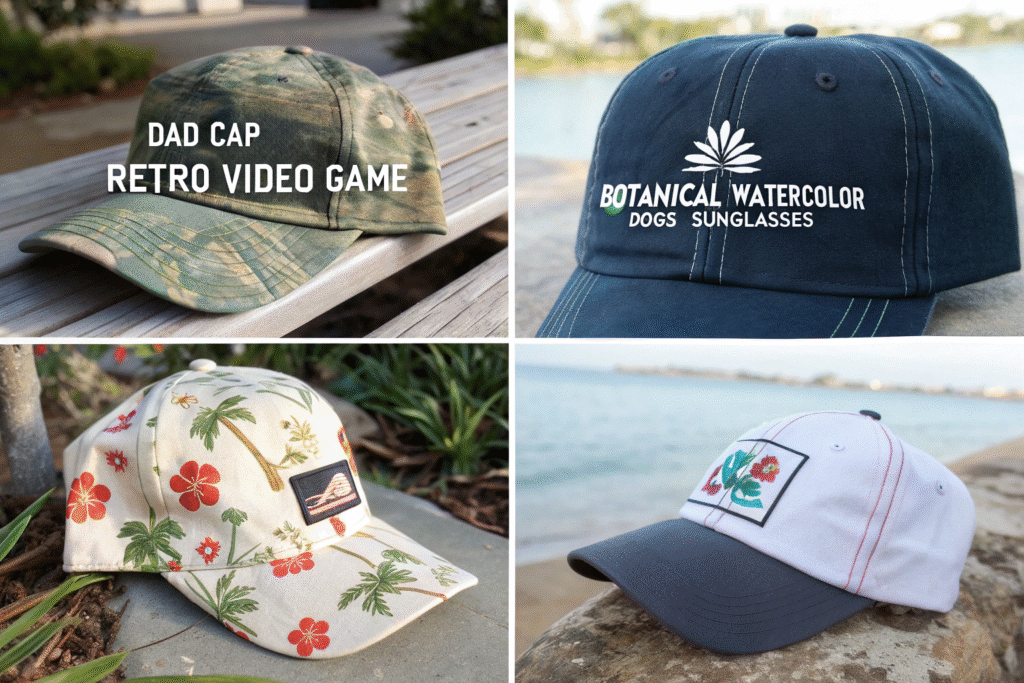
- Pop Culture & Nostalgia: Hats featuring logos or artwork from beloved movies, classic cartoons, retro video games, or iconic bands. These tap into retro trends and fandom.
- Hobbies & Interests: Prints related to gardening, fishing, cycling, camping, or specific sports teams. They act as a badge of identity for the enthusiast.
- Humorous & Novelty: Hats with witty puns, funny animal portraits, or food with faces (e.g., "Avocadon't Worry"). These are pure impulse buys driven by humor.
- Local Pride & Destination: Designs featuring city skylines, state flowers, or "I ♥ [City Name]" graphics. These appeal to both locals and tourists, offering souvenir potential.
How Does This Segmentation Maximize Sales?
By offering a wide array of niche designs, supermarkets can effectively cater to multiple micro-markets simultaneously. A grandparent, a teenager, and a young professional might all be drawn to entirely different hats on the same rack. This increases the overall sell-through rate by minimizing the number of "missed" customers. It transforms the accessory aisle from a place of necessity to a destination for personal discovery, encouraging longer browsing times and repeat visits to see new designs.
Why Are Seasonal and Limited-Edition Lines So Effective?
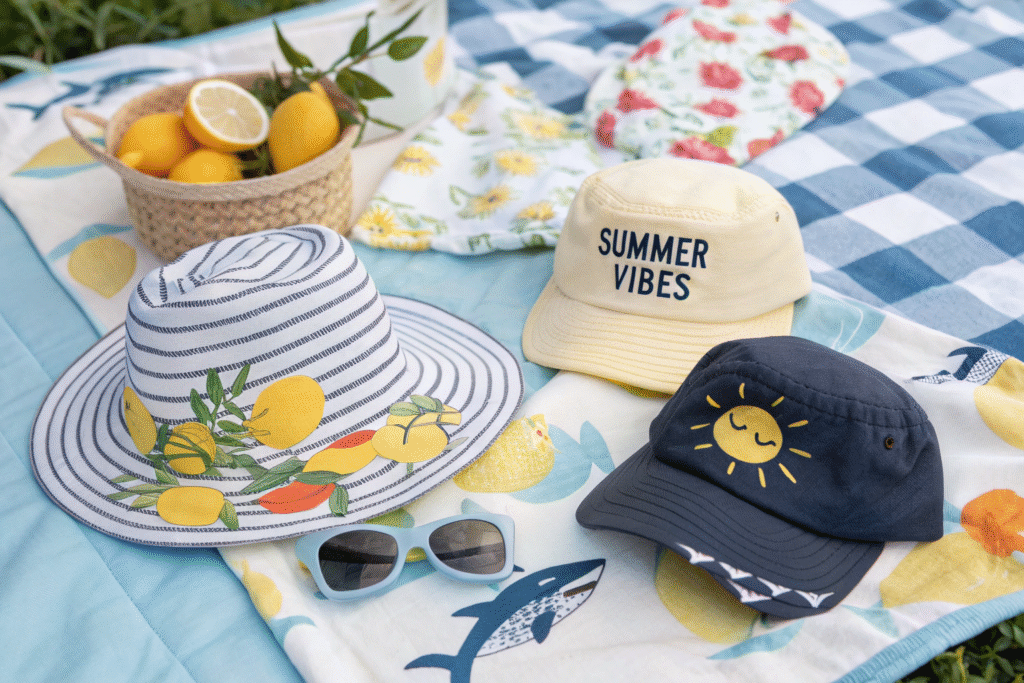
Supermarkets thrive on the rhythm of seasons and holidays. Printed cloth hats are the perfect canvas for capitalizing on this cyclical demand. They are inherently seasonal products (sun hats for summer, beanies for winter), and their print designs can be updated quickly to align with calendar events, creating a sense of urgency and novelty.
This "fast fashion at a supermarket pace" approach keeps the accessory range feeling fresh and relevant. It encourages customers to check back frequently, knowing the offering will have changed, which drives repeat footfall—a critical metric for retailers.
What Are the Key Seasonal and Holiday Themes?
A well-planned annual calendar might include:
- Spring: Floral prints, garden motifs, pastel colors, Easter-themed designs.
- Summer: Tropical patterns (palms, pineapples), bright solids, nautical stripes, beach graphics, 4th of July stars.
- Autumn: Plaid prints, pumpkin and leaf motifs, Halloween characters, warm earth tones.
- Winter: Snowflakes, reindeer, holiday slogans, cozy fair isle or cable knit patterns on fleece-lined beanies.
How Do Limited Editions Create Scarcity and Urgency?
Taking seasonality a step further, supermarkets can introduce limited-edition capsule collections. These could tie into a movie release, a local festival, or a charity collaboration. By marketing them as "available while supplies last," they create scarcity and urgency, pushing customers to buy immediately rather than wait. This strategy also helps manage inventory risk, as the limited run is predetermined. Successfully executing these quick-turnaround, trend-responsive lines requires a manufacturing partner with agile production and reliable logistics, like Shanghai Fumao Clothing.
How Do They Offer Supermarkets a Low-Risk, High-Margin Opportunity?
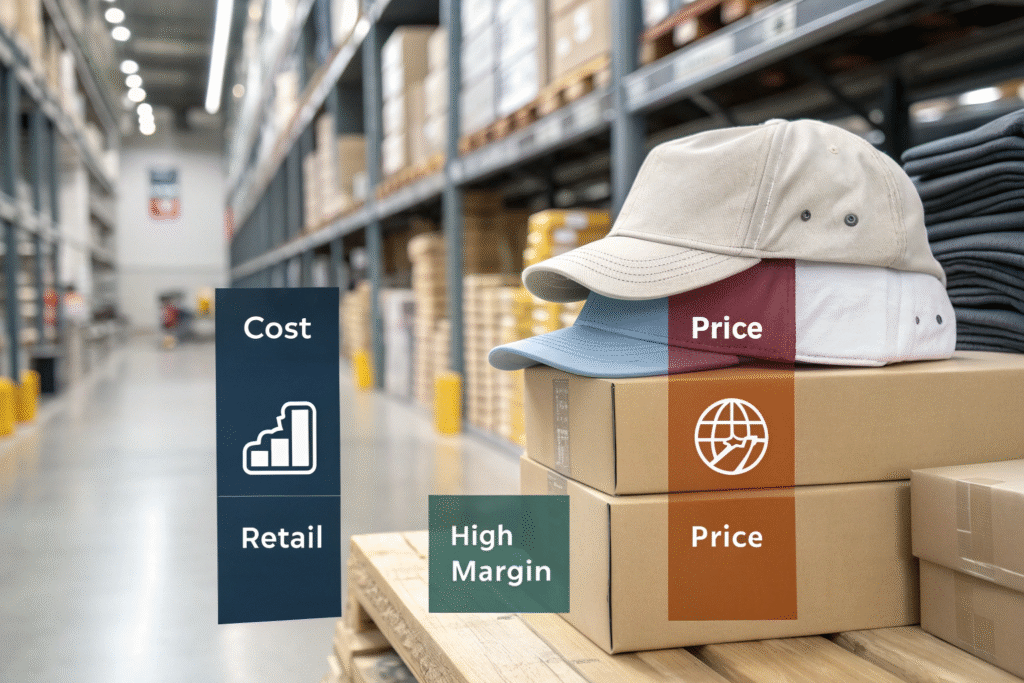
From a commercial perspective, printed cloth hats are an ideal category for supermarkets. They represent a classic case of high-margin, volume-driven retail. Their relatively low cost of goods sold (COGS), especially when sourced in bulk from a manufacturer like Shanghai Fumao Clothing, allows for a healthy markup while still maintaining a highly attractive, low price point for the consumer.
Furthermore, their compact size and lightweight nature make them logistically efficient. They require minimal shelf space compared to their sales potential and are inexpensive to ship and store, contributing to a favorable overall profit margin.
What Are the Sourcing and Quality Considerations for Volume Retail?
To achieve this profitable model, supermarkets need a sourcing partner that excels in large-scale production without compromising on two key fronts: design appeal and consistent quality. The hats must be durable enough to withstand handling in a self-service environment—strong stitching, colorfast prints that won't fade after a few washes, and a shape that holds up. A manufacturer with robust quality control processes is non-negotiable to avoid returns and protect the supermarket's brand reputation. The ability to offer custom printing for private-label supermarket brands adds another layer of exclusivity and margin control.
How Do They Enhance Private Label and Brand Building?
For supermarkets with their own fashion labels, printed cloth hats are a perfect product to expand that range. A private-label hat with a unique, on-brand print reinforces the supermarket's identity beyond food and can build customer loyalty to its apparel line. It allows the retailer to fully control the design, pricing, and marketing narrative, creating a proprietary product that can't be found at a competitor. This strategic move from reseller to brand owner is a significant step in building a differentiated and profitable general merchandise business.
Conclusion
Printed cloth hats are no longer an afterthought in supermarket accessory ranges; they are a strategic asset. They excel at adding vibrant personality through visual merchandising, catering to diverse tastes with niche designs, and driving sales through seasonal relevance and impulse appeal. Commercially, they offer a low-risk, high-margin model that is logistically efficient and perfect for private-label brand building.
For supermarkets looking to elevate their non-food offerings, investing in a well-designed, strategically sourced range of printed cloth hats is a clear opportunity to increase basket size, drive customer engagement, and build a more colorful, profitable, and personality-driven retail environment.
If your supermarket or retail chain is looking to develop a high-impact, commercially successful range of printed cloth hats, Shanghai Fumao Clothing is your ideal volume manufacturing partner. We combine mass-production expertise with a keen eye for trend-driven design, ensuring quality and consistency at scale. Contact our Business Director, Elaine, at elaine@fumaoclothing.com to discuss how we can help you create hat collections that captivate your customers and boost your bottom line.