Have you ever had a beautiful, expensive hair clip suddenly lose its grip and slide out of your hair in the middle of an important meeting? I watched this happen to a retail buyer during a product presentation. She was wearing our competitor’s hair clip. She tilted her head to look at a sample. The clip simply let go. Her hair fell down. She was embarrassed. She was angry. She tossed the clip into the trash. The problem was not the design. The clip looked beautiful. It was the spring inside. The metal had fatigued after just a few weeks of use. The spring had lost its memory. It could no longer hold the jaws closed. The clip was a beautiful corpse.
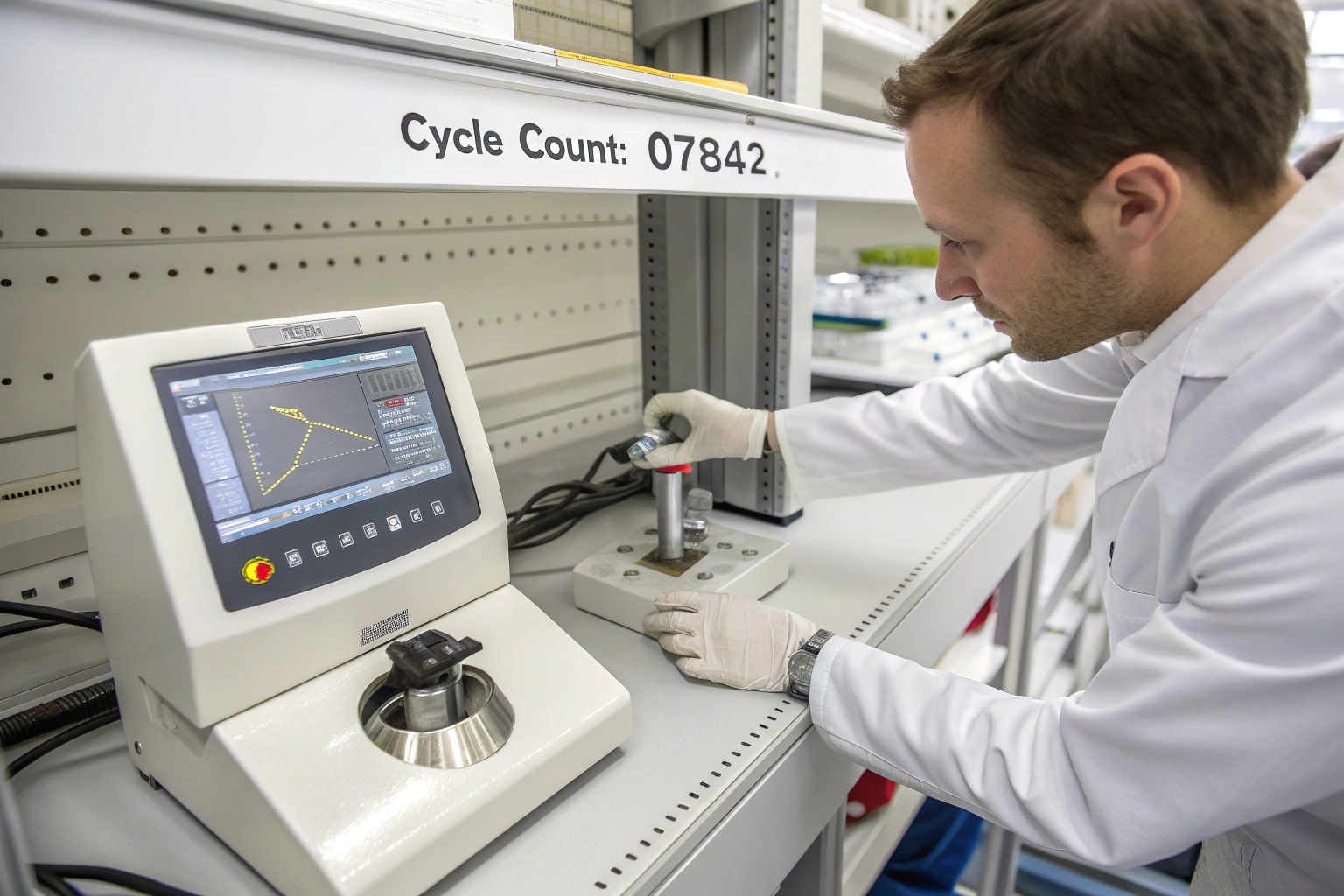
AceAccessory is a professional manufacturer and exporter of accessories. Our QC team tests hair clip spring tension for longevity using a computerized cycle testing machine that simulates 10,000 open-close cycles under a controlled load, combined with a precision force gauge that measures the exact clamping force in newtons before, during, and after the test to ensure minimal force degradation over the product’s lifetime.
The spring is the heartbeat of a hair clip. It is a tiny, hidden piece of tempered steel. It works invisibly every time the clip is opened and closed. If the spring fails, the clip is dead. As a factory owner in Zhejiang, I have invested in a dedicated spring testing laboratory. I want to show you the exact machines, the measurement standards, and the pass/fail criteria that guarantee our clips will not betray your customer at the critical moment.
What Machine Tests the 10,000-Cycle Lifespan of a Clip Spring?
The spring is tested not in isolation, but as part of the complete clip assembly. This is critical. The spring’s performance is influenced by the friction of the hinge and the geometry of the plastic or metal jaws. We use a custom-built "Clip Cycle Tester." This machine is designed by our engineering team specifically for hair accessories.
The machine has a motor-driven cam. The cam pushes a soft, silicone-tipped lever. The lever opens the clip to its maximum functional angle. Then it releases it. The spring snaps the clip shut. This is one cycle. The machine runs continuously at a speed of 30 cycles per minute. It simulates aggressive, daily use. A standard test runs for 10,000 cycles. This represents roughly three years of regular wear, opening and closing the clip about ten times a day. The test is unattended. It runs overnight. The digital counter records the exact number of cycles completed. The test is designed to fail the weak springs. A spring made from poorly tempered steel will fracture before 1,000 cycles. It will snap with a loud ping and the clip will fall apart. A spring with inadequate tension will open but not close fully. The jaws will remain slightly open, floppy and useless. Our passing standard is strict: the clip must complete the full 10,000 cycles without fracture and with a final clamping force that is at least 80% of the original force.
Why Is the 10,000-Cycle Number the Industry Gold Standard?
This number is not arbitrary. It is derived from the expected usage pattern of a quality accessory. A cheap, disposable fashion clip might only be tested to 500 cycles. It is designed to last one season.
A premium hair clip, especially a bridal or professional stylist clip, must last years. 10,000 cycles guarantee longevity. It is the standard used for high-end automotive interior clips. We adopted this standard because we want our clips to outlive the fashion trend. They become a permanent tool in a woman’s accessory kit. This durability is a key selling point for our clients.
How Does the Machine Prevent Heat Build-Up in the Spring?
A steel spring flexing 30 times a minute generates frictional heat. If the spring overheats, it can lose its temper. The test becomes artificially severe and unrealistic.
Our cycle tester has a cooling fan that blows ambient air across the test area. We also pause the test for a 10-second cooling period every 500 cycles. This simulates the natural rest periods in real human use. No one opens and closes a clip continuously for an hour. The thermal management ensures the test measures material fatigue, not heat-induced artificial failure.
How Do You Measure the Exact Clamping Force of the Spring?
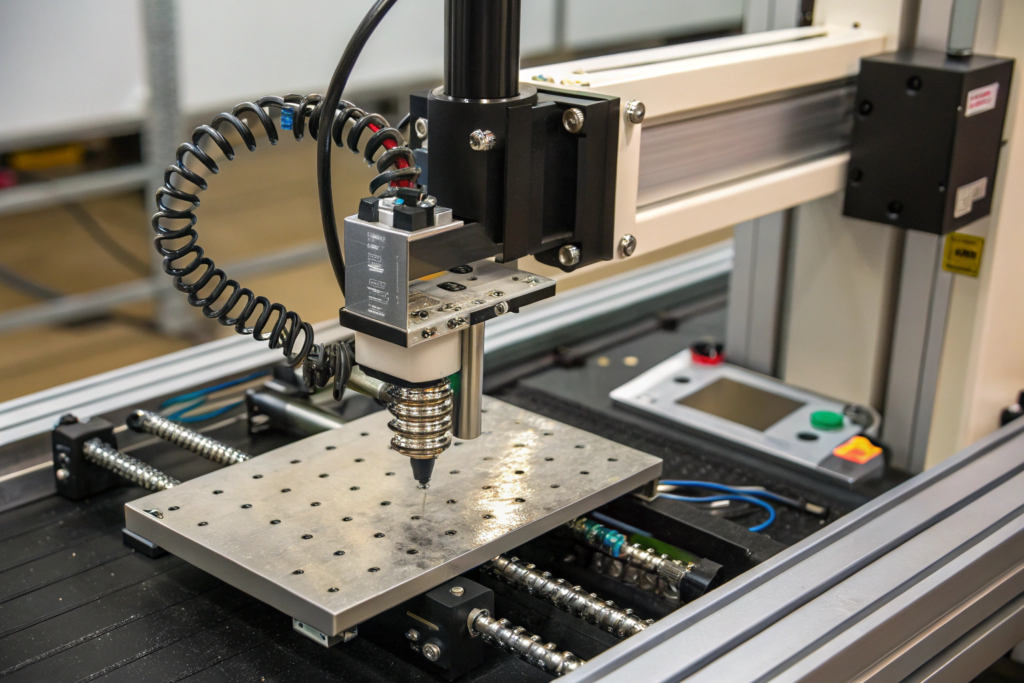
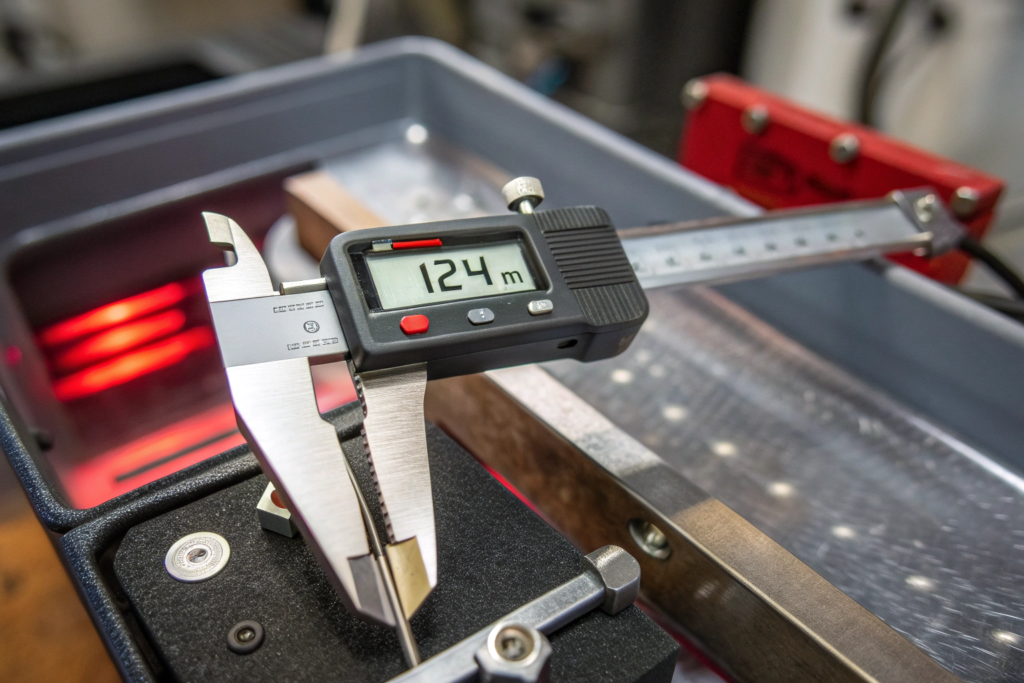
Cycle testing proves durability. Force testing proves performance. A clip that survives 10,000 cycles but has a weak bite is useless. It will slip out of fine hair. We use a digital force gauge, calibrated to 0.01 newton accuracy, mounted on a motorized test stand.
The test measures the "clamping force at the tip." This is the maximum force the clip exerts when fully closed. We position the clip in a fixture. The force gauge probe contacts the inside of the top jaw, exactly 5 millimeters from the tip. The motor drives the probe downward, simulating the hair pushing against the clip’s bite. The gauge records the peak force required to open the jaws by 2 millimeters. This is the "opening force." It represents the clip’s resistance to sliding out. For a standard fashion claw clip, the acceptable range is 8 to 15 newtons. Below 8 newtons, the grip is too weak for thick hair. Above 15 newtons, the clip is too difficult to open and can cause discomfort. We measure the force before the cycle test, at the 5,000-cycle midpoint, and after the full 10,000 cycles. The final force must not drop below 6.4 newtons. This is the 80% retention threshold. We record all measurements in the QC test report for the specific batch.
What Is the Difference Between Tip Force and Hinge Force?
The tip force is what the user feels. It is the bite. The hinge force is the internal spring torque. They are related by the lever arm of the jaw.
A longer jaw amplifies the spring’s weakness. A shorter jaw concentrates the spring’s power. We measure the tip force because it is the functional, real-world metric. The customer does not care about the spring’s internal torque. They care if the clip stays in their hair. This focus on functional testing, rather than abstract component testing, is what separates our QC from a simple spring factory inspection.
Why Do We Use a Controlled Speed for the Force Test?
If you press the gauge too fast, the reading overshoots. You get a falsely high force. If you press too slowly, the clip creeps open and you get a falsely low reading.
Our motorized stand moves at a constant 50 millimeters per minute. This speed is specified in the ASTM D412 standard for elastomer testing, which we have adapted for our clip tests. The constant speed ensures repeatability. A different technician on a different day will get the same result. This is the scientific discipline required for global retail compliance.
What Is the Material Science Behind a Long-Lasting Spring?
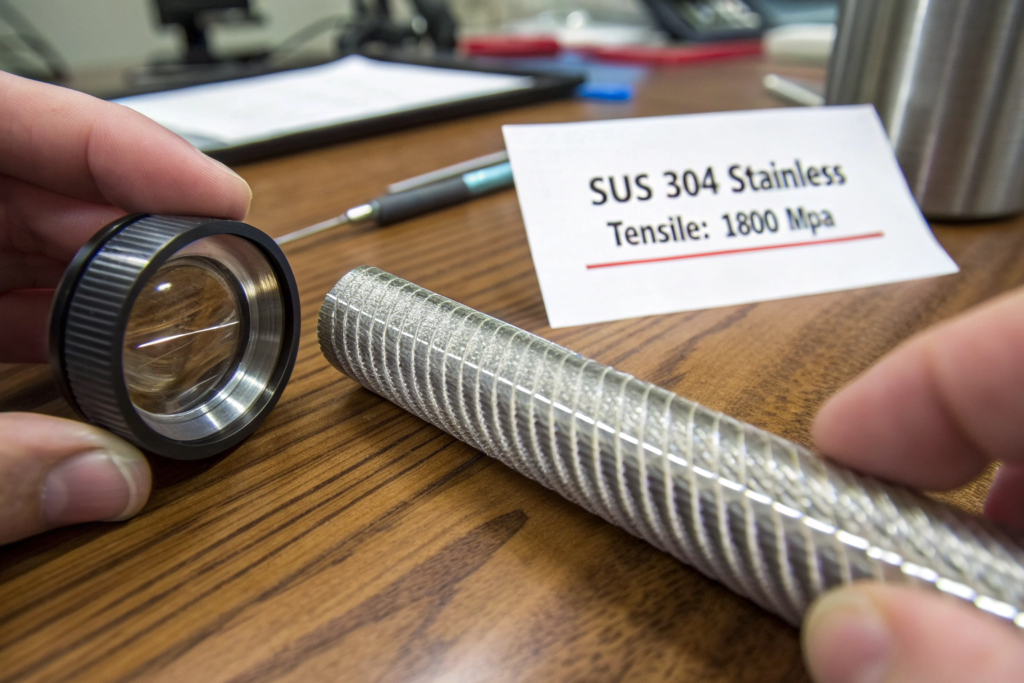
The spring’s longevity is decided at the steel mill, not in our factory. We specify the exact chemical composition and heat treatment of the spring wire. For 90% of our premium clips, we use SUS 304 stainless steel wire. This is a specific austenitic stainless steel.
The wire diameter is typically 0.6 to 0.8 millimeters for a standard claw clip. It is cold-drawn to achieve a high tensile strength, around 1800 megapascals. This is exceptionally strong for stainless steel. After the spring is coiled into its shape in our factory, it undergoes a critical low-temperature heat treatment. We bake the springs at 300 degrees Celsius for 30 minutes in a nitrogen atmosphere oven. This process relieves the internal stresses created during coiling. It is called "stress relieving." It is not hardening. It stabilizes the spring’s shape and prevents it from relaxing over time. A spring that is not stress-relieved will lose 20% of its force in the first few days of use. This is the "settling" effect. Our springs are pre-settled. The force you measure on day one is the force you will have on day one thousand. This material engineering is invisible. It is the difference between a spring that dies young and a spring that lives forever.
Why Stainless Steel Instead of Music Wire?
Music wire is a high-carbon steel. It is cheap. It has excellent spring properties. But it rusts. A single wash in a bathroom, a humid day, and the spring corrodes. It stains the fabric of the clip. It becomes rough. It breaks.
Stainless steel, specifically SUS 304, is corrosion-resistant. It withstands sweat, hair products, and washing. It does not rust. It is also non-magnetic and hypoallergenic. For a hair accessory that touches the skin, this material safety is mandatory. The slightly higher cost of stainless steel wire is a non-negotiable investment in product quality and safety.
What Is the Role of the Spring’s Coil Geometry?
The spring’s force is determined not just by the wire, but by the number of coils and the leg angle. A spring with more coils distributes the stress over a longer length of wire. It has a lower stress per coil. It lasts longer.
Our spring design is optimized. A claw clip spring typically has 4 to 5 coils. The legs are straight and long. The angle between the legs at rest is 120 degrees. When the clip is closed, the legs are forced to a 60-degree angle. This 60-degree deflection is within the elastic limit of the tempered steel. The spring never yields. It always returns to 120 degrees. The geometry is precisely calculated using standard spring design formulas. We verify the leg angle with an optical comparator before assembly.
What Is the Final Inspection Protocol for a Production Batch?
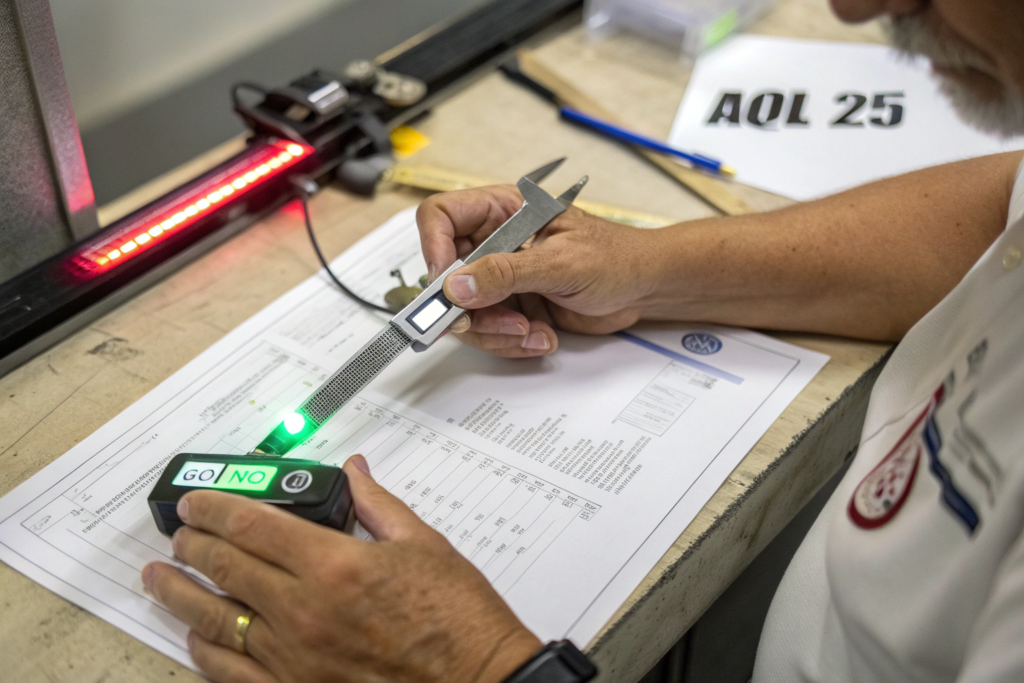
The machine tests are the scientific backbone. The final inspection is the human sensory confirmation. We use an AQL 2.5 sampling plan. For a batch of 5,000 clips, our QC team randomly selects 200 clips for inspection.
The inspection has three stations. Station one is the visual and tactile test. The inspector opens and closes each clip 20 times by hand. She feels for any roughness, sticking, or clicking. A smooth, silent, fluid motion is a pass. A gritty feel indicates a burr on the spring or a misaligned hinge. Station two is the "Go/No-Go" force gauge fixture. This is a fast, pass-fail version of the digital force test. The clip is placed in a simple fixture. A spring-loaded plunger presses on the jaw. If the green light turns on, the force is within the acceptable range. If the red light turns on, the clip fails. Station three is the "drop test." The clip is held at 1.5 meters height and dropped onto a concrete floor. It must not shatter. The spring must not pop out of its housing. This tests the robustness of the whole assembly. Any defect found triggers a tightened inspection level. We go from Level II to Level III. We double the sample size. If the defects exceed the AQL limit, the entire batch is quarantined for 100% re-inspection. No defective clip is allowed to be packed.
How Do You Detect a Microscopic Spring Crack?
A visual inspection might miss a hairline crack in the spring coil. This crack will propagate and cause a sudden failure in the customer’s hand.
We use a dye penetrant test on the sample springs from each batch. The spring is soaked in a red fluorescent dye. It is washed. A developer powder is applied. Under a UV blacklight, any crack glows bright red. This is a non-destructive test borrowed from aerospace and automotive industries. It catches the hidden, latent defects that visual inspection misses.
Why Is the Drop Test Performed at a Specific Temperature?
Plastic becomes brittle in the cold. A clip that passes a drop test in a warm factory might shatter in a freezing winter postbox. We condition the samples in a freezer at minus 10 degrees Celsius for 4 hours. We then perform the drop test immediately. The clip must not crack. This simulates the extreme conditions of winter shipping. It is a critical test for our clients in cold climates. It prevents the winter shatter failure.
Conclusion
The longevity of a hair clip’s spring tension is a measurable, scientific fact. Our QC team uses a cycle testing machine to simulate a lifetime of 10,000 open-close actions. We use a digital force gauge to verify the clamping bite remains above the critical 8-newton threshold. We specify corrosion-resistant, stress-relieved SUS 304 stainless steel wire with an optimized coil geometry. Our final inspection combines human tactile checks with temperature-conditioned drop tests and fluorescent crack detection.
A clip that passes this gauntlet will not betray the wearer. It will hold her hair securely, silently, and reliably for years. The spring is the soul of the clip. We treat it with the precision of a mechanical watch component.
In our Zhejiang factory, the spring testing lab is the heart of our QC department. The cycle testers run 24 hours a day. The force data is logged digitally. The material certificates are filed for every spring wire batch.
If you are a brand that has suffered from spring failure and wants a scientifically guaranteed product, I invite you to contact our Business Director, Elaine. She can send you a video of our cycle tester in operation. She can share a sample force test report for a clip you are interested in. She can demonstrate the 10,000-cycle durability on a live video call. Send her an email at elaine@fumaoclothing.com. Let us build a clip that holds on as long as you do.