A buyer from a US brand that reorders the same core hair accessories season after season once called me with a recurring frustration. Every time she placed a repeat order, her previous factory asked her to send a new reference sample or re-approve a new pre-production sample. The factory had not kept her original approved sample. It had been discarded, lost, or damaged. She had to go through the sampling process again. She had to dig out her own archived sample from her office, package it, ship it internationally, and wait for the factory to match it. The process added two to three weeks and unnecessary cost to every repeat order. She asked me if our factory could just keep her samples safe and ready for the next order. I told her that is exactly what we do.
To find a factory that offers free sample storage for repeat orders, look for a manufacturer with a dedicated, climate-controlled sample archive and a documented sample retention policy. The right factory will treat your approved reference samples as critical production assets, storing them securely, labelling them systematically, and retrieving them instantly when you place a repeat order. Free sample storage eliminates the need to resample for repeat orders, saving you time and money and ensuring absolute consistency between production runs.
At Shanghai Fumao, free sample storage is a standard part of our client service. We do not charge for it, and we do not treat it as an optional extra. We consider the approved reference sample to be as important as the production mold. Let me explain how our sample storage system works and why it matters for your repeat orders.
Why Is Reference Sample Storage Critical for Repeat Orders?
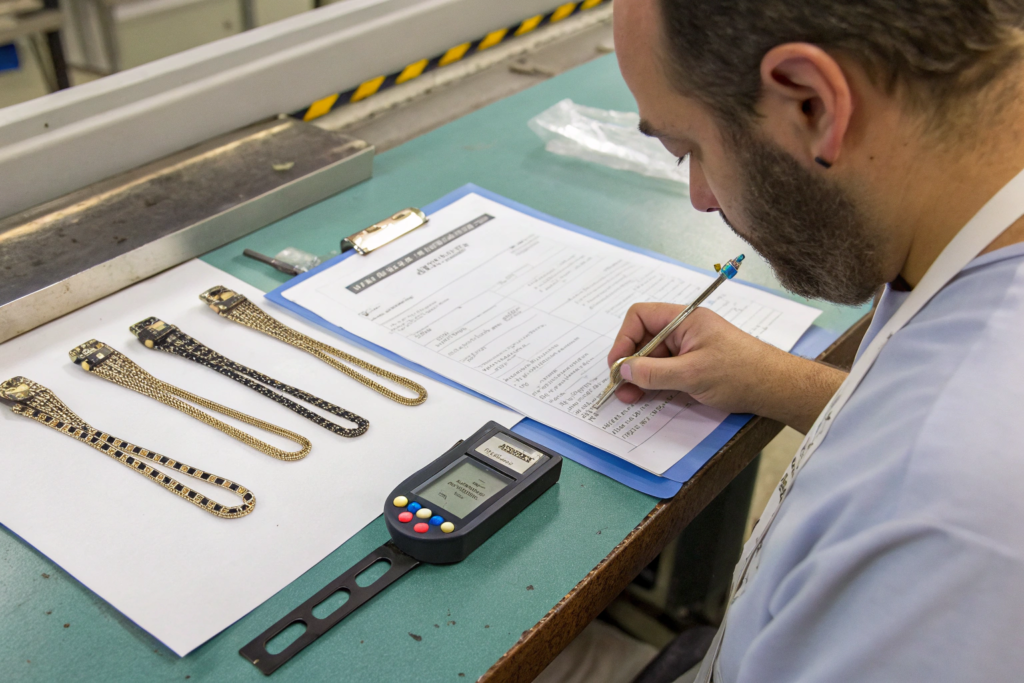
The approved reference sample is the physical definition of your product. It is the standard against which every future production run is judged. When you place a repeat order six months or a year later, the factory must produce goods that match the original approved sample. Without the original sample, the factory is working from memory, from photographs, or from written specifications. None of these is as precise as the physical sample.
Photographs cannot capture the exact colour under standardised lighting. Written specifications cannot describe the exact hand feel of the leather or the exact spring tension of the clip. The reference sample captures all of these subjective quality attributes. It is the definitive standard. A factory that stores your reference samples securely is a factory that is committed to consistent quality across repeat orders. A factory that discards your samples is a factory that accepts the risk of quality drift.
What Happens When a Factory Loses Your Reference Sample?
When a factory loses your reference sample, the repeat order process breaks down. The factory cannot verify that the new production matches the old. They must produce a new pre-production sample and send it to you for approval. You must compare the new sample to your own archived sample, if you have one, or to your memory of the product. You must approve the new sample or request revisions. The process adds two to three weeks to the repeat order timeline.
There is also a risk of quality drift. The new sample may not perfectly match the original. The colour may be slightly different. The material may have been sourced from a different supplier. The finishing may be subtly different. You may not notice the difference on a single sample. Your customer may notice it when the new batch sits next to the old batch on the retail shelf. The reference sample is the anchor that prevents drift. Without it, the product slowly changes over time. Professional reference sample management in manufacturing is a core quality assurance practice.
How Does Sample Storage Save Time on Repeat Orders?
When you place a repeat order with us, the first thing your project manager does is retrieve your archived reference sample from the sample storage room. The sample is brought to the production line. The production team sets up the line to match the sample. The QC team uses the sample as the inspection standard. The first production pieces are compared directly to the reference sample. If they match, production continues. If they do not match, adjustments are made immediately.
This process happens without you. You do not need to ship a sample. You do not need to approve a new pre-production sample. You place the order. We retrieve the sample. We match it. We ship the goods. The repeat order timeline is shortened by the time that would have been spent on resampling and re-approval. For a brand that places quarterly repeat orders, the time savings over a year are significant.
What Does a Professional Sample Storage System Look Like?
A professional sample storage system is not a shelf in a dusty corner. It is a controlled environment designed to preserve the samples in their original condition. Samples stored in a hot, humid, or brightly lit environment will degrade. Leather will dry out and crack. Colours will fade. Metal will tarnish. A degraded sample is a useless standard. It will lead to production that matches the degraded sample, not the original product.
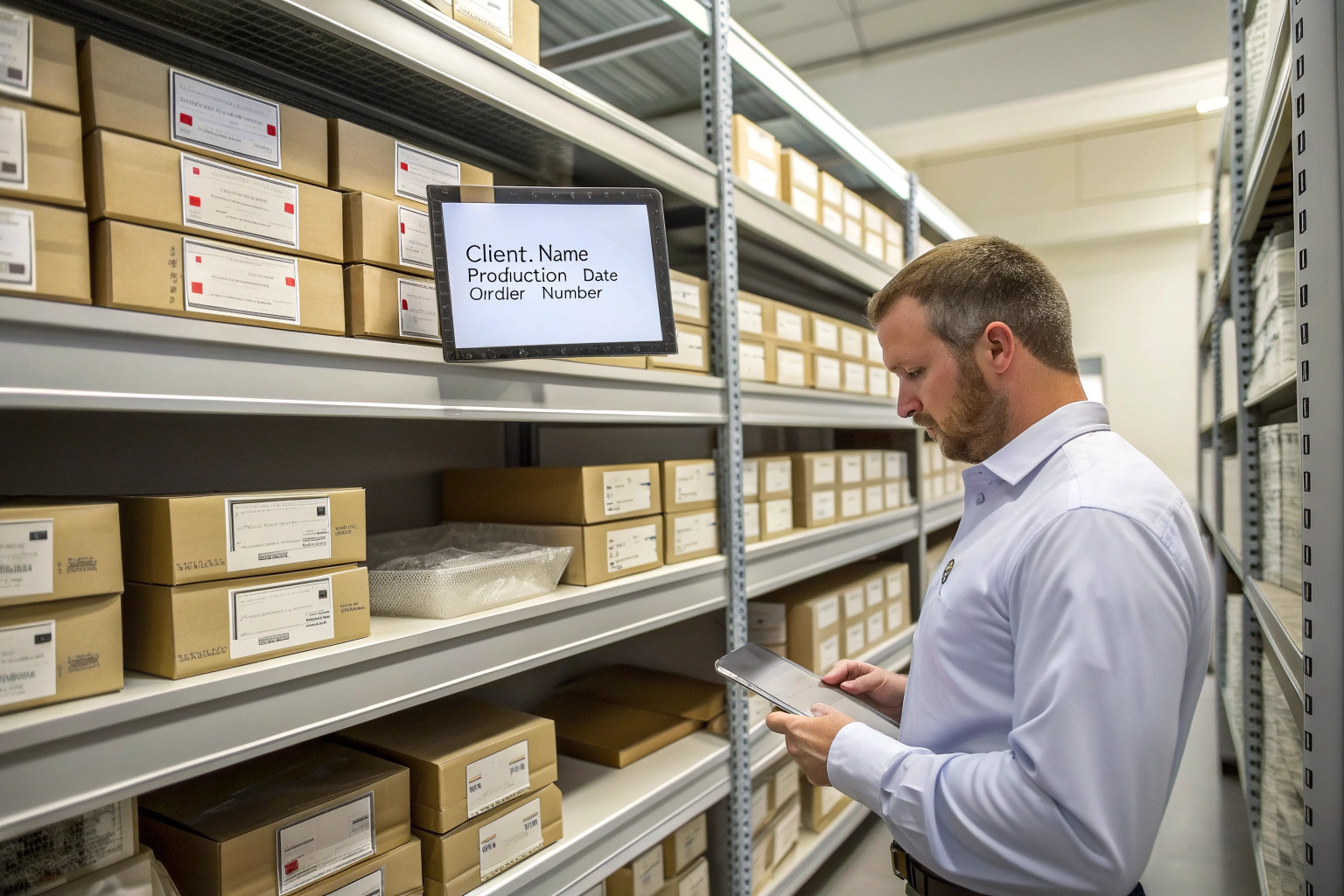
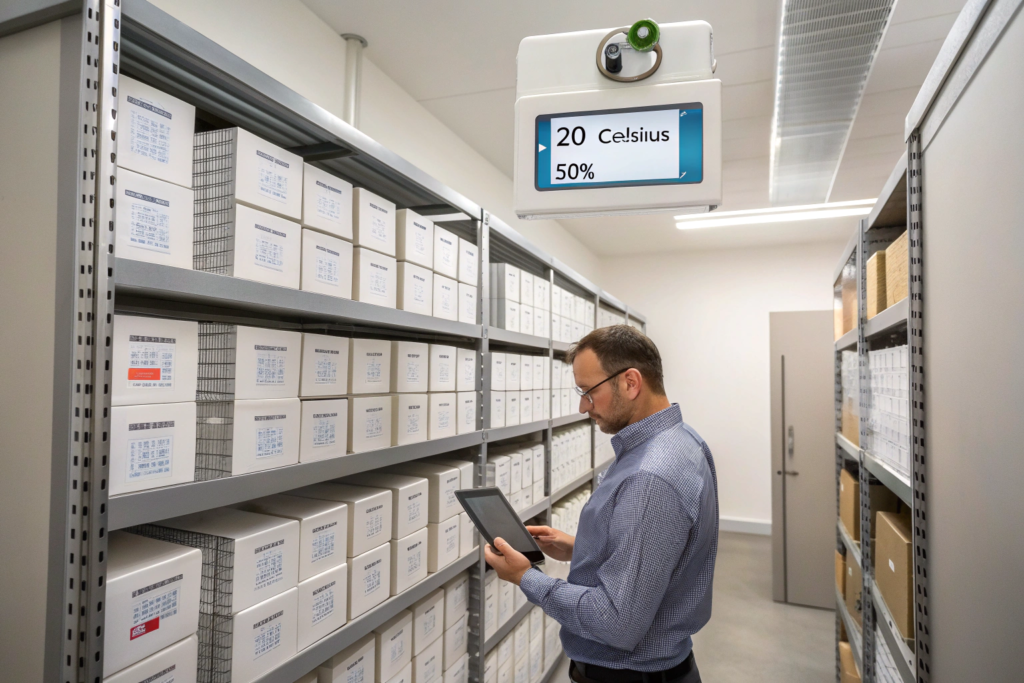
At our factory, the sample storage room is a dedicated, climate-controlled space. Temperature and humidity are monitored and maintained at stable levels that are appropriate for textile and accessory preservation. The room is clean and free of dust. Samples are stored in archival-quality boxes or sealed bags to protect them from light and air. Each sample is labelled with the client name, the product code, the order number, and the approval date. The storage location is recorded in a digital database. A sample can be located and retrieved within minutes.
How Should Samples Be Packaged for Long-Term Storage?
Textile samples, such as scarves and headbands, are stored flat in acid-free tissue paper inside archival boxes. The tissue paper prevents the fabric from creasing and protects it from light. Leather samples are stored in breathable fabric bags to prevent moisture buildup. Metal samples are stored with anti-tarnish strips to prevent oxidation. Each sample is individually bagged or boxed to prevent contact with other samples, which could cause colour transfer or abrasion.
The packaging is labelled on the outside with the key information. The sample inside is also tagged. The double labelling ensures that the sample can be identified even if the outer packaging is damaged. The packaging is designed for the specific material of the sample. A one-size-fits-all approach does not work. Silk requires different storage conditions than leather. Professional textile and artefact storage standards inform our sample preservation methods.
What Digital Tracking System Supports the Physical Archive?
Our sample archive is supported by a digital inventory management system. Every sample is entered into the system when it is approved. The entry includes the client name, the product name, the product code, the order number, the approval date, the storage location, and a digital photograph of the sample. The system allows us to search by any of these fields.
When a client places a repeat order, the project manager searches the system for the client’s approved sample. The system shows the storage location. The manager retrieves the sample. The system records the retrieval and the date. When the sample is returned after production, the return is recorded. The system tracks the chain of custody of every sample. This is the same level of rigour that a museum applies to its collection. It is appropriate for a factory that treats its clients’ products as valuable assets. Understanding inventory management systems for manufacturing helps you appreciate the infrastructure behind a simple promise like "we keep your samples safe."
What Questions Should You Ask a Factory About Sample Storage?
The best time to learn a factory’s sample storage policy is before you place your first order. Ask specific questions. Vague answers indicate a lack of a formal system. Clear, detailed answers indicate a professional operation. Here are the questions I recommend you ask.
"Do you retain approved reference samples for repeat orders? For how long? Is there a charge for this service?" A good factory will answer yes, indefinitely, and no charge. "Where and how are the samples stored? Is the storage area climate-controlled?" A good factory will describe a dedicated, controlled storage room. "How are samples labelled and tracked? Can you retrieve my sample quickly when I place a repeat order?" A good factory will describe a digital inventory system and a retrieval time measured in minutes. "Can I see a photo of your sample storage room?" A good factory will provide a photo or a video tour without hesitation.
How Does a Factory’s Sample Policy Reflect Their Overall Quality Commitment?
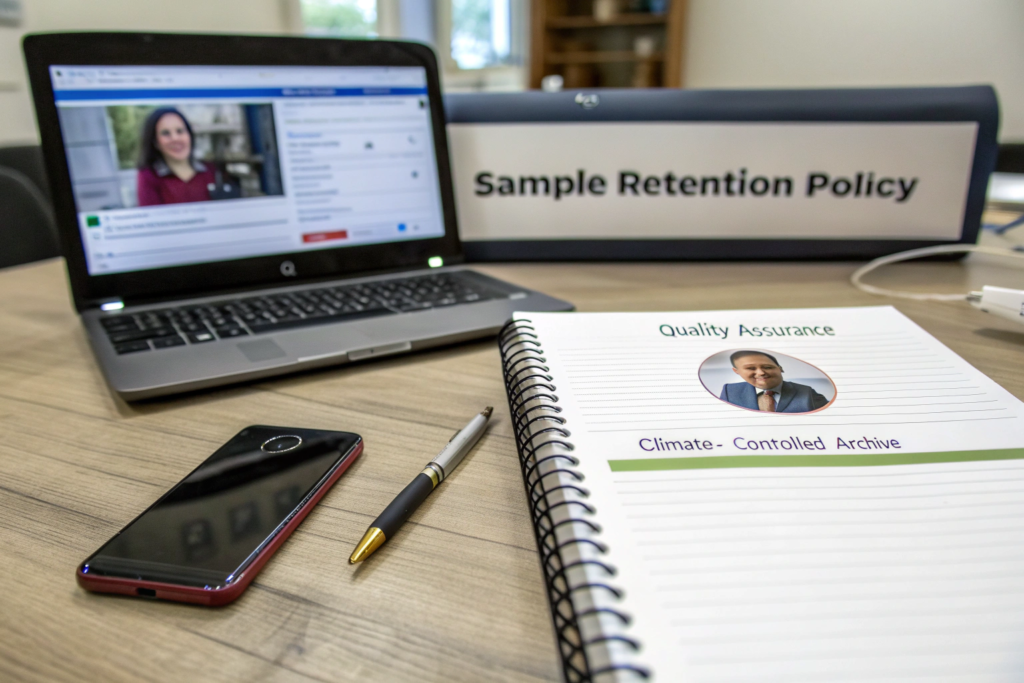
A factory that invests in a professional sample storage system is a factory that takes long-term quality seriously. The storage room, the climate control, the labelling system, the digital tracking. These are not revenue-generating activities. They are investments in quality infrastructure. A factory that makes these investments is a factory that values repeat business and consistent quality.
A factory that does not retain samples, or that stores them carelessly, is a factory that treats each order as a one-time transaction. They are not building a long-term quality relationship with your brand. The sample storage policy is a window into the factory’s business philosophy. Choose a factory whose philosophy aligns with your need for consistent, reliable repeat orders. Professional supplier quality capability assessment should include an evaluation of sample management practices.
Conclusion
Finding a factory that offers free sample storage for repeat orders is about finding a factory that values long-term quality and client relationships. The right factory will have a dedicated, climate-controlled sample archive. Samples will be packaged appropriately for their material, labelled systematically, and tracked digitally. The storage service will be free, and the sample will be retrievable within minutes when you place a repeat order.
The benefit to your brand is faster repeat order turnaround, elimination of resampling costs, and absolute consistency between production runs. Your reference sample is the anchor that prevents quality drift. A factory that safeguards that anchor is a factory that safeguards your brand.
At Shanghai Fumao, free sample storage and retrieval is a standard part of our client service. Our sample archive is climate-controlled, digitally tracked, and professionally managed. We retain your approved reference samples indefinitely. When you place a repeat order, your sample is on the production line within minutes, ensuring your new production matches your original approval. We do not charge for this service. We consider it a fundamental part of our quality commitment.
If you are looking for a manufacturing partner who will treat your reference samples as the valuable quality assets they are, please contact our Business Director Elaine at elaine@fumaoclothing.com. She can provide a video tour of our sample storage room, explain our sample retention and retrieval process, and discuss how our quality systems support consistent repeat orders. Your brand deserves a factory that remembers your product as well as you do.