I received an inquiry three years ago that changed how I think about my factory’s purpose. A woman named Sarah wrote to me from a cancer support center in Toronto. She explained that the scarves her patients were receiving were generic squares of polyester that slipped off bald heads, irritated sensitive scalps, and made the women feel like patients instead of people. She asked if I could produce a scarf designed specifically for chemotherapy patients. Soft, secure, breathable, beautiful. I said yes. That first order of 200 scarves has grown into a specialized product line that now serves oncology boutiques, hospital gift shops, and cancer support charities across North America and Europe.
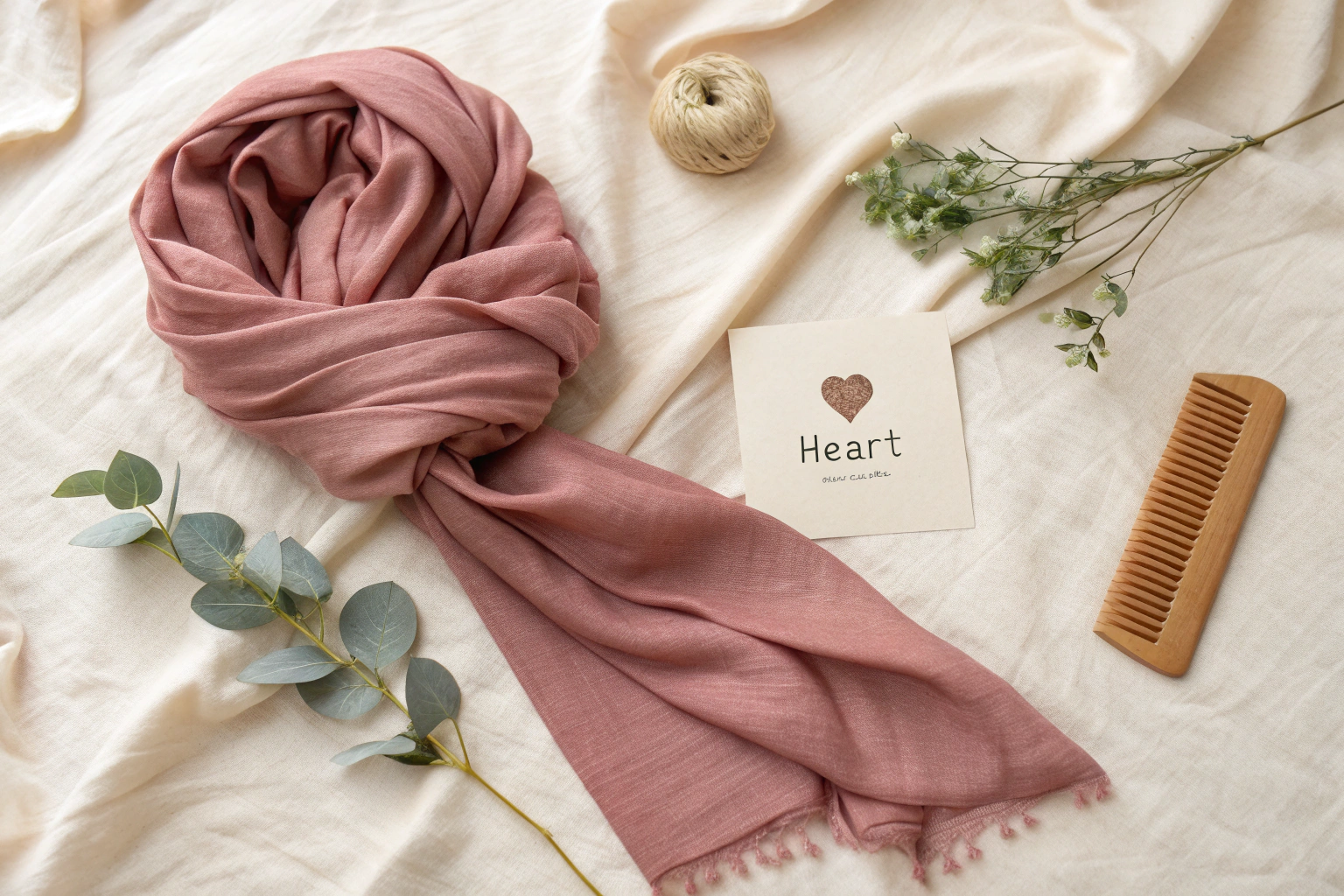
Yes, a professional accessories factory can produce custom shaped hair scarves specifically designed for chemotherapy patients. The construction requires specialized design features not found in fashion scarves. A deep, elasticated nape band that grips the back of the head without pressure points, a wide front panel with a soft, seamless interior lining that protects the scalp from friction, and pre-tied or adjustable closure systems that can be operated with limited dexterity. The fabric must be OEKO-TEX certified, hypoallergenic, and breathable. Cotton-modal blends, bamboo viscose, and micro-modal jersey are the preferred materials because they wick moisture, resist bacterial growth, and feel cool against sensitive, treatment-irritated skin.
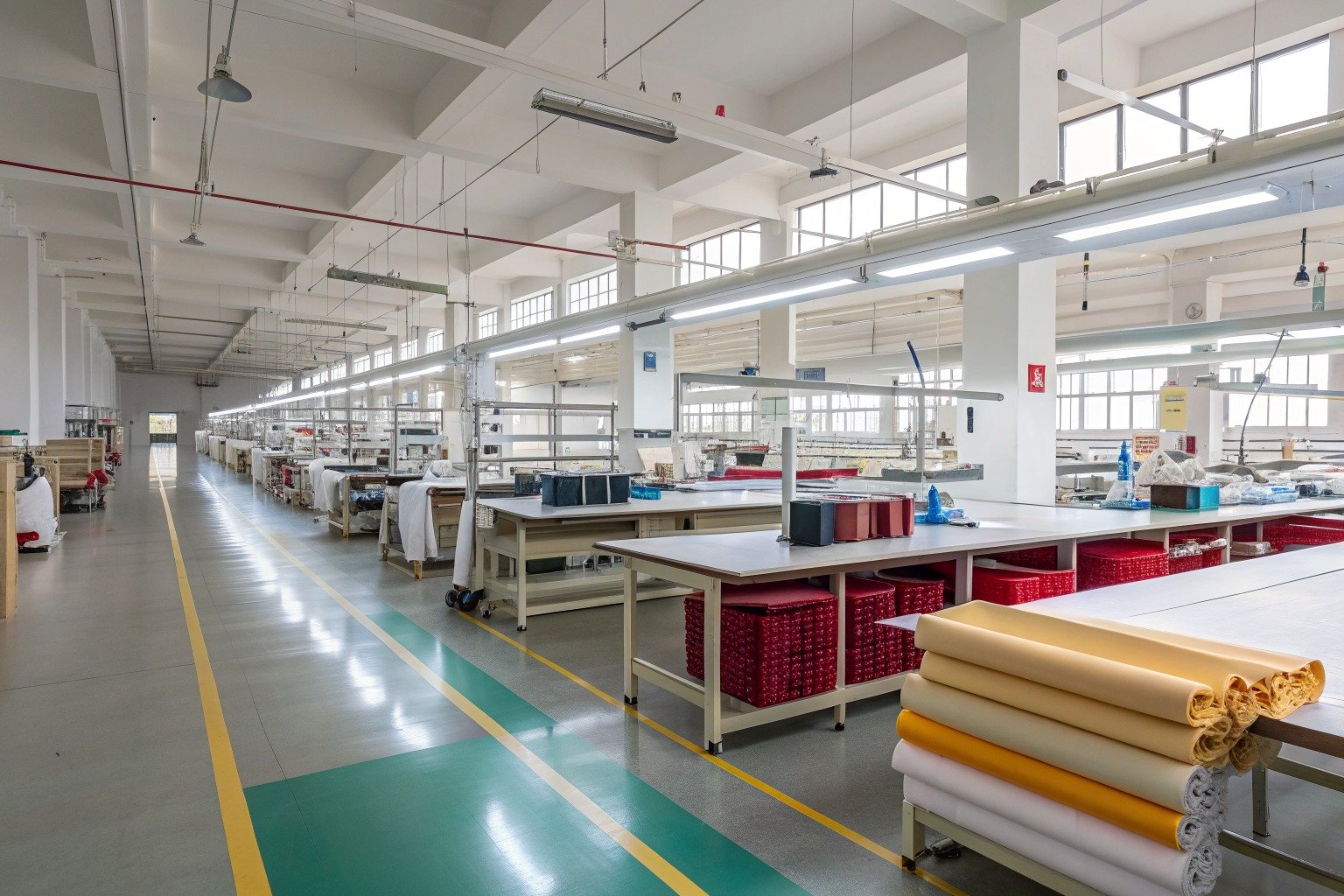
I run a fashion accessories factory in Zhejiang. When Sarah first contacted me, I had never produced a medical-support accessory. I had to research scalp sensitivity, chemotherapy-induced skin conditions, and the ergonomics of securing a scarf on a head without hair. I consulted with oncology nurses. I tested fabrics against bald scalps. I iterated the closure design six times until a patient with arthritis could fasten it one-handed. I want to share exactly how we design, prototype, and produce these scarves, because this product category requires a level of care and precision that goes beyond standard accessories manufacturing.
What Design Features Make a Head Scarf Suitable for Chemotherapy Patients?
A fashion scarf is a rectangle of fabric with a hem. It relies on hair for grip and styling. A chemotherapy scarf must function on a completely bald head, often with altered head shape from surgery, sensitive surgical sites, and skin that is fragile from radiation or chemotherapy treatment. The design cannot assume any biological anchor point. It must create its own secure, comfortable fit through engineering, not through the wearer’s hair or styling skill. The difference between a fashion scarf and a chemotherapy scarf is the difference between a decorative accessory and a medical-support device.
A chemotherapy-suitable head scarf requires a shaped, contoured cut that wraps the crown and nape without bulk, an integrated soft elastic or adjustable band at the nape that secures the scarf without slipping, a seamless or flat-seamed interior that eliminates friction points against sensitive scalps, a full-coverage front panel that drapes naturally to frame the face without requiring pins or clips, and a closure system that can be fastened and adjusted with one hand, accommodating patients with limited arm mobility or neuropathy in the fingers. The scarf must also be machine washable on a delicate cycle without losing shape, as patients often have limited energy for hand washing and special care.
I worked with an oncology nurse during the development of our first chemotherapy scarf. She brought me a list of problems her patients reported with existing scarves. Slipping, itching, too hot, too tight, too complicated to tie, made them feel like they were wearing a costume. Each problem became a design requirement. Slipping became the elasticated nape band. Itching became the seamless interior. Too hot became the bamboo-modal blend. Too complicated became the pre-tied front knot with a hidden adjustable back strap. The design is functional first, beautiful second, and the beauty comes from how the scarf makes the wearer feel, dignified and comfortable, rather than from superficial decoration.
How Does the Elasticated Nape Band Replace Traditional Scarf Tying for a Secure Fit?
A traditional scarf relies on the wearer tying a knot at the nape. This requires two hands with good dexterity, the ability to reach behind the head, and enough hair to provide friction against the fabric. For a chemotherapy patient, all three may be absent. Neuropathy in the fingers makes tying impossible. Port placement or surgery limits arm mobility. A bald scalp provides no grip. The traditional knot is a barrier to independence.
The elasticated nape band solves this by replacing the knot with a pre-sewn, stretchable band integrated into the back hem of the scarf. The band is made from a soft, latex-free elastic encased in the same gentle fabric as the scarf body. The patient pulls the scarf over the head like a cap, and the elastic band gently contracts around the occipital bone at the base of the skull. The grip is distributed across a wide band, approximately 3 to 4 centimeters, rather than concentrated at a single knot point. This distributes pressure evenly and prevents the tension headaches that tight knots can cause. The ergonomic headwear design for medical hair loss has adopted the elastic nape band as the standard alternative to traditional tying.
Why Are Flatlock and Coverstitch Seams Critical for Scalp Comfort During Treatment?
A standard overlock seam has a ridge of fabric and thread on the inside of the garment. On a healthy scalp with hair, this ridge is imperceptible. On a bald, chemotherapy-sensitive scalp, this ridge feels like a scratch. After hours of wear, it can cause redness, irritation, and even small abrasions on skin that has reduced healing capacity due to treatment.
Flatlock seams join two fabric edges without creating a raised ridge. The seam lies completely flat against the skin. Coverstitch seams encase the raw fabric edge in a smooth tunnel of thread, eliminating any sharp or rough edge. We use flatlock construction for all interior seams on our chemotherapy scarves. The exterior may use a decorative stitch, but the surface that touches the scalp is always a flatlock or a coverstitch. Additionally, we position all seams away from the crown of the head, where sensitivity is often highest, and toward the sides and nape. The flatlock seam construction for sensitive skin garments is a standard in medical textiles and adaptive clothing, and it is non-negotiable for chemotherapy headwear.
What Fabrics Are Safe and Comfortable for Chemotherapy-Sensitive Scalps?
A chemotherapy patient’s scalp is not normal skin. It is medically fragile. Chemotherapy drugs target rapidly dividing cells, which include cancer cells but also hair follicle cells, skin cells, and the cells lining the mouth and digestive tract. The scalp may be dry, peeling, tender, or actively painful. It may have sun sensitivity from treatment. It may be breaking out in acne-like rashes. The fabric that touches this skin cannot be chosen based on fashion trends or cost. It must be chosen based on biocompatibility.
The safest and most comfortable fabrics for chemotherapy head scarves are OEKO-TEX Standard 100 certified cotton-modal blends, specifically a 60% cotton, 40% modal jersey with a weight of 180 to 200 gsm, and viscose from bamboo with a similar weight and certification. These fabrics are naturally hypoallergenic, breathable, and moisture-wicking. They contain no chemical finishes, formaldehyde, or heavy metal dyes that could irritate compromised skin. Bamboo viscose offers additional benefits of natural antimicrobial properties and a cool-to-the-touch hand feel that provides relief during hot flashes, a common chemotherapy side effect.
I learned about fabric sensitivity the hard way. My first prototype used a standard polyester satin. It looked beautiful. It was cheap. It also trapped heat, caused sweating, and made a patient tester’s scalp red and itchy within an hour. I threw the polyester samples in the trash and started over with certified natural blends. The cost per meter tripled. The comfort improvement was immeasurable. A patient who can wear a scarf for eight hours without noticing it is a patient who can focus on healing instead of adjusting her headwear.
Why Is OEKO-TEX Standard 100 Certification Non-Negotiable for Medical Headwear Fabrics?
A fabric can be 100% cotton and still contain chemicals that harm a chemotherapy patient. Conventional cotton processing uses formaldehyde as a wrinkle-resistant finish, heavy metals in dyes, and chlorine bleach for whitening. These chemicals remain on the fabric and transfer to the skin. For a healthy person, the exposure is low and the risk is minimal. For a chemotherapy patient with compromised skin barrier function and a suppressed immune system, the exposure is a meaningful health risk.
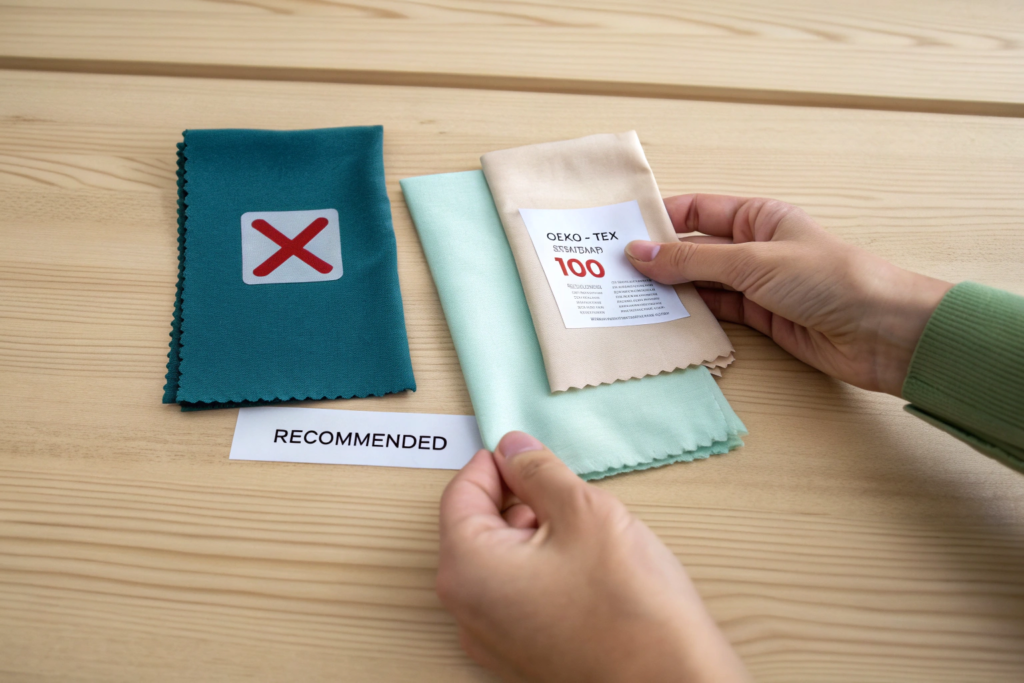
OEKO-TEX Standard 100 certification means the fabric has been tested by an independent laboratory for over 100 harmful substances, including formaldehyde, heavy metals, chlorinated phenols, and allergenic dyes. The certification has four product classes. Class I is for baby products, the strictest standard. Class II is for products with direct skin contact. Chemotherapy head scarves should be made from fabrics certified to Class I or Class II. The OEKO-TEX Standard 100 certification for medical textiles provides the independent verification that the fabric is safe for the most sensitive skin. I require this certificate from every fabric supplier, and I verify the certificate number on the OEKO-TEX online label check before accepting any fabric into my factory.
How Does Bamboo Viscose Compare to Cotton Modal for Temperature Regulation and Moisture Management?
Chemotherapy patients experience temperature dysregulation. Hot flashes surge without warning, followed by chills. A fabric that traps heat makes hot flashes unbearable. A fabric that does not insulate makes chills miserable. The fabric must actively manage temperature and moisture, not just passively allow it.
Bamboo viscose has a natural microporous structure that allows air to circulate close to the skin. It wicks moisture away from the scalp and evaporates it rapidly, creating a cooling effect. It also has natural antimicrobial properties that resist odor-causing bacteria, which is important for patients who may wear the scarf for extended periods without washing. Cotton-modal blends combine the softness and familiarity of cotton with the drape and moisture-wicking of modal. Modal is a regenerated cellulose fiber made from beechwood. It is 50% more absorbent than cotton and has a smoother surface that reduces friction against fragile skin. The bamboo versus cotton for sensitive skin applications comparison shows that both materials are excellent choices, with bamboo offering superior antimicrobial properties and modal offering superior drape and softness.
How Does the Prototyping Process Differ for Medical-Support Accessories?
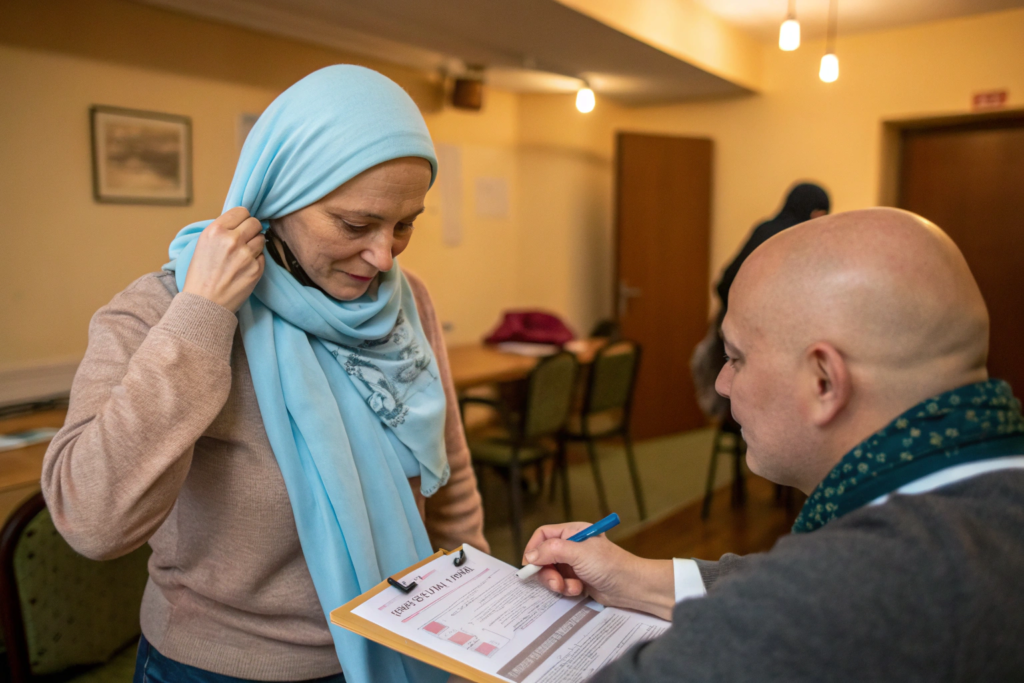
Prototyping a fashion scarf involves one fit model with hair and one round of adjustments. Prototyping a chemotherapy scarf involves multiple testers with different head shapes, different treatment stages, different surgical histories, and different physical limitations. The feedback is not about whether the scarf looks good. It is about whether the scarf can be put on without help, whether it stays on during a nap, whether it causes pain after four hours of wear. The prototyping process is medical in its rigor because the consequences of a design failure are not a returned product but a patient who feels frustrated, uncomfortable, and defeated by a scarf that was supposed to help.
The prototyping process for chemotherapy head scarves requires a multi-round, patient-involved testing protocol. Round one is internal fit testing on a range of mannequin head forms, including forms that simulate hair loss. Round two is patient fit testing with a minimum of five volunteer testers representing different head sizes, treatment stages, and dexterity levels. Round three is extended wear testing where testers wear the scarf for a minimum of six continuous hours and report on comfort, temperature, slippage, and ease of removal. Each round generates specific design modifications. The final prototype is approved only when all testers across all categories report an acceptable or better experience.
I recruited patient testers through Sarah’s cancer support center. Five women volunteered. They had different head sizes, different cancer types, different stages of treatment. They wore the prototypes for a full day and filled out a detailed questionnaire. Their feedback was humbling. The elastic was too tight for a woman with migraines. The front drape was too long for a petite woman. The closure was too small for a woman with swollen fingers from steroid treatment. Each piece of feedback was a gift. Each modification made the scarf better for the next woman who would wear it.
What Fit Testing Protocols Ensure the Scarf Works on Different Head Shapes and Sizes?
A head without hair is not simply a smaller version of a head with hair. The circumference may be smaller, but the shape is different. The occipital bone, the ridge at the back of the skull, is more prominent. The temporal bones at the sides may create flat planes rather than curved contours. A scarf designed on a standard wig block will gap and slip on a real bald head.
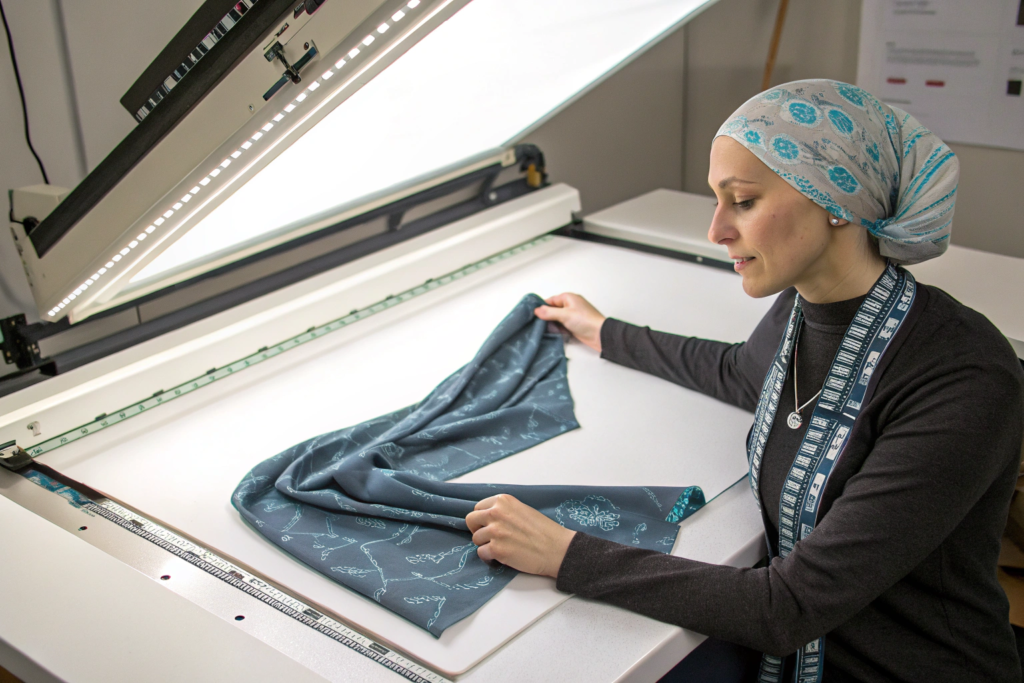
Our fit testing uses head forms that replicate the anthropometric measurements of bald adult female heads. We use a range of circumferences from 52 centimeters to 60 centimeters. We test the elastic nape band tension with a force gauge, targeting a grip force between 2 and 3 newtons, sufficient to prevent slipping without causing pressure marks. We test the scarf on volunteer patients and measure the gap, if any, between the scarf edge and the scalp at the temples, crown, and nape. A gap greater than 3 millimeters at any point triggers a pattern adjustment. The medical headwear fit standards and anthropometric data provide the measurement framework that guides this process.
How Does Wear-Testing by Actual Patients Refine the Closure and Adjustability Design?
A designer can sit at a desk and imagine how a closure should work. A patient with neuropathy in her fingers can demonstrate exactly why that closure fails. Buttons require fine motor control that neuropathy destroys. Velcro catches on other laundry and pills the delicate fabric. Snaps require a pinching motion that may be painful. Ties require two hands and the ability to reach behind the head.
Our patient testers rejected buttons, Velcro, and snaps in the first round. The preferred closure emerged as a continuous loop elastic cord with a spring-loaded cord lock that can be tightened by pulling a single tab with one finger. The cord lock is oversized, approximately 20 millimeters in diameter, to be graspable by stiff or swollen fingers. The elastic cord is threaded through a channel at the nape, and pulling the cord lock tightens the scarf evenly around the entire head circumference. Releasing the cord lock releases the tension. The entire operation can be performed with one hand, looking in a mirror or by feel alone. The adaptive closure design for limited dexterity principles that emerged from the disability fashion movement directly informed this solution.
What Packaging and Presentation Considerations Honor the Emotional Context of the Product?
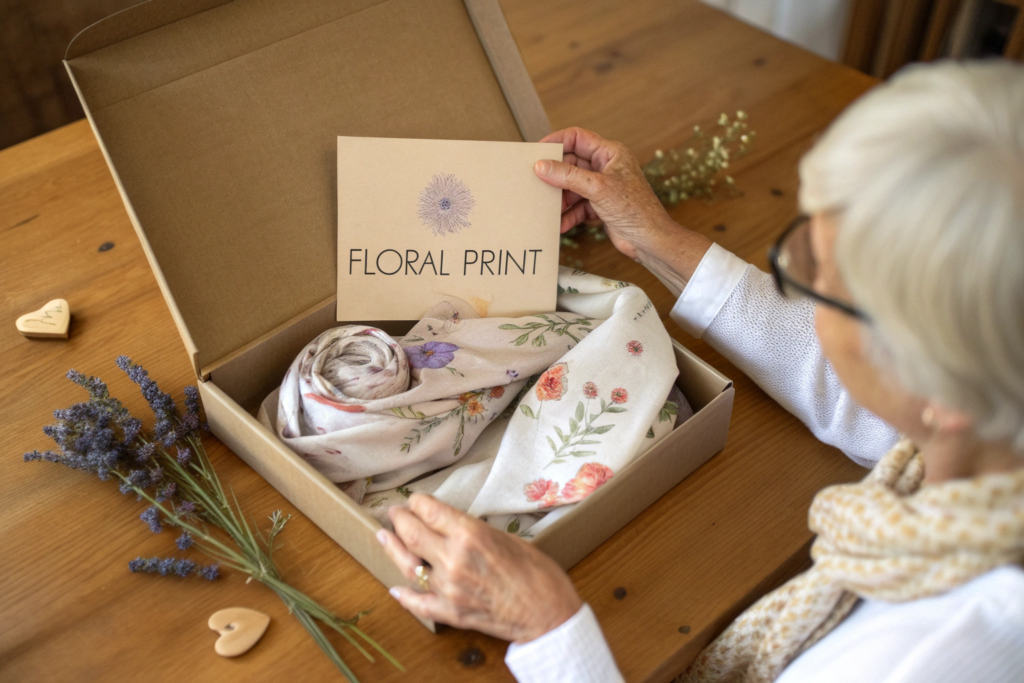
A chemotherapy scarf is not a fashion purchase. It is a purchase made during one of the most difficult periods of a person’s life. The packaging, the presentation, the instructions, the entire unboxing experience, must reflect an understanding of this context. The scarf should not arrive in a crinkly poly bag that screams "cheap." It should not arrive with a tag that says "100% stylish." It should arrive wrapped in tissue, with a note of encouragement, with clear and gentle care instructions, in packaging that can be opened easily by hands that shake.
The packaging for a chemotherapy head scarf should use soft, tactile materials that are easy to open. Tissue paper wrapping with a simple sticker closure, not a stapled poly bag. A care instruction card printed in large, readable type with a warm, encouraging tone. An optional handwritten note card that the gift-giver can personalize. The packaging should be discreet, with no medical labeling on the exterior, so a gift shipment does not announce the recipient’s condition to neighbors or family members. The unboxing should feel like receiving a thoughtful gift, not a medical supply.
I worked with a packaging designer who specialized in oncology support products. She taught me that the color of the tissue paper matters. Stay away from hospital white and clinical blue. Use warm blush, soft sage, gentle lavender. She taught me that the font on the care card matters. Use a rounded, humanist typeface, not a cold sans-serif. She taught me that the care instructions should begin with a message of support before listing washing instructions. These details cost almost nothing to implement. They change the emotional experience of receiving the product entirely.
How Should Care Instructions Be Written for Patients with Limited Energy and Dexterity?
A standard care label says "Machine wash cold, tumble dry low, do not bleach, iron low." A chemotherapy patient reads this and thinks about the energy required to do laundry, the bending and lifting, the sorting and folding. The care instructions should acknowledge this reality and provide the simplest possible care path.
Our care instructions are written in plain language with an empathetic tone. "Caring for your scarf should be easy. Machine wash in cold water on a gentle cycle. Use a mild, fragrance-free detergent. Tumble dry on low heat, or lay flat to dry. No bleach, no fabric softener, no ironing needed. Your scarf is designed to come out of the dryer ready to wear." The instructions are printed on a card large enough to read without glasses, in a 14-point font. The accessible care label design for adaptive clothing movement advocates for this type of patient-centered communication.
Why Does Discreet Exterior Packaging Matter for Gift Orders and Mail Delivery?
A chemotherapy scarf is often purchased as a gift. A daughter buys it for her mother. A friend buys it for a colleague. A husband buys it for his wife. The package arrives at the recipient’s home. If the exterior of the box says "Chemotherapy Headwear" or features a cancer ribbon, the gift-giver’s intention to be discreet is destroyed. The neighbor who collects the package from the doorstep now knows the recipient’s medical situation.
Our exterior shipping packaging is completely neutral. A plain, unbranded kraft cardboard box or a padded mailer with only the return address, which uses our company name without any medical terminology. The interior packaging contains the branding and the supportive messaging, but the exterior reveals nothing. This simple design choice respects the privacy of the recipient and the intention of the gift-giver. The discreet packaging for medical support products is a standard expectation in the oncology support market.
Conclusion
Producing custom shaped hair scarves for chemotherapy patients is not a standard manufacturing job. It is a collaboration between the factory, the medical community, and the patients themselves to create a product that serves a profound human need. You learned that the design requirements are medical in their precision. The elasticated nape band that replaces the impossible knot. The flatlock seams that eliminate friction on fragile skin. The oversized cord lock closure that can be operated with one swollen hand. Each feature exists because a patient identified a problem that standard scarves ignored.
We explored the material requirements. OEKO-TEX Standard 100 certification is the baseline, not the premium. Cotton-modal and bamboo viscose are the preferred fibers because they breathe, wick, and cool. Polyester has no place against a chemotherapy-sensitive scalp. The fabric must be safe enough for a baby because the patient’s skin is that vulnerable.
We walked through the prototyping process. Patient-involved fit testing with multiple head shapes, multiple treatment stages, multiple dexterity levels. Extended wear testing that asks the patient to wear the scarf for six hours and report honestly. Design iterations driven by real feedback from real patients. And we covered the emotional context. The packaging that honors the difficulty of the purchase. The care instructions written with empathy. The discreet exterior that protects privacy. These details are not secondary. They are central to the product’s purpose.
At AceAccessory, I produce chemotherapy head scarves with the same rigorous attention to quality that I apply to all my accessories, and with an additional layer of care that this product category demands. I consult with oncology support professionals. I test with patient volunteers. I source the softest, safest, most breathable certified fabrics available. I package every scarf with the dignity and discretion that the recipient deserves.
If you run an oncology boutique, a hospital gift shop, a cancer support charity, or a brand serving the medical headwear market, and you need a factory that understands the unique requirements of this product, I invite you to contact our Business Director, Elaine. She can share our chemotherapy scarf specification sheet, our fabric certification documentation, and a sample of our patient-centered packaging. Reach her at elaine@fumaoclothing.com. Let’s create scarves that bring comfort, confidence, and a moment of beauty to those who need it most.