I remember a frustrating season when I was sourcing for a boutique client in Seattle. She needed 500 knit beanies and 300 compact umbrellas for the fall drizzle. She placed the beanie order with a knitwear specialist and the umbrella order with a separate factory. The beanies were ready in three weeks. The umbrellas were delayed by two weeks because of a frame shortage. She had to choose between shipping the beanies via expensive air freight to meet her launch date or waiting for the umbrellas and missing the first cold snap. She paid double freight and still missed a week of sales. If you are like Ron, you know that juggling multiple specialized factories is a logistical nightmare. The fear of mismatched delivery timelines and inflated shipping costs is a constant drain on your operational efficiency.
Yes, producing cold-weather accessories like knit hats and scarves alongside rain accessories like umbrellas in a single consolidated order is not only possible but is a core competency of a well-organized Zhejiang-based supply chain manager like AceAccessory. While these items are manufactured in different specialized workshops due to distinct machinery requirements, we centralize the project management, quality control, and logistics. This approach provides you with a single point of contact, a unified commercial invoice, and a cost-effective consolidated Full Container Load (FCL) shipment.
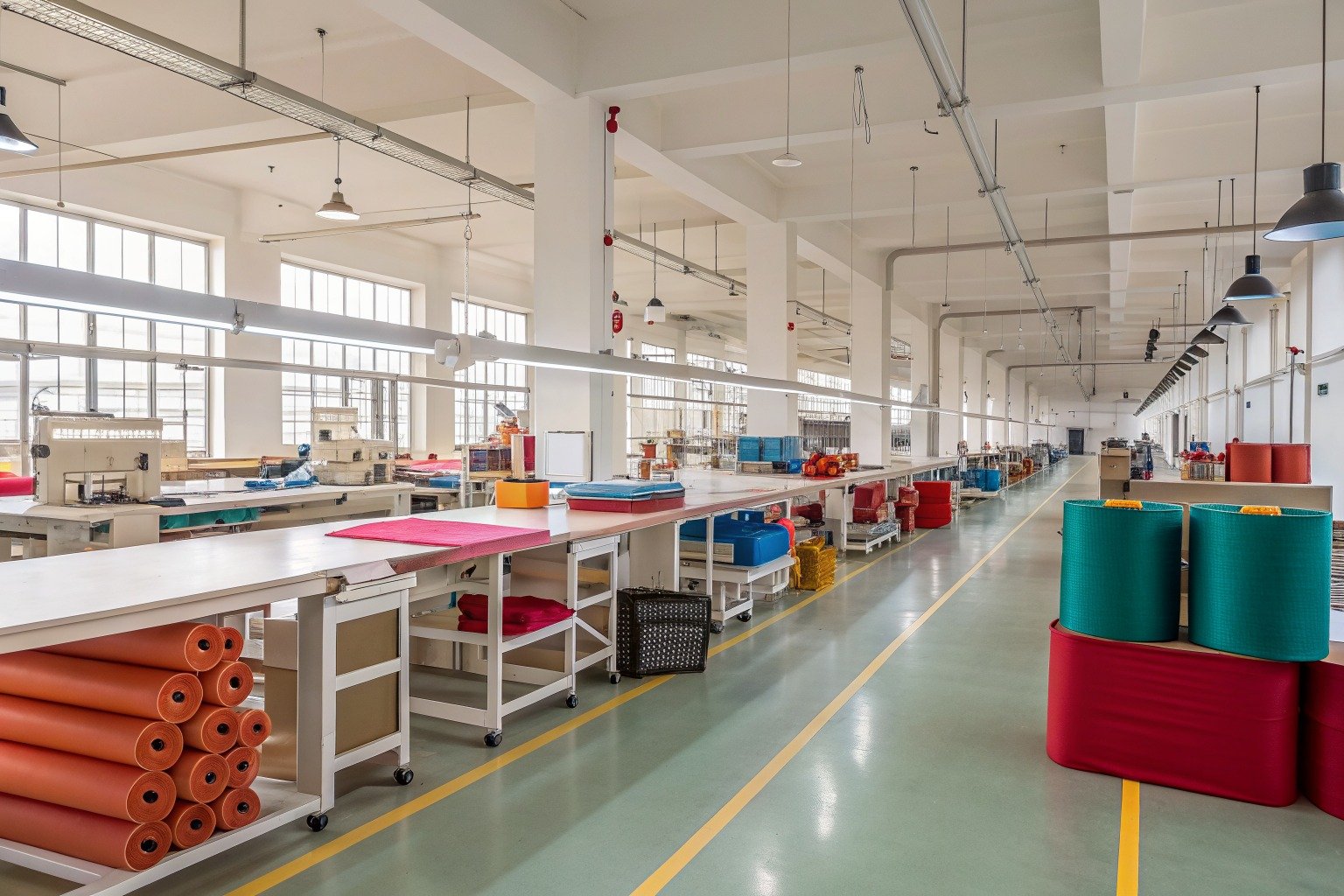
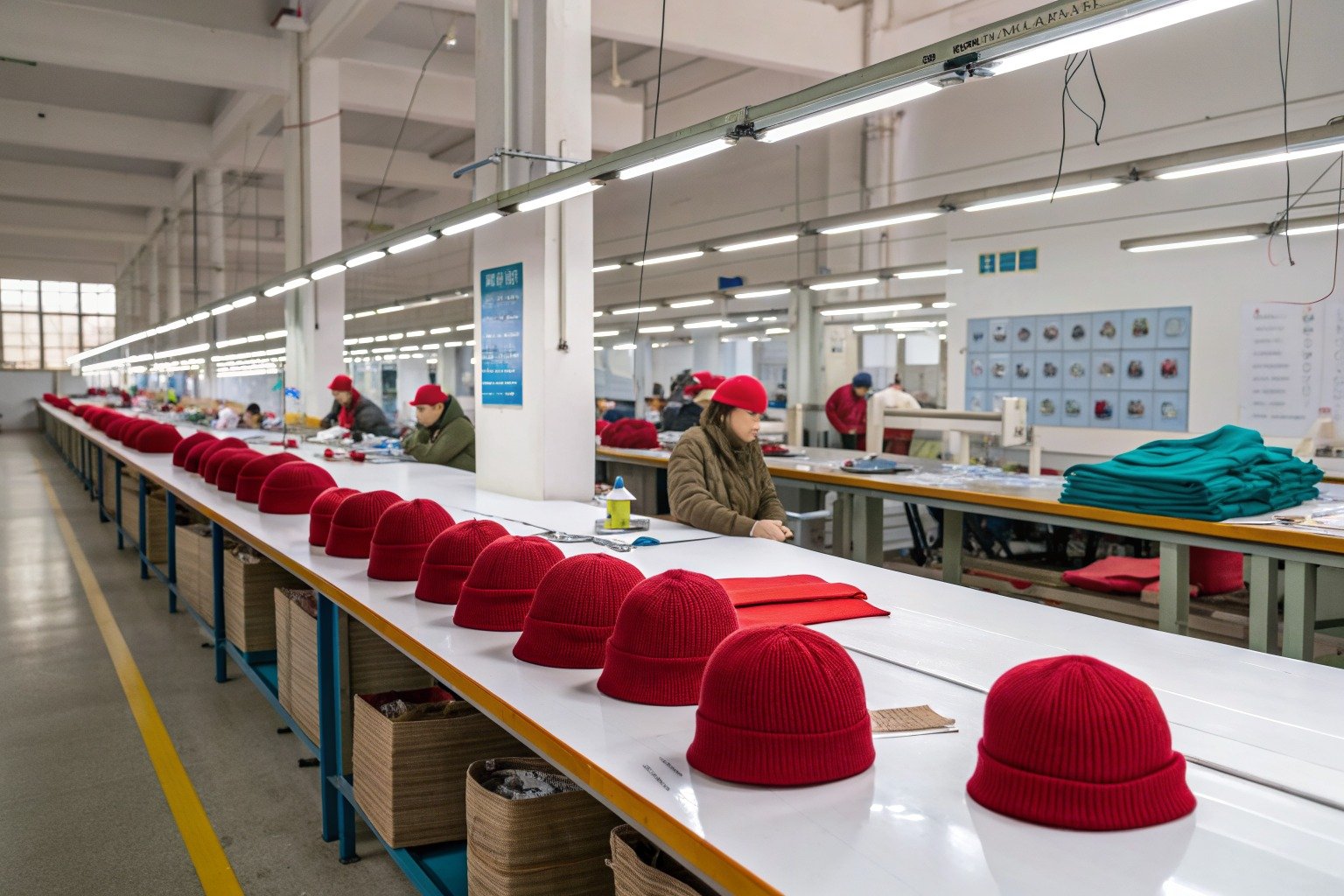
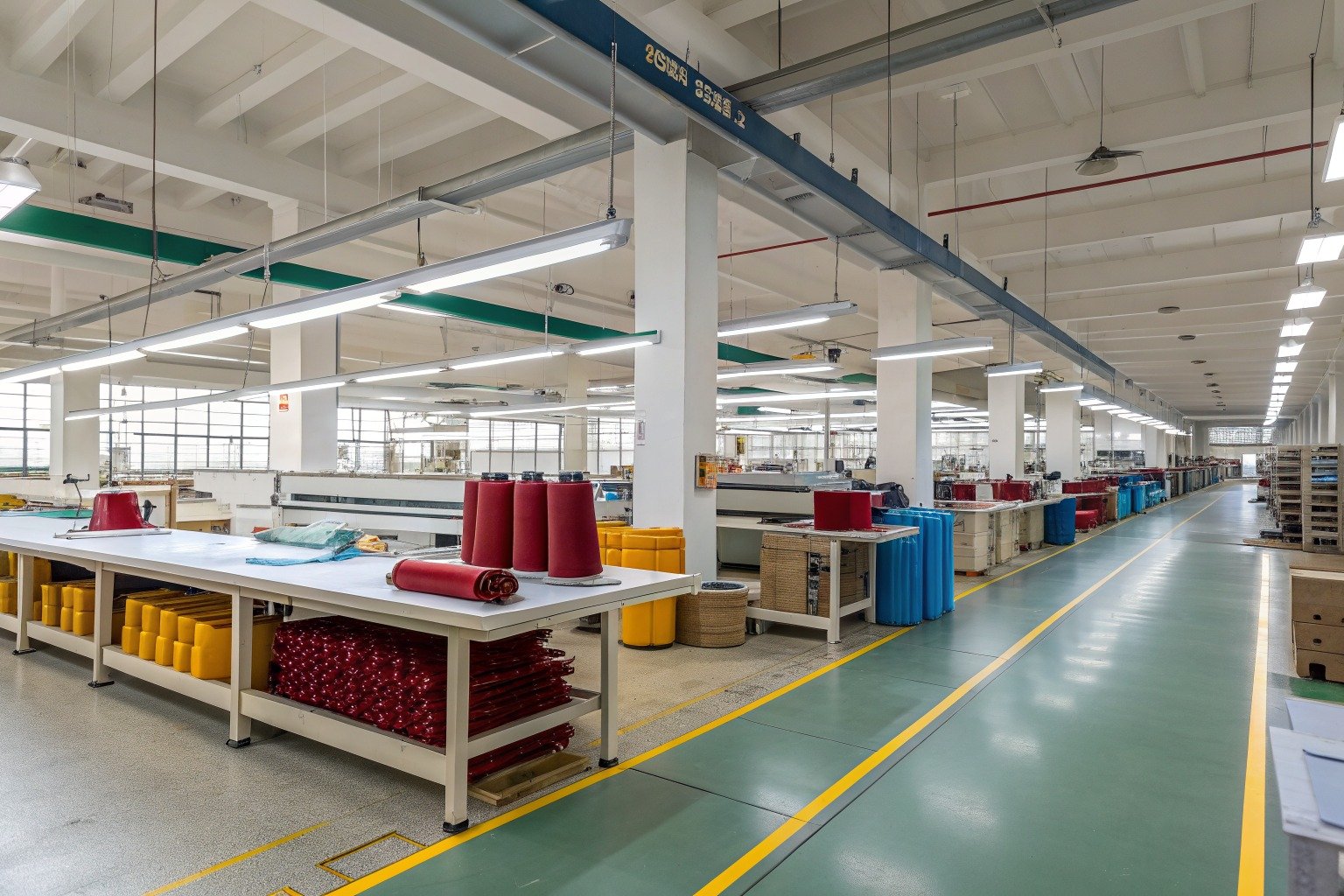
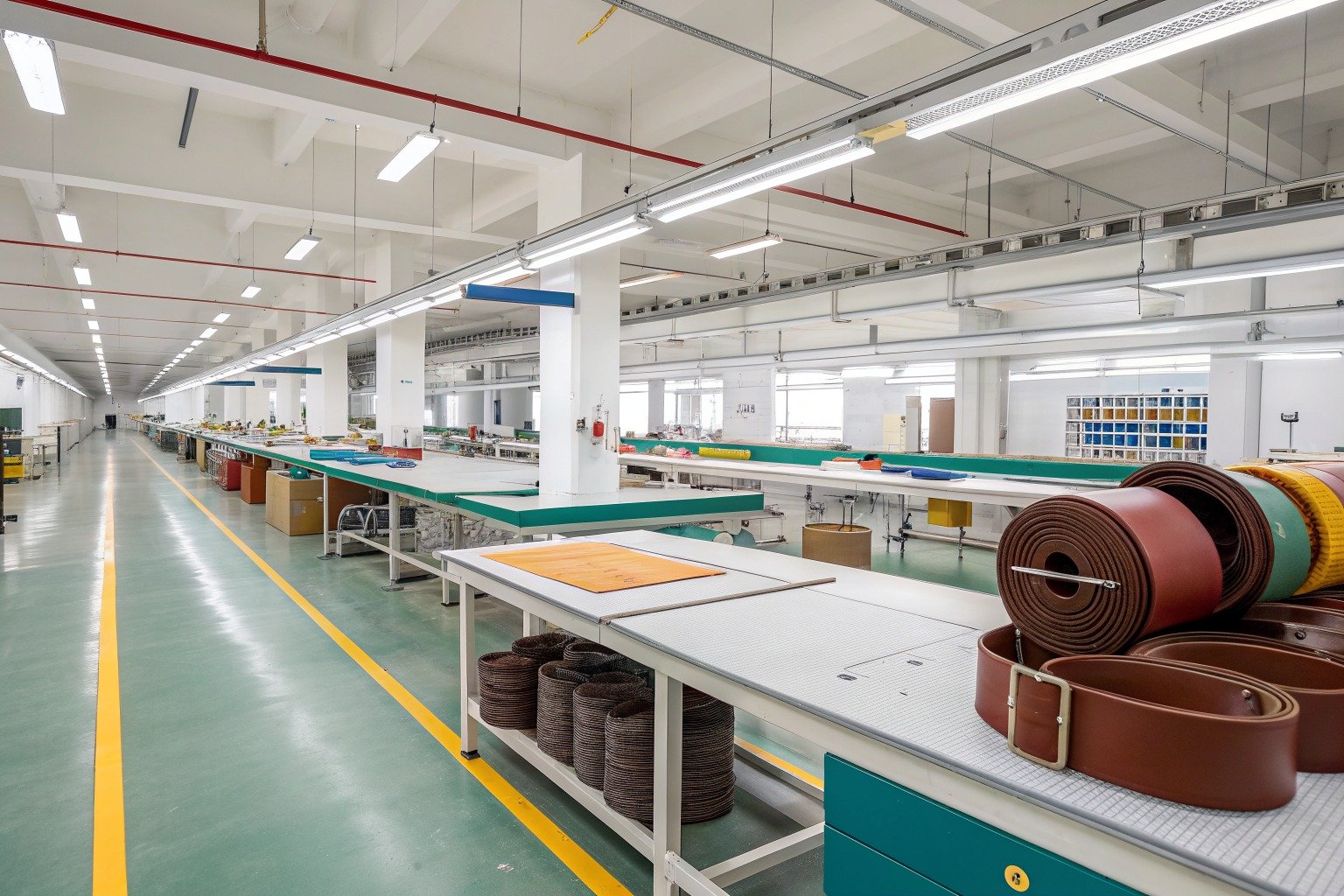
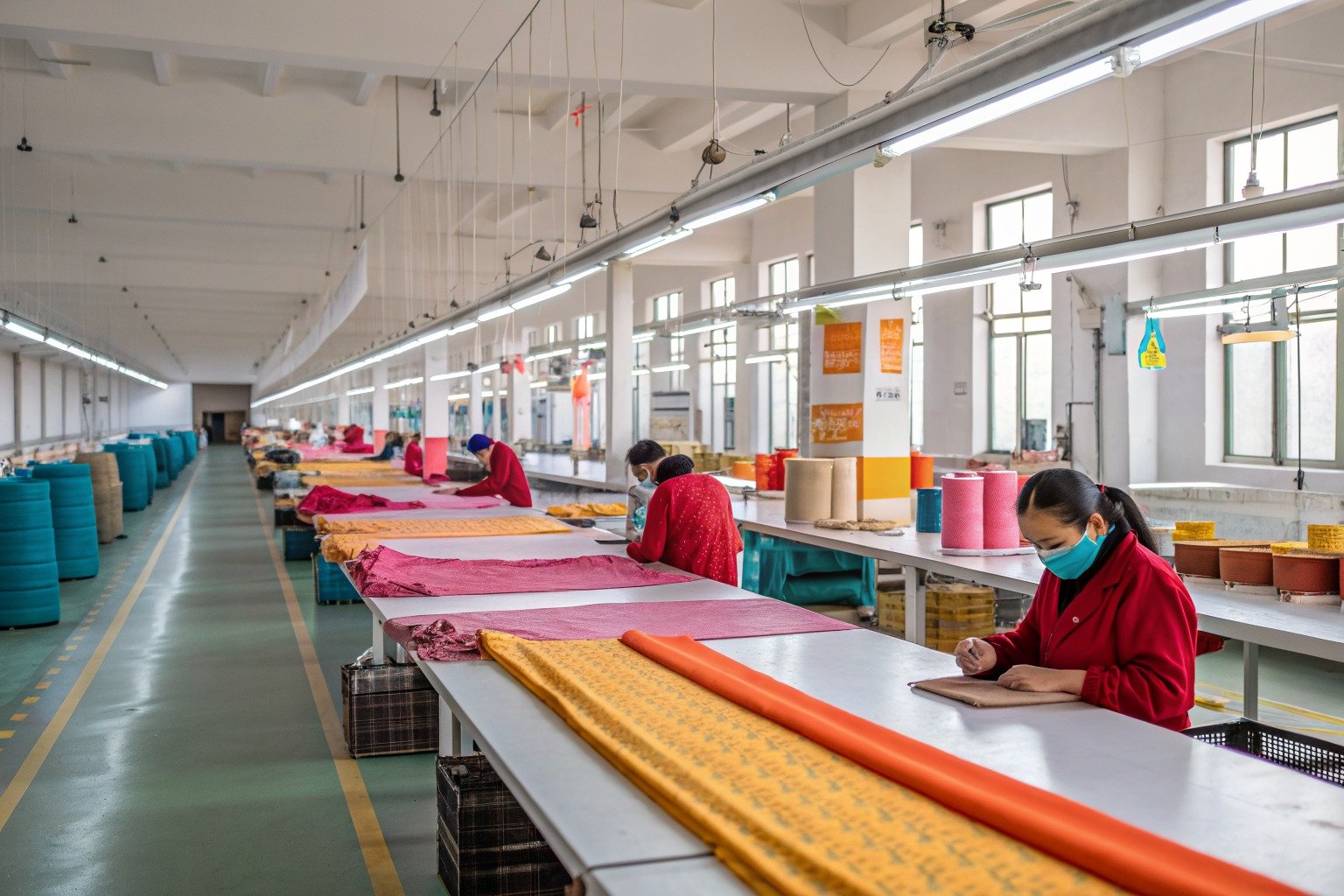
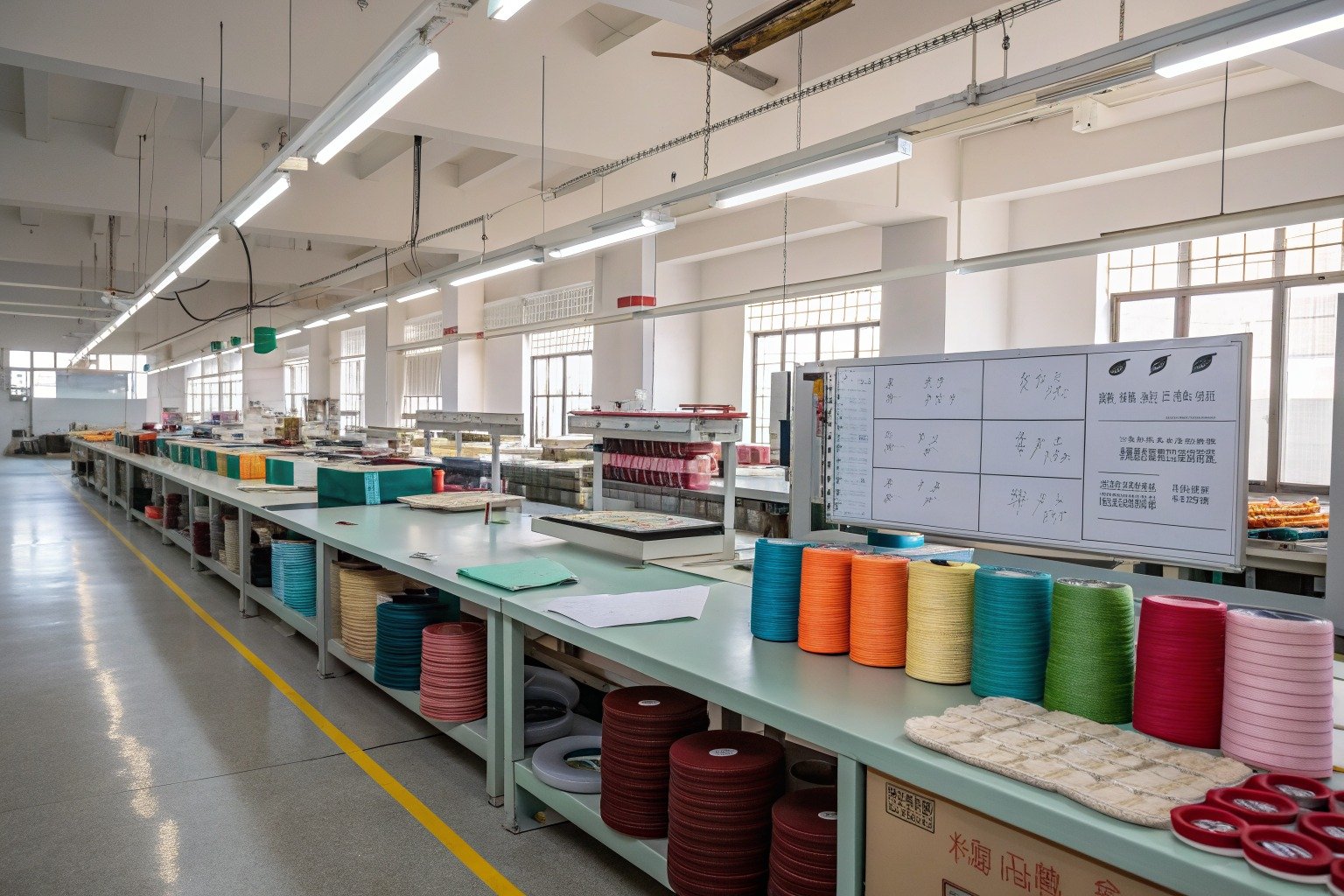
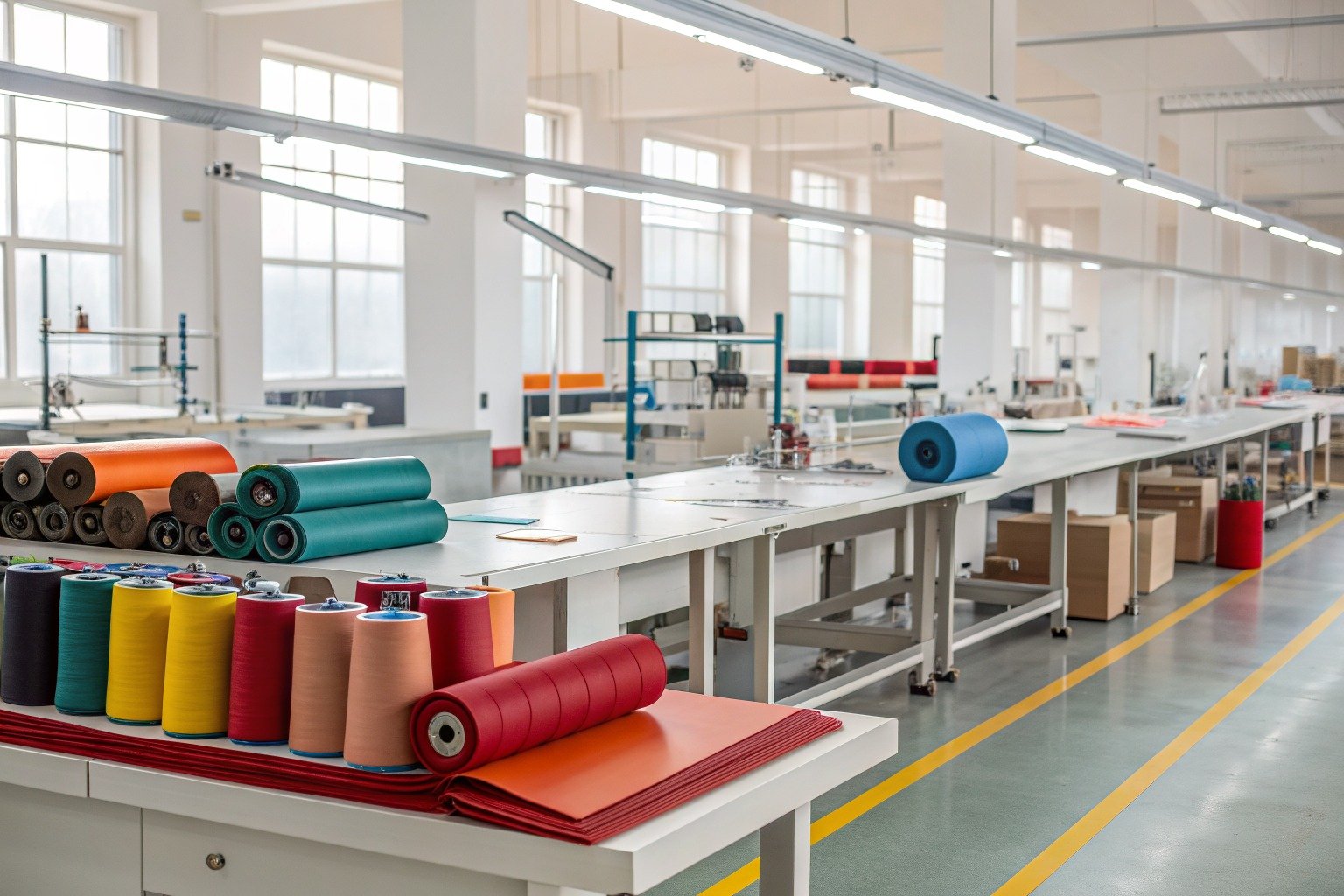
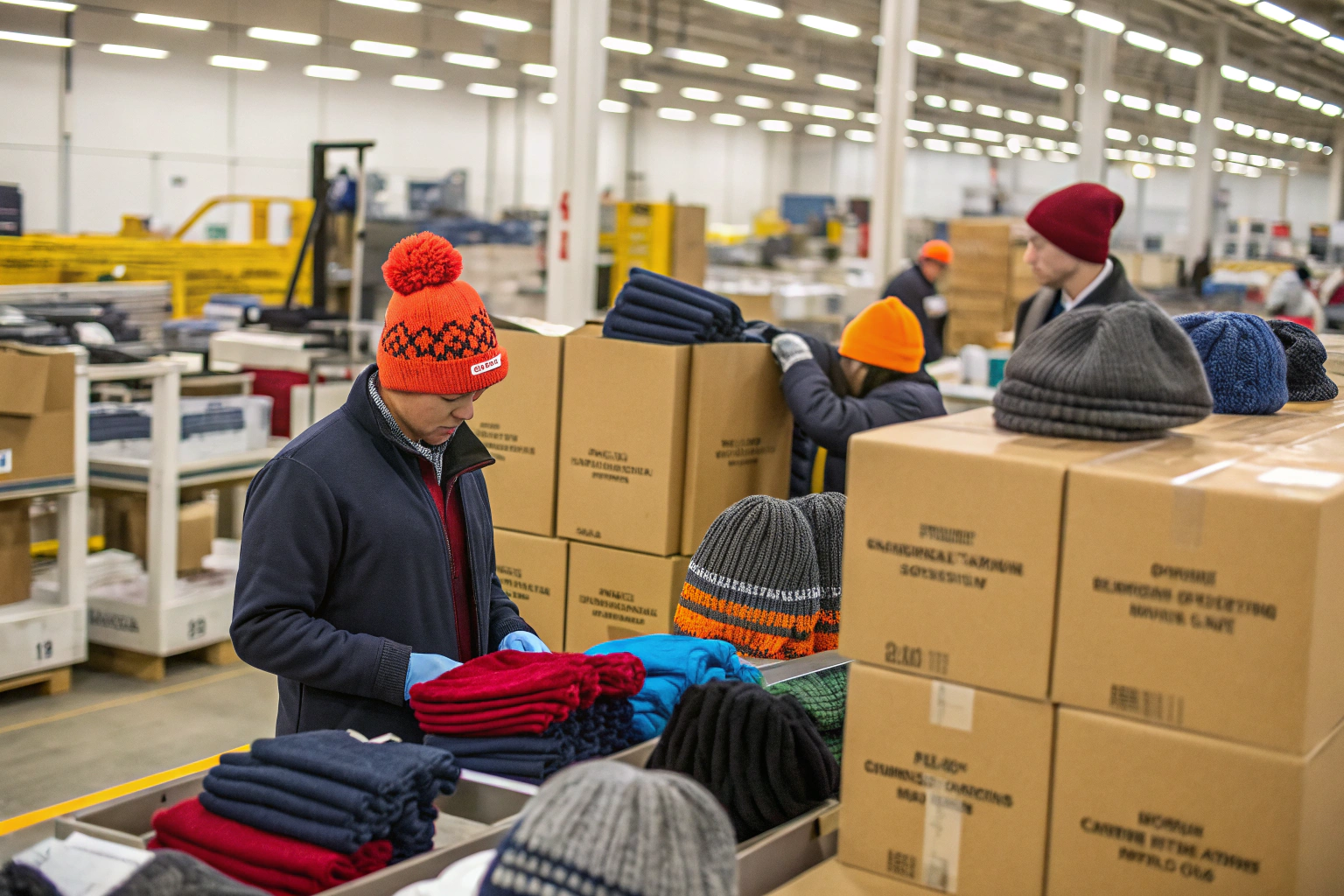
I run AceAccessory in Zhejiang Province. I learned early on that trying to build one mega-factory that does everything from knitting to metal stamping is a recipe for mediocrity. Instead, we operate as a Centralized Conductor. Our headquarters is surrounded by a dense ecosystem of world-class specialists. There is a knitting mill 20 minutes away that produces impeccable beanies . There is an umbrella workshop 15 minutes in the other direction with three generations of frame-making expertise. I don’t need to own their machines. I own the relationship and the quality standard. My team orchestrates the entire symphony so you only have to listen to one beautiful note: Your order is complete and on its way. Let me walk you through exactly how this cross-category consolidation works and why it is the smartest way to source diverse accessories.
How Does a Single Factory Manage Knitwear and Umbrella Production?
The secret is that we do not manage the production in one room. We manage the outcome from one room. You send one Purchase Order to AceAccessory. That PO triggers a precise, parallel workflow in our internal system.
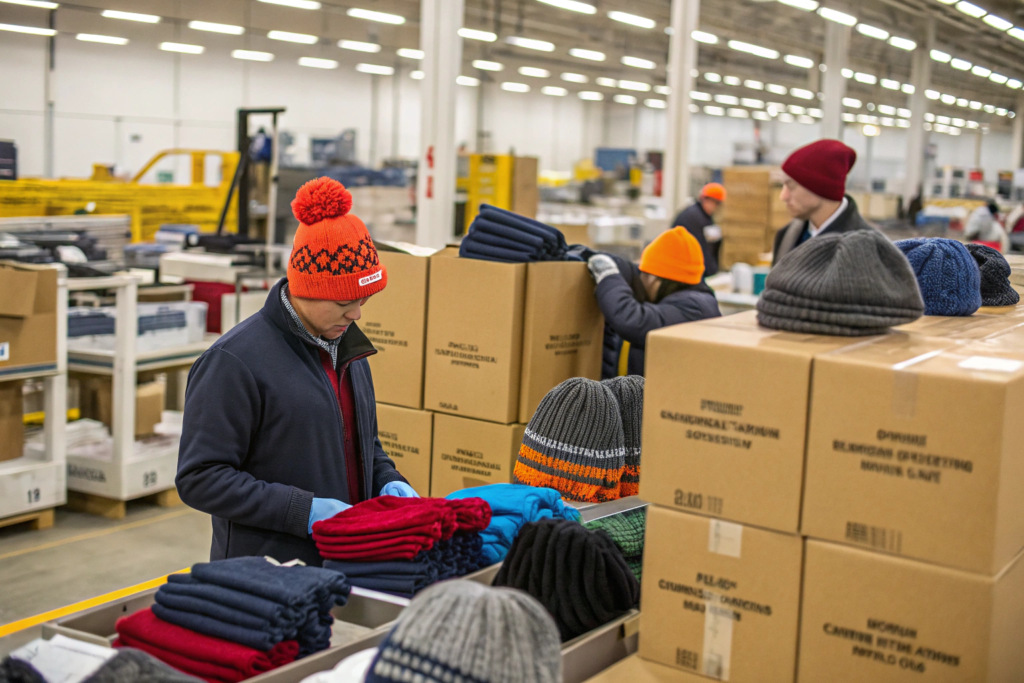
Your dedicated project manager becomes the single brain for multiple hands. For a combined order of scarves and umbrellas , here is the back-end reality:
- Work Order Splitting: The PO is split into an internal Knitwear Work Order and an Umbrella Work Order.
- Material Staging: The yarn for the scarves is ordered from the spinning mill. The polyester pongee fabric for the umbrellas is ordered from the weaving mill. Both are delivered to their respective specialist workshops.
- Parallel Manufacturing: The knitting machines run at Partner A. The frame assembly and canopy stitching happen at Partner B.
- Centralized Tracking: Both partners update a shared digital production calendar that we monitor by the hour.
You never have to learn the name of the umbrella frame supplier or the knitting factory foreman. You only need to know your project manager’s name. This is the essence of our supply chain management philosophy. We absorb the complexity so you can focus on selling.
Why Is a Single Point of Contact Critical for Mixed-Seasonal Orders?
When you are buying for different weather conditions, the variables multiply. The yarn dye lot for a knit hat might be delayed. The wooden handle for a walking umbrella might have a higher than acceptable knot count in the grain. If you are managing two separate factories, you are the one stuck in the middle, translating between a knitter who doesn’t understand metal fatigue and an umbrella maker who doesn’t understand stitch tension.
With a single point of contact, you eliminate Translation Friction. We speak "Knitwear" and we speak "Umbrella." We know that a 3-day delay in yarn delivery means we should hold the truck for the umbrella shipment so they can go together. We know that if the umbrella logo print is slightly off-register, we can ask for a discount that offsets the cost of the extra yarn we bought for the beanies.
This centralized communication saves 15-20 hours of administrative labor per consolidated order. For a buyer like Ron, who values efficiency, this time savings is a direct contribution to the bottom line. It allows you to manage a larger product assortment without expanding your team.
How Are Quality Standards Enforced Across Different Specialized Workshops?
This is the valid skepticism. "If you don’t own the machines, how do I know the quality won’t slip?" The answer is Standardization and Inspection Sovereignty.
We do not rely on the partner’s internal QC. We enforce the AceAccessory Quality Protocol. This is a 40-page document that we have refined over 15 years. It contains specific, measurable criteria for every product category.
| Category | Key QC Checkpoint | AceAccessory Standard |
|---|---|---|
| Knitwear | Seam Strength | Must withstand 15 lbs of pull force at crown seam. |
| Umbrellas | Frame Tension | Spring must open canopy fully without "flapping" noise. |
| Printing | Logo Placement | Position must be within +/- 2mm of approved spec. |
Our employed QC inspectors are roaming auditors. They spend their days driving between our partner workshops. They show up unannounced. They pull samples based on AQL Level II standards. They file reports directly into our central database. The partner workshop does not pay them. They work for AceAccessory. Their loyalty is to our standard and your brand. This structure ensures that the quality control on a beanie is just as rigorous as the quality control on an umbrella.
What Are the Logistical Benefits of Consolidating Cold and Rain Accessories?
The financial logic of consolidation is undeniable. Shipping is a game of volume and density. A box of beanies is relatively light but takes up space. A box of umbrellas is heavy and also takes up space. Alone, neither might fill a container economically. Together, they create the Perfect Payload.
Let’s look at a real-world scenario. You need 2,000 knit beanies (approx. 4 CBM) and 1,000 compact umbrellas (approx. 5 CBM). Total: 9 CBM.
Fragmented Shipping (LCL):
- Beanie LCL Cost: 4 CBM x $85/CBM = $340
- Umbrella LCL Cost: 5 CBM x $95/CBM = $475
- Total Ocean Freight: $815
- Documentation/Customs: 2 x $125 = $250
- Total Logistics Cost: $1,065
Consolidated Shipping (FCL or High-Volume LCL):
- Combined Volume: 9 CBM. This is now a significant volume. We can negotiate a much better LCL rate or even combine it with other goods to hit the FCL threshold (28 CBM) .
- Consolidated Freight Quote: $550 (Negotiated volume rate)
- Documentation/Customs: 1 x $125 = $125
- Total Logistics Cost: $675
Net Savings: $390 on a single order. Over a year of seasonal buys, that is real capital returned to your marketing budget. Moreover, both products arrive on one truck. Your warehouse team schedules one receiving appointment. They check in one shipment. This halves the receiving labor cost. This is the power of logistics optimization .
How Does Full Container Load (FCL) Consolidation Reduce Per-Unit Freight Cost?
Ocean freight pricing has a steep volume discount curve. The most expensive cubic meter is the first one. The cheapest cubic meter is the one that fills the 28th spot in a 20ft container.
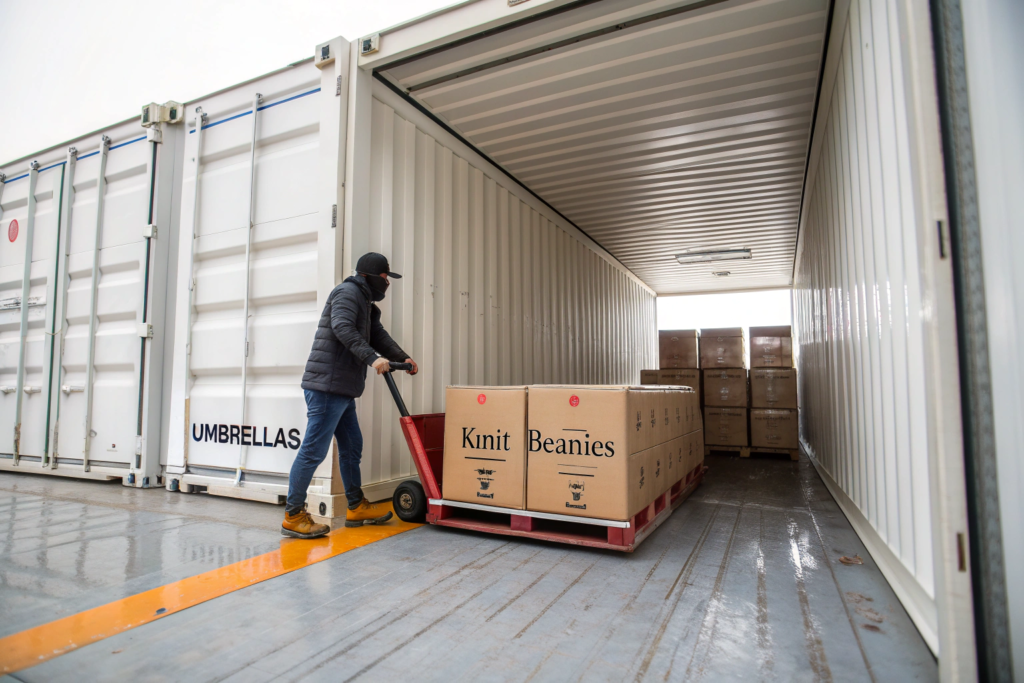
When you buy a Full Container Load, you are renting the entire steel box. The cost is fixed. Whether you put 10 CBM of air or 28 CBM of product in that box, the freight invoice is the same. Your goal as an importer is to maximize the Density of Value.
By combining Winter Accessories with Rain Accessories, we help you reach that 28 CBM threshold faster. Once the container is full, your per-unit freight cost drops significantly. For a beanie that costs $2.00 to manufacture, the freight might drop from $0.25/unit to $0.15/unit. That 10-cent savings is pure margin improvement.
At AceAccessory, we actively use Container Cube Optimization Software. When planning your order, we can tell you exactly: "If you add 300 more shawls to this consolidated order, you will fill the container and save $1,200 in ocean freight." We treat your freight spend as if it were our own.
How Does a Single Commercial Invoice Streamline US Customs Clearance?
Customs clearance is a data-driven process. The US Customs and Border Protection (CBP) automated targeting system looks for Anomalies. A shipment with three different vendor invoices, three different shipper addresses, and three different sets of packing logic is an anomaly. It triggers a Document Review or an Intensive Exam.
A single, clean commercial invoice from AceAccessory is a signal of a Compliant, Professional Importer.
Our consolidated invoice clearly delineates:
- Line 1: 100% Acrylic Knit Beanie, HTS 6505.00
- Line 2: Polyester Umbrella with Metal Frame, HTS 6601.91
- Shipper: AceAccessory (Single Address)
- Country of Origin: CN (Consistent)
This clarity and consistency builds Trust with CBP. It reduces the statistical probability of your shipment being flagged for examination. A customs exam costs time (3-5 days delay) and money ($500-$1,000 in exam fees). Avoiding an exam through clean documentation is a direct cost avoidance. We format our documents specifically to meet these CBP expectations for fashion accessories .
What Are the Limitations of Mixing Textiles and Metal-Framed Goods?
I want to be completely transparent about the boundaries of consolidation. While we manage the process and ship the goods together, we never violate the laws of physics or material science. Textiles and metal frames have fundamentally different storage and handling requirements.
Limitation 1: The Abrasion Risk.
A soft scarf is made of delicate fibers. A metal umbrella shaft is hard and sometimes has sharp edges from the stamping process. During the vibration of ocean transit, if these items are packed loosely together, the metal will act like sandpaper against the textile. It will cause pilling, snagging, and friction marks on the knitwear.
The Solution: Strict Carton-Level Segregation.
We never pack a beanie and an umbrella in the same inner carton. They are packed in their own industry-standard cartons.
- Knitwear: Packed in clean, double-wall corrugated boxes with tissue paper.
- Umbrellas: Packed in specific long, narrow boxes with foam end-caps to protect the tips.
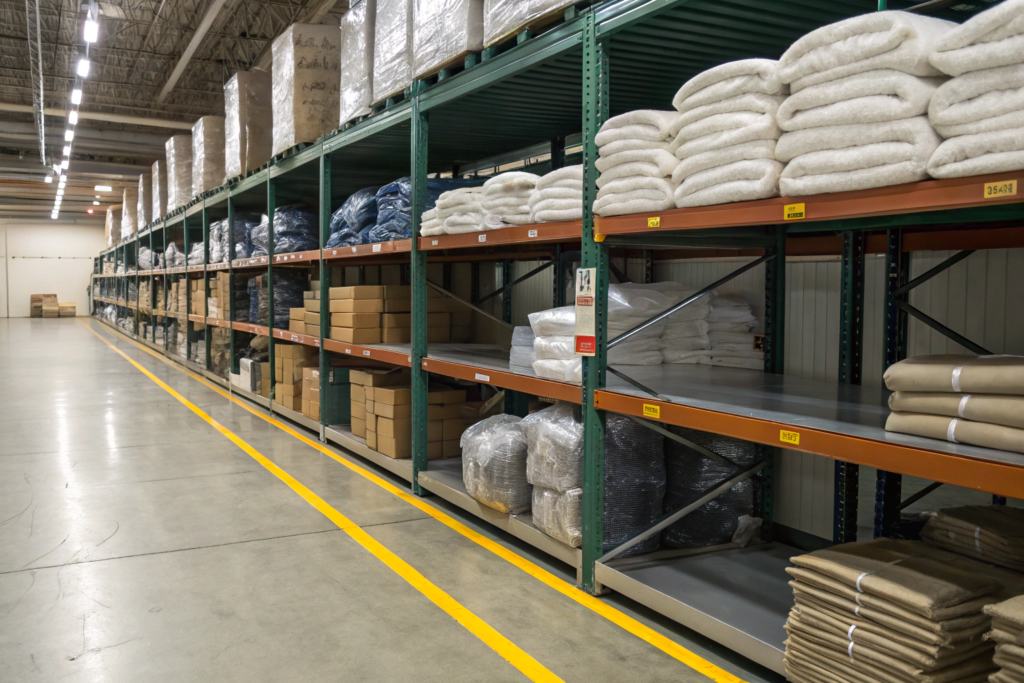
Consolidation occurs only at the pallet level. We use heavy-duty Slip Sheets (flat cardboard dividers) between the layer of umbrella cartons and the layer of beanie cartons. This creates a solid, flat surface that prevents the hard edges of the umbrella boxes from digging into the soft beanie boxes above. This is a non-negotiable warehouse protocol at AceAccessory.
Why Is Lead Time Synchronization a Challenge for Mixed Orders?
Different manufacturing processes have different rhythms. You cannot rush a knitting machine beyond its maximum RPM, and you cannot cure the paint on a wooden umbrella handle faster than the chemical process allows.
- Knitwear Lead Time: 20-25 days. (Yarn sourcing, knitting, linking, washing, pressing).
- Umbrella Lead Time: 25-35 days. (Frame assembly, canopy cutting/sewing, shaft printing, final assembly).
If we start both orders on the same day, the knitwear will be finished and sitting in the warehouse for 10 days while the umbrellas are still being assembled. This ties up our warehouse space and increases the risk of the knitwear being damaged during storage.
The Solution: Critical Path Back-Scheduling.
We identify the Longest Pole in the Tent. In this case, the Umbrellas. We set the Target Consolidation Date (e.g., June 20th). We then work backward.
- Umbrellas: Start production May 20th (31 days lead time).
- Knitwear: Start production May 30th (21 days lead time).
Both streams finish within 48 hours of June 20th. The goods are trucked to our consolidation warehouse on the same day. They are cross-docked directly onto the outbound pallet. Zero storage time. Zero damage risk. This is the operational discipline required for successful mixed-category production management .
Can You Pack Umbrellas and Knit Hats in the Same Gift Box?
This is the one exception to the "never mix" rule, and it is a high-value service we provide for Corporate Gifting and Holiday Sets. The key difference is Engineered Presentation vs. Bulk Shipping.
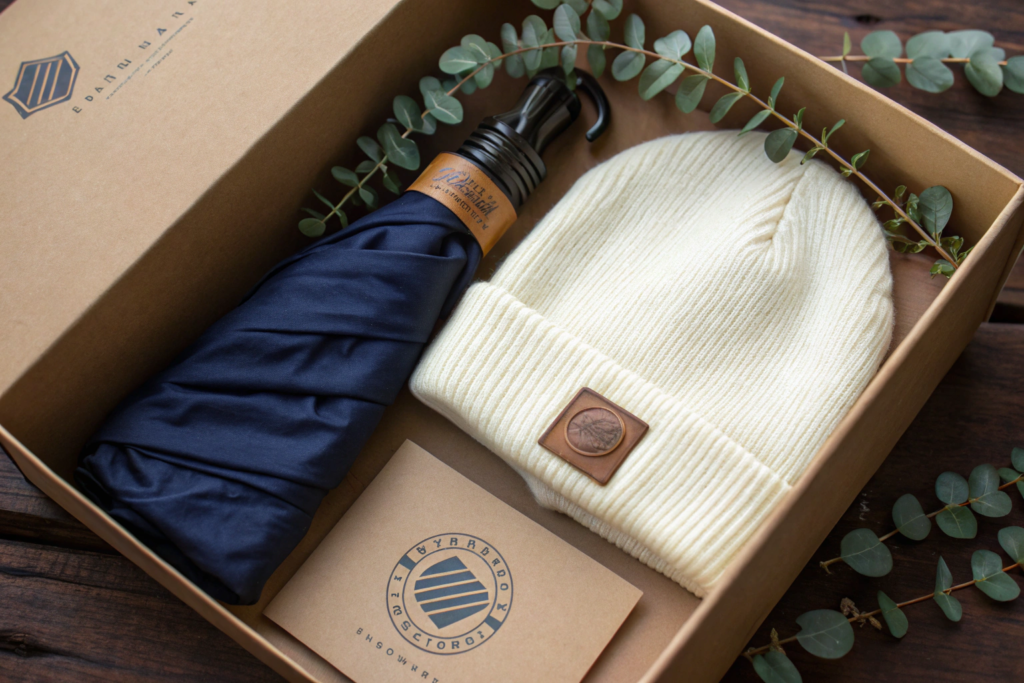
In a bulk shipping carton, the goal is Compression and Protection. In a gift box, the goal is Presentation and Delight. The gift box is designed with a specific Fitment. A die-cut foam or cardboard insert separates the umbrella from the beanie. The items are not loose. They are cradled in their own compartments.
The Process:
- We produce the umbrella and beanie in bulk.
- They arrive at our Kitting Department.
- Workers place the folded beanie in its designated slot. They place the umbrella in its slot.
- The box is closed. The items cannot move or rub against each other during the final leg of shipping.
MOQ for Gift Set Kitting: Typically 500 sets. This covers the cost of the custom fitment insert and the assembly labor. This service allows a brand to offer a premium, ready-to-gift product that commands a significantly higher retail price. It is a perfect example of how our consolidated model enables value-added packaging solutions .
How Does This Model Benefit Boutique Owners and Corporate Gift Buyers?
This consolidated model was practically designed for the modern boutique owner and the corporate gift planner. These buyers are often penalized by the traditional factory model. They need variety but lack the volume to hit high MOQs across multiple single-category factories.
The Boutique Owner’s Advantage:
You want to create a "Cozy & Dry" collection for your shop. You envision a window display with matching umbrellas and beanies in a beautiful Oatmeal and Forest Green color story. Sourcing the beanies from one factory and the umbrellas from another is a non-starter. You’d have to buy 500 of each, and they probably wouldn’t match perfectly.
With AceAccessory, you can place one order for 100 umbrellas (Screen Printed) and 200 beanies (Stock Colors) . We ensure the "Forest Green" is the same Pantone across both materials. We consolidate the small volume into a cost-effective LCL shipment. You get a cohesive, high-end collection without a warehouse full of dead stock.
The Corporate Gift Buyer’s Advantage:
You need 750 welcome gifts for a corporate retreat. You want a high-quality umbrella and a cozy beanie, both with the company logo. You need them in a presentable box, delivered to one location, by a specific date.
This is a Turnkey Project for us. You provide the logo and the quantity. We handle the sourcing, the color matching, the kitting into gift boxes, and the final delivery. You look like a logistics genius to your CEO, and you didn’t have to manage a single overseas factory call. This is the power of our integrated supply chain services .
Can You Ensure Color Consistency Between a Knit Beanie and a Printed Umbrella Panel?
This is the holy grail of cross-category branding, and it is technically challenging. A knit beanie is made of yarn. An umbrella is made of woven polyester fabric. They absorb and reflect dye differently. You cannot simply use the same ink on both.
We achieve visual consistency through a process called Cross-Media Color Matching.
- Pantone Standard: We select a single Pantone Textile code (e.g., 19-1230 Mocha Mousse) as the master reference.
- Yarn Lab Dip: The knitting mill creates a small sample of yarn dyed to match the Pantone chip.
- Fabric Lab Dip: The umbrella fabric printer creates a "strike-off" of the print on the polyester pongee, also matching the Pantone chip.
- Physical Review: We place the yarn sample next to the fabric sample under our D65 Daylight Viewing Lamp. We look for Metamerism (colors that match under one light but not another).
- Adjustment: We adjust the dye formulas until the two materials are visually harmonious under multiple light sources.
They will never be 100% identical because the texture of yarn is different from flat fabric. But they will be close enough to look intentionally coordinated, not like a mismatch. This level of detail is what separates a premium branded gift from a generic promotional item. This is the kind of quality assurance we provide.
How Does a Cohesive Assortment Strengthen Your Brand’s Seasonal Narrative?
This is the strategic payoff. When a customer sees your branded umbrella and your branded beanie presented together, it tells a Story of Care and Cohesion. It signals that your brand is thoughtful, curated, and trustworthy.
The alternative is a jumbled collection of items with slightly different logo treatments and mismatched colors. That signals "clearance rack" or "promotional item." There is no brand equity built.
A consolidated sourcing strategy allows you to control the entire visual narrative of your seasonal collection. The "Oatmeal" beanie and the "Oatmeal" umbrella become a Signature Look. Customers who buy one are highly likely to return for the other. It increases Customer Lifetime Value (LTV) and builds a Moat around your brand identity.
This is the ultimate value we provide at AceAccessory. We don’t just make products . We help build cohesive, profitable brands.
Conclusion
The ability to produce both cold-weather and rain accessories within a single, consolidated order is a strategic capability that transforms the sourcing experience from a logistical burden into a competitive advantage. It is an approach that recognizes the fundamental differences in manufacturing processes while unifying them under a single standard of quality, communication, and logistics.
By acting as a centralized conductor of specialized workshops, we eliminate the fragmentation that drives up costs, wastes time, and dilutes brand identity. We absorb the complexity of lead time synchronization, cross-media color matching, and freight optimization so that you can enjoy the simplicity of a single invoice and a single shipment.
For boutique owners seeking a curated, low-volume assortment and for corporate buyers needing flawless execution of branded gift sets, this model provides a level of service and strategic value that traditional, single-category factories cannot replicate. It allows you to build a powerful, cohesive brand narrative that resonates with customers and strengthens your market position.
If you are ready to consolidate your accessory sourcing and simplify your supply chain for the upcoming seasons, we can develop a tailored plan for your specific assortment needs. Contact our Business Director, Elaine. She can provide a consolidated quote and timeline for your multi-category order. Email Elaine at: elaine@fumaoclothing.com