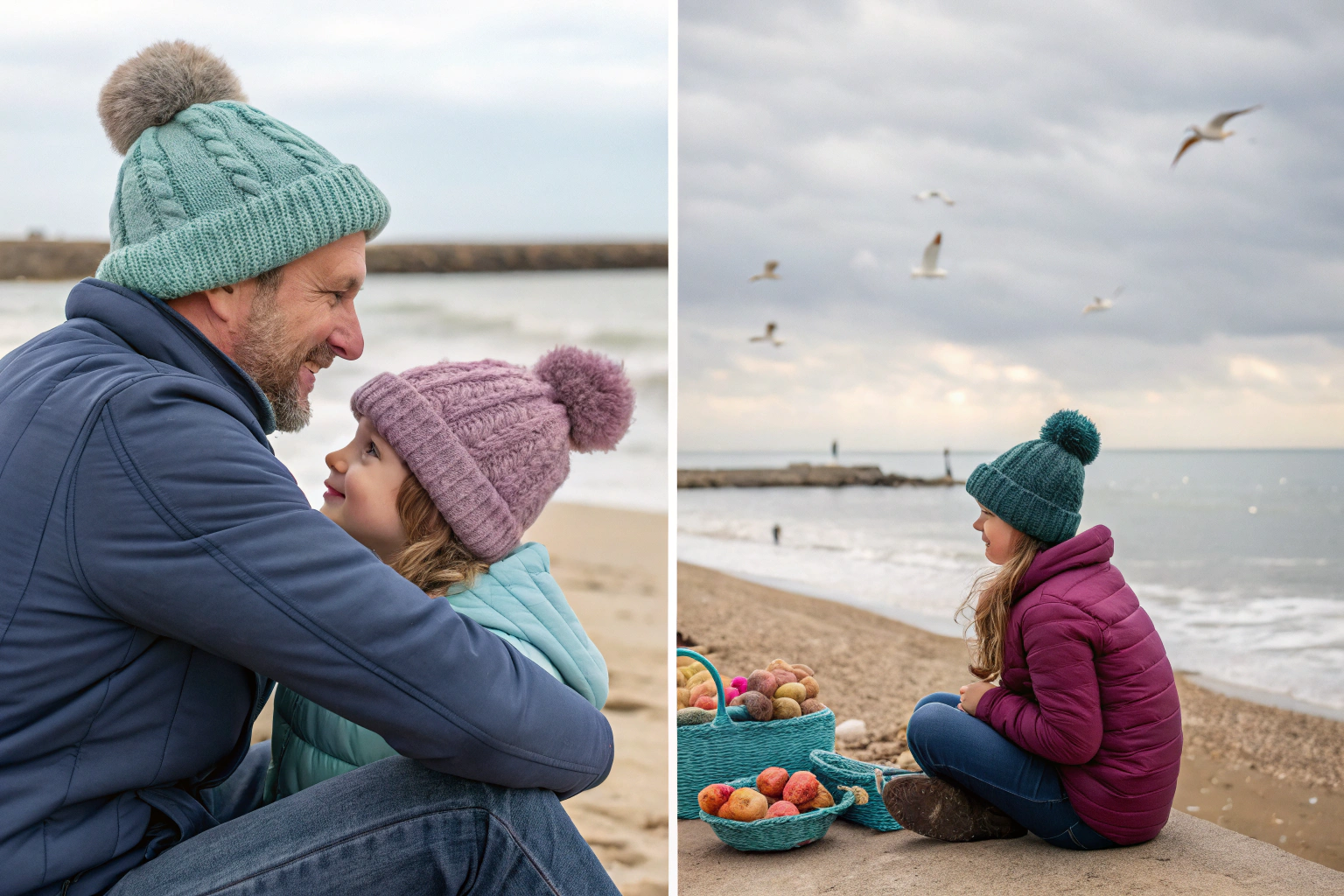
A children’s lifestyle brand owner from Melbourne sat in my showroom last March with a beautiful, simple brief. She wanted to create a "mini-me" beanie collection. The concept was powerful and emotionally resonant. A parent and a toddler wearing the same beanie, in the same color, with the same pom-pom, in the same chunky knit texture. A photograph of a father and daughter in matching beanies on a winter beach. A mother and son in matching beanies at a farmers’ market. The visual was irresistible for social media and for the brand’s catalog. She had taken this concept to three knitwear factories. Two told her they could produce the adult beanie but not the toddler size because their machines were set up for adult head circumferences and the toddler size required different stitch counts and different machinery settings. The third factory said they could do both but the minimum order quantity for the toddler size was 5,000 units per color, far beyond her needs as a growing boutique brand. She needed a factory that could produce both sizes, in coordinated colors, at manageable quantities, with consistent quality. She found us.
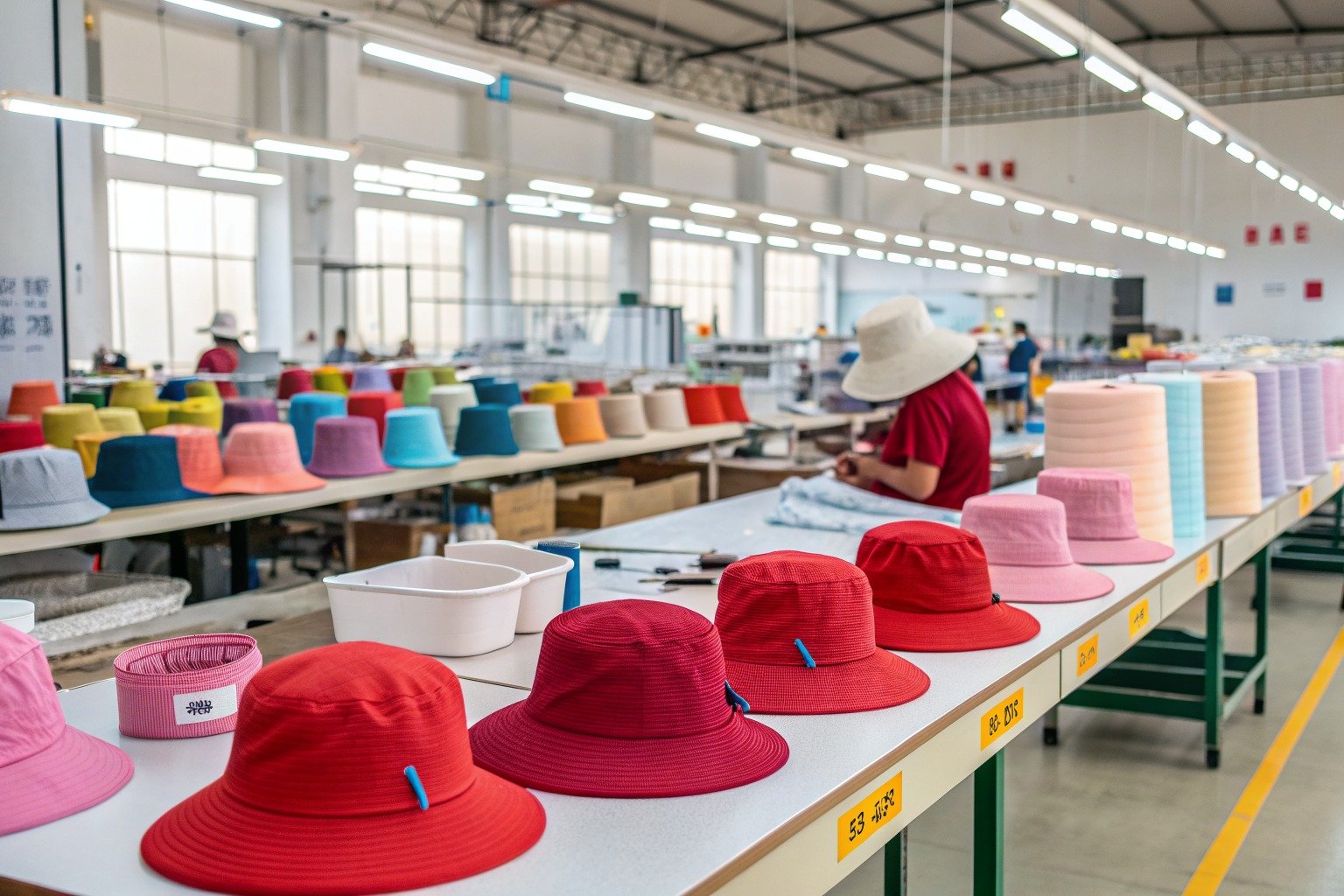
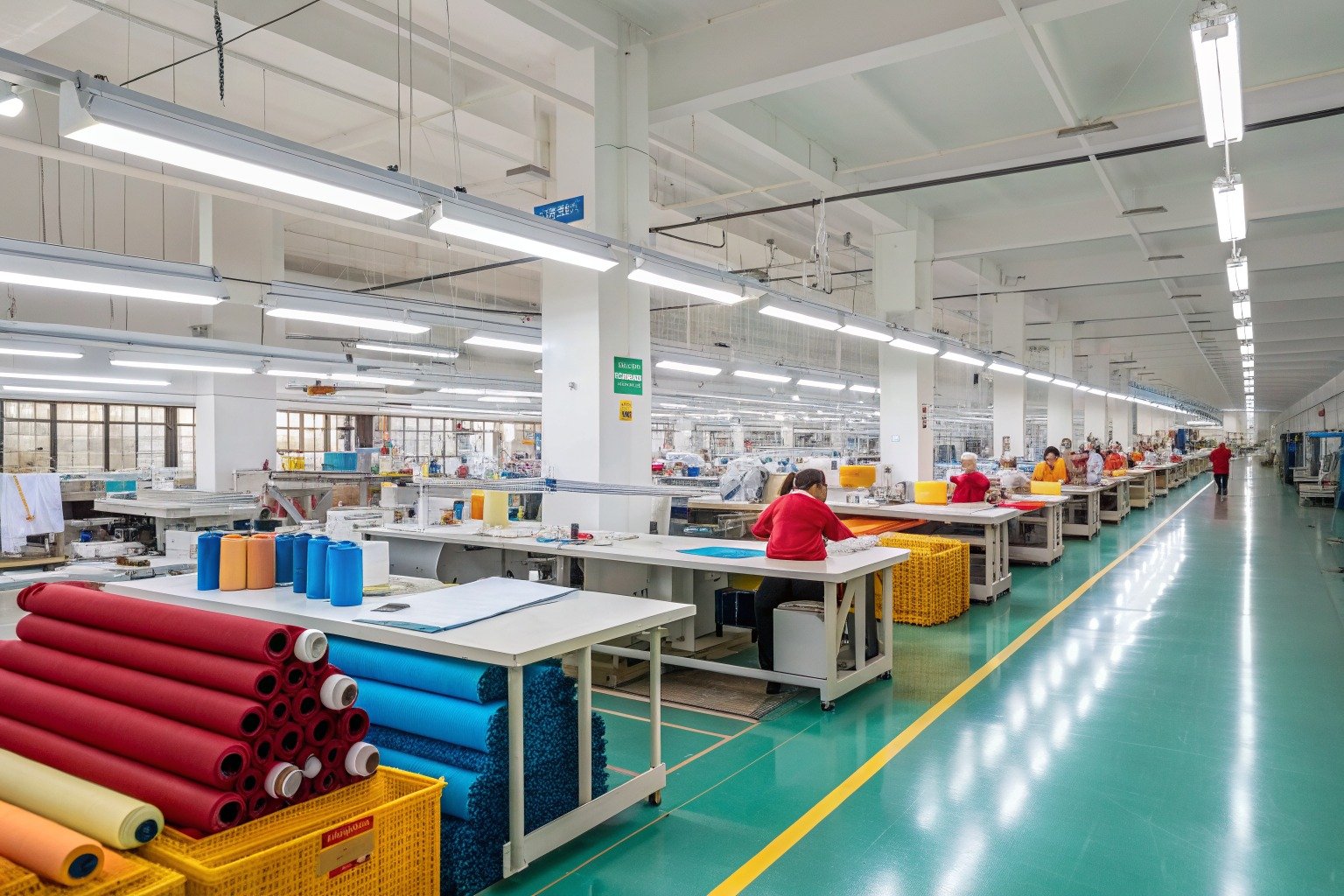
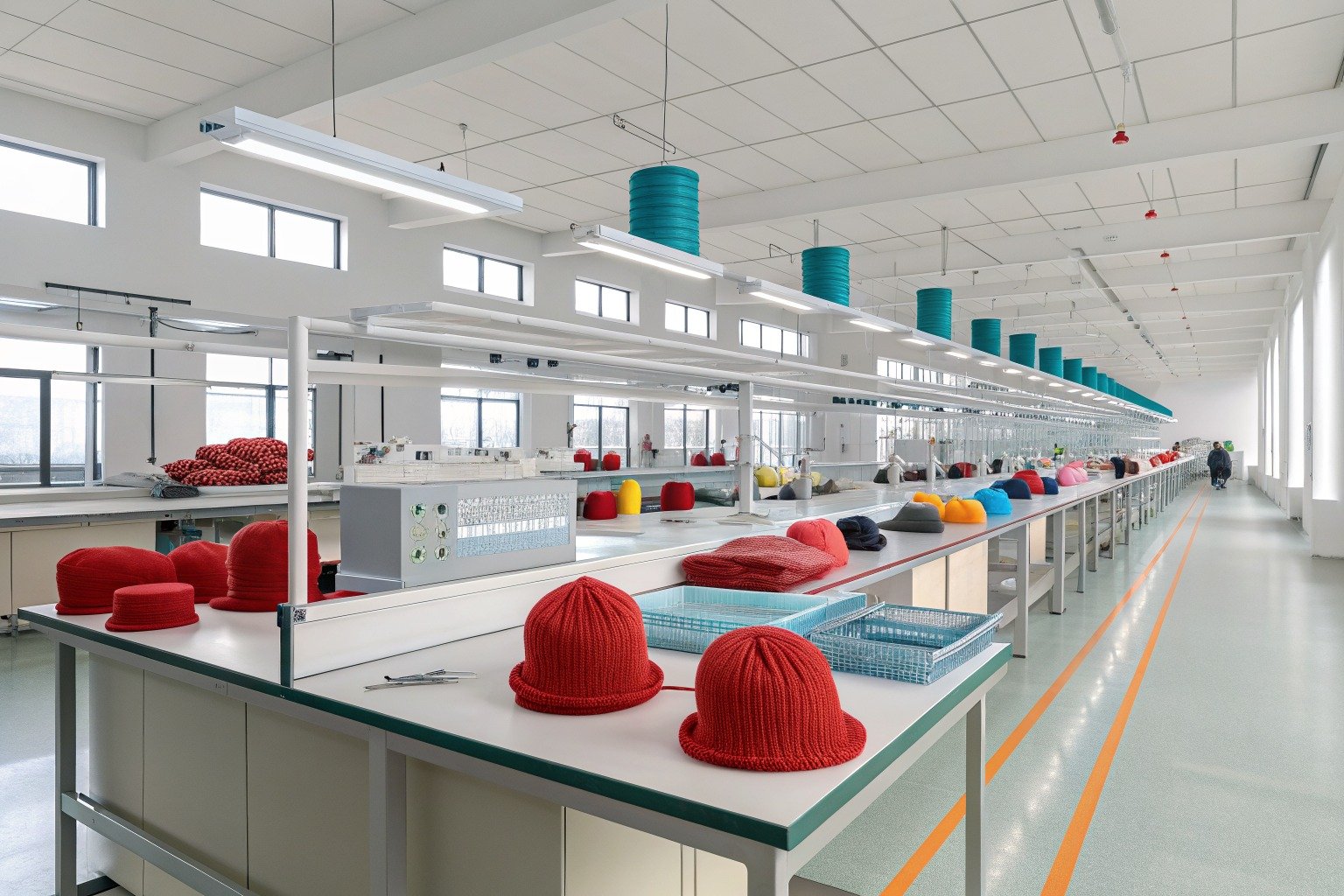
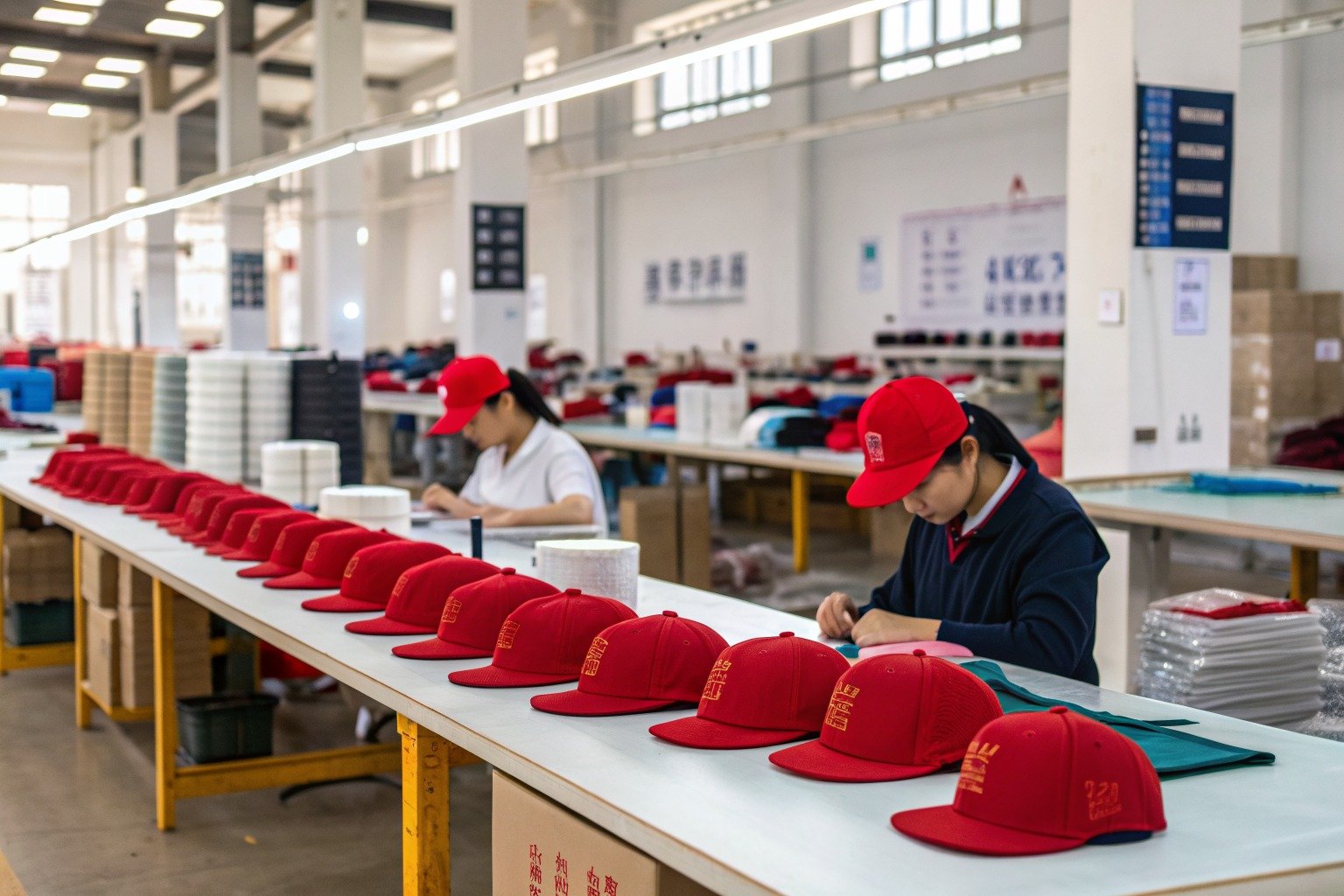
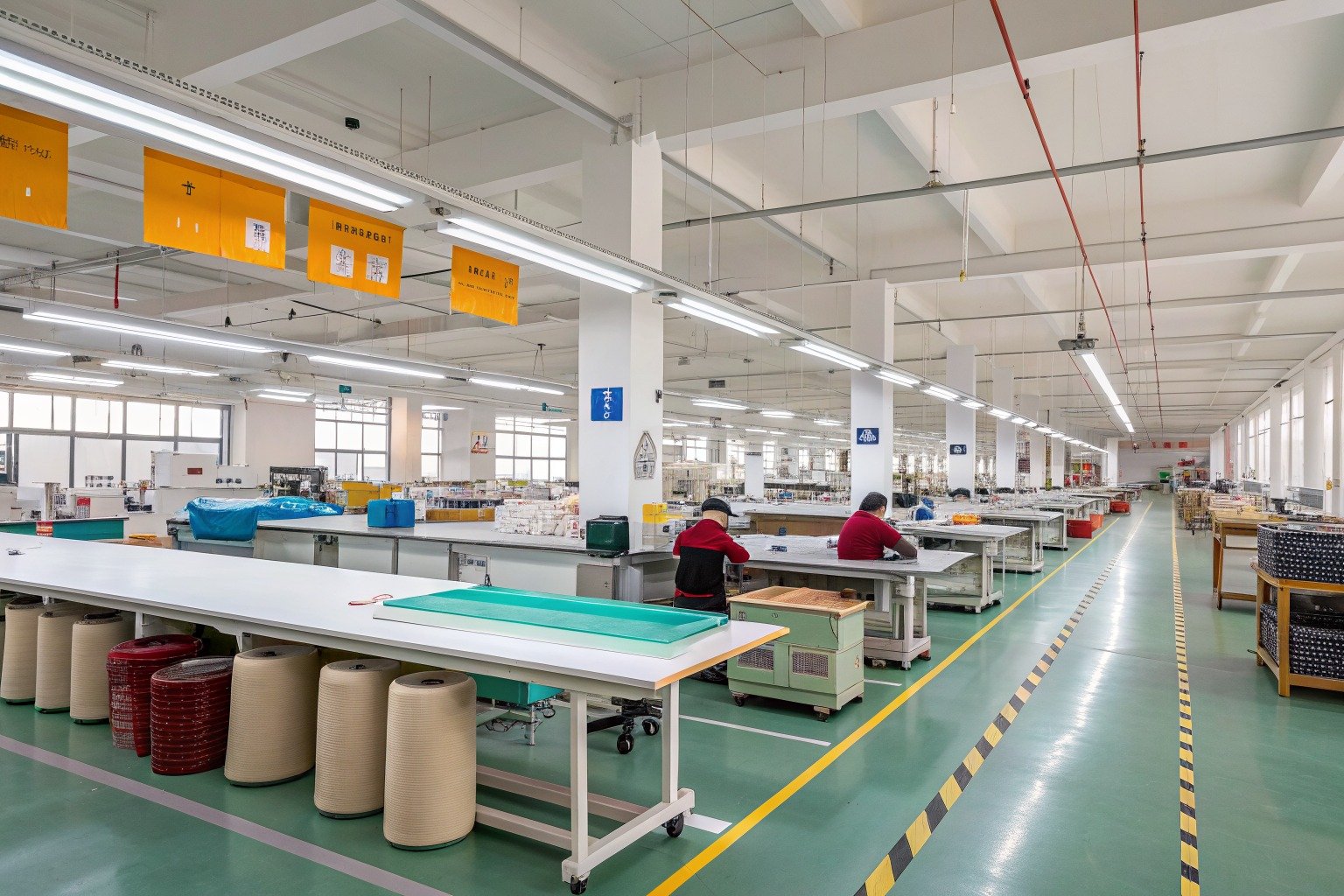
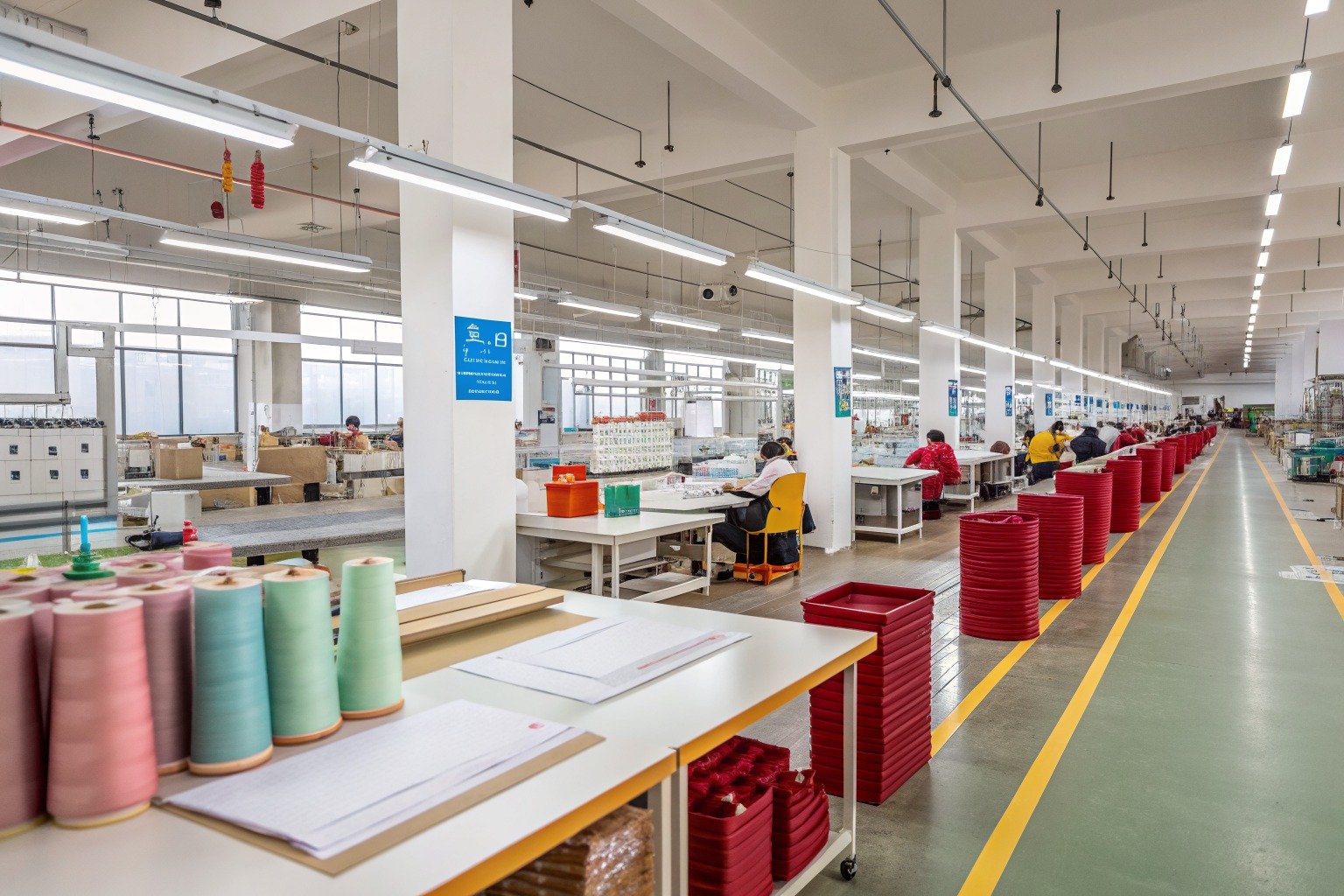
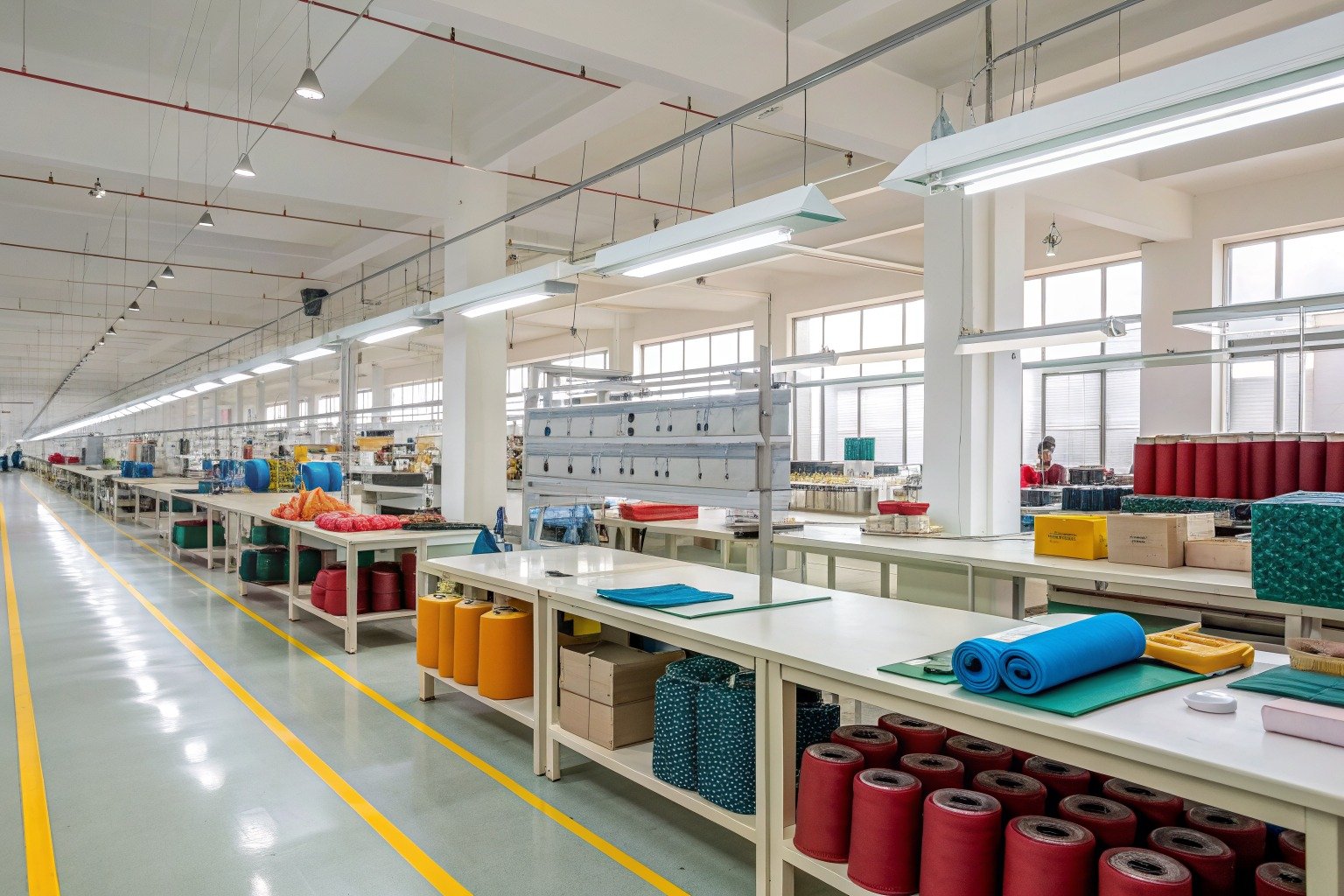
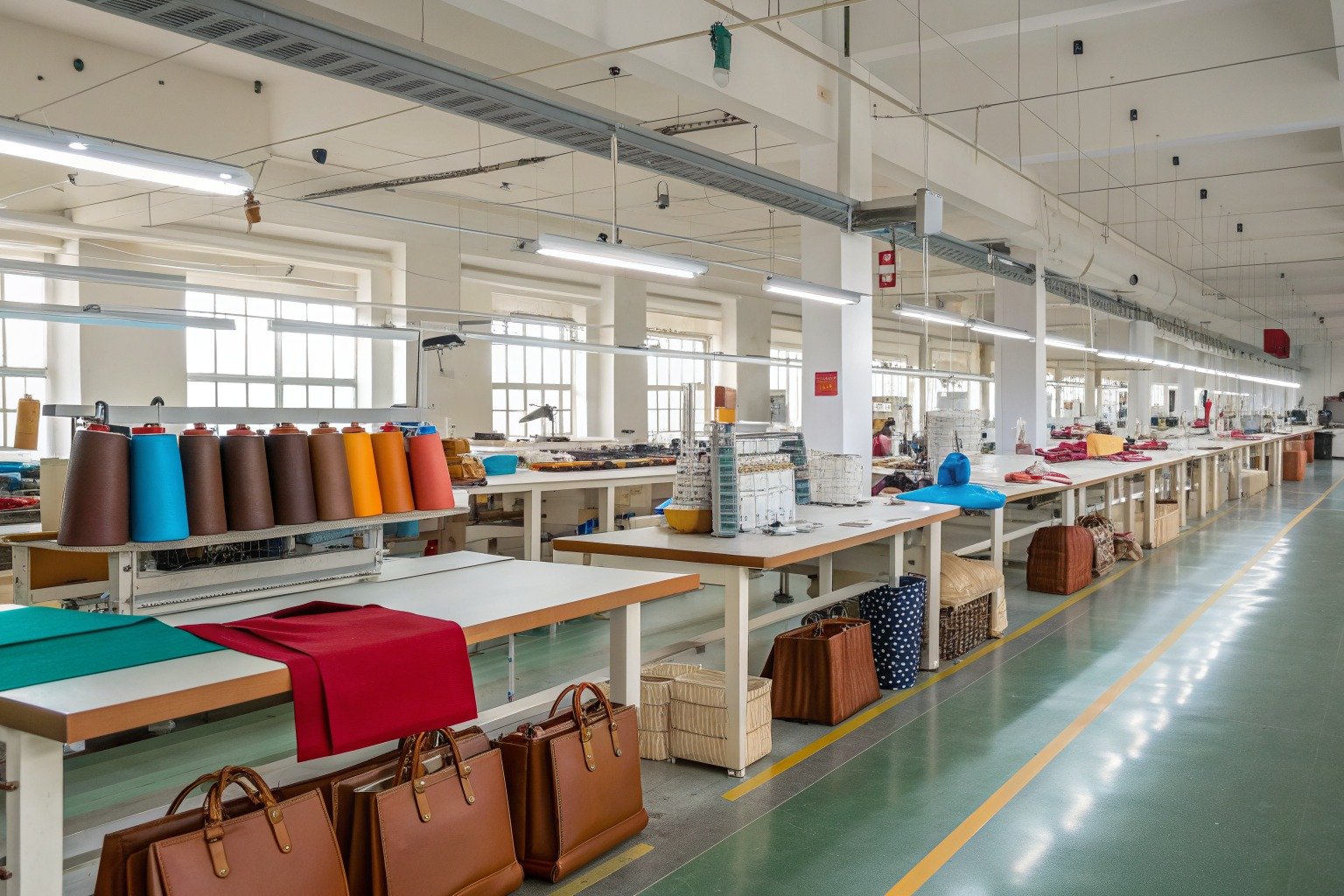
Yes, our factory produces both adult and toddler beanies with perfectly matching designs, colors, and materials under one roof. We achieve this through a combination of flexible knitting machinery that can be quickly reprogrammed for different sizes, a centralized yarn dyeing process that ensures color consistency across all sizes, and a dedicated mini-me production cell that specializes in coordinating multi-size accessory sets. The adult beanies are produced on our standard circular knitting machines, configured for adult head circumferences of 55 to 58 centimeters. The toddler beanies are produced on the same machines, reconfigured with a reduced number of needles and a tighter stitch count to achieve the smaller circumference of 48 to 50 centimeters. Because both sizes are knitted from the same yarn lot, dyed in the same dye bath, and finished on the same production line, the color match is perfect and the design details, the cuff style, the pom-pom, the embroidered patch, are identical. Our minimum order quantity for a coordinated adult and toddler beanie set is 200 sets per color, with each set consisting of one adult beanie and one toddler beanie. This MOQ makes the mini-me concept accessible to boutique brands, online stores, and independent designers.
The mini-me trend, matching accessories for parents and children, is not a passing fad. It is a durable, emotionally driven product category that generates high engagement on social media, strong gift purchase conversion, and premium pricing power. A parent who buys a beanie for themselves and a matching beanie for their child is not just buying two beanies. They are buying a shared experience, a photo opportunity, and a tangible expression of their bond. At AceAccessory, we have embraced this category and invested in the production flexibility to serve it. Let me walk you through exactly how we make matching adult and toddler beanies a reality for your brand.
What Are the Design Considerations for Matching Beanie Sets
Designing a matching beanie set is not as simple as taking the adult pattern and shrinking it down. The toddler head is not a scaled-down version of the adult head. It has different proportions. A toddler’s head is larger relative to their body. The crown is higher. The face is smaller. The ears are positioned differently. A beanie that is simply reduced in size from an adult pattern will fit poorly on a toddler, sitting too low on the forehead, covering the eyes, or being too tight at the crown. The design must be adapted, not just scaled. The design language, the colors, the textures, and the details must be identical, but the underlying pattern must be engineered specifically for each age group.
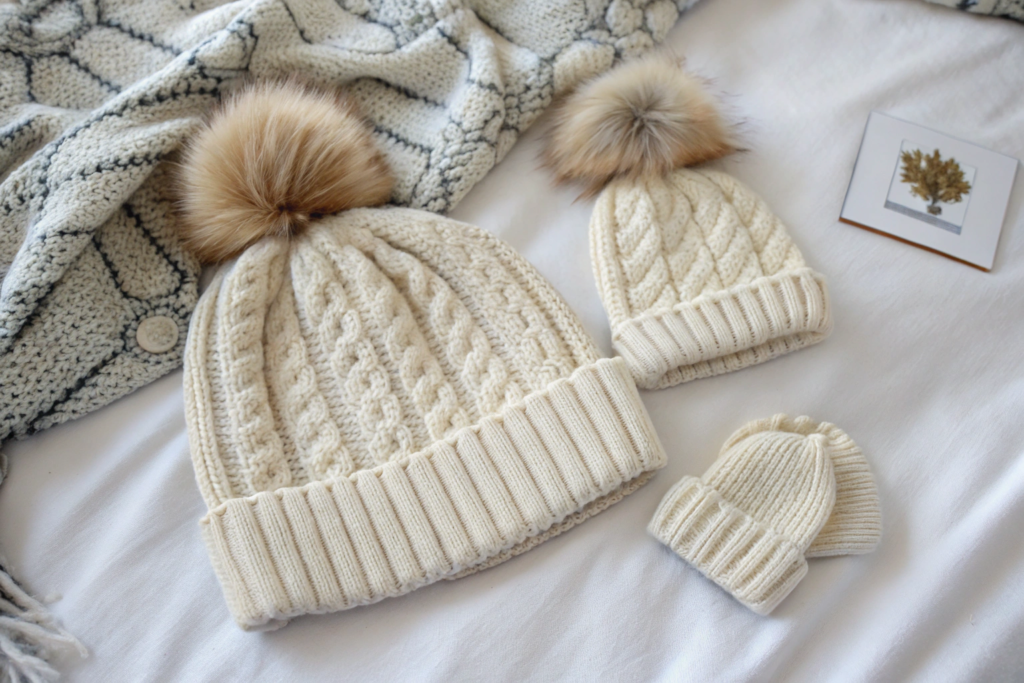
The key design considerations for matching adult and toddler beanie sets are proportional scaling, where the toddler beanie pattern is not a simple reduction of the adult pattern but a re-engineered design that accounts for the different head proportions of a young child, with a relatively larger crown height and a different ear position. Design element consistency, where every visible design detail, the cuff style, the pom-pom size and material, the embroidered patch or logo, and the knit stitch pattern, must be identical in appearance across both sizes, even if the underlying stitch count is different. Color matching, where both the adult and toddler beanies must be knitted from yarn that was dyed in the same dye lot. Even a slight variation in dye lot can create a visible color difference between the two beanies, which destroys the matching effect. If the beanies are made from different dye lots, the adult beanie might be a slightly warmer cream and the toddler beanie a slightly cooler cream. Side by side in a photograph, the mismatch is glaring. Material consistency, where both sizes must use the same yarn fiber content, the same yarn weight, and the same finishing treatments to ensure they feel identical to the touch and wear identically over time. A toddler beanie made from a scratchier yarn than the adult beanie will be rejected by the child, and the parent will notice the difference.
The design process for a matching set begins with the adult beanie. Once the adult design is finalized, the pattern is adapted for the toddler size. The adaptation involves changing the number of stitches, the number of rows, the decrease rate for the crown shaping, and the cuff height. The design elements, such as a jacquard pattern or a cable knit, must be re-charted for the smaller stitch count. A pattern that repeats every 12 stitches on the adult beanie may need to repeat every 8 stitches on the toddler beanie. The visual effect must be the same, even if the underlying math is different. Let me detail the two most critical design aspects.
How Do You Proportionally Scale Patterns for Child and Adult Sizes?
Proportional scaling is the engineering challenge at the heart of matching beanie sets. An adult beanie with a circumference of 56 centimeters and a toddler beanie with a circumference of 48 centimeters differ by approximately 15 percent in overall size. However, the scaling is not uniform. The adult head is roughly cylindrical. The toddler head is more spherical, with a proportionally larger crown. The beanie pattern must accommodate these shape differences. The scaling process begins with the stitch count. The number of stitches in a round determines the circumference. The adult beanie might be knitted with 96 stitches on a 5-gauge machine. Reducing the stitch count proportionally by 15 percent would give approximately 82 stitches. However, the stitch count must also accommodate the design pattern. If the beanie has a 4-stitch rib pattern, the stitch count must be divisible by 4. The toddler stitch count might be set at 80 stitches, which is slightly more than 15 percent reduction but provides a clean pattern repeat. The row count determines the height. The adult beanie might have 60 rows from cuff to crown. The toddler beanie, because of the proportionally larger crown, might have 50 rows, a 17 percent reduction. The crown shaping, the rate at which the stitches are decreased to close the top of the beanie, is adjusted. The adult beanie might decrease 8 stitches every other round. The toddler beanie might decrease 6 stitches every other round, with a slightly faster decrease rate to create a rounder, more spherical crown. The cuff height is scaled proportionally to the overall height. An adult cuff of 6 centimeters might become a toddler cuff of 4.5 centimeters. These adjustments are made by our pattern technician using a combination of standard grading rules and empirical fitting on child and adult head forms. The first sample of the toddler beanie is fitted on a toddler head mannequin and then on a live toddler model. The fit is assessed for coverage, comfort, and proportion. Adjustments are made, and the sample is re-knitted until the fit is perfect.
What Yarn Considerations Ensure a True Color Match Between Sizes?
Color matching between the adult and toddler beanies is the most visible indicator of a coordinated set. If the colors are even slightly off, the matching effect is ruined. The parent will notice. The photograph will look wrong. The key to a perfect color match is using yarn from the same dye lot for both sizes. A dye lot is a batch of yarn that was dyed together in a single dye bath. Every skein in that batch received exactly the same dye formulation, the same temperature, the same processing time. The color is identical across every skein in the lot. If the adult beanie is knitted from dye lot A and the toddler beanie is knitted from dye lot B, even if both lots were dyed to the same Pantone specification, there will be a visible difference. The human eye is remarkably sensitive to color differences, especially in a side-by-side comparison. The solution is to order the yarn for both the adult and toddler beanies at the same time, specifying that all yarn must come from a single dye lot. We calculate the total yarn requirement for the entire order, adult beanies plus toddler beanies, and we place a single order with our yarn supplier. The supplier dyes the entire quantity in one batch. The yarn is delivered to our factory with dye lot certification. We store the yarn together and issue it to the knitting machines for both adult and toddler production. Because both sizes are knitted from the exact same yarn, the color match is physically perfect. Another consideration is the yarn weight and ply. The adult and toddler beanies should use the same yarn weight, such as worsted or DK, and the same ply, such as 2-ply or 4-ply, to ensure the visual texture is identical. A toddler beanie knitted from a single-ply yarn will look thinner and less substantial than an adult beanie knitted from a 4-ply yarn of the same color. The difference in texture will be visible. The yarn composition must also be identical. If the adult beanie uses an 80 percent acrylic, 20 percent wool blend, the toddler beanie must use the exact same blend. Different fiber contents absorb dye differently, and even from the same dye bath, the color can appear slightly different on different fibers.
How Does Production Planning Handle Multi-Size Beanie Orders
Producing matching adult and toddler beanies in a single factory requires careful production planning. The two sizes are different production orders with different stitch counts, different machine settings, and different finishing requirements. But they must be produced in a synchronized way to ensure they are completed at the same time, packed together into sets, and shipped as a single coordinated collection. If the adult beanies are finished two weeks before the toddler beanies, they sit in inventory, accruing storage costs and risking damage. The production plan must orchestrate the parallel production of both sizes and their convergence at the packing stage.
Production planning for multi-size beanie orders uses a synchronized batch production system. The total order is broken into batches by color. For each color, the yarn is issued to both the adult knitting machine and the toddler knitting machine simultaneously. The machines are set up with the respective stitch counts and patterns for that size. Both machines begin knitting at the same time. The adult machine, with a higher stitch count, may have a slightly longer knitting cycle time, but the difference is small, typically minutes per beanie. The knitted tubes are moved to the linking and finishing stations. The finishing team processes both sizes in parallel. The pom-poms, the labels, and the packaging are prepared identically. The finished beanies are paired into sets, one adult and one toddler, and packed together in a single polybag or gift box. The batch production system ensures that the adult and toddler beanies in a given color are completed within the same production window and can be immediately paired. The system requires flexible machinery. Our knitting machines are computer-controlled and can be reprogrammed for different stitch counts and sizes in minutes. The machines are not dedicated to a single size. A machine that knitted adult beanies in the morning can knit toddler beanies in the afternoon. This flexibility allows us to balance the production flow and avoid bottlenecks.
The production plan is managed by a dedicated project manager who tracks the progress of each size and each color. The project manager uses a shared production tracking document that is updated in real time as each batch progresses through knitting, linking, finishing, and packing. The client receives weekly progress updates with photographs of the work in progress. Let me detail the two key elements of production planning.
Can Both Sizes Be Knitted on the Same Machine Type?
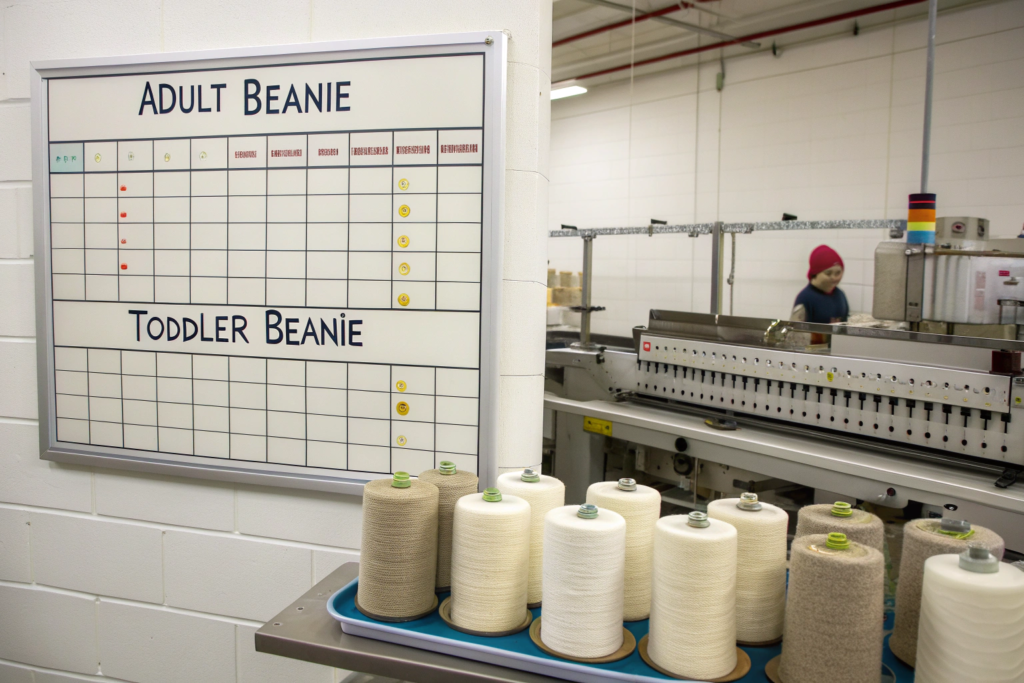
Yes, both adult and toddler beanies can be knitted on the same type of circular knitting machine. The machine does not need to be physically modified. The changeover from adult to toddler size is a matter of software and needle configuration. Our circular knitting machines are computer-controlled, with electronic needle selection. The knitting pattern, including the stitch count, the number of active needles, the stitch type, and the shaping instructions, is programmed into the machine’s computer. To switch from an adult beanie with 96 active needles to a toddler beanie with 80 active needles, the operator loads the toddler program into the machine. The machine automatically deactivates 16 needles, the ones that will not be used. The yarn feeders, the tension settings, and the stitch cam settings are adjusted for the new program. The changeover takes approximately 15 to 30 minutes, including the time to run a test piece and verify the settings. The same machine can also switch between different stitch patterns, a ribbed cuff, a jersey body, a jacquard pattern, within the same program. This flexibility is what enables us to produce multi-size orders efficiently. We do not need dedicated toddler knitting machines that sit idle when there are no toddler orders. The entire knitting floor is flexible and can be reconfigured based on the order mix. The limitation is the machine gauge. A fine-gauge 12G machine, suitable for lightweight, sleek beanies, cannot knit a chunky 3G yarn. The gauge is a physical characteristic of the needle spacing and cannot be changed. But within a given gauge, the machine can knit any size from newborn to adult by adjusting the program. We have multiple machine gauges in our knitting workshop, 3G, 5G, 7G, and 12G, so we can produce matching sets in a range of yarn weights and styles.
How Are Adult and Toddler Beanies Packaged as a Set?
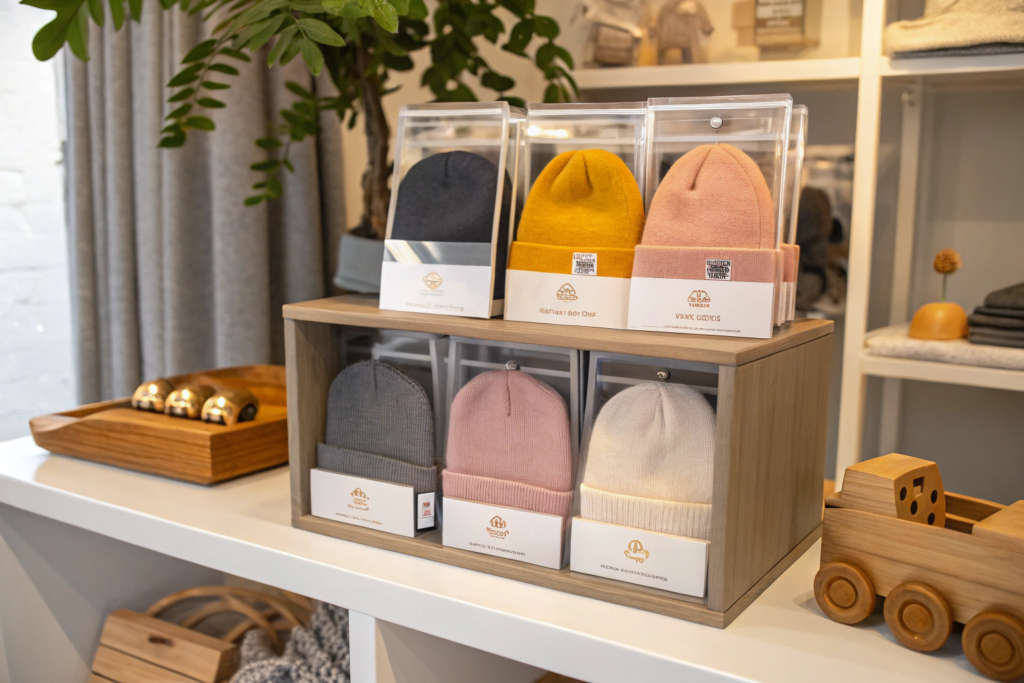
The packaging of a matching beanie set is part of the product experience. The parent and child beanies should be presented together, as a pair, in a way that reinforces the "mini-me" concept and that photographs beautifully for social media. The packaging must also protect both beanies during transit and present them attractively on a retail shelf. The most common packaging format for matching beanie sets is a single, larger polybag or gift box that contains both the adult and toddler beanie together. The beanies are folded neatly and placed side by side, with the toddler beanie nested slightly inside the adult beanie, or arranged in a visually pleasing composition. The packaging is sealed, and a single hangtag or sticker is applied. The hangtag might read "Mini-Me Beanie Set" or "Matching Parent and Child Beanies." The packaging should be sized to accommodate both beanies without crushing them. The adult beanie is the larger item, so the packaging is sized for the adult beanie, and the toddler beanie fits comfortably alongside. For premium sets, a custom-printed rigid gift box is used. The box has a die-cut insert that holds each beanie in its own compartment, with a space in the center for a branded gift card. The gift box elevates the set to a premium gift item, suitable for baby showers, holiday gifts, and special occasions. For retail display, a clear PVC or PET box with a printed cardboard sleeve is effective. The clear box allows the customer to see both beanies, while the sleeve provides the branding and product information. For e-commerce, a polybag with a branded header card is the most practical and cost-effective option. The header card is sized to accommodate the combined thickness of both beanies. A reinforced euro slot allows the package to be hung on a display hook if it is also sold in physical retail. The packaging design should be coordinated with the beanie design. The colors, fonts, and materials of the packaging should reflect the brand’s aesthetic and the cozy, familial feeling of the matching set.
What Minimum Order Quantities Apply to Matching Sets
The minimum order quantity for matching adult and toddler beanie sets is a critical factor for boutique brands and independent designers. These brands operate on a different scale than mass-market retailers. They need smaller quantities to test new designs, to manage inventory risk, and to maintain the exclusivity of their brand. The MOQ for matching sets is influenced by the yarn minimums, the machine changeover time, and the packaging. Our MOQ structure is designed to make the mini-me concept accessible to brands of all sizes.
The minimum order quantity for matching adult and toddler beanie sets at our factory is 200 sets per color. Each set consists of one adult beanie and one toddler beanie. The 200-set MOQ applies to a single yarn color with a single design. If the set includes a jacquard pattern or an embroidered patch, the MOQ may be slightly higher, 300 sets per color, due to the additional setup costs for the pattern programming or the embroidery digitizing. The total order MOQ, combining multiple colors, is flexible. A brand can order 200 sets in oatmeal, 200 sets in charcoal, and 200 sets in dusty rose, for a total order of 600 sets. This MOQ is significantly lower than the 1,000 to 5,000 units per size that many larger factories require. It is achieved through our flexible production system and our willingness to manage the changeovers. The per-unit cost at these MOQs is higher than at mass-production quantities, but it is accessible and allows the brand to maintain a healthy margin at their retail price point. For brands launching a new mini-me collection, the 200-set MOQ allows them to test the market with a manageable inventory investment before scaling up.
The MOQ is driven by the yarn minimum. Yarn suppliers have a minimum order quantity per color, typically 30 to 50 kilograms for stock colors and higher for custom-dyed colors. A single adult beanie might use 80 grams of yarn, and a toddler beanie 50 grams, for a total of 130 grams per set. Two hundred sets require 26 kilograms of yarn, which meets the supplier’s minimum for a stock color. For a custom Pantone-dyed color, the yarn minimum might be 50 kilograms, which would require approximately 380 sets. We work closely with our yarn suppliers to obtain the smallest possible minimums for our clients. For stock yarn colors, the 200-set MOQ is firm. For custom colors, we advise clients on the feasibility and may suggest using a stock color that is a very close match to their desired custom shade to keep the MOQ low.
Can You Mix and Match Colors Within a Minimum Order Quantity?
Yes, the ability to mix and match colors within the total order quantity is one of the key flexibilities we offer for matching beanie sets. A brand does not need to order 600 sets of a single color. They can spread their total order across multiple colors. The MOQ applies per color, not per order. If a brand orders 600 sets total, they could choose three colors at 200 sets each, or two colors at 300 sets each. The color variety is essential for a retail collection. A display of matching beanie sets in a single color looks sparse and unappealing. A display of sets in four or five coordinated colors looks like a curated collection and invites the customer to choose their favorite. The color options are drawn from our stock yarn library, which contains hundreds of colors across multiple yarn types and weights. The stock library includes core neutrals, blacks, whites, grays, creams, and navies, fashion colors, seasonal shades like mustard, burgundy, forest green, and dusty rose, and heathers and marls, blended yarns with a heathered appearance. The stock yarn colors do not require a dye lot minimum and are available at the 200-set MOQ. If a brand requires a custom Pantone-matched color, the MOQ is higher, typically 500 sets, due to the yarn dyeing minimum. The ability to mix and match colors allows a brand to build a seasonally appropriate color palette within their budget and MOQ constraints. The per-set pricing is the same regardless of how the colors are mixed, as long as each color meets its individual MOQ.
How Is Quality Control Coordinated Across Different Sizes
Quality control for a matching beanie set must verify not only that each individual beanie meets its specification, but that the two beanies in the set match each other perfectly. An adult beanie that meets all its specifications and a toddler beanie that meets all its specifications may still not match if the color is slightly different or if the stitch texture appears different because of the different stitch count. The QC process includes specific checks for set-level consistency that go beyond the standard individual beanie checks.
Quality control for matching adult and toddler beanie sets is performed at three levels. Individual beanie QC, where each beanie is inspected against its own specification for dimensions, stitch quality, and finishing. The adult beanie is checked against the adult specification for circumference, crown height, and cuff width. The toddler beanie is checked against the toddler specification. Set-level QC, where the two beanies are inspected together, side by side, under standardized D65 daylight lighting. The inspector checks for color match between the two beanies. Any visible color difference is a failure. The inspector checks for design element consistency. The pom-pom size and density must match. The cuff height must be proportional. The embroidered patch or logo must be identical in appearance, even if the placement is scaled. The overall visual impression of the set must be one of perfect coordination. Packaging QC, where the packaged set is inspected. The beanies must be correctly paired, one adult and one toddler, in the correct colors. The packaging must be correctly assembled, with the correct hangtag, barcode, and any care labels. The package must be sealed securely. The QC sample is drawn from the finished, packaged sets. The sample size is determined by the AQL sampling plan. The inspector opens the package, removes both beanies, performs the individual and set-level inspections, and then repacks the beanies. Any set that fails at any level is rejected, and the defect is recorded. If the failure rate exceeds the AQL threshold, the entire batch is quarantined for investigation.
The set-level QC is what ensures the customer receives a matching set that looks as beautiful in person as it did on the brand’s website. A color mismatch between the adult and toddler beanie is the most common and the most damaging defect for this product category, and it is the primary focus of the set-level inspection. Let me detail the specific set-level checks.
How Do You Verify Consistent Sizing Across Adult and Toddler Beanies?
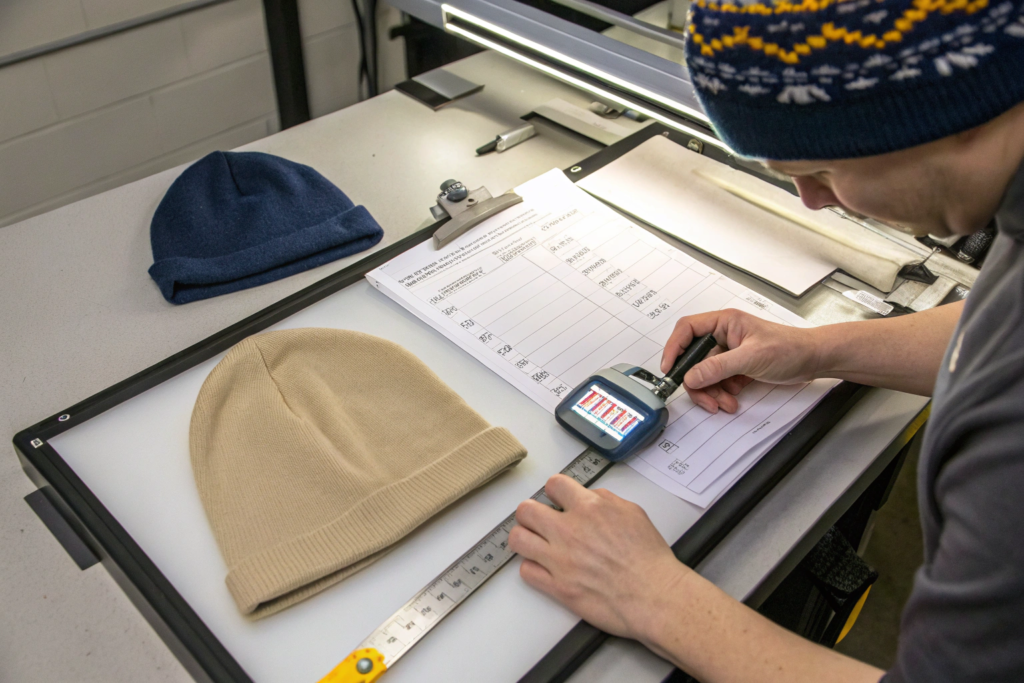
Sizing verification is a two-part process. First, each beanie is measured individually against its own specification. The adult beanie is measured for circumference, laid flat and measured across the width, then doubled. The target adult circumference is typically 56 centimeters with a tolerance of plus or minus 2 centimeters. The crown height is measured from the center of the crown to the bottom of the cuff. The target is typically 22 to 24 centimeters depending on the style. The toddler beanie is measured in the same way. The target toddler circumference is typically 48 centimeters with the same tolerance. The crown height is typically 18 to 20 centimeters. Second, the proportional relationship between the two sizes is verified. The toddler beanie should not look like a shrunken, distorted version of the adult beanie. It should look like a perfectly proportioned smaller beanie. The proportion check is visual. The inspector places the two beanies side by side and assesses the overall silhouette. The cuff height on the toddler beanie should be proportionally smaller than the adult cuff, not the same absolute size. A toddler beanie with an adult-sized cuff looks comically oversized and is a sizing failure. The crown shape should be proportionally consistent. A properly proportioned toddler beanie will have a slightly rounder, more spherical crown than the adult beanie, reflecting the different head shape. The sizing verification is performed on a sample of sets from each color and each production batch. The measurements are recorded on the QC report, along with the pass-fail determination for each measurement. The sizing data is also used for continuous improvement. If a particular size consistently runs small or large, the pattern is adjusted for the next production run.
Are the Same Testing Standards Applied to Children’s Products?
Yes, and for toddler beanies, the testing standards are actually more stringent than for adult beanies because children’s products are subject to additional safety regulations. The key difference is the small parts regulation. A toddler beanie, intended for a child under three years old, must not have any small parts that could detach and pose a choking hazard. The pom-pom, if present, must be securely attached. We test the pom-pom attachment using a 90-newton pull test, the same standard used for snaps and buttons on children’s clothing. The pom-pom must withstand the pull force without detaching. Any decorative elements, such as embroidered patches, buttons, or beads, must also meet the small parts requirement. The yarn and dyes used for toddler beanies must meet the stringent chemical safety standards for children’s products. Under EU REACH and US CPSIA, children’s products have tighter limits for heavy metals, phthalates, formaldehyde, and other harmful substances. We test every batch of toddler beanies to OEKO-TEX Standard 100 Class I, the strictest level, which certifies the product is safe for babies and toddlers. The adult beanies are typically tested to Class II. The labeling requirements are also different. Toddler beanies must carry a warning label if they contain small parts, which they should not, or if they present any other hazard. The care label must include the fiber content, the country of origin, and the care instructions in the required languages for the destination market. The QC process includes a check that all required labels are present and correctly attached. The higher testing standards for toddler products are a non-negotiable part of our production process. We ensure that every toddler beanie is compliant with the regulations of the market where it will be sold.
Conclusion
Producing matching adult and toddler beanies is a capability that requires flexibility in design, production, and quality control. It is not simply a matter of making the same beanie in two different sizes. It is about engineering a proportional, well-fitting toddler pattern that faithfully reproduces the design details of the adult original. It is about sourcing yarn in a single dye lot to guarantee a perfect color match. It is about orchestrating parallel production streams so that both sizes are completed simultaneously and can be paired into sets. It is about inspecting the finished sets not just as individual beanies but as a coordinated pair, where the visual harmony is the defining quality metric. And it is about making all of this available at a minimum order quantity, 200 sets per color, that is accessible to the independent brands and boutique retailers who are the lifeblood of the children’s and family accessories market.
At AceAccessory, we believe in the power of the mini-me concept. We have seen the photographs that our clients’ customers post, the father and daughter in matching beanies on a windy beach, the mother and son in matching beanies at the pumpkin patch. These images are not just marketing content. They are genuine moments of family connection, and the matching beanies are the tangible symbol of that connection. We are proud to play a small part in creating those moments. Our production team has the knitting flexibility, the yarn sourcing discipline, the finishing expertise, and the quality control rigor to produce matching sets that delight parents and children alike.
If you are considering a matching adult and toddler beanie collection, a "mini-me" line, a family gift set, or a coordinated parent-child accessory range, I invite you to start the conversation with us. Contact our Business Director, Elaine, at elaine@fumaoclothing.com. Tell her about your brand, your design concept, your color palette, and the quantities you are envisioning. She can provide samples of our adult and toddler beanie constructions, show you examples of our color matching and proportional scaling, and give you a quotation for a production run. Let us help you create the matching beanies that families will treasure, and that will photograph beautifully for years to come.