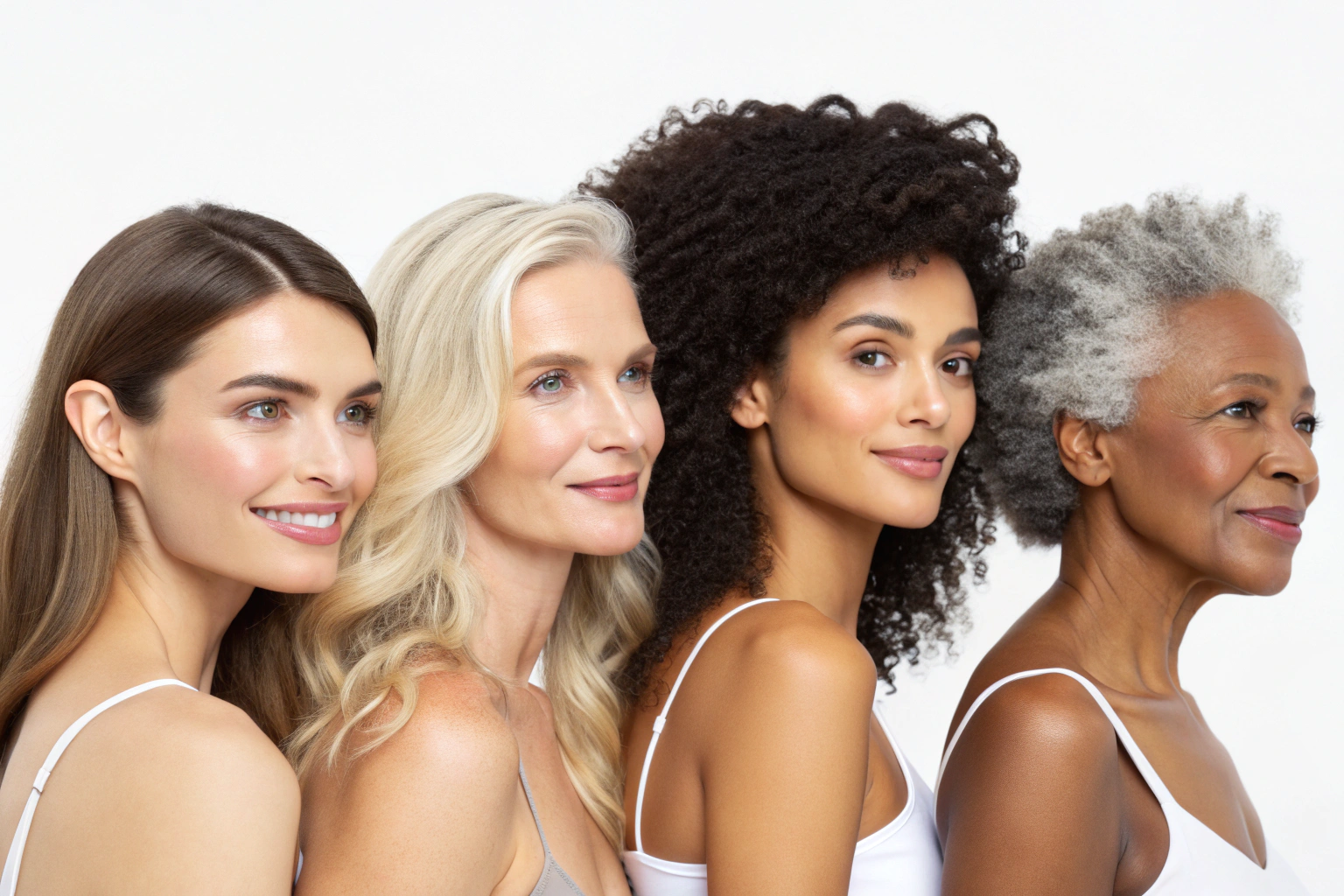
You’ve probably tried a hair tie that promised no slip, only to find it either yanking your fine hair or failing to hold your thick curls. For retailers and brand owners, stocking a one-size-fits-all non-slip hair tie can lead to dissatisfied customers and divided reviews, hurting your brand’s reputation in a competitive market.
While non-slip hair ties are designed for superior hold, their suitability varies significantly across different hair types. The key to a universal fit lies in the specific material technology, tension design, and surface texture of the tie. At Shanghai Fumao Clothing, we develop and test non-slip hair accessories with a wide range of hair types in mind, ensuring our clients can confidently market them to diverse audiences. The right non-slip tie should provide secure hold without causing breakage or discomfort, a balance that requires careful engineering.
Let’s examine how these popular accessories perform across the hair spectrum and how to choose or develop the right option for your target customer.
How Do Non-Slip Hair Ties Work on Fine or Thin Hair?
For individuals with fine or thin hair, the greatest fear is breakage and slippage. Standard hair ties often slip out because there’s not enough hair for the elastic to grip, or they wrap too tightly, causing stress and snapping delicate strands. This makes the search for a gentle yet secure hold a constant challenge.
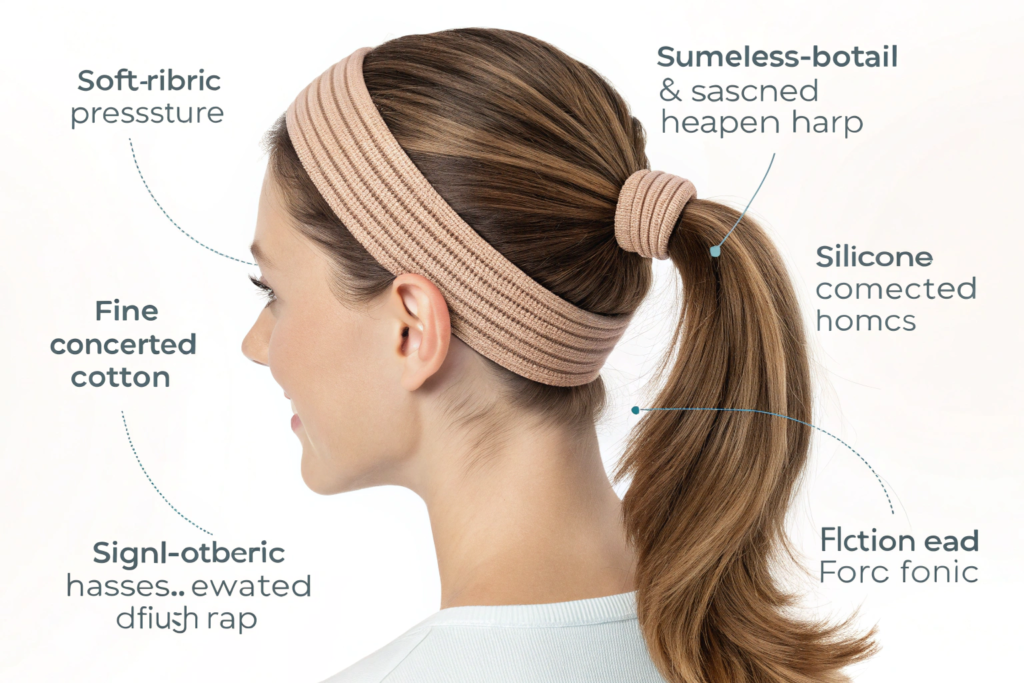
Non-slip hair ties can be excellent for fine hair, but only if they are specifically designed with lower tension and a wider, smoother surface area for distribution of pressure. The goal is to grip the hair without concentrating force on a single point. Ties made from soft, ribbed cotton-blend fabrics or seamless silicone-coated elastics often work well, as they provide friction without requiring a tight wrap.
Understanding this specific need is part of a supplier’s core design and development capability, ensuring products cater to niche market segments effectively.
What Features Prevent Breakage on Delicate Hair?
For fine hair, the features that prevent breakage are non-negotiable. First, seamless construction is critical. Any bump or seam can catch and snap hair when the tie is removed. Second, the elastic core should be wrapped in a soft, plush fabric like velour or a smooth nylon blend. This creates cushioning between the elastic and the hair. Third, the tension level must be adjustable; a tie that is too strong will pull hair out even if it doesn’t slip. Many brands now offer "ouchless" versions specifically engineered for this hair type, using technology that prioritizes gentle grip over maximum hold. Resources like the American Academy of Dermatology often discuss hair care practices that minimize breakage, aligning with this product philosophy.
Can Non-Slip Ties Provide Enough Hold for Thin Hair?
Yes, they can provide ample hold, but through friction rather than constriction. The non-slip technology often involves a silicone dot pattern on the inside of a soft tie or a high-friction fabric weave. This texture grips the individual hair strands without needing to be wrapped excessively tight. For women with thin hair, a smaller-diameter tie is also advantageous, as it can make a secure ponytail without needing to wrap it multiple times, which can create a bulky, unnatural look. The key is for the buyer to request samples and test them. A reliable manufacturer like Shanghai Fumao Clothing will provide sample cards with various tension levels for this precise evaluation.
Are They Effective for Thick, Curly, or Coarse Hair?
On the opposite end of the spectrum, thick, curly, and coarse hair demands a hair tie with immense holding power and durability. The common frustrations are ties that snap under pressure, lose elasticity quickly, or get lost in the volume of hair, failing to create a defined shape. A tie that can’t withstand this demand is useless.
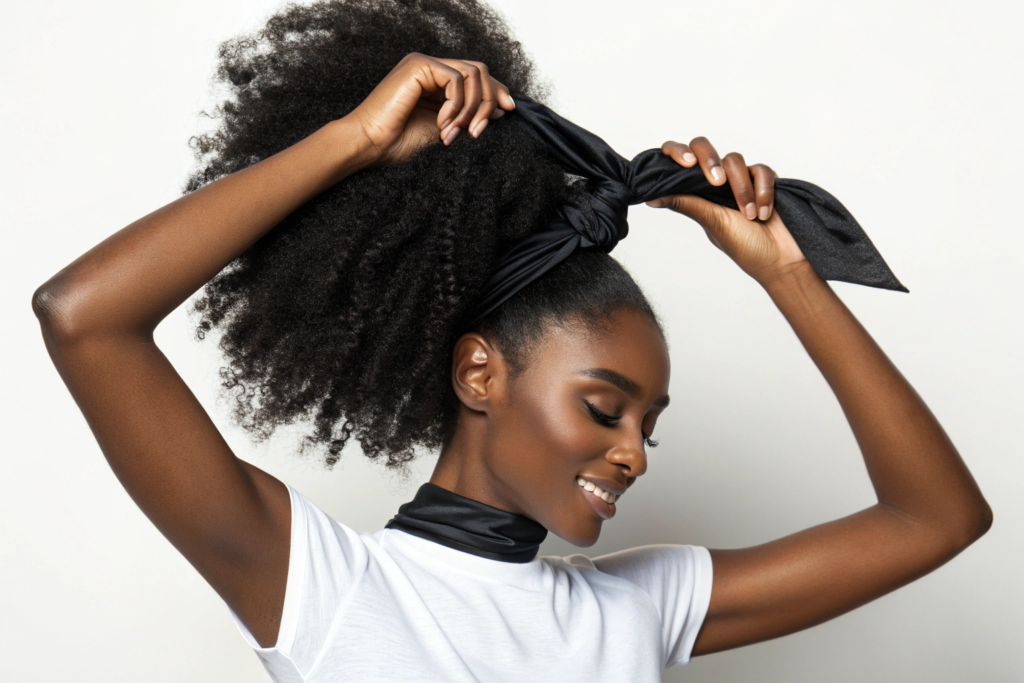
Non-slip hair ties are often a fantastic solution for thick and curly hair types because their enhanced grip reduces the number of wraps needed, minimizing bulk and denting. However, they must be constructed with high-grade, durable elastic and strong seams to withstand the constant tension. Coated elastics or thick, woven bands with a strong grip are typically the most effective.
The durability of these products is a direct reflection of a factory’s quality control and certifications, ensuring they perform under stress over multiple uses.
What Construction Makes a Tie Durable for Heavy Hair?
The construction for thick hair focuses on reinforcement. Look for ties with a braided elastic core rather than a simple round elastic, as it offers more strength and stretch recovery. The outer fabric or coating must be securely bonded or stitched to this core to prevent separation. Additionally, the joining method of the tie is crucial; a heat-sealed or ultrasonically welded seam is far stronger than a simple glued bond. For the highest durability, some lines are made from a single, continuous loop of molded silicone or TPE material, eliminating seams entirely. This level of construction detail is what separates bulk commercial goods from premium accessories.
Do They Cause Less Denting and Frizz on Curly Hair?
A significant advantage of well-designed non-slip ties for curly hair is the potential for less denting and frizz. Because the grip is more effective, you can often achieve a secure hold with only one or two wraps, as opposed to three or four with a standard tie. Fewer wraps mean less compression on the hair shaft, which helps maintain the curl pattern and reduces the crease or "dent" when the tie is removed. Furthermore, ties with a smooth, snag-free fabric exterior (like satin or silk blends) glide over the hair cuticle rather than ruffling it, which is a key technique for frizz control recommended by curly hair specialists on platforms like NaturallyCurly.
What About Hair That is Short, Treated, or Aging?
Hair types aren’t just defined by thickness and curl; condition plays a major role. Short hair, chemically treated (colored, permed), or aging (gray, thinning) hair has unique vulnerabilities. These hair types are often more fragile, prone to dryness, and have less natural grip, making them a tricky middle ground.
Non-slip hair ties can be suitable here, but the selection criteria shift towards extreme gentleness and secure grip on shorter lengths. The tie must hold a smaller bundle of potentially compromised hair without stressing it. Wide, soft fabric bands or spiral/coiled designs that can grip shorter pieces without slipping are often the best solutions. For treated hair, avoiding materials that strip color or cause friction damage is also a priority.
Supplying accessories for these specific needs requires a supplier with adaptable communication and service to understand and meet nuanced client requirements.
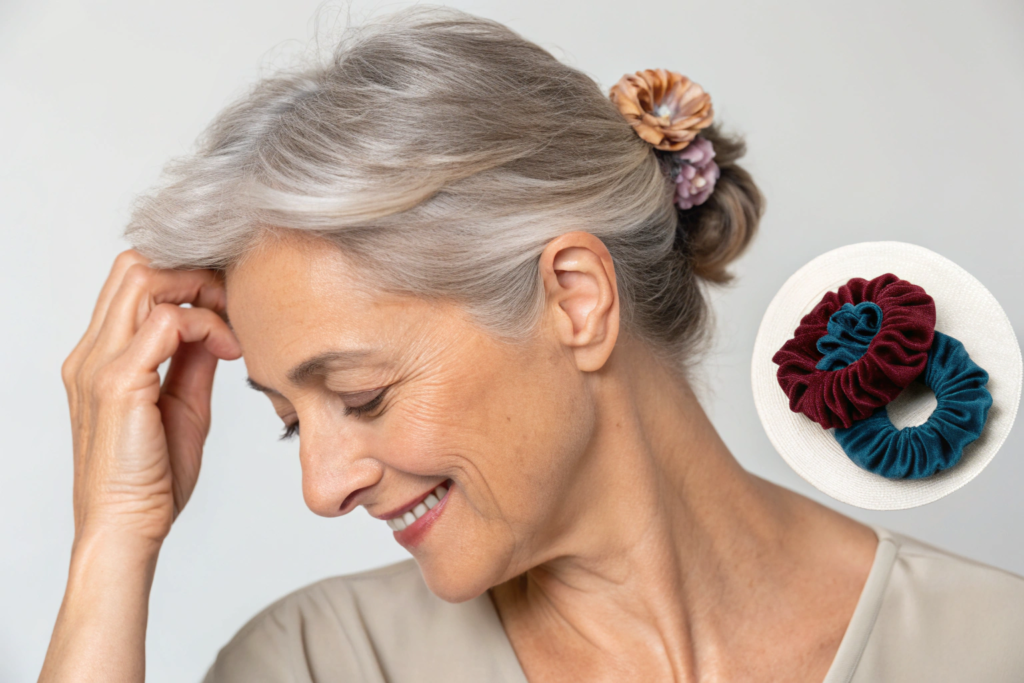
What Styles Work for Short Hair or Pixie Cuts?
For short hair or pixie cuts, the goal is to manage small sections, face-framing pieces, or create tiny buns. Miniature non-slip ties are essential. Spiral or "telephone cord" style ties are exceptionally effective for short hair because they can grip even very small amounts of hair along their entire length, and their coiled structure expands to hold securely. Another excellent option is a thin, velvet-lined cord elastic. Its high-friction surface provides a strong hold on slippery short hair without needing length to wrap around multiple times. These specialized products cater to a growing market segment that mainstream ties often overlook.
How to Choose Ties for Color-Treated or Fragile Hair?
For color-treated, bleached, or otherwise fragile hair, the choice of material is paramount. Avoid ties with harsh synthetic rubbers or cheap elastics that contain sulfur, as they can cause discoloration on blonde or lightened hair. Instead, opt for ties with sulfur-free elastic cores and outer covers made of smooth, non-abrasive materials like silk, satin, or high-quality microfiber. These materials reduce friction, which helps preserve the hair cuticle and prolong color vibrancy. Information on hair-safe materials is often corroborated by professional stylist resources like Modern Salon. Providing this level of detail can be a strong selling point for your brand.
How to Select the Right Non-Slip Tie for Your Product Line?
As a buyer, you need a product that appeals to the broadest audience while acknowledging specific needs. Offering a single SKU and claiming it works for all hair types is a risky strategy. A smarter approach is to curate a small range that covers the major hair type categories.
Your selection process should involve testing on multiple hair types, verifying material claims, and working with a manufacturer that offers customization. This ensures you can offer "gentle hold" and "extra hold" options, clearly marketing each to its ideal user. This targeted approach builds trust and reduces returns.
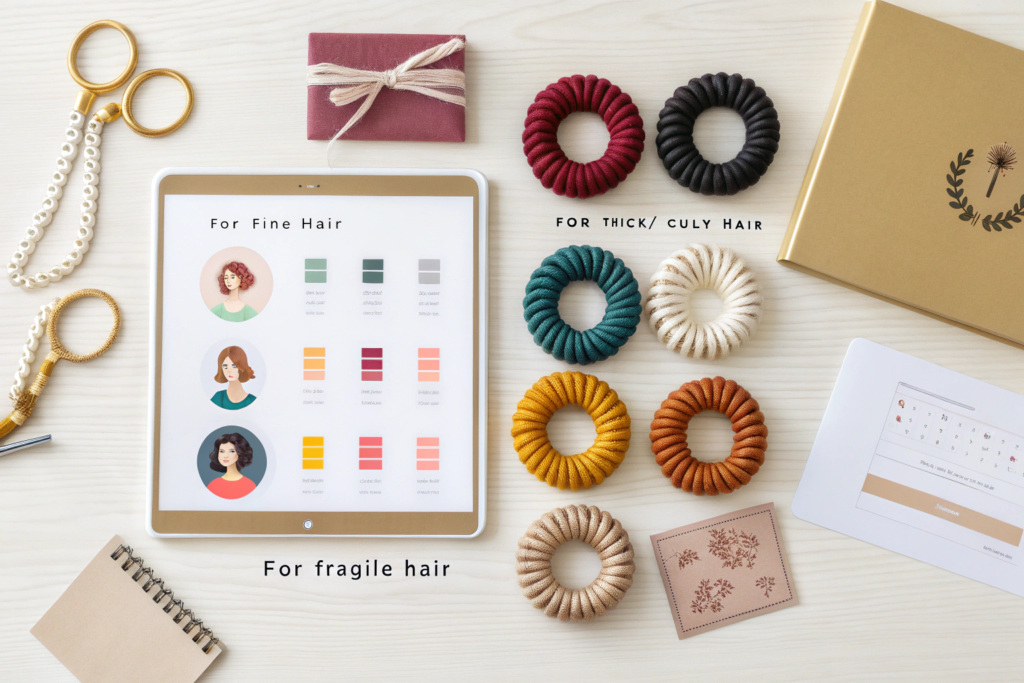
How to Conduct Effective Product Testing with Suppliers?
Effective testing goes beyond feeling the sample yourself. Request a hair type test kit from your supplier, which should include ties of varying tension, diameter, and material. Then, conduct real-world testing: have individuals with fine, thick, curly, and short hair use the ties for a week. Gather feedback on hold, comfort, slippage, and any hair damage or denting. Reputable manufacturers like Shanghai Fumao Clothing often facilitate this by providing structured sample feedback forms. This data is invaluable for making informed purchasing decisions and for creating accurate marketing copy.
Can You Develop a "Universal" Non-Slip Hair Tie?
While a perfect "one-for-all" tie is challenging, it is possible to develop a product that strikes a widely acceptable balance. This would likely be a medium-tension tie with a soft, seamless fabric cover (like a fine knitted nylon) and a slight silicone dot pattern inside for added grip. The design would avoid extremes in size and pressure. However, even a universal tie should be part of a broader range. By also offering specialized options, you demonstrate deep category understanding, which enhances brand authority and caters to a wider logistics and sourcing network of diverse retailers.
Conclusion
Non-slip hair ties hold tremendous potential for all hair types, but their suitability is not universal. Success lies in matching the specific engineering of the tie—its tension, material, texture, and construction—to the unique demands of fine, thick, curly, short, or treated hair. For retailers and brands, this means moving away from a single stock-keeping unit strategy and towards a thoughtful assortment that addresses these distinct needs.
By partnering with a knowledgeable manufacturer who can provide a range of tested options and customize where needed, you can build a hair accessory line that earns loyalty across diverse customer groups. This approach turns a simple functional item into a trusted solution, driving repeat sales and building a reputation for inclusive, effective design.
Ready to build a comprehensive and successful line of non-slip hair ties? Contact our Business Director Elaine at Shanghai Fumao Clothing. We can help you navigate product selection, customization, and sourcing with our expertise in accessory manufacturing. Email her at: elaine@fumaoclothing.com to start developing products that truly hold up for every customer.